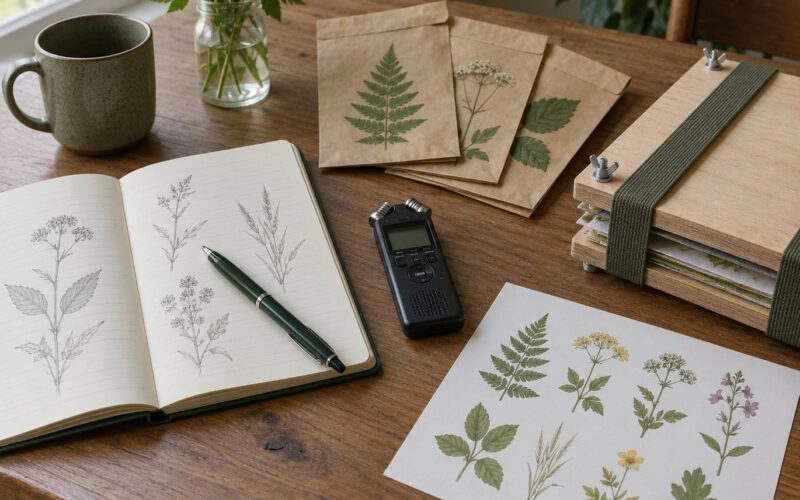
Finding a foraging class near you comes down to searching seven specific places and then checking that the instructor actually teaches identification. In order of how often classes appear: county and state parks departments, nature centers and botanical gardens, mushroom societies, native plant societies and herbal guilds, university Extension offices, event platforms like Eventbrite and Meetup, and farms, ranches or outdoor schools.
Before any of that, one rule: never eat a wild plant or mushroom you cannot identify with complete certainty. A single mistaken species can be fatal, and that is the whole reason a field class exists. Books are useful, but pattern recognition in the field is a skill you build with a mentor standing next to you.
Most beginners who get stuck are not searching badly. They are searching one place, usually a single Facebook group, and concluding that nothing exists within driving distance. A park department calendar, meanwhile, usually has a two-hour walk scheduled for a Saturday in 2026.
Table of Contents
- 1What You Need
- 2Step-by-Step
- 3Step 1: Define the kind of foraging class you need
- 4Step 2: Search local directories and outdoor organizations
- 5Step 3: Check the instructor and curriculum
- 6Step 4: Compare cost, schedule, and class format
- 7Step 5: Confirm the location and safety requirements
- 8Step 6: Attend the first class and continue responsibly
- 9Common Mistakes
- 10Frequently Asked Questions
- 11How can I find a beginner foraging class in my area?
- 12What should I look for in a foraging instructor?
- 13Are online foraging classes suitable for beginners?
- 14Can I eat wild plants or mushrooms immediately after a class?
- 15What should I bring to an outdoor foraging class?
- 16How do I know whether a foraging event is safe and legitimate?
- 17Start With a Reputable Local Class
What You Need
Before you search, get four things straight. Skipping this step is why people book the wrong class and never return.
Your real radius. People say near me and mean a fifteen-minute drive. Decide honestly how far you will travel. For a single two-hour walk, most people will drive up to an hour. For a full-day immersion with a hike and no pavement, that number drops fast.
The kind of instructor you need. Ask what they actually do. Herbalists trained in plant traditions, mycologists who work on fungi, naturalists who run regional plant walks, and chefs who source for restaurants are four different backgrounds. A mushroom course run by a botanist who is not a mycologist is a warning sign, and so is a fungi course run by someone with no field background at all.
Your own outdoor comfort. A field class means uneven ground, wet plants, ticks and often a long stretch with no cell service. If that is new to you, say so when you write to the organizer and ask whether a beginner walk exists separately from the advanced trail sessions.
An emergency contact and a plan for it. Tell one person where you will be and when you expect to return, carry your phone charged, and know that the instructor should be carrying a first aid kit and a written emergency contact sheet. If a listing mentions neither, that is your first filter.
Step-by-Step
Step 1: Define the kind of foraging class you need
Beginner urban foraging, mushroom identification, medicinal plant work, seasonal survival, and advanced field sessions are genuinely different products. Naming the one you want stops you from booking a two-hour mushroom walk when your real goal is learning the edible plants in your own neighborhood.
A useful rule: if you have never foraged at all, start with a general plant walk. Mushrooms carry a far higher misidentification risk, and most guides will say plainly that you need field experience before a fungi course is worth your time.
You will know this step worked when you can say in one sentence what you want to be able to do afterward, such as confidently identify three spring greens and know their look-alikes.
Step 2: Search local directories and outdoor organizations
This is the channel most people skip. Type your county name and state into each of these searches, one at a time, rather than relying on a single generic query.
- Parks and recreation: search your county parks foraging, your state parks plant walk, your city nature preserve edible tour.
- Nature centers, botanical gardens and museums: search [your city] nature center foraging class, botanical garden wild edible walk, museum plant walk.
- Mushroom societies: search mycological society [your state], mushroom club [your city] walk schedule. Members post most public mushroom walks, and these are frequently free or donation-based.
- Native plant societies and herbal guilds: search native plant society [your state] events, herbal guild [your city].
- Extension offices: search [your county] cooperative extension foraging. Land-grant universities run these, and they are the least-used channel on the list.
- Event platforms: Eventbrite and Meetup, filtered by your city and the coming two months. Local Facebook groups are hit or miss because walks are often posted without a calendar.
- Nearby farms and outfitters: search wildcrafting course near me, plus your state name. Permaculture farms, homesteading schools and naturalist outfitters run multi-day courses that never appear on a park calendar.
You will know this step worked when you have at least three dated listings, not one. A single hit usually means you searched one channel, and it usually means more exist.
Step 3: Check the instructor and curriculum
Ask four questions in writing before you pay anything. A serious instructor answers within a day or two.
- What is your background, and how long have you been doing this work?
- How much of the session is hands-on in the field versus lecture?
- How many people are in the group, and what is the ratio of students to instructors?
- What happens if we find nothing edible that day?
That last question separates good programs from bad ones. A class that still teaches you how to read habitat, season and key characteristics on a slow day is doing the real work. A class that promises a basket of food every time is selling a fantasy.
Look for species coverage in the description rather than a topic label. Look-alike pairs are the part that saves lives, so a curriculum that pairs, say, three look-alike berry pairs is teaching the right thing. Disqualify anyone who encourages tasting everything on the walk, or who cannot name a single poisonous species in your region.
Step 4: Compare cost, schedule, and class format
Pricing in this niche is opaque. Most organizers publish nothing until you write, and weekend intensives run into the hundreds while volunteer mushroom society walks are often free. What you can compare without paying anything is structure.

- Volunteer society walk: usually free, two to three hours, mushroom or plant focused, group sizes in the dozens. Best for a first look, weakest for individual attention.
- Half-day park or museum workshop: a modest fee, four to six hours, small groups, one or two species in depth. The best value for a beginner.
- Weekend intensive: the highest tier of cost, two full days, small groups, more species and a stronger emphasis on look-alikes. Only worth it after a cheaper class.
- Seasonal immersion or residential course: multi-day, the most expensive option, taught by a working practitioner. Look for published credentials before considering this.
- Online course: useful for taxonomy, seasonal calendars and look-alike pairs, and weak on the thing that matters most, which is seeing a plant in its habitat. Good supplement, poor substitute for a first class.
- Private or group booking: many guides will run a private walk for a group. This is the easiest route in rural areas with no public calendar.
Check the schedule against the season, too. Plant and fungi classes peak at different times, and a spring greens walk is useless in November.
Step 5: Confirm the location and safety requirements
Get the meeting point in writing, not just a park name. Ask about terrain, distance walked, restroom access and cell coverage, and whether the session moves to another site if weather turns.
Clothing and gear are usually listed, and if they are not, assume sturdy closed-toe boots, long trousers, a rain layer, water and gloves. Ask about allergies and about bringing children, since family walks and adult identification sessions are often different events.
Then check the legal side before the day arrives. Foraging rules on public land vary by state, agency and even by park, and some places restrict picking to specific species or quantities. Your state department of natural resources will publish this, and Extension offices can point you to it. A good instructor covers it; if they do not, ask your state agency for the written rules before you go.
Also confirm the cancellation policy, what the emergency contact sheet looks like, and whether the instructor carries a first aid kit. A day of rain should be rescheduled, not improvised.
Step 6: Attend the first class and continue responsibly
On the day, stay with the group, photograph plants rather than picking them unless the instructor says otherwise, and write down the features you were taught to check instead of just the species name. Ask the look-alike question every single time.
Ask permission before harvesting anything, take no more than a third of what is present, and leave the stand intact. Many mushrooms and berries fruit from a network underground, and a greedy harvest damages years of supply.
Then join the group that hosted the class. The class is the door; the recurring walk schedule is the education. Ask how to get on the mailing list or the group chat, because most people who stay in this hobby found their community through exactly that class.
One more habit: do not eat a new species independently until you have seen it in the field, matched it against its look-alikes, and had an experienced forager confirm it. A class is a starting point, not a licence.
Common Mistakes
Booking on price alone. The cheapest option is often a large volunteer walk with thirty people and no take-home materials. Judge the group size, the instructor background and the species coverage first.
Trusting an unvetted guide. Self-taught foragers often teach, and sometimes they teach well. The check is not a certificate, it is whether the person can describe their field experience, name local poisonous species and explain their look-alike pairs on request.
Skipping weather and terrain checks. A summer thunderstorm on an open ridge is a genuine hazard. Read the cancellation policy, ask about exposure, and pack a layer you were told you would not need.
Conflating edible with medicinal. A plant being traditionally used does not make it safe to eat, and a demonstration of one does not become a treatment. Keep edible identification and herbal study as separate tracks unless a qualified clinician is teaching the second one.
Harvesting without permission. Private land means the owner’s permission, full stop. Public land still has rules about protected species, quantities and commercial collection. Ask, every time.
Eating something you identified on your own. This is the one mistake that ends careers. The 100 percent rule is absolute, and no app, photo or forum post changes it.
One more worth naming: giving up after a single search. Look at 2026 schedules in the spring and fall, check your state mycological society, and check whether your county Extension office has a naturalist program. Classes exist in most regions. They are just announced in places nobody thinks to look.
Frequently Asked Questions
How can I find a beginner foraging class in my area?
Search your county and state name in seven places: parks and recreation calendars, nature centers and botanical gardens, your state mycological society, native plant societies, your county Extension office, event platforms like Eventbrite and Meetup, and nearby farms or outfitters. Start with a general plant walk rather than a fungi course, since plant walks carry lower risk and most guides ask for field experience first.
What should I look for in a foraging instructor?
Ask what their background is and how long they have done the work, how much of the session is hands-on, the student-to-instructor ratio, and how they handle look-alike species. A good instructor names local poisonous species without hesitation, explains what they will do if nothing edible appears, and treats identification as the subject rather than food as the goal.
Are online foraging classes suitable for beginners?
They are a useful supplement and a poor first step. Online courses are strong on taxonomy, seasonal calendars, look-alike pairs and harvesting ethics, and weak on the thing beginners most need, which is seeing plants in their habitat and habitat clues in real soil. Many instructors will say publicly that online study should come after a field class, not instead of one.
Can I eat wild plants or mushrooms immediately after a class?
No. A class teaches you to start identifying, not to eat on the spot. Most programs will not allow tasting during the walk for good reason, since the first few species you meet will be observation and practice species. Take photos, take notes, have an experienced forager confirm your identifications later, and only then consider harvesting.
What should I bring to an outdoor foraging class?
Sturdy closed-toe boots, long trousers, a rain layer, water, gloves, a phone charged for photos, and a field guide if the instructor suggests one. A basket beats a plastic bag because airflow protects delicate plants. Ask the organizer in advance about restrooms, cell coverage, allergies, and whether children can attend, since family walks are often separate events.
How do I know whether a foraging event is safe and legitimate?
Look for a named instructor with described field experience, a stated meeting point with terrain and distance details, a first aid kit, a written emergency contact, a clear cancellation policy, and a curriculum that emphasizes look-alike species. Walk away from anyone who promises a full basket every time, encourages tasting unidentified plants, or cannot tell you which local species are poisonous.
Start With a Reputable Local Class
Do one thing this week: open your county parks calendar, your state mycological society page and your county Extension office site, and write down every dated event between now and the end of 2026. Three listings is enough to choose from. Then pick the half-day workshop with the smallest group, book it, and bring boots.
Everything else, including the books, the apps and the online courses, works better once you have a mentor who can correct you in the field.