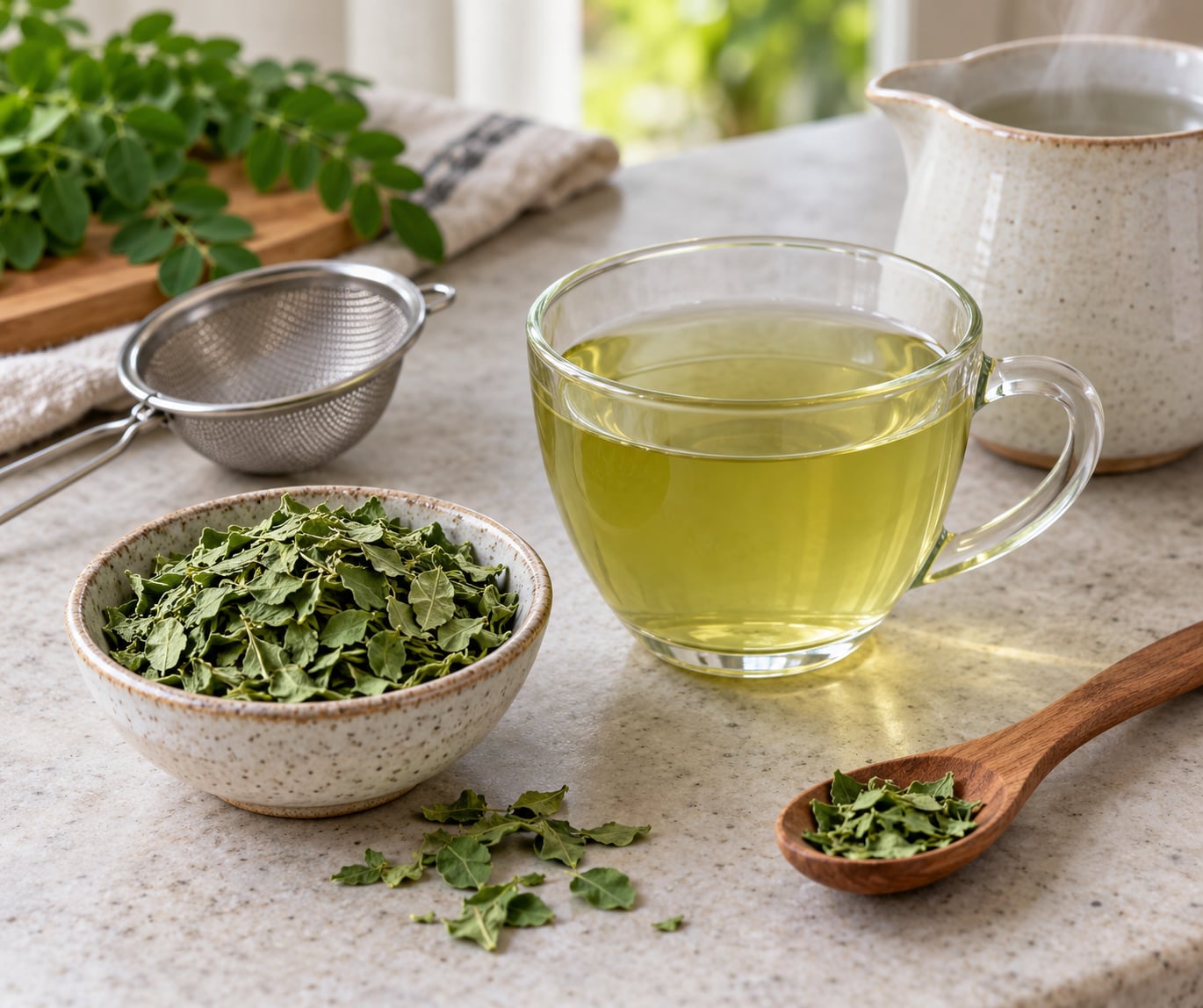
To make moringa tea at home, put roughly 1 tablespoon of dried moringa leaves or 1 teaspoon of moringa powder into a cup, pour over water heated to about 90°C, steep for 5 to 6 minutes with a lid on, then strain it finely. Fresh leaves work too, but only after they are washed and dried first.
Most disappointing homemade cups come down to one of three mistakes: too much leaf, too long a steep, or wet leaves that were never dried. Fix any one of those and the drink turns into something quite pleasant on its own.
Here is the short version before the detail:
- Heat 250 ml of water to about 90°C, just short of a rolling boil.
- Measure 1 tablespoon of dried moringa leaves, or 1 teaspoon of moringa powder.
- Put the leaf or powder in your mug and pour the water over it.
- Cover and steep for 5 to 6 minutes.
- Strain through a fine mesh sieve if you used loose leaves.
- Add lemon, honey or ginger if you want, and drink it.
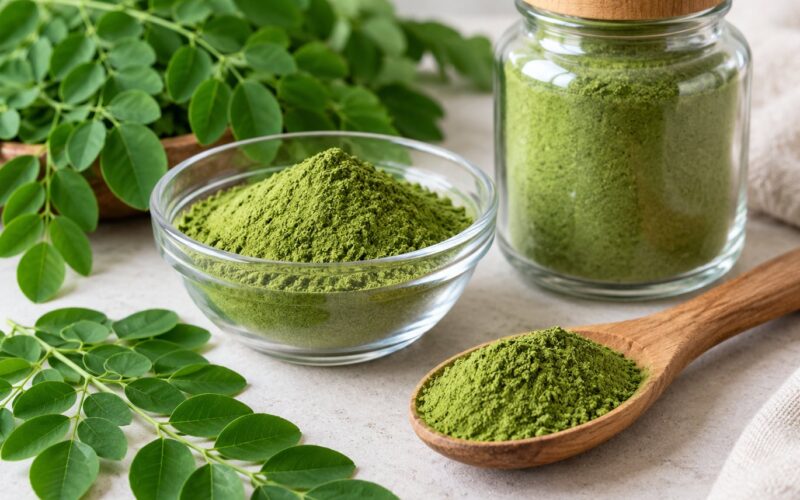
The plant behind the drink is Moringa oleifera, usually called the drumstick tree or horseradish tree. It grows fast, it is easy to grow from a seed, and it does well in home gardens across warm regions. The leaf is the part used for tea.
Table of Contents
- 1What You Need
- 2Fresh, Dried and Powder: What Equals What
- 3Step-by-Step: How to Make Moringa Tea at Home
- 4Step 1: Heat the Water to Just Below Boiling
- 5Step 2: Measure the Leaf
- 6Step 3: How to Make Moringa Tea at Home with Dried Leaves or Powder
- 7Step 4: Steep for 5 to 6 Minutes, Covered
- 8Step 5: Strain It Fine
- 9Step 6: Flavour and Drink
- 10Step 2: How to Make Fresh Moringa Leaf Tea
- 11To Use Fresh Leaves Straight Away
- 12To Dry Fresh Leaves at Home
- 13How to Adjust the Strength and Flavor
- 14Common Mistakes
- 15Using too much leaf
- 16Boiling dried leaves hard for 20 minutes
- 17Using fresh leaves straight from the branch
- 18Pouring water that is far too hot
- 19Skipping the lid
- 20Straining too coarsely
- 21Letting powder clump
- 22Harvesting from an unidentified plant
- 23Storing powdered moringa open on the counter
- 24Steeping the same leaves three times
- 25Safety and Who Should Not Drink Moringa Tea
- 26Frequently Asked Questions
- 27Is it good to drink moringa tea every day?
- 28Are there any side effects to drinking moringa tea?
- 29What not to mix with moringa tea?
- 30Who can not drink moringa tea?
- 31Does heat destroy moringa?
- 32How do I make moringa powder taste better?
- 33Conclusion
What You Need
There are three forms of moringa leaf, and they are not interchangeable at the same weight. Getting the amount right is most of the work.
- Fresh leaves — around 10 to 15 leaves per 250 ml cup, stripped from the stem and chopped. Only usable once dried, apart from a brief blanch.
- Dried leaves — 1 tablespoon, roughly 2 to 3 g, per cup. Whole or lightly crushed leaves work better than fine dust.
- Moringa powder — 1 teaspoon, about 2 g, per cup. It disperses faster and needs less steeping time.
You also need a kettle, a mug or glass, a timer, and a fine mesh sieve or a small strainer if you are using loose leaf. A lid matters more than people expect, because it holds the volatile compounds in the cup instead of letting them drift away.
Fresh, Dried and Powder: What Equals What
This is the conversion table home growers ask for most often, because sources rarely give it. One level tablespoon of dried leaf is about 5 grams, which is roughly the weight of the fresh leaves you need to dry down to get it.
| Form | Amount per 250 ml cup | Approx. weight | Steep time | Taste |
|---|---|---|---|---|
| Fresh leaves (dried first) | 1 small handful, 10 to 15 leaves | 20 g fresh, roughly 5 g dried | 5 to 6 minutes | Green, grassy, mild |
| Dried whole leaves | 1 tablespoon | 2 to 3 g | 5 to 6 minutes | Fullest, slightly peppery |
| Dried crushed leaves | 1 tablespoon | 2 to 3 g | 4 to 5 minutes | Stronger, faster extraction |
| Moringa powder | 1 teaspoon | about 2 g | 3 to 4 minutes | Green, slightly sweet, can be flat if it is filler |
| Moringa tea bag | 1 bag | 2 to 3 g | 5 minutes | Convenient, variable quality |
Buy leaves that are clearly identified as Moringa oleifera and sourced from a named supplier. Bright green, whole or coarsely broken leaf with a grassy smell is a good sign. Dull brown dust with no aroma is usually leaf powder mixed with filler, and it tastes flat.
Only harvest from a plant you have positively identified. Moringa has a distinctive three-lobed leaf shape, but several unrelated plants grow in the same conditions, and misidentification is the one mistake that genuinely matters here.
Step-by-Step: How to Make Moringa Tea at Home
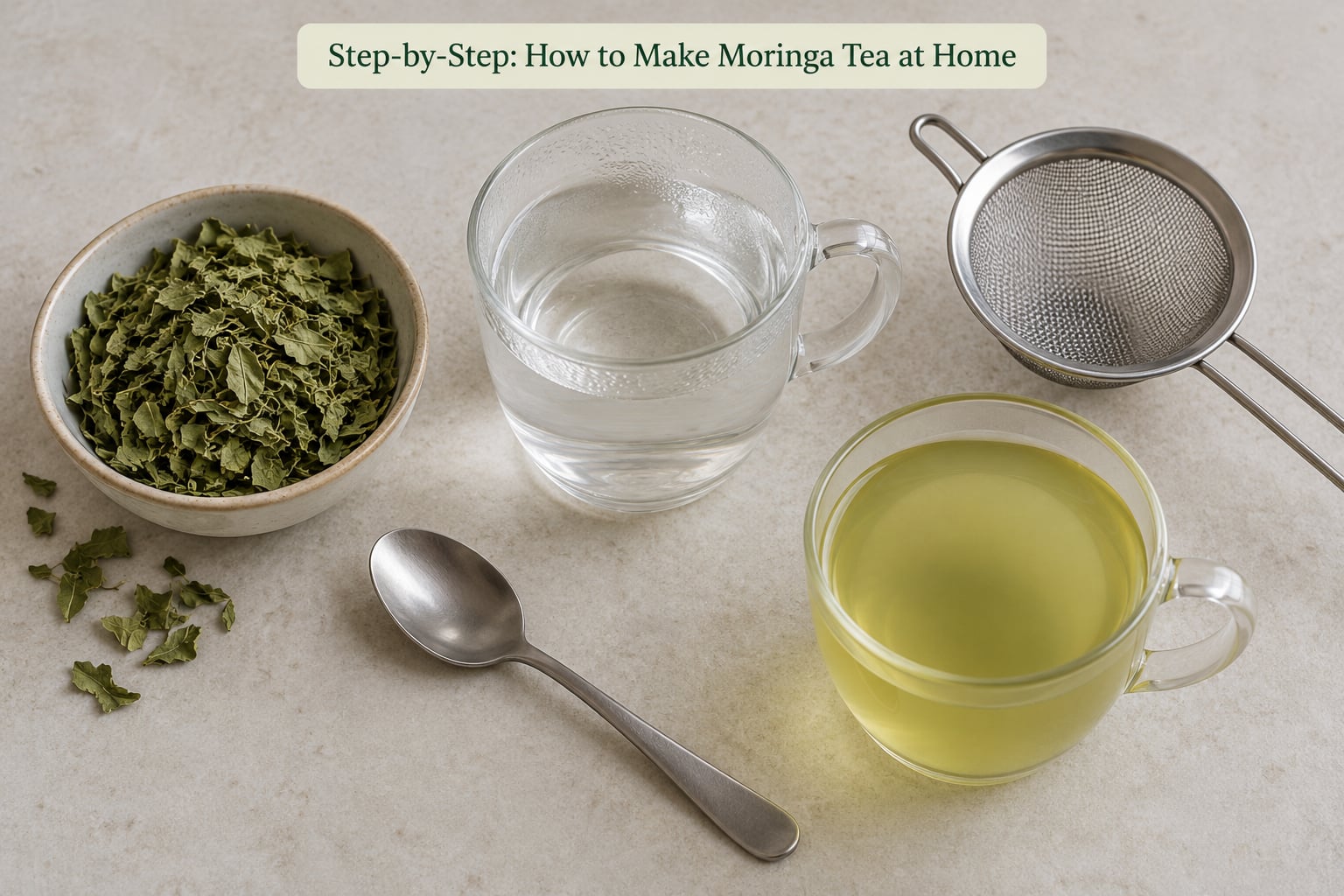
Step 1: Heat the Water to Just Below Boiling
Bring 250 ml of water to the boil, then let it sit for about a minute before pouring. That lands you near 90°C. A temperature-controlled kettle set to 90°C does the same job without the guesswork.
This is the part most home guides get wrong. Moringa is a sturdy leaf, not a delicate green tea, and it does not need cooler water to protect it. A published brewing study that tested water from 70°C to 100°C and steep times from two to ten minutes found the highest phenolic content and antioxidant activity at near-boiling water with a steep of roughly six minutes.
Step 2: Measure the Leaf
Put 1 tablespoon of dried leaves, or 1 teaspoon of powder, straight into your mug. A level tablespoon, not heaped, because the difference in strength between the two is noticeable.
If your leaf came loose from a bag rather than measured, roughly 15 to 20 whole small leaves is a normal cup. Whole leaves expand slightly as they rehydrate, so do not double up.
Step 3: How to Make Moringa Tea at Home with Dried Leaves or Powder
Pour the hot water over the leaf in the mug, then stir once so the powder or crushed leaf distributes instead of sitting in a clump at the bottom. With powder, whisking or a frother works better than a spoon.
Step 4: Steep for 5 to 6 Minutes, Covered
Rest a saucer or lid on top and leave it alone. Five minutes is a gentle cup, six minutes is a fuller one, and past eight minutes you are heading into bitterness.
You can tell it has worked by colour and aroma rather than by clock. The liquid moves from pale green-yellow towards a deeper green, and the grassy, slightly peppery smell gets stronger over the first few minutes.
Step 5: Strain It Fine
For loose leaf, pour through a fine mesh sieve, catching the leaf underneath. A coffee filter works for a clear cup. Powder needs no straining at all, which is part of why people who buy powder tend to keep using it.
Step 6: Flavour and Drink
Moringa has a natural mild sweetness, so most people need nothing added. Lemon, honey, ginger and cinnamon all pair well, and the details are further down this page.
A second steep is worth trying. Add a little fresh hot water, leave it two to three minutes, and expect a lighter cup with a milder edge. Beyond that you are mostly re-extracting the same compounds.
Step 2: How to Make Fresh Moringa Leaf Tea
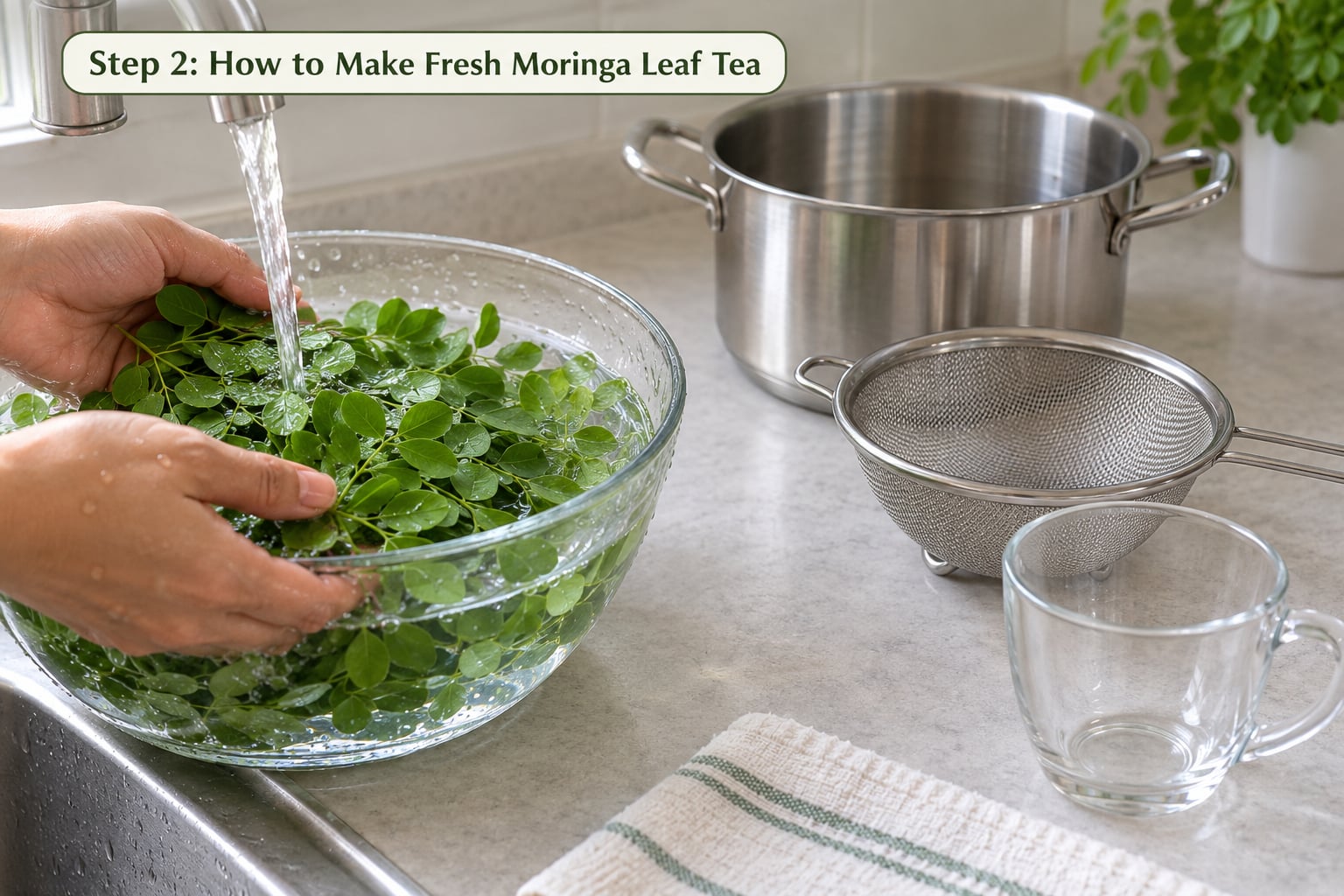
Fresh leaves straight from a branch are the hardest route, and home growers consistently hit the same wall: wet leaves make a muddy, bitter cup. Drying first is the answer.
To Use Fresh Leaves Straight Away
- Wash the leaves under running water and strip them from the central stem.
- Chop or tear them roughly, then blanch for 30 seconds in boiling water and drain.
- Add 10 to 15 leaves to a cup, pour over near-boiling water and steep for 5 to 6 minutes.
- Strain well through a fine sieve.
The result is a fresh, green drink rather than the rounder cup dried leaves give you. It is a short infusion, not a drying method.
To Dry Fresh Leaves at Home
Home growers report that shade drying over roughly two days keeps more colour and aroma than direct sun or a hot oven, and the result tastes noticeably less harsh.
- Air-dry (best flavour) — Spread leaves in a single layer on a clean cloth or rack in a warm, dry, shaded, well-ventilated place. Turn them daily. They are dry when the leaves feel crisp and crumble rather than bend. Expect about two days.
- Oven-dry (faster) — Use the lowest setting, around 60°C, on a baking tray with the door cracked. Check every 15 minutes. Higher heat scorches the leaf and drives off the aroma, which is the exact taste people describe as bitter.
- Stir-fry first (household tradition) — In parts of South India and Sri Lanka, fresh leaves are stir-fried with curry leaf, often about one to one, before drying. It mellows the peppery edge and adds aroma.
Store dried leaves in an airtight container away from light, heat and moisture. A glass jar in a cupboard keeps them usable for months; a humid kitchen shortens that considerably.
How to Adjust the Strength and Flavor
Once the base method works, three levers control the cup: how much leaf, how much water, and how long it sits. Change one at a time so you know what did it.
| You want | Change this |
|---|---|
| A milder first cup | Half the leaf, same water, same time |
| A stronger cup | 1.5 tablespoons of leaf per cup, 6 minutes |
| A large mug | Double both leaf and water, not water alone |
| A concentrate for iced tea | Double the leaf, steep 8 minutes, dilute with cold water and ice afterwards |
On flavour, honey and lemon are the obvious pairings, and ginger is close behind. Cinnamon, cardamom and a little black pepper turn the cup into something closer to a spiced infusion, which is where masala chai variants come from.
For iced moringa, brew it strong and hot, then pour over ice. Iced is the easiest way in for anyone who finds the hot cup plain. Blending the brewed tea with fruit and a little milk gives a moringa latte that tastes more like a smoothie than a tea, and hides powder bitterness well.
Morning or night is a personal question rather than a medical one. Most people drink it in the morning as a caffeine-free start to the day, since it contains no caffeine at all. If you drink it in the evening, it will not keep you awake.
Common Mistakes
Almost every bad cup traces back to one of these.
Using too much leaf
Doubling the leaf doubles the bitterness as well as the strength. Start at the measured amount and adjust next time.
Boiling dried leaves hard for 20 minutes
A long hard simmer makes a decoction, not an infusion. It works as a different drink, but it is the single biggest cause of harsh cups. Six minutes near boiling is the research-backed window.
Using fresh leaves straight from the branch
Wet leaf releases silt and chlorophyll in a way that tastes of pond water. Dry first, or blanch for 30 seconds.
Pouring water that is far too hot
Fully boiling water over powder scalds it into a flat, cooked flavour. Let the kettle sit a minute.
Skipping the lid
Nothing ruins an infusion faster than steam carrying the aroma out of the cup. Cover it.
Straining too coarsely
Splintered leaf left in the cup keeps releasing bitterness as it sits. Fine mesh, or a coffee filter for a clear cup.
Letting powder clump
Dumping powder into water gives you lumps and a weak first sip. Whisk it into a paste with a little cold water first, or pour the water in stages while stirring.
Harvesting from an unidentified plant
This one is not a taste problem. Only use leaves you are certain are Moringa oleifera, from a tree you grew or a supplier that names the species.
Storing powdered moringa open on the counter
Powder picks up moisture and kitchen smells fast. Airtight, dark, cool.
Steeping the same leaves three times
One or two steeps is plenty. A third taste is water with a memory of moringa in it.
Safety and Who Should Not Drink Moringa Tea
Moringa leaf tea is generally well tolerated, but a few honest caveats matter more than the benefit lists.
- Side effects reported by users include stomach upset, nausea and diarrhoea, most often at high intakes.
- People taking diabetes medication or blood pressure medication should ask a doctor or pharmacist first, because moringa may affect blood sugar and blood pressure levels.
- Pregnancy and breastfeeding: avoid medicinal amounts. Moringa root and bark extracts are a separate concern and are not the same as leaf tea.
- Anyone with a plant allergy, or a history of reactions to legumes or other tropical plants, should be cautious.
- Tea made from an unidentified plant is not worth the risk, no matter how it tastes.
This is general information about a food and a traditional herb, not medical advice. Talk to your doctor or a registered dietitian before making a medicinal habit of it, and seek professional help for any persistent symptom or warning sign.
Frequently Asked Questions
Is it good to drink moringa tea every day?
Daily use is common in many households and most adults tolerate it well as a food. Evidence on long-term high intakes is limited, so treat it as a beverage rather than a treatment. If you take diabetes or blood pressure medication, or are pregnant or breastfeeding, ask your doctor before drinking it every day.
Are there any side effects to drinking moringa tea?
The side effects people report most are digestive: nausea, stomach cramping and diarrhoea, usually at larger amounts or from very strong brews. Some people notice a mild earthy aftertaste or headache from over-steeping. Stop and speak to a clinician if symptoms persist rather than adjusting the dose yourself.
What not to mix with moringa tea?
There is no well-established list of foods that must be avoided. The practical caution is about medication rather than meals: moringa may affect blood sugar and blood pressure, so it should not be combined with diabetes or blood pressure drugs without a doctor’s advice. Take it separately from other herbal supplements so you can track effects.
Who can not drink moringa tea?
Pregnant and breastfeeding women are advised to avoid medicinal amounts. People on diabetes or blood pressure medication, anyone with an allergy to related plants, and people about to have surgery should check with a clinician first. Children should only be given it on advice from a doctor.
Does heat destroy moringa?
No. A published brewing study testing water from 70 to 100 degrees Celsius and steep times from two to ten minutes found the highest phenolic content and antioxidant activity at near-boiling water with about six minutes of steeping. The advice that cooler water protects the leaf is a habit carried over from green tea, which is a different plant.
How do I make moringa powder taste better?
Start with less powder than you think you need, about one teaspoon per cup, and whisk it into a little cold water before adding hot water to stop lumps forming. A splash of milk or oat milk, a pinch of cinnamon or cardamom, and serving it iced all soften the flat grassy note. Blending it into a smoothie hides bitterness more effectively than anything else.
Conclusion
If you have never made it before, start here: one tablespoon of clearly identified dried moringa leaves, 250 ml of water heated to about 90°C, a lid, six minutes, and a fine strainer. Taste it plain before you add anything.
After that, adjust one thing at a time. More leaf for strength, less time for gentleness, a dash of lemon and honey if the grassy note bothers you. If you grew the leaves yourself, dry them in shade for two days rather than reaching for a hot oven, and you will avoid most of the bitterness people complain about. Updated for 2026, this method is the same one used in the household methods described across West African and South Asian kitchens, just measured rather than guessed.