How to use baobab powder in smoothies: whisk 1 to 2 tablespoons into the liquid in your blender first, pile the fruit on top, then blend for 30 to 60 seconds until nothing grainy is left. Adding the powder after the fruit, or tipping it in dry, is the reason so many first attempts taste chalky. The whole thing takes about five minutes.
Baobab fruit powder is the dried, finely milled pulp of the fruit of the baobab tree, an African tree that has been eaten and traded across the continent for centuries. The flavor is naturally tart and lightly citrusy, with no sugar added, which is exactly why it works so well in a blend: it adds character and a little body without sweetening anything.
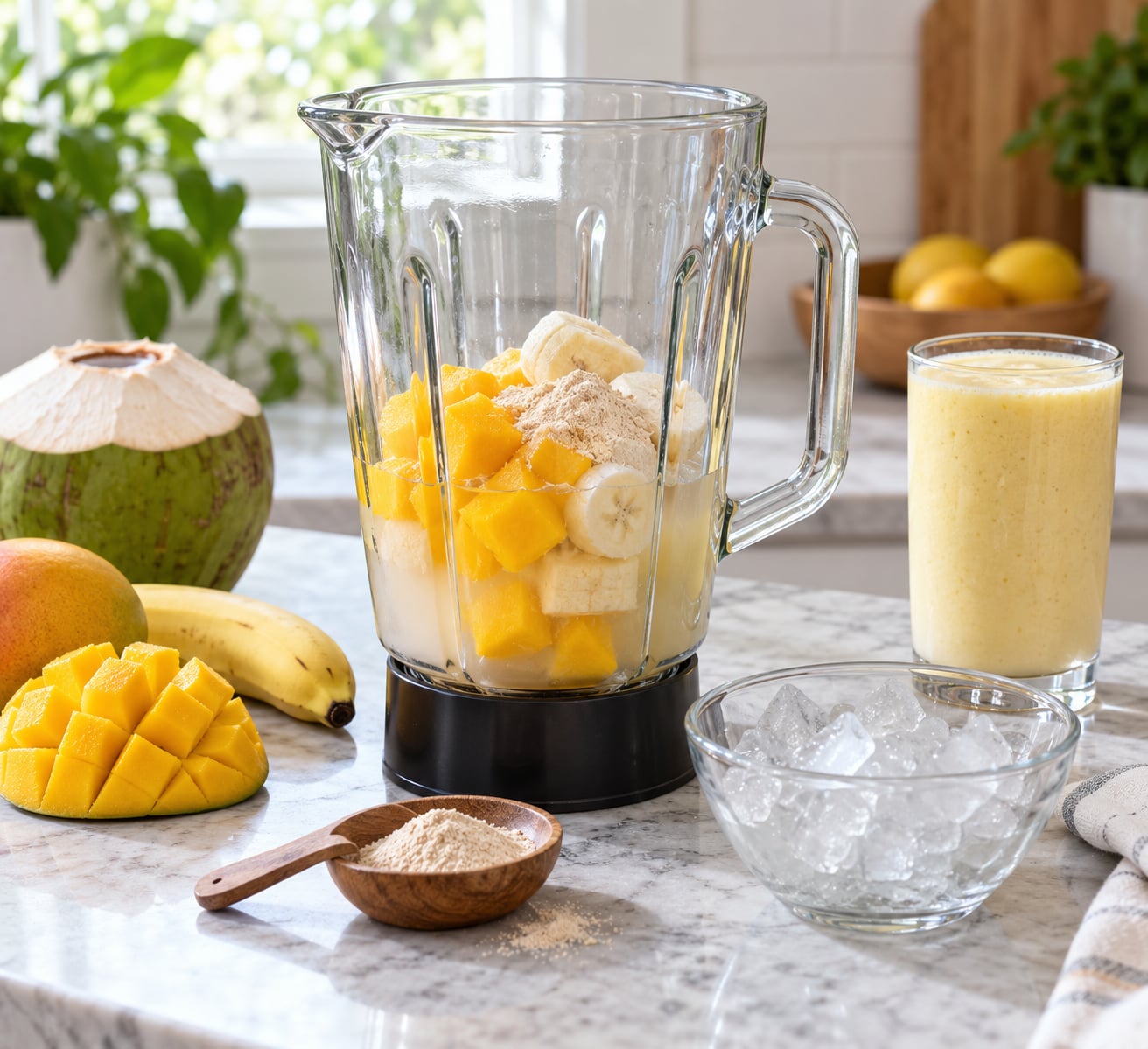
I make this most mornings, and the version I keep coming back to is frozen mango, half a banana, coconut water and a single tablespoon of the powder. Ten seconds of whisking in the jar first, and the drink comes out bright instead of sharp.
Table of Contents
- 1What You Need
- 2How to Use Baobab Powder in Smoothies: Step-by-Step
- 3Choose a Liquid Base: Start With Something Mild
- 4Add Fruit for Balance
- 5Blend It Smoothly: How to Use Baobab Powder in Smoothies Without Clumps
- 6Taste and Adjust
- 7Serve or Store
- 8Common Mistakes
- 9Frequently Asked Questions
- 10What does baobab powder taste like in a smoothie?
- 11How much baobab powder should I add to a smoothie?
- 12What flavors go well with baobab powder?
- 13How can I make a baobab smoothie less tart?
- 14Is baobab fruit powder the same as baobab seed powder?
- 15Conclusion
What You Need
Almost nothing. This is a five-minute job with a five-minute cleanup, and every item below is probably already in your kitchen.
- A blender. A countertop blender gives the smoothest result. An immersion blender in a wide-mouth jar works fine for a single drink, just blend longer and press the powder down off the sides with a spatula.
- Measuring spoons. A level teaspoon and tablespoon matter here. Baobab powder is strong enough that a heaped spoonful can overshoot the flavor you were aiming for.
- A cup or mug. Something to drink it out of, ideally a tall glass if you like a thick drink.
- Liquid. Water, coconut water, almond milk, oat milk or dairy milk. About 1 to 1.5 cups for a standard single serving.
- Fruit. Ripe banana, mango, pineapple, pear or berries. Roughly half a cup to a cup, frozen or fresh.
- Baobab fruit powder. One to two tablespoons for a first attempt.
One label detail worth getting right. Baobab fruit powder is made from the dried pulp of the fruit. Seed-derived baobab products also exist and are sold mainly for hair, skin and garden use, so they are not the same thing and they do not taste like this. Check that the ingredient list says baobab fruit pulp or baobab fruit powder, and nothing else.
How to Use Baobab Powder in Smoothies: Step-by-Step
Work through these in order. The order is the whole trick: liquid, then powder, then fruit, then speed.
Choose a Liquid Base: Start With Something Mild
Pour 1 to 1.5 cups of cold liquid into the blender jar first. For a first attempt, pick something mild and unsweetened. Coconut water is my pick because its mild sweetness softens the tartness without hiding it, and plain water works too if the fruit is ripe and sweet.
Watch what you choose here. A base that is already sharp or strongly flavored makes baobab’s acidity harder to notice and harder to balance, so lemon juice, vinegar-based dressings, tart kombucha and strongly roasted nut milks are poor partners for a first try. Very thin liquid also gives the powder less to cling to, so if you go with straight water or juice, blend longer than feels necessary.
Add Fruit for Balance
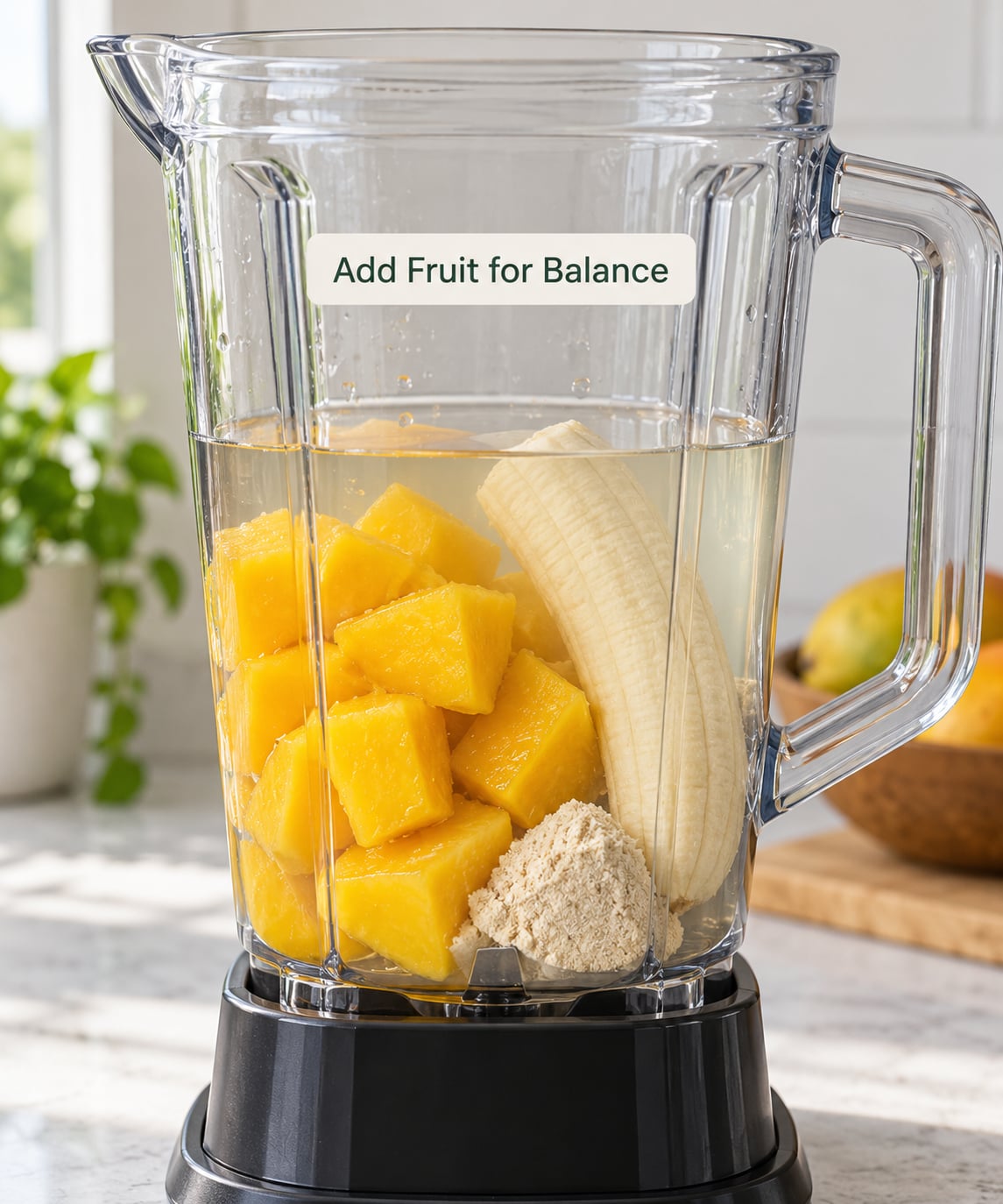
Now add the fruit on top of the liquid, which keeps it from dropping straight onto the powder and forming a dry pocket. Ripe banana, mango, pineapple, berries and pear all round out the tartness nicely, because their sugars are mild enough to sit beside the acidity instead of fighting it.
A combination that works on the first try: 3/4 cup frozen mango, half a ripe banana, 1 cup coconut water, and 1 tablespoon of baobab powder. Blend it and you get something closer to a tropical fruit drink than a fruit-flavored powder drink, which is the usual complaint people have about baobab on the first sip.
Blend It Smoothly: How to Use Baobab Powder in Smoothies Without Clumps
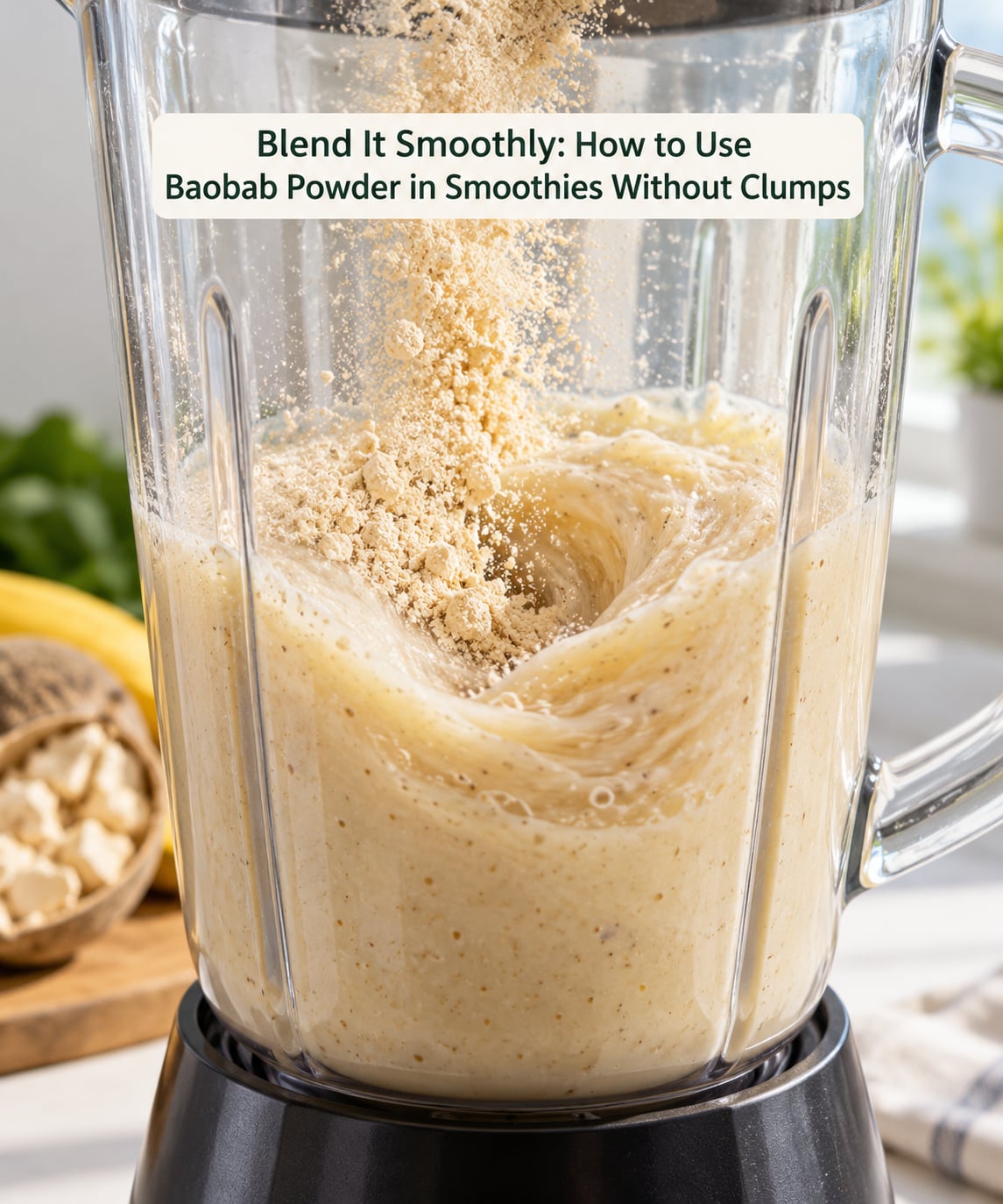
Before anything else, take a fork or small whisk and beat the powder into the liquid in the jar. Thirty seconds of stirring turns a dusty layer into a cloudy suspension, and that suspension disperses far better in a blender than loose powder does.
Then start the blender on its lowest setting. Give it about fifteen seconds so the powder fully suspends in the liquid, and only then increase to high. Add the fruit once the powder has stopped looking dry. If you dump everything in at once on high speed, the powder and the fruit will tumble together in pockets and the last thing you get is a gritty film at the top of the glass.
Total blending time is usually 30 to 60 seconds. You will know it is done when there is no visible powder at the top and no grit on the lid when you pour it. Thick, fibrous fruit needs longer than berries, and greens need the most blending of all, because the powder has to be mixed into a thicker, colder mass.
Taste and Adjust
Taste it before you serve it, and start with less powder than you think you need. One teaspoon is a sensible first taste in a 12-ounce drink, one tablespoon is right for a standard 16-ounce smoothie, and two tablespoons is for a large drink where you want the tartness to be a real flavor rather than a background note.
If it is too sharp, add more fruit, a splash of milder liquid, or a few ice cubes. If it needs sweetening, add a small amount of a sweetener you already use, such as a date, a teaspoon of honey or maple syrup, and blend again. Baobab has no sugar of its own, so it does not need much help, but it also does not hide a drink that is under-ripe. Very tart, under-sweet fruit is the other common reason a baobab smoothie tastes harsh, and the fix is there in the fruit bowl, not in the powder.
Serve or Store
Drink it right away if you can. Baobab settles slightly as the blend sits, so a second pour from the bottom will be more tart than the first, and it is easier to adjust a fresh glass than to fix one that has already separated.
For leftovers, transfer the smoothie to a covered container and refrigerate it promptly, then eat it within about a day. Give it a good shake or a quick re-blend first, because the powder will have settled into the bottom. For the dry powder itself, keep the container sealed and store it somewhere dry and cool, and follow whatever the label on your bag says, since shelf lives differ between brands.
Common Mistakes
Nearly every disappointing baobab smoothie comes down to one of these, and each has a straightforward fix.
- Using too much powder. Two heaped tablespoons in a small drink is a lot of flavor and a lot of fiber at once. Fix: measure level tablespoons, start at one, and add the second only after tasting.
- Buying the wrong baobab product. Seed-derived powders do not behave like fruit pulp in a drink. Fix: read the ingredient list and confirm it says baobab fruit pulp or baobab fruit powder.
- Adding the powder to too little liquid. With a small amount of liquid, the powder forms a paste that stays pasty even after blending. Fix: use at least 1 cup, and beat the powder into the liquid before the fruit goes in.
- Choosing a tart or heavily flavored base. Lemon juice, tart kombucha and strong nut milks stack their acidity on top of baobab’s. Fix: use coconut water, almond milk or water for your first attempt.
- Blending the powder in dry at high speed. This is the direct cause of gritty, chalky texture. Fix: whisk into the liquid first, blend low, then speed up.
- Expecting it to fix a bad recipe. Baobab adds acidity and fiber, so it cannot rescue an under-ripe or badly balanced blend. Fix: get the fruit right first, then decide how much powder to add.
One last tip for your first attempt: choose ingredients that are mild on their own. Ripe banana, mango and coconut water have no sharp edges, so you can taste the baobab clearly and decide whether you like it before you start adjusting anything.
Frequently Asked Questions
What does baobab powder taste like in a smoothie?
Baobab fruit powder tastes tart and lightly citrusy, closer to dried cranberry or a sour lemon than to a tropical fruit. In a smoothie that acidity usually gets softened by whatever sweet fruit you blend with, so a good mango or banana combination reads as bright rather than sour. If a baobab smoothie tastes harsh to you, the more common cause is under-ripe fruit or too much powder, not the powder itself.
How much baobab powder should I add to a smoothie?
Start with 1 teaspoon, roughly 2 grams, in a 12-ounce drink if you have never had it. One tablespoon, about 6 grams, is the right amount for a standard 16-ounce smoothie. Two tablespoons suits a large drink or a higher-fibre blend. Measure level rather than heaped, and taste before adding more, because baobab carries a lot of tartness per spoonful.
What flavors go well with baobab powder?
Sweet, mild fruit pairs best: ripe banana, mango, pineapple, pear, strawberries, blueberries and raspberries all round out the tartness. Coconut water, almond milk and oat milk give you a mild base that lets the flavor come through without adding sharpness. Ginger, a pinch of cinnamon and vanilla work as supporting notes. Very tart fruit and citrus-heavy bases tend to make the whole drink sour.
How can I make a baobab smoothie less tart?
Add more sweet fruit, dilute with a splash of water or milk, or blend in ice, then taste again. A date or a small amount of honey or maple syrup also rounds it out, though baobab usually needs only a little. If it still tastes sharp, cut the powder back rather than adding more sugar, since more sweetener is usually what turns a good smoothie into a sweet one.
Is baobab fruit powder the same as baobab seed powder?
No. Baobab fruit powder is made from the dried pulp of the baobab fruit, which is tart, citrusy and rich in fiber. Seed-derived baobab products are a different material and are commonly sold for hair, skin and garden use rather than for drinking. Check the ingredient list for baobab fruit pulp or baobab fruit powder, and if the label is vague or lists added fillers, pick another bag.
Conclusion
Start with one teaspoon of clearly labeled baobab fruit powder in a cup of mild liquid, add sweet ripe fruit, whisk the powder into the liquid before you blend, and taste before you adjust anything. Once that base recipe works, the rest is just swapping fruit.