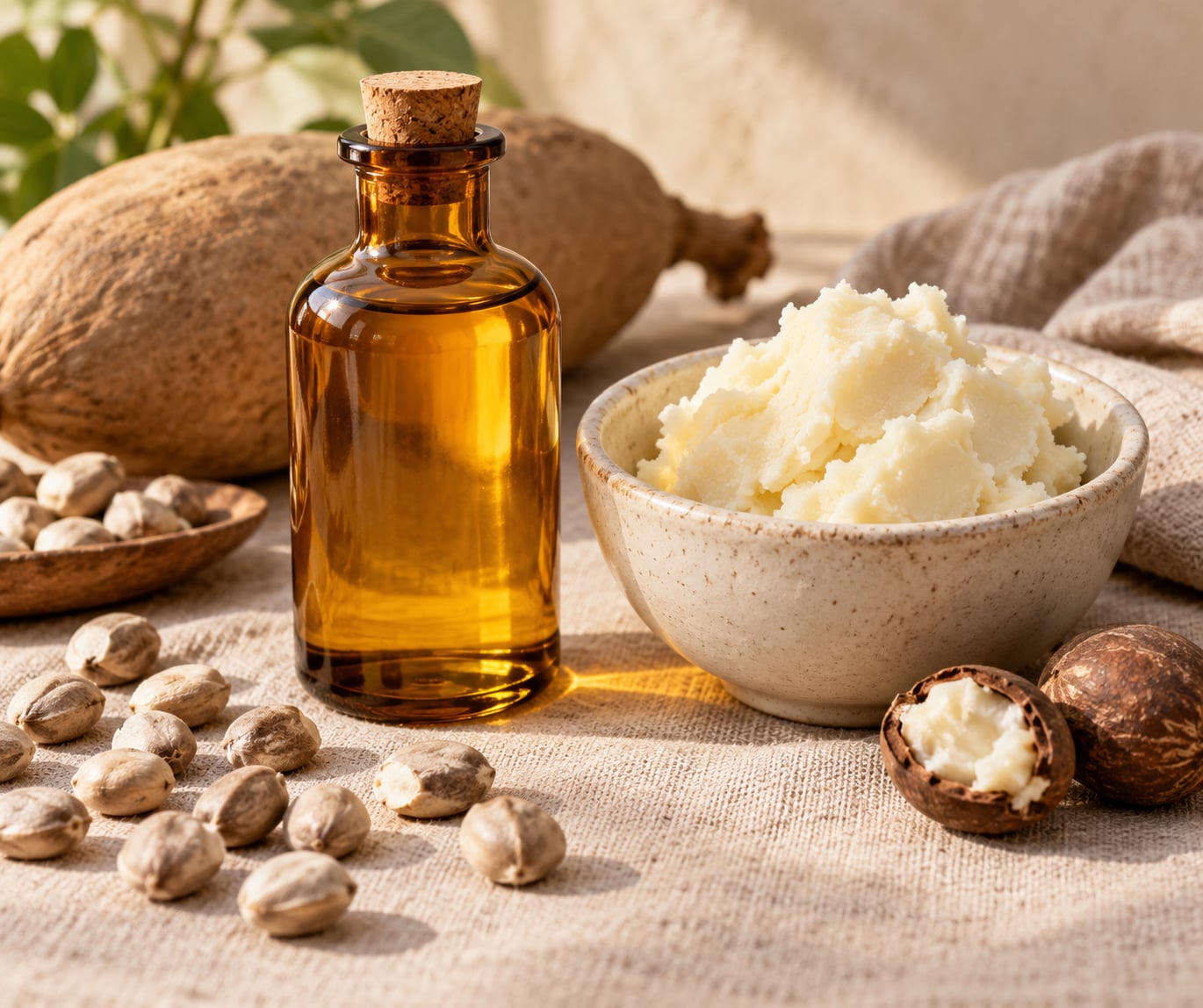
Baobab oil vs shea butter for skin comes down to one real difference: texture and how deeply each one sits. Baobab oil is a thin, fast-absorbing seed oil that suits combination and oily skin and daytime wear. Shea butter is a thick, occlusive butter that suits dry, mature or weather-stressed skin and nighttime wear. Neither is better in general, and the formula you buy often matters more than the ingredient on the label.
Both are African botanicals with long cosmetic histories, and both appear on this site’s ingredient pages. The honest answer takes a few hundred words, because the differences are physical and chemical rather than magical.
Table of Contents
- 1Baobab Oil vs Shea Butter for Skin at a Glance
- 2What Are Baobab Oil and Shea Butter?
- 3Why one is called an oil and the other a butter
- 4How refining changes the final product
- 5How Do They Feel on the Skin?
- 6Which One Is Better for Moisturizing?
- 7Baobab Oil vs Shea Butter for Skin: Ingredients and Composition
- 8Which Is Better for Dry, Oily, or Sensitive Skin?
- 9How to Use Baobab Oil or Shea Butter Safely
- 10How to Choose a Product Label
- 11Which Should You Choose?
- 12Frequently Asked Questions
- 13Is baobab oil better than shea butter?
- 14Is baobab oil or shea butter better for dry skin?
- 15Is baobab oil good for the face?
- 16Does shea butter or baobab oil have a stronger scent?
- 17Can I use baobab oil and shea butter together?
- 18How should I patch-test a skincare oil or butter?
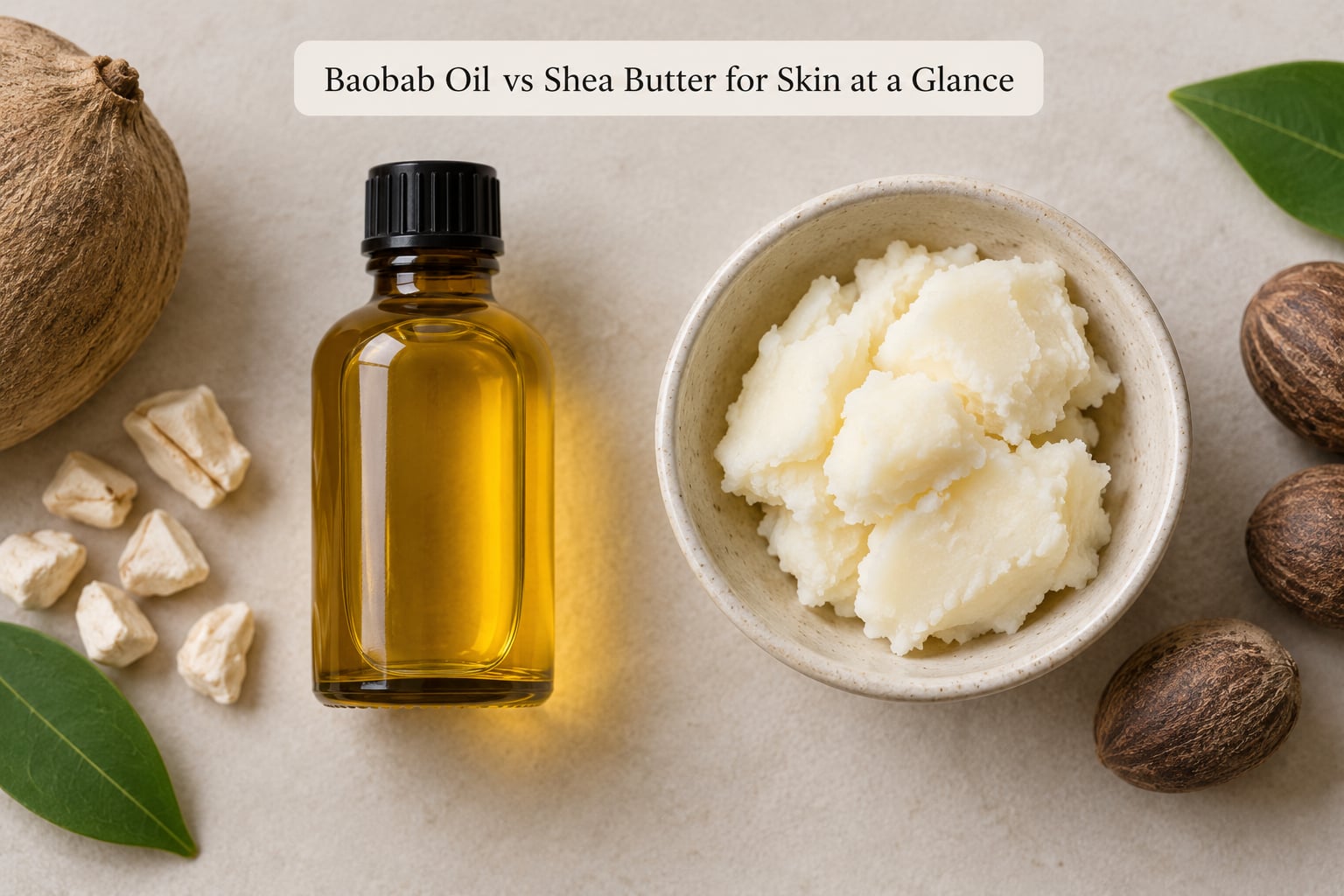
Baobab Oil vs Shea Butter for Skin at a Glance
| Property | Baobab oil | Shea butter |
|---|---|---|
| Plant source | Seeds of the baobab tree | Nuts of the shea tree |
| Botanical name | Adansonia digitata | Vitellaria paradoxa, also called Karité |
| INCI name | Adansonia Digitata Seed Oil | Butyrospermum Parkii Butter |
| Physical form | Lightweight liquid oil | Solid or semi-solid butter |
| Absorption | Sinks in within seconds | Melts on contact, then absorbs slowly |
| Skin role | Emollient that softens and smooths | Occlusive that seals moisture in |
| Dominant fatty acids | Oleic, linoleic, palmitoleic | Stearic, oleic, palmitic |
| Oils and butters naturally present | Omega-3, omega-6, omega-9 | Omega-9 with a stiffer omega-6 share |
| Scent | Mild, nutty, sometimes faintly smoky | Distinctly nutty, sometimes roasted after refining |
| Common cosmetic roles | Facial serum, massage oil, scalp oil | Body butter, lip balm, cream base |
| Shelf stability | Moderate; oxidises faster than shea | High; stearic acid content resists rancidity |
| Skin types it suits | Oily, combination, humid climates, daytime use | Dry, mature, eczema-prone, cold weather, nighttime use |
| Potential irritants | Rare; fragrance is the usual culprit | Rare, but tree-nut reactions are reported |
What Are Baobab Oil and Shea Butter?
Baobab oil is pressed from the kernels of the baobab tree, Adansonia digitata, and appears on cosmetic labels as Adansonia Digitata Seed Oil. The fruit holds dry, powdery pulp around hard seeds, and the oil comes from those seeds rather than the pulp.
Shea butter is pressed from the kernels of the shea tree, Vitellaria paradoxa, listed on labels as Butyrospermum Parkii Butter. The name in the INCI dictionary still reflects an older classification of the same species, which is why you will see both Karité and the Latin name in different places.
Why one is called an oil and the other a butter
The naming follows physical form rather than plant family. An oil stays fluid at room temperature because its triglycerides are long and loose. A butter is solid because the fatty acids pack together in a way that holds a shape, mostly from a high stearic acid share.
That single structural difference explains almost every practical difference you will notice on your skin.
How refining changes the final product
Cold-pressed baobab oil keeps its natural colour and nutty aroma, and a refined version is bleached and deodorised. Refined shea butter loses much of its aroma and colour, and it can be fractionated so that the stearic and oleic parts are separated and recombined for a softer, less grainy texture.
Dilution is the other common change. A product sold as shea body butter may start with shea butter and then be bulked out with coconut oil, sunflower oil or a silicone, and a baobab product may be cut with a lighter, cheaper carrier oil. Added fragrance also masks the natural scent and is the most frequent source of irritation in an otherwise simple ingredient.
How Do They Feel on the Skin?
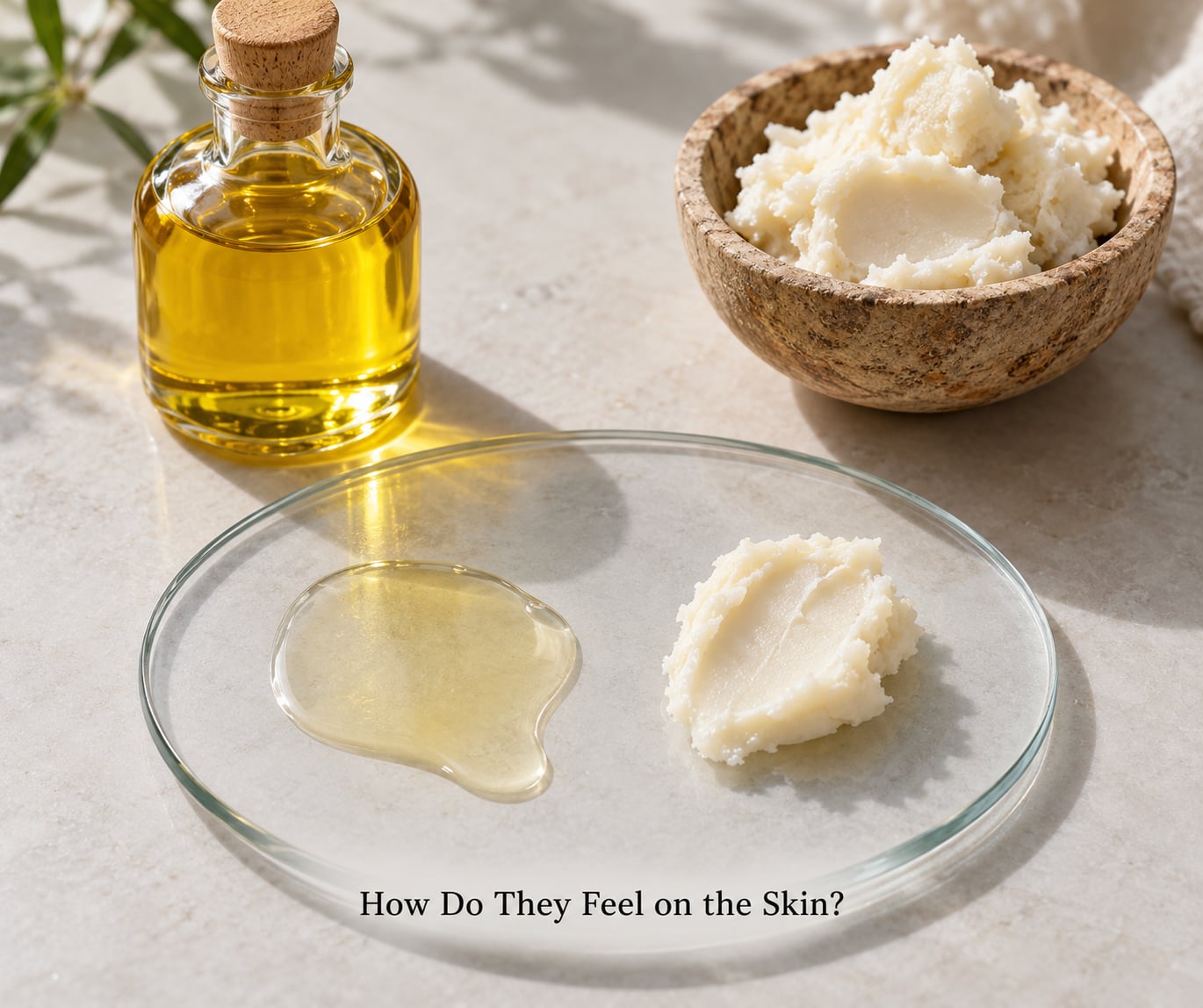
Baobab oil feels almost watery at first touch. It spreads across the face in a few seconds, leaves a satin finish and does not sit on top of the skin. People often over-apply it, assuming a light feel means a light effect, and end up with shine rather than comfort.
Shea butter behaves the opposite way. It warms against body heat, softens under the fingers and holds a shape in the jar until you press it against skin. On dry areas it stays noticeable for a few minutes, which is the point: it forms a breathable film that slows water escaping from the stratum corneum.
That film is what people mean when they call shea butter occlusive, and baobab oil emollient. An emollient fills the gaps between dead surface cells and makes skin feel flexible. An occlusive sits on the surface and reduces water loss. Cold, windy weather rewards occlusives, while humid weather and active skin usually prefer emollients.
Which One Is Better for Moisturizing?
Both moisturize, in different ways and on different timescales. Baobab oil works inside the surface, softening rough texture and supporting the look of smoother, more elastic skin. Shea butter works at the surface, keeping water in and protecting dry, cracked areas from drying out further.
So the answer is not one winner. In dry indoor air, shea butter usually keeps skin comfortable longer. In humid air or on skin that produces plenty of oil, baobab oil does the same job without leaving a residue. On a face that flakes in winter and feels tight by lunchtime, either can work, and the deciding factor is often the rest of the formula.
Baobab Oil vs Shea Butter for Skin: Ingredients and Composition
Baobab oil is unusually balanced for a cosmetic oil. It carries a high share of oleic acid, a meaningful linoleic acid share and one of the more widely discussed omega-3 profiles among tree oils, through alpha-linolenic acid. Its unsaponifiable fraction carries phytosterols and tocopherols, which is where much of its antioxidant character comes from.
Shea butter is dominated by stearic acid, usually the largest single fatty acid in the butter, alongside oleic acid, palmitic acid and a smaller linoleic share. Its unsaponifiable fraction is unusually large for a butter and is frequently cited in the cosmetic literature as the basis for its skin-conditioning reputation.
Here is where labels complicate things. If the jar says shea butter and the ingredient list says Butyrospermum Parkii Butter, Cocos Nucifera Oil, Adansonia Digitata Seed Oil, you are looking at a blend that already combines the two, plus coconut. Raw single-ingredient baobab oil and raw single-ingredient shea butter behave differently from a formulated body butter built on a shea base.
Which Is Better for Dry, Oily, or Sensitive Skin?
For dry skin, shea butter is the more dependable of the two. Its occlusive action suits hands, heels, elbows and any area that cracks in cold weather, and it works well as the final step at night over a lighter layer.
For oily or combination skin, baobab oil is usually the better fit. It absorbs quickly, does not add the heavy film that people associate with butters, and suits daytime use under or mixed into a lighter cream. That said, neither ingredient carries an official comedogenic rating, and individual skin responds differently, so treat the oily-skin recommendation as a starting point rather than a rule.
For sensitive skin, read the full ingredient list rather than the product name. Skin that reacts to many products usually reacts to fragrance, essential oils or botanical extracts rather than to a well-refined seed oil. An unscented, single-ingredient product gives you the cleanest test.
If you have ongoing symptoms such as persistent itching, weeping, flaking or a rash that does not settle, stop experimenting with cosmetics and speak to a healthcare professional. Cosmetic ingredients cannot treat skin disease, and a pharmacist or doctor can tell you whether what you are seeing needs medical attention.
How to Use Baobab Oil or Shea Butter Safely
Introduce one product at a time, not both in the same week. When you add two new items together, a reaction tells you very little about which one caused it.
Patch test first. Dab a small amount on the inside of your forearm or behind your ear, leave it undisturbed for 24 to 48 hours and look for redness, itching, swelling or a burning sensation. The inner elbow is a good spot because skin there is thin and sensitive.
Use clean hands or a clean applicator every time. Fingers carry oil, dust and bacteria, and a scooped jar introduces contamination that no label can account for.
Keep both off broken, shaved, recently waxed or actively irritated skin. Applying an occlusive butter over a micro-wound traps moisture and warmth, which feels soothing at first and can slow healing.
Stop using the product if irritation develops, and wash it off with a mild cleanser rather than leaving it to sit. If you have a history of tree-nut allergy, shea butter deserves a conversation with an allergist or dermatologist before you use it on your face, and baobab is a separate question that the same professional can answer for you.
How to Choose a Product Label
Turn the bottle over and read the ingredients before anything else. A genuine single-ingredient baobab oil lists one thing: Adansonia Digitata Seed Oil. A single-ingredient shea butter lists Butyrospermum Parkii Butter and nothing more.
Look for the form words. Cold-pressed and unrefined point to minimal processing and a stronger natural scent. Refined and fractionated point to a paler, softer product with less of the plant’s own character.
Check where fragrance sits in the list. Fragrance or parfum near the top of a short ingredient list matters more to sensitive skin than any botanical claim on the front of the bottle. Added essential oils are a separate consideration, since they are active compounds rather than background scent.
Watch for carrier oils padding the product out. Coconut, sunflower, soybean and mineral oil appear frequently in blends sold as shea butters, and they change the texture and the behaviour on skin entirely.
Look at the packaging. Dark glass or opaque containers slow light-driven oxidation, and a batch number or best-use date tells you how the maker handles freshness. Note the two different storage needs: shea butter tolerates a warm shelf comfortably, while baobab oil is more fragile and benefits from a cool, dark cupboard away from heat and sunlight.
Natural does not mean allergen-free or non-comedogenic. Those are separate questions and a label rarely answers them for you.
Which Should You Choose?
Choose baobab oil if you want a light, oil-like finish that absorbs in seconds, if you live in a humid climate, or if you are layering it under sunscreen in the morning and want nothing heavy underneath.
Choose shea butter if your skin runs dry and tight in cold or dry air, if you are applying it to hands, feet, elbows or knees, or if you want a rich nighttime layer that stays noticeable after you rub it in.
Choose a fragrance-free, single-ingredient version of either one if your skin reacts easily or you are still testing whether either botanical suits you.
Choose a professionally formulated product rather than a single raw ingredient if you have a named skin concern, are pregnant, or are managing a condition a dermatologist has told you about. That advice outranks anything in this article.
Frequently Asked Questions
Is baobab oil better than shea butter?
Neither is better in general. Baobab oil suits oily, combination and humid-skin situations because it absorbs fast and leaves little residue. Shea butter suits dry, mature or weather-stressed skin because it forms an occlusive layer that holds water in. Pick based on how your skin feels after use rather than on any general ranking.
Is baobab oil or shea butter better for dry skin?
Shea butter is usually the better choice for dry skin, especially cracked hands, heels and elbows in cold weather. It melts on contact and forms a layer that slows water escaping from the outer skin. Baobab oil still helps soften rough texture, and many people use it first and seal it with shea butter on top.
Is baobab oil good for the face?
Baobab oil is widely used as a facial oil because it spreads quickly and leaves a soft finish. Apply only a few drops to slightly damp skin, and give it a moment before sunscreen or makeup. Patch test on a small area first, and choose an unscented single-ingredient version if your skin reacts easily.
Does shea butter or baobab oil have a stronger scent?
Unrefined shea butter has the stronger and more distinctive smell, a nutty, sometimes roasted aroma that fades once it is warmed into the skin. Cold-pressed baobab oil is milder, with a light nutty note and sometimes a faint smoky edge. Refined versions of both are close to odourless, so scent is also a rough guide to how processed a product is.
Can I use baobab oil and shea butter together?
Yes. The common approach is a thin layer of baobab oil first to soften the surface, then shea butter over the top to hold moisture in, which works well at night on dry patches. Many homemade body butters set baobab at roughly 20 to 30 percent of the total weight in a shea base, which keeps the texture spreadable instead of waxy.
How should I patch-test a skincare oil or butter?
Put a small amount on the inside of your forearm or behind your ear, then leave it alone for 24 to 48 hours without washing or covering it. Watch for redness, itching, swelling or a burning feeling. If nothing appears, add it to one small area of the face first and keep other new products out of your routine that week.
Start with the label, not the marketing. Read the ingredients, pick the single-ingredient version in the texture you actually like, and patch test it for two days before you judge it. If your skin runs dry and cracks in cold weather, start with shea butter. If you want something lighter for daytime and humid weather, start with baobab oil.