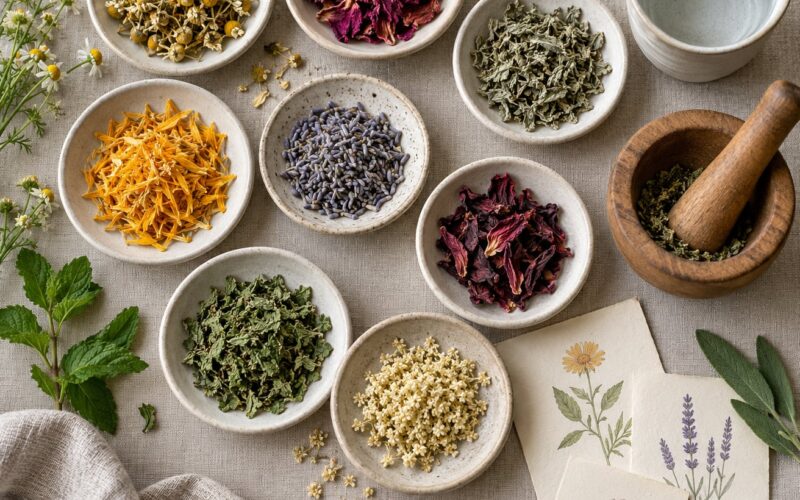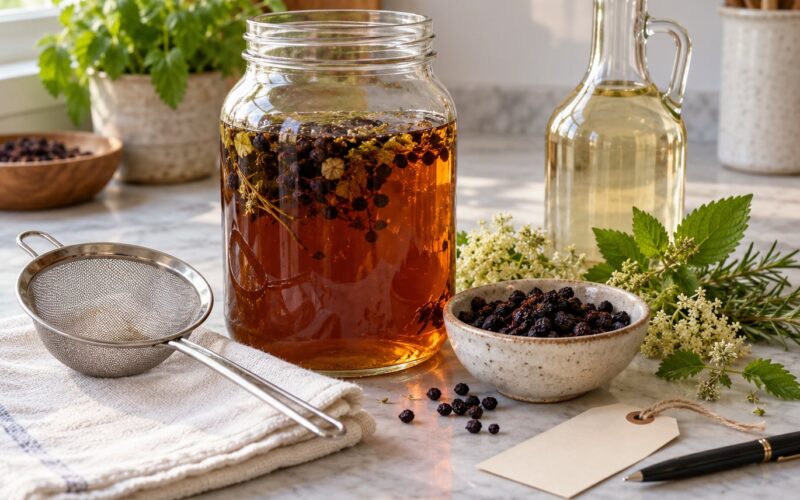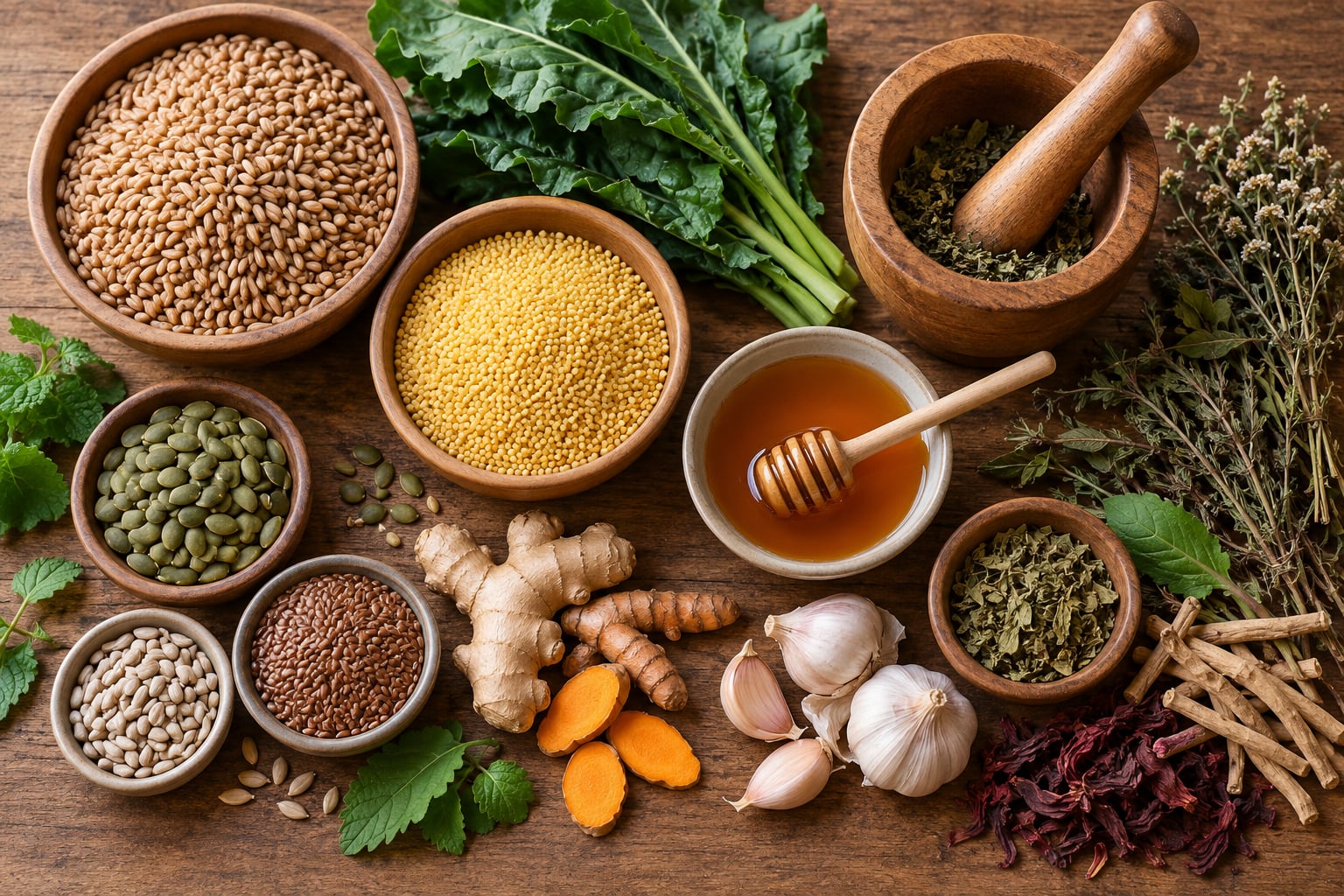
Why food and medicine overlap in traditional systems is a question about history and practicality, not about a strange coincidence. Long before anyone could buy a prepared remedy, the most available and reliable treatment for everyday illness was whatever grew nearby. Communities learned to read plants for nourishment and for healing at the same time, so the same species could be a staple, a decoction, or a dressing depending on how it was prepared and who was using it.
That shared origin is why so many traditional remedies turn out to be ordinary foods, and why the same dinner pot can also be a dispensary. It is also why the question matters for anyone combining a traditional remedy with prescription medicine today.
Table of Contents
- 1How do traditional healers define the overlap between food and medicine?
- 2Why food and medicine overlap in traditional systems
- 3How are food, medicine, poison, and ritual related?
- 4What biological roles can shared plants play?
- 5What do African traditions show about this overlap?
- 6Does traditional use prove that a food is a safe medicine?
- 7How can researchers study the overlap without oversimplifying it?
- 8Frequently Asked Questions
- 9What is the difference between food and traditional medicine?
- 10Does overlap between food and medicine mean every traditional food has medicinal benefits?
- 11How can traditional food-and-medicine knowledge guide modern research?
- 12Why is correct plant identification important in traditional healing research?
- 13When should someone consult a doctor or pharmacist instead of relying on traditional remedies?
- 14Conclusion
How do traditional healers define the overlap between food and medicine?

Most traditional healers would not describe the relationship as two categories meeting. They describe it as one set of materials whose use depends on context: what part of the plant is taken, how it is prepared, how much is used, who takes it, and what the person is being treated for. A bitter leaf boiled in water and drunk in quantity is a remedy; the same leaf in a soup with other ingredients is dinner.
It helps to keep three kinds of use apart before going further.
| Use category | How it is treated | Typical example in African practice |
|---|---|---|
| Food | Eaten regularly as nourishment; dose is a portion | Millet and sorghum porridges, indigenous leafy vegetables |
| Medicine | Prepared in a specific way and given in a measured amount for an ailment | Buchu (Agathosma betulina) leaf infusion |
| Both | Eaten as food in one context, prepared as a remedy in another | Rooibos (Aspalathus linearis) as a daily drink and as a remedy for colic in infants |
These traditional categories do not map neatly onto modern biomedical ones. A plant that a healer calls a medicine for one complaint may be a food in a laboratory analysis, and the reverse is also common.
Why food and medicine overlap in traditional systems
Eight reasons show up repeatedly across ethnobotanical records, whatever the culture or continent.
- Availability. When there is no pharmacy within reach, the nearest effective material is usually already in the cooking pot or growing nearby.
- Prevention first. Many systems treat food as the everyday defence against illness, with medicine reserved for what diet has not handled.
- Dose hidden in food. Eating a plant repeatedly in ordinary amounts delivers a small, steady exposure, which is how many traditional practices work.
- Same plant, different parts. A root may be a poison and a leaf a vegetable in the same species, which blurs any clean food and medicine split.
- Sensory cues for danger. Taste, smell and texture carry information about toxicity. Bitter and astringent notes often signal compounds that act on the body.
- Season and supply. What is available in the dry season is not what is available in the rains, and traditions encode use by season.
- Household transmission. Much of this knowledge is held in kitchens and transmitted by women and older relatives, not in written texts.
- Whole-person treatment. Diet, rest, social contact and ceremony are treated as part of the same intervention, so food sits inside the treatment rather than beside it.
How are food, medicine, poison, and ritual related?
The boundary between food, medicine and poison in traditional systems is contextual rather than absolute. The same substance can be a staple at one dose, a treatment at another, and dangerous at a third, and traditional classifications rarely rest on a single property of the plant.
What shifts the classification, in most documented systems, is dose, preparation, frequency, the age and health of the person taking it, and the setting in which it is given. A decoction, an infusion, a powder and a chew extract are four different products from one leaf.
Ritual adds another axis. When preparation includes washing, burning or an offering, the material is being used to connect the sick person to a community and a set of beliefs, not only to alter physiology. Treating that as chemistry alone misses part of what is happening.
It is worth being clear about the limit here: a traditional classification is not a safety certificate. Knowing that a plant counts as a food tells you nothing about a concentrated dose, an interaction with a prescription drug, or the safety of an incorrectly identified specimen.
What biological roles can shared plants play?

Several mechanisms are well established in nutrition science, and several are still preliminary. Keeping the two apart is the honest way to talk about this.
- Nutrients and fibre. Whole grains, seeds and leafy greens supply protein, micronutrients and fibre. Their role in preventing deficiency disease is not in dispute.
- Bioactive compounds. Many plants contain phenolics, alkaloids, glycosides and terpenes that have measurable effects in laboratory and animal work. That is a reason to investigate, not proof of benefit in people.
- Fermentation. Fermented foods and beverages supply microorganisms that act on the gut, and some preparation methods change a plant’s chemistry in ways that matter for its effects.
- Sensory effects. Bitterness, astringency, heat and aroma influence saliva, digestion and appetite, which is why a bitter preparation may be given deliberately and why taste guides selection in the field.
- Traditional use as a signal. Long repeated use across many communities is weak but real evidence that a substance does something. It does not establish dose, safety or clinical effectiveness.
Evidence tiers differ sharply between these. Nutritional adequacy and deficiency prevention are settled science. Specific therapeutic claims for a named species usually rest on laboratory, animal, or traditional-use evidence unless a clinical trial exists, and many claims do not have one.
What do African traditions show about this overlap?
Africa holds many distinct healing traditions, not one system, and any generalisation flattens differences that matter. Even so, several well documented cases show foods appearing in healing knowledge, each with its own community context and its own limits.
Grains and millets. Millet and sorghum appear across the continent as staples and also in preparations given for particular conditions, from porridges for children’s fevers to malted drinks. The nutrition of the grain is documented; the specific therapeutic claim usually is not.
Indigenous leafy vegetables. Perennial leafy vegetables are eaten as daily vegetables and also feature in remedies in several southern African traditions. Here the overlap is closest to complete, since the dish and the preparation come from the same plant.
Honey. Honey appears as a food and as a topical dressing in many communities, valued for keeping wounds covered. Antimicrobial activity in laboratory conditions is documented, and clinical use still depends on wound type and care.
Rooibos (Aspalathus linearis). A shrub of the South African fynbos, drunk daily as a beverage and also given in measured form as a remedy for colic in infants. It is caffeine-free and is one of the clearer cases of a single plant doing both jobs.
Cancer bush (Sutherlandia frutescens). Taken as a tea and widely used in southern Africa. Laboratory and clinical interest is real, and so is a documented interaction concern: it has been reported to affect atazanavir, an antiretroviral, so anyone on that medication needs a doctor’s advice before using it.
Buchu (Agathosma betulina), Cape aloe (Aloe ferox) and devil’s claw (Harpagophytum procumbens). All three are South African plants with real commercial and cultural use. Buchu is barely eaten, which shows the reverse direction: a medicine that stays a medicine.
Manketti root, mufushwa and wild lettuce. These appear across southern African ethnobotanical records as remedies prepared by grinding or steeping roots and leaves, and they show how much of the food-medicine overlap is really a preparation practice rather than a property of the plant.
Does traditional use prove that a food is a safe medicine?
It does not. Long-standing use is a useful pointer for researchers and a reasonable reason to take a tradition seriously, but it cannot establish safety, dosage or effectiveness for every person.
There are specific situations where the gap between traditional use and individual safety matters most. Traditional records rarely include the situations modern users are actually in.
- Pregnancy and breastfeeding. Some traditionally used plants are used in pregnancy for one purpose and avoided in others. Ask a clinician rather than inferring from tradition.
- Children. Doses used by adults do not scale simply by weight for concentrated preparations.
- Allergy and asthma. Plants in the daisy family, among others, cause real reactions in some people.
- Liver or kidney disease. Concentrated preparations put more processing load on organs that are already impaired.
- Prescription medication. Interactions with antiretroviral drugs, anticoagulants, antidepressants and hormonal contraceptives are documented for several widely used plants.
- Misidentified species. Local names can cover several different plants, and a market product may not be the plant the tradition names.
For a child, a pregnancy, an existing condition or any prescription medicine, talk to a doctor, pharmacist or qualified health professional before trying a traditional remedy. Seek urgent care for severe symptoms rather than treating them at home.
How can researchers study the overlap without oversimplifying it?
Credible work here needs several methods used together rather than one substituted for another. Ethnobotanical documentation records who uses a plant and for what, in the local language and the local categories, before any comparison with modern taxonomy is attempted.
Precise species identification comes next, because a name shared across villages may refer to different plants, and similar-looking species can have very different chemistry. Preparation records matter just as much: a note that a plant is used says little about whether it was chewed, steeped, boiled for an hour or given as a powder.
On top of that sit nutritional analysis for the food role, phytochemistry and pharmacology for the bioactive role, and clinical trials for any therapeutic claim. A phylogenetic approach adds something useful: Kewin’s 2026 study found overlap between lineages used as food and as medicine, and between condiments and medicine, both across and within regions, which supports the idea of a shared plant base rather than a coincidental one.
Two research areas are easy to overlook. Reyes-Garcia’s 2013 work on secular trends found medicinal and wild edible knowledge to be the most vulnerable domains of traditional ecological knowledge to erosion, which matters because that knowledge is a data source as well as a living practice. Vandebroek’s 2008 comparison of traditional and biomedical care found substantial overlap in the conditions each treats, particularly respiratory infections, which is the strongest argument for treating the two as working on the same problems.
Research also has obligations. The Nagoya Protocol and World Intellectual Property Organization debates on traditional knowledge exist because benefits derived from community knowledge have often been taken without consent or payment, and older published surveys frequently recorded local names without recording who held the knowledge.
Frequently Asked Questions
What is the difference between food and traditional medicine?
The practical difference is purpose, dose and preparation. Food is eaten in ordinary portions for nourishment, often every day. A traditional medicine is prepared in a specific way and given in a measured amount for a particular ailment or ceremony. Many communities draw the line with context rather than with the plant itself, so one species can legitimately be both.
Does overlap between food and medicine mean every traditional food has medicinal benefits?
No. Overlap means some plants serve both roles, not that every food is medicinal in a clinically meaningful sense. Millets, leafy greens and honey have well documented nutritional roles, and some also appear in remedy traditions. Calling every food medicinal flattens real nutritional science into a claim it cannot support.
How can traditional food-and-medicine knowledge guide modern research?
Repeated use across many communities is a practical way to spot substances worth investigating. Ethnobotanical surveys then supply preparation details, dosages and the conditions treated, which phytochemistry and pharmacology can test, and clinical trials can confirm or reject. Work such as the 2026 phylogenetic study used these shared lineages as its starting point.
Why is correct plant identification important in traditional healing research?
Local names can cover several different species, and related species can have very different chemistry. A study that identifies the wrong plant produces a result that cannot be repeated or safely used. Accurate identification, documented preparation and a voucher specimen are what make traditional-use evidence interpretable at all.
When should someone consult a doctor or pharmacist instead of relying on traditional remedies?
Consult a professional before using any traditional remedy if you are pregnant or breastfeeding, treating a child, taking prescription medicine, or living with liver, kidney or heart disease. Interactions between plants and drugs are well documented. Seek urgent medical care for severe or worsening symptoms rather than managing them with traditional preparations.
Conclusion
Food and medicine overlap in traditional systems because they started from the same practical problem: treating illness with what was available, and doing it with enough repetition that the practice survived. Whether a given plant is called a food or a medicine usually depends on preparation, dose and setting, not on the plant alone.
So notice the context behind a traditional use, check that the species is identified correctly, and keep track of what the evidence actually supports. Long use is a reason to investigate a substance, not a substitute for diagnosis or treatment from a doctor or pharmacist.