Taste was one of the oldest selection tools people had. Before laboratory assays and trial plots, communities decided which plants to keep, eat and pass on largely by putting them to the mouth, and by remembering what happened when they did. Understanding how taste guided traditional plant selection matters because it shows flavour knowledge was never a casual preference. It was working evidence, gathered over generations, that sorted useful plants from useless ones and shaped the crop diversity we have today.
This article looks at that process in African and wider ethnobotanical settings: what a taste clue could reveal, what it never could, and how researchers now document the knowledge without treating it as proof.
Table of Contents
- 1What Can Taste Reveal About Traditional Plant Selection?
- 2Where taste fits in the chain of evidence
- 3How Taste Guided Traditional Plant Selection
- 4Taste-guided plant selection inside one household season
- 5What Taste Categories Did Plant Selectors Notice?
- 6What Is a Bittersweet or Pungent Taste Usually Meant to Signal?
- 7How Did Preparation Change What People Tasted?
- 8How Was Taste Knowledge Transmitted and Checked?
- 9What Are the Limits of Using Taste to Identify Plants?
- 10How Do Researchers Study Taste Without Presuming It Is Truth?
- 11How Do Cultural Context and Biological Evidence Fit Together?
- 12Frequently Asked Questions
- 13Why were bitter plants important in traditional African medicine?
- 14Did all African cultures interpret bitter, sweet and pungent tastes in the same way?
- 15Can you use taste to identify a medicinal or poisonous plant?
- 16Why can the same plant taste different depending on season or preparation?
- 17How can researchers verify a traditional claim about a plant’s taste and use?
- 18Conclusion
What Can Taste Reveal About Traditional Plant Selection?
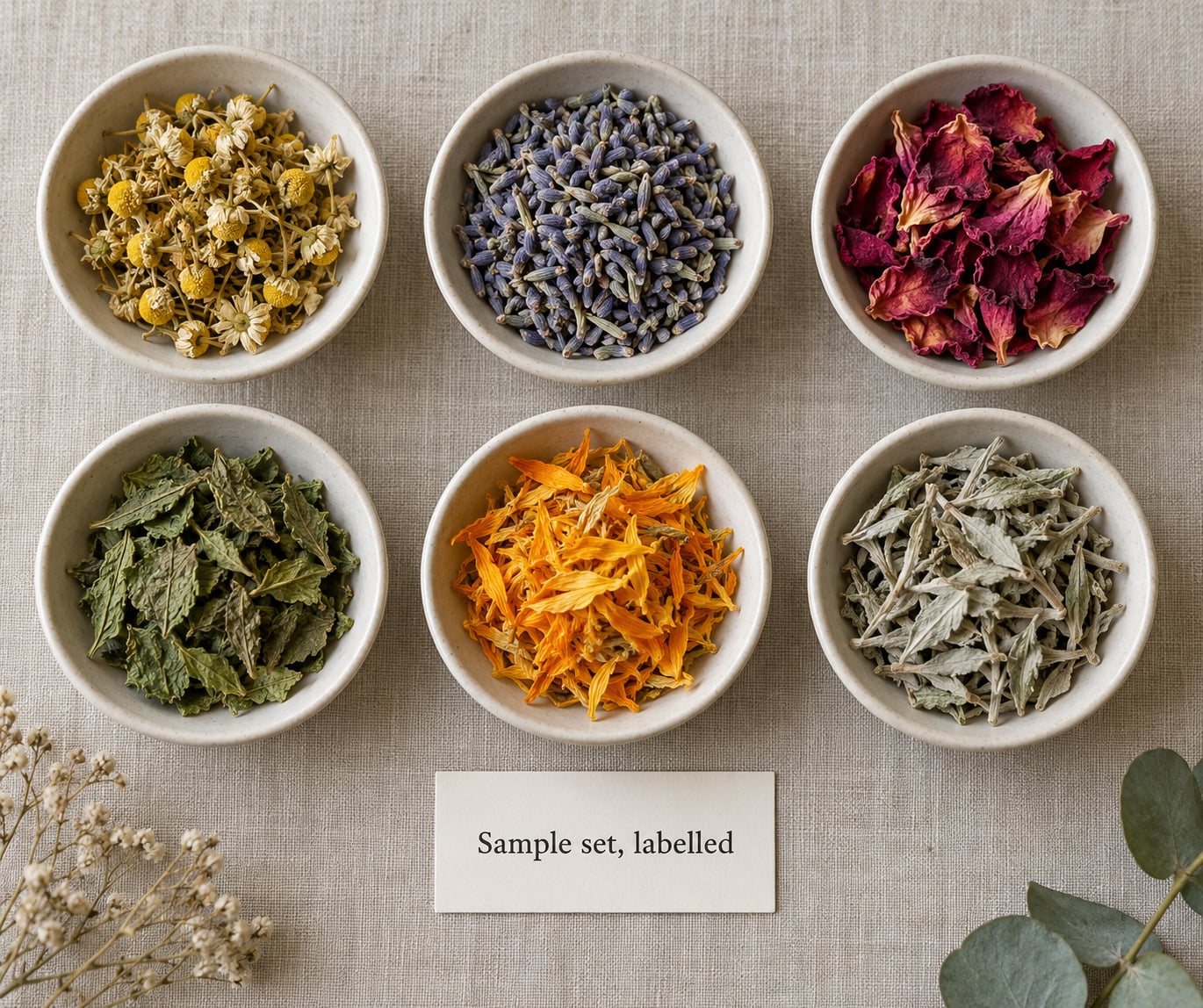
Taste could give selectors clues about a plant’s identity, its expected role, and whether it belonged in the household repertoire at all. It could not, on its own, establish safety or prove any medical benefit.
Ethnobotany is the study of the relationship between people and plants: how they are recognised, named, harvested, prepared and used. Traditional knowledge is the practical understanding that grows up around that relationship in a particular place.
In that setting taste worked as a classifier. A leaf that is sharply bitter, one that is bland and watery, one that numbs the tongue or perfumes the breath. Each gives a selector something immediate to compare against plants they already know. Because it works fast and needs no equipment, taste sat at the front of a longer chain that began with habitat and plant form and ended with preparation method and later observation.
What taste could never do on its own was confirm a botanical identity or certify that a remedy worked. Those steps needed the rest of the inherited system: knowing which plant grew where, how it was prepared, how much was used, and what happened afterwards.
Where taste fits in the chain of evidence
Spatial knowledge comes first. A selector knows which slope, soil type or water source a plant comes from, and that location narrows the candidate list before anything is tasted.
Form and texture come next: leaf shape, stem colour, how the plant breaks when handled, whether the sap runs clear or milky.
Taste then adds the fast comparison, while preparation and follow-up supply the slow confirmation that turns a single impression into a decision about seed, replanting or continued harvest.
How Taste Guided Traditional Plant Selection
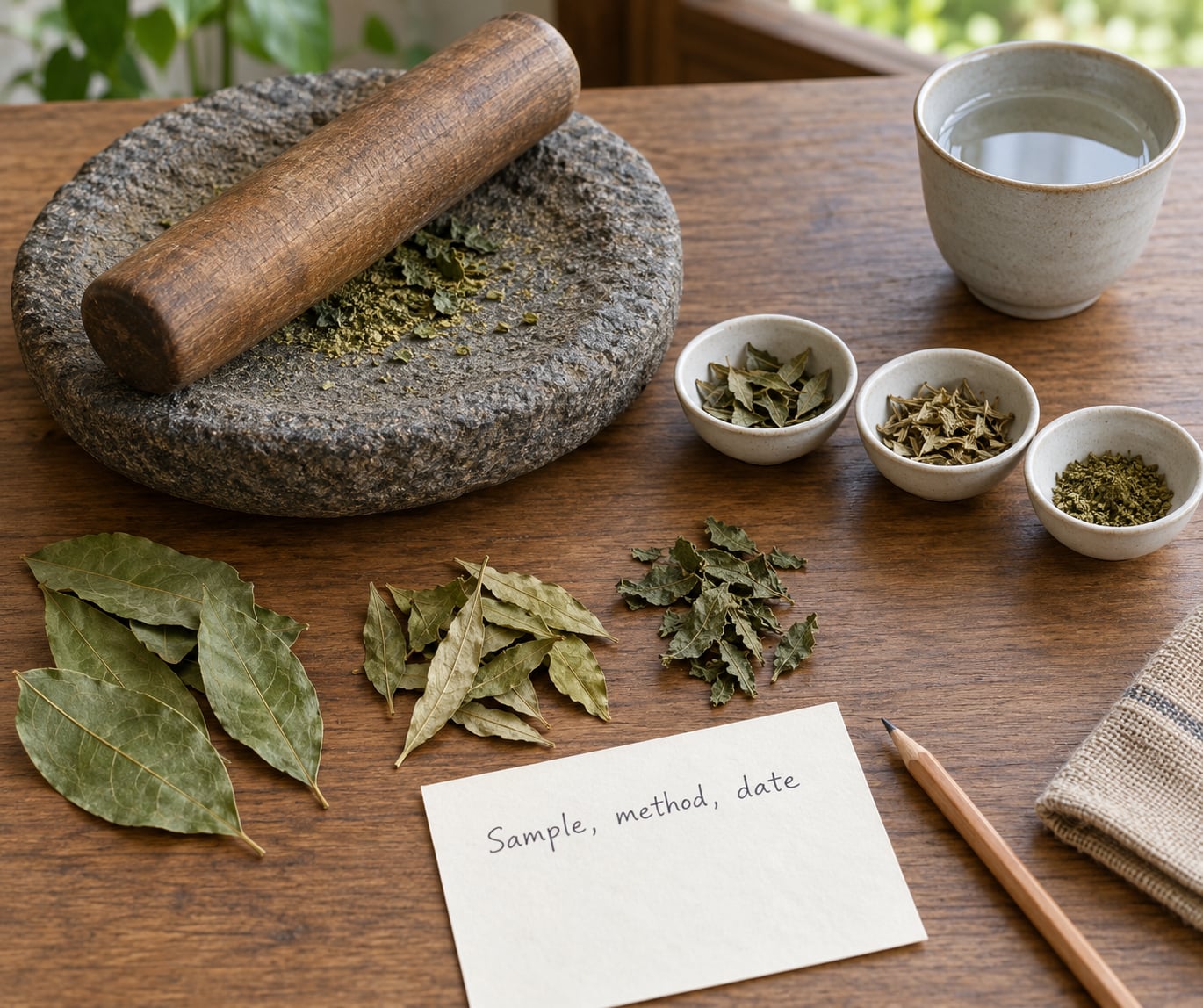
Selection ran as a sequence, not a single taste. Habitats were surveyed, candidate plants recognised against known ones, samples taken, prepared by the method that plant normally gets, tasted, compared, then watched over time.
Taste-guided plant selection inside one household season
Step one is recognition. A plant is matched against plants the selector already knows, using habitat, growth habit and leaf form. If it does not match a known plant, it stays outside the tested repertoire. That one rule prevents most serious mistakes before any tasting happens.
Step two is preparation. The relevant question is rarely how the raw plant tastes. It is how it tastes after the normal handling for that part, boiled, roasted, pounded, steeped or dried first.
Step three is comparison. Samples are judged against a reference plant the selector trusts, so the question is comparative rather than absolute: is this batch or this plant more or less bitter than the one the household has used for years?
Step four is context of use. In healing traditions, taste was read alongside the plant’s role, whether it was considered strengthening, cooling, cleansing, drying or something else in a locally defined system. Those categories are cultural, not pharmacological.
Step five is follow-up. Reactions, refusals and repeated outcomes across seasons turned a favourable first impression into a decision about seed and replanting.
It is worth being precise about scope here. Documented practice in a specific community, language group or ecological zone is evidence. Generalising that into “African traditional medicine” as a single thing is not, and a lot of popular writing about traditional African plant use does exactly that.
What Taste Categories Did Plant Selectors Notice?
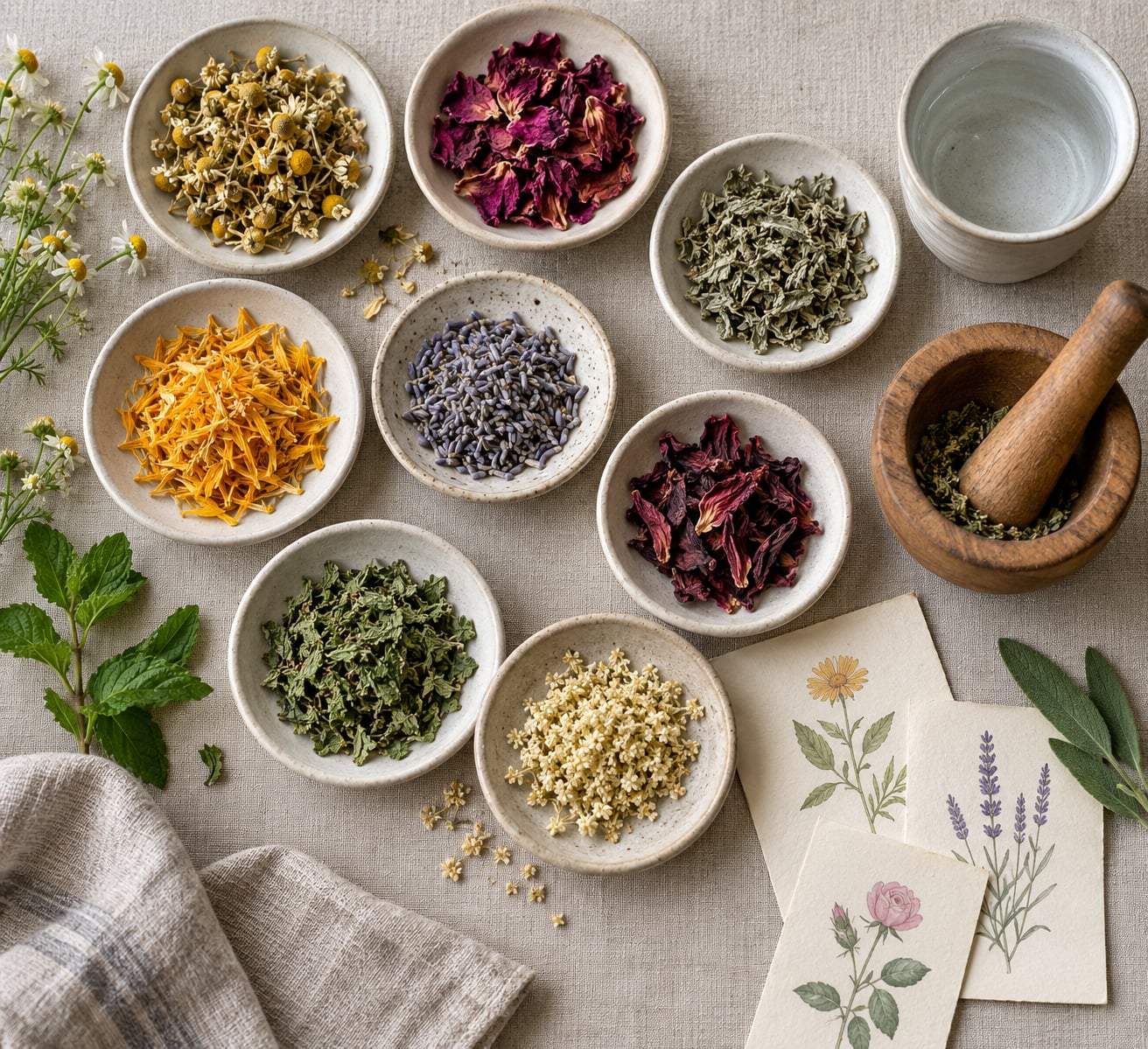
Selectors used a fairly consistent sensory vocabulary even when the words and their meanings differed: bitter, sweet, sour, astringent, pungent or hot, aromatic, mucilaginous or slimy, bland, and cooling.
Bitter was the most widely reported and the most debated. Astringency, the dry puckering feeling, was often described separately from bitterness even though the two overlap chemically in many plants. Pungency covered both heat and the sharper nasal sensations, including aromatic intensity. Mucilaginous described a slippery, thick mouthfeel, common in seeds and in certain leaf preparations.
Terms did not map one to one across languages or regions. A single vernacular word can bundle bitterness, pungency and a medicinal claim together, and two different communities can use the same word for entirely different plants. Where written records of the vocabulary are thin, translators reconstruct meaning from observed use rather than from a dictionary.
Colour, aroma and texture on the tongue also carried weight. Some selectors judged a preparation partly by how dark or bright it was, how strong it smelled before tasting, and whether the mouthfeel changed after swallowing.
What Is a Bittersweet or Pungent Taste Usually Meant to Signal?
In many documented systems bitterness marked a plant as medicinal rather than as food, pungency pointed to aromatic intensity and heat, and sweetness pointed to palatability and to plants fit for everyday eating.
That framing has a practical logic. Strong bitterness tends to accompany defensive plant chemistry, which is one reason experienced selectors distrust plants that taste mild and unfamiliar. A bitter leaf is at least announcing something.
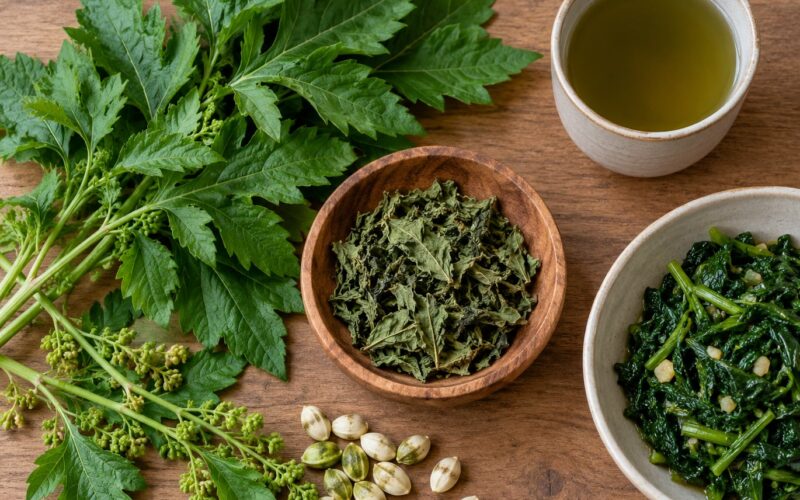
Consider bitter leaf, Vernonia amygdalina, widely used as both a food and a medicinal plant in parts of West and Central Africa. The bitterness is exactly why it is prepared the way it is, washed, pounded, then cooked or steeped until the intensity drops. In that context bitterness is not a defect to breed out. It is the marker that tells the cook which preparation the plant requires.
The clearest selection example is the bean case. BWL beans register as bitter because of their high alkaloid content, reported at around 1.3 percent on average, and become palatable after roasting. A selector never evaluates the raw bean. The taste that would disqualify the variety uncooked is transformed by processing into a reason to keep it.
None of this is a medical claim. These are documented cultural readings of taste, and they vary between communities.
How Did Preparation Change What People Tasted?
Preparation routinely altered both taste and a plant’s classification. The same leaf could become a different food, described in different words, depending on what was done to it before it reached the mouth.
Washing removes surface residues and dilute compounds. Drying concentrates what remains and shifts volatile aromatics. Pounding breaks cell walls, which releases compounds that whole leaves barely give up.
Boiling and cooking dilute bitterness and break down heat-sensitive compounds, while roasting does the opposite and pushes flavour toward char and smoke. Steeping and decocting draw out water-soluble material, giving a light infusion from one preparation and a strong one from another.
Fermentation adds acidity and complexity, and mixing changes the picture entirely. A strongly bitter leaf often becomes palatable once it is cooked into a stew with other ingredients, which is why a taste judgment held on a raw plant so often says nothing about how it behaves in the pot.
This is the biggest trap for anyone trying to judge traditional plants from a book. Palatability is a property of a plant plus a method plus a meal, not of the plant alone.
How Was Taste Knowledge Transmitted and Checked?
Taste knowledge was transmitted mainly by doing, under supervision, and corrected socially. Nobody learned a taste vocabulary from a list.
Apprenticeship was the core mechanism. A learner prepared, tasted and explained alongside an experienced household member or specialist, and the corrections came fast. Households also used preparation failure as a teaching device: an under-washed or badly pounded batch tastes wrong, and the household corrects it on the spot.
Memory and language did much of the work. A name, a proverb, a song or a preparation instruction encodes the verdict, so a plant’s reputation travels without a written record.
Several correction mechanisms existed beyond apprenticeship: comparing new material against the plant the household already trusts, watching over seasons whether a plant held up, and being corrected by a healer or an elder after a failed preparation. Much of that record is still oral, and a good deal of it is being rebuilt now by researchers working in 2026.
Seed libraries and informal exchange networks added another layer. Community seed library practitioners note that visual inspection alone cannot confirm a variety is true to type, which pushes collectors toward cooking and tasting behaviour as practical identity confirmation. Home growers running large heirloom collections describe test-growing a whole catalogue a year before deciding what to offer, which is a small-scale version of the same trial work.
What Are the Limits of Using Taste to Identify Plants?
Taste is unreliable as botanical identification. It cannot tell you which species you have, and using it that way can kill you.
The core problem is that taste varies. A plant’s bitterness level shifts with plant age, soil, rainfall, season, harvest time and processing, so two samples from the same species can taste meaningfully different. Some plants carry toxic compounds that are not reliably tasted at a low enough dose to give a warning, and some are dangerous precisely because they taste mild.
Individual perception varies too, and can shift with illness, age, medications and sensitivity. Pregnancy, allergies, and liver or kidney conditions all change what a safe dose looks like.
Then there is contamination risk. A sample picked from the wrong plant, handled by someone who prepared a toxic plant moments earlier, or stored near a chemical, can produce a taste that belongs to something else entirely.
So the honest position is this: taste is a useful descriptive attribute for a plant you have already identified and already know how to prepare. It is not a test to run on something unknown. Anyone considering a plant they have never eaten should not taste it to find out, and should ask a doctor or pharmacist about wild-plant use rather than experimenting.
How Do Researchers Study Taste Without Presuming It Is Truth?
Ethnobotanical researchers treat traditional taste knowledge as documented cultural practice, then test the parts that can be tested. They never ask a household to prove a claim by tasting something dangerous.
Interviews capture the vocabulary, the reasoning and the preparation in the respondent’s own words, usually with the plant still in view. Participant observation records what actually happens in a kitchen or a healing session rather than what people say happens.
Voucher specimens give the plant a permanent identity in a herbarium, which fixes what the taste claim was really about. Preparation records document cooking time, part used, water ratio and processing step, because taste without a method is not a repeatable observation.
Sensory terminology then gets structure through descriptor scales and, for larger studies, trained panels or Best-Worst Scaling. That last method, used in a 2023 study of 480 farmers across Benin’s main sweet potato areas, asked growers to rank their criteria and found high root yield, root size, marketability and early maturity ahead of eating quality.
That finding belongs in an article like this one rather than being smoothed over. Taste-led selection has been widely celebrated, and the honest picture is messier: for many growers, flavour ranks below yield and market traits.
Chemical analysis and published health guidance supply the boundaries. Consent governs access, and benefit-sharing governs what happens to the knowledge afterwards.
How Do Cultural Context and Biological Evidence Fit Together?
Traditional sensory categories describe how a plant behaves to a prepared palate in a particular place. They contribute classification, comparison and context. They cannot establish identity, dosage, safety or efficacy, and those need other evidence.
| What traditional taste categories contribute | What they cannot establish | Evidence needed instead |
|---|---|---|
| A memorable, teachable descriptor for comparing one plant or variety with a known reference | The botanical identity of a specimen | Herbarium voucher collection and taxonomic identification |
| A clue about whether a plant belongs in the medicinal rather than the everyday food repertoire | Any medical effect or dosage | Pharmacological study and clinical guidance from mainstream health bodies |
| An indicator of which preparation method a plant part requires | Whether a plant is safe to eat raw or unprepared | Toxicological testing and published food safety guidance |
| Evidence about why a household kept a local landrace for generations | Whether the variety outperforms an improved one on yield or market traits | On-farm trials and stated-preference studies such as Best-Worst Scaling |
| A record of biodiversity held in living knowledge rather than in a seed store | How many varieties exist or how fast they are being lost | Variety inventories, diversity surveys and on-farm conservation monitoring |
Read down the middle column and one pattern holds: every claim taste was traditionally used for has a hard-edged version that taste cannot reach. That is not a criticism of the practice. It is a map of where each kind of evidence belongs.
Frequently Asked Questions
Why were bitter plants important in traditional African medicine?
Bitterness often marked a plant as medicinal rather than as everyday food in documented African systems, so selectors used it as a category signal. Strong bitterness also tends to accompany defensive plant chemistry, which makes it a memorable warning about an unfamiliar specimen. Categories and meanings differ between communities, languages and ecological zones, so bitterness never carried one fixed meaning across the continent.
Did all African cultures interpret bitter, sweet and pungent tastes in the same way?
No. Taste vocabulary is tied to language, ecology and history, and the same vernacular word can cover bitterness, pungency and a medicinal claim at once. Two communities can use identical words for entirely different plants. Written records of these terms are also thin, so researchers usually reconstruct meaning from observed preparation and use rather than from dictionaries.
Can you use taste to identify a medicinal or poisonous plant?
No, and attempting it is dangerous. Taste cannot establish botanical identity, and some toxic plants taste mild. Flavour also shifts with plant age, soil, season, harvest time and processing. Treat taste as a descriptive attribute for a plant already identified and known to be prepared, never as a test on something unfamiliar. Ask a doctor or pharmacist about wild-plant use rather than experimenting.
Why can the same plant taste different depending on season or preparation?
Preparation changes what reaches the palate. Washing removes surface residues, drying concentrates what is left, pounding breaks cells and releases compounds, while boiling dilutes bitterness and roasting pushes flavour toward char. Fermentation adds acidity, and cooking a bitter leaf into a stew changes it entirely. Palatability belongs to a plant plus a method plus a meal, never to the plant alone.
How can researchers verify a traditional claim about a plant’s taste and use?
They document it as cultural practice first, then test what can be tested. Interviews and participant observation capture vocabulary and preparation, herbarium vouchers fix the plant’s identity, and preparation records make a taste observation repeatable. Chemical analysis and mainstream health guidance set the safety boundary. Consent governs access, and benefit-sharing governs what happens to the knowledge afterwards.
Conclusion
Taste worked as one contextual clue inside inherited systems of plant recognition, preparation and evaluation. It helped people sort, name, teach and compare plants, and it shaped which landraces survived long enough to be handed down.
It was never a substitute for botanical identification or for proven medical care, and the strongest accounts of this history are the ones that say so plainly. Farmers themselves weigh flavour against yield and market value, and researchers measuring their criteria find taste ranking lower more often than the romantic version admits.
If you want to go deeper, look for published ethnobotanical records and participatory breeding studies rather than summaries that flatten a whole continent into one practice. And before you use any plant medicinally, speak to a doctor or pharmacist.