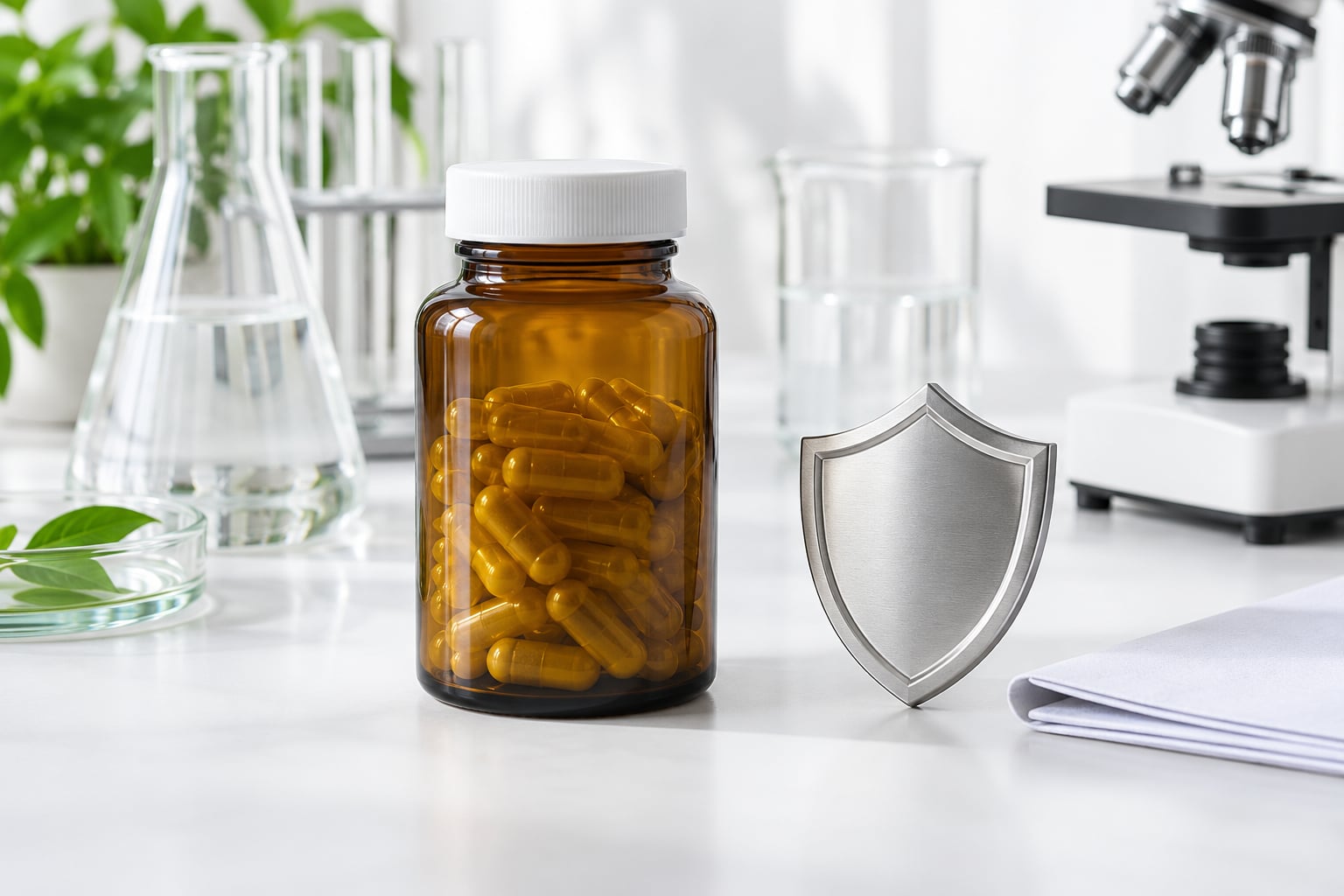
USP Verified means an independent nonprofit, the United States Pharmacopeia, tested that specific product in a laboratory and audited the factory that made it. The mark confirms the contents match the label, stay within contaminant limits and break down properly. It is a quality seal, not an FDA approval and not a claim that the product treats anything.
That distinction matters more than it sounds. In 2026, the FDA still does not review a dietary supplement before it reaches a shelf, so a mark from a third party is one of the few independent checks a shopper can actually see. The trouble is that the seal is widely misunderstood, sometimes printed without permission and occasionally left on packaging after a product has changed.
I spend a lot of time reading herbal labels and monographs, and the most common question I get is some version of the same thing: is this bottle trustworthy? Here is what the mark covers, what it leaves out, and how to confirm for yourself before buying.
Table of Contents
- 1What USP Verified Means on a Supplement
- 2What USP Verified means in practical terms
- 3Which Supplement Qualities Does USP Verification Check?
- 4What Does USP Verification Not Prove?
- 5Why Most Herbal and Ethnobotanical Products Are Not USP Verified
- 6How to Confirm a USP Verified Product Before Buying
- 7USP Verified vs Other Supplement Quality Marks
- 8Questions to Ask Before Trusting a Supplement Claim
- 9Frequently Asked Questions
- 10Is a USP Verified supplement FDA approved?
- 11Can herbal supplements receive USP verification?
- 12Why is a USP Verified product difficult to find online?
- 13Does USP verification cover every product made by the same company?
- 14What should I do if a verified product changes its ingredients or dosage?
- 15What are the differences between USP and NSF certified supplements?
- 16What to Do First
What USP Verified Means on a Supplement
The USP Verified Mark is a certification program run by the United States Pharmacopeia, an independent nonprofit organization that sets standards for medicines and supplements and does not sell products itself. A company applies for verification for one specific product, not for its whole catalog, and earns the right to print the mark only for as long as the authorization lasts.
One piece of housekeeping first, because you will see it everywhere online: USP prefers USP Verified. The phrase USP certified circulates constantly, and some companies use it on their own marketing copy, but it is the informal and inaccurate variant. A genuine mark on a bottle says USP Verified, with the program’s own logo.
What USP Verified means in practical terms
In plain language, the program asks four things of a product: does it contain the ingredient it claims, in the amount it claims; is it free from contaminants above USP’s limits; does it break down in the body the way it should; and does the facility that makes it follow current good manufacturing practice. A product only gets the mark after it passes all four.
What USP verification means on a supplement, then, is narrower than most shoppers assume. It is a statement about identity, potency, purity and process for one formula. It is not a statement about your health outcomes, and I will get into exactly what sits outside the mark further down.
The mark is also not permanent. Participating products are authorized for a limited period, then re-audited, and USP samples products off the shelf between audits to confirm they still match. If a company reformulates, changes a supplier or swaps a strength, the listing has to be revisited and the old approval no longer covers what is in the bottle.
Which Supplement Qualities Does USP Verification Check?
The four criteria are fixed, but the specific tests applied inside each one depend on the product. A vitamin tablet and a softgel get a different panel of chemical tests, which is why two USP Verified products can have very different certificates of analysis behind the same seal.
| Criterion | What is tested | Why it matters on the shelf |
|---|---|---|
| Identity and potency | Chemical testing confirms the ingredient is present and within the range stated on the label | Catches underfilled, expired or substituted actives |
| Purity | Heavy metals such as lead, arsenic, cadmium and mercury, microbial limits, and sometimes pesticide residues | Catches contamination from soil, water and poor processing |
| Disintegration or dissolution | How fast the tablet or capsule breaks down under simulated conditions | A correct dose that never dissolves is a dose you swallow and waste |
| Manufacturing compliance | On-site audit against current good manufacturing practice, covering record-keeping, equipment and staff | Checks the process that produced the lot, not just the finished pill |
The honest caveat is that these are specification limits, not perfection. A product can contain a trace of a contaminant and still pass. The mark tells you the levels sit inside published thresholds, not that nothing at all was detected.
What Does USP Verification Not Prove?
This is the section I wish more articles gave weight to. Verification confirms what is in the bottle. It says very little about what the bottle does for you, and several assumptions people attach to the mark are simply wrong.
- It is not FDA approval. The FDA does not approve dietary supplements before they are sold. A manufacturer claiming FDA-approved certification on a supplement is making a claim that does not exist, and that is worth walking away from.
- It is not proof of clinical benefit. A potency assay confirms how much active compound is present. It cannot tell you whether that amount improves sleep, immunity or cholesterol in a real person.
- It is not banned-substance screening. USP runs contaminant and quality testing, not a comprehensive athletic doping panel. Athletes who need that should look at a sport-specific program instead.
- It is not brand-wide. Verification covers a specific product at a specific strength. Two products from the same company, one verified and one not, is an entirely normal situation.
- It is not personal medical advice. The mark does not know your liver, your medications or your pregnancy status, and it cannot tell you whether this product is right for you.
Researchers have documented how far label claims can drift from reality. A widely cited analysis of melatonin gummies found products containing up to 347% more melatonin than the label declared, and some contained an unlisted compound. That gap between what a label promises and what a product delivers is exactly the problem third-party verification was built to close.
Why Most Herbal and Ethnobotanical Products Are Not USP Verified
The verified list is short, and it is short mostly because it is full of vitamins, minerals and protein powders. Traditional plant preparations are largely absent, and readers here ask me about that gap more than any other. The reasons are technical rather than a judgement on herbal medicine.
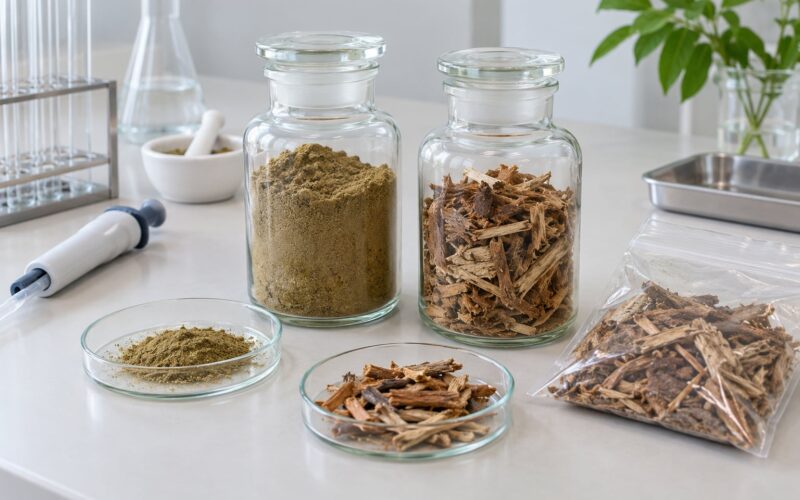
For a mineral such as calcium or vitamin D, identity is a chemistry question with a clean answer. For a plant, identity is a taxonomy question with several acceptable answers on paper, because many herbal labels are written to the genus rather than the species. Two closely related plants can look identical in a powder, and a cheaper lookalike can stand in for the expensive one without any intent to deceive. Confirming the actual species in a finished herbal extract takes botanical expertise and reference specimens that a standard vitamin assay does not require.
Batch variation compounds it. A cultivated extract, a wild-harvested root and a standardized extract with a fixed alkaloid percentage are three different products sharing one label name. Wild harvests especially shift from season to season, and reproducing last year’s result is not straightforward.
There are also risks specific to plants that the standard vitamin panel was never designed to catch. Pyrrolizidine alkaloids in certain plants are the clearest example: they are a known liver concern at sufficient exposure, and detecting them means running a targeted panel rather than a general purity screen. Alkaloid content in general varies by plant part and preparation method, so a number on one batch says little about the next.
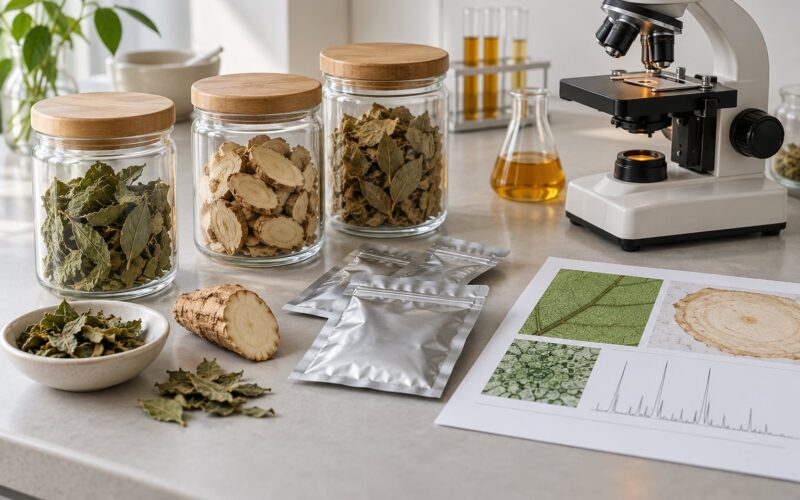
What to ask for instead, when no herbal product carries a seal: the botanical name down to species, the plant part used, the extraction method, a lot-specific certificate of analysis covering the contaminants that matter for that plant, and heavy metals and microbial results for the batch in your hand. A supplement company that answers those five questions plainly is doing something a printed seal cannot.
How to Confirm a USP Verified Product Before Buying
Run this check before you check out. It takes about a minute and it catches most of the problems people run into.
- Look for the actual mark. A printed logo reading USP Verified is the first filter. A sentence in the marketing copy that says the product is USP verified is not.
- Search the USP verified product directory. Type the exact product name, manufacturer, dosage form and strength into the official product finder on the USP site.
- Match the listing to your bottle. Same company, same product name, same strength, same dosage form. A near match on one of those is not a match.
- Check the listing status. Confirm the entry is active rather than lapsed, and read any authorization note attached to it.
- Ask the manufacturer when you buy online. Marketplace listings mix verified and unverified versions of the same product under one page, so a seller should be able to tell you which one you are receiving.
Red flags worth stopping over: a mark on the box with no matching directory entry, no lot number printed anywhere on the label, a claim of third-party testing with no organization named and no accreditation given, or a certificate of analysis that covers raw material only and cannot be matched to your bottle.
One more piece of practical evidence that most people never see. Ask for the lot-specific certificate of analysis, the document describing tests run on that exact batch. A seal tells you a program exists; a COA with a matching lot number tells you what happened to the product actually sitting in your hand. The two together are stronger than either alone.
USP Verified vs Other Supplement Quality Marks
Different programs answer different questions, so picking between them depends on what you care about. Stacking badges on a label does not automatically make a product better; it sometimes just means the company bought several subscriptions.
| Program | What it verifies | Best for | Main limitation |
|---|---|---|---|
| USP Verified | Identity, potency, purity, dissolution and a manufacturing audit | General everyday use, especially where dosing consistency matters | No clinical efficacy claim and no comprehensive banned-substance screening |
| NSF Certified | Product contents and contaminant limits against NSF/ANSI 173 | General consumers comparing against a familiar seal | Covers a narrower set of attributes than USP |
| NSF Certified for Sport | NSF/ANSI 173 plus screening against a banned-substance list | Competitive athletes and anyone tested for doping | Fewer participating products, mostly from sport-focused brands |
| Informed Sport | Batch-level testing against prohibited substances in sport | Athletes who need frequent, recent testing evidence | A program rather than a general quality seal; it does not replace quality verification |
| ConsumerLab | Independent testing of products brands choose to submit | Comparison shopping across many brands at once | Results sit behind a membership, and a brand opts in rather than being required |
That last row is the one people misread most. A company paying ConsumerLab for a seal is voluntary, and a passing result does not imply that other products from the same company were ever submitted. Coverage is per product, in every program on this list.
Questions to Ask Before Trusting a Supplement Claim
Whether or not a seal exists, six questions sort a good product from a hopeful one. Ask them of the company, not of the label, and the answers should be specific enough to check.
- What is the exact botanical or chemical name, down to species where it is a plant, and which part of the plant was used?
- What amount of the active compound was actually tested, and does the result appear on the finished product or only the raw material?
- What evidence supports the specific benefit printed on the front of the bottle?
- What is the lot number, and can I see a certificate of analysis for that lot?
- Which contaminants were tested for, which laboratory ran them, and what accreditation does the lab hold?
- Is the version being sold today the same formula as the tested one?
If the answers stay vague, that is data too. A US Department of Defense program, the Operation Supplement Safety Scorecard, exists as a public checklist for exactly this situation when a product carries no seal at all. It asks a short set of questions about ingredients, manufacturing and third-party testing. Fewer than a few clear yes answers is a reasonable signal to pass.
Talk to your doctor or pharmacist before starting anything, especially if you take prescription medication, are pregnant or breastfeeding, manage a chronic condition, or are giving a supplement to a child. That step does not depend on which seal is on the bottle.
Frequently Asked Questions
Is a USP Verified supplement FDA approved?
No. The FDA does not approve dietary supplements before they reach shelves, which is exactly why independent verification programs exist. USP Verified confirms identity, potency, purity, dissolution and manufacturing compliance for one product. If a brand advertises a supplement as FDA approved or FDA certified, treat that claim as a red flag and check the USP directory yourself.
Can herbal supplements receive USP verification?
They can, but very few do. Herbal identity is harder to confirm than a vitamin assay, because labels are often written to genus rather than species, closely related plants are hard to tell apart in a finished extract, and wild-harvested batches vary. USP verification also requires a stable specification, which is difficult for products whose alkaloid content shifts season to season.
Why is a USP Verified product difficult to find online?
Usually because the verified and unverified versions share one product page. Sellers list a brand’s whole range under a single listing, and only some of those SKUs are verified. Check the USP product finder for the exact product and strength, then ask the seller which version they are shipping, ideally by lot number, before you order.
Does USP verification cover every product made by the same company?
No, and this is the most common misunderstanding. Verification is granted for a specific product at a specific strength and dosage form. A company may have one multivitamin listed and another multivitamin absent, with no implication about the company’s overall quality. Always confirm the exact product name, strength and form in the USP directory.
What should I do if a verified product changes its ingredients or dosage?
Re-run the directory check at the next purchase, because you are the only one who will notice a reformulation. Reformulation, a new supplier or a changed strength requires the listing to be revisited, and the previous authorization does not carry over. Also check the bottle’s lot number, since that is what ties your purchase to a specific tested batch.
What are the differences between USP and NSF certified supplements?
Both are independent quality programs, but the criteria differ. USP Verified covers identity, potency, purity, disintegration or dissolution and a manufacturing audit, run under the Dietary Supplement Verification Program. NSF certifications are written to NSF/ANSI standards and split into general and sport-focused versions, where the sport program adds banned-substance screening that USP does not perform.
What to Do First
Before you buy anything, search the exact product, manufacturer and strength in the USP verified product directory, then compare that listing line by line with the bottle in your hand. If the product is herbal and no listing exists, ask for the species name, plant part, lot-specific certificate of analysis and contaminant panel instead, and treat a company that cannot answer those as a company you skip.
And bring the specific product, with its label and ingredient list, to a doctor or pharmacist before you start taking it if you are pregnant, breastfeeding, managing a chronic condition or already using other medicines. That conversation is worth more than any seal on the box, including this one.