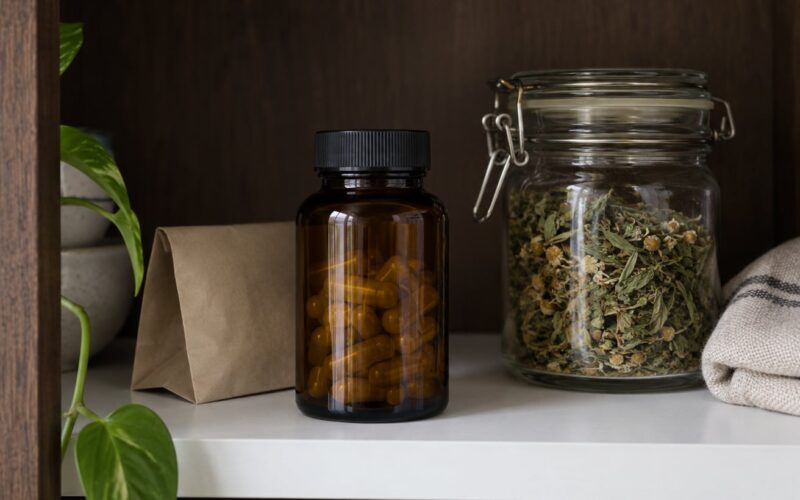
Dried herbs are hygroscopic, which simply means they keep pulling water out of the air until they reach equilibrium with the humidity around them. Once ambient relative humidity climbs past roughly 60 percent, the water activity inside the herb rises above about 0.65, and enzymes, mold and chemical breakdown start working on material you thought was safely dry. That is the short answer to how humidity ruins dried herbs, and it applies to every jar in your cupboard.
The frustrating part is that the damage rarely announces itself while it happens. A batch can look perfect, snap clean in half, and then three weeks after sealing start to clump, dull and smell faintly sour. Understanding the mechanism makes the storage rules much easier to follow.
Table of Contents
- 1What Does Humidity Do to Dried Herbs?
- 2Why Moisture Damages Herbs After Drying
- 3It starts with herbs that were never fully dry
- 4Warm storage speeds everything up
- 5Containers sealed too early or sized badly
- 6Hygroscopic materials make it worse
- 7What Signs Show That Humidity Has Ruined Dried Herbs?
- 8How to Dry Herbs Without Trapping Moisture
- 9How to Store Dried Herbs in Humid Conditions
- 10Can Damp or Moldy Dried Herbs Be Restored?
- 11How to Choose a Reliable Humidity Check for Herb Storage
- 12Frequently Asked Questions
- 13Is condensation inside a herb jar normal?
- 14Can I store dried herbs in paper bags?
- 15Should dried herbs be refrigerated or frozen?
- 16How long can dried herbs be stored?
- 17Can you save moldy dried herbs?
- 18When should I ask a health professional about moldy herbs?
- 19Conclusion
What Does Humidity Do to Dried Herbs?
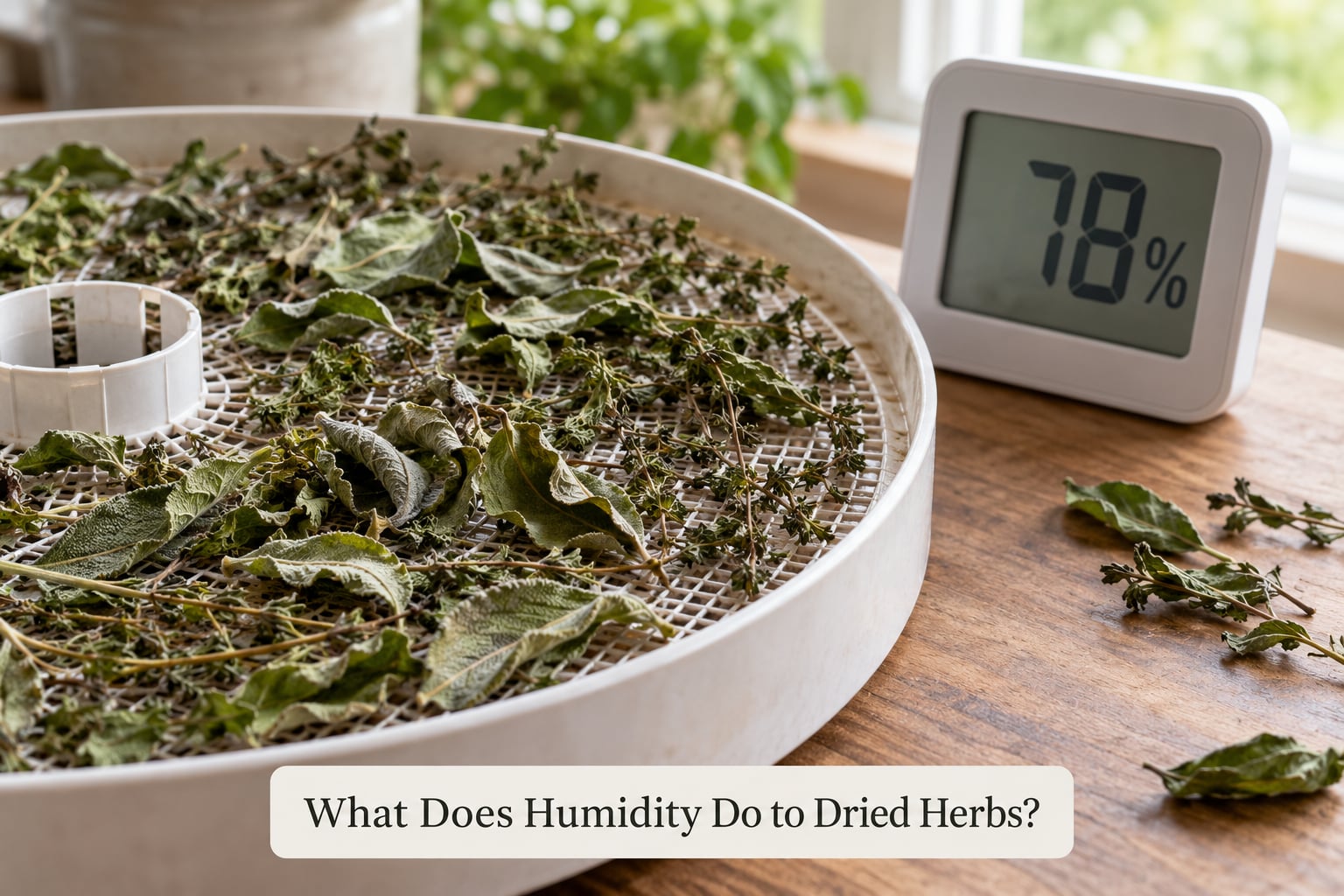
Dried plant material is not inert. Its cell walls and remaining sugars bind airborne water by hydrogen bonding, drawing it in until the moisture inside the herb matches the moisture in the room. The number describing that moisture is water activity, written as aw, which measures water available to microbes rather than total water. A 0 to 1 scale, where pure water is 1.0.
Most dried herbs sit well below the danger zone, around aw 0.2 to 0.4. Push the room above 60 percent relative humidity and that figure can climb past 0.65, which is the level most molds, yeasts and bacteria need to grow. Enzyme activity also restarts, and oxidative reactions begin breaking down the volatile oils that give herbs their aroma and much of their character.
So there are two separate failures happening at once, and readers often blur them together. Quality loss is when the aroma fades, the color greys and the leaves turn leathery. Safety loss is when microbes actually colonize the material. The first makes a herb disappointing; the second makes it something you throw out.
Why Moisture Damages Herbs After Drying
It starts with herbs that were never fully dry
Most home drying fails at the last step rather than the first. Leaves picked at their driest, dried in a single thin layer with good airflow and turned regularly, usually finish fine. The losses come from stacking thick bunches, drying in warm dead air with no circulation, or packing material straight from a dehydrator into a jar before it has cooled.
Warm herbs sealed into an airtight jar release their own trapped moisture as vapor. Forum discussion on r/herbalism and homesteading groups is full of exactly this complaint: herbs that smelled fine in the tray smelled fermented within a month of being sealed.
Warm storage speeds everything up
Heat and humidity travel together. A pantry in a humid climate is usually warm, and warm air holds far more water than cool air at the same relative reading. Moving a jar from an air-conditioned room to a humid afternoon porch is the classic way to put condensation on the inside of the lid.
Containers sealed too early or sized badly
Airtight sealing is the right goal, but sealing damp material traps the problem instead of fixing it. Container size matters too. A quart jar holding a cup of herb leaves a large volume of humid headspace that the herbs spend months absorbing from.
Hygroscopic materials make it worse
Leafy herbs with residual sugars and honeydew on the surface soak up moisture far faster than woody materials. Researchers describe this with sorption isotherms, curves showing the moisture content a plant material settles at for a given humidity. Rosemary and cinnamon sit low on those curves. Basil, mint and anything sticky from aphid activity sit high.
What Signs Show That Humidity Has Ruined Dried Herbs?
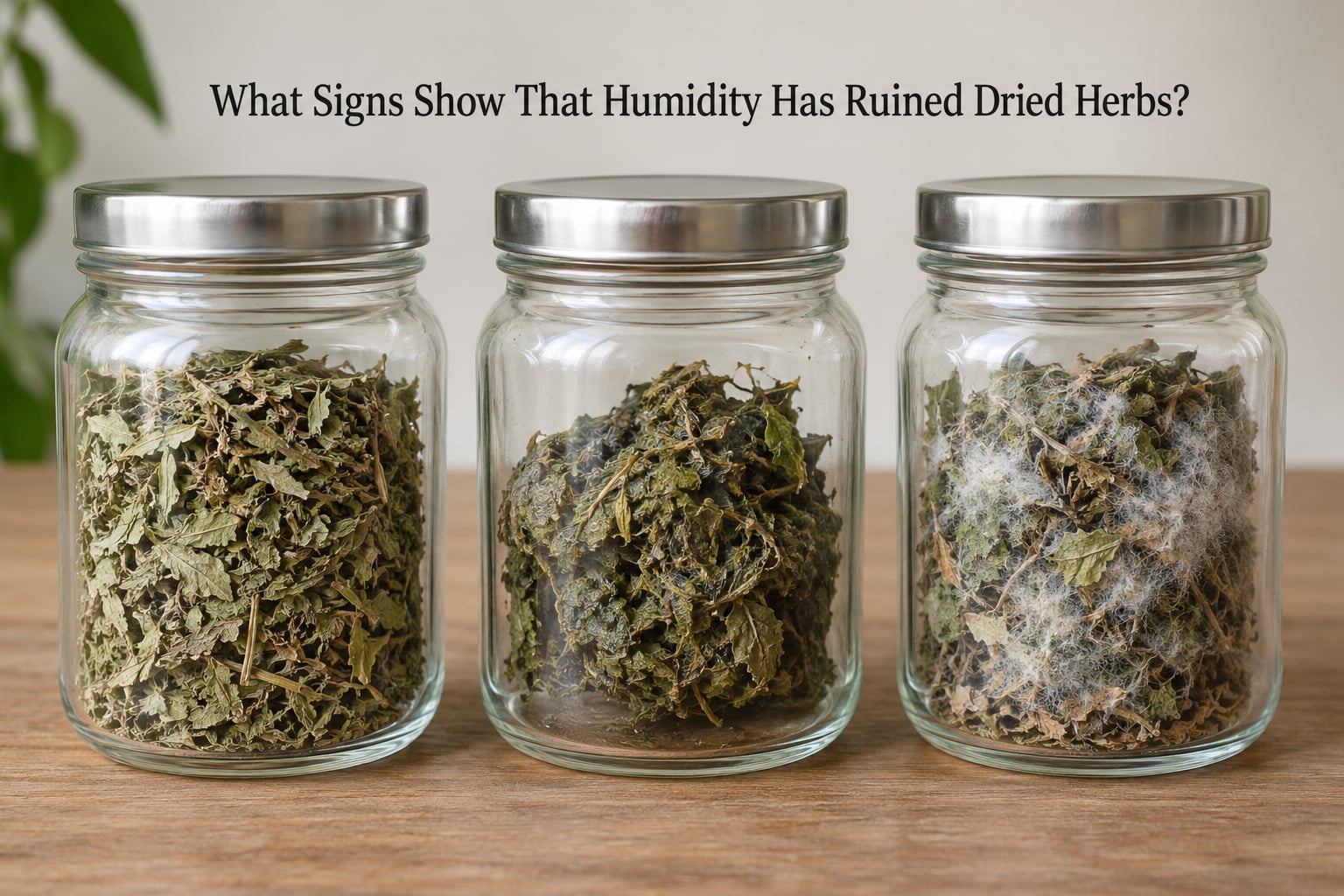
Check the jar when you open it, not six months later when you need a spoonful. These are the signals worth stopping for.
- Clumping. Material that was loose and crumbly has fused into soft lumps that bend instead of snap.
- Damp or cool-feeling leaves. Herbs that feel room temperature in a warm hand are holding water.
- A musty, sour or fermented smell. This is the strongest warning sign and it appears before any visible growth.
- Discoloration. Greens going grey-brown or blackened at the stem ends, or pale halos around leaf edges.
- Fuzzy or powdery patches. White, grey or green fuzz, or a dusty coating that wipes off on a fingertip.
- Loss of aroma. A jar that once opened with a sharp burst now smells like brown paper.
Color fading and aroma loss can sometimes be reversed or worked around. Mold cannot. Once fuzz appears, the hyphae have grown through the material and produced metabolites, including mycotoxins such as aflatoxins and ochratoxin, that do not wash out with heat or soaking. Dry it again, toast it, grind it for tea and you are concentrating those compounds rather than removing them.
Discard the whole jar, wash the container with hot soapy water, and dry it fully before reuse. If you suspect contamination near food you regularly eat, clean the surrounding shelf and cupboard too, because spores travel on air currents.
How to Dry Herbs Without Trapping Moisture
Drying well is mostly about moving air and giving herbs time. Whatever method you use, judge the result by texture rather than by the clock.
- Harvest at the driest moment. Midday after the dew has lifted gives you the lowest starting moisture. Dry herbs thoroughly before harvest for the same reason, and skip plants with insect damage or sticky honeydew.
- Wash only when you must, then dry the surface completely. Residual surface water costs hours of drying and is a common mold starting point.
- Strip leaves from stems for leafy herbs. More surface area, faster moisture escape, far less chance of a damp core.
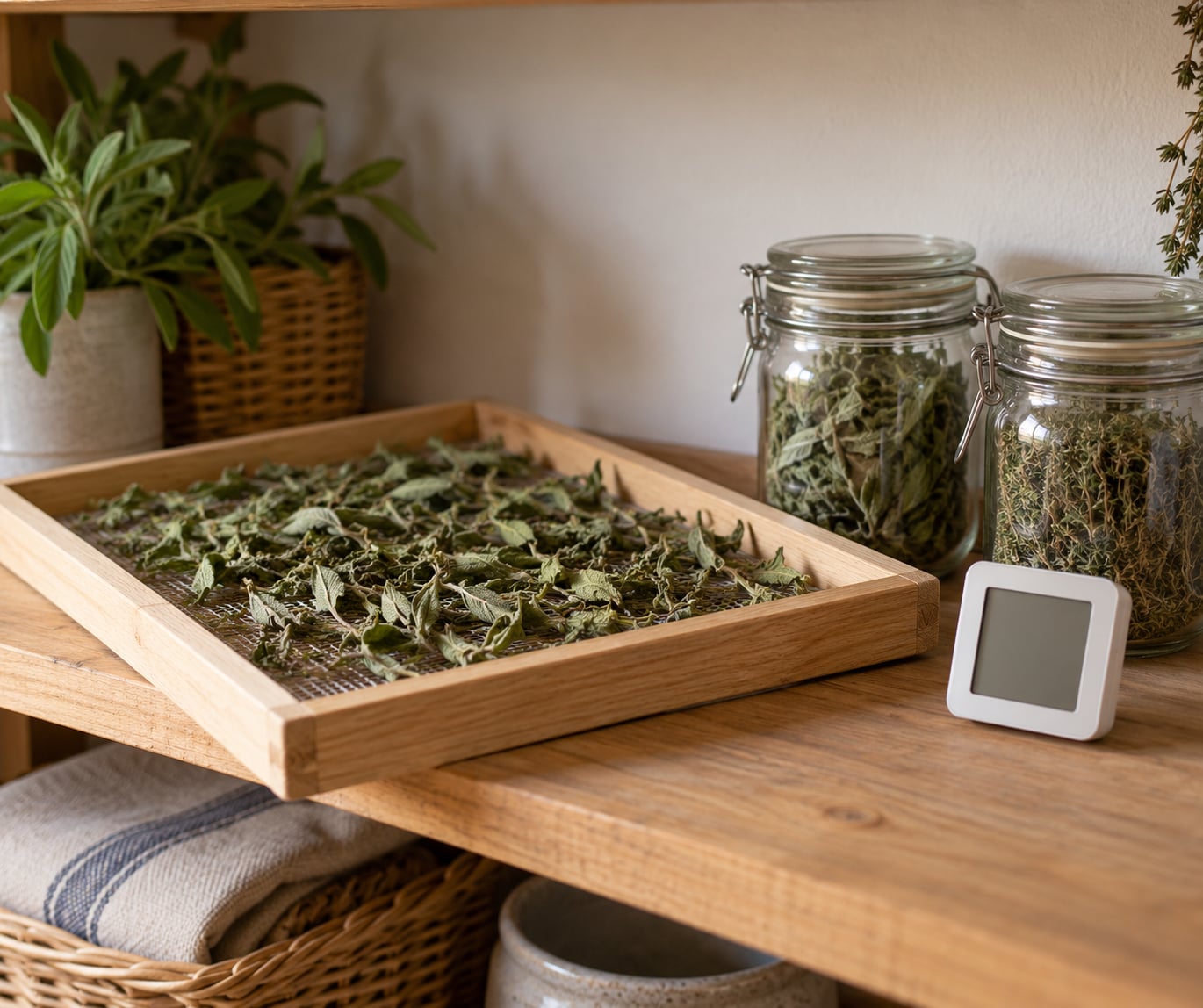
- Air-dry in a single thin layer in a dark, well-ventilated space. Hang small bunches upside down or spread on a mesh rack. Turn or rotate daily. Expect several days to a couple of weeks depending on thickness and humidity.
- Use a dehydrator when you have one. Follow the unit’s own guidance, keep air moving across the tray rather than through it, and leave the door cracked for the final stage so moisture can leave.
- Test for brittleness. Leaves should snap cleanly. If they bend without breaking, keep drying.
- Cool completely before packaging. Herbs at room temperature, ideally after sitting in the open air for an hour or two, are the only ones that go into a sealed jar.
Sun drying works in dry, breezy climates but the temperature swings and UV exposure fade color and aroma, and shaded drying gives more consistent results. Skip microwaves, uncovered ovens at low temperature and drying over a car dashboard; all of them cook the plant material instead of removing water evenly.
For medicinal material, drying method matters more than most people expect, because heat-sensitive constituents degrade with sustained warmth. Follow the guidance of your supplier, a clinician or a qualified herbal professional rather than improvising.
How to Store Dried Herbs in Humid Conditions
Storage is a slow leak. Even in a good jar, moisture from a humid room works inward over months.
- Seal tightly and keep the fill level high. A full jar has less headspace for humid air to sit in. Split large batches into smaller containers instead of one deep jug.
- Use glass with a rubber gasket for everyday storage. Glass blocks light and oxygen better than thin plastic, and gasketed lids hold a seal after months of use.
- Consider Mylar bags with an oxygen absorber for long storage. Follow the pouch manufacturer’s instructions exactly, and use absorbers rated for the volume you are packing.
- Add a desiccant only as the manufacturer directs. Silica gel packets and food-grade desiccants draw moisture out of headspace. Never let loose desiccant touch the herb itself, and keep them out of reach of children.
- Store cool, dark and stable. A closet on an interior wall beats a garage, a car and a bathroom. Avoid anywhere with a radiator, an exterior wall or a big daily temperature swing.
- Separate high-aroma herbs. Mint, citrus peel and camphor-like materials transfer volatile oils to whatever sits beside them, which flattens the aroma of delicate roots and flowers.
- Label with the date and rotate oldest first. A jar is easy to forget in the back of a shelf, and freshness matters more than the label suggests.
Note that aroma, color and the constituents people care about change even in a jar that still looks intact. Absence of visible moisture is not proof that potency is unchanged; it only tells you mold has not taken hold.
Can Damp or Moldy Dried Herbs Be Restored?
No, not safely, and the reason is not a matter of technique. Re-drying only lowers water activity until conditions change again, which is exactly what happens the next humid week. Washing spreads spores across the whole batch. Heat that would kill surface mold also drives off the volatile oils that make the herb worth keeping, and it does nothing to metabolites already inside the tissue.
For severely damp but visibly clean material with no odor and no fuzz, the honest answer is that you have a trade to make. Some people dry that material quickly and use it soon as a cooking herb, accepting a shorter shelf life. Nothing about that restores it to a dried-goods standard, and it is not a route to herbal preparations, teas or tinctures.
Anything with a musty or sour odor, any fuzz, any webbing, discard it. Bag it, take it out, and clean the container before reusing it. Mold spores travel further than people expect, and a jar that was contaminated once will do it again.
If you are asking because of suspected contamination, or because you plan to use herbs medicinally, talk to a pharmacist, clinician or qualified herbal professional before handling the batch further. I am not able to advise on individual health questions here.
How to Choose a Reliable Humidity Check for Herb Storage
A small digital hygrometer is the cheapest useful tool in this whole job, and it answers questions that guessing cannot. Point-and-read analog models drift; a digital model with a hold function or a min and max display shows you the peaks that matter.
Where you place it changes the number you get. Put it in the closet where jars actually sit, not in the hallway, and give it a few hours to settle after moving it. Record the reading at the same time each day for a week or two, and note what the weather was doing. Storage-room readings and wet-weather readings are different data, and the difference tells you whether your problem is chronic or occasional.
Treat any reading that regularly sits above 60 percent as a signal to change the storage location rather than to adjust your standards for the herbs. A dehumidifier or a conditioned closet solves a humidity problem far more reliably than packing tricks do. Use the hygrometer to confirm the fix worked, not to hunt for a magic threshold that guarantees safe herbs.
Frequently Asked Questions
Is condensation inside a herb jar normal?
No. Condensation on the inside of a lid or jar wall means warm humid air met a cool surface and released water, and that water is now sitting on your herbs. Move the jar back to its stable storage spot and let it sit untouched for 24 hours before opening it. If the herbs smell musty or show fuzz after the incident, discard them rather than trying to re-dry the batch.
Can I store dried herbs in paper bags?
Paper bags are fine for a few weeks of cool, dry storage, and many herbalists prefer them because they let the material breathe. They are not suitable for humid climates or long storage, since paper wicks moisture from the air straight through. Once you notice the leaves have softened or the bag smells empty at the top, move the contents into airtight glass or Mylar.
Should dried herbs be refrigerated or frozen?
Refrigerating dried herbs is usually a mistake, because refrigerator air is cool but close to saturation and many units cycle humidity. Freezing genuinely works for long storage, provided the herbs are bone dry before freezing and the sealed jar is allowed to come to room temperature before you open it. Opening a cold jar lets humid room air rush in and condense on the contents.
How long can dried herbs be stored?
In a cool, dark, dry cupboard with relative humidity under 60 percent, leafy herbs such as basil and mint usually keep reasonable quality for about six to twelve months. Woody herbs like rosemary, thyme and cinnamon hold up for a year or two, and roots and bark keep longest of all. These are quality windows, not safety deadlines, and humidity damage shortens every one of them.
Can you save moldy dried herbs?
No. Mold hyphae grow through the leaf tissue and produce metabolites including aflatoxins and ochratoxin, and those compounds survive drying, heating, soaking and grinding. Trimming the visible fuzz does not remove them. Discard the entire jar, clean the container with hot soapy water, dry it fully, and check the surrounding shelf for spores that may have spread.
When should I ask a health professional about moldy herbs?
Ask a pharmacist, clinician or qualified herbal professional if mold exposure concerns you personally, if anyone in your household is pregnant, immunocompromised or has allergies, or if you plan to use the material medicinally. Bring a sample rather than the whole jar if you can. General storage questions are fine to research yourself, but individual health questions deserve a qualified answer.
Conclusion
Dried herbs fail on moisture long before anything else, and the fix is unglamorous: finish drying until leaves snap, cool them fully before sealing, then keep them cool, dark, sealed and monitored with a hygrometer near the jars.
Check every jar when you open it, and discard anything with moisture, fuzz or an unusual odor rather than trying to bring it back. Storage cannot undo contamination, and questions about your own health go to a pharmacist, clinician or qualified herbal professional.