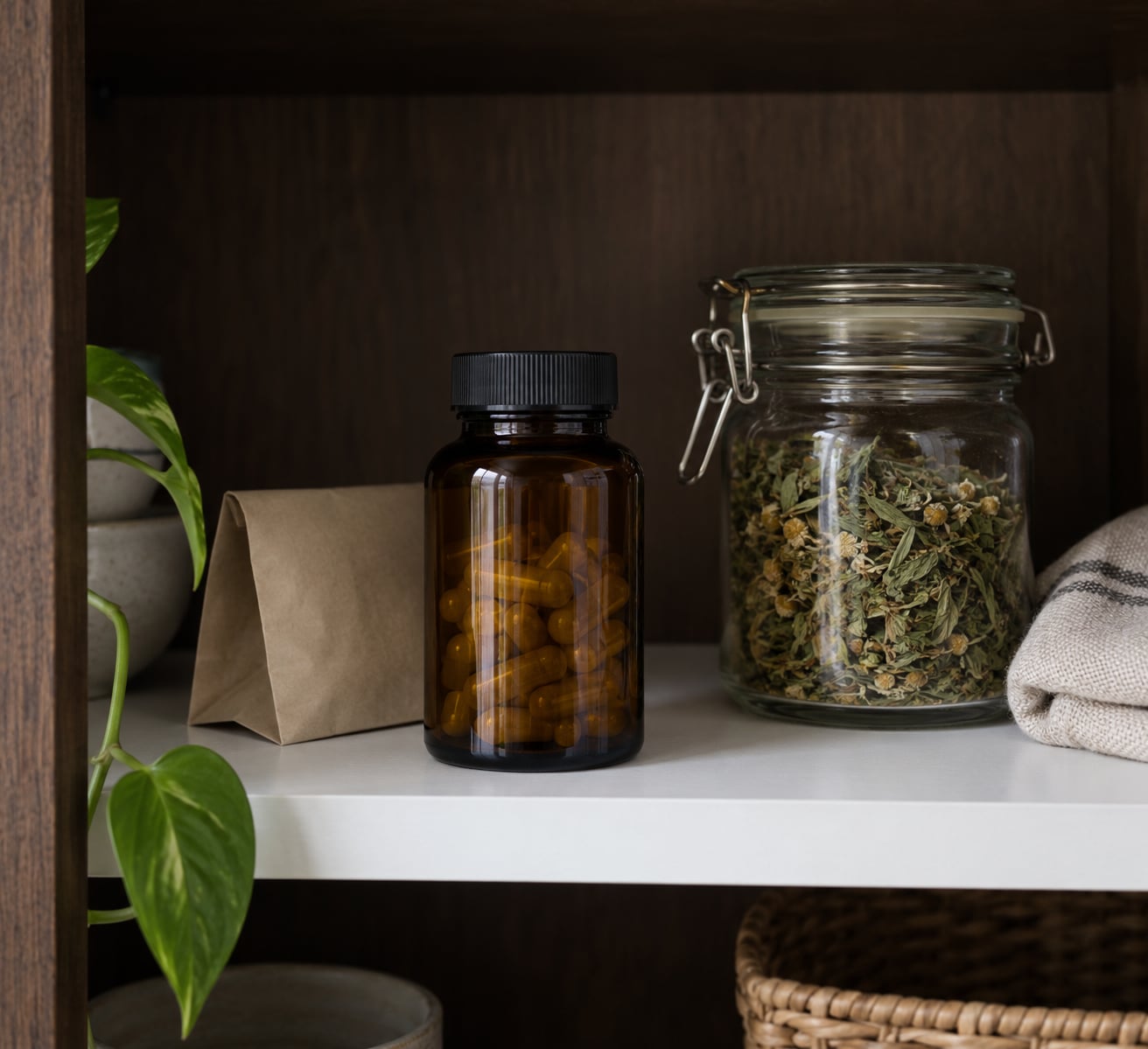
The best way to store supplements is simple: keep them sealed in their original container, in a cool, dry, dark place between roughly 15 and 25 C (59 to 77 F), away from heat, sunlight and moisture. The storage instructions on your label always come first, and most people get storage wrong by leaving bottles in the bathroom or on the kitchen counter.
That answer takes a minute to read, but the details are where bottles get ruined. Heat, humidity and light each attack supplements in a different way, and a printed expiration date only means something when all three are under control. Most bottles arrive with nothing on the box about how to keep them, so a few minutes of sorting does more for your supply than any new gadget.
This is general storage information, not medical advice. For anything specific to your situation, a pharmacist is the right person to ask, and the manufacturer of the product has the final word on how it should be kept.
Table of Contents
- 1What You Need
- 2Step-by-Step: How to Store Supplements to Keep Them Fresh
- 3Step 1: Check the Product Label and Expiration Date
- 4Step 2: Keep Containers Closed and Intact
- 5Step 3: Choose a Cool, Dry, Dark Location
- 6Step 4: Separate Forms and Special-Storage Products
- 7Step 5: Inspect and Replace Supplements Regularly
- 8Common Mistakes
- 9Frequently Asked Questions
- 10How long can supplements be stored after opening?
- 11Do supplements need to be refrigerated?
- 12Can vitamins be stored in a humid bathroom?
- 13How can I tell whether a supplement has gone bad?
- 14Should supplements be kept in their original containers?
- 15How should supplements be stored while traveling?
What You Need
You need almost nothing to store supplements properly, which is the good news. Before you move anything, gather these basics so you handle each bottle once.
- The original container. The label carries the storage instructions, the lot number and the expiration or best-by date. Keep it readable.
- The desiccant packet. That small DO NOT EAT sachet inside the bottle absorbs moisture. Leave it in.
- A cool, dry, dark location that stays between 15 and 25 C (59 and 77 F) and does not swing wildly in temperature.
- Your labeled storage instructions for anything that says refrigerate after opening.
Optional but useful: an airtight container with a silicone seal for powders you scoop from regularly, an opaque or amber container if your current bottle is clear, a small travel vial for a week of doses, and a weekly pill organizer to cut down on the number of open bottles in circulation.
What you do not need is a mini fridge, a dehumidifier or a whole shelf of organizers. Unless your label says otherwise, a bedroom closet shelf or an interior kitchen cabinet handles almost everything.
Step-by-Step: How to Store Supplements to Keep Them Fresh
Step 1: Check the Product Label and Expiration Date
Read the storage panel before you move the bottle, not after. It will usually say something like store in a cool, dry place at room temperature, or keep refrigerated after opening, and the difference matters. Some products, particularly live probiotic strains and certain liquid preparations, genuinely need a refrigerator between uses.
Look for two different dates. An expiration date is the manufacturer’s guarantee that the product holds its label strength through that date when stored as directed. A best-by date is more of a quality signal, where the product still works but flavour, texture or potency may have drifted.
Write down the lot number too, near the expiration date on the base of the bottle. If a batch makes you ill, the lot number is what the manufacturer or your pharmacist needs to trace it. The step worked when you can say, for any bottle in your hand, what it is, how long it lasts and whether it needs cold.
Step 2: Keep Containers Closed and Intact
Snap the cap shut properly every time, not just when you are putting the bottle away. Air exchange and humidity are what pull moisture into a bottle between openings, and a loosely closed cap is the most common reason capsules get soft and tablets break apart.
Keep supplements in their original container. That is where the calibrated child-resistant cap, the printed warnings and the moisture protection are. On Reddit threads in r/workout and r/organized, people describe decanting scoops of protein powder and pre-workout mix into smaller tubs so they can grab them fast, and then worrying about the loss of label, date and protection. If you decant for convenience, keep the original tub as the record of what it is and when it expires.
Never combine leftovers from two different bottles into one. Different products carry different lot numbers, expiration dates and dosing instructions, and a mixed bottle breaks the first-expire-first-out rule you will need later. If you do decant, limit it to a week at a time, write the product name and date on the container, and keep the desiccant packet in powder tubs. The test is simple: if you cannot identify the contents and the open date without guessing, it is stored wrong.
Step 3: Choose a Cool, Dry, Dark Location
Aim for stable room temperature between 15 and 25 C (59 and 77 F), low relative humidity, and no direct light of any kind. The enemy is not one extreme but the daily cycle between them, since a bottle that swings from cool and damp to warm repeatedly degrades faster than one that just sits at a slightly warmer but steady temperature.
| Location | Verdict | Why |
|---|---|---|
| Bathroom medicine cabinet | Worst | Shower steam and humidity get past a medicine cabinet door and soften tablets and capsules |
| Kitchen counter near the stove or sink | Worst | Cooking heat, steam and splashes, plus light from the window above the counter |
| Top of the refrigerator | Poor | Warm from the motor below and exposed to kitchen light and humidity |
| Windowsill | Worst | Direct sunlight, including UV, degrades light-sensitive ingredients fast |
| Glove box or bag in a parked car | Worst | Car temperatures climb far past anything a product was tested at |
| Bedroom closet shelf | Good | Dark, stable temperature, no heat source, no humidity |
| Interior kitchen cabinet away from the stove | Good | Works well if it is an inside wall, not the one next to the oven |
| Pantry or larder shelf | Good | Cool and dark, provided the pantry stays dry and is not a damp crawl-space closet |
| Refrigerator door shelf (cold products only) | Condition dependent | Fine for products whose label says refrigerate, poor for everything else because the temperature swings each time the door opens |
Because each bottle has its own light sensitivity, give glass containers a real test rather than relying on the tinted colour of a plastic bottle. A clear amber bottle in a dark closet behaves like a dark one, and a clear bottle on a shelf under a lamp does not. If a bottle is clear, wrap it in an opaque sleeve or move it into a closed cabinet.
Watch for the slow creep of humidity rather than obvious damp. A home in a humid climate, or a cabinet in a building that stays damp, can quietly shorten shelf life even without a visible leak. The step worked when every bottle in your supply sits in one of the good rows of that table, and nowhere else.
Step 4: Separate Forms and Special-Storage Products
Different forms fail in different ways, so a single rule does not cover them. Capsules and tablets are the forgiving ones, while softgels, gummies, powders and anything living need more attention.
- Dry capsules and tablets. Cool, dry and dark in the original bottle, cap snapped shut. Softening or crumbling means moisture got in.
- Fish oil and other softgels. The oils inside oxidize and go rancid with heat, light and air. Refrigerate if the label allows, or keep them in a dark cabinet and finish them within the stated window. A faint oily smell in the bottle is a warning sign, though a fresh fishy burp after a dose is not.
- Gummies. Heat makes them slump and fuse into one solid block, which destroys the ability to take a dose. Store them cool, count on them going soft above about 25 C (77 F), and never keep them in a car or a summer porch. People describe exactly this fusing in warm months on supplement forums.
- Powders, including protein, creatine and herbal powders. Clumping is the first sign of moisture. Keep the airtight scoop, the sealed inner bag or the desiccant packet, and press the lid down firmly each time. Scooping with a wet scoop is the fastest route to a hard, useless block.
- Probiotics. Live organisms are heat-sensitive. Many labels specify refrigeration, and where they do, follow it and use the product within the stated period after opening rather than the full shelf life.
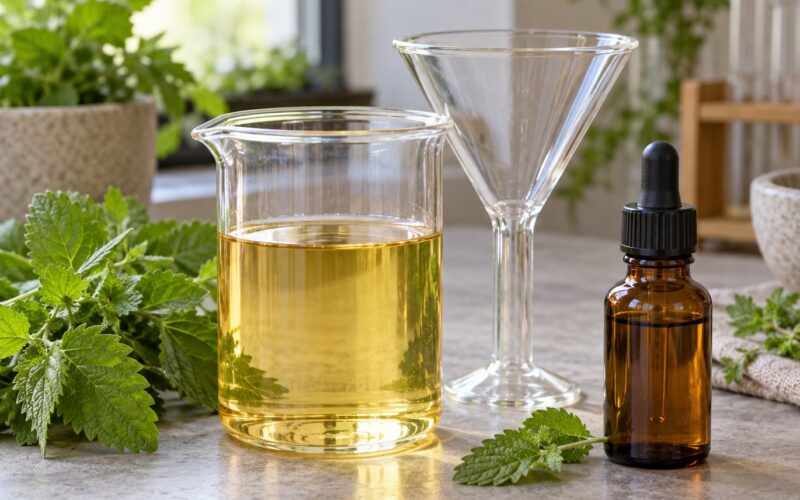
- Herbal tinctures and infused oils. Store in dark glass, away from light, with the cap tight. Alcohol-based tinctures keep better than water-based ones, and an oil preparation stored warm will smell and feel different well before its date.
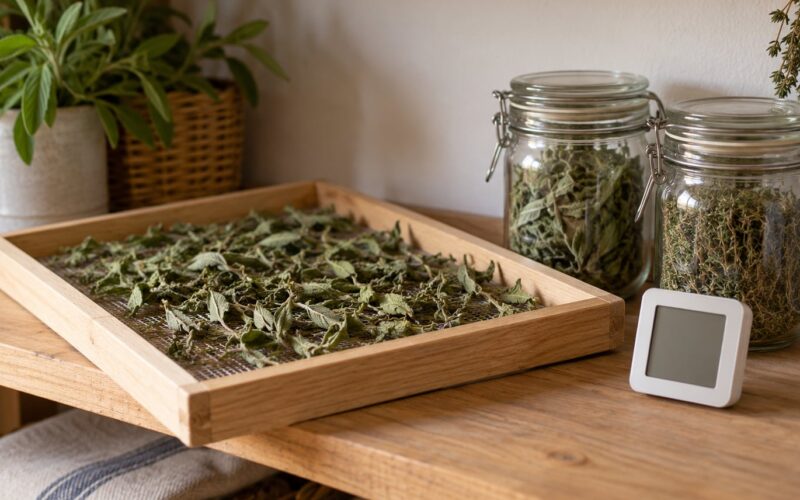
- Dried herbs and whole plant material. Keep them airtight and dark, not just in a paper bag. If a bag of dried leaf sits open in a humid kitchen it will reabsorb moisture, and colour and aroma are the fastest tells. Squeeze a handful: if it feels leathery and limp rather than crisp, it has taken on water.
When in doubt, the label wins over anything on this list. Some herbal preparations are made for the fridge from the moment the bottle is opened, and no general rule beats that instruction.
Step 5: Inspect and Replace Supplements Regularly
Put a five-minute check on your calendar once a month. Walk the storage location and read dates, then pick up one bottle from each category. Sensory checks are the second line of defence after the date, and they catch a lot that a date cannot.
Look for a seal that has loosened, a cap that no longer clicks, a desiccant packet that has gone soft or disappeared, a powder that has hardened into a block, gummies stuck together, capsules that have fused or shells that crumble between your fingers, liquid that has separated or clouded, and dried herbs that have lost their colour or smell of nothing. Any of these means the product is not worth trusting, whatever the date says.
Move the oldest bottle to the front and write the open date on the label with a pen. Rotating oldest-first is what stops the supplements at the back of the shelf from quietly expiring. If something is past its date or shows spoilage signs, take it to a pharmacy take-back point where one exists, and never flush supplements down a drain, because the water treatment process is not designed to remove them.
If you are unsure whether a product is safe to keep taking, stop using it until you have asked a pharmacist, and take the bottle with you so they can read the lot number and expiration date. That is the moment the step has really worked: you have an answer instead of a guess.
Common Mistakes
Almost every spoiled bottle traces back to one of these. The fix is usually a move, not a purchase.
- Living in the bathroom cabinet. Fix: move everything to a bedroom closet or an interior kitchen cabinet. This is the single change people on supplement forums regret most, once they realise where their bottles have been sitting.
- Leaving the cap loose or the container open on the counter. Fix: snap the cap fully shut and return the bottle immediately.
- Decanting everything into smaller jars. Fix: keep the original container, label any decanted portion with the product name and open date, and refresh it weekly.
- Mixing two products into one bottle. Fix: one product per container, always. Different lot numbers, dates and doses matter when something goes wrong.
- Throwing out the desiccant packet. Fix: put it back. It is the cheapest moisture protection you will ever have.
- Buying the largest bottle and leaving it open for months. Fix: buy a size you will finish inside a few months, and rotate oldest-first so nothing sits past its date.
- Refrigerating everything by default. Fix: refrigerate only what the label tells you to. Readers on forums describe starting a fridge habit and stopping it once they found condensation forming on capsules taken straight from the cold.
- Leaving bottles in the car or in a hot garage. Fix: bring them in with you. A parked car in warm weather exceeds the tested range of any shelf life claim on the label.
A few extra habits help. For travel, keep supplements in your carry-on rather than checked luggage, since hold temperatures swing widely, and use a small airtight vial with a label rather than a pile of loose bags. For a hot car, the rule is simple: nothing stays in the vehicle longer than the errand.
With children and pets in the home, store everything high up or in a locked cabinet. A child-resistant cap slows a determined toddler down but does not stop them, and that matters even more for products where an accidental handful would be dangerous, such as iron-containing supplements, vitamin A, vitamin D and concentrated fish oil. Keep the original packaging for those, and ask your pharmacist to point out which of your own bottles fall into that group.
Frequently Asked Questions
How long can supplements be stored after opening?
It depends on the product, but a good rule is to use dry capsules and tablets within one to three months of opening, and powders, gummies and softgels sooner rather than later. The date on the bottle assumes proper storage, and opening it repeatedly lets humidity in. Once a powder clumps or gummies fuse together, treat them as expired even if the printed date has not passed. Mark the open date on the label so you are guessing less.
Do supplements need to be refrigerated?
Usually not. Most dry capsules, tablets, gummies and powders are made for stable room temperature between 15 and 25 C (59 and 77 F), and refrigeration can do more harm than good because pulling cold bottles out of a fridge in humid air causes condensation on the surface. Refrigerate only when the label says so, which is common for live probiotics and some liquid and herbal preparations, and follow the label wording exactly.
Can vitamins be stored in a humid bathroom?
A bathroom is close to the worst spot in a home for supplements. Shower steam and humidity get past a medicine cabinet door and settle on tablets and capsules, which softens them and encourages microbial growth on powders. It is worth moving your whole supply to a bedroom closet or an interior kitchen cabinet instead, and treating anything that already sat in the bathroom as suspect if it has been there more than a couple of months.
How can I tell whether a supplement has gone bad?
Use your senses plus the date. Look for a loose seal, a cap that will not click, capsules fused together or shells that crumble, hard-clumped powder, gummies stuck in one block, oil that has separated or smells faintly rancid, and dried herbs that have lost their colour. Also discard anything past its expiration date. Where a product is one you take daily, ask your pharmacist rather than guessing.
Should supplements be kept in their original containers?
Yes, and it is the easiest habit to keep. The original container carries the label directions, the lot number, the expiration date, the warnings and usually a desiccant packet, plus a child-resistant cap. If you decant for convenience, keep the original as the record and label the new container with the product name and the date you opened it. Never combine two different products into one bottle.
How should supplements be stored while traveling?
Carry them in your hand luggage rather than checked bags, because hold temperatures swing far beyond the 15 to 25 C (59 and 77 F) range most products are tested for. Pack them in a small airtight vial or resealable bag, keep the original labels or a photo of them, and avoid leaving the container in a parked car or on a hot windowsill while you are at your accommodation.
Start with the easiest fix: walk through your home and move every supplement out of the bathroom, off the kitchen counter and out of the car, into one cool, dark, stable spot. Then snap every cap shut, put any desiccant packets back, and write an open date on anything already in progress. If any product is past its date or has clumped, fused or changed smell, set it aside and take the bottle to a pharmacist, and remember that the label directions always come first. This is general information rather than medical advice, so for anything specific to your health or your products, ask a pharmacist or the manufacturer.