If you have never eaten moringa before, start by treating it as an ordinary leafy green rather than a supplement. Fresh leaves go into a pot like spinach, and dried leaves can be rehydrated, cooked or briefly steeped. The first serving should be small, gently seasoned, and eaten with a normal meal.
That is really all there is to it. Moringa oleifera, called sehjan and sohjana in India, malunggay in the Philippines and drumstick tree in much of Africa, has been eaten as a staple green for centuries. The only reason a beginner hesitates is usually flavour, not danger. This guide walks through choosing clean leaves, preparing them simply, and knowing when to stop.
Table of Contents
- 1What You Need
- 2Step-by-Step: How to Use Moringa Leaves for the First Time
- 3Step 1: Choose a Clean, Well-Sourced Product
- 4Step 2: Wash and Inspect the Leaves
- 5Step 3: Start with a Small Amount
- 6Step 4: Choose a Simple Preparation
- 7Step 5: Cook, Season, and Serve
- 8Common Mistakes
- 9Frequently Asked Questions
- 10Can you eat moringa leaves raw, or should you always cook them?
- 11How much moringa should a first-time user start with?
- 12What does moringa taste like, and how do I make it more palatable?
- 13Should a beginner start with fresh moringa leaves or powder?
- 14What side effects should I watch for when eating moringa leaves every day?
- 15When should I talk to a doctor before using moringa?
- 16Conclusion
What You Need
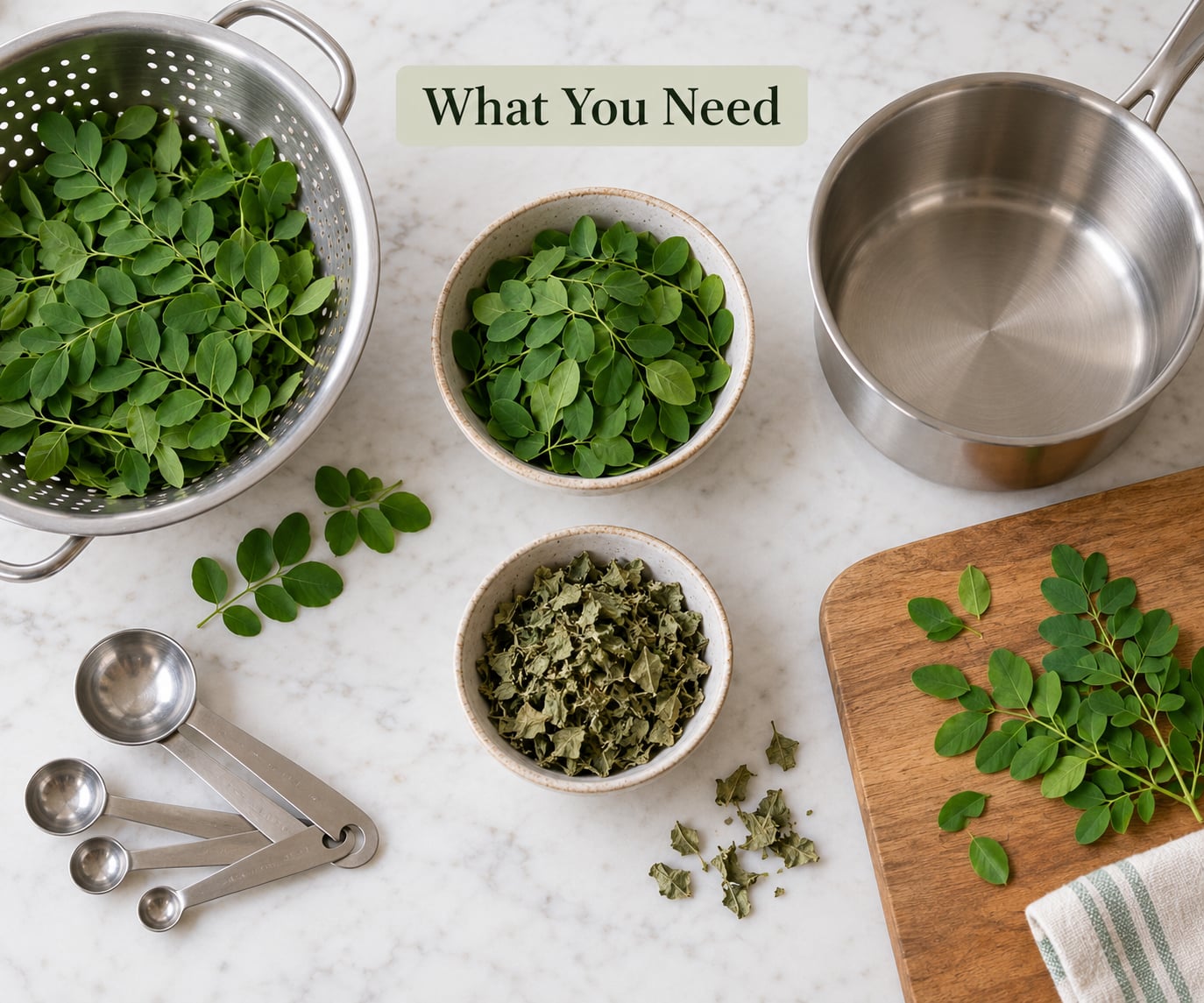
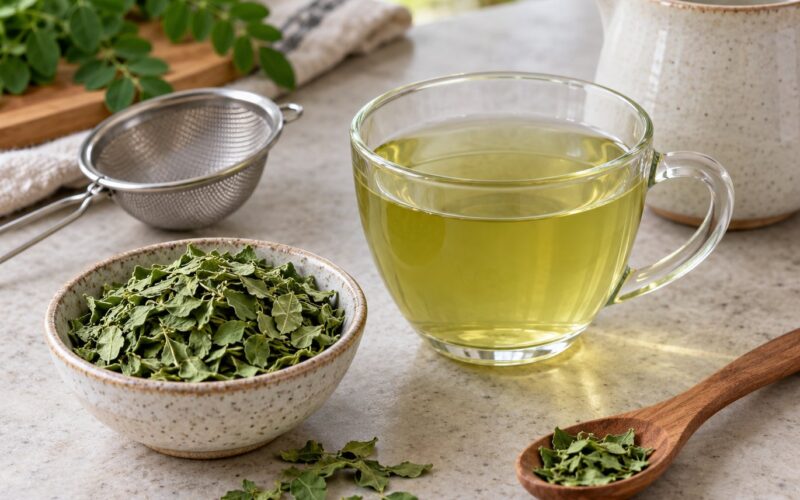
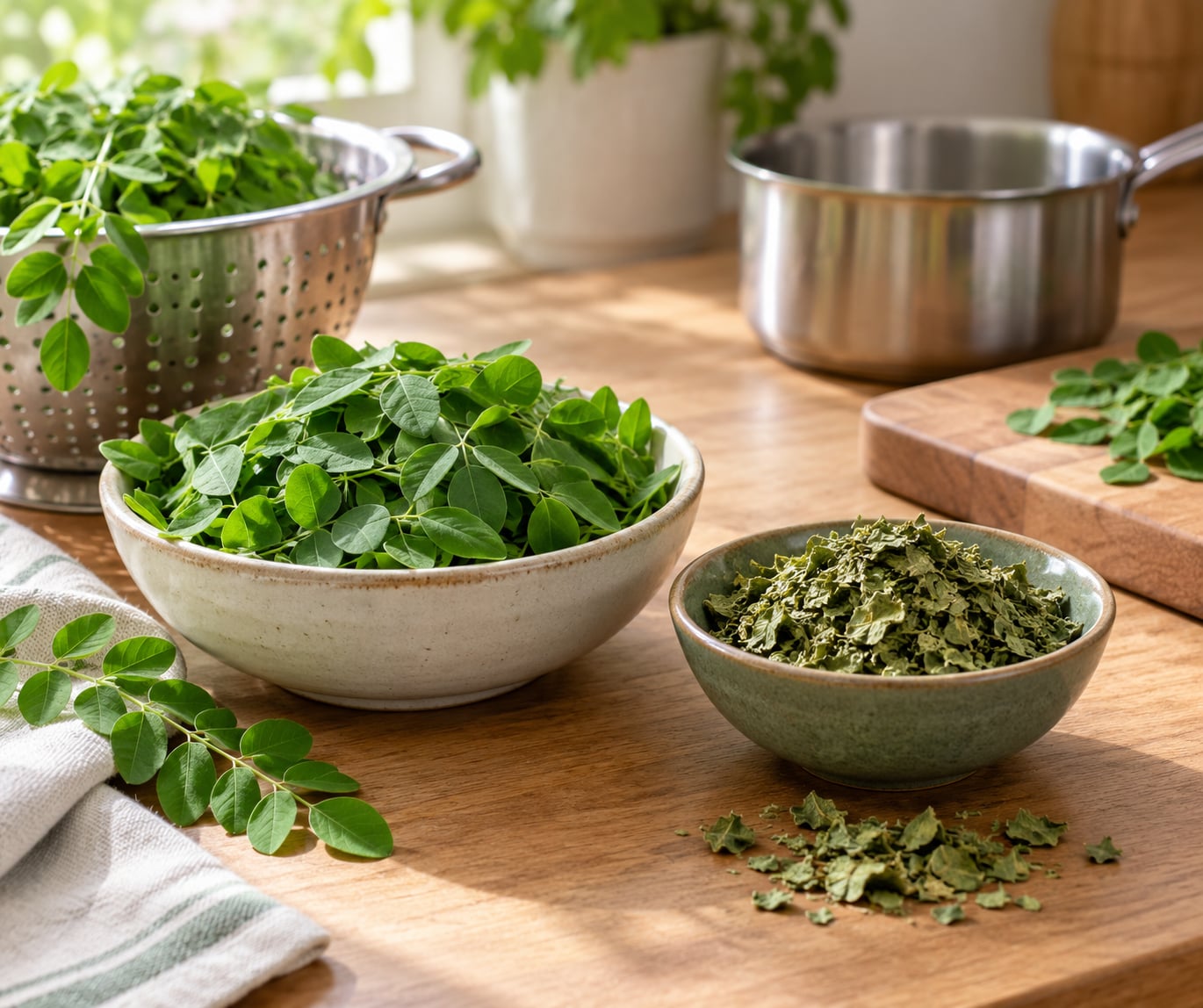
The first decision is fresh or dried. Fresh moringa leaves are small, soft and green, with a peppery note that softens noticeably when cooked. Dried leaves are brittle, duller in colour and last far longer in a sealed jar, and they need a few minutes in liquid before they soften.
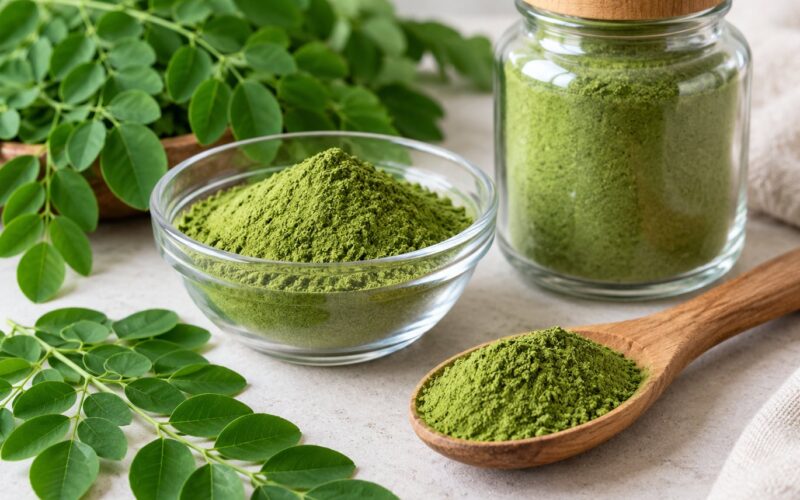
Dried leaves are not the same thing as leaf powder. Powder is what you get after grinding dried leaves, and it behaves differently in a kitchen: it disperses into smoothies and sauces, stains everything it touches, and will not dissolve in plain water. It settles as grit at the bottom of a glass. If you are nervous about taste, buy whole dried leaves or fresh leaves rather than powder.
You need very little equipment: a colander or sieve, a pot or pan, a knife and a board, and a wooden spoon or your fingers for crushing the dried leaves. That is the whole list.
On flavour pairings, moringa is a savoury green. Garlic, onion, ginger, lemon, chilli, black pepper, cumin, coriander and coconut milk all sit comfortably with it. Sweet pairings such as banana, apple and honey work too, but they mask the leaf rather than making it more palatable, which is useful when you are still deciding whether you like it at all.
Before anything else, check what you actually bought. A single-ingredient list naming moringa leaf is easy to evaluate. An unlabelled pouch of loose powder from a market stall, or a product that lists several unidentifiable botanicals, is not.
Step-by-Step: How to Use Moringa Leaves for the First Time
Step 1: Choose a Clean, Well-Sourced Product
Look for leaves you can identify. Moringa leaves have a distinctive shape: small oval leaflets arranged in pairs along a central stalk, often with a slightly glossy surface. Dried whole leaves should look like recognisable leaf fragments rather than an anonymous green dust.
Check that the packaging is intact and that the ingredient list is short and readable. A reputable supplier will state the plant by name and the part used, and will say whether the product is leaf only. Products made from root or bark carry a different risk profile from leaves, because the root and bark of this plant contain compounds that are not welcome in regular use.
Checklist before your first purchase:
- The ingredient list names moringa leaf, ideally as the only ingredient
- Loose leaves or whole dried leaves, not an anonymous fine powder
- Intact, sealed packaging with a visible date or batch marking
- A stated country of origin, and evidence of third-party testing for heavy metals if you buy imported powder
- No added fillers, sweeteners or “extract” claims on a food product
Step 2: Wash and Inspect the Leaves
Fresh leaves get rinsed under cool running water and shaken dry. Use them the same day or within a day or two, refrigerated in a closed container. If the leaves feel slimy, smell musty, or have brown or yellow patches, throw them out rather than cooking around the problem.
Dried leaves need a different check. Tip a small handful onto a plate and look for dust, small stones, insects, hair or any pale fleck that is not leaf. Rub a leaf between your fingers: it should crumble into fine pieces, not feel waxy or sticky. Clumping that feels damp or smells musty means the leaves were stored badly, and moisture plus leaf material is exactly the combination that grows mould.
Discard anything with visible mould, a musty smell, or a damp texture, whether it is fresh or dried. You cannot reliably see or smell every contaminant, which is another argument for washing fresh leaves and buying from a supplier that tests its harvest.
Step 3: Start with a Small Amount
Make a small portion. A handful of fresh leaves, or a tablespoon of rehydrated dried leaves, is plenty for one person. This is the step where beginners most often go wrong, because a scoop of powder mixed into a full glass of water is a concentrated dose by food standards, and that is how people end up with stomach cramps instead of dinner.
Two habits make the first week easier. Eat the leaves as part of a meal with other food rather than on their own, and use moringa in place of some of your usual greens rather than in addition to everything else you already eat.
Pay attention to how you feel over the following hours rather than the next day. If the taste, the texture, or anything in your stomach is uncomfortable, stop and return to it later in a smaller, better-seasoned form.
Step 4: Choose a Simple Preparation
There are three first-time preparations I would consider, in order of how easy they are to get right.
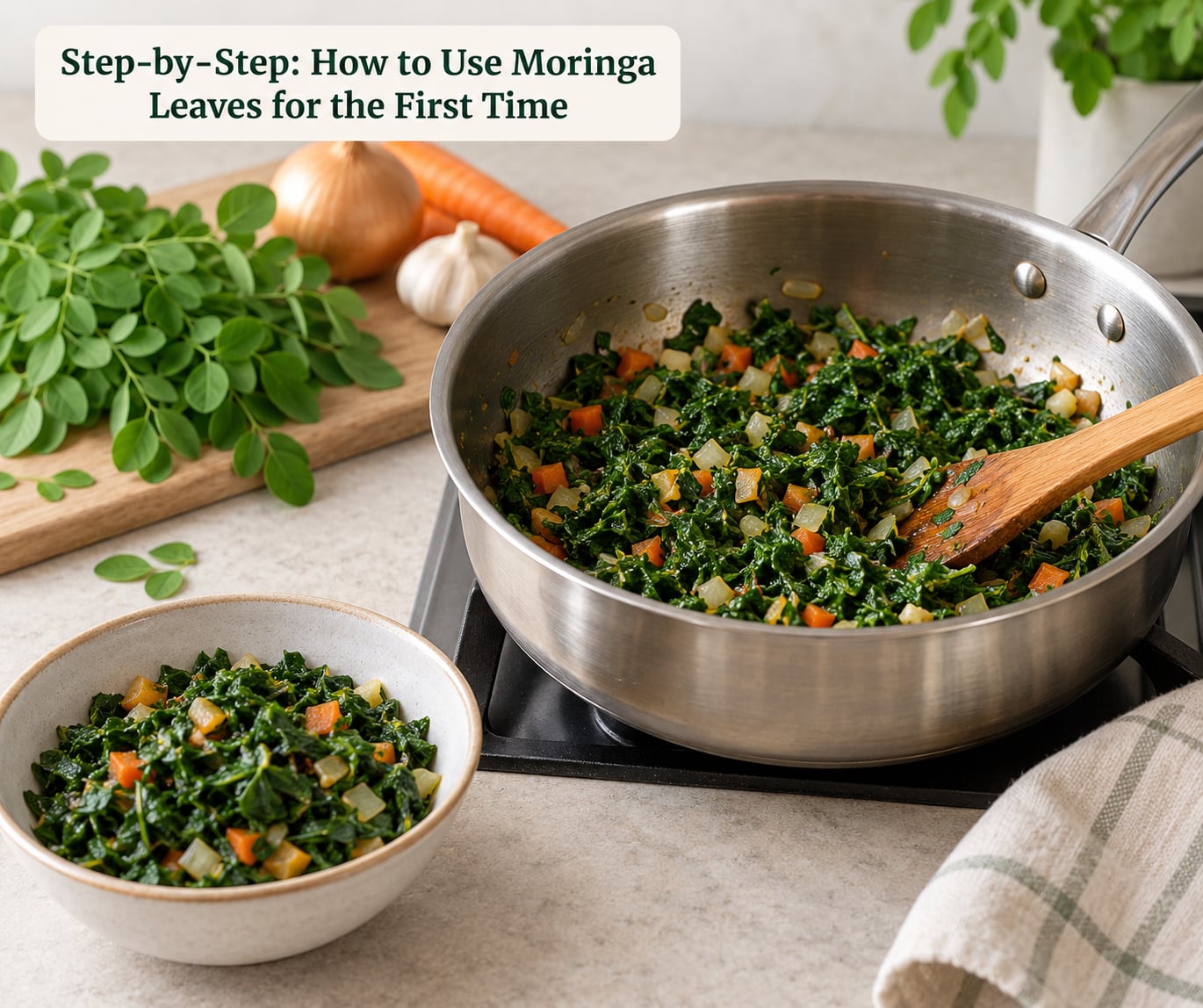
Chopped into a vegetable mixture. Strip the leaves from their central stem, chop them roughly, and add them to a pan of onions, garlic and other greens. They cook down like spinach in a few minutes.
Added to a savoury soup or dal. Simmer your soup until it is nearly done, then stir in the chopped leaves and let them cook for a few more minutes. Adding them at the end preserves more of their character than boiling them from the start.
Briefly sautéed. Warm a little oil in a pan, add the leaves, and stir for two or three minutes with garlic, ginger or chilli. This is the fastest route to something that tastes like food rather than like a plant experiment.
None of these need a blender, a dehydrator or a special pan. Avoid starting with concentrated products such as tinctures, extracts or capsules, which carry a different risk profile from food and are not what a first-time cook needs.
Step 5: Cook, Season, and Serve
Cook the leaves until they are dark, soft and collapsed, with no crisp raw edges left. Fresh leaves shrink dramatically, so judge doneness by texture and colour rather than by volume. Two or three minutes in a hot pan, or five minutes in a simmering pot, is usually enough.
Season lightly at first with salt, a squeeze of lemon, a little garlic and a pinch of chilli or black pepper. Taste before adding more. Moringa has a peppery, slightly bitter edge that people either grow to like or never do, and heavy seasoning on the first attempt can push you toward an unfair verdict.
Serve it alongside your usual meal rather than as the whole meal, and drink water with it. Fresh leaves cooked this way pair naturally with rice, flatbread or any lentil dish; dried leaves work the same way once softened.
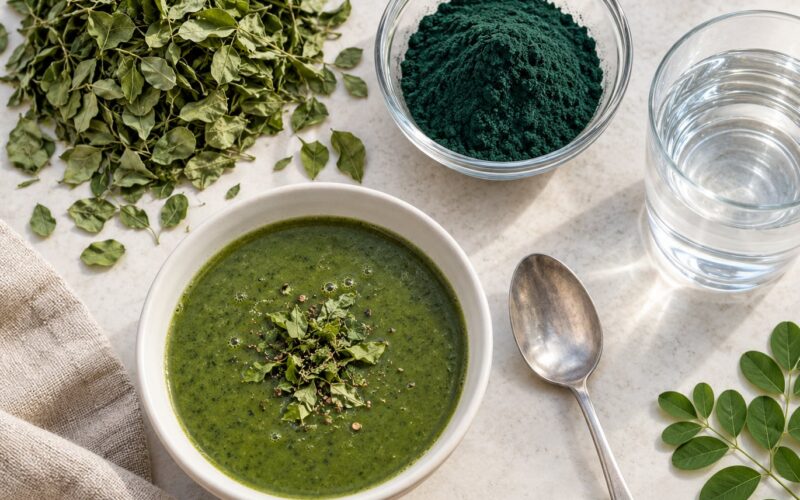
If the taste is still a problem, two options work well. Fold a small amount of powder into a fruit smoothie with banana and apple, where the fruit dominates, or eat the cooked leaves inside a dal or stew where they are one flavour among several. Both get the leaf into your diet without a stand-alone cup of green water.
Common Mistakes
Treating moringa as medicine. It is a food, and a nutritious one, but no food replaces treatment. Plenty of marketing treats a scoop of powder as a therapy. Decide in advance that you are adjusting your diet, not treating a diagnosis.
Buying unlabelled loose powder. Powder is impossible to identify by eye, and unlabelled products can contain anything. Buy sealed packaging with a single named ingredient.
Starting with a full tablespoon of powder in water. This is the most common route to a bad first impression. A teaspoon stirred into food is a much gentler entry point than a scoop in a glass.
Confusing dried leaves with powder. Dried leaves rehydrate and cook like a vegetable. Powder disperses, stains and does not dissolve. Treat them as two different ingredients.
Using root or bark preparations as if they were leaf. The root and bark of Moringa oleifera contain compounds that are not appropriate for regular consumption, and a product that does not say which part it uses is a product you should skip.
Ignoring allergies, medications or pregnancy. If you have a tree or vegetable allergy, are pregnant or breastfeeding, take any regular medication, or manage a chronic condition, talk to a doctor or pharmacist before making moringa a habit. Moringa has been studied for effects on blood sugar and blood pressure, which is exactly why it deserves a conversation with someone who knows your medication list.
Preparing it unsafely. Wash fresh leaves, cook them rather than eating large raw portions, keep dried leaves dry in a sealed container, and discard anything that smells musty or feels damp. Mould on dried leaves is a storage failure, not something to cook out.
Two more small habits. Drink water with the leaves, because moringa is mildly laxative at larger amounts and dehydration makes any stomach upset worse. And keep the leaves in a sealed, opaque container away from heat and sunlight, because light and moisture degrade the colour and the taste long before anyone can measure a difference.
Frequently Asked Questions
Can you eat moringa leaves raw, or should you always cook them?
You can eat a small amount raw, and in many cuisines leaves are used raw in salads and garnishes, but cooking is the gentler first option. Raw leaves keep more of their peppery bite, which is the flavour beginners react to most strongly. Sautéing or simmering them for two or three minutes softens that edge and makes the texture familiar. Wash fresh leaves under running water first either way.
How much moringa should a first-time user start with?
Start with a small food-level portion rather than a supplement-sized amount. For fresh leaves that means a handful cooked into a dish. For dried leaves, a tablespoon rehydrated in soup or dal. If you use powder, a teaspoon mixed into a smoothie or a cooked meal is a reasonable place to begin, and many people work up from there. Amounts that suit one person will not suit another, especially if you take medication or have a digestive condition.
What does moringa taste like, and how do I make it more palatable?
Expect a grassy, peppery flavour with a slightly bitter finish, and expect it to smell strongly green. Cooking with garlic, onion, ginger, chilli and lemon disguises it well, and so does coconut milk in a curry. Blending a teaspoon into a banana and apple smoothie is the most commonly recommended entry point. It will not dissolve in plain water, so grit at the bottom of a glass is normal rather than a sign of a bad product.
Should a beginner start with fresh moringa leaves or powder?
Fresh or whole dried leaves are the easier starting point. They behave like a vegetable, so a mild mistake still produces an edible dish, and the flavour is milder once cooked. Powder is more concentrated, stains strongly, and disperses rather than dissolves, which makes the first attempt more intense. A person who enjoys the cooked leaves can move to powder later for smoothies and for stirring into stews.
What side effects should I watch for when eating moringa leaves every day?
The most commonly reported effects of regular use are digestive: looser stools, stomach discomfort and, at larger amounts, cramping. Start with a small portion and increase only if nothing feels off. Stop and seek medical advice if you develop persistent stomach pain, signs of an allergic reaction such as swelling or difficulty breathing, or any symptom that worries you. Food use and supplement use are different, and concentrated products deserve a conversation with a clinician.
When should I talk to a doctor before using moringa?
Talk to a doctor or pharmacist first if you are pregnant or breastfeeding, take any regular medication, manage diabetes, blood pressure, thyroid or kidney conditions, or are due for surgery. Moringa has been studied for effects on blood sugar and blood pressure, so it may matter alongside the medicines you already take. The same applies if you have a known allergy to related trees or vegetables, or if a child or older relative wants to use it.
Conclusion
How to use moringa leaves for the first time comes down to restraint. Pick leaves you can identify, wash them, cook a small savoury portion with garlic, lemon and a little chilli, and eat it alongside the rest of your meal.
If the taste is not for you, move it into a smoothie or a dal rather than forcing a plain glass of green water. And if you are pregnant, breastfeeding, managing a condition or taking medication, ask a doctor or pharmacist before you make it a habit. Nothing in a first serving needs a healthcare professional, but nothing in a first serving should outrun one either.