Alkaloids are nitrogen-containing plant compounds that act as chemical defence: plants build them from amino acids, store them in particular tissues, and deploy them to deter herbivores, pathogens and competing plants. Understanding how alkaloids work in plants means following three steps. Where the compound is made, where it is kept, and what happens when something bites, chews or sucks on that tissue.
Most people meet alkaloids long before they meet the word. A cup of tea, a chocolate bar, a cup of coffee at 7am, a nicotine patch. Only a fraction of the estimated several thousand described alkaloids have been studied in detail, and almost none of the plant chemistry involved is accidental. None of it is a by-product that nobody chose. It is the result of enzyme-driven pathways that have been running, and being refined by natural selection, for tens of millions of years.
This guide walks through that chemistry, then comes back to what it means for anyone who handles medicinal plants. The short version: the reason a root decoction can be far stronger than a leaf infusion is chemistry, not tradition.
Table of Contents
- 1What Are Alkaloids in Plants?
- 2What separates an alkaloid from other plant compounds?
- 3How Alkaloids Work in Plants
- 4What happens at the level of a single leaf
- 5What Is Alkaloid Biosynthesis?
- 6Which amino acids start most alkaloid pathways?
- 7How Do Alkaloids Protect Plants From Herbivores?
- 8The four main ways they hurt an attacker
- 9Why Do Plants Make Alkaloids?
- 10How Do Alkaloids Affect Humans and Animals?
- 11Four alkaloids you meet every day
- 12Why natural does not mean safe
- 13How Do Alkaloids Move Through a Plant?
- 14Alkaloids and Traditional African Medicine
- 15What Factors Change Alkaloid Content?
- 16What Are the Main Functions of Plant Alkaloids?
- 17How Can Researchers Study Plant Alkaloids?
- 18Key Misconceptions About Plant Alkaloids
- 19Frequently Asked Questions
- 20Can alkaloids be harmful to humans?
- 21Can you give me a list of alkaloids in plants?
- 22Can you give me four alkaloids that are useful in our daily lives?
- 23How do you remove alkaloids from plants?
- 24Are alkaloids only found in plants?
- 25How are alkaloids different from glycosides and flavonoids?
- 26Conclusion
What Are Alkaloids in Plants?
Alkaloids are organic compounds built on a carbon ring structure that contain at least one nitrogen atom. Plants make them as specialized metabolites, compounds that are not needed for basic growth and respiration but for survival in a specific way. More than 5,000 alkaloids have been described, and scientists are still adding to the list.
Three features usually run through the class. There is a nitrogen-containing ring, which is where the heterocyclic label comes from. There is a degree of biological activity, which is why so many reached pharmacy cabinets. And there is a bitter or otherwise unpleasant taste, which is often the first thing an animal notices before anything else happens.
What separates an alkaloid from other plant compounds?
Plenty of plants make nitrogen, and plenty of plant compounds taste bitter. Neither fact makes a compound an alkaloid.
- Glycosides carry a sugar attached to a non-sugar part. Cyanogenic glycosides in cassava and cardiac glycosides in foxglove are the familiar examples. Many people call glycosides alkaloids in conversation, and the two groups do overlap in effect, but they are defined differently.
- Flavonoids are polyphenolic compounds built from carbon skeletons rather than amino acids. They carry most of the antioxidant activity people associate with tea and cocoa, not the alkaloid activity.
- Terpenoids come from five-carbon units joined together. Some terpenoids pick up a nitrogen atom and become alkaloids, as in the monoterpene indole alkaloids. Most do not.
- Primary metabolites are the proteins, sugars, lipids and nucleic acids every cell needs. Alkaloids are not in this group, which is a common source of confusion in biology courses.
That said, alkaloids are not strictly a plant category. Bufotenin appears in toads, batrachotoxin in poison frogs, and the same defensive alkaloids turn up in Pitohui bird feathers. So the useful definition is chemical, not taxonomic.
How Alkaloids Work in Plants
How alkaloids work in plants comes down to build, move, store and deploy. The plant assembles the compound from amino acid precursors using specialist enzymes, moves it through the vascular system to a chosen tissue, locks it into cell vacuoles, and releases it when tissue is damaged or attacked. Localization is the part most explanations skip, and it is the part that explains a lot.
What happens at the level of a single leaf
When an insect bites, cells rupture and their contents mix with enzymes in the gut of the plant. Alkaloids released at that moment interfere with the insect’s nervous signalling, its digestive enzymes, or its handling of sodium and calcium ions. Some act fast enough that the insect stops feeding within minutes.
Some plants do not wait to be bitten. Nicotine is held in the leaf vacuole and released when tissue is chewed, and it acts as a neurotoxin on the insect. Caffeine works differently: at low concentrations in nectar it is a reward rather than a penalty, and at high concentrations in the leaf it is a deterrent. Same molecule, opposite outcome.
Not all of this is about insects either. Root alkaloids leak into soil and suppress the germination of nearby plants, a mechanism called allelopathy. A few compounds chelate metal ions, keeping them in a form the plant can use but competitors cannot. And a handful behave structurally like plant growth regulators.
What Is Alkaloid Biosynthesis?
Biosynthesis is the step-by-step construction of the alkaloid inside the plant, driven by enzymes rather than assembled in one reaction. The pathway begins with an amino acid, passes through a series of intermediates, and ends with a finished alkaloid stored in a specific organ. Families have evolved different routes, so the recipes are not interchangeable between species.
Which amino acids start most alkaloid pathways?
Five amino acids account for the large majority of known alkaloid skeletons.
- Tryptophan gives the indole ring. The monoterpene indole alkaloids, which include ibogaine and reserpine, begin when tryptophan is converted to tryptamine and joined to a terpene fragment called secologanin. A single enzyme, strictosidine synthase, makes that first joining.
- Tyrosine feeds the isoquinoline family, which includes morphine and the compounds in bloodroot and barberry.
- Ornithine and arginine are the route to pyrrolizidine alkaloids and to the tropane alkaloids such as atropine and scopolamine.
- Lysine leads to the quinoline alkaloids, quinine and camptothecin among them, via a diamine intermediate.
- Histidine gives the small imidazole alkaloids, including histamine and the imidazole compounds found in some seeds.
Aromatic amino acids come through the shikimate pathway, so the shikimate route sits upstream of much alkaloid chemistry. Steroidal alkaloids follow a completely different road: they are built from the terpene-derived steroid framework, which is why they appear in yew, veratrum and nightshade relatives rather than in any amino acid family.
Two practical consequences follow from all this. Pathway enzymes are specific, which is why the same compound often appears in only a handful of plant families. And alkaloid levels sit under genetic control, which is why the alkaloid profile of a species is fairly stable even as the concentration moves around.
How Do Alkaloids Protect Plants From Herbivores?
Alkaloids protect plants by making plant tissue expensive or dangerous to eat. They interfere with an animal’s nervous system, digestion, metabolism or behaviour, and they usually do it at concentrations the plant can afford to carry. The taste alone does much of the work: bitterness signals poorly nutritious food before any damage occurs.
The four main ways they hurt an attacker
Nervous system interference. Nicotine mimics acetylcholine and overstimulates insect neurons until the insect convulses and stops. Muscarine and the pyridine alkaloids work on different receptor families but with the same result.
Digestive disruption. Many alkaloids bind to enzymes or bind up metal ions that the digestive tract needs, so the insect starves on full stomachs. Tannins are not alkaloids, but they belong to the same strategic family of leaf defence.
Metabolic and membrane effects. Solanine in nightshade family tissue disrupts membranes, and cardiac-active alkaloids in lily-of-the-valley interfere with the sodium-potassium pump in heart muscle of any vertebrate that eats enough.
Behavioural avoidance. This is the cheapest form of defence for the plant because nothing dies. A herbivore that learns one plant is unpleasant usually leaves it alone, and a bitter-tasting leaf teaches that lesson without a fight.
Not every herbivore learns. The Colorado potato beetle tolerates high levels of the potato glycoalkaloid that would sicken most insects, which is one reason that beetle is such a durable crop pest. That case is worth citing as a reminder that the defensive story is only partly true.
Why Do Plants Make Alkaloids?
Plants make alkaloids for several overlapping reasons, and only some of them are about defense. Defence against herbivores is the biggest reason, but antimicrobial action, suppression of competitors, chemical signalling and metal handling all show up clearly in research.
- Antibacterial and antifungal action. Tetrahydro-beta-carboline alkaloids have been tested as natural protectants against post-harvest pathogens in rice, kiwifruit and citrus.
- Allelopathy. Root exudates can suppress germination of plants growing nearby, buying space and nutrients without physical competition.
- Pollinator and dispersal manipulation. Low-dose caffeine in nectar is reported to improve memory in bees, which increases return visits and pollen transfer.
- Growth regulation. A few alkaloids act in hormone-like ways, including some that alter auxin transport.
- Metal chelation. Quinolines and other alkaloids can lock up iron, aluminium and zinc in a form only the plant can take up.
- Stress response. Alkaloid levels often shift under drought, high light, temperature extremes, low soil nitrogen and insect attack, which suggests a signalling role as well as a defensive one.
The honest version of the answer is that not every alkaloid has a proven job. Some are by-products of a pathway, some are waste stored until the tissue dies, and some matter mostly to the plant in ways researchers have not pinned down.
How Do Alkaloids Affect Humans and Animals?
Alkaloids affect humans and animals in a dose-dependent way: the same compound can be a mild stimulant at one dose and a serious poison at another. Their effects depend on which receptor or enzyme they bind, how quickly they are absorbed, and how fast the body clears them. Many of the most useful drugs in medicine are alkaloids, and many of the most lethal plant poisons are too.
Four alkaloids you meet every day
- Caffeine from coffee, tea, guarana and kola nut. It blocks adenosine receptors, which is why alertness rises and sleep pressure falls.
- Theobromine from cacao, structurally close to caffeine and milder in effect.
- Nicotine from tobacco, an insecticide for the plant and an addictive agonist at human nicotinic receptors.
- Morphine and codeine from opium poppy latex, opioid receptor agonists with the widest clinical record of any plant alkaloid group.
Quinine from cinchona bark, reserpine from Rauvolfia, atropine from deadly nightshade and ephedrine from Ephedra are the other names you meet often.
Why natural does not mean safe
Several features make plant alkaloids a genuine safety question. Many have narrow therapeutic windows, where the gap between a useful dose and a toxic one is small. Pyrrolizidine alkaloids in heliotrope, comfrey and some legumes cause cumulative liver damage, because the damage builds over months rather than showing up in one episode. Tropane alkaloids cause anticholinergic delirium and dangerous rises in body temperature. Aconitine from aconite roots disrupts cardiac conduction. And alkaloid medicines interact with other medicines, sometimes sharply.
That last point matters more than it first appears. Alkaloids act on the same receptors, enzymes and transporters as many prescription drugs, so a strong herbal preparation is not automatically a safe one. Anyone with a medical condition, a pregnancy, or a regular prescription should talk to a doctor or pharmacist before a concentrated plant preparation rather than after.
How Do Alkaloids Move Through a Plant?
Alkaloids move through a plant on three systems: the xylem, the phloem, and cell-to-cell vesicular transport. Nicotine made in the root of tobacco travels up and concentrates in the leaf, which is exactly where an insect will arrive. Root alkaloids in some species move downward instead and stay in the root zone, where they shape the soil chemistry.
Within a cell, alkaloids are almost always parked in the vacuole. That matters for two reasons. It keeps the compound away from the plant’s own enzymes, so it does not damage the tissue storing it. And it lets the plant release a concentrated dose the instant the cell is ruptured.
Concentration is not uniform, and that is the practical point for anyone reading a traditional preparation list.
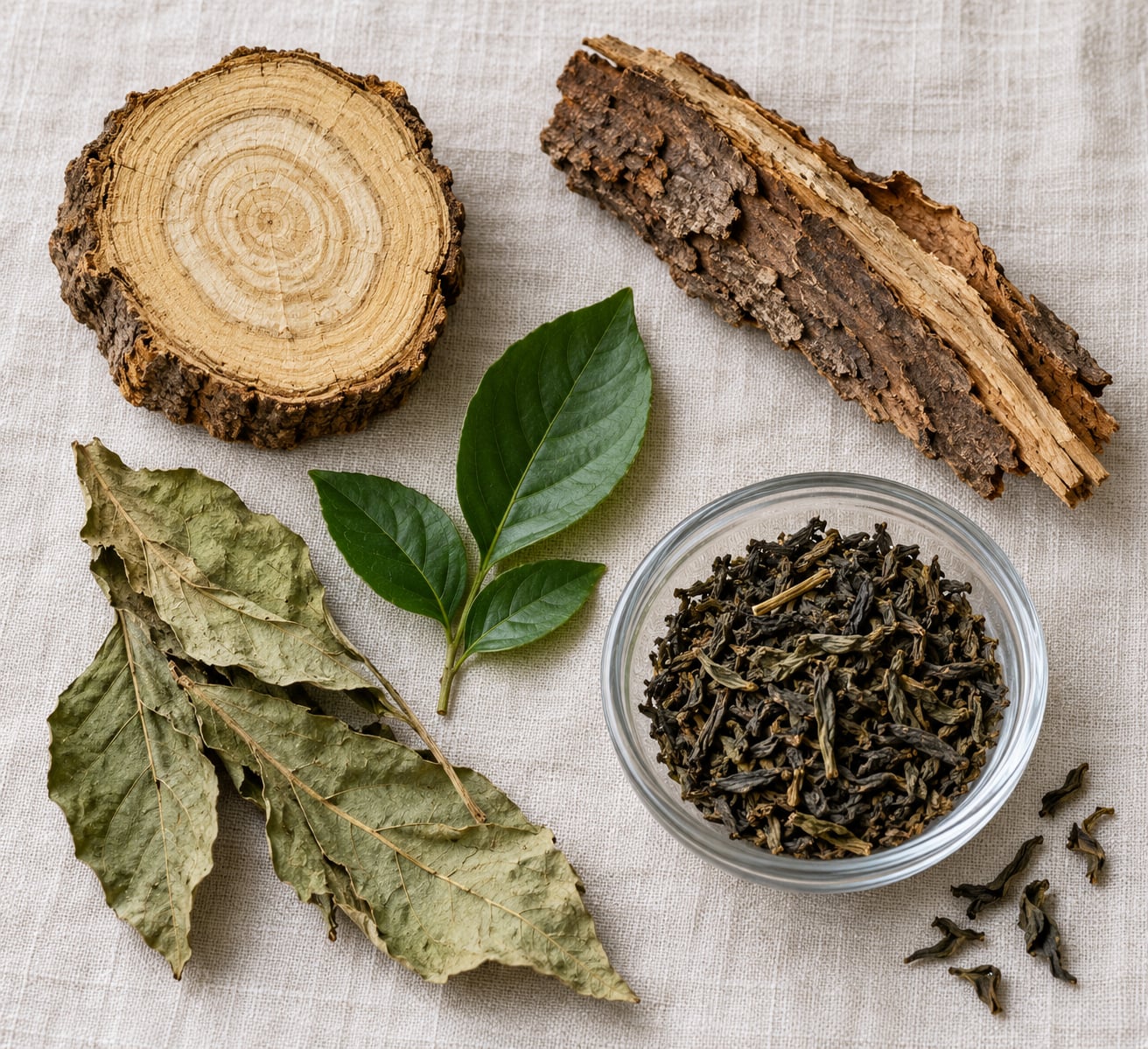
- Roots and bark often carry the highest concentrations, because they are the persistent, long-lived tissue and losing a leaf is cheap for the plant while losing the root is not.
- Seeds protect the next generation, and some species concentrate alkaloids there heavily.
- Latex, resin ducts and trichomes act as external stores in latex-bearing plants and in stinging or glandular species.
- Leaves carry the compound where browsers will meet it, often at a lower concentration but with a much larger exposed area.
This is the answer to a question that comes up constantly in herbal forums: why is a root preparation stronger than a leaf preparation of the same species. Root or bark is where the compound is concentrated, so a decoction draws more of it per gram. Whole-plant extracts average across tissues, which makes them gentler and less predictable.
Alkaloids and Traditional African Medicine
Alkaloids sit at the center of much African ethnobotanical record, and the record itself is scientifically useful. Several plants with well-documented traditional use turn out to be alkaloid-rich, which makes them easier to study and easier to dose with care.
- Iboga (Tabernanthe iboga) is an indole alkaloid source from the root bark, and its main compound, ibogaine, has been studied for opioid and stimulant use. Its administration is a serious safety question in its own right.
- Kinkeliba (Anchomanthes diffusa) root contains kinkelibine, an isoquinoline alkaloid, and is used traditionally in West Africa, where folklore and popular trade attach a long history of use to it.
- Voacanga africana contains indole alkaloids including voacamine, and features in West African ritual practice.
- African serpentwood (Rauvolfia vomitoria) is the plant source of reserpine, which moved from African traditional use into mid-twentieth century blood pressure treatment and then out of favour because of side effects.
- Kola nut (Cola nitida) carries caffeine and theobromine and sits at the centre of social and ceremonial life across West and Central Africa.
Khat (Catha edulis) is worth a separate note because it is often lumped in. Its stimulant cathinone is a phenylalkylamine, structurally close to ephedrine, and most chemists do not classify it as a true alkaloid.
Traditional use records matter because they are long, repeated observations of what happens to people, and they point researchers toward plants worth analysing. What they cannot do is establish a safe dose, prove a mechanism, or predict how two preparations from the same species compare. The plant part, the preparation method and the growing conditions all change what is in the cup.
What Factors Change Alkaloid Content?
Alkaloid content is not fixed, even within one species. Discussions in plant science and botany communities keep circling the same frustration: two plants of the same species, growing side by side, can differ enough to matter, and that changes what any traditional preparation delivers.
| Factor | Typical effect | Why it matters |
|---|---|---|
| Plant part | Root and bark usually highest, leaves moderate, fruit variable | Decides which part of a plant carries the treatment |
| Developmental stage | Levels often rise in young tissue, fall at maturity | Timing of harvest changes the profile |
| Season and time of day | Fluctuations of several-fold reported across the year and diurnal cycle | Two harvests a month apart are not the same sample |
| Light intensity | Higher light often raises alkaloid content | Shade-grown and sun-grown material differ |
| Water availability | Drought stress often raises alkaloid concentration | Drier years yield more defensive chemistry |
| Temperature | High temperature and low humidity shift accumulation | Regional differences in a traditional herb |
| Soil nitrogen | Low soil nitrogen frequently increases alkaloid content | Fertile farms are not automatically better material |
| Herbivory and pathogen attack | Attack usually triggers induced synthesis | Undamaged plants and chewed plants differ |
| Processing and storage | Water-soluble alkaloids leach away; drying concentrates | Boiling and discarding water can remove much of the load |
Researchers on pyrrolizidine alkaloid accumulation have published the same conclusion in a specific crop: sunlight intensity, water deficit, high air temperature and low relative humidity all move the concentration. That is a chemical answer to a question herbal practitioners ask constantly, and the answer is that identity alone does not tell you the dose.
What Are the Main Functions of Plant Alkaloids?
The main functions of plant alkaloids fall into a small number of recurring categories. The table below maps each class to what it does in the plant, with a named example so the category is not abstract.
| Class | Example | Source plant | Known role |
|---|---|---|---|
| Pyrrolizidine | Senecio alkaloids | Groundsel, ragwort, heliotrope | Liver-toxic defence against herbivores |
| Tropane | Atropine, scopolamine | Deadly nightshade, henbane, mandrake | Neuromuscular and anticholinergic toxicity |
| Isoquinoline | Morphine, berberine | Opium poppy, goldenseal, barberry | Analgesic action; antimicrobial and antifungal effects |
| Indole | Reserpine, ibogaine, tryptamine alkaloids | Rauvolfia, iboga, periwinkle | Blood pressure effects, behavioural activity |
| Quinoline | Quinine, camptothecin | Cinchona bark, happy tree | Antimalarial and anticancer activity in medicine |
| Quinazoline | Vasicine | Adhatoda | Antitussive and antipyretic traditional use |
| Piperidine | Coniine, piperine | Hemlock, black pepper | Nerve toxicity in hemlock; pungency in pepper |
| Purine | Caffeine, theobromine | Coffee, tea, cacao, kola | Dose-dependent deterrence and metabolic effects |
| Steroidal | Solanine, cyclopamine, taxol precursor | Potato, yew, false hellebore | Membrane disruption; potent pharmacological activity |
Read the roles column twice. Almost everything on it says the same thing from a different angle: these compounds are built to interact with biological systems, and that is the whole reason they work on us when we use them.
How Can Researchers Study Plant Alkaloids?
Researchers study plant alkaloids by matching a compound back to a plant with confidence, then separating and identifying it chemically, then testing what it does. The workflow is more repeatable than it sounds, and it is the reason the alkaloid list grew from a few hundred named compounds to several thousand.
- Identify the plant. A voucher specimen is pressed, dried and stored, so that the analysis still means something ten years later.
- Sample deliberately. Plant part, developmental stage, time of day and growing conditions are all recorded, because of the variability described above.
- Extract. Plant material is ground and soaked in a solvent such as methanol or water, which pulls out the alkaloids while leaving most bulk plant material behind.
- Separate. High-performance liquid chromatography pushes the extract through a column, and compounds emerge at different times.
- Identify. Mass spectrometry gives each compound a mass-to-charge fingerprint, compared against reference standards and published spectra.
- Test activity. Bioassays check antimicrobial, toxic or receptor effects on living systems.
- Record the uncertainty. The honest reports state sample size, conditions and variation, not just a single clean number.
That last habit is worth adopting as a reader. A paper reporting an average concentration tells you very little unless it also tells you the spread.
Key Misconceptions About Plant Alkaloids
All alkaloids are equally toxic. They are not. Some are among the most potent poisons known, like aconitine and batrachotoxin, and others are ordinary parts of a daily diet, like caffeine and theobromine. Dose and target separate them.
Natural means safe. Safety comes from dose, preparation and context, not from origin. A plant that evolved a nerve agent for insect defence has no idea what a human liver does with it.
Everything bitter is an alkaloid. Bitterness is a taste profile produced by many different compound families. Some alkaloids are not bitter, and some non-alkaloids are extremely bitter.
One plant has one fixed chemical profile. Two plants of the same species can differ in alkaloid content substantially, and the difference between leaf and root can be larger than the difference between two species.
Alkaloids exist only for defence. Defence is the dominant role, but antimicrobial action, allelopathy, pollinator effects, metal chelation and growth regulation are all documented. Some alkaloids are probably in the plant for no reason anyone has settled yet.
A traditional preparation and a purified drug are the same thing. They share compounds, but a whole-plant decoction is a variable mixture with its own pharmacokinetics. That is why the two cannot be exchanged at a given dose, and why one cannot be judged by the other.
Frequently Asked Questions
Can alkaloids be harmful to humans?
Yes. Alkaloids range from everyday caffeine to aconitine, which disrupts cardiac conduction at small doses, and pyrrolizidine alkaloids, which cause liver damage that accumulates over months. The risk depends on the compound, the dose, the preparation and other medicines being taken. Anyone with a health condition or regular prescriptions should speak to a doctor or pharmacist before using a concentrated plant preparation.
Can you give me a list of alkaloids in plants?
Common plant alkaloids include caffeine (coffee, tea, kola nut), theobromine (cacao), nicotine (tobacco), morphine and codeine (opium poppy), quinine (cinchona), reserpine (Rauvolfia), atropine and scopolamine (deadly nightshade and relatives), ephedrine (Ephedra), ibogaine (iboga), berberine (barberry) and solanine (potato). More than 5,000 alkaloids have been described.
Can you give me four alkaloids that are useful in our daily lives?
Four you meet constantly are caffeine from coffee and tea, theobromine from chocolate, nicotine from tobacco, and morphine or codeine from poppy latex, which remain the most widely used strong analgesics in medicine. Quinine from cinchona bark, added to tonic water, makes a solid fifth.
How do you remove alkaloids from plants?
Water-soluble alkaloids can be reduced by leaching: cut the plant into small pieces, soak in cold water, then boil and discard the water. Green potatoes should be discarded entirely rather than trimmed, because solanine sits at the surface and around the eyes. Alkaline treatment also reduces some alkaloids, and drying concentrates what remains, so preparation method changes the final load.
Are alkaloids only found in plants?
No. Alkaloids are defined by chemistry, not by source. Bufotenin occurs in toads, batrachotoxin in poison frogs and the same defensive alkaloids accumulate in the feathers and skin of Pitohui birds in New Guinea. Microorganisms also produce alkaloid-like compounds, including some of the ergot alkaloids that cause ergotism in grain.
How are alkaloids different from glycosides and flavonoids?
An alkaloid is a nitrogen-containing compound built on a carbon ring. A glycoside is defined by having a sugar attached to another molecule, such as cyanogenic glycosides in cassava. A flavonoid is a polyphenolic compound built from carbon skeletons rather than amino acids. Some compounds carry more than one label, so the categories overlap in practice even though the definitions are separate.
Conclusion
Plants make alkaloids with enzyme-driven pathways from amino acids and terpene fragments, then park the finished compound in whichever tissue gives the best return: a root that survives losing a leaf, a seed that carries the next generation, or a vacuole that releases a concentrated dose on contact. That single design explains why alkaloids deter herbivores, why root and bark preparations run stronger than leaf ones, and why so many of the same compounds ended up in pharmacy.
If you want to go further, start with the amino acid families, since they organise the whole field. Then identify a plant down to the species and the part. And treat every safety claim, traditional or modern, as a question that needs evidence rather than a fact that needs repeating.