To make a herbal poultice, you crush or soften one familiar plant material, mix it with a little clean water into a moist paste, spread that paste in a thin layer on clean breathable cloth, and hold the cloth against intact skin for a short time. The whole process takes about 15 minutes of active work plus time to let things cool.
It is a cheap, low-tech technique that shows up in Ayurvedic swedana, Thai lukprakob, Malay campur-campur and many African healing traditions, which is why it has survived so long. It is also easy to get wrong, usually by using a plant you cannot confidently name or by leaving the pack on after the skin starts complaining.
This guide covers materials, method, timing and cleanup. It is general information, not medical advice, and nothing here replaces a diagnosis or treatment from a doctor or pharmacist.
Table of Contents
- 1What You Need to Make a Herbal Poultice
- 2Step-by-Step
- 3Check the Ingredient and Patch-Test First
- 4Prepare the Herbal Material
- 5Make a Simple Wet Poultice
- 6Apply the Poultice Safely
- 7Remove, Inspect, and Clean Up
- 8Common Mistakes
- 9Tips for a Safer and More Consistent Poultice
- 10Frequently Asked Questions
- 11What material can I use for a herbal poultice?
- 12Can I make a dry poultice instead of a wet one?
- 13How long should I leave a herbal poultice on?
- 14Can I reuse a cloth that held a poultice?
- 15Is it safe to put a herbal poultice on broken skin?
- 16When should I stop using a poultice and see a doctor?
- 17Conclusion
What You Need to Make a Herbal Poultice
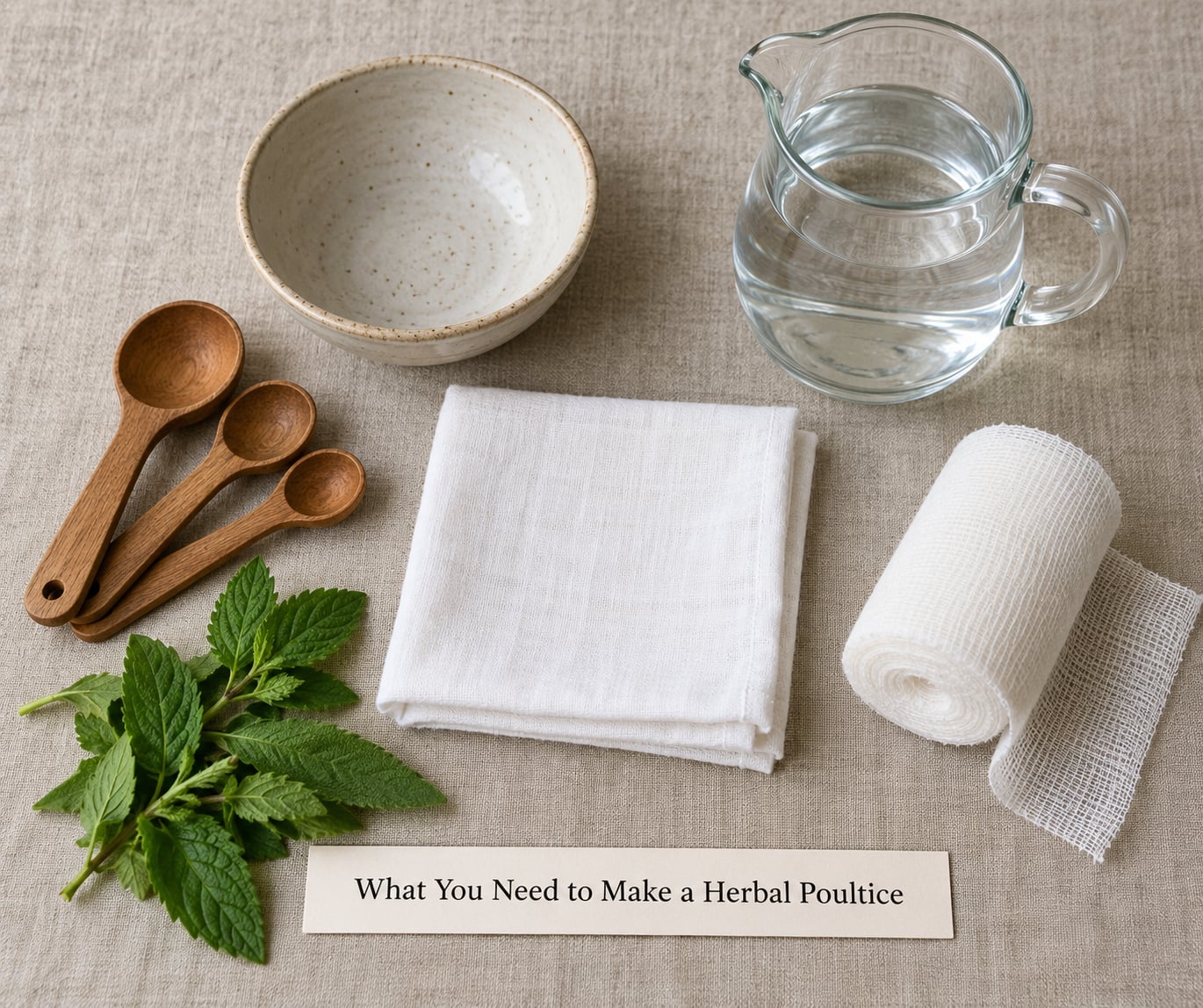
Five things cover almost every poultice you will ever make at home. Everything else is optional.
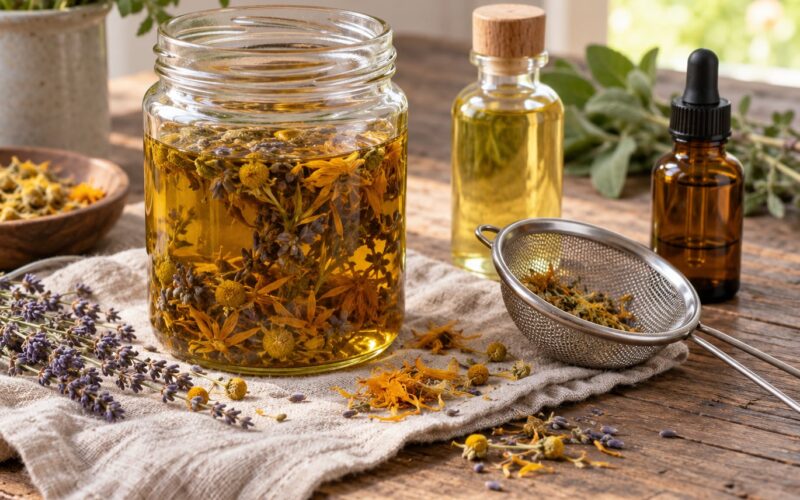
- One herbal material that you can name with certainty, fresh or dried, in an amount you would not mind discarding.
- Clean water, cool or warm depending on whether you want a cooling or warming pack.
- An optional binder such as dry oatmeal, powdered clay or plain flour, which thickens a watery mash and keeps the paste from sliding off the cloth.
- A breathable cloth such as clean cotton muslin, gauze or an old cotton pillowcase, cut larger than the area you are covering.
- Something to secure it, usually a loose bandage, a wide strip of cloth, or medical tape placed only on the cloth, never across irritated skin.
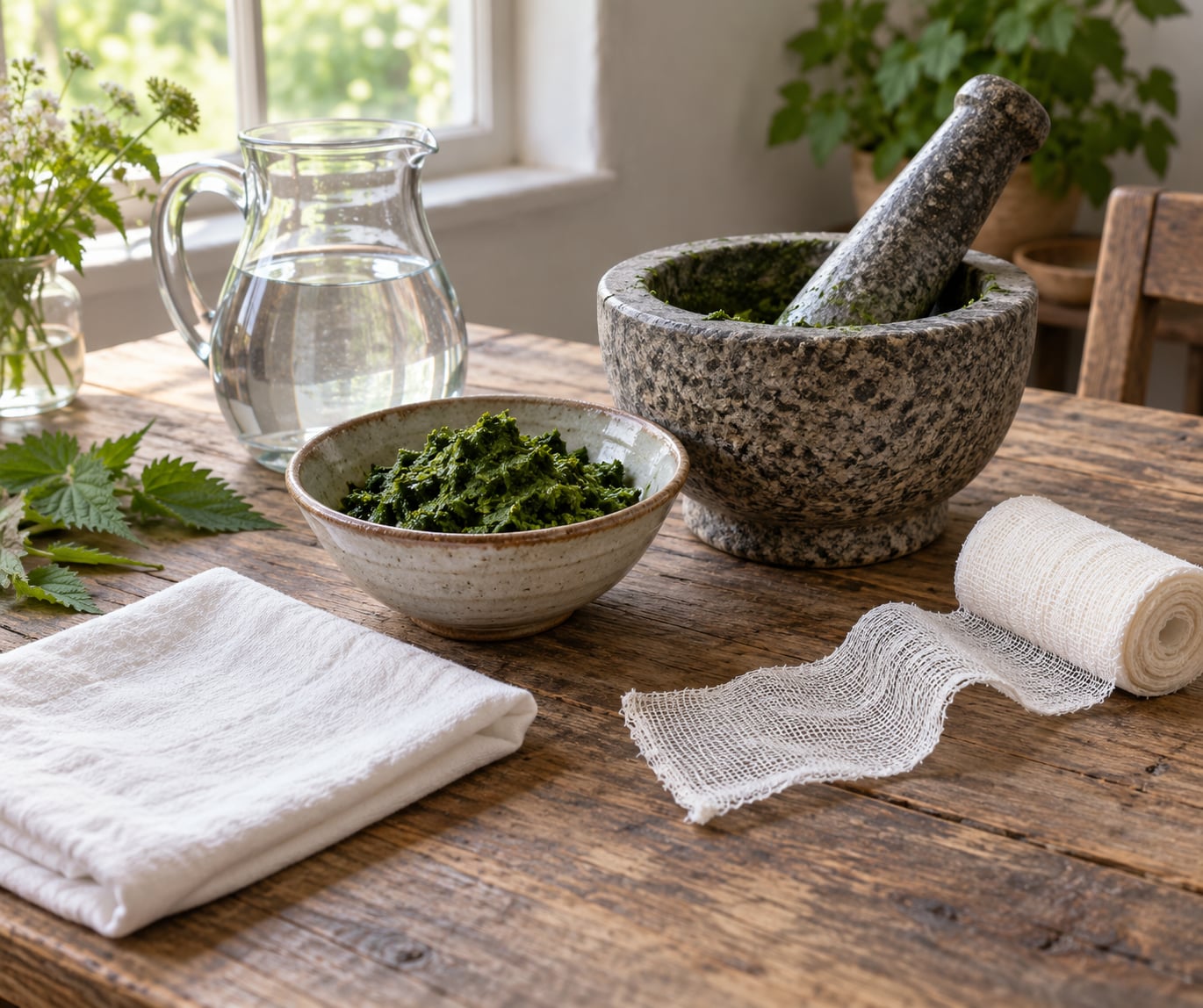
A mortar and pestle, a small bowl and a spoon complete the setup. Nobody needs a fire, a special pot or a shop-bought kit, which is exactly why poultices still show up in field first-aid kits.
Two rules apply to everything on that list. A poultice is for external use only, never for swallowing or for eyes, mouth, or genital tissue. And the plant material must be something you have identified yourself, free of mould, rot, roadside spray, chemical contamination or insect damage, because a wrong identification is the one mistake here that can do real harm.
Step-by-Step
Check the Ingredient and Patch-Test First
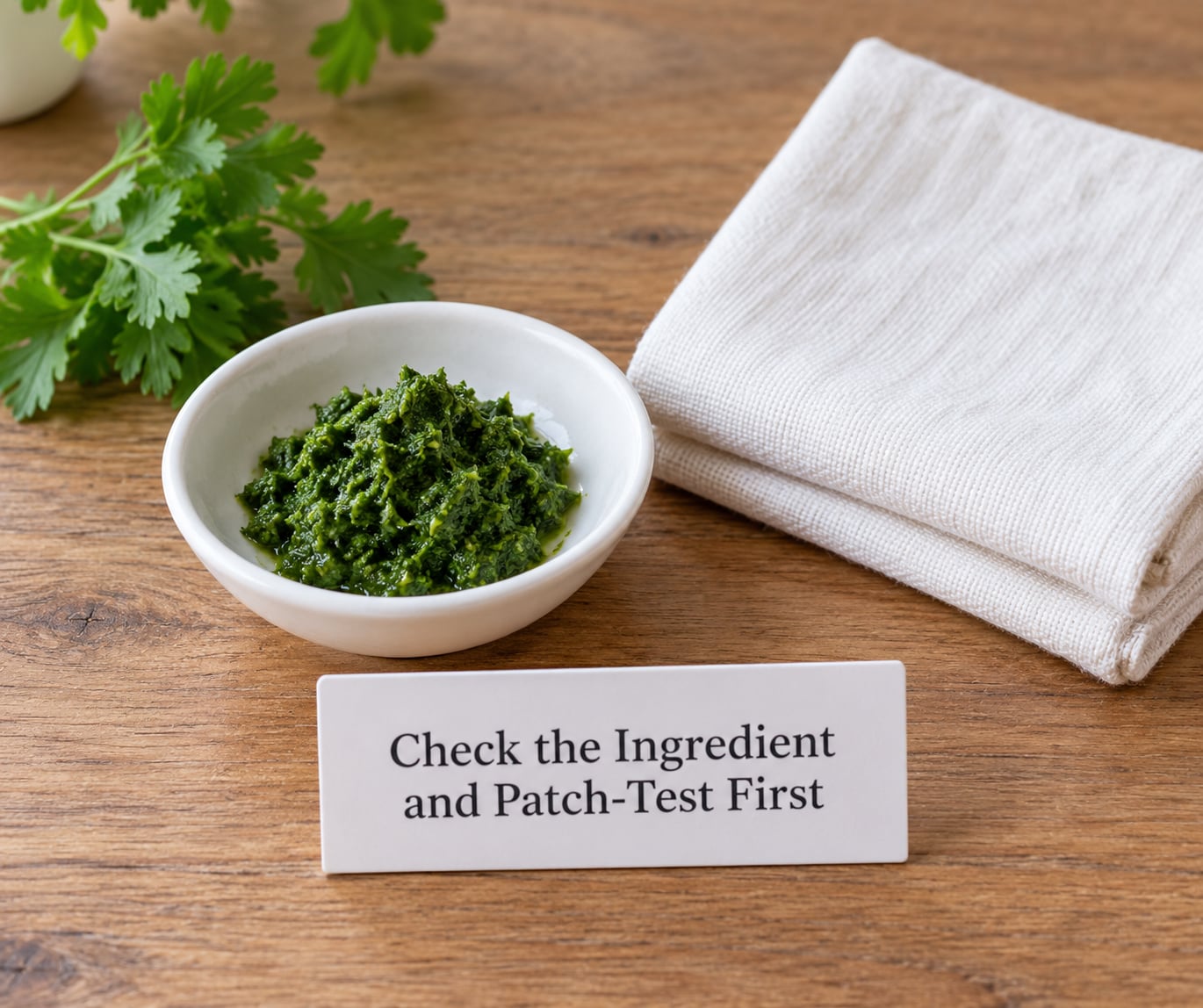
Identification comes before anything else, because the word plantain alone covers two completely unrelated plants. Broadleaf plantain, Plantago major, is the medicinal yard weed with parallel veins and no stem. The banana plant of the same name is a tropical crop that shares none of those traits, and a recipe that says “plantain” without specifying which one is an incomplete instruction.
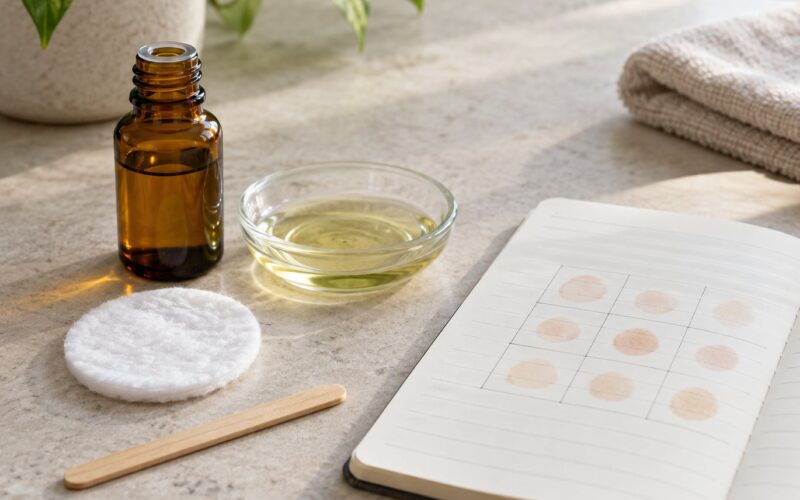
Once you have a single identified ingredient, put a dab on a small area of intact skin, usually the inside of the forearm, and leave it 15 minutes. Wash it off and look. If you see redness, itching, hives or a tight burning feeling, that plant does not go near you again.
Ask a doctor or pharmacist before you use any herbal preparation on a baby or young child, during pregnancy or breastfeeding, or if you take regular medicines. People with allergies, eczema or sensitive skin need the same caution. When in doubt about any of these, get individual advice first.
Prepare the Herbal Material
For fresh material, rinse it under cool running water, strip off damaged or discoloured leaves, and pat it dry on a clean towel. Dirt and stray bugs irritate skin, and the skin does not need that distraction.
Bruise or chop the plant just enough to break the cell walls. A mortar and pestle or the back of a spoon works; you want torn and crushed pieces, not a smooth purée. Over-processing turns the paste into sludge that dries out fast and slips off the cloth.
For dried material, check that it is clean, dry and correctly identified, and rehydrate it before it goes anywhere near skin. Cover the herb with a little hot water and let it stand 10 to 15 minutes until it swells and softens. Skip the rehydration and the powder will sit on the cloth doing nothing while the water underneath cools in seconds.
Use one ingredient at a time when you are starting out. A single plant tells you exactly how your skin responds to it; a mixed paste does not.
Make a Simple Wet Poultice
Working on a clean, dry surface, put the crushed material in your bowl and add just enough clean water to make a moist paste. Warm water helps the plant release its compounds faster and makes a warming pack; cool water makes a cooling one. You are aiming for the texture of thick wet oatmeal, not soup and not dry crumb.
Stir in a little binder if the paste runs. Dry oatmeal works well and soothes at the same time, powdered clay holds moisture against the skin, and plain flour is the cheapest option when nothing else is on hand.
Spoon the paste onto the middle of your cloth and spread it in a thin, even layer, roughly the thickness of a coin. Leave a couple of centimetres of bare cloth all around the edge so you can fold it over and trap the material inside.
Keep it loose. The goal is gentle, moist, breathable contact with the skin, not pressure, and a tightly packed layer blocks airflow and traps heat.
Apply the Poultice Safely
Place the cloth over intact skin only, in an area where you are comfortable, and fold the bare edges over the paste so nothing touches skin directly. That extra layer is your insurance policy against a plant that turns out more irritating than the patch test suggested.
Never apply a poultice to the eyes, mouth, open wounds, fresh burns or blistered skin. On broken or infected tissue, material can be pushed deeper into the wound and can carry bacteria along with it.
Secure with a loose bandage or strip of cloth. If you use medical tape, put it on the outer layer of the cloth, never directly on skin, and never wrap a poultice tightly enough to cut off circulation. Watch the fingers or toes on a limb application. Pale, blue or numb means loosen it now.
Remove the pack immediately if heat builds past comfortable, or if you notice stinging, itching, redness, swelling or increasing pain. Persistent or severe symptoms need medical assessment rather than a second application.
You can cool or warm a fresh batch and reapply once or twice while the area stays calm and unbroken, but a poultice that has warmed past comfortable is finished. Throw it out and start again with a cooler batch rather than reapplying it as is.
Remove, Inspect, and Clean Up
Take the pack off based on comfort, not on a promise about what it is doing. Long-lying overnight poultices are not recommended, because moisture held against skin for hours is exactly the setup behind contact dermatitis and maceration.
Look at the skin afterwards. Gentle pinkness that fades within an hour after you clean it off is one thing. Redness that lingers, blisters, a tight rash or pain that outlasts the pack means stop using that herb and get advice.
Discard the used plant matter in the bin rather than the compost heap, especially if you applied it to broken or questionable skin. It carries whatever was on the surface of your skin and it is not something you want in a compost that feeds garden plants.
Wash your hands with soap and water, and launder the cloth separately with your laundry or by hand. Never reuse a cloth that held a poultice on another person, and never reuse it on broken skin.
Common Mistakes
Using a plant you cannot name. Herbal folk names overlap between regions, and a good recipe with a wrong plant is still a wrong poultice. Identify it from a reliable field guide with clear photographs and a description of leaf arrangement and stem, and skip any wild-harvested or unidentified material.
Putting the paste straight on skin. Direct contact concentrates the plant and makes irritation far more likely. Always have cloth between the plant material and your skin.
Making it too wet or too thick. A watery mix soaks the cloth and dries the skin out underneath; a stiff paste pulls at the skin when you peel it off. Adjust with a little more water or a spoon of binder until it holds together without dripping.
Leaving it on after discomfort starts. Rising heat, itching, spreading redness or pain is your signal, not a challenge to push through. Take it off, wash the skin, and reassess whether a poultice is appropriate at all.
Reusing a contaminated cloth. Used cloth carries skin cells, bacteria and plant residue. Wash it thoroughly, and keep a dedicated cloth for poultices that nobody else touches.
Treating a serious symptom at home. A spreading red streak, pus, fever, worsening pain, a bad smell, swelling that keeps growing, or any breathing difficulty needs a clinician, not another batch of plant material. Severe pain, breathing problems, spreading redness, swelling and fever are the four things we send people to a doctor about without hesitation.
Two more traps catch people out. Essential oils added undiluted, and cayenne or other capsaicin sources used straight, cause real chemical burns on skin. If you use them at all, dilute heavily in a carrier or skip them.
Tips for a Safer and More Consistent Poultice
Stay with one ingredient until you know your own skin well enough to try a second. That habit makes reactions traceable instead of a guessing game between three unknown plants.
Keep tools clean and dry. Wash the mortar and pestle and let it dry fully between batches, because leftover residue from a previous herb goes right into your new paste.
Choose breathable fabric. Cotton and muslin let heat and moisture escape, which keeps skin comfortable and reduces irritation. Synthetic or tightly woven material traps sweat and worsens problems.
Write down what you used and how the skin reacted. A few lines in a notebook save you from repeating an herb that burned you, and after a year you have your own working record instead of someone else’s recipe list.
One honest word about evidence. A long history of traditional use across many cultures is real and worth knowing, but it is not the same as clinical proof that a poultice treats a specific condition. Claim that a plant does X is not a reason to use it on a wound. If you have allergies, sensitive skin, pregnancy concerns or symptoms that keep going, ask a doctor or pharmacist for advice tailored to you.
Frequently Asked Questions
What material can I use for a herbal poultice?
Clean cotton muslin is the most common choice, and it is breathable, cheap and easy to find. Old cotton pillowcases work well and can be cut to size. Gauze is thinner and dries faster, which suits small areas. Avoid synthetic or tightly woven fabric, and never let the plant material touch skin directly. Wash any cloth before first use and keep a separate cloth for poultices.
Can I make a dry poultice instead of a wet one?
A dry version is possible, usually dried herb powder mixed with a binder and applied as a thick layer on cloth, but a wet poultice is the standard method and works better at holding moisture and warmth against the skin. Dry material also tends to fall off the cloth and can irritate as it moves. If you dry your own herbs, store them airtight and away from light and check for mould before use.
How long should I leave a herbal poultice on?
Keep a poultice on for a short period and base the decision on comfort rather than on a hoped-for result. Check it every 15 to 20 minutes. Leave overnight applications off, since hours of trapped moisture is the usual cause of contact dermatitis and macerated skin. If the pack becomes hot, or you notice stinging, itching, redness or swelling, take it off straight away.
Can I reuse a cloth that held a poultice?
You can reuse it for your own intact skin after washing, but never for another person and never on broken skin. Launder the cloth with soap and water, and let it dry fully before storing it. Used cloth carries skin cells, bacteria and plant residue, and reusing it is a common way to spread irritation. A dedicated cloth kept for poultices is the simplest habit.
Is it safe to put a herbal poultice on broken skin?
No. Do not apply a poultice to open wounds, fresh burns, blistered skin or infected areas, because plant material and bacteria can be pushed into the tissue and occlusion can trap warmth and moisture over a wound. On intact but irritated or broken skin, use a doctor or pharmacist instead. Signs such as spreading redness, pus, fever or worsening pain always need professional care.
When should I stop using a poultice and see a doctor?
Stop immediately if you feel burning, itching, hives, increasing pain or swelling, and wash the skin with plain water. Seek medical care rather than reapplying if you notice spreading redness, pus, a bad smell, fever, swelling that keeps growing, or pain that outlasts the pack. Anyone with allergies, sensitive skin, pregnancy concerns, or symptoms lasting more than a few days should get individual advice first.
Conclusion
The safest way to learn how to make a herbal poultice is to start with one ingredient you can name with certainty, patch-test a small amount on intact skin, and then apply the paste on clean breathable cloth over the area that feels comfortable.
Keep batches short, watch the skin often, and throw the used material away rather than leaving it on longer in the hope of a better result. Traditional use across many cultures tells us these plants have a long place in household practice; it does not replace a diagnosis.
Seek medical care for severe pain, breathing problems, spreading redness, swelling that keeps growing, pus, or fever, and for any symptom that worsens instead of settling.