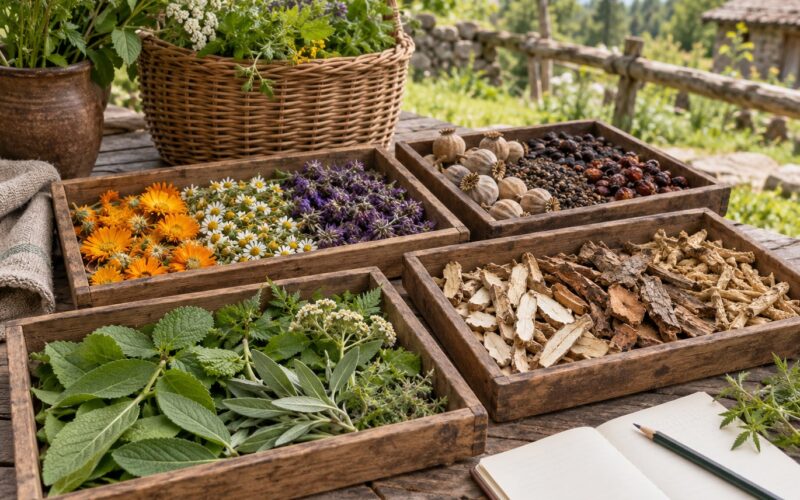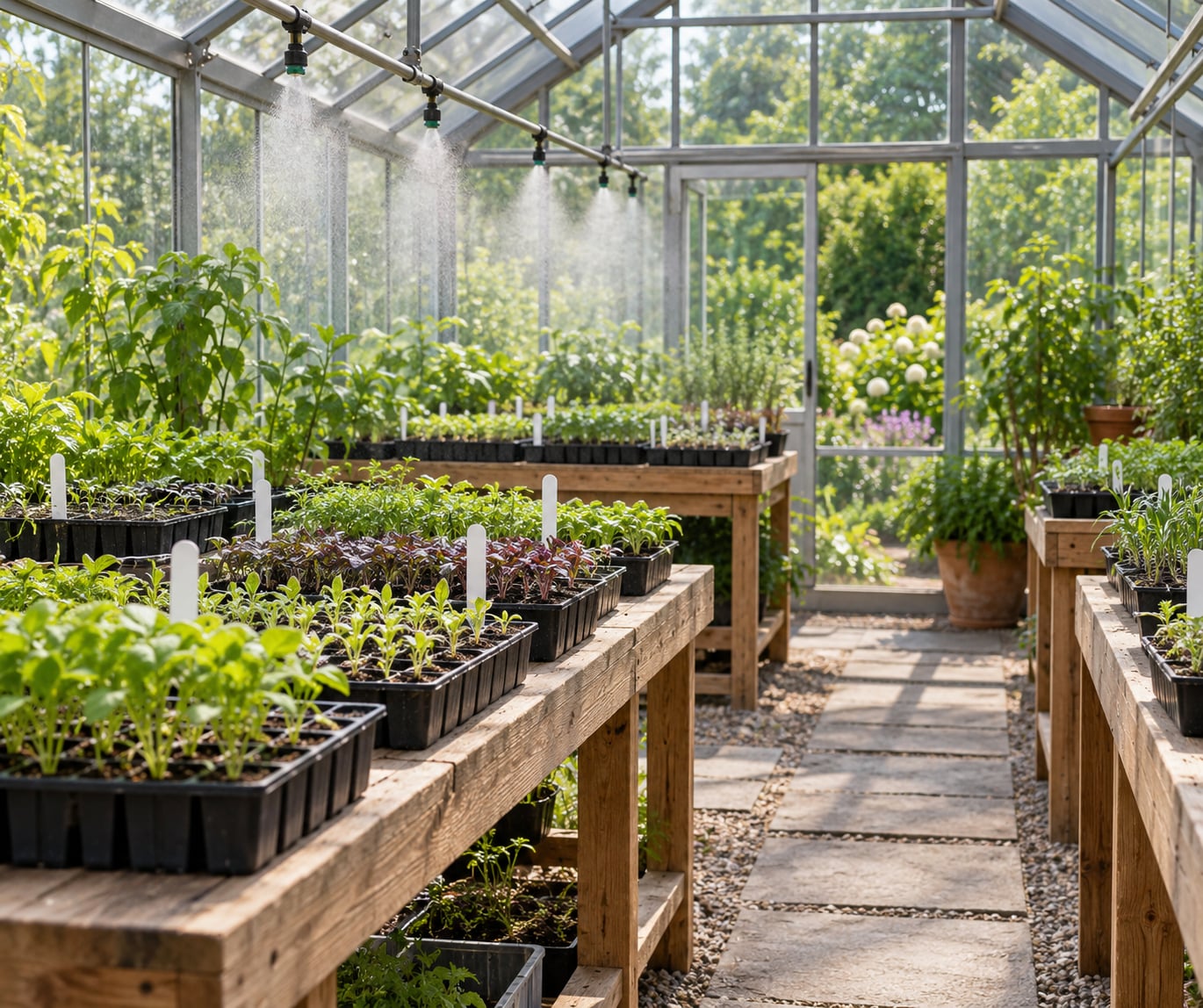
Botanical gardens protect rare plants by keeping living collections under controlled conditions, banking seeds for long storage, propagating plants so no single population carries all the risk, and putting nursery-grown material back into protected habitat when a site is ready. They do all of it with records attached, because a plant nobody can trace is a plant nobody can use. Here is how the pieces fit together.
The work sits somewhere between a museum and a working farm. A conservator will spend an afternoon counting seedlings in a tray the way an archivist counts manuscripts, and the next morning she will be explaining to schoolchildren why a plant with five leaves left in the wild is not a curiosity but a warning.
The stakes are high. Around two in five plant species face extinction risk, and the pressures behind that number are familiar ones: habitat conversion, a shifting climate, invasive species, and plants simply being dug up or picked faster than they can recover.
Table of Contents
- 1What Is a Rare Plant?
- 2Why Botanical Gardens Are Important for Plant Conservation
- 3How Botanical Gardens Protect Rare Plants
- 4How Botanical Gardens Protect Rare Plants Day to Day
- 5Propagation Creates a Second Line of Defense
- 6Seed Banks Preserve Genetic Material for the Future
- 7Living Collections Require Careful Genetic Planning
- 8Restoring Rare Plants to Protected Habitats
- 9Monitoring Shows Whether Conservation Is Working
- 10How Botanical Gardens Avoid Introducing Threats
- 11Why Gardens Cannot Protect Rare Plants Alone
- 12Frequently Asked Questions
- 13What is the difference between conserving a rare plant in a botanical garden and protecting it in the wild?
- 14Can every rare or endangered plant species be stored in a seed bank?
- 15Why do botanical gardens record where each plant was originally collected?
- 16How do gardens prevent rare plants from cross-pollinating and becoming genetically mixed?
- 17How can visitors support botanical garden plant-conservation programs?
- 18Conclusion
What Is a Rare Plant?
Rarity has an official definition. The IUCN Red List sorts species into categories based on population size, how many locations they occupy, and how fast they are declining. A vulnerable species has a large enough population to be recovering or stable, an endangered species has fallen into a very small range and is still shrinking, and a critically endangered species faces extinction in the near term.
Extinct in the wild is the category people find hardest to believe. It means the species survives only in cultivation, in seed banks, or in a handful of carefully tended individuals in the wild. Franklinia alatamaha, a small flowering tree from the southeastern United States, disappeared from its native habitat and now exists in gardens, and it is the standard example in any conversation about why collections matter.
Small population is not the only way a plant qualifies as rare. Some species live in one place on one narrow strip of soil and never had many individuals. Others were once common and are common still, but only in a tiny fraction of their historical range. A species that exists in four locations and a species that exists in ten thousand scattered individuals are both rare, and they need different kinds of help.
Taxonomists use the word taxon, plural taxa, to describe any formally recognised unit of plants. When a conservation programme says it protects 1,400 taxa, it is counting species, subspecies and varieties, not just species names. The Center for Plant Conservation, for instance, holds more than 1,400 rare North American taxa in conservation collections, and that number counts close relatives as separate entries.
Why Botanical Gardens Are Important for Plant Conservation
A botanical garden is an institution that grows, documents and conserves living plant collections for research, education and species survival, and that holds documented collections of living plants for scientific study. That is the formal definition, and the documentation part matters more than most visitors realise.
It separates a botanical garden from a nature reserve. A reserve protects a place and everything living in it, including species nobody has catalogued. A garden takes individual species out of the landscape and holds them under human care, which buys control but costs context. Good programmes run both.
Scale is the other difference. A survey of 1,116 botanical gardens run by the Botanic Gardens Conservation International found the sector holding 105,634 species, roughly 30 percent of the 350,699 species then recognised worldwide, and about 40 percent of endangered plant species. Only around 5 percent of those holdings were nonvascular plants such as mosses, liverworts and hornworts, and tropical species were thinly represented compared with temperate ones.
Those gaps are the argument. If gardens only hold what is easy to grow, the safety net has holes in exactly the places where plants are most vulnerable. That is why deliberate collection planning, not luck, decides how useful a garden’s collection will be twenty years from now.
Gardens also carry a mandate that few institutions do: they exist in public view. An orchid in a glasshouse at Kew or the Missouri Botanical Garden is a billboard. People arrive expecting flowers and leave understanding that a plant can be a national asset.
How Botanical Gardens Protect Rare Plants
Eight things happen repeatedly, and they build on each other rather than sitting in separate departments.
First, gardens survey and document wild populations, because you cannot protect what you have not counted. Second, they reduce immediate loss by controlling pests, fire and vandalism around conservation collections. Third, they propagate plants, creating backup populations. Fourth, they manage genetic diversity so collections do not drift toward one parent. Fifth, they bank seeds, which is cheap insurance measured in decades. Sixth, they restore habitat so there is somewhere for a species to return to. Seventh, they monitor outcomes over years, because a planting that fails silently is worse than no planting. Eighth, they train people, since a seed bank run by someone who cannot identify the species it holds is a very expensive box of sand.
The threats a plant faces and the garden method that answers them line up fairly neatly.
| Threat to rare plants | How botanical gardens respond |
|---|---|
| Habitat loss and fragmentation | Living collections, propagation, and long-term habitat restoration work with land managers |
| Climate change | Climate risk assessment, exchange between gardens, and collections of material from a wider range of source populations |
| Invasive species and disease | Quarantine, sanitation, pest control and path-garden isolation |
| Overharvesting and illegal collection | Documented, permission-based collection and nursery-grown substitutes supplied instead of wild plants |
| Small or inbred populations | Genetic planning, minimum population sizes and managed exchange of material between institutions |
How Botanical Gardens Protect Rare Plants Day to Day
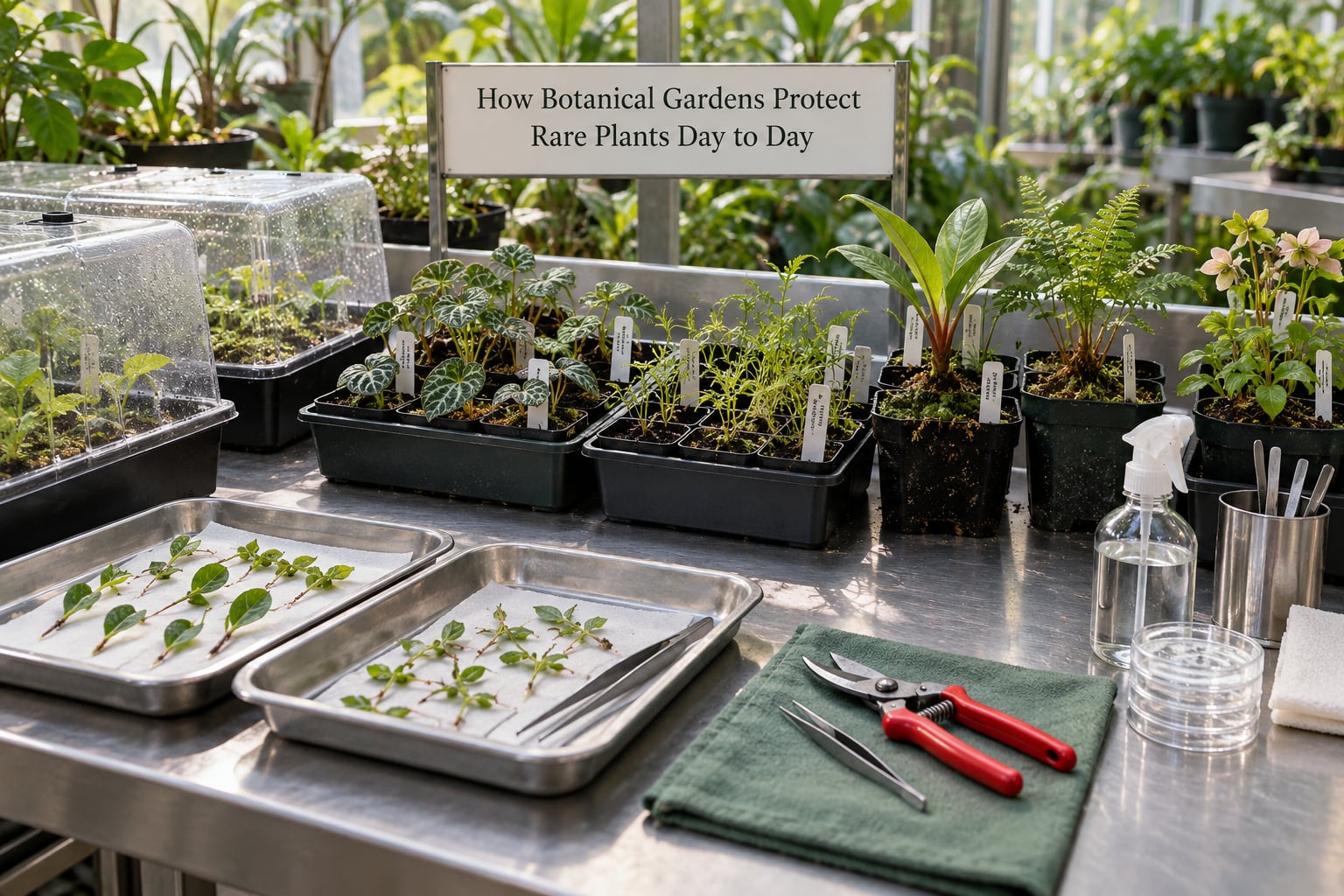
The unglamorous work is what keeps a collection alive. Each plant carries an accession record: a number that ties the individual in the glasshouse to a collection event in a named place, a date, a collector and a herbarium specimen. Those records are the reason a garden can answer questions about a species decades later, and they are also the reason a bad accession can be traced and quarantined.
Water is the daily negotiation. Rare plants from seasonal climates are given dormancy, and tropical epiphytes are given humidity, and mixing those two regimes in one house is how a collection is lost in a week. Nutrient delivery is similarly species-specific, because a plant that thrives on a rich potting mix may be poisoned by the same mix in a wild setting that is nutrient-poor.
Pest and disease control runs on isolation and prevention. Tools get cleaned between plants, benches are spaced so staff do not carry spores the length of a greenhouse, and new material sits in quarantine before it joins the main collection. Plants that show cross-pollination risk or hybrid origin get moved apart or pulled out.
Monitoring is continuous rather than annual in most gardens. Staff walk the collections, record flowering, note mortality, and flag anything that is off-pattern. A plant that has dropped a year of flowering may be telling you its root zone, its light level or its genetics changed, and the record is how you tell which.
Propagation Creates a Second Line of Defense
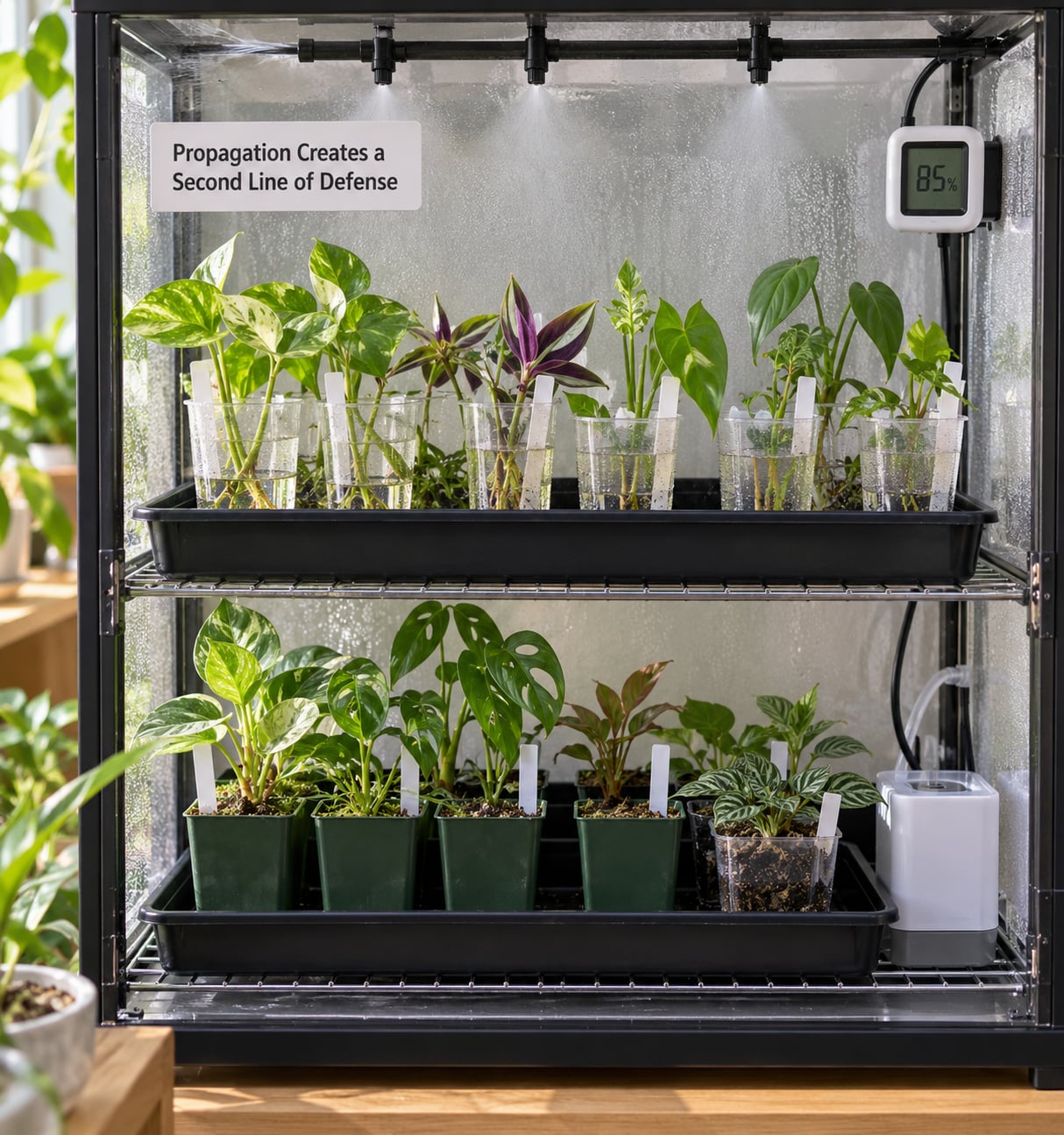
Propagation is the step that turns a collection into a real population, and gardens use more than one method because species respond differently to each.
Seed propagation is the first choice, since it produces the most individuals and the widest mix of inherited traits. Cuttings and layering work for species that root readily from stem tissue. Division and offsets are fast for anything with a clumping habit, and bulbs and corms can be lifted and separated while dormant. Grafting is a rescue tool for plants with weak rooting in cultivation but vigorous rootstock from a related species. Tissue culture, where tiny pieces of tissue are grown in a sterile nutrient medium, multiplies material when seed is unavailable or when disease must be excluded from the propagation stock.
Two risks come with propagation. The first is genetic. Propagating a single parent repeatedly produces a genetically narrow stand, and a stand that narrow invites the inbreeding depression and disease susceptibility that make a reintroduction fail.
The second risk is ecological. Garden plants do not stay in garden plants. If a propagated accession escapes or is planted near a native population, it can interbreed with wild relatives and dilute local adaptation. That is why reintroduction plans start with biosecurity rather than with the planting day.
Seed Banks Preserve Genetic Material for the Future
Seed banking is the cheapest insurance in plant conservation and the most misunderstood. The pipeline is deliberate at every step, and each step can be done badly.
Collections begin in the field. A botanical garden records which population the seed came from, when it was collected and by whom, because seed banking 1,000 individuals from one hillside preserves far less than seed banking 100 from each of ten hillsides. Seed is dried, cleaned, counted and tested for germination. Only after a lot passes a quality check is it sealed and moved into cold, dry storage.
The protocol targets specific conditions: low temperature, low humidity, and darkness. Under those conditions, orthodox seeds, the great majority of flowering plant seeds, stay viable for decades and sometimes centuries. Banks check on this rather than trusting it. A sample from each lot is germinated on a regular schedule, and a lot that has drifted below the bank’s threshold is grown out and replaced.
Backups matter as much as the cold room. Because no single institution is secure from fire, flood, equipment failure or budget cuts, most lots are deposited as duplicates in a second bank. The Millennium Seed Bank Partnership at Kew is built around this idea, sharing storage and distribution standards across member countries.
The hard limit is recalcitrant seed. The seeds of many tropical trees, orchids and mangroves lose viability if dried or frozen, so they cannot go into a standard bank at all. For those species, protection means living collections, in vitro storage, cryopreservation of shoot tips, or field gene banks in the country of origin. Estimates vary, but recalcitrant seeds are usually a minority of species and a large share of the conservation headache.
Living Collections Require Careful Genetic Planning
Living collections are the part of conservation that ages fastest. Every year a plant dies and a decision has to be made about what replaces it, which is where genetics comes in.
Gardens record provenance in detail: coordinates, habitat, soil, associated species, the number of individuals at the source population. That record survives staff turnover and refurbishment, and it is the only thing that lets a future gardener know what conditions the plant actually tolerates.
Planning then aims at numbers. Small populations are grown up, and enough unrelated parent plants are maintained that pollination between relatives does not narrow the gene pool. Gardens set collection goals for species with few accessions and for groups that are missing from collections altogether, such as nonvascular plants and tropical species.
Unwanted hybridisation gets managed in two directions. Physical separation handles plants in the same glasshouse, and hand-pollination control handles plants that share a house. Pollinating by hand means choosing which plant receives pollen and applying only the intended donor, which takes labour but stops a single hand pollination from creating an accession nobody can identify.
Exchange between gardens fills both gaps, genetic and geographic. Material moves between institutions with matching needs, and the transfer is documented so that both gardens know what they now hold. Collecting from a wild population, by contrast, is a last resort and takes a permit, a justification and restraint on how many individuals are taken.
Restoring Rare Plants to Protected Habitats
Putting a plant back is the most visible part of conservation and the part most likely to fail quietly. Garden material helps a wild population only when the site can actually carry it.
Reintroduction returns a species to a place it once grew. Translocation moves it to a suitable site it never occupied, which is sometimes the only option when the original habitat is gone. Both need the same preparation.
Gardens assess the site before they bring plants: is the soil right, is the hydrology right, has the competitive community shifted, is the original pollinator or disperser still present. They then get permission, from the landowner and the agency holding the jurisdiction, before a single tray moves.
The material itself is chosen carefully. Provenance matters more than quantity, since plants from the wrong source can carry the wrong adaptation or the wrong pathogens. Some programmes raise only enough plants to test establishment first, then scale up once survival is demonstrated.
Reintroduction is also where communities matter most. Landowners who manage the site decide whether it works, and that includes Indigenous nations and local land managers, whose knowledge of a landscape often runs deeper than any dataset. Horticultural trades, volunteer networks and county-level groups often supply the labour that small projects cannot pay for.
Monitoring Shows Whether Conservation Is Working
Every method above produces a number that has to be checked later, and the honest ones are unflattering at first.
Survival is the simplest. Seedling survival of 80 percent in year one means little if year three brings a drought and mortality of 90 percent. So gardens track longer horizons than they would track a crop.
Reproduction is the stronger signal. A population that flowers, sets viable seed and recruits new seedlings is a self-sustaining one, and a population that hangs on under glasshouse care alone has not been recovered. Counts of flowers, pollinators observed and seeds germinated in place tell you more than counts of survivors.
Population size, genetic diversity and seed bank viability are tracked on cycles from years to decades, since a generation of a long-lived tree takes far longer to turn over than one of an annual. Gardens also watch flowering time and health against climate records, which is where a shifting growing season becomes visible as data before it becomes obvious as decline.
How Botanical Gardens Avoid Introducing Threats
A collection that saves one species while harming another is a bad trade, so biosecurity is treated as conservation work rather than as housekeeping.
New material enters through quarantine, in a separate space, for long enough that pests and pathogens which complete a life cycle quickly reveal themselves. Tools, trays and benches are cleaned between accessions. Where a pathogen is suspected and cannot be eliminated, plants move into a path garden, a setup where the infected material cannot spread to healthy stock.
Insect pests are trapped, monitored and treated, and the treatments chosen consider impacts on the plants’ own pollinators and on surrounding wild populations. Soil from collection sites is a known infection route and is treated before it joins a potting bench.
Public access carries its own rules. Labelled beds keep people from breaking off cuttings to take home, and gardens are candid about the legal side: in many jurisdictions, endangered plants are exempt from federal take prohibitions on private land, but state law, foreign law and institutional rules can still apply. Collecting a rare plant for your own garden can be unlawful even when the intent is to help.
Why Gardens Cannot Protect Rare Plants Alone
Ex situ conservation is a safety net, and safety nets have limits. A plant in a glasshouse is alive but not functioning, not pollinated by its own insects, not feeding a food web, not storing carbon in a hillside, not adapting on its own to a changed climate. Every year a collection spends is a year the habitat did not get protected.
The Kunming-Montreal Global Biodiversity Framework puts a number on the ambition. Target 12 calls for at least 75 percent of threatened plant species to be maintained in human care, and gardens are the main institutions through which that target is reached.
The economics are the other half of the argument. Plant species dominate the recovery record under the US Endangered Species Act, with plants accounting for roughly 74 percent of recoveries while receiving under 5 percent of recovery funding, according to the Botanic Gardens Conservation International. Work that is cheap, cooperative and uncontroversial gets deprioritised when the funding formula rewards conflict and delay.
So gardens work in networks rather than alone. The Center for Plant Conservation shares best practice across member institutions, BGCI accredits gardens and runs the global inventory, and the Millennium Seed Bank Partnership distributes stored material back to researchers and restoration projects. None of that functions unless habitat protection, national legislation and local stewardship hold the other end.
There is a capacity problem underneath all of it. Taxonomic skill, collection management and plant identification are taught by few programs, and experienced specialists retire faster than they are replaced. A conservation system cannot be stronger than the people running it, which is why training sits inside the method rather than beside it.
Frequently Asked Questions
What is the difference between conserving a rare plant in a botanical garden and protecting it in the wild?
Conserving a rare plant in a botanical garden means holding it outside its habitat under human care, with controlled water, soil and pests, and a record of where it came from. Protecting it in the wild means securing the habitat itself, which keeps the plant pollinating, dispersing and adapting on its own. The first gives you control and insurance; the second gives you a functioning species. Programs treat them as complements, because a glasshouse plant is safe but not self-sustaining, and a wild population is self-sustaining but exposed to any single disaster.
Can every rare or endangered plant species be stored in a seed bank?
No. Seeds that tolerate drying and freezing, called orthodox seeds, store well for decades under cold, dry conditions, and those make up the majority of species. Recalcitrant seeds from many tropical trees, orchids and mangroves are killed by drying, so they cannot use standard banks and depend instead on living collections, in vitro storage, cryopreservation or field gene banks. Garden staff test every lot after collection, since a lot that looks fine can still have poor germination.
Why do botanical gardens record where each plant was originally collected?
The provenance record tells future staff what the plant actually needs. A collection from a dry coastal ridge and one from a wet forest interior may be the same species with very different tolerances for water, light and soil. Provenance also protects genetic diversity, because seed drawn from a single small population keeps the collection narrow. When a plant declines years later, the record is the only way to tell whether the cause is husbandry, climate or the genetics of the source population.
How do gardens prevent rare plants from cross-pollinating and becoming genetically mixed?
Spacing comes first, since related accessions are kept in separate areas of the glasshouse or nursery. Where separation is impossible, staff control pollination by hand, choosing one intended donor and applying only that pollen. Gardens also check suspected hybrids, remove them from the conservation record and flag them so they are not redistributed. On the wild side, provenance records and reintroduction plans aim material at matching sites, so garden plants do not interbreed with local wild relatives.
How can visitors support botanical garden plant-conservation programs?
Member memberships and donations fund the slow work of propagation, seed storage and monitoring, and most gardens also fundraise through plant sales and events. Donating locally native seed of good provenance, rather than wild-collected material, helps wildflower and restoration programmes directly. Volunteers are useful in seed cleaning, propagation and garden maintenance, and staying current through a garden’s education programmes is what turns visitors into the public constituency that conservation funding depends on.
Conclusion
How botanical gardens protect rare plants comes down to a chain where each link supports the next: documented living collections, propagation that spreads risk, seed storage for decades, restoration into habitat that is genuinely ready, and monitoring long enough to catch failure. No single technique saves a species on its own.
If you want to see it working, look at the conservation programme of the garden nearest you, ask how they document their accessions and where their propagated material ends up. Membership, seed donations and volunteering are what keep that work staffed.