Why harvest time changes herb strength comes down to one fact: a plant’s active constituents are not fixed quantities sitting in the tissue. They are made, moved and broken down continuously, so their concentration shifts with growth stage, time of day, season and weather. Two collections of the same species, taken weeks or hours apart, can produce preparations that differ measurably in strength and in the ratios of the compounds present.
Most guides tell you when to cut. Very few explain the plant physiology that makes the timing matter, which is the part researchers, growers and traditional practitioners all need in order to adapt a rule to a specific species in a specific place.
Table of Contents
- 1Why Harvest Time Changes Herb Strength
- 2How Plant Chemistry Changes During Growth
- 3Why Harvest Time Changes Herb Strength by Plant Part
- 4What Time of Day Does Harvesting Matter?
- 5How Weather and Location Alter Herb Potency
- 6What Happens Between Harvesting and Drying?
- 7How Can the Effect of Harvest Timing Be Measured?
- 8What Should Researchers and Collectors Record?
- 9Frequently Asked Questions
- 10Is an herb always stronger when harvested later?
- 11Does an herb have one best harvest time?
- 12Are herbs harvested in the morning stronger than those harvested later?
- 13Does drying make every medicinal plant stronger?
- 14How can I tell whether a traditional medicine is potent or safe?
Why Harvest Time Changes Herb Strength
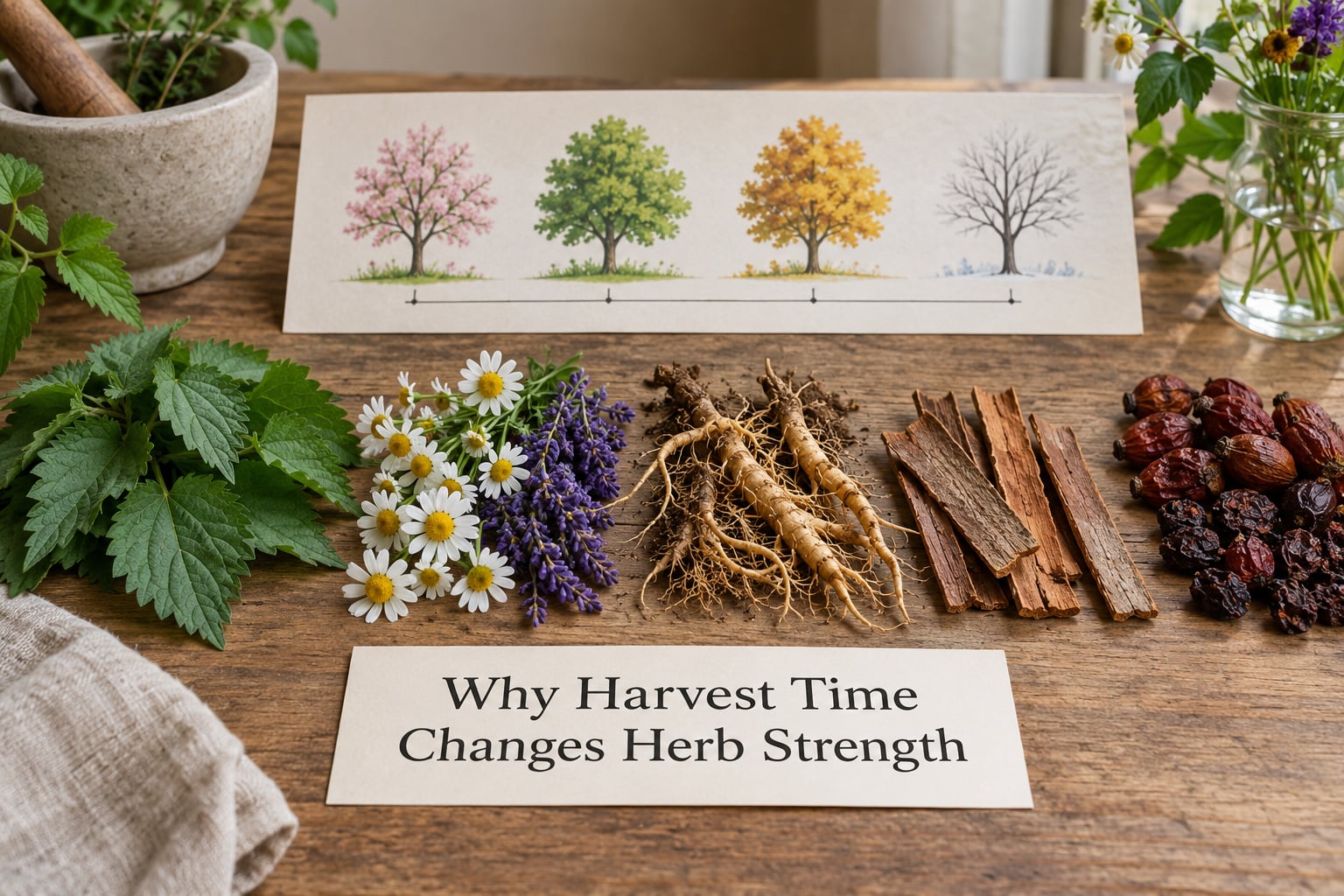
A plant allocates chemical resources much the way it allocates sugar and water. Before flowering, secondary compounds concentrate in the leaves that are feeding the developing bud. Later in the season, as the plant prepares for dormancy, reserves are pulled down into roots, rhizomes and bark. Cut the plant at the wrong moment and you capture a chemical profile that is genuinely different, not merely weaker.
That is why a plant part cannot be treated separately from its moment. Leaves, flowers, roots, bark, fruits and seeds each have their own window, and those windows rarely line up with one another. What applies to Melissa officinalis at dawn will not apply to a Prunus species bark harvested for its tannins.
The useful framing is that a plant has a budget of carbon and nitrogen it moves around, and the compounds people harvest are attached to that budget. Harvest timing decides which part of the budget you are collecting.
How Plant Chemistry Changes During Growth
Leaves run on photosynthesis, converting light, water and carbon dioxide into sugars. Those primary metabolites, the sugars, amino acids and fatty acids, feed everything else, including the secondary metabolites that make a plant aromatic, bitter, astringent or toxic. A plant cannot spend carbon on a sesquiterpene it is also spending on new tissue, so the balance moves as the plant ages.
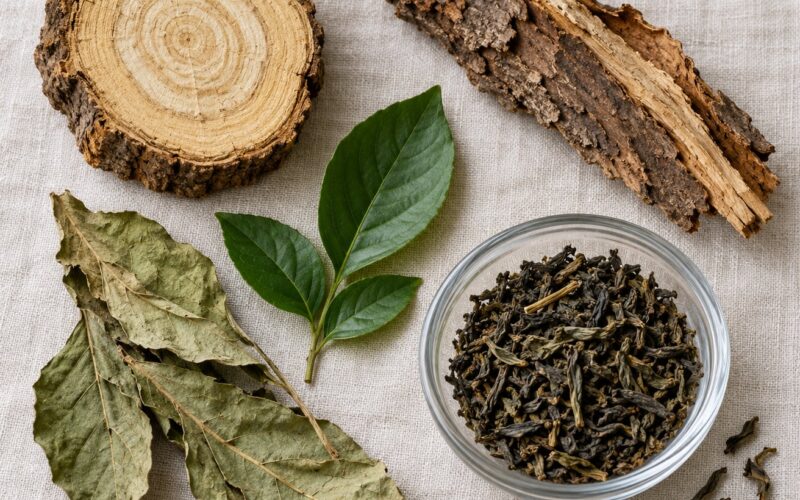
Leaves before flowering, fully open flowers, roots at dormancy and bark during spring sap flow are chemically different organs at different stages, not the same organ sampled repeatedly.
Rosmarinus, or rosemary, is a workable example. The diterpene carnosic acid in its leaves is highest while the plant is putting energy into vegetative growth and flowering. Once it has set seed, the share of that carbon going into flowering structures has risen and the concentration per gram of leaf falls. The plant has not lost the compound; the arithmetic of where it sits has changed.
Researchers call this phenological variation, the study of chemistry across a life cycle rather than at one snapshot. It is the single most useful idea for anyone asking why two harvests of the same plant behave differently.
Why Harvest Time Changes Herb Strength by Plant Part
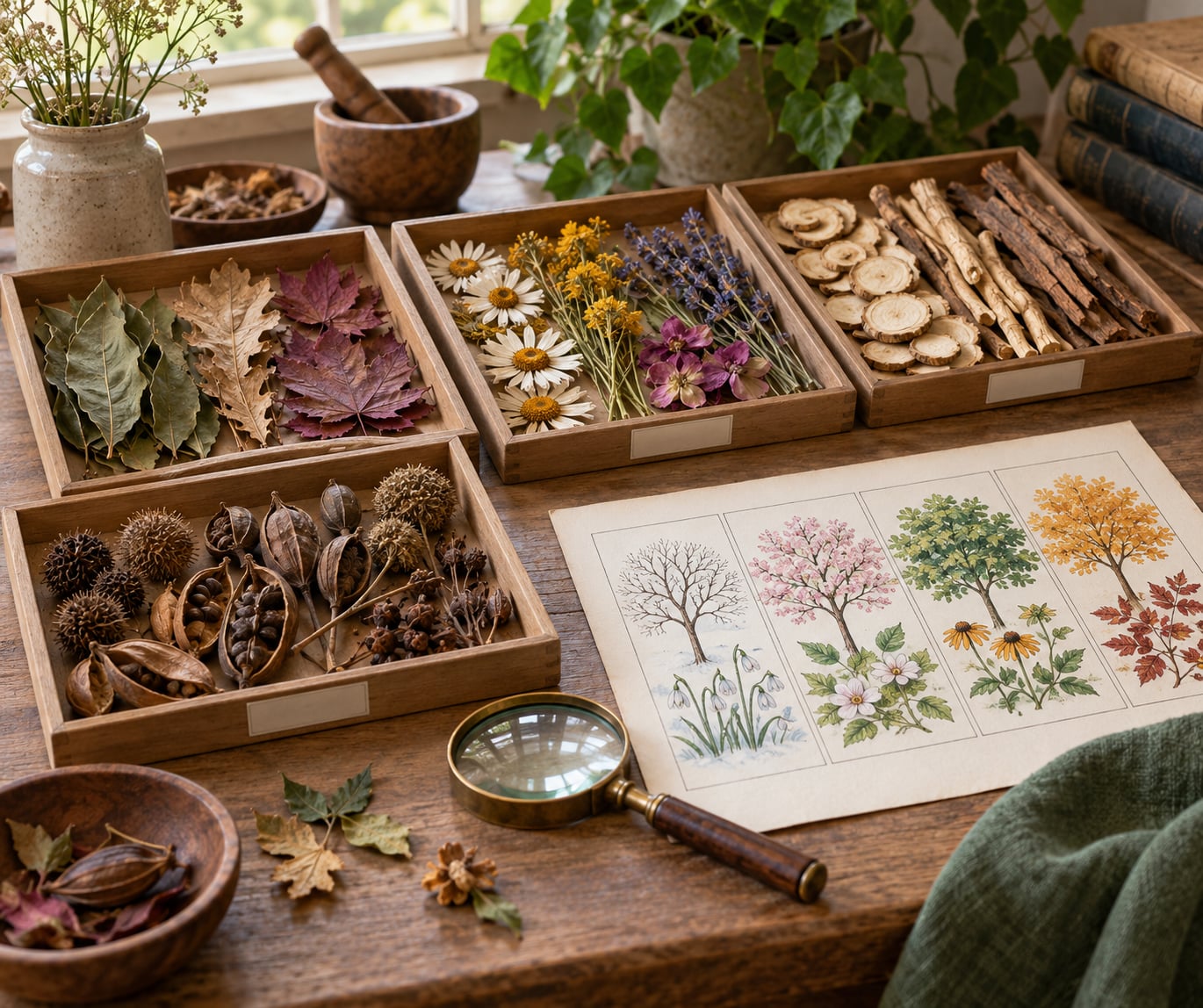
The table below sets out what to look at when judging whether a window has opened. The chemical trade-off column matters most, because it explains what you gain and what you give up by cutting early or late.
| Plant part | Maturity indicators | Timing consideration | What changes chemically |
|---|---|---|---|
| Leaves | Fully expanded, deep colour, no flower buds breaking at the tips | Early in the growth cycle, before flowering draws stored reserves | Highest share of photosynthetic tissue; flowering later dilutes leaf constituents per gram |
| Flowers | Open and dry, before pollination and before browning at the edges | Full open but unpollinated, on a dry day | Volatile oils peak around anthesis; after pollination the profile shifts toward seed and resin compounds |
| Roots and rhizomes | Foliage senescing, tops dying back after the first hard frost | Dormancy, once top growth has collapsed | Carbohydrate and inulin reserves are at their maximum after translocation downward |
| Bark | Cambium active, sap rising, branch flexible rather than brittle | Spring sap flow on many species; seasonal exceptions are common | Phloem and starch content shift through the year; tannins and cyanogenic glycosides in Prunus bark vary with the season |
| Fruits | Full colour, firm, stem drying out, seed brown and hard | Full maturity, harvested before dropping or shattering | Sugars and acids rise to peak; further sitting on the plant turns sugars to fibre and pigments to brown |
| Seeds | Dry, rattling in the capsule or pod, brown rather than green | Fully dry on the plant where possible | Fixed oil and protein fractions accumulate last; green seed carries high chlorophyll and moisture |
Resins and gums sit outside the usual categories because they are a seasonal state rather than a tissue. They are collected when the plant exudes them under heat or injury, and their viscosity changes with temperature, which changes how much plant material ends up in a finished preparation.
What Time of Day Does Harvesting Matter?
Within a single day the plant runs a smaller cycle, and it is the one most people notice first. Starch accumulates in the leaves through the afternoon and is broken down overnight. Volatile oils stored in glandular trichomes evaporate in sunlight and warm air, and the plant rebuilds them during the cooler night hours. The effect is measurable: the aromatic profile of a crushed leaf in the early morning is not identical to the same leaf at midafternoon.
The standard herbalist rule follows from that. Harvest after the dew has dried and before the sun is high, on a dry day, so the material arrives with less surface water to encourage mould and fewer oils already lost to the air. This advice is a good default rather than a law, and it is worth knowing where it breaks down.
Research on Melissa officinalis has reported peaks in citronellal, citronellol and geranyl acetate in material cut in the late afternoon, which is close to the opposite of the morning rule. That is one species with one set of conditions, not a general reversal, and it is a fair summary of the state of the evidence that individual species sometimes run on a different clock. Nobody reconciles the two claims well, and practitioners tend to end up in the habit of picking species by species once they have handled a plant more than once.
Alkaloid-rich plants follow yet another pattern, with some showing higher readings in the late afternoon and some in the morning. The honest position is that diurnal variation is real and poorly characterised for most species, so ideal timing cannot be generalised from a neighbour’s plant to yours.
How Weather and Location Alter Herb Potency
Weather is a stress multiplier, and stress changes chemistry. Drought slows growth, so the same leaf area carries a higher concentration of whatever the plant has already made. Practitioners have reported Hypericum perforatum from a dry year as dramatically darker in colour than material from a wet year, a visible stand-in for concentration when no laboratory is available.
Rain dilutes. A wet spell just before harvest raises leaf water content, which changes your plant-to-medicine ratio later, and material cut wet and bagged will mould. Sustained rain also reduces light, and light drives the carbon the plant can spend on volatiles.
Temperature, soil, altitude and latitude all feed into the same picture. A species growing on a cooler slope at higher altitude will develop differently from one in a warm valley, which is why researchers compare material from several sites rather than assigning a single universal harvest date. Anyone reading a study on a species harvested in one region should assume the same rule transfers to another region only after testing.
What Happens Between Harvesting and Drying?
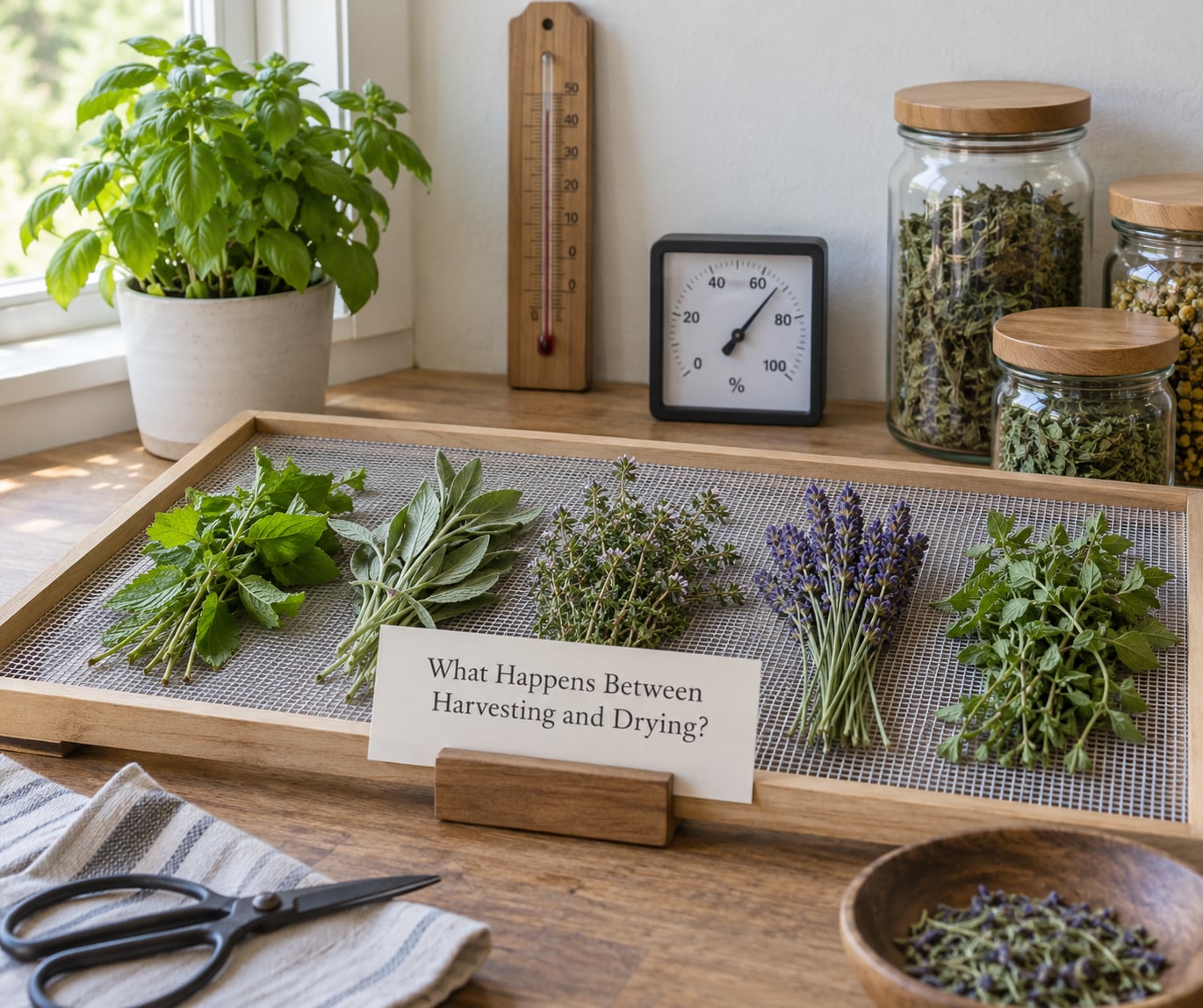
Harvesting is the first lever, and drying is the second. Between the two, more strength is often lost than the timing decision ever gained.
Moisture is the main risk. Above roughly 10 percent residual moisture, enzymes and mould organisms stay active in dried material, and the constituents you harvested begin to break down. Below about 10 percent, most material stored dark and cool keeps for a year or more, though volatile-rich herbs are the exception and lose aroma faster.
A workable home sequence is short. Cut on a dry day into a single layer so air passes on both sides of each leaf. Keep the material in shade or in a dark, airy space, because direct sun drives off volatile oils. Dry at roughly 60 to 70 F with good airflow, adding gentle heat only if the air is too humid to finish the job. Turn the material every day or two and finish early, not late, because a thin, dry sample can be handled quickly while a thick, damp one never dries through. Store the finished herb in sealed containers away from light, heat and moisture, and label it with the species, part, date and location.
Readers often ask whether the best window differs for fresh use and for drying. The honest answer is that it can. Fresh material is used within days, so a later, oil-rich cut may be fine; dried material has to survive storage, which favours earlier cuts with more robust tissue. For an aromatic plant destined for tincture, the high-oil late-day cut is often the one worth preserving intact rather than dried slowly.
How Can the Effect of Harvest Timing Be Measured?
Nothing at the point of harvest tells you the strength of what you are holding. Colour, aroma and leaf texture are proxies, useful for spotting a missed window but incapable of confirming a chemical level. This is the central limitation in every forum discussion about knowing whether a harvest worked.
Researchers approach it with analytical methods instead. Gas chromatography with mass spectrometry separates and identifies the volatile fraction of a sample, which is how diurnal and seasonal patterns in essential oil composition are mapped. High-performance liquid chromatography quantifies non-volatile constituents such as alkaloids, glycosides and flavonoids. Spectrophotometric assays cover total phenolic or antioxidant content at lower cost, microscopy confirms identity and reveals adulteration, and a moisture meter or oven-drying check confirms that the material is stable.
Potency itself is not a single property. It has to be stated against something: a specified marker compound, a full constituent profile with accepted ranges, or a validated biological assay. Without one of those, any claim that a harvest is strong is a description of appearance. Analytical chemistry is what turns a traditional timing rule into a testable claim.
What Should Researchers and Collectors Record?
A harvest record is the cheapest way to make next year’s harvest better, and it takes a few minutes in the field. Record the species with its Latin binomial, confirmed by a qualified identifier. Note the plant part, the exact location with coordinates, the date, the time of day and the weather in the preceding week.
Also record maturity stage against objective indicators rather than judgement, the harvest method, drying temperature, duration and final moisture, storage conditions, and every analytical result. The moment this data is missing, the sample becomes an anecdote, and anecdotes do not survive a season of variable weather.
There are windows where the wrong timing is not merely weaker but riskier, and these deserve separate attention. Bark and leaves from Prunus species carry cyanogenic glycosides whose levels vary across the year, and the seasonal direction of that change is not the same for every species. Elderberries (Sambucus nigra) are commonly collected when fully dark and before the fruit softens, and no part of the plant should be treated as a casual substitute. Pennyroyal carries a known toxicity concern that timing does not address at all. For any plant where you are unsure, the right move is to consult a qualified pharmacologist, toxicologist or clinician rather than reason from a general rule.
Traditional knowledge on this subject is often specific to a species and a landscape, and that specificity is worth recording rather than smoothing away. Many African harvesting calendars distinguish a dry-season cut from a rainy-season cut for the same plant, and dry-season material is often described as more concentrated in aroma and colour, which lines up with the water-stress chemistry above. Some practitioners also schedule harvests by lunar phase. That is living traditional knowledge and deserves to be described as such. What controlled trials do not support is a consistent mechanism linking moon phase to constituent levels, and the two statements can both be made without contradiction.
Frequently Asked Questions
Is an herb always stronger when harvested later?
No. Later is stronger only for specific parts and specific species. Roots and rhizomes do peak after top growth dies back, because carbohydrate reserves finish moving downward. Leaves and flowers usually run the other way, peaking before or at flowering and dropping as the plant commits to seed. Compare the same part on the same plant across a season before drawing a conclusion, and record it, because a single plant in a single year proves very little.
Does an herb have one best harvest time?
Most species have a window rather than a moment, and that window is usually a few days to two weeks wide. Inside the window the differences between days are usually small compared with the differences between the window and the weeks on either side of it. Judge by maturity indicators, such as fully expanded leaves, open unpollinated flowers or seed that has turned brown and dry, and treat species-specific notes as overrides to any general guidance.
Are herbs harvested in the morning stronger than those harvested later?
Morning cutting is a good default: dew has dried, volatile oils have rebuilt overnight, and there is less surface water to encourage mould. It is not universal. Late-afternoon peaks in citronellal, citronellol and geranyl acetate have been reported in lemon balm, and some alkaloid-bearing plants also read higher later in the day. Harvest in the morning unless you have a reason for a particular species, and keep a note when you notice a plant that seems to behave differently.
Does drying make every medicinal plant stronger?
No. Drying is preservation, not concentration. Water leaves, but so do volatile oils, and heat accelerates that loss, which is why slow, shaded, well-ventilated drying at moderate temperatures beats a hot oven. Getting material below roughly 10 percent residual moisture keeps enzymes and mould inactive and is the step that protects whatever you harvested correctly. For a fresh preparation such as a tincture, some material bypasses drying altogether and the question does not arise.
How can I tell whether a traditional medicine is potent or safe?
You cannot tell from appearance, smell or taste, and anyone who offers a field test for potency is guessing. Strength has to be measured against a named marker compound, a full constituent profile with accepted ranges, or a validated biological assay, and that needs a laboratory. Safety is a separate question from potency: some well-grown plants are simply toxic in part, as with pennyroyal or the bark of Prunus species. Until a product has been tested, discuss it with a qualified clinician or pharmacist.
Start with the part you are collecting, not with the calendar. Leaves go in before flowering, flowers at full open and unpollinated, roots after the tops die back, bark during the season its species actually runs, fruit and seed at full maturity. Cut after the dew has dried on a dry day, get it out of the sun, and dry it slowly below 60 to 70 F. Record what you did this year, because the strength of a herb is a relationship between a plant and a moment, and you can only manage the second one.