To overwinter tender herbs, you pick one of three routes for each plant: leave it outdoors under mulch and a wind break, bring it indoors to the brightest window you have, or store it dormant in a cool unheated garage. The whole job takes an afternoon of prep in early fall and then a few minutes of attention every week or two. Most losses come from cold wet soil rather than cold air, so drainage and watering matter more than any cover you can buy.
I keep a potted herb row on a porch that faces the wrong way, and the difference between the ones that come back and the ones that don’t is almost never temperature. It’s whether the roots sat in wet soil for three weeks in January. That single fact has shaped everything below.
Table of Contents
- 1What You Need
- 2Step-by-Step
- 31. Identify Which Herbs Need Indoor Protection
- 42. Inspect and Prepare the Plants
- 53. Choose Containers with Good Drainage
- 64. Move Herbs to the Right Winter Location
- 75. Water Less and Feed Carefully
- 86. Maintain Airflow and Watch for Pests
- 9Extra: Harvest and Preserve Before the Weather Turns
- 10Extra: If You Have No Indoor Space
- 11Common Mistakes
- 12Frequently Asked Questions
- 13What herbs can be left outside in winter?
- 14Can you overwinter plants in an unheated garage?
- 15How can I safely overwinter potted herbs?
- 16Are herbs freeze tolerant?
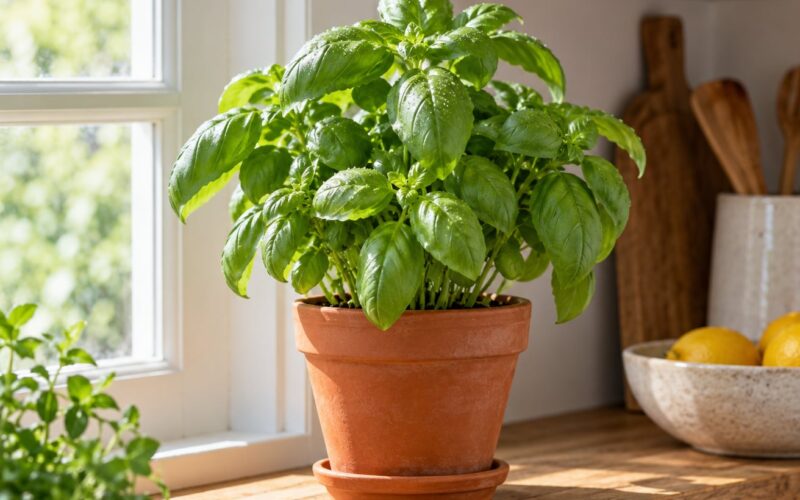
- 17Will basil grow indoors in winter?
- 18Should I water herbs in winter indoors?
- 19Conclusion
What You Need
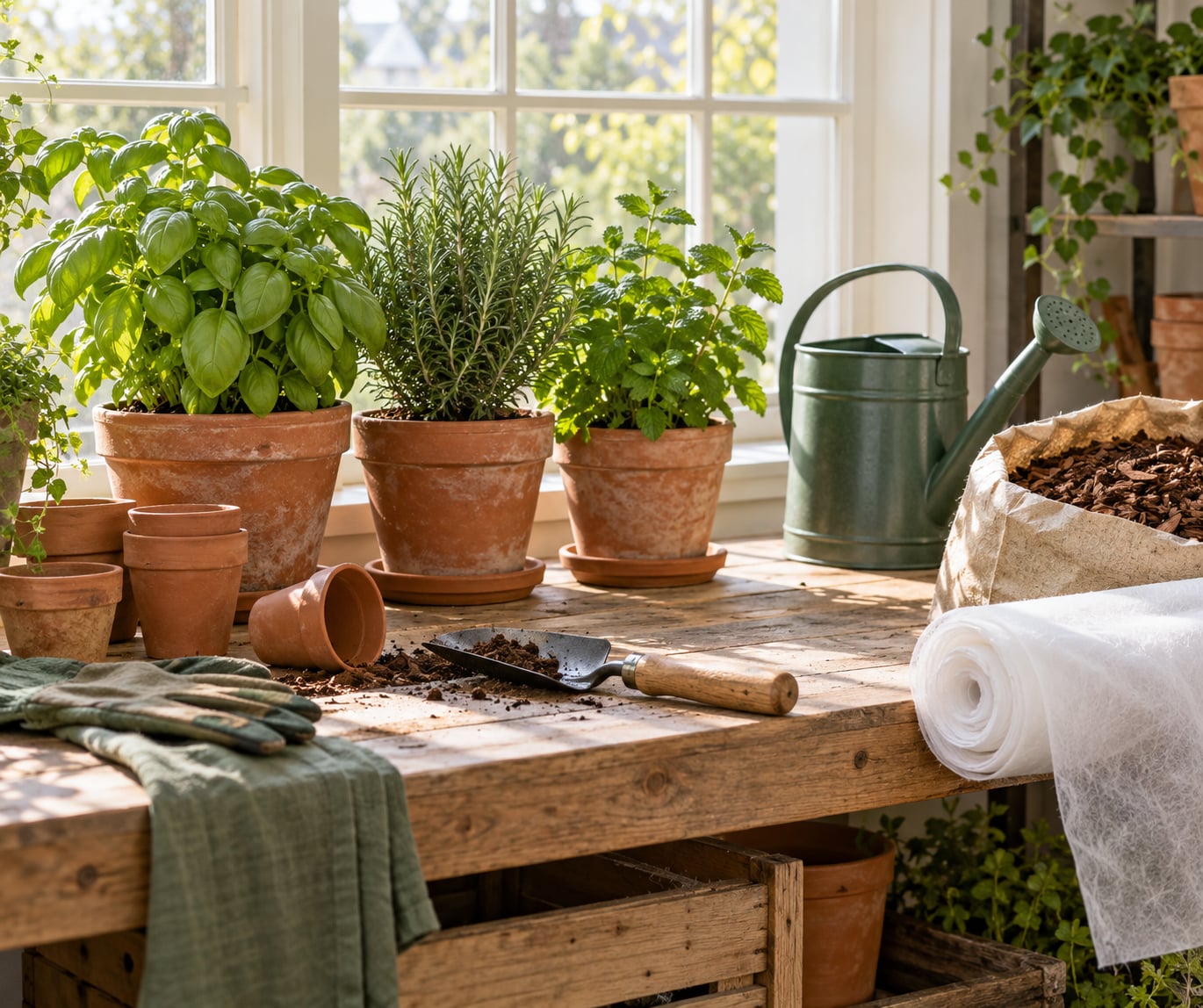
You don’t need much, and you definitely don’t need a greenhouse to start. Here’s the honest list, split into what matters and what is nice to have.
- Pots with drainage holes. A pot without a hole is a death sentence in winter. If your decorative planter has none, use it as a cachepot and keep the plant in a nursery pot inside it.
- Gritty, well-draining potting mix. Standard potting soil amended with perlite, pumice or coarse grit holds less water in cold weather. Wet roots at low temperature cannot replace what they lose, so root rot sets in fast.
- The brightest window you have, or a grow light on a timer. Six hours of direct light is the floor for keeping herbs alive indoors; ten to fourteen hours under a light is what keeps them actually growing.
- A watering can with a fine spout and your finger. Winter watering is infrequent and precise, and a gentle spray avoids blasting soil out of the pot.
- A pebble tray or a cheap hygrometer. Heated indoor air is often drier than a desert, and dry air drops spider mites straight onto an overwintering plant.
- Insecticidal soap or diluted dish soap for the pest wash before anything crosses your threshold.
- Organic mulch, frost cloth or row cover, and a few bricks or boards if you are protecting herbs outdoors or want to bury pots in the ground.
Optional but useful: a small fan for air movement, a pair of clean pruners rinsed in alcohol between plants, and rooting hormone for cuttings. Gardeners on r/vegetablegardening mention over and over that the real blocker is space, not supplies, so if that’s you too, jump to the fallback options at the end.
Step-by-Step
1. Identify Which Herbs Need Indoor Protection
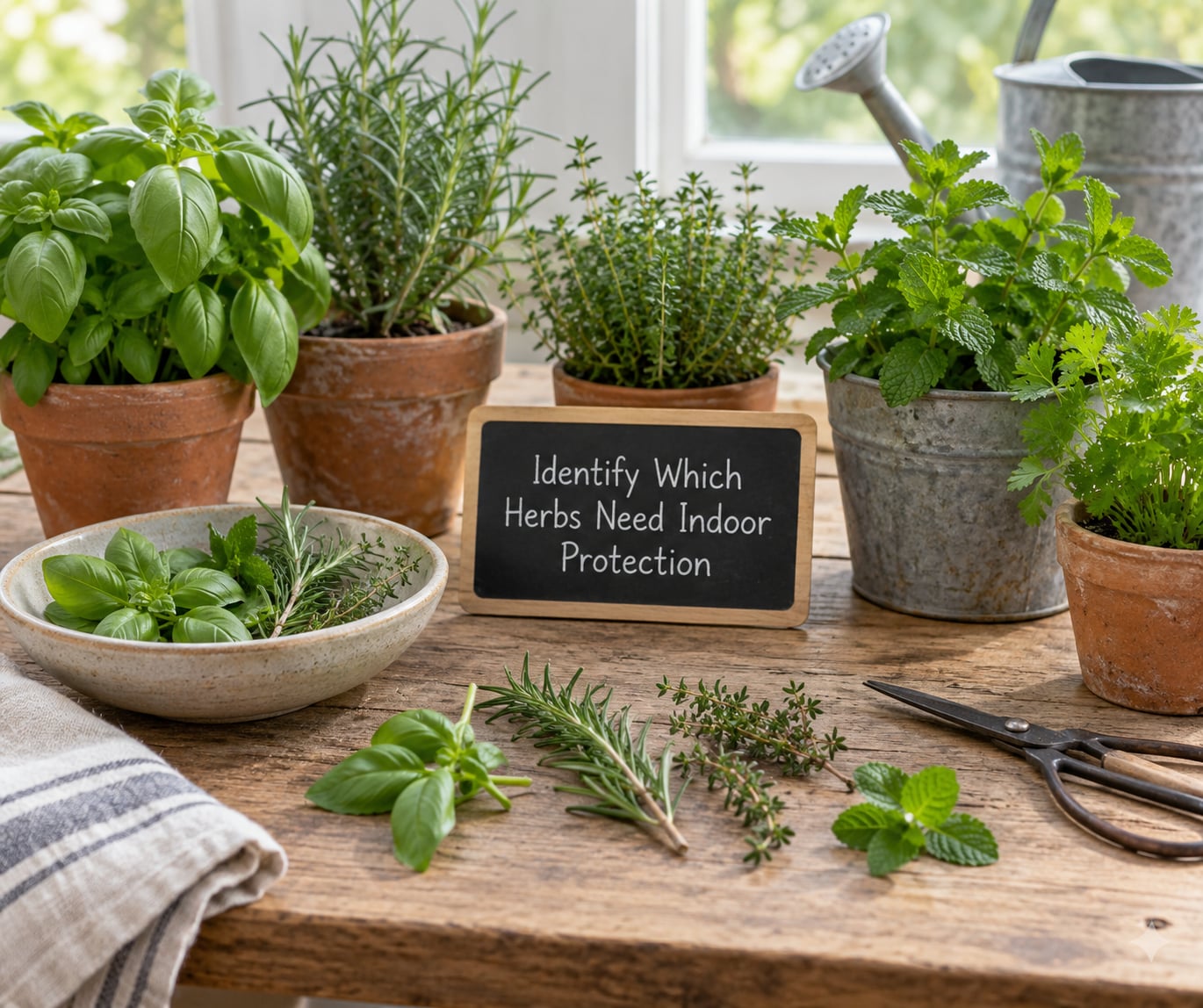
Tender herbs are the ones that take damage below about 40°F. Hardy herbs sleep through it. Before you buy a single pot, sort what you actually have into one of these groups, because the whole plan depends on it.
Rosemary, thyme, sage and oregano are the awkward middle. They are perennial and Mediterranean, so they want cold air and dry roots, but a hard freeze with wet soil will still take them. Mint and lemon balm are the opposite problem: they die back to the ground in zones 5 and 6 and return in spring, so there is almost nothing to protect. Parsley and chives overwinter as biennials in most of the country. Basil, cilantro, dill and most annuals are simply finished for the season unless you grow them indoors.
| Herb | Zones 4-5 | Zones 6-7 | Zones 8-10 |
|---|---|---|---|
| Thyme | Leave and mulch | Leave and mulch | Leave, light mulch |
| Sage | Mulch heavily | Leave and mulch | Leave, light mulch |
| Oregano | Mulch heavily | Leave and mulch | Leave, light mulch |
| Rosemary | Indoors or garage | Garage or sheltered spot | Leave with wind break |
| Marjoram | Indoors or discard | Indoors or garage | Leave with mulch |
| Mint | Leave, dies back | Leave, dies back | Leave, dies back |
| Chives | Leave, mulch | Leave, mulch | Leave, light mulch |
| Parsley | Indoors or cold frame | Leave and mulch | Leave, light mulch |
| Tarragon | Deep mulch | Deep mulch | Leave, light mulch |
| Lemon balm | Leave, dies back | Leave, dies back | Leave, dies back |
| Lavender | Mulch heavily | Leave and mulch | Leave, light mulch |
| Basil | Indoors only | Indoors only | Annual, re-seed |
| Cilantro | Indoors or discard | Cold frame or discard | Annual, re-seed |
| Dill | Indoors only | Indoors only | Annual, let it self-seed |
| Lemongrass | Indoors only | Indoors only | Roots in ground, tops die back |
| Bay laurel | Indoors only | Indoors or garage | Leave or sheltered |
| Tulsi / holy basil | Indoors only | Indoors only | Annual or patio perennial |
A potted plant counts as roughly two growing zones less hardy than the same species in the ground, because its root ball is exposed on all sides and its soil volume swings temperature fast. If you are in zone 6 and read that rosemary suits your zone, that rule is what makes you bring the pot inside.
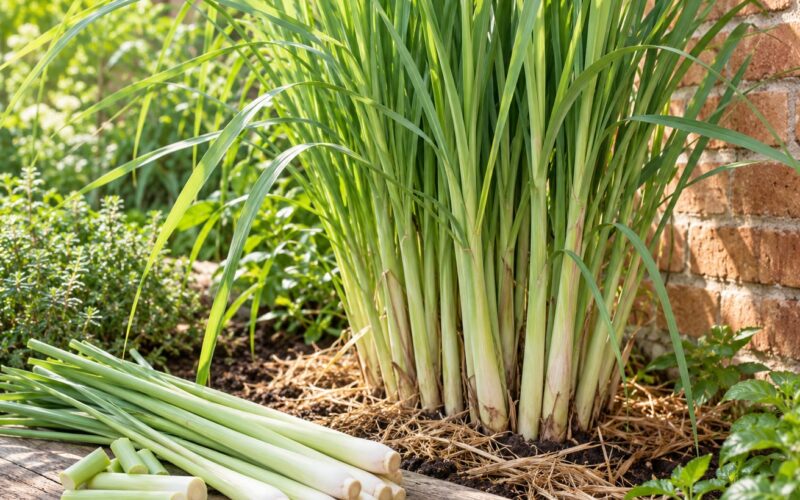
The tropical and African herbs deserve their own note. Lemongrass, tulsi, perilla and Cuban oregano do not merely dislike cold, they have no dormancy mechanism at all. Somewhere above 50°F they keep growing, so treat them as houseplants with a light requirement rather than as garden plants with a winter problem.
2. Inspect and Prepare the Plants
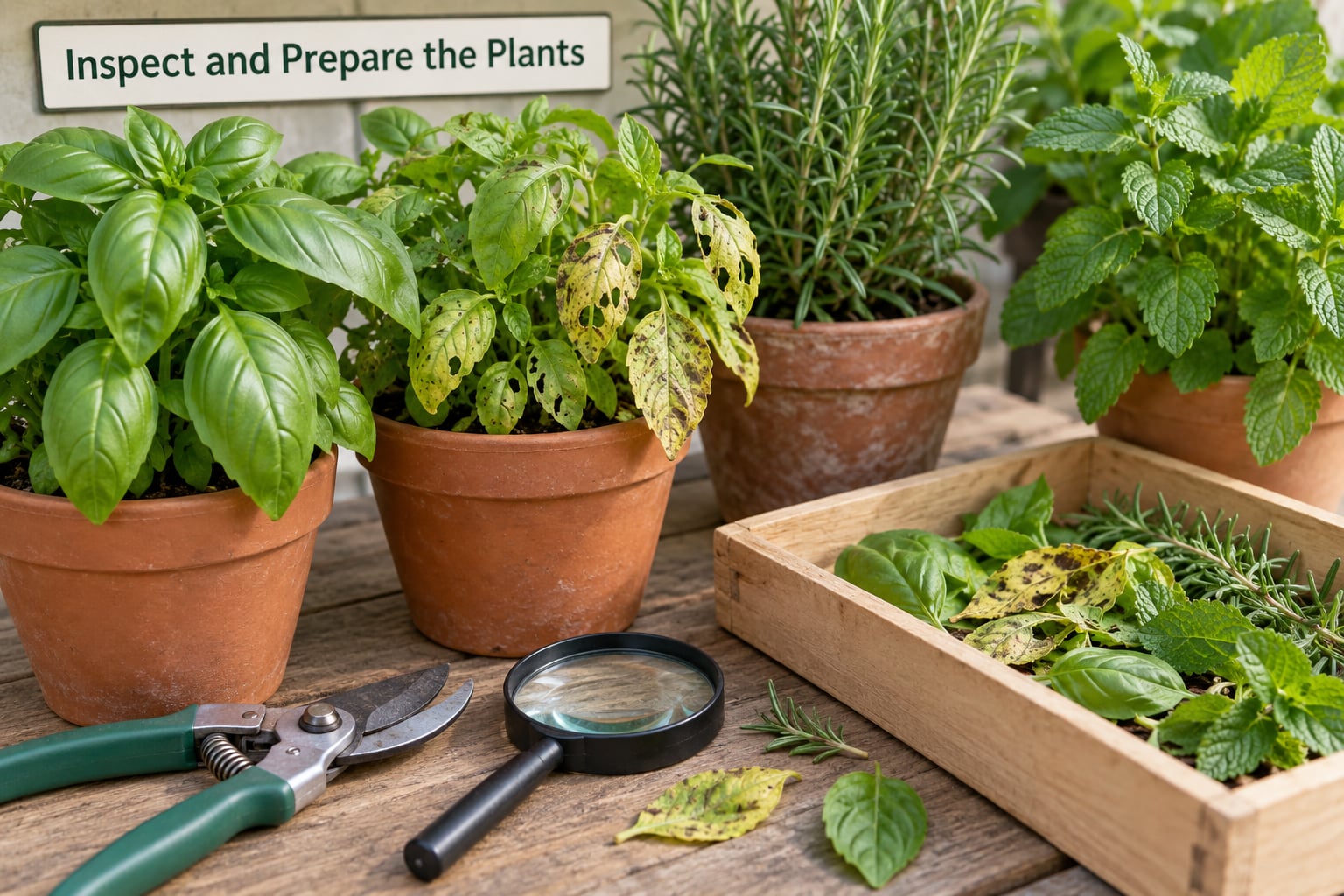
Whatever you’re about to move indoors, wash it first. Take the plant to the sink or out to the hose and wash the underside of every leaf, paying attention to where leaf veins meet the stem, because that is where aphids and whitefly eggs sit. Follow up with insecticidal soap or soapy water and let it dry before the plant comes inside.
Spider mites are the reason people find webbing on their houseplants in February. They arrive quietly on an overwintered herb, and a blow-up of foliage followed by stippling and dull grey leaves means they are already there. A magnifier and a white sheet of paper under the plant will tell you in a minute.
Then trim damage, not growth. Cut out yellowed leaves, snapped stems and anything soft or moldy. Leave healthy green growth alone. Cutting back in fall triggers tender new shoots that freeze first, and the loss that follows is far worse than the loss from not pruning at all.
Take cuttings now, before anything goes wrong. A 4 to 6 inch stem, lowest leaves stripped, stuck in a jar of water on a windowsill will often root in about two weeks, and rooting hormone plus damp mix is faster if you have it. This is the cheapest insurance in the whole plan and most people skip it.
The success signal here is simple: clean leaves, no insects visible under the magnifier, green stems that snap rather than bend.
3. Choose Containers with Good Drainage
Drainage is the whole ball game, and the reason most overwintered herbs die. Every pot needs a hole. If you want a decorative outer pot, set the drained nursery pot inside it and lift it out to water so the saucer never fills.
Do not go up more than one pot size. A big pot of moist mix in a cold room stays wet for weeks, and an herb with more soil than roots in it is a root rot waiting to happen. Pot up only if you can see roots circling the surface or the plant dries out within a day of watering.
Mix in perlite or pumice at roughly a third of the volume, and check that water runs out the bottom within a few seconds of a slow pour. If it sits in a puddle, the mix is too dense.
Terra cotta holds water less than plastic, which helps in a cool room, but it also pulls moisture out of the root ball fast enough to freeze a tender plant in a cold snap. If you must use terracotta over winter, wrap it or set it on a foam board so the root ball is insulated from the floor.
4. Move Herbs to the Right Winter Location
There are four realistic winter homes for herbs, and they suit different plants. A bright indoor room is the only option that gives you a winter harvest. A cool greenhouse keeps growth slow and conditions even. A protected porch or cold frame works for hardy-ish perennials in mild zones. An unheated garage or shed is the sleeper option for tender perennials.
| Location | Temperature | Light | Best for |
|---|---|---|---|
| Bright indoor room | 60-70°F | 6+ hours direct, or 10-14 under a light | Basil, cilantro, lemongrass, tulsi, small harvests |
| Cool greenhouse | 45-60°F | Full sun, more than indoors | Rosemary, bay, sage, parsley, chives |
| Protected porch or cold frame | Variable, above freezing | Full sun | Thyme, oregano, mint, chives, parsley in zones 6-7 |
| Unheated garage or shed | 40-60°F | Bright or even dark for dormant plants | Rosemary, bay, marjoram, mint, dormant perennials |
The garage option deserves its own explanation because it solves the space problem. In a garage the target range is 40 to 60°F, cool and dry rather than warm and bright. Rosemary, bay and most Mediterranean herbs take this beautifully, since cool air and a rest period suit what they evolved for. Watering drops to nearly nothing: check every three to four weeks and water only if the root ball has gone bone dry and the soil is unfrozen.
Do not rush the move. Plants carried straight from a cold porch into a warm room often wilt and drop leaves within a day, which reads as damage but is really shock. Acclimate them in stages: bring them in for the evening, put them back out to a shaded spot in the morning, then leave them out a little longer each day for about a week. Soft light, not direct sun, is what you want for that first stretch.
Once settled, find the brightest window and turn the pot a quarter turn every week or so, because plants lean hard toward light and end up leggy and bent. Set the pot back a hand’s width from the glass. Leaves pressed against cold glass get scorched, and a wall of herbs against a window blocks its own light anyway. For anything you actually want to harvest from, add a grow light on a 10 to 14 hour timer and keep it a foot or so above the canopy.
5. Water Less and Feed Carefully
Winter watering is the step most people get wrong, usually because they keep a summer schedule. Put your finger about an inch into the soil. If it’s damp, wait. If it’s dry, water thoroughly until it drains, then let it go again for two to four weeks.
Watering in cold conditions has a second rule: do not water below 40°F, and never water frozen soil. Cold wet soil is worse than cold dry soil, because roots sitting in saturated mix suffocate and rot rather than simply pausing. Cold water on a warm root ball can also chill the roots on contact. Skip the watering can instead.
Stop feeding entirely. No fertilizer from the end of August onward. Nitrogen pushes soft growth that has no chance of hardening off before frost, and a plant that is trying to grow in winter has no light to support it. Resume a dilute feed in spring only after you see real new growth, usually around February or March indoors.
The success signal is a plant that feels slightly heavy when you lift it, with soil just barely damp, and leaves that stay firm rather than soft and translucent.
6. Maintain Airflow and Watch for Pests
Stagnant indoor air is what turns a rescue into a loss. Run a small fan near the plants for a few hours a day, space pots so leaves touch nothing, and remove any leaf that sits on damp soil. Mold and mildew show up first on the lowest leaves where air doesn’t move.
Winter air indoors is usually drier than the 50% relative humidity these herbs want. A tray of pebbles and water under the pot helps, as does grouping plants together so they share a damp microclimate. Misting once or twice a week helps briefly but does almost nothing in a heated room, since the water is gone in an hour.
Check leaf undersides weekly. Aphids cluster on new growth, whiteflies flutter up when you disturb the plant, and spider mites give a fine sandpaper feel with pale stippling. Treat early with insecticidal soap and repeat five to seven days later, because the second application catches what the first one missed. Isolate anything infested from the rest of your houseplants until it’s clean.
Extra: Harvest and Preserve Before the Weather Turns
Do this before the first frost, not after. Basil, cilantro, dill and frost-sensitive herbs won’t be here in February, so preserve the surplus while the leaves are good: dry sturdy herbs like thyme, sage, oregano and rosemary in bundles in a dry airy room, and freeze the soft ones.
Chives freeze and do not dry well. Blitz them with a little olive oil in a blender and freeze in small portions, or chop them into butter. Basil, parsley and cilantro turn to mush when frozen wet, so blitz those into pestos with oil and freeze in ice cube trays. Tender herbs also dry well as whole leaves laid flat on a screen, away from direct sun.
Extra: If You Have No Indoor Space
This is the most common blocker, so here are the answers that don’t require a spare room. Bury the pots: dig a hole as deep as the pot, set the potted herb in at an angle so the top tilts to drain water, backfill, and mulch four to six inches deep. Group pots tight against the south wall of a house, mulch between and over them, and drape a sheet over the group on the coldest nights. An unheated shed or garage works as a dormancy space for tender perennials in zones 5 to 8. And if none of that works, let the annuals go and save them in the freezer instead.
Common Mistakes
Overwatering on a schedule. This is the number one killer. A pot in a 60°F room dries maybe a quarter as fast as it did on a summer patio, and most indoor herb deaths are root rot that started two weeks before you noticed. Fix: finger test an inch down, water only when dry, then leave it alone for two to four weeks.
Placing herbs hard against the glass. Cold glass and drafts scorch leaves even when the room is warm enough. Fix: set pots back a hand’s width, and rotate a quarter turn weekly so growth stays even.
Skipping drainage. A pretty pot with no hole holds water all winter. Fix: use the decorative pot as a cachepot with a drained nursery pot inside, and empty the saucer after every watering.
Fertilizing in fall. Nitrogen drives soft growth that freezes first, and winter light can’t support it. Fix: stop feeding in late August and resume only after new growth appears in spring.
Moving plants straight from cold to warm. The shock causes immediate wilt and leaf drop that looks like death. Fix: acclimate over about a week, evening hours indoors and daytime hours back outside in shade, lengthening the stay each day.
Pruning in fall. Cutting herbs back before winter triggers new tender shoots that die, and the plant carries the damage into spring. Fix: remove only damaged or dead material now, do the real pruning in spring.
One more thing worth knowing: how do you tell dormant from dead? Scrape a thumbnail lightly across a stem. Green under the bark means the plant is alive and resting, so leave it alone. Brown and dry all the way through means that stem is finished, but check a lower or inner stem before you throw out the whole plant.
Frequently Asked Questions
What herbs can be left outside in winter?
Thyme, sage, oregano, mint, chives and lemon balm can usually stay outdoors in zones 5 and up if the crowns are mulched 3 to 6 inches deep after the first hard freeze. Rosemary and marjoram survive outdoors only in zones 8 and 9 or in a sheltered, well-drained spot in zone 7. Basil, cilantro and dill cannot overwinter outside anywhere in the continental United States. Mulch after the ground freezes, not before, and never pile it against the stems.
Can you overwinter plants in an unheated garage?
Yes, and for tender perennials it is often the best option, especially if you have no bright indoor space. Aim for a garage that holds 40 to 60F. Rosemary, bay, marjoram and mint do well there. Watering drops to almost nothing, roughly every three to four weeks only when the root ball is dry and unfrozen. Basil and other tropical herbs will not hold up in a dark cool garage, because they never go dormant.
How can I safely overwinter potted herbs?
Treat a potted herb as two growing zones less hardy than the same plant in the ground. Check drainage holes first, then decide the route. Indoors: brightest window or a 10 to 14 hour grow light, water when the top inch is dry. Outdoors: group pots together against a wall, mulch 4 to 6 inches deep over and between them after the first hard freeze, or dig the pot into the ground. In a garage: 40 to 60F and almost no water.
Are herbs freeze tolerant?
Hardy herbs are, tender ones are not, and the dividing line sits near 28F for a single hard frost and closer to 40F for repeated cold. Thyme, oregano, chives and parsley tolerate freezes in zones 5 and colder. Rosemary, sage and mint survive cold but are damaged by cold soil and ice around the crown. Basil, cilantro, dill, lemongrass and tulsi show damage as soon as temperatures dip below 40F. Cold wet soil causes more deaths than cold air.
Will basil grow indoors in winter?
It will grow slowly, and that is fine. Basil needs six hours of direct window light to survive and does much better under a grow light set for 10 to 14 hours a day. Keep it away from cold glass and drafts, water only when the top inch of soil is dry, and trim the growing tips regularly to keep it compact. Expect noticeably slower growth from November through January, and no flowers, since flowering makes the leaves bitter.
Should I water herbs in winter indoors?
Much less than you think. Test the soil with your finger about an inch down and water only when it feels dry, which in a typical cool room is every two to four weeks. Water thoroughly until it drains, empty the saucer, then leave it alone. Never water below 40F or into frozen soil, since cold saturated soil is what causes root rot. Yellowing leaves and a sour smell from the pot usually mean too much water, not too little.
Conclusion
That is the whole answer to how to overwinter tender herbs: pick the route first, and only then worry about containers, light and covers.
Start with the decision, not the shopping. Identify which of your herbs are actually tender, inspect each one for pests and damage, make sure the pot drains, and put it in the brightest suitable spot you have. Then cut the water back to almost nothing and leave the fertilizer alone until spring. If a plant looks dead in February, scrape the bark before you give up on it, and preserve what you can’t save while the leaves still taste good.