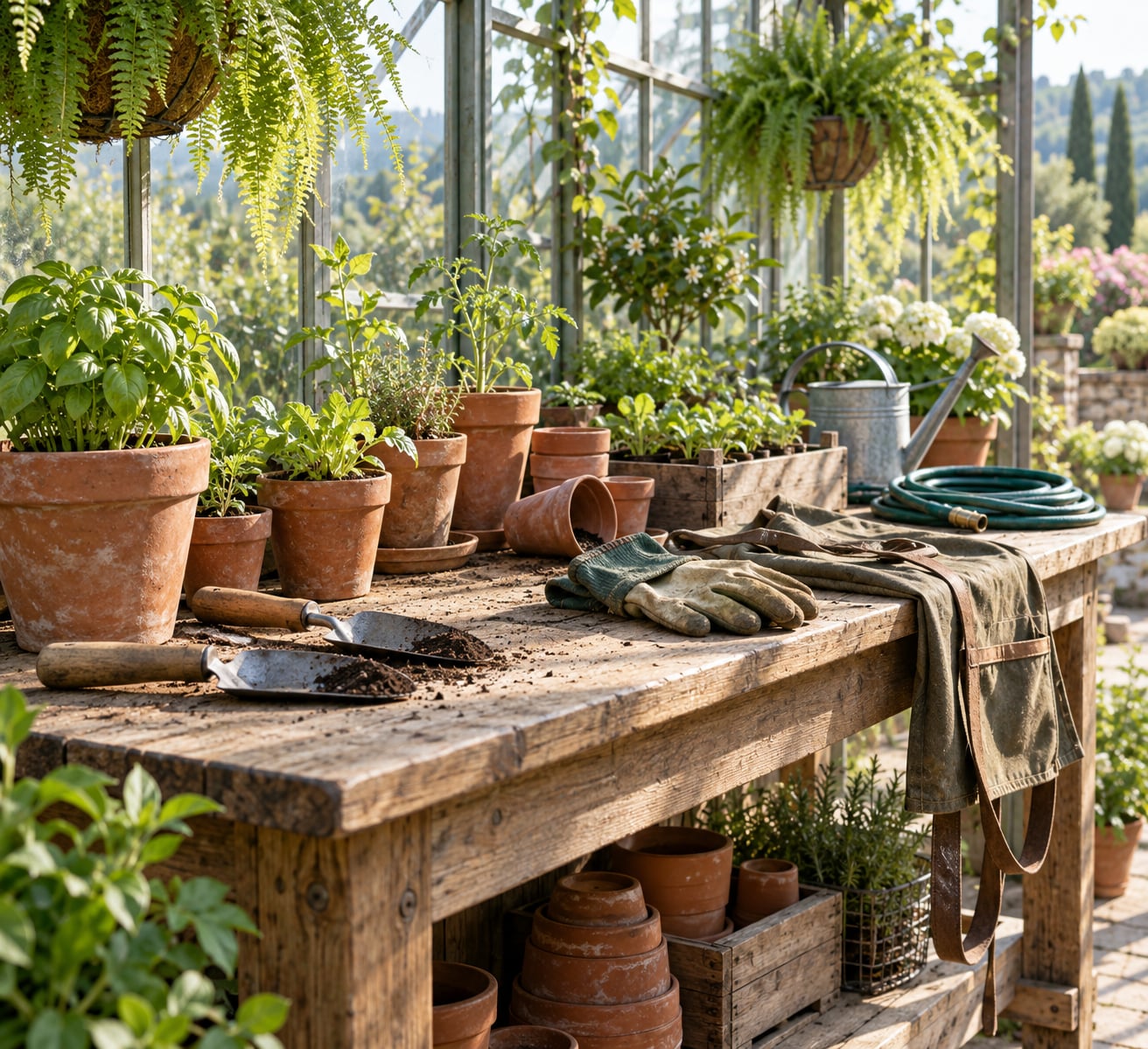
To volunteer at a botanical garden, you contact the garden’s volunteer office, submit an application, clear a background check, and finish an orientation before your first supervised shift. Most programs need a few weeks between your first email and your first day, and busy gardens recruit hardest in late winter and early spring. The hard part is rarely the application itself. It is figuring out which of the many gardens near you actually recruits beginners, and what they need from you once you arrive.
Here is the process that works, garden by garden, whether you are aiming at a large public institution, a university collection, a conservatory, a native plant reserve, or a small community garden.
Table of Contents
- 1What You Need to Volunteer at a Botanical Garden
- 2Documents and personal details
- 3Clothing and gear for your first shift
- 4Health and accessibility
- 5Step-by-Step: How to Volunteer at a Botanical Garden
- 6Step 1: Research Botanical Gardens and Volunteer Programs
- 7Step 2: Choose a Role That Matches Your Interests and Availability
- 8Step 3: Contact the Garden and Complete the Application
- 9Step 4: Prepare for an Interview or Informal Conversation
- 10Step 5: Attend Orientation and Complete Required Training
- 11Step 6: Start With Supervised Garden Tasks
- 12Step 7: Build a Reliable Schedule and Continue Learning
- 13Common Mistakes That Derail New Garden Volunteers
- 14Frequently Asked Questions
- 15Do I need gardening experience to volunteer at a botanical garden?
- 16What should I wear or bring for my first volunteer shift?
- 17Are botanical garden volunteer positions available year-round?
- 18Can older adults or people with limited mobility volunteer?
- 19How much time should I commit to as a beginner?
- 20Can I volunteer to work with medicinal plants or African ethnobotany collections?
- 21Conclusion
What You Need to Volunteer at a Botanical Garden
Almost every garden asks for the same handful of things before you start. Gathering them first turns a two-week application into an afternoon.
Documents and personal details
Expect to give your full legal name, address, date of birth, phone number and email. Gardens that work directly with school children also ask about your relationship to minors, and some roles in visitor services require a background check, which normally needs your consent and sometimes a small processing fee. Have identification ready rather than hunting for it after an email request.
Clothing and gear for your first shift
Wear closed-toe shoes with good grip, long trousers, and sleeves you can roll up or push back. Gardens supply gloves, hand tools, watering equipment and high-visibility vests, so you do not need to buy a kit. Sunscreen, a refillable water bottle, insect repellent and a wide-brimmed hat are worth carrying in summer. If you use glasses, consider a strap so they stay put while you are bent over a bed.
Health and accessibility
Tell the garden about lifting limits, back or knee problems, allergies, or any medication that affects heat exposure. Staff will then assign you to tasks that suit you. Conservatory and glasshouse work can run hot and humid, so tell anyone if you struggle with that. Gardens increasingly run adapted roles at raised beds, the visitor centre, seed library or office tasks, and staff are used to discussing it.
One thing worth reading before you apply: many institutions publish their rules on a single volunteer page, including age minimums and annual hour requirements. Two examples from the SERP research. The San Antonio Botanical Garden asks volunteers to be 18 or older and to log a minimum of 24 hours a year. The Missouri Botanical Garden requires a background check, garden membership, and at least 60 hours a year. Different numbers everywhere, which is why step one below matters.
Step-by-Step: How to Volunteer at a Botanical Garden
Seven steps, in the order that actually gets you onto a work roster. You will know you are done with a step when the thing in front of you has happened.
Step 1: Research Botanical Gardens and Volunteer Programs
Start by listing what is genuinely reachable. Public gardens and arboreta are the obvious first stop, but also look at university botanic gardens, glasshouse conservatories, native plant reserves, arboreta attached to parks departments, and community gardens with a serious seed or pollinator program. Small gardens often move faster and teach faster than large institutions with formal hiring panels.
For each one, find the actual volunteer page rather than a contact form buried in a general site. You are looking for three things: whether they recruit beginners, what the screening involves, and whether there is a stated commitment. The result of this step is a short list of two or three gardens with a named volunteer coordinator or office.
Step 2: Choose a Role That Matches Your Interests and Availability
Roles split into a few families. Propagation and nursery work covers sowing, potting on, watering and seed collection in the glasshouse. Outdoor horticulture covers weeding, mulching, dividing perennials, path and trail maintenance, and herbarium planting. Conservation work includes seed banking, native species restoration, and mapping. Interpretation means talking with visitors as a docent or garden guide. Visitor services covers the front desk, gift shop, membership desk and event set-up. Offices and events need admin help, event staffing, and school group chaperones.
Conservatory and outdoor work are genuinely different jobs, as people who have done both point out. One is precision watering under glass in poor light. The other is physical work in open beds with weather to plan around. Age rules and supervision levels also vary by role, so you will know this step is done when you can name one or two roles, not five.
Step 3: Contact the Garden and Complete the Application
Write one short message to the volunteer coordinator. Say who you are, where you live, what interests you, and the days or half-days you can commit to. Then say you would like to apply and ask what the next step is.
Keep it to a short paragraph. Something like: “I live in [area] and am looking for regular weekend shifts this spring. I am most interested in propagation or seed collection, and I am happy to start with supervised nursery tasks. What is the process for joining your volunteer program?”
Application forms usually ask for availability by day, any lifting or mobility limits, relevant skills, emergency contact, and consent for screening. Be accurate about availability rather than generous. Gardens build rotas months ahead, and a volunteer who disappears after three shifts costs them more than one who never joins. If you are answering as part of a group or employer team, say so at the top, because those projects are usually booked as blocks rather than individual placements.
Step 4: Prepare for an Interview or Informal Conversation
Large gardens often run short conversations, sometimes over a video call, sometimes at the garden on a walk-through. Small gardens may simply chat on the phone. Either way, they are checking reliability and fit more than credentials.
Prepare four things: why you want to volunteer there in one sentence, the specific skills you bring, your honest availability, and how you handle a safety instruction you have not been trained for. Turn the last one into something practical. “I would stop, ask the supervisor, and wait for guidance” beats a confident guess. Bring questions too, because they tell the garden you are serious. Ask what their biggest staffing need is this season, how much supervision beginners get, and what the training path looks like after the first three months.
Step 5: Attend Orientation and Complete Required Training
Orientation usually covers garden rules, plant handling, tool safety, personal protective equipment, emergency procedures, accessibility practice, and how data about members and visitors is handled. Some roles add a short certification, such as irrigation, pesticide handling, or working in the glasshouse alone. Sign the liability waiver early. Until that is done, you will shadow rather than handle tools or plants.
Take notes on plant handling rules and keep them. The habit most volunteers regret skipping is not learning the plant names and their requirements early. You will know you have finished this step when staff let you sign up for shifts without a chaperone.
Step 6: Start With Supervised Garden Tasks
Your first few sessions should be low-stakes. Weeding an established bed, watering under supervision, tidying a path, or potting on seedlings with a staff member watching is plenty. Follow instructions exactly, ask before acting, and never touch a plant you have not been told to touch. Unlabelled specimens in a botanical garden are working collections, often irreplaceable and documented in a living plant database.
Record what you finished when asked. Some gardens log hours for annual reporting, and some volunteers use that log later to apply for a seasonal role or a paid post. Done correctly, your first month is about learning the site, not proving how much you can dig.
Step 7: Build a Reliable Schedule and Continue Learning
This is where most beginner volunteers quietly drop out, and where the ones who last several years are built. Confirm your shifts through whatever portal the garden uses, such as a scheduling system or sign-up sheet, rather than assuming you are rostered. Notify the coordinator as early as you can when you cannot attend. Silence is what causes a volunteer to be quietly removed from a rota.
Reliability beats volume. Consistently showing up for a two-hour morning shift reads better to coordinators than occasional six-hour bursts, and it is how you get access to the work nobody can delegate to a first-year volunteer. Ask for feedback at your three-month mark, start learning plant names in the areas you frequent, and put your name forward for advanced tasks like propagation, tour guiding, or leading school sessions. Some volunteers move from volunteer to seasonal horticulture crew, guide, or education assistant, and volunteers with a horticulture certificate from a major garden carry that credential into jobs elsewhere.
Common Mistakes That Derail New Garden Volunteers
- Skipping the application and emailing a staff member directly. Coordinators get buried. Find the published volunteer page and use the form or address on it.
- Claiming more availability than you have. Two honest half-days a week beats four you can only manage sometimes. Rotas are planned a season ahead, and last-minute no-shows cost real work.
- Arriving in trainers and a summer shirt. Closed-toe shoes, long trousers and sleeves are the baseline. Sunscreen and a filled water bottle save you by hour two.
- Touching unfamiliar plants to see what they are. Botanical collections include rare, toxic, and research specimens. Look, ask, and wait to be told before you handle anything.
- Ignoring safety guidance to keep up. Gloves on when handling compost and treated material, boots not sandals, tools passed handle-first, and lifting technique taught in orientation all exist for a reason.
- Going silent when your schedule changes. One email before a missed shift keeps you on the roster. Disappearing is the fastest way to lose the placement you worked to get.
A quieter mistake is applying in August and expecting a reply. Many gardens staff up for spring and autumn planting, then go quiet through the hottest weeks, so applying in October can mean a long wait.
Frequently Asked Questions
Do I need gardening experience to volunteer at a botanical garden?
No. Most gardens recruit beginners and train you on the job, and entry roles such as weeding, potting on, watering and visitor desk work assume no prior knowledge. What coordinators notice is willingness to learn and showing up when you said you would. Some specialist tracks, such as propagation or seed banking, build on each other, but you can still enter through general garden work first.
What should I wear or bring for my first volunteer shift?
Closed-toe shoes with grip, long trousers, sleeves you can move in, and weather appropriate layers. Gardens supply gloves, hand tools and high-visibility vests, so you do not need to buy equipment. Bring sunscreen, a refillable water bottle, insect repellent and a wide-brimmed hat for outdoor work. If you wear glasses, use a strap. Ask the coordinator whether a hat or water bottle is provided before you buy anything.
Are botanical garden volunteer positions available year-round?
Sort of. Outdoor garden roles usually follow the growing and planting seasons, so recruitment is heaviest in late winter and early spring, with quiet periods in midsummer heat and deep winter. Glasshouse, nursery, office, visitor desk and event roles often run all year because indoor and administrative work does not stop. If you want steady hours, ask which roles work in the off-season rather than assuming the program shuts down.
Can older adults or people with limited mobility volunteer?
Yes, and gardens are used to arranging it. Say plainly what you can and cannot do, and staff will match you to tasks such as seed cleaning, potting on at a bench, herbarium preparation, membership and office support, visitor desk work, or adapted garden beds. Conservatory work and trail maintenance tend to demand more bending, carrying and heat tolerance. Ask about accessibility at your interview and give your honest limits before you are placed.
How much time should I commit to as a beginner?
Check the garden’s stated minimum before you promise anything, because the figures vary widely. The San Antonio Botanical Garden asks for a minimum of 24 volunteer hours a year, while the Missouri Botanical Garden requires at least 60 hours annually alongside membership. As a rule of thumb, a recurring half-day shift each week is easier to sustain and more useful to a coordinator than scattered long days.
Can I volunteer to work with medicinal plants or African ethnobotany collections?
Yes, though these are usually offered through the education and interpretation side of a garden rather than as open gardening shifts. Collections of medicinal and ethnobotanical plants are often interpreted, researched and label-managed, and volunteers help with display upkeep, guided tour preparation, seed growing for themed events and visitor questions. Tell the coordinator specifically what you are after, and mention any language skills, since interpretation programmes regularly look for them.
Conclusion
Volunteering at a botanical garden comes down to three things: pick a garden that publishes real volunteer information, be honest about your availability, and turn up consistently once you are trained. Do this week and it takes one afternoon. Choose two or three gardens within a realistic distance, read their volunteer pages, and send the coordinator a short message naming your interests and the shifts you can cover. The rest is learning plant names and remembering to ask before you touch anything.