To check whether a plant is endangered, identify it to species, search the IUCN Red List of Threatened Species for its conservation category, cross-check a national or regional Red Data Book such as Kew’s Plants of the World Online, and then confirm whether the plant is legally protected where you are standing. Global conservation status and local legal status are two different questions, and only the second one can put you in trouble.
Most people who ask this question are not botanists. You might be a wildcrafter checking a medicinal plant before you harvest it, a herbal practitioner sourcing material for a preparation, a land surveyor clearing a construction site, a gardener looking for legally propagated stock, or a student writing up a field record. Each of you needs the same chain of checks, in the same order.
The order matters more than it looks. Look up a plant under the wrong name and every later answer is worthless, so identification comes first. A missing record on a global database is not permission to collect, so the national check comes after the global one, never instead of it.
Table of Contents
- 1Where to Look First: The Four Places to Check
- 2What You Need Before You Start
- 3What Each IUCN Red List Category Means
- 4Step 1: Identify the Plant to Species
- 5Step 2: Search the IUCN Red List
- 6Step 3: Cross-Check Regional and African Databases
- 7Step 4: Check Your Country’s Protected Species List
- 8Step 5: Confirm Legal Status Before You Collect, Sell or Trade
- 9Global Status Is Not the Same as Legal Protection
- 10What to Do If a Plant Is Data Deficient or Not Evaluated
- 11If You Find a Rare Plant in the Wild
- 12Common Mistakes That Produce the Wrong Answer
- 13What to Do Once You Know the Status
- 14Frequently Asked Questions
- 15How can I tell if a species is endangered?
- 16Is it illegal to dig up an endangered plant?
- 17What is the red list of endangered species?
- 18What does the IUCN Red List contain?
- 19What if a plant is not on the red list?
- 20How do I report a rare plant sighting?
Where to Look First: The Four Places to Check
If you read nothing else, read this list. These are the four sources, in the order they answer different parts of the question.
- The IUCN Red List of Threatened Species (iucnredlist.org) — the global assessment. Gives you the official conservation category, the assessment year, who made the assessment, and the criteria it met.
- A regional or continental database — Kew’s Plants of the World Online (powo.science.kew.org) for accepted names and native range, the African Plant Database for African taxonomy, NatureServe Explorer (explorer.natureserve.org) for North American global rank.
- Your country’s Red List and protected species schedule — this is the list that carries legal force. National lists are usually stricter and narrower than the global assessment.
- The enforcing authority or a permit office — the final word. Only they can tell you whether a specific act on a specific plant on your specific piece of land is lawful.
Three of those four are free public databases you can use in about ten minutes. The fourth takes longer, and it is the one that actually protects you.
What You Need Before You Start
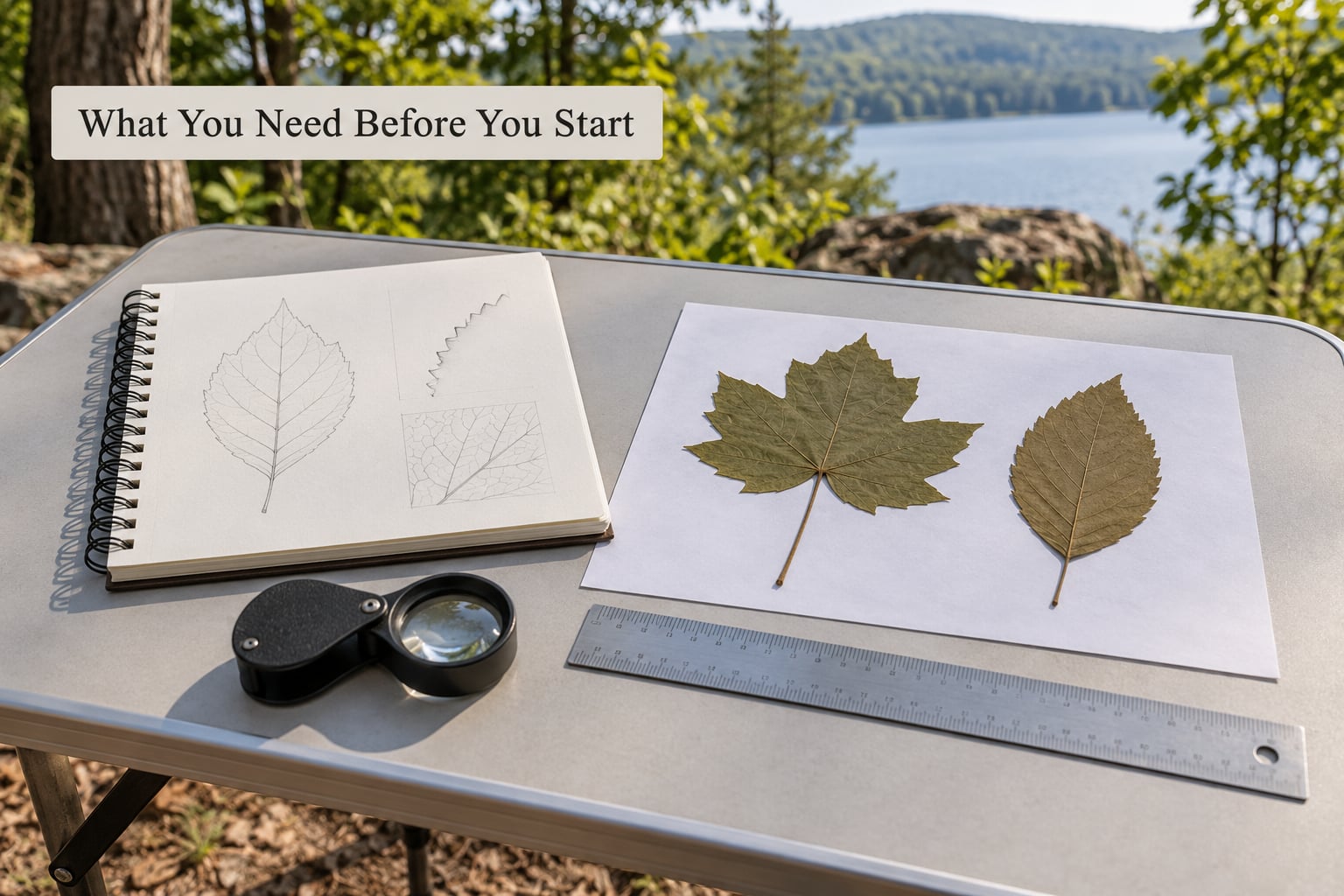
You need less than you would expect. Have ready:
- The plant’s name, however uncertain, plus any local or vernacular name a community uses for it.
- Clear photographs: the whole plant in its habitat, then close-ups of leaf arrangement, leaf margin, venation, bark, flower and fruit if present.
- Where you found it — country, region, and roughly how far from a town or road. Range is part of the assessment, so location changes the answer.
- The rank you care about. Status can be listed for a species, a subspecies or a variety, and the legal list may name only one of those. Check the species and, if it has them, the infraspecific taxa.
- The date, or the year of the assessment you are reading. Status changes.
What Each IUCN Red List Category Means
The IUCN Red List sorts every assessed species into one of nine categories. Three of them — Critically Endangered, Endangered and Vulnerable — together make up the group formally called “threatened”. The table below is the plain-English version of the official framework.
| Category | Code | Extinction risk | What it means in practice |
|---|---|---|---|
| Extinct | EX | No reasonable doubt | Only preserved material, photographs or DNA remains. Nothing alive in the wild. |
| Extinct in the Wild | EW | Only in captivity or cultivation | Gone from nature, maintained in botanic gardens, seed banks or living collections. |
| Critically Endangered | CR | Extremely high risk | Already under severe pressure. Usually a small remnant and steep decline. |
| Endangered | EN | Very high risk | Populations are small, fragmented or declining fast. This is the category most people mean when they say endangered. |
| Vulnerable | VU | High risk | Not critically high, but on a clear trajectory toward it if pressures continue. |
| Near Threatened | NT | Close to qualifying | Almost meets a threatened criterion. Frequently moves up after reassessment. |
| Least Concern | LC | Low risk currently | Widespread and abundant enough. Still not a licence to harvest. |
| Data Deficient | DD | Cannot be judged | Too little information to assign a risk. Absence of data is not absence of risk. |
| Not Evaluated | NE | No assessment exists | Never assessed against the criteria. Most plant species sit here. |
Assessments use the IUCN Categories and Criteria, currently version 16, published March 2024. If a page or a blog quotes an older version, the thresholds may not match what the database is showing you today.
Step 1: Identify the Plant to Species
This is the bottleneck, and it is where most people fail. Search a database with the wrong name and you will get a confident, useless answer about a different species.
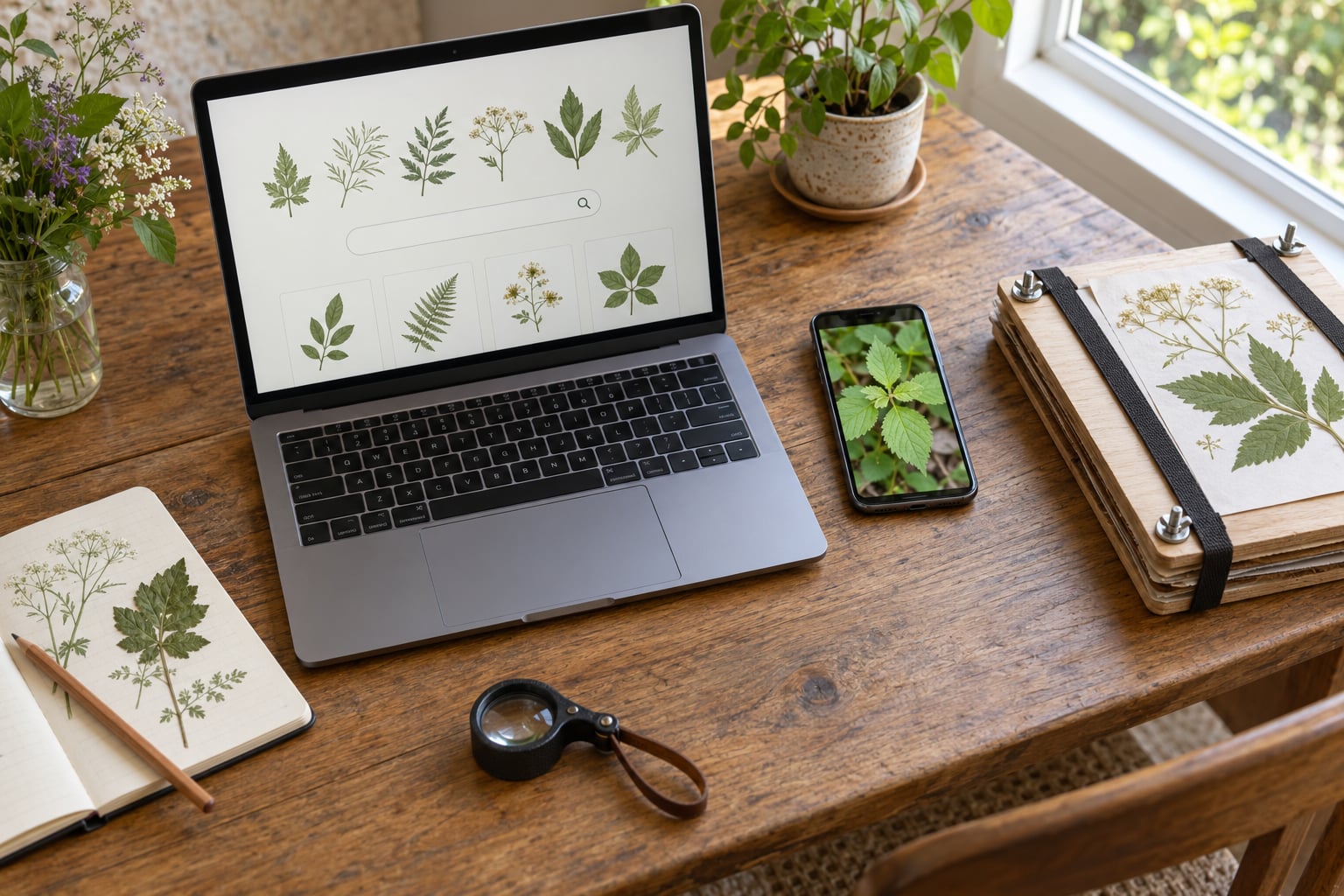
Use several characters, not one. Leaf arrangement (alternate, opposite, whorled), leaf margin, venation pattern, bark texture, growth habit, flower structure and fruit all carry signal. A single feature that is variable within a species — leaf size, colour, hairiness — is the worst thing to rely on.
Photograph the habit first, then the details. A close-up of a flower with no sense of the whole plant is very hard to match to a key or a description. Note whether the plant is a tree, shrub, climber, herb or rosette, and whether leaves are opposite or alternate — that one character separates whole families in many cases.
Watch for look-alikes. Closely related species that differ mainly in a single floral character are exactly the kind that get misidentified, and in many genera the medicinal or ceremonial species a community uses has a common look-alike that is not the same plant. Cross-check with two field guides from different authors, and use a second opinion through iNaturalist or Seek before you act on an identification that matters.
If two reputable sources disagree, treat the plant as unidentified. An unresolved ID is a reason to leave it alone, not a reason to pick the more likely answer.
Step 2: Search the IUCN Red List
Search by scientific name, then check that the record you landed on is the accepted name for that taxon. Names move around as taxonomies are revised, and a synonym will either return nothing or return a different species.
Once you are on the record, read these fields in this order:
- Assessment date and assessor. A 2015 assessment tells you about 2015. Land conversion, fire regimes and harvest pressure move quickly, and a listing can also be outdated in the optimistic direction.
- Category and criteria met. The criteria are lettered A through E, covering population size, area of occupancy, extent of occurrence, number of locations or subpopulations, and quantitative decline over a set period. Two criteria together usually give a higher category than one.
- Population trend. Decreasing, increasing or stable. A decreasing trend on a Vulnerable listing is the difference between a species with time and one without it.
- Range description. Extent of occurrence and area of occupancy, and whether the range is fragmented.
- Threats. Habitat loss, overharvest for medicine or timber, grazing, fire, invasive species, and — increasingly for narrow-range species — climate-driven range shift.
- Assessment rationale and references. The rationale is where the assessor explains the numbers. The references are where you can check the underlying study.
Screenshot or note the assessment date, the category and the assessor. That three-line record is what you will need if anyone later asks why you believed the plant was safe to collect.
Step 3: Cross-Check Regional and African Databases
A global category is a global average. It hides everything about the place you are standing, and for most plants what matters locally is the opposite of the global picture: widespread and harmless globally, but a regional endemic with a handful of populations on one hillside.
| What you need | Where to look | What it tells you |
|---|---|---|
| Accepted name and synonyms | Kew’s Plants of the World Online (powo.science.kew.org) | The current accepted name, synonyms, and native versus introduced range. |
| African taxonomy and distribution | African Plant Database | Synonymy and country-level distribution for African taxa, with nomenclatural references. |
| North American global and state rank | NatureServe Explorer (explorer.natureserve.org) | A global rank plus a state rank, which is closer to legal reality than the IUCN band alone. |
| US federal listing | US Fish and Wildlife Service ECOS species list | Whether the species is Endangered, Threatened or Petitioned under the Endangered Species Act. |
| Descriptions and photographs | Kew POWO, national herbaria, iNaturalist | Diagnostic description and imagery to confirm your identification. |
Use POWO and the African Plant Database to fix the name first, then search the IUCN Red List with that accepted name. Doing it in the other order wastes time on synonyms.
Step 4: Check Your Country’s Protected Species List
National and subnational lists decide the legal question. They sit alongside the global assessment rather than beneath it, and they change more often. Look for the schedule of protected or specially protected flora attached to your national biodiversity, forestry or environment legislation, plus any provincial or state schedule.
| Region | Authority or database | What it settles |
|---|---|---|
| United States | ECOS species list; State Natural Heritage Programs via NatureServe Explorer | Federal Endangered Species Act status, and state-level legal rank plus watch lists. |
| Canada | COSEWIC status; Species at Risk Act (SARA) registry | Special concern to extinct statuses, and what is actually prohibited federally. |
| United Kingdom | The Red Data Book for British Vascular Plants | GB Red List status and whether the plant is protected under the Wildlife and Countryside Act schedule. |
| South Africa | Red List of South African Plants; NEMBA protected species lists | National Red List categories and which species may be collected, traded or exported. |
| Other African countries | National Red Lists published in the regional and national Red List series; national biodiversity and forestry legislation | Country-level categories and the legal prohibitions that apply to you. |
| International trade | CITES Appendices I, II and III | Whether trade, export or import is restricted regardless of domestic status. |
Note what each list actually settles. A watch list is a monitoring tool, not a prohibition, and a national Red List category is a conservation judgement that may or may not have been written into law. Where the list names a protected species, the schedule usually states the specific act that is an offence: pick, uproot, cut, dig, remove, trade or sell.
Step 5: Confirm Legal Status Before You Collect, Sell or Trade
Only this step is legally decisive, and no database can do it for you. What you need depends on what you plan to do.
- Pick a flower or cut a stem — covered by many protected species schedules even for common-looking plants.
- Uproot or dig a whole plant — almost always the most heavily restricted act, and the one a collector is most likely to regret.
- Sell, buy or trade — adds commercial offences on top of collection, often with heavier penalties.
- Export or import — adds CITES permitting, which requires documented legal provenance and can be refused outright if the specimen was wild-collected without permission.
So call. In the United States, field and construction workers report the same thing repeatedly: start with the state department of environmental protection, but know that some states route endangered species through the fish and game agency instead, so ask both if the first call stalls. The federal answer only covers federally listed species, which is a small slice of what any given state protects.
Ask the agency three specific questions: is this species listed in my jurisdiction, is the act I am considering prohibited, and do I need a permit. Write down the name of the person you spoke to and the date. Penalties for illegal collection are commonly a fine per plant plus prosecution, and for protected medicinal species the trade offences stack on top.
Global Status Is Not the Same as Legal Protection
This is the single most useful thing to understand, and almost every ranking page on this topic gets it wrong.
A Least Concern global category means the species is not at high global risk of extinction. It says nothing about whether your country protects it, and it does not mean there are plenty of plants near you. A species can be abundant across a continent and still be restricted to one riverbank in your district, where it is the only population left. That plant may be on your national protected list, may be your state or provincial special concern species, and may be illegal to dig even though its Red List category is LC.
The reverse also happens. A plant can be Vulnerable globally, legally unprotected where you are, and entirely lawful to collect from a roadside population — though a good ethnobotanist would still think twice, because Vulnerable plus harvest pressure is how a species slides two categories down the list.
Extirpated is a related trap. A species can be gone from your region entirely while being common elsewhere and listed as healthy globally. If your field guide shows a species in your area that nobody has recorded in decades, you may be looking at an extirpated species or at a case of misidentification.
What to Do If a Plant Is Data Deficient or Not Evaluated
Data Deficient and Not Evaluated are the two categories people misread most often, and the confusion is expensive. DD means assessors looked and could not reach a judgement. NE means nobody has looked.
Most plant species on Earth are Not Evaluated. Plants are systematically under-assessed compared with birds and mammals, so a blank result for a wild species is the normal case, not a warning sign in itself. But absence of a listing is not a clearance, and it is not evidence that the species is abundant.
When you hit DD or NE, change your question. Instead of asking “is it endangered?”, ask “is it protected here?”, and answer that from the national schedule and the agency. Check whether a national Red List covers taxa the global list has skipped, since regional assessors often work on different priorities. Treat any DD or NE plant that has documented local pressure — a shrinking known range, heavy commercial collection, heavy grazing, recent land conversion — as something to leave in place until an authority tells you otherwise.
If You Find a Rare Plant in the Wild
When you suspect something is listed, the safe sequence is short and it never involves putting it in your bag.
- Stop. Do not dig, cut, break branches or strip leaves. Photograph instead, including scale in the frame.
- Record the location precisely, with coordinates and the date. A vague hilltop note is nearly useless to a conservation agency.
- Log it on iNaturalist or an equivalent citizen science platform, so the observation becomes part of the permanent record.
- Report it to the right authority — the state or provincial environment agency for land, the forestry department where the plant is timber, and the wildlife agency for anything on an animal list too.
- If you did not find it, say so. Use a trip with a target species list in iNaturalist so the species shows as looked-for-and-absent rather than simply missing. Blank records get misread as missing data, and absence is real conservation data.
If a project needs the plant propagated rather than collected, seed collection and growing is often the answer that everyone will accept. Restoration groups run projects that map local rare plants, protect existing stands, collect seed under agreement, and raise plants for planting back. The rule they work to is simple: be certain of the identification first, and if there is any doubt, do not harvest.
Common Mistakes That Produce the Wrong Answer
Assuming a common-looking plant is common. Abundance in the wild, on a roadside or in a garden tells you nothing about legal status or global trend. Someone growing a listed species from seed can face real restrictions that surprise them.
Trusting a social media post or an identification app’s top match. Automated suggestions are useful for narrowing to a genus and poor at resolving species. Confirm against a description and an herbarium specimen before you act.
Confusing a watch list with a national list. A state or provincial watch list flags species needing survey; it is not a prohibition. A national Red List may or may not have legal force depending on how it is written into national law. Read the actual legislation or the schedule, not a summary of it.
Treating an old assessment as current. Read the assessment year. An assessment published before a major land conversion, a mining approval or a change in harvest demand may not describe what is happening on the ground now.
Harvesting before checking. This is the expensive one. Check first, every time, even when you are convinced you know the plant.
Believing “not on the Red List” means safe. It most often means not assessed.
What to Do Once You Know the Status
For medicinal and ceremonial use, the practical workflow runs: identify to species, check global status, check the national schedule, get written confirmation from the authority or a recognised herbarium, then source only material with documented legal provenance. Where wild harvesting is genuinely permitted, collection quotas, locality limits and record-keeping usually come with the permit, and communities that hold traditional knowledge about a species often have rights to that harvest and to benefit from it. Ask before assuming the knowledge is unowned.
Where harvest is not permitted, the alternatives are real and well established. Culturally important species are maintained in community and university botanic gardens, propagated from seed in seed banks such as Kew’s Millennium Seed Bank, and grown on contract by specialist nurseries. Many ethnobotanical practitioners now cultivate the plants they would once have wild-harvested, which removes the legal question entirely and takes pressure off the wild population.
For restoration, land management and development work, the same chain applies, with one addition: an assessment on file before work starts is what protects you. Surveyors and contractors who have been through this describe the same pattern — the plant that stops a project is always the one nobody checked for until the diggers arrived.
Frequently Asked Questions
How can I tell if a species is endangered?
You tell by looking up the species in the IUCN Red List of Threatened Species and reading its category: Critically Endangered, Endangered and Vulnerable together make up the threatened species. An Endangered category means populations are small, fragmented or declining quickly. Check the assessment year too, because a listing describes the species at the time of assessment and pressures change.
Is it illegal to dig up an endangered plant?
Usually, yes, if the species is protected where you are. Protected species schedules generally prohibit uprooting, digging, cutting or removing, and most national laws also penalise selling or trading. The IUCN category does not decide this — a Least Concern species can still be illegal to dig locally. Confirm with your national or state environment agency before you touch the plant.
What is the red list of endangered species?
The Red List is the global reference for the conservation status of plants, animals and fungi. It is maintained by the IUCN through a network of more than fifteen hundred expert committees and partner organisations, and it assigns each assessed species to one of nine categories based on the IUCN Categories and Criteria, currently version 16.
What does the IUCN Red List contain?
It contains assessed species records, not a list of species to protect. Each record gives the conservation category, the criteria the assessment met, population size and trend, geographic range, the threats acting on the species, and the references behind the decision. Only a minority of known species, and a smaller share of plants, have been assessed so far.
What if a plant is not on the red list?
Nothing follows from it. Not Evaluated means no assessment has been done, and Data Deficient means assessors had too little information to judge. Both are common for plants. The only thing that settles what you may do is your country’s protected species schedule and the enforcing agency — treat an unlisted species as unknown, not as safe.
How do I report a rare plant sighting?
Photograph the whole plant and the details, record coordinates and the date, and post the observation to iNaturalist so it enters the permanent record. Then tell the relevant authority: the state or provincial environment agency for plants on land, and the wildlife or forestry agency where the species falls under their schedule. Field workers report that getting the report filed properly matters more than getting it filed fast.
Start with the identification, because everything downstream depends on it. Get the name right, run it through the IUCN Red List, then the national schedule, then ask the authority what the specific act you have in mind means. If you only do one thing today, check the national protected species list — that is the one that carries legal weight.