Most of what you swallow an herb as is not the form that reaches your bloodstream. The liver rewrites the compound first, and understanding how liver metabolism affects herbal safety explains why two people can react very differently to the same plant, why an herb can interfere with a prescription, and why “natural” is not a safety claim.
This guide explains the process in plain language for readers without a biochemistry background. It is general information, not medical advice. If you take any medicine, have a diagnosed liver condition, are pregnant or breastfeeding, or have been told your liver tests are abnormal, talk to a doctor or pharmacist before changing what you take.
Table of Contents
- 1How Liver Metabolism Affects Herbal Safety
- 2What the liver does to herbal compounds
- 3Why metabolism can change an herb’s effects
- 4Enzyme inhibition and enzyme induction do opposite things
- 5Named botanicals that give clinicians reason for caution
- 6How liver metabolism affects herbal safety when medicines are also involved
- 7Why two people can respond differently to the same herb
- 8Preparation method changes the hepatic load
- 9What research can and cannot tell us
- 10Myths worth retiring
- 11Warning signs and situations that need professional advice
- 12How to discuss herbal use with a doctor or pharmacist
- 13Frequently Asked Questions
- 14Which herbs are known to damage the liver?
- 15What are the differences between phase 1 and phase 2 liver metabolism?
- 16What is the herb that reverses liver damage?
- 17Can too many supplements be bad for your liver?
- 18Do herbs interact with prescription medicines through the liver?
- 19Why do different people react differently to the same herb?
- 20What to do first
How Liver Metabolism Affects Herbal Safety
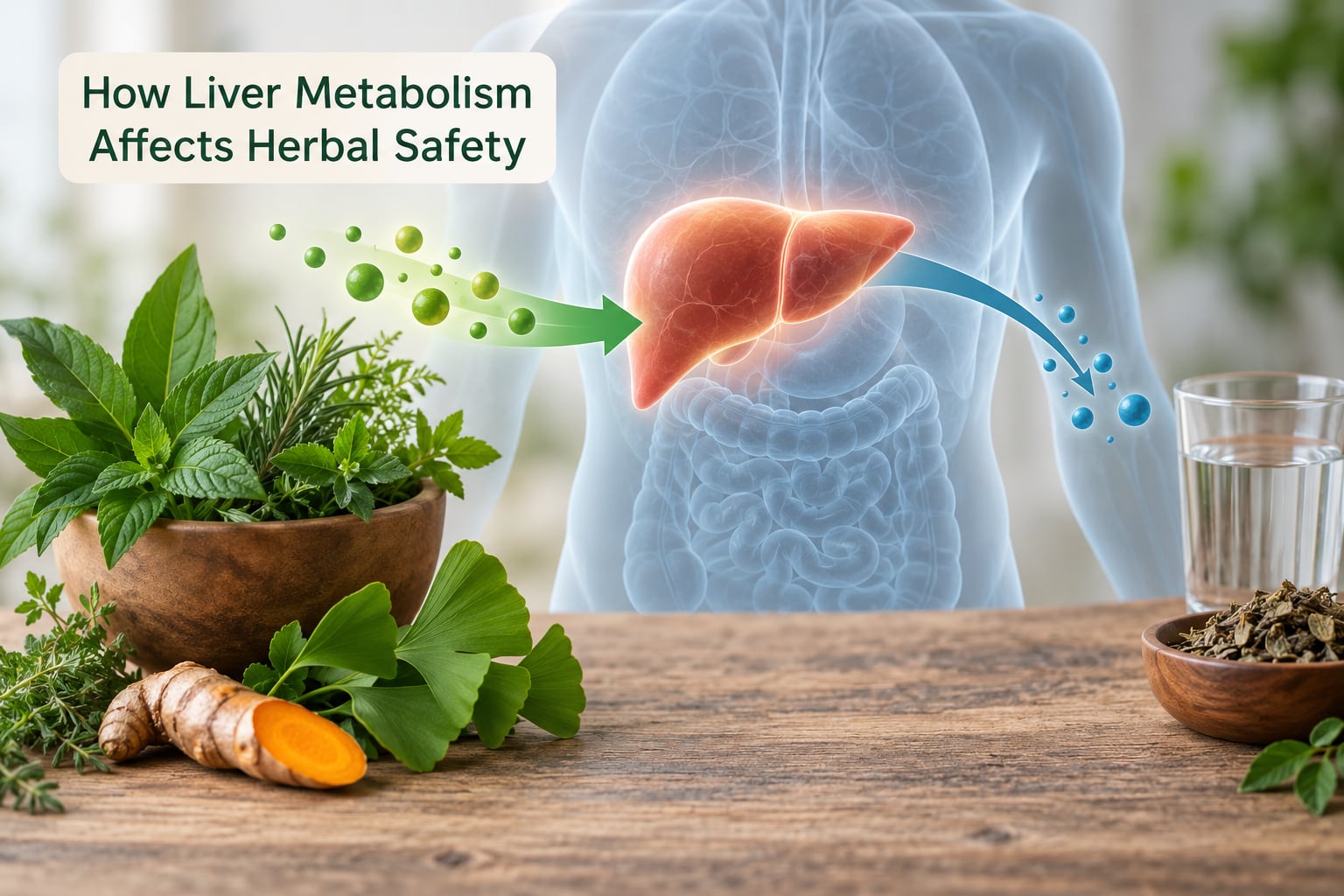
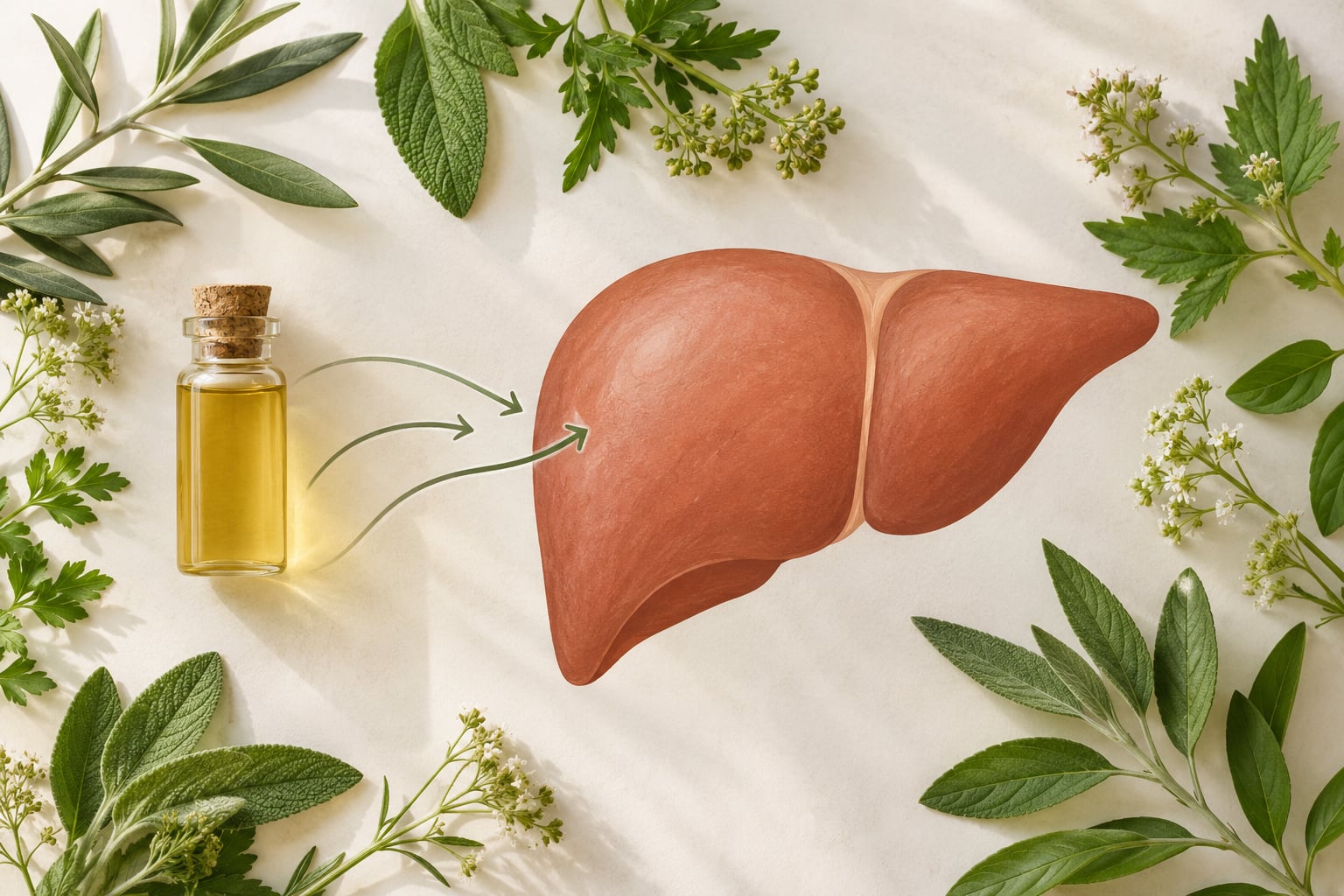
The liver takes most herbal compounds and breaks them into a form your body can excrete, a two-stage process of Phase I oxidation followed by Phase II conjugation. That same process can convert a mild plant compound into a reactive one that damages liver cells, which is why a herb’s effect and its risk both depend on how your liver handles it.
Two things follow from that. The first is that a herb’s real risk cannot be judged from the plant alone; it depends on dose, preparation, your liver, and anything else you take. The second is that the liver sits at the centre of herb safety for a practical reason: it is also where prescription drugs are processed, so an herb that changes liver enzymes can change drug levels as well.
What the liver does to herbal compounds
Here is the route an herbal compound takes, in the order it happens:
- Absorption. Compounds dissolve in the gut and cross the intestinal wall. Some are already altered by gut bacteria before they arrive anywhere.
- First-pass metabolism. Blood from the gut drains into the liver before returning to the body, so a large share of the dose can be metabolised on first pass, and a smaller amount reaches systemic circulation intact.
- Phase I oxidation. A large family of enzymes, the cytochrome P450 (CYP) system, adds oxygen to the molecule. CYP3A4 alone handles roughly half of all drug metabolism, and P450 enzymes as a group handle the bulk of small-molecule metabolism in the body.
- Phase II conjugation. A second family of enzymes attaches something water-soluble to the oxidised molecule: glutathione, glucuronic acid, sulfate, a methyl group, an acetyl group, or an amino acid such as glycine or taurine.
- Excretion. The conjugated, water-soluble product leaves through bile into the intestine or through the kidneys into urine.
The point to hold onto is that Phase I and Phase II do opposite jobs. Phase I usually makes molecules more water-soluble, but it can also make them more reactive. Phase II tags them for removal. When Phase I runs faster than Phase II can keep up, reactive intermediates pile up inside liver cells.
| Feature | Phase I | Phase II |
|---|---|---|
| Main enzymes | Cytochrome P450 (CYP3A4, CYP2D6, CYP2C9, CYP1A2) | UGT, GST, SULT, COMT, NAT |
| Reaction | Oxidation, reduction, hydrolysis | Conjugation |
| What it produces | More polar, sometimes more reactive metabolites | Water-soluble tagged compounds |
| Safety implication | Can create toxic intermediates; sustained imbalance stresses glutathione reserves | Neutralises and clears; slower variants leave more parent compound circulating |
Not every herb follows the same route. Some are handled mainly by CYP enzymes, some mainly by glucuronidation or sulfation, some are excreted largely unchanged, and some are processed heavily in the gut before the liver sees them at all. That is why one plant can behave like a mild medicine while another behaves like a toxin at the same nominal dose.
Why metabolism can change an herb’s effects
The same herb can be neutralised, activated, or made more toxic depending on how much enzyme activity a person has and which pathway dominates. The outcome is set by enzymes, genetics, age, liver health, nutrition, and other medicines, all of which shift the balance between activation and clearance.
Enzyme inhibition and enzyme induction do opposite things
An herb can suppress an enzyme, which slows clearance and raises circulating levels of itself or of a drug, or it can induce an enzyme, which speeds clearance and lowers levels. Induction is slow to start and slow to fade, taking days to weeks, while most inhibition is faster and mostly reversible once the compound is gone.
This matters most for medicines with a narrow therapeutic index, where the difference between an effective level and a toxic level is small: warfarin, digoxin, some seizure medicines, immunosuppressants, lithium, and several chemotherapy agents. The consequence is not that the herb is a poison by itself, but that it quietly moves a drug out of its safe range.
St John’s wort is the clearest example. Its hyperforin content activates the pregnane X receptor, which turns up CYP3A4 expression, and prescription drugs handled by CYP3A4 clear faster than intended. Reports of this interaction have involved oral contraceptives, warfarin, transplant medicines, and antiretroviral drugs. Low-hyperforin standardised extracts produce a smaller effect than standard extracts, which is why preparation matters even within one herb.
Named botanicals that give clinicians reason for caution
The table below groups widely discussed plants and compounds by the mechanism researchers have proposed, and by how solid that evidence actually is. Most of it rests on case reports, registries such as the Drug-Induced Liver Injury Network, and in-vitro work, which is a real limitation worth stating rather than hiding.
| Herb or compound | Proposed mechanism | Type of risk | Evidence strength |
|---|---|---|---|
| Kava kava | Reactive metabolites, membrane and mitochondrial injury, inhibition of CYP2C19 and CYP3A4 | Dose-dependent and idiosyncratic | Case reports plus animal data; strong regulatory warnings in several countries |
| Green tea extract (EGCG) | Catechins, especially in concentrated extracts, associated with hepatocellular injury; possible oxidative stress and EGCG-related reactive species | Mostly idiosyncratic, with a dose relationship at high intakes | Case series and pharmacovigilance signals; tea as a beverage is not implicated |
| Comfrey and other pyrrolizidine-alkaloid plants | Pyrrolizidine alkaloids are bioactivated by CYP enzymes to reactive pyrrole metabolites that cross-link DNA in hepatocytes | Predominantly dose-dependent and cumulative | Established in animals and human poisoning; regulatory bans in several markets |
| Chaparral (creosote bush) | Quinone metabolites associated with centrilobular liver and kidney injury | Dose-dependent, cumulative with use | Case reports; restricted or withdrawn in some countries |
| Pennyroyal oil | Menthofuran and related metabolites injure hepatocytes; documented in pregnancy | Dose-dependent | Documented human poisoning cases |
| Polygonum multiflorum (He Shou Wu, prepared and raw) | Proposed mitochondrial and hepatocellular injury, with a dose and preparation relationship; raw root more implicated than processed | Both patterns reported | Registry case series; a growing body of pharmacovigilance data |
| Ephedra (ma huang) | Sympathomimetic alkaloids cause ischaemic and cardiovascular injury, with reported cases of hepatic injury | Dose-dependent; main risk is cardiovascular | Well-documented toxicity; prohibited or tightly restricted |
| Aromatic Aristolochia species | Aristolochic acids are bioactivated to reactive metabolites causing renal and hepatic tubular injury and urothelial malignancy | Cumulative, DNA-damaging | Established; IARC Group 1 carcinogen |
| Usnic acid | Mitochondrial and hepatocellular injury; limited safety data | Dose-dependent | Case reports and animal data |
| St John’s wort | CYP3A4 induction via hyperforin and pregnane X receptor rather than direct liver toxicity | Interaction-driven, not hepatotoxic | Consistent pharmacokinetic and clinical interaction data |
Note what is missing from that list. Milk thistle and silymarin are widely sold as liver supports, and while silymarin is generally well tolerated, there is no good evidence that it repairs a damaged liver, and rare cases of liver injury have been reported with it. A herb being studied as a protective agent is not the same as a herb that is proven to treat disease.
How liver metabolism affects herbal safety when medicines are also involved
When an herb and a medicine meet in the liver, three different things can happen: one can change how the other is processed, both can act on the same target at once, or one can bind a shared transport or absorption pathway. Only the first is what liver metabolism strictly means, but readers often lump all three together, so it is worth separating them.
| Interaction type | What it means | Why it matters |
|---|---|---|
| Pharmacokinetic, metabolism-based | The herb induces or inhibits the enzymes that clear the medicine | Drug levels rise or fall without any change in the prescribed dose; biggest risk with narrow therapeutic index drugs |
| Pharmacokinetic, absorption-based | Fibre, mucilages or gums change how much drug is absorbed | Affects the whole dose, not just liver handling; can blunt or delay a treatment that has a narrow window |
| Pharmacodynamic | Both act on the same system, adding or opposing effects | Two sedating herbs plus a sedating medicine, or a blood-pressure effect doubled. No enzyme involved |
| Additive or synergistic toxicity | Two substances injure the same organ by separate routes | Alcohol plus a hepatotoxic extract is the classic example; cumulative rather than enzyme-based |
| Shared pathway competition | Both compounds are handled by the same enzyme family at high load | Clearance of each is slower, so exposure to both rises even with no formal interaction |
Timing is one more variable people miss. Enzyme induction is slower than inhibition, so a herb started on Monday can still be changing drug metabolism weeks later, and stopping it does not mean the enzyme system has returned to baseline. That is one reason a medicine that was well tolerated for years can start causing side effects after a supplement is added.
Why two people can respond differently to the same herb
Identical doses of the same plant do not produce identical exposure, because variation enters at every step. Most of it comes from dose and preparation, how long someone has been taking it, liver and kidney function, other medicines, and genetic differences in enzyme activity.
Genetics are worth spelling out, because it explains reactions that look random. CYP2D6 alone has well-described genetic variants that make some people poor, intermediate, normal or ultra-rapid metabolisers. Someone who processes a compound slowly may reach a higher internal concentration from a modest dose, and someone who processes it rapidly may get little effect at all. Populations differ in the frequency of these variants, which matters for how dosing advice written in one group travels to another.
Preparation method changes the hepatic load
Ethnobotanical practice is precise about preparation, and those choices are metabolic choices. What a practitioner does to a root before use changes how much active compound arrives at the liver in a single pass.
| Preparation | What changes | Metabolic implication |
|---|---|---|
| Infusion or tea in water | Water extracts polar compounds; many terpenes and resins stay behind | Usually a lower and slower liver load than tincture or extract |
| Decoction | Heat and time pull out more of the plant, including harder-to-extract compounds | Larger volume and higher compound load; repeated daily use compounds the exposure |
| Alcohol tincture | Extracts lipophilic compounds including alkaloids and resins; adds ethanol itself | Compounds that are often CYP-metabolised reach the liver in concentrated form, with alcohol as an added hepatic stressor |
| Alcohol tincture plus water rinse | Reduces ethanol content, changes the extraction profile | A traditional attempt to lower the hepatic load; not equivalent to a standardised dose |
| Dried root or leaf powder | Whole plant material, variable concentration | Hard to predict; actual content varies with plant part, season and storage |
| Standardised extract | Compound content fixed to a stated percentage or extract ratio | The most predictable form for liver work, and often the highest concentration of a single compound |
| Fermented or roasted preparation | Microbial and thermal transformation alter compound chemistry | Can reduce some constituents and create others; effects are rarely characterised for liver risk |
Stacking is the other variable. Taking four or five herbs at once makes attribution nearly impossible if something goes wrong, and each additional compound shares the same finite enzyme capacity. Forum discussions on herbal practice often raise exactly this, with people debating whether an elevated reading came from an herb, from alcohol-based tinctures, or from background alcohol use. That ambiguity is the practical reason to keep a written record of what you take and when.
What research can and cannot tell us
Herbal liver safety evidence is thinner than most readers assume, and knowing the type of evidence matters more than the headline. A laboratory result, an animal study, a case report, a registry case and a randomised trial all get reported as “studies show,” and they are not interchangeable.
In-vitro work shows that a compound inhibits an enzyme in a dish, not that it changes drug levels in a person. Animal studies use doses far above human use and species that metabolise differently. Case reports establish that something happened and that a herb was plausible, which is how most herbal liver injury knowledge was built. Registry data such as the Drug-Induced Liver Injury Network is stronger, but even there the association is often assessed retrospectively with the RUCAM method, which is an informed judgement rather than a measurement. Controlled trials in people are rare for harmful products, for obvious reasons.
Two further limits deserve attention. First, long traditional use is evidence of a different kind. It tells you what people have done for a long time, which is useful context and can carry real safety signal, but it is not the same as documented human safety, and many traditions have had far less historical use than the internet assumes. Second, product composition is a variable in itself. Two products labelled with the same plant name can differ in plant part, extraction ratio, adulteration, and declared versus assayed dose, and batches of one product can differ from each other.
That last point deserves its own caution. Reports going back years describe herbal products found to contain undeclared pharmaceutical ingredients, which means the label may not describe what is in the bottle at all. Where a product carries third-party certification, that addresses identity and contamination rather than hepatic safety, which is a separate question.
Myths worth retiring
- “Natural means safe.” Toxicity tracks chemistry, not origin. Pyrrolizidine alkaloids, aristolochic acids and kavalactones are plant molecules with well-documented liver and kidney effects.
- “My liver is overloaded.” Genuine toxin overload is rare. The common reality is chemical injury to hepatocytes from a specific substance at a specific dose, which is a different problem with a different fix.
- “Detox teas cleanse the liver.” Tea blends have been linked to cases of acute liver injury requiring hospital care. A preparation is not automatically gentle because it is drunk as a beverage.
- “I can tell it was the herb.” Raised liver enzymes are a signal, not a diagnosis. Separating a herb, a medicine, alcohol, and fatty liver usually takes time, repeat testing and clinical judgement.
- “More phases means more detox.” Phase I is not the detox step; it is often the activation step. Supporting Phase I without adequate conjugation capacity can make things worse.
Warning signs and situations that need professional advice
Raised liver enzymes often cause no symptoms at all, which is why blood testing matters more than how you feel. When symptoms do appear they tend to be general, and the ones below deserve prompt medical assessment rather than another week of the same supplement.
- Yellowing of the skin or the whites of the eyes
- Dark urine and pale or chalky stool
- Itching without a rash, especially at night
- Persistent pain in the upper right abdomen
- Unusual bruising or bleeding
- Nausea, vomiting or loss of appetite that does not settle
- Unexplained fatigue that keeps worsening
- Swelling of the abdomen or legs, or confusion
- Hives, swelling of the face or lips, or difficulty breathing after taking a product
A few situations call for professional advice before you start, not after something goes wrong. Known liver disease, including fatty liver disease, hepatitis or cirrhosis, changes the risk calculus because clearance capacity is already reduced. Pregnancy and breastfeeding, because safety data in these groups is thin and some compounds cross the placenta. Older adults, who often take several medicines at once. Children, who are not simply smaller adults. Regular alcohol use, which stresses the same pathway. Anyone taking more than one medicine, particularly a narrow therapeutic index one. And anyone who has already been told their enzymes are raised.
Do not stop a prescribed medicine because of anything in this article. If a problem is suspected, the conversation belongs with the prescriber.
How to discuss herbal use with a doctor or pharmacist
The most common failure is disclosure. People bring a bottle, or mention it late, or describe “a tea” and leave out the extract. A useful appointment starts with specificity, and these are the things to have ready:
- The exact product. Brand, plant name, plant part, extract ratio and strength. Photos of both sides of the label work.
- Dose and duration. How much, how often, and for how long, including the start date.
- Everything else you take. Prescriptions, over-the-counter medicines, vitamins, other supplements, teas with medicinal claims, and alcohol intake.
- Why you want to take it. The symptom or goal, and what you have already tried.
- Medical context. Liver history, hepatitis status, fatty liver diagnosis, kidney disease, pregnancy, allergies.
- Certificates. What third-party testing the product actually carries, and for what.
- Where you obtained it. Especially relevant for loose or unlabelled material.
Questions worth asking are equally concrete. Does this herb use any of the enzymes that clear my medicines? Is there a standardised extract that has been studied rather than a proprietary blend? Should I repeat my liver tests, and when? What symptoms mean I should stop and call you? If this herb causes trouble, what is the plan to identify it, and would you want to see the product itself?
On testing, the usual liver panel includes ALT, AST, alkaline phosphatase, GGT, bilirubin, and often INR, with albumin added in some panels. Which tests are worth repeating, and how long after starting or stopping a product, depends on your situation and is a decision for your clinician rather than a fixed schedule. Keep the results so a change can be dated to a change in intake.
Frequently Asked Questions
Which herbs are known to damage the liver?
The botanicals most consistently linked to liver injury include kava kava, comfrey and other pyrrolizidine-alkaloid plants, chaparral, pennyroyal oil, green tea extract, usnic acid, and Polygonum multiflorum in some case series. Aristolochia species cause both liver and kidney injury. Evidence for most of these comes from case reports, registries and animal studies rather than trials, and reactions at normal use levels are uncommon but real.
What are the differences between phase 1 and phase 2 liver metabolism?
Phase I uses cytochrome P450 enzymes to oxidise a molecule, mainly to make it more water-soluble, but sometimes producing a more reactive intermediate as a side effect. Phase II then attaches a water-soluble tag such as glutathione, glucuronic acid or sulfate so the compound can be excreted. Phase I can therefore create the hazard that Phase II is designed to clear.
What is the herb that reverses liver damage?
No herb has been shown to reverse liver damage in people. Milk thistle and silymarin are the most widely sold liver supports and are generally well tolerated, but good evidence that either repairs an injured liver is lacking, and rare cases of liver injury have been reported with them. Managing the cause, avoiding alcohol and reviewing medicines with a clinician matter far more than any supplement.
Can too many supplements be bad for your liver?
Stacking raises risk mainly in two ways. Compounds that injure liver cells add up, and several products can compete for the same limited enzyme capacity, slowing clearance of each. It also makes cause impossible to pin down afterwards. The idea that a healthy liver becomes overloaded with toxins is different and largely a myth; most supplement-related liver problems are chemical injury from a specific product.
Do herbs interact with prescription medicines through the liver?
Yes, and this is the best-documented herb-medicine interaction. Some herbs inhibit the enzymes that clear a medicine, raising its level, while others induce them, lowering it. St John’s wort is the standard example, turning up CYP3A4 activity through the pregnane X receptor. The risk is greatest for medicines with a narrow therapeutic index, such as warfarin, digoxin, lithium, some seizure medicines and transplant drugs.
Why do different people react differently to the same herb?
Genetic differences in enzymes such as CYP2D6 mean some people process a compound slowly and reach higher internal levels from a modest dose, while others clear it quickly and get little effect. Age, liver and kidney function, alcohol use, other medicines, the preparation form and how long someone has been taking it all add to the difference. Individual sensitivity and prior liver disease matter as much as the chemistry.
What to do first
Start by identifying the exact product rather than the plant name, because two products with the same herb on the label can carry different liver risk. Pull together everything you take, including prescriptions, supplements and alcohol, so a clinician can see shared enzyme pathways.
Then let go of the assumption that natural means safe, and treat alcohol-based tinctures and concentrated extracts as the higher-exposure forms they are. If you have liver disease, are pregnant or breastfeeding, take several medicines, or already have raised enzymes, book that conversation before starting anything new rather than after a test comes back odd.
Anyone who has started a product and now notices jaundice, dark urine, itching, unusual bleeding or swelling should stop self-experimenting and seek medical care promptly. Do not stop a prescribed medicine in order to test a theory; raise it with the prescriber instead.
Good reference points for this topic include the NIH LiverTox database, Drug-Induced Liver Injury Network case data, WHO monographs on selected medicinal plants, and NCCIH herb fact sheets. They are more useful than any label claim, including the ones on the bottle you are holding.