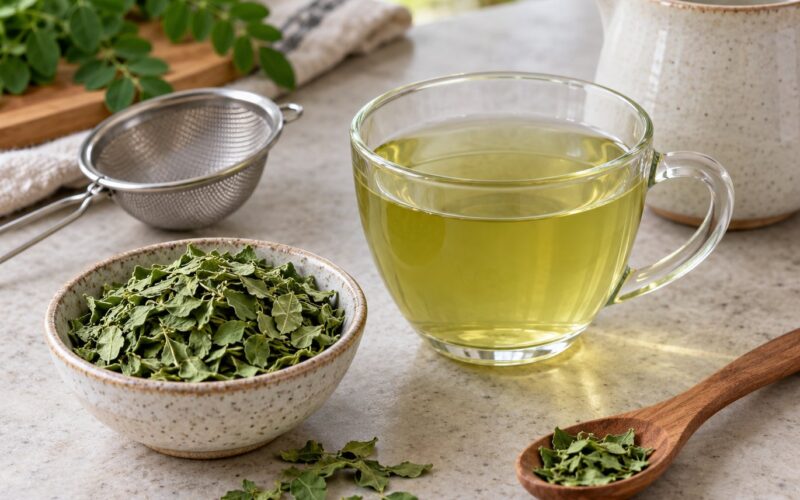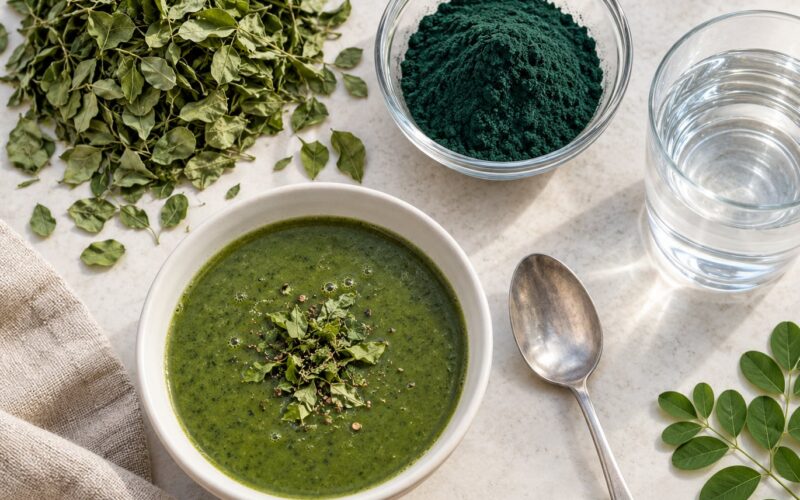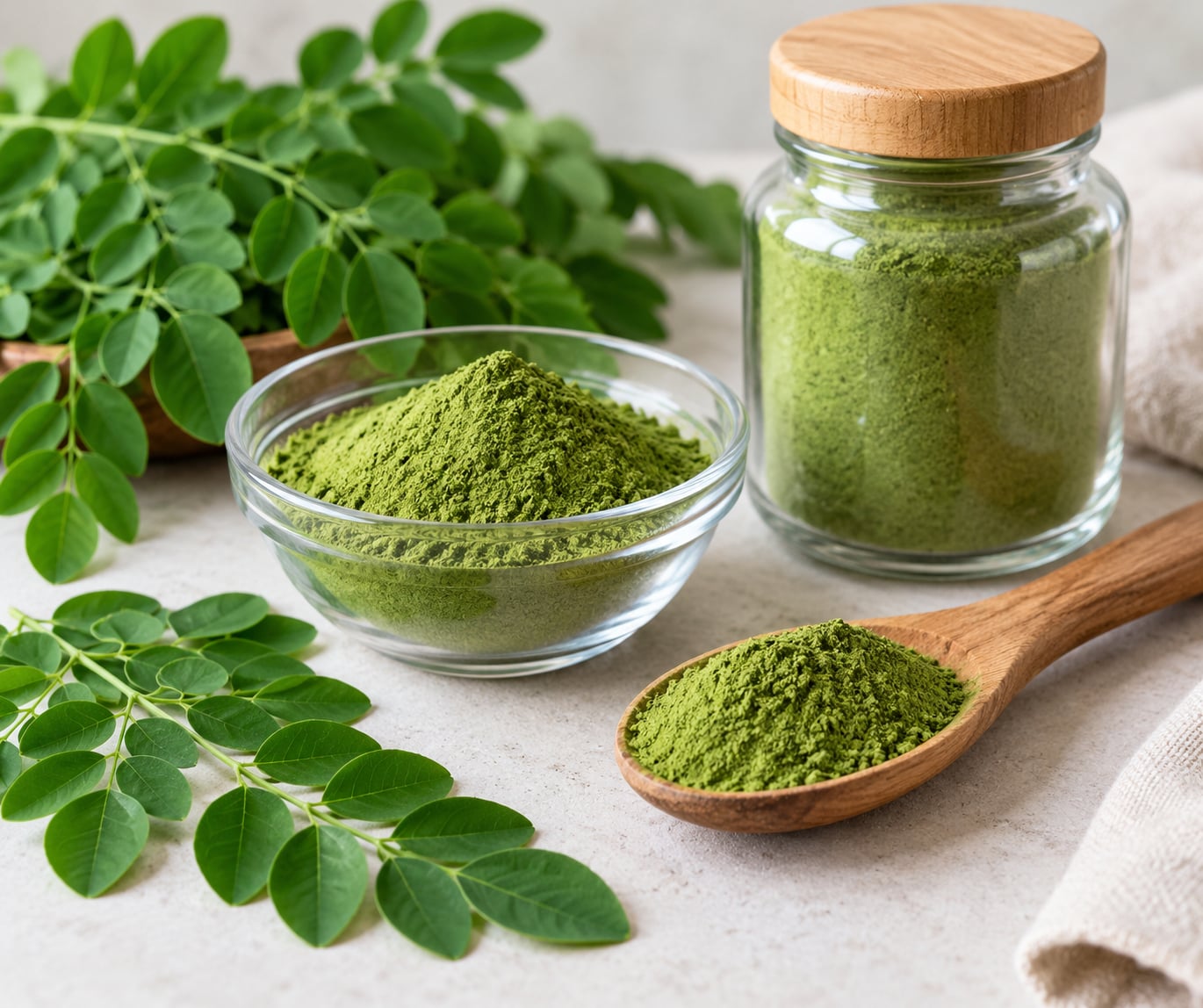
Moringa powder is the dried, ground leaves of Moringa oleifera, and its benefits and side effects both scale with dose. The most dependable benefit is straightforward nutrition: a concentrated source of vitamins, minerals and antioxidants. The most common side effects are digestive — nausea, gas, cramps and loose stools — and the most serious risk is that it quietly moves blood sugar or blood pressure while you are already taking medication for either.
Here is what human studies actually support, what is still lab-only work, and which groups should talk to a doctor or pharmacist before adding it to a routine. Nothing here is a diagnosis or a treatment plan, and moringa is not a substitute for prescribed care.
Table of Contents
- 1What Is Moringa Powder?
- 2Moringa Powder Benefits and Side Effects at a Glance
- 3What Benefits of Moringa Powder Have Been Studied?
- 4How Does Moringa Powder Provide Its Effects?
- 5Nutrition and micronutrient density
- 6Blood glucose, cholesterol and triglycerides
- 7Inflammation, digestion and exercise recovery
- 8Weight, mood and immunity
- 9What Are the Common Side Effects of Moringa Powder?
- 10What Side Effects and Risks Are Especially Important?
- 11Root and bark are a different plant
- 12Contamination, adulteration and batch variability
- 13Regulatory status varies by country
- 14Medication interactions
- 15Who Should Be Especially Careful About Using Moringa?
- 16How Do You Choose and Use Moringa Powder Safely?
- 17Frequently Asked Questions
- 18Is moringa powder better than fresh moringa leaves?
- 19Can you take moringa powder with diabetes or blood pressure medicines?
- 20Does moringa powder cause weight loss?
- 21Is moringa powder safe during pregnancy or breastfeeding?
- 22How can I tell whether a moringa product is high quality?
- 23Bottom Line
What Is Moringa Powder?
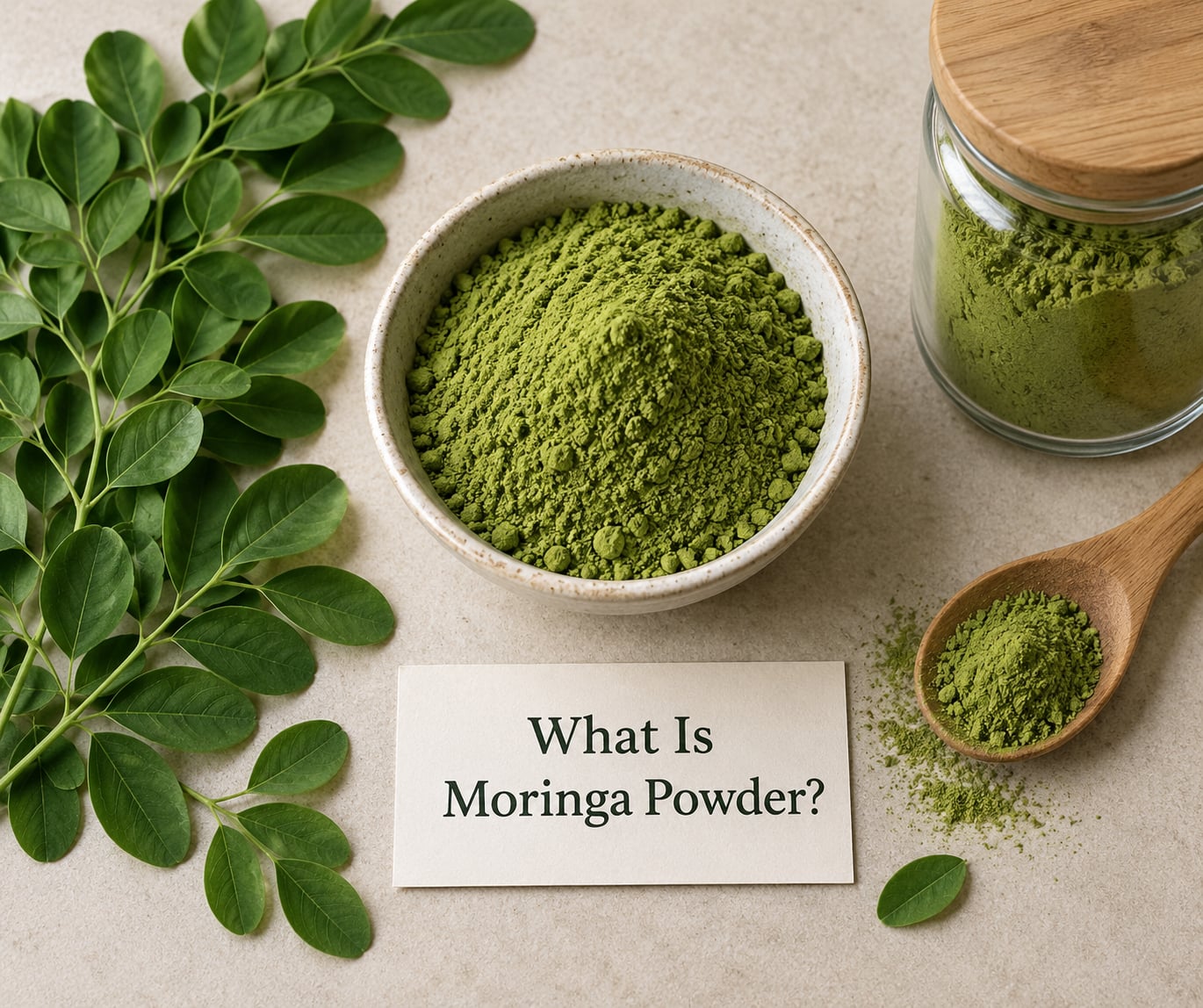
Moringa powder comes from the leaves of a fast-growing tree native to the Indian subcontinent and cultivated widely across Africa and South Asia. You will also see it called the miracle tree, tree of life, drumstick tree, horseradish tree or ben oil tree.
The part that matters is the leaf. Fresh leaves are blanched or dried, then milled into a fine green powder. That leaf powder is what appears in juices, teas, smoothies and capsules, and it is the product covered in this guide.
Other moringa products come from different parts and behave differently. Seed oil is pressed from the seeds and is roughly 70 percent oleic acid, so it is a cooking and topical oil rather than a supplement. Immature pods are eaten as a vegetable in parts of South Asia. Root and bark preparations are a different category entirely: they contain alkaloids and spirochin, which are considered toxic and are not food.
Almost all of the published research concerns Moringa oleifera. A handful of other Moringa species are sold as leaf powder in some markets, and their composition and safety profile are not interchangeable with oleifera.
Moringa Powder Benefits and Side Effects at a Glance
The summary below separates what studies show from what remains unproven, and pairs each potential benefit with the side effect that most often travels with it.
| Area | What the evidence supports | How strong it is | Reported side effect or risk |
|---|---|---|---|
| Nutrition | Dense in vitamins A and C, calcium, iron, potassium and plant protein | Strong — measured composition | None typical at food-level amounts |
| Blood glucose | Small trials report reductions in fasting blood sugar | Limited — small, short human trials | Blood sugar dropping too low, especially with insulin or metformin |
| Cholesterol and triglycerides | Modest improvements reported in a few human studies | Limited — small samples | Limited direct side effects |
| Inflammation | Lower inflammatory markers in several trials | Promising but not conclusive | Usually none reported on its own |
| Digestion | Fiber content supports regularity | Reasonable | Gas, bloating, cramps and loose stools |
| Weight and belly fat | Reductions seen mostly in animal and early human work | Weak — not established | Appetite loss, stomach discomfort |
| Blood pressure | Small reductions reported in a few trials | Limited | Dizziness or low blood pressure alongside antihypertensives |
| Breastfeeding milk supply | Long-standing traditional use as a galactagogue | Traditional use only, weak trial data | Not recommended without medical advice |
Two cautions about the table. Study sizes are small and short, so effects are often measured in markers rather than outcomes people feel. And quality varies so much between products that a study result may not describe the jar in your kitchen.
What Benefits of Moringa Powder Have Been Studied?
The benefits with real human evidence behind them are modest, and the ones with the loudest marketing are the weakest. The grading below keeps each claim honest.
How Does Moringa Powder Provide Its Effects?
Moringa leaf powder works mainly as concentrated nutrition plus a source of antioxidant compounds. Drying the leaves concentrates what was in them, so a small spoonful delivers more vitamin A, vitamin C, calcium, iron and potassium than an equal weight of most fresh vegetables.
The active fractions are polyphenols, flavonoids and carotenoids such as quercetin and chlorogenic acid, along with glucosinolates that the plant converts to isothiocyanates. Antioxidants neutralise reactive oxygen species; fiber slows digestion and blunts how fast sugars reach the blood. Isothiocyanates are the fraction researchers keep returning to, and they are also the fraction most often studied in cells and rodents rather than in people.
That last point explains most of the confusion in this topic. A test-tube result measures whether a compound can do something to a cell. An animal study measures it in a body with a very different metabolism from yours. Only a controlled human trial tells you whether swallowing the powder changes anything a clinician would notice.
Composition also varies. Young leaves, mature leaves, stems and roots do not produce the same profile, and heat used during drying reduces some compounds while leaving others intact. Two powders can carry meaningfully different levels of the same active, which is one reason dose advice stays approximate.
Nutrition and micronutrient density
This is the strongest and most boring benefit, and boring is fine. Moringa leaf powder is unusually dense for a plant food, with values that compare favourably with foods people treat as nutrient powerhouses. For people eating a plant-forward diet or eating few fresh greens, it genuinely adds something.
One wrinkle matters if you already have plenty of these nutrients: a study reported in the Journal of Ethnopharmacology found elevated iron status at high intakes in some participants. More is not always better, particularly for anyone with haemochromatosis or iron overload.
Blood glucose, cholesterol and triglycerides
Small human trials have reported reductions in fasting blood sugar and some improvement in lipid profiles over weeks to months. The samples have been small, the durations short, and the products varied, so treat this as promising rather than proven.
This is also the area with the clearest interaction problem. Both blood sugar and blood pressure appear to move downward under moringa in some studies, which is the point if you have high readings and the problem if you are already medicated to a target.
Inflammation, digestion and exercise recovery
Several trials report lower inflammatory markers after a few weeks of leaf powder, usually alongside a modest drop in cholesterol. The fiber content explains the digestive angle and the digestive complaints at the same time: more bulk and faster transit, which helps some people and upsets others.
Small studies in people taking moringa alongside exercise have reported less muscle soreness and faster recovery. The samples were tiny and the blinding imperfect, so this stays a curiosity rather than a reason to buy a tub.
Weight, mood and immunity
Weight loss is the claim you will hear most and can support least. Most of the work is in animals, and what humans show is inconsistent. Some trials report appetite reduction or a small change in body weight over months, which is within the range a modest calorie change produces on its own.
Claims about mood, memory and immune function follow the same pattern: biologically plausible, mechanistically described, clinically unproven. If you take moringa for any of these, treat it as food you happen to enjoy rather than a supplement you are receiving a therapeutic dose of.
What Are the Common Side Effects of Moringa Powder?
Digestive complaints are the side effects people actually report. At food-level amounts most people notice nothing at all, and problems cluster when intake rises or when the powder is taken on an empty stomach.
- Nausea — most often after a large dose in water or on an empty stomach.
- Gas and bloating — common in the first days as the fiber load adjusts.
- Stomach cramps and abdominal pain — usually dose-related and easing after the amount is reduced.
- Diarrhea or loose stools — frequent at higher intakes, especially combined with laxative-type herbs.
- Low blood sugar — shakiness, sweating or dizziness, most likely alongside insulin or diabetes tablets.
- Low blood pressure — lightheadedness or dizziness, particularly with blood pressure medicines or diuretics.
- Heart palpitations — reported occasionally, usually with stimulants or in people already sensitive to such effects.
- Skin irritation or rash — more common with topical oil or in contact with concentrated powder.
- Allergic reaction — itching, hives or swelling in people sensitive to the plant family.
- Urine colour change — a harmless greenish tint at high intakes, though it can mask dehydration.
Seek medical care promptly for trouble breathing, swelling of the face or throat, a severe or spreading rash, fainting, or confusion alongside the symptoms above. Stop taking it and contact a clinician if symptoms persist after you reduce the amount or stop.
One more practical note: the powder has a strong, peppery, grassy taste and smell. People in supplement and parenting forums consistently report masking it in smoothies, oatmeal or citrus juice. That is a trivial issue, but it matters more than expected when people quit in week two because the taste is unpleasant.
What Side Effects and Risks Are Especially Important?
A few risks sit well above ordinary digestive upset. They are rare in careful use and worth knowing because they are invisible on a product label.
Root and bark are a different plant
Root and bark contain alkaloids and spirochin, compounds associated in animal studies with toxicity and with effects on cholinesterase. They are not leaves and not food. If a product claims to be a full-plant or root-inclusive moringa preparation, that is a reason to look at the label closely rather than a reason to feel reassured.
Contamination, adulteration and batch variability
Some moringa products have been found to contain added colourants or bulking agents, and imported leaf products can carry contamination that has nothing to do with the plant itself. Salmonella has come up repeatedly in community discussion as a sourcing worry, along with heavy metals. Regulators in several countries have recalled moringa products over contamination reasons, which is usually a manufacturing or sourcing problem rather than something intrinsic to the plant.
Batch variability deserves its own line. The same brand can vary in leaf age, drying temperature and particle size between harvests, which moves the active compound levels without changing anything on the front of the pouch.
Regulatory status varies by country
Moringa leaf is eaten as a vegetable in many places and sold as a supplement in others. Some countries restrict moringa preparations, most often root or bark extracts, because of alkaloid content and laxative effects. A product that is entirely ordinary in one market may be restricted or withdrawn in another.
Medication interactions
The classes below are the ones health sources including Cleveland Clinic, WebMD, Healthline and Northwestern Medicine warn about. The pattern is consistent: moringa may add to what your medicine already does.
| Medication class | What moringa may do | What to do |
|---|---|---|
| Insulin, metformin and other diabetes drugs | Lower blood sugar further | Ask your prescriber before starting; monitor glucose closely at first |
| Antihypertensives and diuretics | Add to the blood pressure drop, sometimes causing dizziness | Ask your prescriber; watch for lightheadedness when standing |
| Levothyroxine and other thyroid hormone | Interference with thyroid function is reported | Do not start without medical advice; separate doses as advised |
| Warfarin and other anticoagulants, antiplatelet drugs | Possible effects on clotting | Ask a pharmacist before long-term use |
| Immunosuppressants | Immune-stimulating effects may work against the drug | Check with your specialist first |
| Laxatives and diuretic herbs | Additive bowel and fluid effects | Combine only with advice |
| Sedatives and anaesthesia agents | Reported interactions in animal and case literature | Tell your anaesthetist and surgeon before any procedure |
Who Should Be Especially Careful About Using Moringa?
Several groups should speak to a doctor, pharmacist or registered dietitian before using moringa at all, rather than simply starting and monitoring.
- Pregnant people — animal studies suggest uterine stimulation, which is why herbal references advise avoidance during pregnancy. Traditional use does not override a safety signal.
- Breastfeeding parents — moringa is widely used to increase milk supply, but good human evidence is missing and quality control is the bigger worry. A lactation consultant or doctor is the right first call.
- Children and infants — no reliable dose data exist, so children should only take moringa on specific advice.
- People with diabetes or high blood pressure — the effect you want may be additive with your medication.
- People with thyroid disease — reported interference with thyroid hormone deserves a conversation with your prescriber.
- People with liver or kidney conditions — high intake puts more load on organs that may already be working harder.
- People with iron overload or haemochromatosis — moringa leaf is iron-rich, and elevated iron status has been reported at high intakes.
- Anyone facing surgery — stop in advance and tell the surgical team, because moringa may affect blood sugar, blood pressure and clotting.
- People trying to conceive — animal data on fertility effects is mixed and no human guidance exists, so raise it with a clinician.
How Do You Choose and Use Moringa Powder Safely?
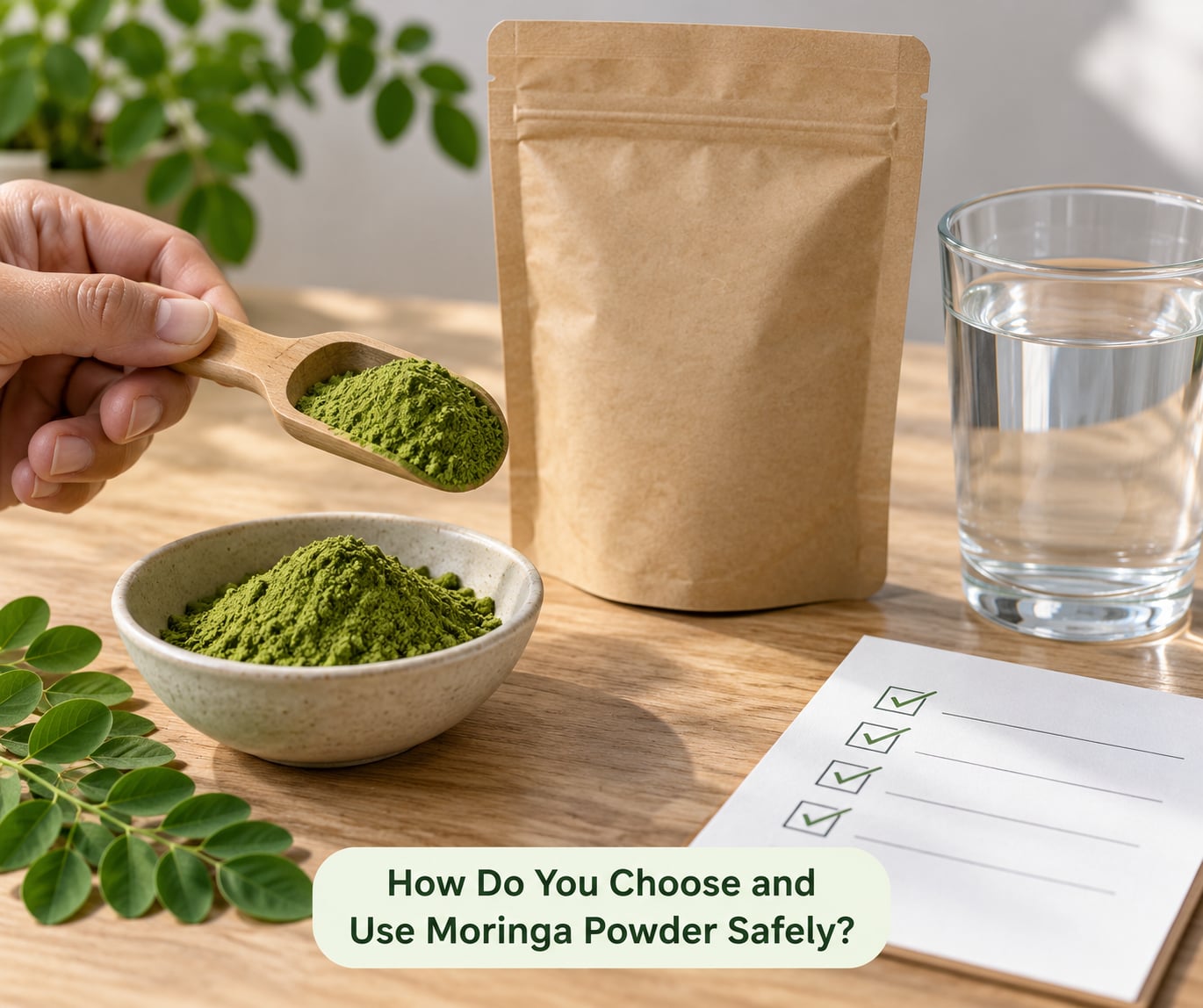
Choosing well matters more than dosing well here, because the variation between products is larger than the variation between doses.
Look for a single-species product that states Moringa oleifera leaf explicitly and names the country of origin. Any product listing root, bark or whole-plant extract should be avoided for internal use. Check for third-party contaminant testing and an allergen statement, and treat missing information as a reason to pick a different brand.
Introduce it gradually. Start with roughly a quarter to half teaspoon daily and build up over a week or two, which is far below the 1 to 2 teaspoons a day that health sources treat as the usual upper reference amount for adults. Taking it with food rather than on an empty stomach settles stomach complaints for most people, and evening use suits those who find it energising.
Keep a short symptom log for the first month: the amount, the time of day, and anything you notice in your digestion, energy or blood pressure readings. That record is what makes the difference between a rough two weeks and a genuinely informed decision to continue.
Do not take moringa to treat a diagnosed condition, and do not let it replace prescribed medication. If someone is selling it to you as a cure for cancer, diabetes or a thyroid disorder, that claim is a reason to walk away from the product and from the seller.
Frequently Asked Questions
Is moringa powder better than fresh moringa leaves?
Fresh leaves are higher in vitamin C, while drying and milling concentrates the more stable nutrients and antioxidants, so a teaspoon of powder delivers more per gram than the same weight of fresh leaf. Neither form is meaningfully better in health terms, because the clinical research is almost all conducted on dried powder. Fresh leaves need washing and cooking to remove most of their fibrous bulk and bitterness. If you eat plenty of greens already, fresh leaves in a stew or porridge are the easier habit. If you want a concentrated dose, the powder is the practical form.
Can you take moringa powder with diabetes or blood pressure medicines?
Only after speaking with your prescriber or pharmacist. Moringa appears to lower both blood sugar and blood pressure, so adding it to insulin, metformin or a blood pressure tablet can push either reading lower than intended. Symptoms to watch for include shakiness, sweating, dizziness and lightheadedness. Some sources also report interference with thyroid hormone and blood-thinning medicines. Bring the exact product and your full medication list to that appointment, and do not adjust your prescribed dose on your own.
Does moringa powder cause weight loss?
There is not enough good human evidence to say so. Most weight findings come from animal studies, and the small human trials report inconsistent results, often changes within the range that a modest calorie change produces on its own. Some users report reduced appetite, which simply means eating less. Moringa is low in calories and adds fiber, so it can fit a healthy eating pattern, but treating it as a weight-loss product sets up disappointment. Diet and activity still do the work.
Is moringa powder safe during pregnancy or breastfeeding?
Most herbal safety references advise against moringa during pregnancy, largely because animal studies suggest it can stimulate uterine contractions. Traditional use does not settle that question. While breastfeeding, moringa is commonly used to increase milk supply, but good human evidence is thin and the bigger practical concern is whether the powder is clean and correctly identified. Speak to your doctor, midwife or a lactation consultant before starting, and tell them every supplement you already take.
How can I tell whether a moringa product is high quality?
Check four things on the label: the plant must be named as Moringa oleifera leaf, the country of origin should be stated, root or bark content rules the product out for internal use, and third-party contaminant testing should be mentioned. Colour is a rough guide, since a dull olive powder rather than a vivid artificial green tends to mean less colouring added. Prefer products in sealed containers with a batch or expiry date, and avoid anything that promises to treat or cure a disease.
Bottom Line
Moringa leaf powder is a nutritious food with a handful of modest, partially supported benefits and a small set of predictable side effects. The nutrient density is real. The blood sugar, cholesterol and inflammation findings are promising but come from small and short trials, and the weight, immunity and mood claims outrun the evidence.
Before adding it to your routine, check the plant part and species on the label, avoid root and bark, start with a small amount and build up, and write down what you notice. If you take any prescription medicine, are pregnant, breastfeeding, caring for a child, or managing a liver, kidney, thyroid, blood sugar or blood pressure condition, that conversation with a doctor or pharmacist comes before the first spoonful.