Hibiscus tea benefits centre on anthocyanins and other polyphenols: modest blood-pressure and cholesterol support, plus antioxidant and blood-sugar effects seen in trials. Most healthy adults can drink it in reasonable amounts. Pregnancy, breastfeeding, certain medicines, low blood pressure and some conditions make it unsuitable, and those groups should ask a clinician first.
That is the honest version of the claim. The tea is genuinely useful as a pleasant caffeine-free drink, and the research on blood pressure is real but modest. What makes the question of who should avoid it worth as much attention as the benefits is that the same compounds that nudge blood pressure and blood sugar down can push them too low, especially alongside prescription medicines.
This guide is educational. It is not medical advice, and it does not replace a conversation with your doctor or pharmacist.
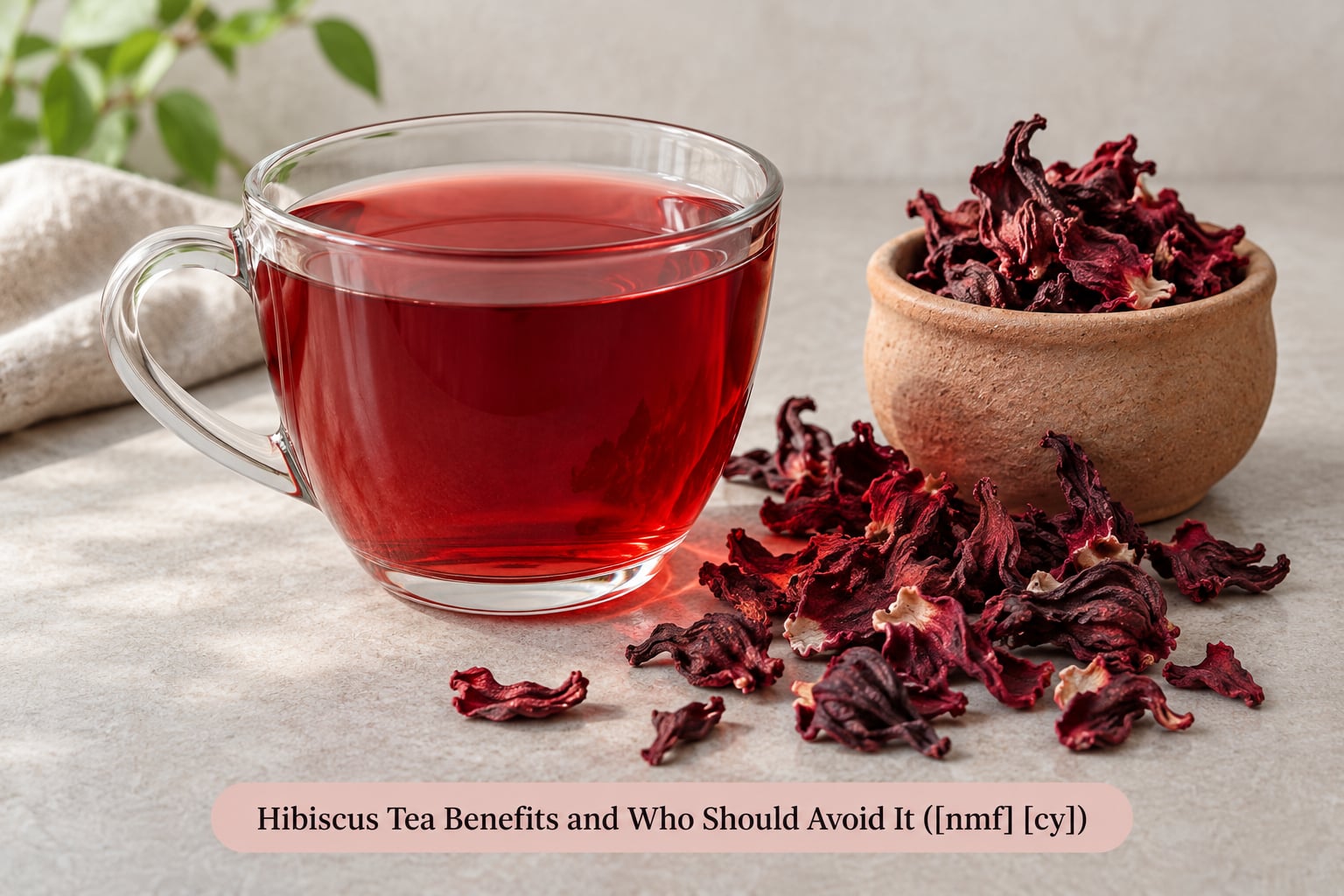
Table of Contents
- 1Hibiscus Tea Benefits and Who Should Avoid It: What the Evidence Says
- 2What the evidence labels in this article actually mean
- 3What Is Hibiscus Tea?
- 4What Are the Most Supported Hibiscus Tea Benefits?
- 5Hibiscus tea benefits, ranked by how solid the evidence is
- 6How Hibiscus Tea May Support Blood Pressure and Heart Health
- 7What Does the Research Not Show?
- 8Who Should Avoid Hibiscus Tea?
- 9Can Hibiscus Tea Interact With Medicines?
- 10What Other Side Effects and Sensitivities Should You Know?
- 11How much hibiscus tea is too much?
- 12How Is Hibiscus Tea Usually Prepared Safely?
- 13How to Choose a Hibiscus Product Without Overclaiming
- 14Who Should Ask a Healthcare Professional First?
- 15Frequently Asked Questions
- 16Does hibiscus tea contain caffeine?
- 17Is hibiscus tea better than cranberry juice for hydration?
- 18Why does hibiscus tea taste tart, and can sugar make it unhealthy?
- 19Can you drink hibiscus tea every day?
- 20Does hibiscus tea help with weight loss?
- 21What should you do if hibiscus tea causes stomach pain or dizziness?
- 22What to Do First
Hibiscus Tea Benefits and Who Should Avoid It: What the Evidence Says
What the evidence labels in this article actually mean
Herbal claims get repeated far faster than they get studied, so I label every claim here. Moderate evidence means several randomised controlled trials in people, with consistent direction. Limited means a few small trials. Preliminary means laboratory or animal work, or a single small human study. Lab-only means a result in a test tube that has not been shown in people.
By those labels, blood pressure is the strongest claim in this article. Weight loss is real but preliminary. Cancer prevention is not supported at all.
What Is Hibiscus Tea?
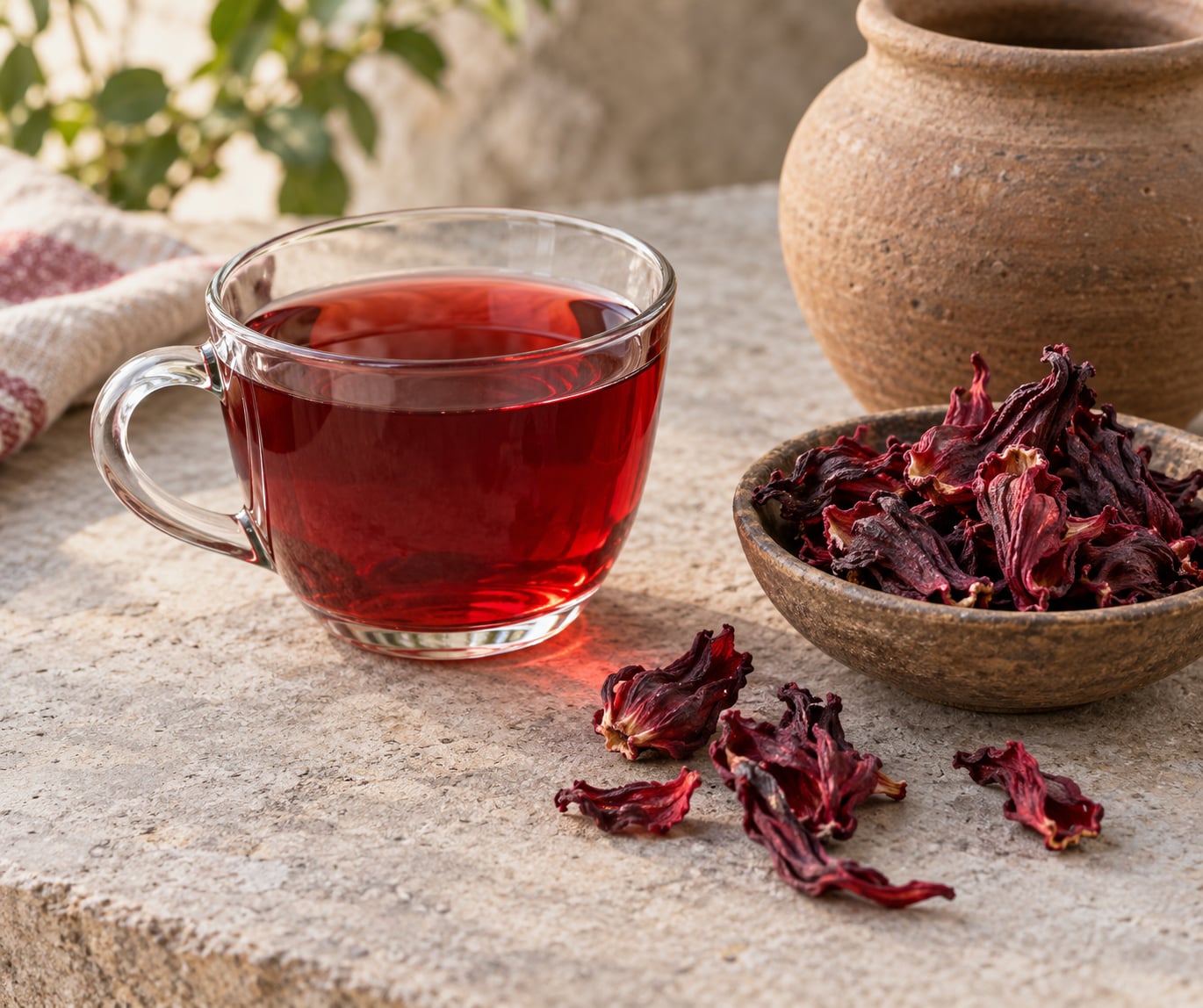
Hibiscus tea is a caffeine-free infusion made from the dried red calyces, the fleshy sepals around the base of the flower, of Hibiscus sabdariffa. It is tart, faintly cranberry-like, ruby to deep red once brewed, and drunk hot or cold across West Africa, Sudan, Egypt, Mexico and Thailand.
The same plant travels under a long list of names. Roselle and karkade are the most common English and Arabic ones, bissap in French, agua de Jamaica in Mexico, sorrel in the Caribbean. On an ingredient label, any of those plus Hibiscus sabdariffa means hibiscus, which matters if you are checking a drink because of pregnancy or a medication.
Two things get confused with it. Garden sorrel, Rumex acetosa, is a different plant with a similar tartness and no shared evidence base. Hibiscus rosa-sinensis, the showy hibiscus of gardens, is a third species again. Almost every clinical study uses sabdariffa, so if a product does not name the species, treat the evidence as uncertain.
One more distinction worth holding onto: the research mostly concerns aqueous preparations, meaning tea, water and infusions. Capsules, tinctures and standardised extracts concentrate compounds in ways a cup never does, and they carry the risks discussed further down.
What Are the Most Supported Hibiscus Tea Benefits?
Hibiscus tea benefits, ranked by how solid the evidence is
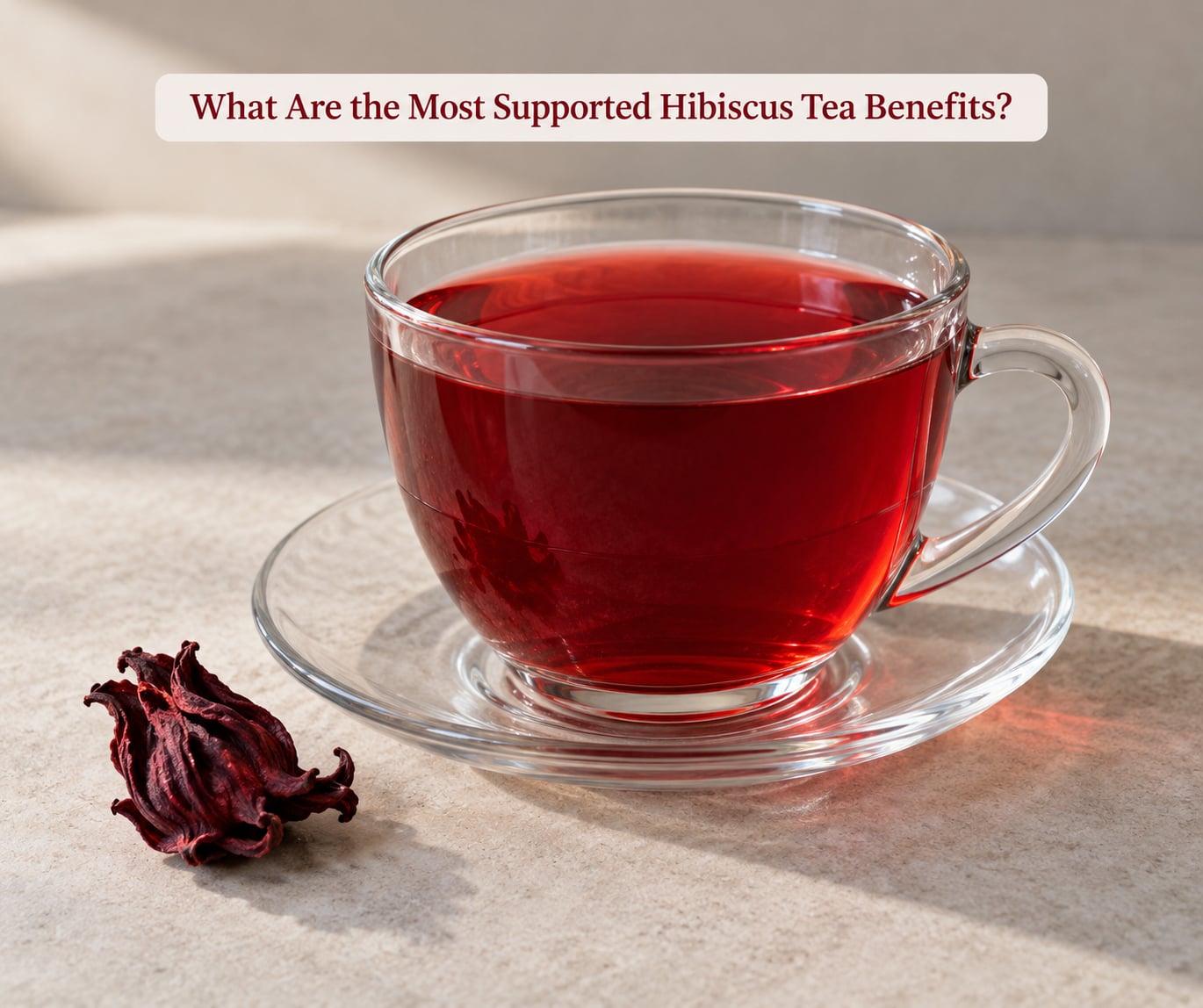
1. Blood pressure. This is the best-supported use. Several randomised trials, including a 2019 study in patients with stage 1 hypertension and a 2010 Cochrane review covering five trials, found modest reductions in systolic and diastolic pressure after weeks of daily use. Effects are in the low single-digit to roughly ten millimetre of mercury range depending on the study and the dose.
2. Cholesterol and triglycerides. Trials report reductions in total cholesterol, LDL and triglycerides alongside a small rise in HDL. Moderate evidence, mostly in people with raised lipids or metabolic conditions.
3. Blood sugar regulation. Extracts and teas have lowered post-meal glucose and improved some markers of insulin sensitivity in small trials, including one with 222 participants. Preliminary to limited, and a reason people on diabetes medication need advice rather than a free pass.
4. Antioxidant activity. Anthocyanins, flavonoids, chlorogenic acid, quercetin and caffeic acid are all present in the calyx. Free-radical scavenging is where most of the laboratory literature sits, which is not the same as a health benefit in a person.
5. Liver support. Animal and cell work describes hepatoprotective effects and reduced liver fat synthesis. Small human trials have looked at liver enzymes. Limited.
6. Diuretic effect. A mild increase in urine output is reported and is part of the proposed blood-pressure mechanism. It also matters for safety, because extra fluid loss can drop pressure and electrolytes.
7. Antimicrobial and urinary tract activity. Calyx extracts inhibit Escherichia coli, Staphylococcus aureus, Pseudomonas and Klebsiella in laboratory studies. Lab-only, and no trial has shown that drinking the tea prevents infections.
8. Weight and appetite. Ghrelin and leptin modulation shows up in laboratory and animal studies. Limited, and easily oversold.
9. Digestive and menstrual uses. Traditional use for cramps and digestion is widespread and worth respecting as cultural knowledge. Clinical support is thin, and I would not claim it.
10. Skin and hair. This is mostly topical or cosmetic interest rather than a documented health outcome. Patch-test anything you put on your skin.
How Hibiscus Tea May Support Blood Pressure and Heart Health
The proposed mechanism is a combination. Anthocyanins appear to support vasodilation, widening blood vessels so blood moves with less resistance. There is evidence of ACE inhibition, which echoes how some prescription blood-pressure drugs work, and some modulation of aldosterone, a hormone that helps the body hold onto sodium and water. The mild diuretic action adds to this by reducing circulating volume.
Trials used fairly specific regimens. One well-cited protocol used one tablespoon, about 10 g, of dried hibiscus in 500 mL of water twice a day for four weeks. Other work has used 1,000 mg of dried herb three times daily. Individual trials have been small, in the region of 42, 60 and 222 participants, which is typical for this field and a reason to treat the numbers as direction-of-travel rather than precise promises.
Timing matters to readers planning around it. Effects in these studies appeared after several weeks of daily drinking, not after one cup. If your blood pressure is already treated, any additional drop adds to the medication, and the symptom to watch for is lightheadedness when standing up, especially in the first week.
For people with high blood pressure, hibiscus tea is best understood as a pleasant addition to a diet and lifestyle approach, not as a treatment. Keep taking prescribed medication, and tell your clinician what you drink. That framing is what decides hibiscus tea benefits and who should avoid it in your own case.
What Does the Research Not Show?
Laboratory antioxidant activity does not automatically become a health benefit when you drink the tea. Anthocyanins look impressive in a beaker. Humans digest most of what they swallow, absorb a fraction, and excrete the rest. The gap between the two is where marketing lives.
Weight loss is not established. The studies that measured body mass index and waist-to-hip ratio were small and short. Nobody should stop a nutrition plan because they added a cup of sour tea.
Cancer prevention has no clinical support in people. Laboratory findings in cell lines do not transfer to outcomes in humans, and I found no good trial evidence for it.
Kidney effects are poorly documented, which is worth saying plainly. There is little good human data either way, so people with kidney disease fall into the check-first group rather than treating themselves as safe.
Most importantly, no evidence supports replacing prescribed treatment with hibiscus tea. If you have hypertension, diabetes or high cholesterol, the tea is a side note in the same life as your medication and your GP or pharmacist.
Who Should Avoid Hibiscus Tea?
Here is the short list this article exists for. Most people fall outside it, but if you are in one of these groups, the cost of asking is tiny compared with guessing.
1. Anyone pregnant, or trying to conceive. Hibiscus has traditionally been used to bring on menstruation and to ease labour, which is exactly why it is avoided during pregnancy. The concern is uterine contraction. If you have already drunk a cup, that is not a crisis, but it is worth a quick call to your midwife or doctor.
2. Anyone breastfeeding. Traditional use as a milk-inhibiting herb, plus almost no safety data in infants, means this falls outside what is established as safe.
3. People on blood pressure medication. ACE inhibitors, ARBs, calcium channel blockers, thiazide diuretics such as hydrochlorothiazide, and beta-blockers can combine with hibiscus to push pressure too low. The risk is hypotension: dizziness, faintness, fatigue.
4. People on diabetes medication. Metformin and similar drugs plus hibiscus can produce unexpectedly low blood sugar. Sweating, shakiness and confusion are the signs to watch.
5. People on anticoagulants or antiplatelet drugs. Warfarin and related blood thinners carry a theoretical bleeding concern with hibiscus. Bring it up with a pharmacist rather than deciding yourself.
6. Anyone with low blood pressure already. If you already run at the lower end, a diuretic effect can leave you lightheaded and tired without anyone identifying the cause.
7. People with kidney disease or electrolyte problems. The diuretic effect adds risk where fluid and electrolytes are already delicate.
8. Anyone with acid reflux or GERD. The tea is acidic, and reflux sufferers report irritation, nausea and a burning sensation after drinking it cold and sweet.
9. People with low iron or iron deficiency. Tea polyphenols can reduce absorption of non-haem iron from plant sources, which is relevant if you are pregnant, vegetarian or anaemic.
10. Anyone with a known allergy to hibiscus or to the mallow family. Reactions reported include rash, itching and swelling. Breathing difficulty is an emergency.
11. Children, unless a clinician has said otherwise. There is no established safe dose for younger children.
12. Anyone facing surgery. Stop at least two weeks ahead, because effects on blood pressure and clotting can complicate procedures. Tell the surgical team what you have been drinking.
Can Hibiscus Tea Interact With Medicines?
The honest answer is that direct studies of hibiscus alongside specific medicines are scarce, so most of this is a reasoned caution rather than a proven interaction. That is exactly why a pharmacist is the right person to ask. Here is the practical map.
| Medicine or class | Why hibiscus matters | Sign to watch for | What to do |
|---|---|---|---|
| ACE inhibitors and ARBs | Additive blood-pressure lowering | Dizziness on standing, low readings | Ask your prescriber before drinking daily amounts |
| Thiazide diuretics including hydrochlorothiazide | Extra diuretic and electrolyte loss | Weakness, cramps, thirst | Get advice; drink less if advised |
| Metformin and other glucose-lowering drugs | Additive glucose lowering | Shakiness, sweating, confusion | Check with a clinician and monitor |
| Anticoagulants and antiplatelet drugs | Possible additive bleeding risk | Unusual bruising, bleeding gums | Ask a pharmacist specifically |
| ACE-inhibitor-containing cold remedies | Doubles the caution above | Same as blood-pressure row | Count these as part of your total |
| Iron supplements | Reduced non-haem iron absorption | Ongoing fatigue if iron is low | Separate from your tea by a couple of hours |
| Statins | Possible additive lipid effects | Generally none reported | Usually fine; mention it at your next review |
| Water pills and dehydration products | Compounds fluid loss | Headache, reduced urination | Avoid stacking several together |
None of this means you must stop a medicine, and I am not going to tell anyone to adjust a prescription. Bring the packet of your tea or the name of the plant to the pharmacist counter and ask. That conversation takes two minutes.
What Other Side Effects and Sensitivities Should You Know?
Most people notice nothing beyond the tart taste. When they do notice something, these are the reports that come up repeatedly.
Nausea or stomach discomfort, sometimes with a feeling of fullness. Acid reflux or heartburn, particularly with large servings or a sweetened preparation. Dizziness or lightheadedness, the one worth taking seriously because it can signal the blood-pressure effect. Headaches, often reported alongside dehydration. A mild diuretic effect showing up as extra urination and occasional vivid dreams or restlessness in the evening.
There is a cosmetic one people forget. Deep red pigment stains teeth, lips, fabric and hair. If you use it as a hair dye, results vary by hair type and it is messy to get out of towels.
Changes in menstrual bleeding are reported too, which is part of why it is avoided in pregnancy and worth noting for anyone with irregular cycles.
Get medical help rather than another cup if you get swelling of the face, lips or throat, trouble breathing, a rapid or pounding heartbeat, fainting, or a rash with fever. Those are not normal tea reactions.
How much hibiscus tea is too much?
There is no official upper safe limit for hibiscus tea, which is frustrating for anyone trying to answer this properly. Practical guides instead compare servings with the doses used in research, usually two cups of a normal-strength brew per day. Concentrated homemade extracts and syrups are a different category entirely, because they can deliver many times the amount of dried herb in a single swallow.
Signs that you have had too much are practical rather than measured: persistent dizziness, a headache that will not settle, noticeable dehydration, palpitations, or reflux that lingers. If you drink one or two cups of normal-strength tea most days and feel fine, you are in the range most trials used.
How Is Hibiscus Tea Usually Prepared Safely?
Making it at home is ordinary food preparation. There is nothing medicinal about boiling water and pouring it over dried petals.
Use one or two teaspoons of dried hibiscus calyces per cup, or one to two tablespoons for a litre. Pour on water just off the boil, cover while it steeps for five to ten minutes, then strain. Cold brewing in the fridge overnight gives a sweeter result without added sugar and avoids the heat that can make the taste sharper.
Prepare the calyces with clean equipment and potable water, drink it within a day or two if refrigerated, and follow the directions on any packet you buy. Loose-leaf hibiscus is widely sold and inexpensive, which makes over-concentrated homemade extracts easy to build by accident, so keep it to tea strength.
A word on prepared drinks. Agua de Jamaica, sorrel punch and boba-style hibiscus drinks carry heavy sugar, and the caffeine in black tea versions changes the picture for anyone avoiding stimulants. That is the difference between a cup of brewed hibiscus and a sweetened bottle, and it is worth reading the label.
How to Choose a Hibiscus Product Without Overclaiming
Start with the ingredient list. You want Hibiscus sabdariffa and a plant part, ideally calyx or flower. If a label says only sorrel, check whether it is genuine sorrel or hibiscus under a local name, and note that it may be a different species.
Tea bags and loose dried calyces are the closest match to the research. Capsules, tinctures and anything labelled standardised extract pack a far higher dose, and that is exactly the category that should give a cautious reader pause.
Look for independent quality testing where the seller publishes it, and for allergen information. Third-party certification matters more here than in most food categories because herbal products are not tightly regulated for contaminants in every market.
Treat the marketing with suspicion when you see antioxidant powerhouses, detoxes your liver, or a specific number of pounds without a study reference. Those phrases tell you marketing wrote the page. Nobody needs to sell you a fact that a trial already established.
Who Should Ask a Healthcare Professional First?
Ask a doctor, pharmacist or registered dietitian first if you are pregnant, trying to conceive or breastfeeding, if you take any regular prescription medicine, if you have high blood pressure, diabetes, kidney disease, liver disease, a bleeding disorder or acid reflux, if you have had low iron, or if you have an allergy history that includes hibiscus or mallow-family plants.
Bring the plant name and, if you can, the packet. Say plainly that you drink hibiscus tea most days. If your blood pressure is treated, ask whether it is worth monitoring for a few weeks and what readings should prompt a call. That is a specific question, and clinicians answer specific questions well.
Frequently Asked Questions
Does hibiscus tea contain caffeine?
No. Plain hibiscus tea is naturally caffeine-free, which is one reason it is often served as an evening drink. Watch out for blended products: some hibiscus teas are mixed with black or green tea, and prepared drinks such as boba punches may contain caffeine from added tea. Check the ingredient list if avoiding caffeine matters to you.
Is hibiscus tea better than cranberry juice for hydration?
Both count toward fluid intake, but they are not equivalent. Cranberry juice comes with a substantial sugar and calorie load unless you buy unsweetened, and sweetened cranberry juice is common. Brewed hibiscus tea is naturally sugar-free, so it works well as a daily fluid, though its diuretic effect means you should not treat it as your only source of water.
Why does hibiscus tea taste tart, and can sugar make it unhealthy?
The tartness comes from naturally occurring organic acids, including citric and hibiscus and crambic acids. It is the same family of compounds that make cranberry sour. Sweetening a cup changes a low-sugar drink into a sugary one, and honey or syrup also slightly offsets the antioxidant content, so cold brewing overnight is a better route to a milder taste.
Can you drink hibiscus tea every day?
Most healthy adults can, since research protocols generally used two cups of brewed tea daily over four weeks. There is no official upper safe limit, which is worth knowing. Daily use becomes a bigger question if you take blood pressure, diabetes or blood-thinning medication, are pregnant or breastfeeding, or have reflux or low blood pressure.
Does hibiscus tea help with weight loss?
The evidence is preliminary rather than established. Laboratory and animal studies suggest hibiscus may influence appetite hormones such as ghrelin and leptin, and small short human trials have measured body mass index and waist-to-hip ratio. None of that makes it a weight-loss method, and it does not replace a nutrition plan or activity.
What should you do if hibiscus tea causes stomach pain or dizziness?
Stop drinking it for now and drink some water, since mild diuretic effects can contribute to both. Note what you drank, how much, and when the symptoms started. Dizziness that continues, palpitations, unusual bruising or any facial swelling, breathing difficulty or fainting need prompt medical care, especially if you take blood pressure or diabetes medication.
What to Do First
If none of the caution groups apply to you, make a normal cup: one or two teaspoons of dried calyces, hot water, five minutes, no syrup. Drink it cold-brewed if the tartness bothers you, and keep it at one or two cups a day rather than brewing a concentrate.
If you are pregnant, breastfeeding, on blood pressure, diabetes or blood-thinning medication, managing low blood pressure, reflux or kidney problems, then read the ingredient label, find the botanical name, and ask your doctor or pharmacist before making it a habit. Two minutes of advice settles most of what I have written here.
Hibiscus tea is a good-tasting, caffeine-free drink with modest evidence behind its blood-pressure and cholesterol effects. That is a fair summary, and it is enough to enjoy it, as long as you know which side of the line you are standing on.