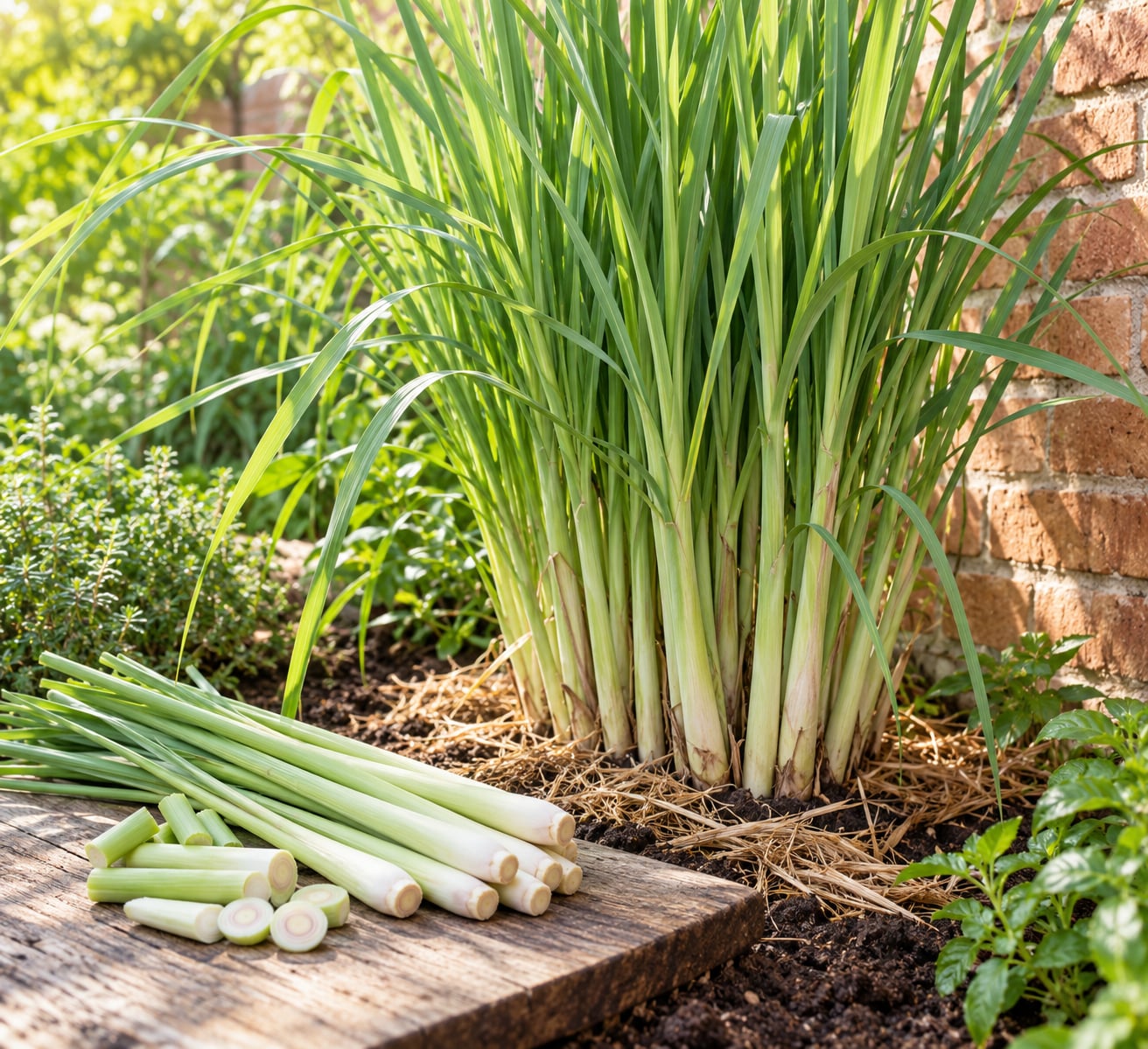
Lemongrass grows best in full sun, in warm temperatures above 50°F (10°C), and in rich, moist soil that drains freely. Give it at least 6 to 8 hours of direct light, roughly 1 to 2 inches of water a week, and enough root space for a spreading clump, and you will be cutting stalks within about 75 to 100 days.
That is the whole game, honestly. Lemongrass is a tender perennial grass from Southeast Asia, and almost every failure I see in garden forums traces back to one of three things: not enough sun, soil that stays wet, or cold. It is not fussy about anything else.
The fastest route for most home gardeners is a supermarket stalk. Stand the base in a shallow container of water, change the water every couple of days until roots appear, then plant it out. Seed works too, but it is far less reliable, and I will get to why below.
Before you buy anything, here is the short version of what to gather and how to set things up.
Table of Contents
- 1What You Need
- 2Step-by-Step
- 3How to Create the Best Growing Conditions for Lemongrass
- 4Choose a Warm, Bright Location
- 5Water Consistently Without Waterlogging
- 6Use Fertile, Well-Draining Soil
- 7Support Container-Grown Lemongrass
- 8Maintain Growth and Harvest Responsibly
- 9Common Mistakes
- 10Frequently Asked Questions
- 11What are the best growing conditions for lemongrass in a pot?
- 12Should lemongrass leaves turn yellow?
- 13How often should I water a potted lemongrass plant?
- 14Can lemongrass survive winter?
- 15How do I harvest lemongrass without killing the plant?
- 16What is the best soil pH for lemongrass?
- 17Conclusion: Start with Light and Drainage
What You Need
A healthy plant or a division from a friend is the simplest start. Look for bright green, upright stalks with no yellowing at the base and no mushy crown. If you are buying a potted plant, knock it out of the container first and check that the roots are firm and cream-colored rather than brown and soft.
For a garden bed, you need decent loamy soil with organic matter already in it. If your soil is heavy clay that puddles after rain, fix the drainage before you plant rather than after. Gardeners who skip this step spend the first season watching a yellowing clump instead of harvesting.
For containers, buy a free-draining potting mix rather than filling the pot with garden soil. A pot needs drainage holes, and a saucer that holds water under the pot works against you in summer.
Add a 2 to 3 inch layer of straw or shredded bark mulch once the plant is in the ground. Mulch is the cheapest way to hold moisture steady between waterings, which matters most in July.
On feeding, have a nitrogen-leaning option ready: compost, chicken manure pellets, or a balanced liquid feed. Lemongrass is a hungry grass in active growth, but it does not need heavy fertilization and rich soil can push leaf growth at the expense of the stalks you actually want to cook.
Step-by-Step
Work through these in order. Each one depends on the one before it, and skipping ahead usually shows up as a plant that looks fine in June and collapses by August.
How to Create the Best Growing Conditions for Lemongrass
Dig a hole twice the width of the root ball and the same depth. Lemongrass is a shallow-rooted grass, so depth matters more than width, and burying the crown invites rot. Set the plant so the crown sits level with the surrounding soil.
Backfill, press gently, and water deeply once to settle the soil against the roots. Then check the spot after a heavy rain: water should soak in and drain away rather than sit in a puddle for an hour.
If you are starting from a stalk in water, wait until the roots are 2 to 3 inches long before planting. Unrooted bases rot more often than they establish.
If you are planting in a pot, choose the container before you prepare the mix, because the pot dictates how much room the roots get for the next two years.
Choose a Warm, Bright Location
Six to 8 hours of direct sun is the target, and a south or west wall is usually the best real estate in a home garden. Lemongrass will not tolerate shade gracefully. Give it partial shade and you get thin, pale, floppy stalks that flop over the rim of the pot the moment they catch wind.
Warmth matters nearly as much as light. Growth stalls below about 50°F (10°C), and a hard frost will blacken the leaves within a night. In USDA Zone 9 and warmer, plant straight into the garden and treat it as a perennial. In Zones 3 through 8, treat it as an annual, grow it in a container, and bring it in before the first frost.
Shelter from drying wind pays off more than most gardeners expect. Those tall grass blades flag and tear in dry wind, and a plant on an exposed corner will look scorched while one against a sheltered fence stays green.
If you have room, plant a small group rather than a single stalk. Three or four clumps in a row shade their own soil and hold humidity around the base, which cuts your watering in the hottest weeks.
Water Consistently Without Waterlogging
Moist but never soggy is the phrase to keep in your head. Aim for roughly 1 to 2 inches of water per week, including rain, and deep infrequent watering beats a daily splash because it pushes roots deeper.
Test the soil rather than guessing. Push a finger about 2 inches into the surface: if it comes up damp, skip the watering; if it is dry and powdery, water now. That single check prevents most of the trouble people report.
Drought stress shows up fast. The lower leaves yellow first, then crisp along the edges, and the whole clump goes limp in an afternoon. The top complaint in houseplant forums is actually the opposite problem, though: a plant brought indoors for winter that is killed by constant watering and root rot in a dry heated room.
Drainage is the variable people underestimate. Lemongrass cannot tolerate standing water, and a pot without holes is a slow, quiet way to kill it. In containers, raise the pot on feet so water can leave the base.
Adjust for the season: water more often in high summer and during the first two weeks after transplanting, less often in winter, where the plant is dormant and low light means slow evaporation.
Use Fertile, Well-Draining Soil
Loamy soil with plenty of organic matter is the target. A pH of roughly 6.0 to 7.5 suits it, and most garden soils fall in that range without amendment, so a soil test is worth doing only if growth has been poor.
Work a few inches of compost into a heavy bed in spring. Do not build a rich, manure-heavy pocket in a planting hole, because the roots tend to stay in that pocket and the plant becomes dependent on your feeding schedule.
For containers, a general-purpose potting mix is right on its own, with a handful of compost mixed through. Peat-heavy mixes dry fast in a full-size pot; add perlite or bark fines if the surface crusts over.
Mulch after the soil has warmed, keeping it a couple of inches away from the crown. Mulch against the base invites rot, so leave a small ring of bare soil around the stalk.
Feed lightly during active growth, roughly once a month with a nitrogen-leaning feed or a dose of compost tea. Stop feeding in autumn so the plant hardens off before cold.
Support Container-Grown Lemongrass
A pot needs to be at least 12 inches across to start, and deeper is better than wider because the root ball grows downward. Anything smaller will dry out daily in summer and the clump will never bulk up.
Use a mix formulated for containers, water thoroughly until it runs out of the drainage holes, then let the top inch or so dry before watering again. Daily sips keep the surface damp and the roots shallow, which is how you end up with a floppy plant.
Leave space between pots. Lemongrass needs airflow around the leaves, and clumps pressed together in a corner invite fungal trouble and shade one another.
Repot when roots circle the base and water runs straight through without soaking in, usually every two or three years. Move up one pot size rather than a large jump, since an oversized pot holds water the plant cannot use.
Division is the better answer for a mature clump. In spring, split the root mass into two or three pieces with a clean knife, replant each, and both grow faster than the original ever did.
Maintain Growth and Harvest Responsibly
Cut back dead and yellowing leaves at the base as they appear, and remove any flower stalks, which pull energy away from the leaves. In warm zones, gardeners with mature plants report clumps over 10 feet tall and bushy in their second year, so trimming keeps the harvest usable.
Harvest selectively from the outside. Take one or two stalks at a time, cut near the base with clean shears, and always leave the central clump growing. Cutting the whole crown back to the ground sets the plant back and can end it.
Chopping stalks finely releases the flavour much faster than using them whole, and drying them well in a warm airy place keeps them for months. A stalk from the supermarket already in your kitchen will grow into a usable clump within a season.
One note on how this plant is used, since it comes up often here. Lemongrass stalks and leaves have a long record of traditional use across West African, South Asian, and Southeast Asian cuisines and herbal practice, and it is grown commercially for essential oil. Talk to a doctor or pharmacist before using it medicinally if you are pregnant or breastfeeding, if you have glaucoma, or if you take any medication. Essential oil is concentrated and should be diluted well before skin contact.
Common Mistakes
Too little light. Pale, thin stalks that lean and snap in wind point to shade. Move the container or dig the clump up and reset it in a spot with 6 to 8 hours of direct sun.
Yellowing leaves. Usually overwatering or poor drainage rather than disease. Check the soil with a finger, and if it is wet, let it dry and confirm the pot drains. Some yellowing at the base in autumn is natural dieback.
Purple or reddish leaves. Cold stress is the usual reason, often combined with poor nutrient uptake in cold soil. Move the plant away from cold wind and feed lightly once growth resumes in spring.
Brown, crispy tips. The soil has dried out between waterings or the air is very dry, which is common indoors in winter. Water deeply and raise humidity around the plant.
Soggy, soft base and foul smell. Root rot from standing water. Remove the plant, cut away dark mushy roots with a sterilised knife, repot into fresh draining mix, and cut back the foliage by half.
Plant flops or breaks in the wind. Leaves are outgrowing their structural strength, usually from low light or excess nitrogen. Stake the clump, move it to brighter conditions, and stop feeding until late summer.
Crowded pot, no new growth. Root-bound plants exhaust the water and nutrients in a pot quickly. Divide the root mass in spring and replant each section.
Scraggly seedlings that never take off. Seed is unreliable and needs about 4 weeks of cold stratification in a sealed container in the refrigerator before sowing. Without that step, most seed never germinates at all. Start from a stalk instead.
Dying after winter. Cut all the brown growth back to about 2 inches above the crown, keep it in the brightest available spot, and water sparingly. If the crown is firm and green underneath, it will reshoot; if it is black and soft, there is nothing to save.
Two more things that trip people up. Coffee grounds are fine in small amounts as a nitrogen source, but a heavy layer raises soil acidity and dries out fast. And lemongrass does clump rather than run, so in most gardens it stays where you put it; the spread people worry about is a container overflowing its pot.
Frequently Asked Questions
What are the best growing conditions for lemongrass in a pot?
Use a pot at least 12 inches wide with drainage holes, a free-draining potting mix, and 6 to 8 hours of sun. Water deeply whenever the top inch of soil dries, which in summer is often daily. Raise the pot off the ground so water can drain from the base, and feed monthly with a nitrogen-leaning fertiliser during active growth.
Should lemongrass leaves turn yellow?
A little yellowing at the base in autumn is normal dieback. Yellowing during the growing season almost always means too much water or soil that drains poorly, so check the moisture with a finger before adding more. Check the base of the pot for a smell as well, since a soft, mushy crown points to root rot rather than simple overwatering.
How often should I water a potted lemongrass plant?
Check the top inch of soil daily during summer and water thoroughly whenever it feels dry. That usually means watering every two or three days in hot weather and far less often in winter. Water until it runs out of the drainage holes, then empty the saucer. Daily light splashes keep roots shallow and the plant floppy.
Can lemongrass survive winter?
In USDA Zone 9 and warmer it usually overwinters in the garden. In Zones 3 to 8, pot it up before the first frost and bring it indoors, where it needs the brightest window you have and only light watering. Cut brown growth back to about 2 inches in late winter and move it outside again once nights stay above 50°F.
How do I harvest lemongrass without killing the plant?
Take one or two stalks at a time from the outside of the clump, cutting close to the base with clean shears, and always leave the centre growing. Never cut the whole crown back to the ground, which sets the plant back badly. Stop heavy harvesting in late autumn so the plant has energy to get through winter.
What is the best soil pH for lemongrass?
A pH of roughly 6.0 to 7.5 suits lemongrass, and most garden soils already fall in that range. Quality matters more than the exact number, so prioritise loam with plenty of organic matter and free drainage. Use a general-purpose potting mix for containers and add compost or perlite rather than relying on fertiliser alone.
Conclusion: Start with Light and Drainage
The best growing conditions for lemongrass come down to four things: 6 to 8 hours of direct sun, warm temperatures above 50°F (10°C), soil that stays evenly moist while draining freely, and enough root space for a clump that wants to spread.
If you fix only one thing this year, check the drainage. More lemongrass is lost to wet feet than to anything else, and a pot with holes and a bed that does not puddle will fix problems you have been blaming on light.
Start with a stalk in a jar of water this week, and you will be cutting your own within a few months.