To start a medicinal plant garden, you need a sunny, well-drained spot, a small set of reliably identified plants suited to your climate, and a notebook. Most beginners can have their first bed planted in a weekend, and a dozen species will teach you more than fifty.
That is the honest version. Medicinal plants are not harder to grow than culinary herbs — chamomile, mint, thyme and calendula behave exactly like the herbs already in most kitchens. What makes a medicinal garden different is not the growing but the care around it: correct identification, ethical sourcing, careful records, and a clear understanding that a plant’s traditional use says nothing about whether it is safe for you.
This guide walks through the whole sequence, from choosing a location to your first harvest. It is written for students, researchers and curious home growers who want to study or grow these plants responsibly.
Table of Contents
- 1What You Need
- 2How to Start a Medicinal Plant Garden: Step-by-Step
- 31. Define your medicinal garden’s purpose and location
- 42. Choose plants suited to your climate
- 53. Prepare the growing area
- 64. Source plants and seeds responsibly
- 75. Plant and label the garden
- 86. Maintain plants without damaging habitats
- 97. Keep records and learn responsible harvesting
- 10Common Mistakes
- 11Frequently Asked Questions
- 12What are the easiest medicinal herbs to grow for a beginner?
- 13How big a container do I need to grow herbs at home?
- 14Should I start medicinal herb seeds indoors or direct sow them?
- 15Is it legal to grow medicinal plants at home?
- 16How do I harvest and dry medicinal herbs correctly?
- 17What was the role of medicinal plants in traditional African medicine?
- 18Conclusion
What You Need
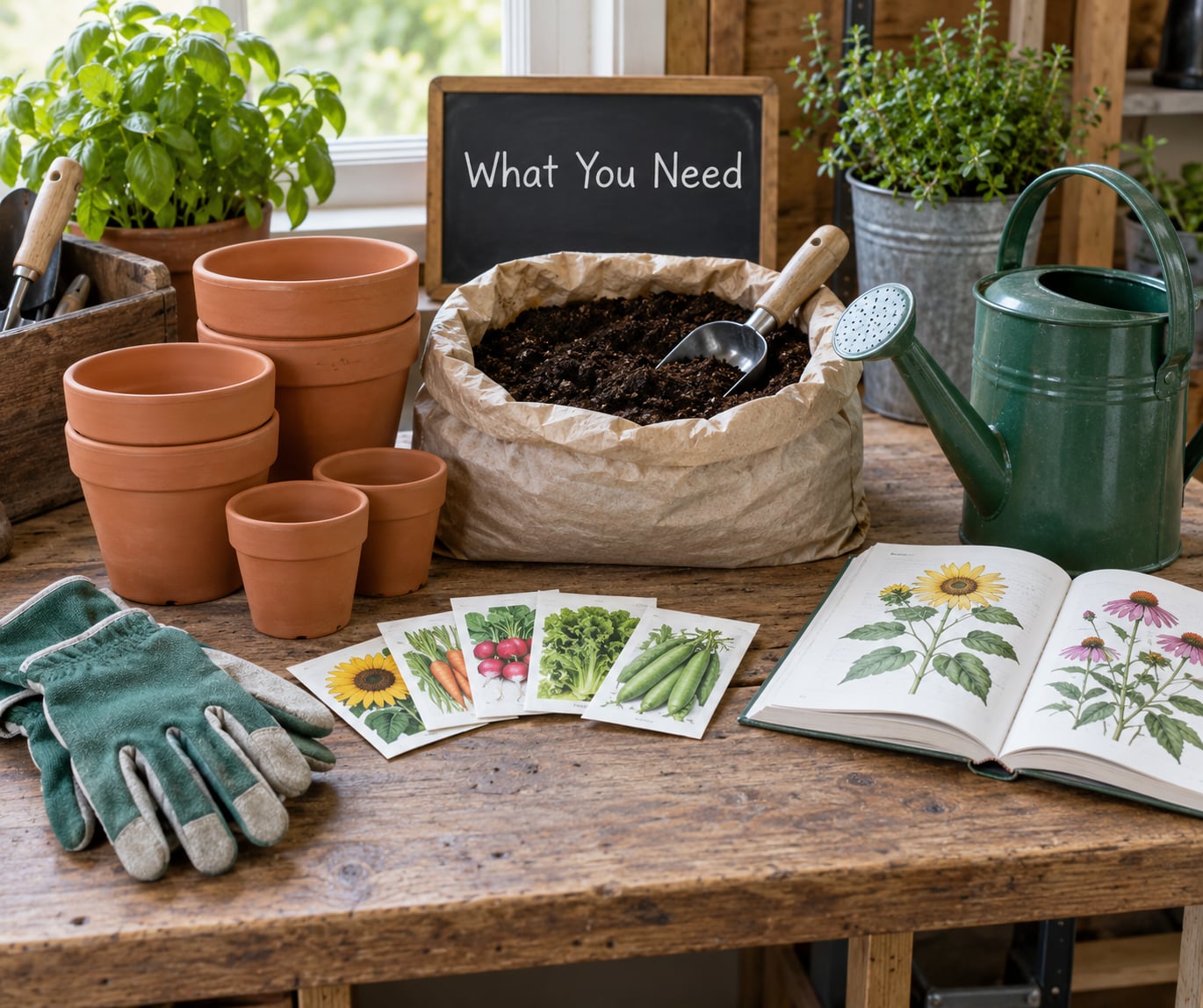
The starter list is short. Beginners who buy everything at once end up with an untidy corner of half-used supplies and no surviving plants, so gather the basics first and add tools only when a specific job calls for one.
- Space: a bed, a row along a fence, or a set of containers. Twenty square feet is plenty for a first season.
- Well-drained soil or potting mix: most medicinal herbs rot in heavy ground, so drainage matters more than richness.
- Compost or well-rotted organic matter to loosen and feed the soil.
- A watering can with a rose and, ideally, a moisture test you do with a finger rather than a schedule.
- Labels and a notebook: permanent labels plus a written record of every planting.
- Gloves and hand tools: a trowel, a fork, and cut-resistant gloves if you plan to handle nettles or spiny plants.
- A reputable botanical reference — a regional flora, a good field guide, or a university extension service — so you confirm names from more than one source.
You also need safety information before plants arrive, not after. Know which of your chosen species are toxic, which are unsuitable for internal use, and which interact with common medications.
How to Start a Medicinal Plant Garden: Step-by-Step
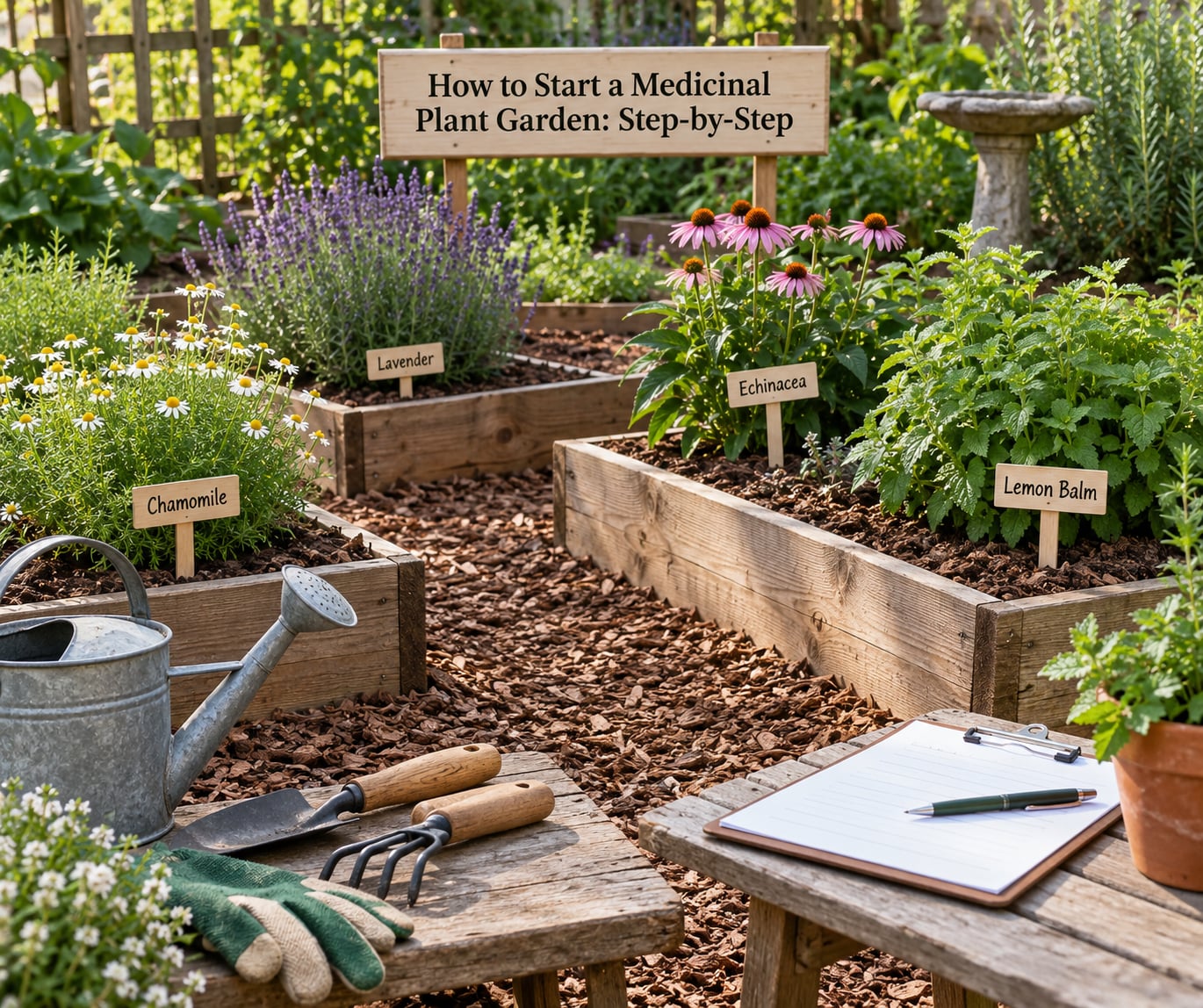
Work through these seven steps in order. Each one depends on the decision before it, so skipping ahead to planting usually means digging plants up again within a season.
1. Define your medicinal garden’s purpose and location
Say plainly what the garden is for, because the purpose changes every other choice. An educational collection wants breadth and reliable labels; a conservation planting wants species that are actually under pressure; a demonstration garden wants plants that survive neglect and tolerate visitors; a small home collection wants a handful of reliable, container-friendly herbs.
Then match that purpose to your conditions. Note how many hours of direct sun the space gets, whether rain drains away or sits, what your local hardiness zone is, and how much time you can genuinely commit in July.
Watch out for one trap. Plants promoted as medicinal include some genuinely dangerous species — angel’s trumpet, oleander and several nightshades have all been sold as garden ornamentals. Research toxicity for every single plant before it goes in the ground.
2. Choose plants suited to your climate
Choosing well-identified plants that already grow near you is the highest-value decision in the whole process. A plant suited to your zone establishes faster, needs less intervention, and is far more likely to survive its first winter than a tender species you rescued from a nursery clearance.
Use local ecological knowledge, regional floras and reputable horticultural sources together. When a community, traditional healer or local grower names a plant, ask for the botanical name — common names overlap and mislead constantly.
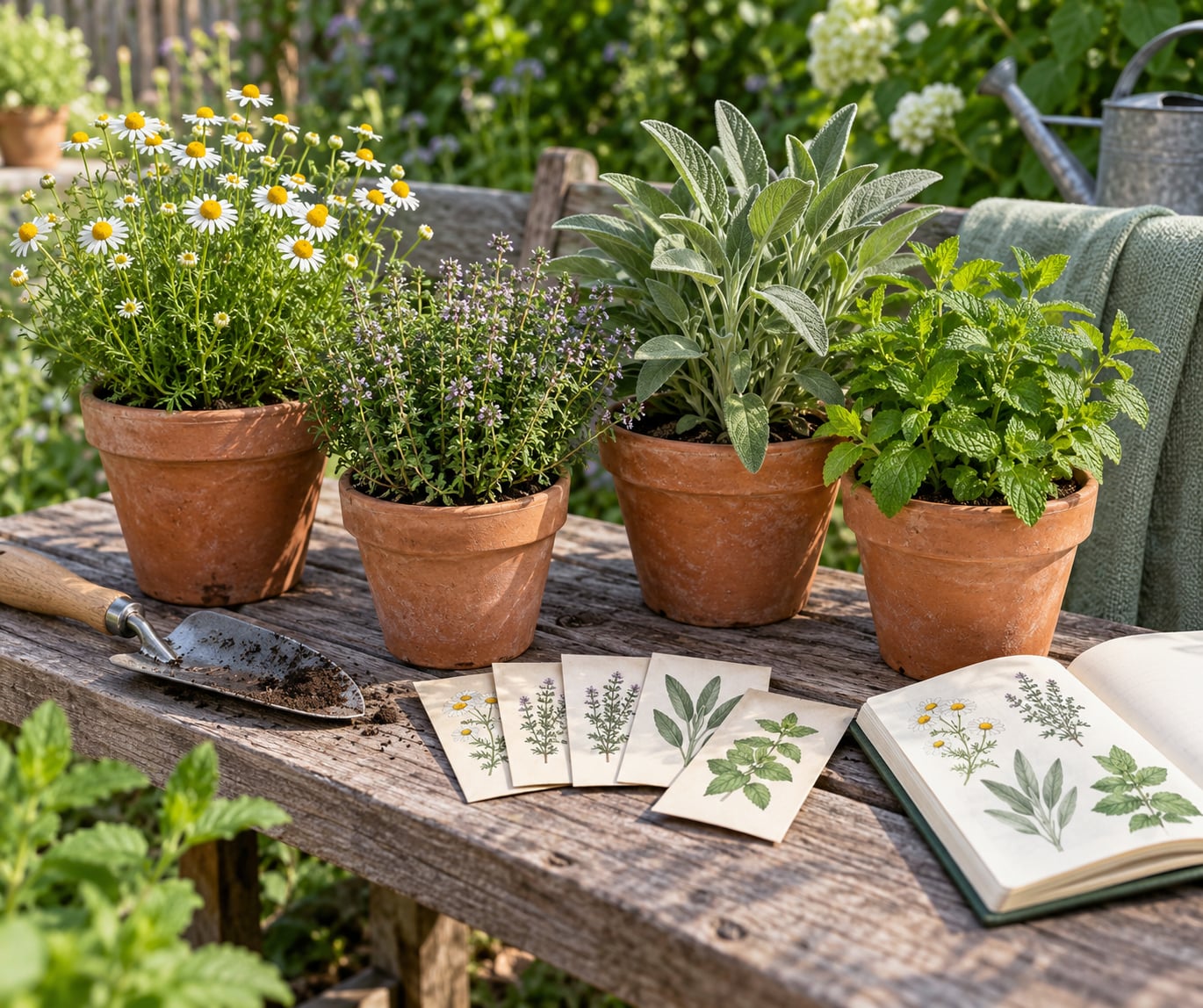
Separate your list into two groups. Everyday herbs like chamomile, thyme, sage, mint and calendula are forgiving and widely available. Everything else — plants needing specialist conditions, alpine species, woodland understory plants, or anything you have only seen in traditional records — should come from reputable specialist nurseries and should never be dug from the wild.
Here is the kind of starter set that works in a first season. Botanical names matter more than trade names, and the last column is my honest read on difficulty.
| Plant | Botanical name | Light | Water | Size and spread | Minimum container | Harvest window | Difficulty |
|---|---|---|---|---|---|---|---|
| Chamomile | Matricaria chamomilla | Full sun | Moderate, let dry between waterings | Annual, 60 cm tall, self-seeds | 20 cm pot | Flowers, while open | Easy |
| Calendula | Calendula officinalis | Full sun | Moderate | Annual, 60 cm, self-seeds freely | 25 cm pot | Flower heads, every 2 weeks | Easy |
| Thyme | Thymus vulgaris | Full sun | Low, drought tolerant | Perennial, 30 cm, woody | 20 cm pot | Leaves, before flowering | Easy |
| Sage | Salvia officinalis | Full sun | Low to moderate | Perennial shrub, 60 cm | 30 cm pot | Leaves, before flowering | Easy |
| Mint | Mentha spp. | Sun to part shade | Moderate to high | Perennial, spreads by runners | 25 cm pot, contained | Leaves, before flowering | Easy but invasive |
| Lavender | Lavandula angustifolia | Full sun | Low | Perennial shrub, 60 cm | 35 cm pot | Flower buds, just before opening | Moderate |
| Echinacea | Echinacea purpurea | Full sun | Moderate | Perennial, 90 cm, deep roots | 40 cm pot or a bed | Leaves and roots in autumn | Moderate |
| Holy basil (tulsi) | Ocimum tenuiflorum | Full sun | Moderate | Annual or short perennial, 60 cm | 25 cm pot | Leaves and flowering tops | Easy |
| Lemon balm | Melissa officinalis | Part shade tolerated | Moderate | Perennial, 60 cm, self-seeds | 25 cm pot | Leaves, before flowering | Easy |
| Rosemary | Salvia rosmarinus | Full sun | Low | Perennial shrub, up to 1.5 m | 40 cm pot | Sprigs, year round | Moderate to hard |
One regional note. Aloe, sutherlandia, wild ginger and devil’s claw all carry deep importance in traditional African medicine and appear constantly in conversations about medicinal gardens. Many are slow, frost-tender or under conservation pressure, so they belong in specialist nurseries or conservation collections rather than a first-year home bed.
3. Prepare the growing area
Test the drainage before anything else. Dig a hole about 30 cm deep, fill it with water, let it drain, then fill it again. If water still stands after an hour, that spot will rot roots.
Test the soil properly through your local cooperative extension service — the lab report gives you pH, organic matter and, crucially, whether anything toxic is present. Do not skip this step in old urban ground or anywhere near a former industrial site.
Improve structure rather than chasing fertility. Work in a few centimetres of compost, loosen compacted soil with a fork, and on heavy ground build a raised bed so the root zone never sits in winter wet. On containers, use a free-draining potting mix and check that drainage holes stay open.
Watch wind and access. A plot sheltered from the worst prevailing wind loses less water and fewer young plants, and you need to reach every bed to weed and harvest without treading on soil.
4. Source plants and seeds responsibly
Buy from nurseries and seed suppliers that name the species. Suppliers who list only a folk name, or who cannot tell you a botanical name, are handing you a guess.
For a species you cannot find commercially, ask a herbarium, a botanical garden or a university extension office about a documented source rather than digging it up. Wild collection carries real risks: misidentification, damage to slow-regenerating populations, and legal restrictions. Several medicinal species are protected or listed on threatened plant inventories, and in many jurisdictions digging or selling them without a permit is an offence.
Ask before you take anything — from a landowner, a community or a traditional knowledge holder — and credit the source. That conversation costs ten minutes and it is the difference between research and extraction.
5. Plant and label the garden
Follow the seed packet for depth and spacing, because crowding causes the airflow problems that turn into fungal trouble. Sow chamomile and calendula directly where they will grow; they resent transplanting. Start slower or more delicate species indoors, then harden them off over a week before planting out.
Sow too early indoors and you get leggy, weak seedlings — a complaint that shows up repeatedly in beginner gardening threads. Six weeks before your last frost date is a safer rule of thumb for most herbs than the two months many packets imply.
Some seeds need cold stratification: a spell in the fridge in a damp medium before sowing, which mimics winter and breaks dormancy. The packet will say so; skipping the step usually means seed that simply never sprouts.
Give everything a permanent label the day it goes in. Each one should carry the accepted botanical name, any verified local name, the source, the planting date, and a note of any uncertainty in identification. Unlabelled plants get mixed, misidentified and eventually harvested under the wrong name — which in a medicinal garden is the one error that genuinely matters.
Water in, then mulch. A 5 cm layer of organic mulch keeps roots cool, cuts watering and stops most weeds before you start pulling them.
6. Maintain plants without damaging habitats
Check moisture with your finger a few centimetres down rather than watering on a fixed schedule. Overwatering, not underwatering, is what kills most beginner herb plantings, and the usual cause is soil that never drained.
Weed by hand while plants are small, and mulch so you have to weed less. Cut plants back after flowering to encourage bushy growth, and remove self-seeded seedlings unless you want more of them — calendula and lemon balm will otherwise take over a small bed within two seasons.
Contain the runners. Mint in particular invades a bed and is close to impossible to remove once established, so grow it in a pot buried in the soil, or in its own container.
Nettle is another special case: it stings, and it spreads by seed and rhizome. Harvest it with gloves and long sleeves, and keep it away from paths children use.
Manage pests with water, hand removal, and beneficial insects rather than routine sprays. Broad-spectrum insecticides kill the pollinators most medicinal plantings depend on, and residues on a plant you intend to dry and store are exactly the reason to skip them.
7. Keep records and learn responsible harvesting
Keep a simple log for every species: sowing date, emergence, first flowering, pests, weather notes and every harvest with its date and weight. Records are what turn a hobby plot into a study collection, and they are the first thing any herbarium or researcher will ask for.
Harvest in the morning, after dew has dried and before the day’s heat, when essential oils and aromatic compounds peak — a detail forum growers mention often and few beginners know. Use clean scissors, take no more than a third of the plant at once, and never strip a perennial down to bare stems.
For drying, spread leaves in a single layer on racks in a dark, dry, well-ventilated room. Turn them daily and discard anything mouldy. Store fully dry material in labelled glass jars away from light and heat, and write the harvest date on every jar — dried herbs lose quality with time, and an undated jar is the one you will find in five years not knowing what it is.
Keep learning, with boundaries. Growing a plant is horticulture; using one medicinally is a health decision that needs reliable identification and professional guidance. A doctor or pharmacist should review anything you intend to take internally, especially alongside prescription medication, during pregnancy or breastfeeding.
Common Mistakes
Almost every beginner error here is a shortcut, and every one of them is cheap to fix.
Choosing plants by common name alone. Different species share folk names, and misidentification has hospitalised people. Verify botanical names with two independent references, and if you cannot confirm a plant, do not harvest it.
Overcrowding. Plants spaced too closely compete, airflow fails, and fungal disease moves through the bed. Follow spacing guidance even when it looks generous.
Overwatering. Soggy soil kills more first-year herbs than cold does. Test the soil, fix drainage, and let the top layer dry between waterings.
Letting mint run free. Mint spreads by runners into neighbouring beds and comes back for years. Contain it in its own pot from the start.
Harvesting from the wild. It seems free and it is not — populations of slow-growing species take years to recover, and many are protected. Grow through reputable suppliers.
Treating traditional use as proven medicine. Documented traditional use is valuable cultural and ethnobotanical knowledge. It is not evidence of safety or effectiveness for any individual, and the two should never be blurred together.
Failing to label and record. Unlabelled beds produce material harvested under the wrong name. Label on planting day, not later.
Starting too big. Twelve species you can keep alive beats fifty you cannot. Expand only after a full successful season.
Frequently Asked Questions
What are the easiest medicinal herbs to grow for a beginner?
Chamomile, calendula, thyme and holy basil are the easiest for most climates. All four are forgiving about soil, seed readily or transplant easily from nursery stock, and bounce back from minor mistakes. Mint and lemon balm are nearly as easy but self-seed and spread aggressively, so give them their own pot. Start with four or five species rather than a full catalogue list, and add more only after a full season succeeds.
How big a container do I need to grow herbs at home?
Use a pot at least 20 cm across for most culinary and medicinal herbs, and 30 to 40 cm for shrubby or deep-rooted species such as sage, rosemary, echinacea and lavender. Depth matters as much as width, so avoid shallow bowls unless the plant is a shallow-rooted herb. Drainage holes are essential; a pot without them is the fastest way to kill a plant. Herbs in containers dry out fast in summer and need watering daily in high heat.
Should I start medicinal herb seeds indoors or direct sow them?
Direct sow fast, hardy annuals such as chamomile and calendula straight into their final position, since they dislike being moved. Start slower species indoors about six weeks before your last frost date, no earlier, because seedlings started too soon become leggy and weak. Give indoor seedlings strong light and harden them off for a week outdoors before planting. Some seeds need cold stratification in a damp medium in the fridge before sowing.
Is it legal to grow medicinal plants at home?
Growing common culinary and medicinal herbs at home is legal almost everywhere, with a few regulated exceptions. The restrictions focus on harvesting wild populations of protected, threatened or endangered species, and on selling or processing certain plants commercially. Rules differ by country, state and species, so check your local regulations before collecting anything from the wild. If a species appears on a national protected species list, buy it from a licensed nursery instead.
How do I harvest and dry medicinal herbs correctly?
Harvest in the morning after dew has dried and before the day’s heat, when aromatic compounds peak. Take clean scissors, remove no more than a third of the plant, and never strip a perennial to bare stems. Dry single layers on racks in a dark, dry, ventilated room, turning daily and discarding anything mouldy. Store fully dry material in labelled glass jars out of light and heat, with the botanical name and harvest date written on each jar.
What was the role of medicinal plants in traditional African medicine?
Medicinal plants have been central to health and healing across African societies for thousands of years, treated through trained practitioners working with local knowledge, materials and diagnosis. Plants such as aloe, sutherlandia, wild ginger and devil’s claw hold deep cultural importance and growing regional conservation concerns. Scholars in ethnobotany document these traditions carefully, while noting that many species face pressure from habitat loss and harvesting.
Conclusion
Choose your location and check its drainage, pick one or two reliably identified plants suited to your climate, prepare well-drained growing space, label everything the day it goes in, and keep a written record from the first sowing. That is the whole first step. Expand the collection after a season of results, and talk to a doctor or pharmacist before any medicinal use.