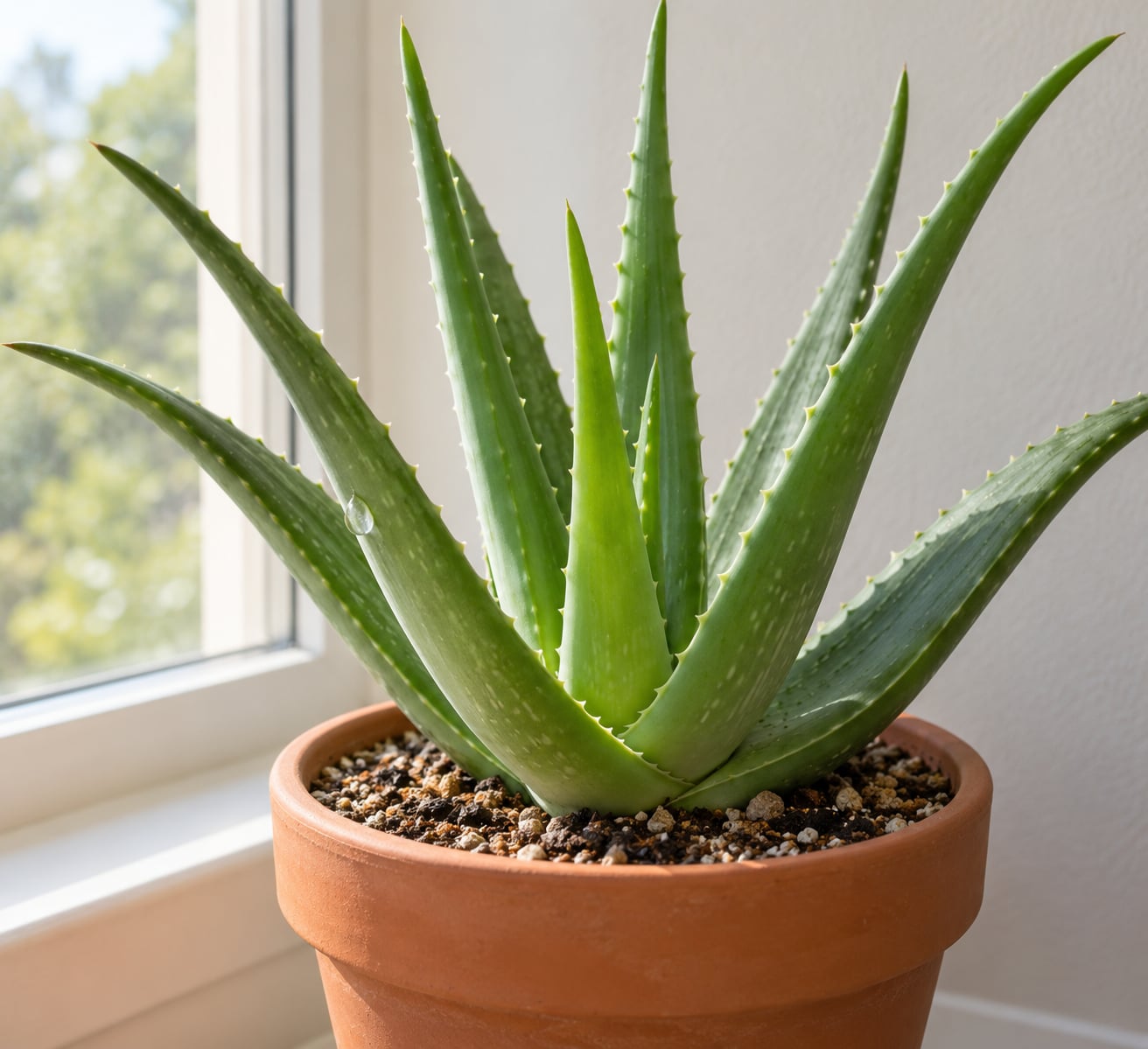
To grow aloe vera indoors, give it 4 to 6 hours of bright light near a south- or west-facing window, plant it in a gritty mix of 50% cactus soil and 50% perlite in a pot with drainage holes, and water it deeply only after the soil has dried at least halfway down the pot. Overwatering, not neglect, is what kills most indoor aloe.
That is the whole method, and it is a strange one for a plant-lover. Aloe stores its water in thick leaves, and the clear gel inside them is almost entirely water, so it survives on neglect in a way most houseplants do not. The whole job is refusing to give it too much of the one thing it already has plenty of.
Beginners can have a healthy plant running in about twenty minutes of actual work. From there it is mostly observation. Here is how to grow aloe vera indoors, step by step, in the order the tasks actually happen.
Table of Contents
- 1What You Need
- 2Step-by-Step: How to Grow Aloe Vera Indoors
- 3Choose the Right Aloe Vera Plant
- 4Prepare a Pot with Good Drainage
- 5Plant the Aloe Vera
- 6Give It the Right Indoor Light
- 7Water Only When the Soil Needs It
- 8Feed, Monitor, and Repot the Plant
- 9Common Mistakes
- 10Frequently Asked Questions
- 11How much light does aloe vera need indoors?
- 12How often should I water an indoor aloe vera plant?
- 13Do aloe vera plants like small pots?
- 14Why are my aloe vera leaves soft and mushy?
- 15Can you grow an aloe vera plant from a single leaf?
- 16Is aloe vera safe for cats and dogs?
- 17Conclusion
What You Need
You do not need much. A terracotta pot, a bag of cactus mix, a bag of perlite, and a plant or an offset from someone who already has a mother aloe will cover everything.
- A pot with drainage holes. Terracotta is the best default because it lets the root zone breathe and dries out faster than plastic or glazed ceramic.
- A gritty potting mix. Half cactus soil, half perlite or coarse sand. Regular potting soil holds water far too long.
- A plant or a pup. Either a healthy Aloe barbadensis miller, or a healthy offset from a friend or neighbour’s mature plant.
- A bright window or a grow light. A south- or west-facing window sill, or a full-spectrum LED panel a foot above the leaves.
- A finger. Your most reliable watering tool, and it is free.
Here is the short version of the care numbers, so you can sanity-check a nursery tag or a forum answer against it.
- Light: 4 to 6 hours of direct sun, or bright indirect light all day
- Water: every 2 to 3 weeks in summer, every 4 to 6 weeks in winter
- Soil: 50% cactus soil plus 50% perlite, draining fast, roughly pH 6.0 to 7.0
- Pot: terracotta, drainage hole required, one size up at most
- Temperature: roughly 55 to 85 F, kept away from cold drafts
- Mature size: 12 to 24 inches tall indoors without a bloom
- Pet safety: whole plant is toxic to cats and dogs
Step-by-Step: How to Grow Aloe Vera Indoors
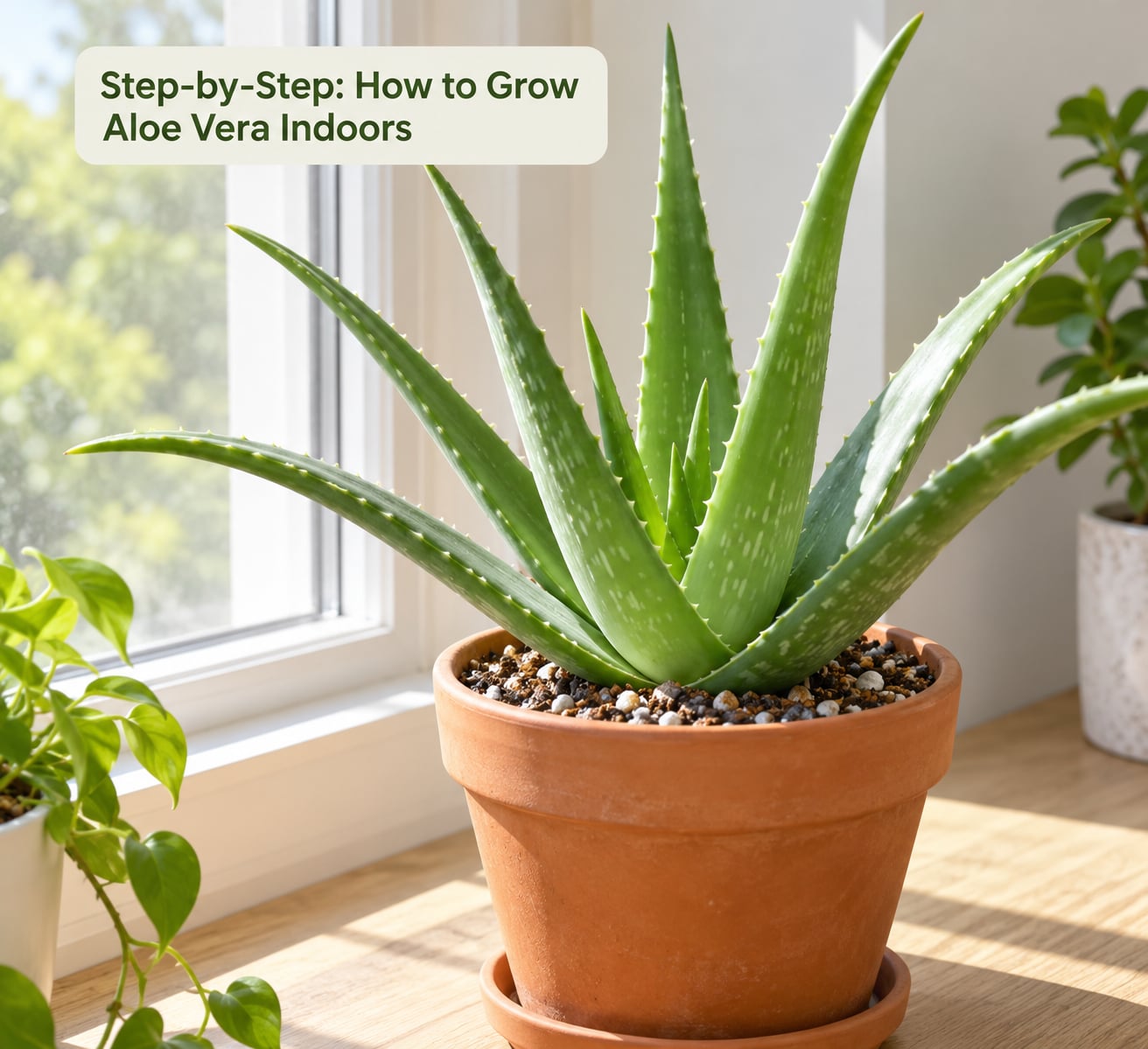
If you only have time for two things, make them these: pick a pot that drains, and pick a pot that is not much bigger than the root ball. Everything after that is adjustment.
Choose the Right Aloe Vera Plant
Look for thick, upright, blue-green leaves that fill out from the base. A slight lean is fine on a plant that has been reaching for light. Avoid anything with mushy, translucent leaves near the base, blackened roots, or a soft stem, and skip any plant with a lot of white cottony material tucked into the crown, which is usually mealybug.
Be aware of what you are buying. Plenty of garden centres sell ornamental hybrid aloes under an aloe vera label. If you want the gel, you want Aloe barbadensis miller, the one with fat toothed leaves. Dwarf cultivars like Mini Belle stay small and suit a narrow sill, and there are plenty of handsome spotted aloes that will look better on a shelf and give you nothing to harvest.
Starting from a pup is easier than it sounds. A mature aloe pushes offsets around its base, and they arrive with small roots already attached. Gently twist or cut one away with a clean blade, leave the cut base to dry and callus for 24 to 48 hours, then pot it shallowly in dry mix.
Prepare a Pot with Good Drainage
Choose a pot one size up from the current one, no more. Terracotta, with a hole in the bottom. Aloe grows slowly in a pot that is larger than its roots because wet soil sitting in an oversized container is the exact thing that causes root rot.
This is where beginners get it wrong. A pot with no drainage hole can be rescued by watering far less often, but it is always working against you, and it is the single easiest way to kill an aloe. If you love the decorative pot, use it as a cachepot and let the real pot drain first.
Plant the Aloe Vera
Slide the plant out of its old pot, loosen the outer roots a little with your fingers, and set it into the new pot at the same depth it was growing. The base of the leaves should sit slightly above the soil line rather than buried. Soil packed up against the crown traps moisture there, and crown rot starts exactly where you would not want it.
Fill around the root ball with your dry mix, press it down lightly, and leave the top half inch unfilled so water runs off instead of pooling against the rim. Do not pack the mix down hard. Aloe roots need air around them, and a loose mix drains faster than a tamped one.
Give It the Right Indoor Light
Aim for 4 to 6 hours of direct sun if you can get it, which indoors usually means a south- or west-facing window. Bright indirect light all day also works, and the plant will grow more slowly and stay more compact in it. If you have neither, a full-spectrum LED grow light set about 12 inches above the leaves will carry a plant that would otherwise stretch.
Stretched, pale, leaning leaves mean the plant needs more light. Turn the pot a quarter turn every few weeks so it grows evenly, since aloe bends permanently toward whatever it can reach.
Moving an indoor aloe straight into a full-sun window is the other classic first-year mistake. The leaves will develop flat brown or reddish patches that will not recover, and it is scorch, not rot. Acclimate it over a week or two instead, adding an hour of direct sun at a time.
Water Only When the Soil Needs It
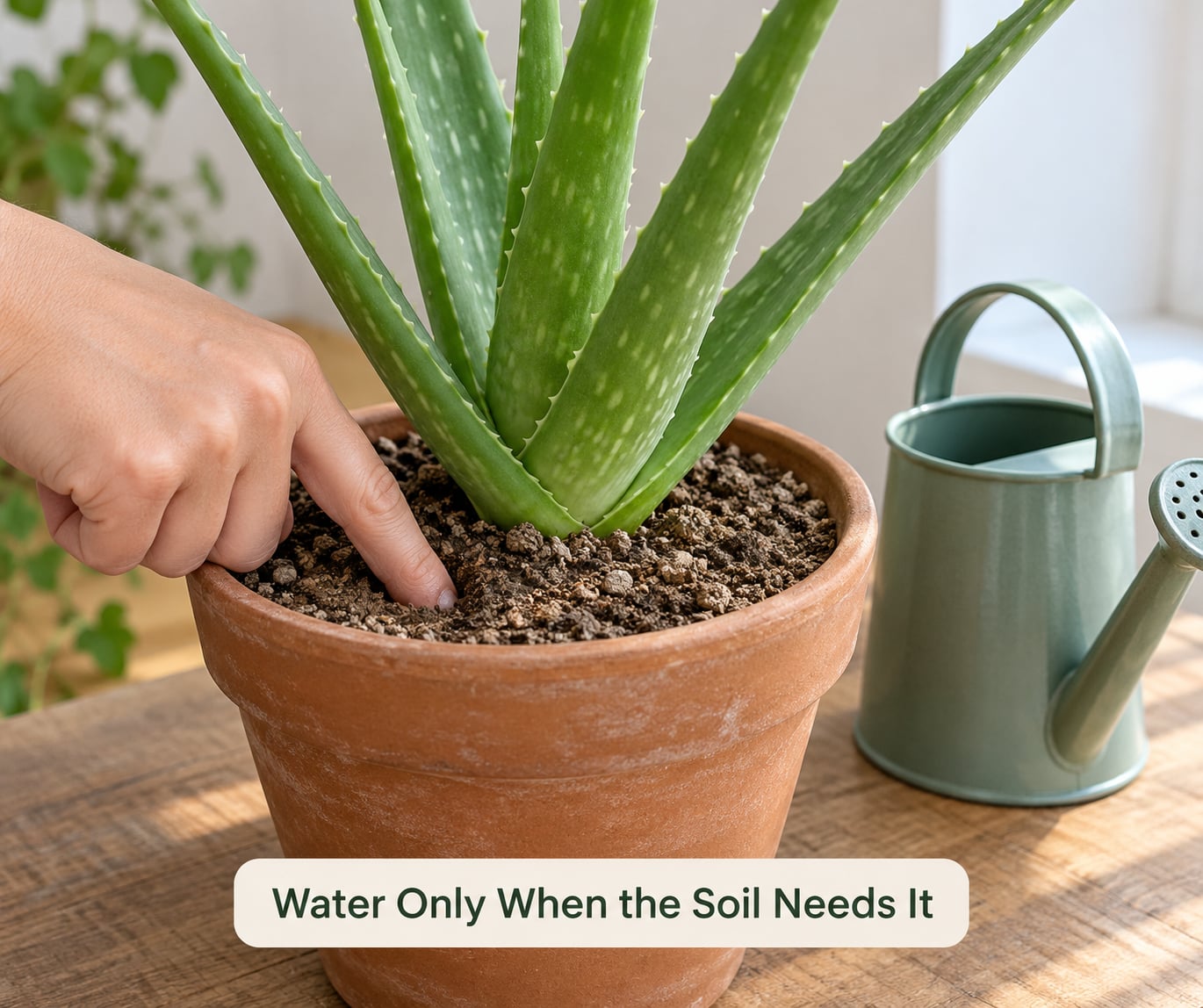
Push a finger into the soil to about half the depth of the pot. If you feel any dampness at all, wait. Water when the soil is dry all the way to about halfway down, which in summer is roughly every 2 to 3 weeks and in winter closer to every 4 to 6 weeks. A bamboo skewer pushed to the bottom reads more accurately in a large pot.
When you do water, soak it. Pour slowly until water runs freely out of the drainage hole, then empty the saucer. A small splash on dry soil wets only the top roots and teaches the plant to stay shallow-rooted. Let the pot drain completely on a sink or in the shower.
Checking the roots settles almost every diagnosis. Pull the plant out and look: firm white, cream, or pale yellow roots are normal, even slightly orange ones. Black, soft, or slimy roots mean root rot, and the plant needs fresh gritty soil, a clean pot, and a cut back to firm tissue.
Two problems look identical from across the room, so separate them by touch. Overwatered leaves are soft, watery, translucent, and floppy, and the base may feel mushy. Underwatered leaves are thin, wrinkled, and curl inward at the tips. Most people assume flopping means dying, then water again and finish the job.
Feed, Monitor, and Repot the Plant
Aloe is a light feeder. In spring and summer, feed it a balanced liquid fertilizer at half strength once every four to six weeks, poured onto dry soil so it drains through rather than sitting concentrated against the roots. Stop feeding in autumn and winter, when growth slows down anyway.
Check the leaves every couple of weeks while you are watering. Mealybugs hide in the crown and look like white cotton; scale insects sit on the leaf surface and resist wiping. Isolate, then dab each one with alcohol on a cotton swab and repeat weekly. Fungus gnats come with soil that stays wet, so their arrival is usually a watering signal first and a pest problem second.
Repot when roots circle the bottom of the pot, when water runs straight through without the plant ever wetting its roots, or when the mix has broken down into something dense and peaty. Move up one pot size, ideally in spring, and refresh the soil whenever you do it. Roots sitting in cold wet soil all winter is the combination that finishes a plant off.
Common Mistakes
Almost every dead indoor aloe traces back to one of these. The fix for each is short, which is good news.
- Watering on a schedule. A calendar does not know that your pot is terracotta, next to a hot window, in the third week of July. Check the soil instead. This is the number one killer.
- Using ordinary potting soil. It is too dense and holds water for weeks. Mix 50% cactus soil with 50% perlite and the problem mostly disappears.
- Using a pot with no drainage hole. Water has nowhere to go and the root zone stays saturated. Every pot needs a hole, and a saucer needs emptying.
- Small sips instead of full soaks. The top few roots get wet, the lower roots stay dry, and the plant grows lopsided. Soak until it runs out the bottom.
- Burying the base too deep. Keep the base of the leaves just above the soil line. Soil against the crown is how crown rot begins.
- Skipping the light adjustment. Pale, stretching leaves need more light. Brown flat patches after a move mean too much sun too fast, so acclimate over two weeks.
- Leaving leaves lying on damp soil. Outer leaves that touch wet mix will spot and rot. Prop the plant up or tie it loosely while it settles so leaves sit above the soil.
One more worth naming, because it sounds like advice and is not: leaving the soil slightly damp. It should not be slightly damp. Not even in summer.
Frequently Asked Questions
How much light does aloe vera need indoors?
Aloe vera wants 4 to 6 hours of direct sun indoors, ideally at a south- or west-facing window, and it copes with bright indirect light all day. A full-spectrum LED grow light about 12 inches above the leaves works in a dim room. Pale, stretched, leaning leaves mean it needs more. Flat brown patches after a move mean it got too much sun too fast, so increase exposure an hour at a time.
How often should I water an indoor aloe vera plant?
Water when the soil is dry to about halfway down the pot, which is usually every 2 to 3 weeks in summer and every 4 to 6 weeks in winter. Push a finger or a bamboo skewer in before you decide rather than following a calendar. Soak until water runs out of the drainage hole, let the pot drain fully, and empty the saucer.
Do aloe vera plants like small pots?
Aloe tolerates a snug pot far better than an oversized one, because extra wet soil in a big container is what causes root rot. Stay within one pot size of the root ball. Repot when roots circle the bottom, when water runs straight through without wetting the roots, or when the mix has broken down, and go up one size rather than two.
Why are my aloe vera leaves soft and mushy?
Soft, watery, translucent leaves and a mushy base almost always mean overwatering, which cuts off oxygen to the roots and causes rot. Stop watering until the soil is bone dry, then wait another week. Slide the plant out and check the roots: firm white, cream or pale yellow roots are healthy, while black slimy roots mean rot. Cut back to firm tissue and repot in fresh gritty mix.
Can you grow an aloe vera plant from a single leaf?
Rarely, and it is worth being blunt about it. A bare leaf has no roots and usually shrivels before it roots, because a cut leaf has to callus, then push new growth from the base, and most never manage it. Pups or offsets from a mature plant are the reliable route. Separate one, let the cut callus for 24 to 48 hours, and pot it shallowly in dry succulent mix.
Is aloe vera safe for cats and dogs?
No, the whole plant is considered toxic to cats, dogs and horses because of the aloin, a yellow latex just under the leaf skin, along with saponins. Poisoning shows up as vomiting, drooling and diarrhea, so call a vet straight away if a pet chews on a leaf. The safest choice in a home with pets is a high shelf or a different plant entirely.
Conclusion
Two decisions do most of the work here. Pick a terracotta pot with a drainage hole that is only one size larger than the root ball, and fill it with a 50/50 blend of cactus soil and perlite. Then put the plant in the brightest window you have and leave it alone.
Everything after that is a finger in the soil rather than a date on a calendar. Check before you water, look at the leaves while you are there, and remember that the failure mode of how to grow aloe vera indoors is too much water, not too little. A plant that has gone soft and floppy is often recoverable. A plant that has been sitting in wet soil for months may not be.