Most herbaria open their collections to visitors, but almost none of them accept walk-ins at the door. To visit a herbarium as a member of the public, you find the institution, email the collections manager or curator, explain what you want to see, and agree a time. The whole arrangement usually takes a few emails and a couple of weeks of notice.
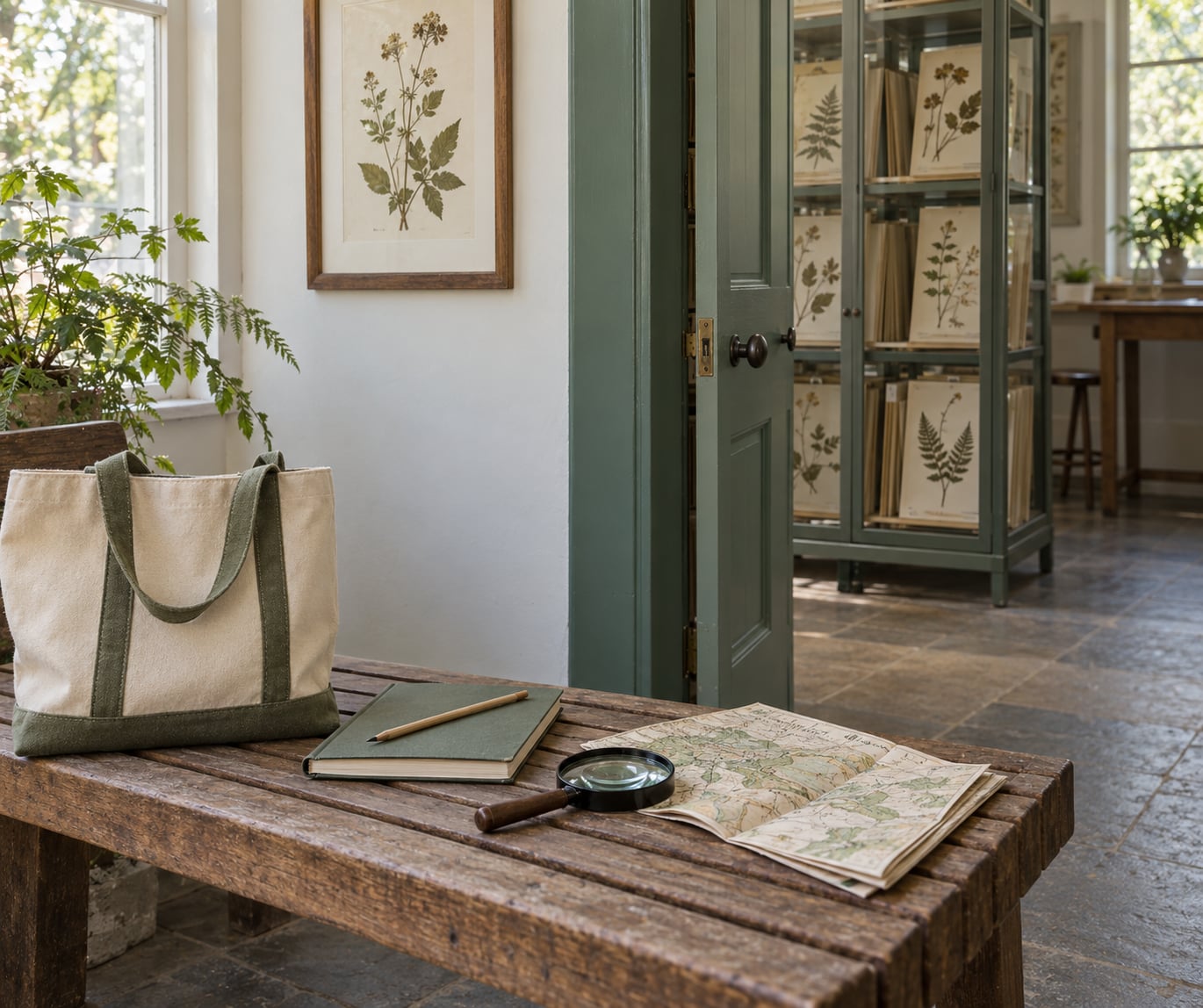
A herbarium is a collection of dried, pressed and labelled plant specimens, kept as a permanent record of plant life. Each sheet carries a label recording what the plant is, where it was collected, when, and by whom. That label is the reason a visit is worth making: you can confirm an identification against a documented specimen rather than a photograph.
This guide covers how to visit a herbarium as a member of the public, from first contact through to the questions worth asking staff. It also covers handling rules, because the rules exist but are rarely explained to casual visitors.
Table of Contents
- 1What You Need
- 2Step-by-Step: How to Visit a Herbarium as a Member of the Public
- 31. Check whether the herbarium is open to the public
- 42. Contact the herbarium before your visit
- 53. Prepare the plants or research questions you want to investigate
- 64. Learn the differences between a display, a study collection, and a herbarium database
- 75. Follow the herbarium’s handling and photography rules
- 86. Record specimen details accurately
- 97. Ask useful questions and close the visit responsibly
- 10Common Mistakes
- 11Frequently Asked Questions
- 12Can anyone visit a herbarium?
- 13Do I need an appointment to visit a herbarium as a member of the public?
- 14Can I take photographs of plant specimens?
- 15Why can I not touch or remove plants from a herbarium specimen?
- 16What information should I record when researching an African medicinal plant?
- 17Can traditional-use information from a herbarium be used as medical advice?
- 18Conclusion
What You Need
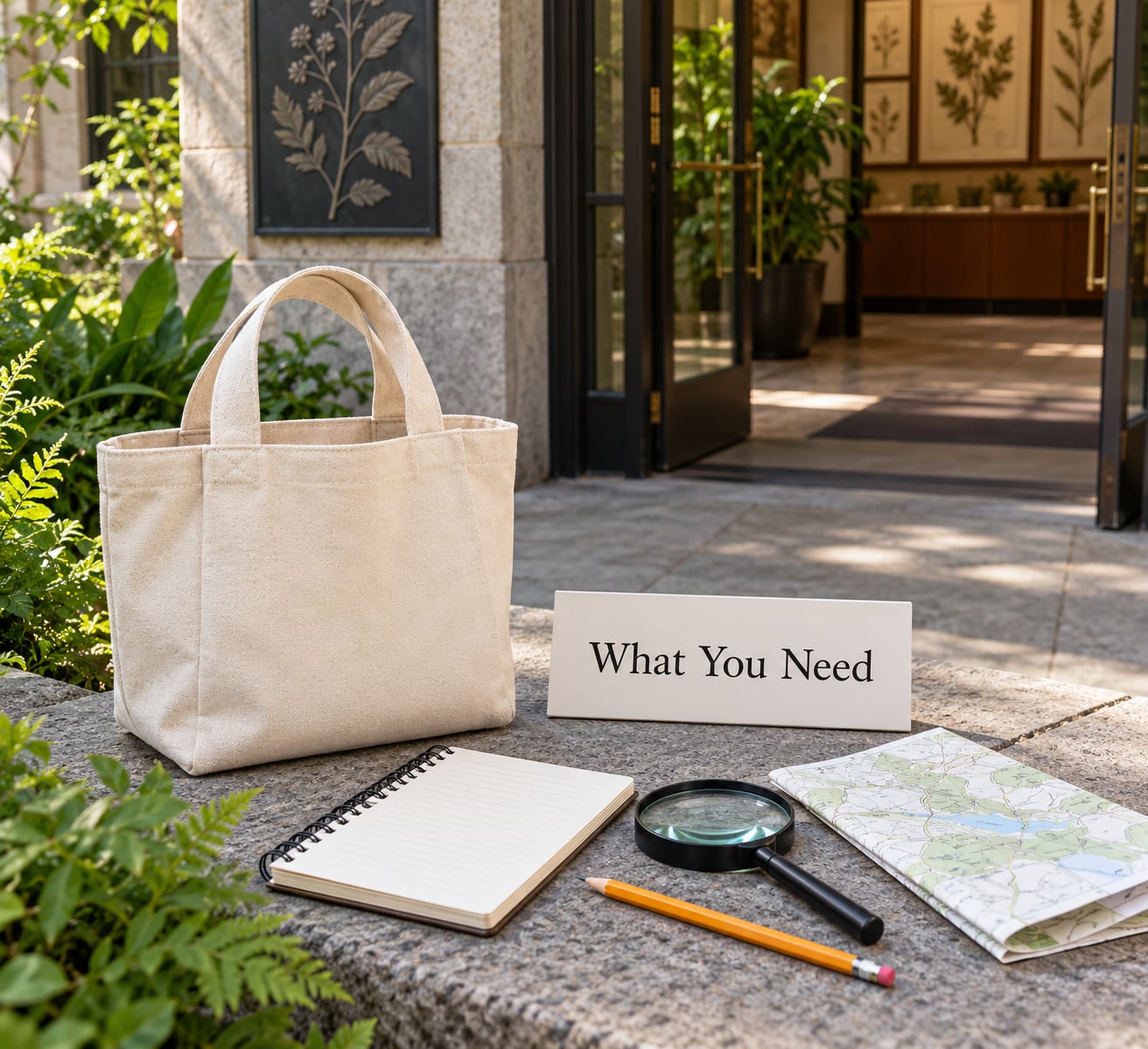
Bring less than you think, but bring the right things. The collections are fragile and the rooms are controlled, so anything extra becomes a liability.
- Photo ID. University buildings run security check-in, and most herbaria sit inside a research facility rather than a public museum.
- Your research question in writing. One or two sentences on what you need to see, so staff can pull folders before you arrive.
- A pencil and a notebook. Pens are not allowed at the worktable. Ink transfers onto sheets and cannot be undone.
- A list of plants to look up with whatever details you already have: region, date, habitat, local name, collector.
- Your own plant material, if you are asking for identification, collected legally and wrapped in paper rather than plastic.
- A camera, only after staff confirm photography is allowed.
- Closed, clean shoes and quiet clothing. Collection rooms are working laboratories, not galleries.
Leave behind your pen, your food, your drink, and any large bag you would have to leave in a corridor.
Step-by-Step: How to Visit a Herbarium as a Member of the Public
1. Check whether the herbarium is open to the public
Start by separating three things that get blurred together: a public exhibit, a public gallery attached to a research collection, and the research collection itself. The exhibit is usually open during standard museum hours with no booking. The research collection usually needs an appointment, and often needs one even if you are a student.
Check the visitor page for opening days, whether admission is free, and any seasonal closure. University herbaria commonly close for a week or two around Christmas and for a month during summer teaching weeks.
2. Contact the herbarium before your visit
Email or phone the collections manager, not a general enquiries inbox. Say who you are, what you want to look at, and when you hope to come. Ask about appointment requirements, group size limits, photography, reading room hours, accessibility, and whether anyone without a research background can be accommodated.
A message that works: Hello, I am a member of the public with no institutional affiliation. I would like to examine herbarium specimens of [plant or group] from [region] to confirm an identification. Would a supervised visit be possible on a weekday morning in the next month, and is photography permitted? Happy to supply my details for a visitor badge.
Ask whether the collection is closed for rehousing. Departments relocate their cabinets periodically, and a herbarium can be open as a department while the sheets themselves are inaccessible.
3. Prepare the plants or research questions you want to investigate
Gather what you already know about the plant before you travel: the scientific name if you have one, the region and country, the date you saw it, the habitat, any local names, and how it was used. Where traditional use is involved, write down the preparation method and the part of the plant used as the person described it to you.
Write it as reported speech, not as fact. A field note saying the elder reported a decoction of the roots used for stomach complaints is a record. Rewriting that as the roots treat stomach problems is a claim nobody has tested. Herbarium staff will help you keep the two apart.
4. Learn the differences between a display, a study collection, and a herbarium database
A display is chosen for visual appeal and tells you very little. A study collection is the real archive: sheets in folders inside cabinets, each with an accession number, an Index Herbariorum code identifying the institution, and a folder-level shelf location. A database is the digital shadow of that archive.
The two rarely match perfectly. A sheet may have been recorded in a database that was never updated, and a database record may reference a sheet that is on loan in another country. Staff know where the discrepancies are; ask them rather than assuming.
5. Follow the herbarium’s handling and photography rules
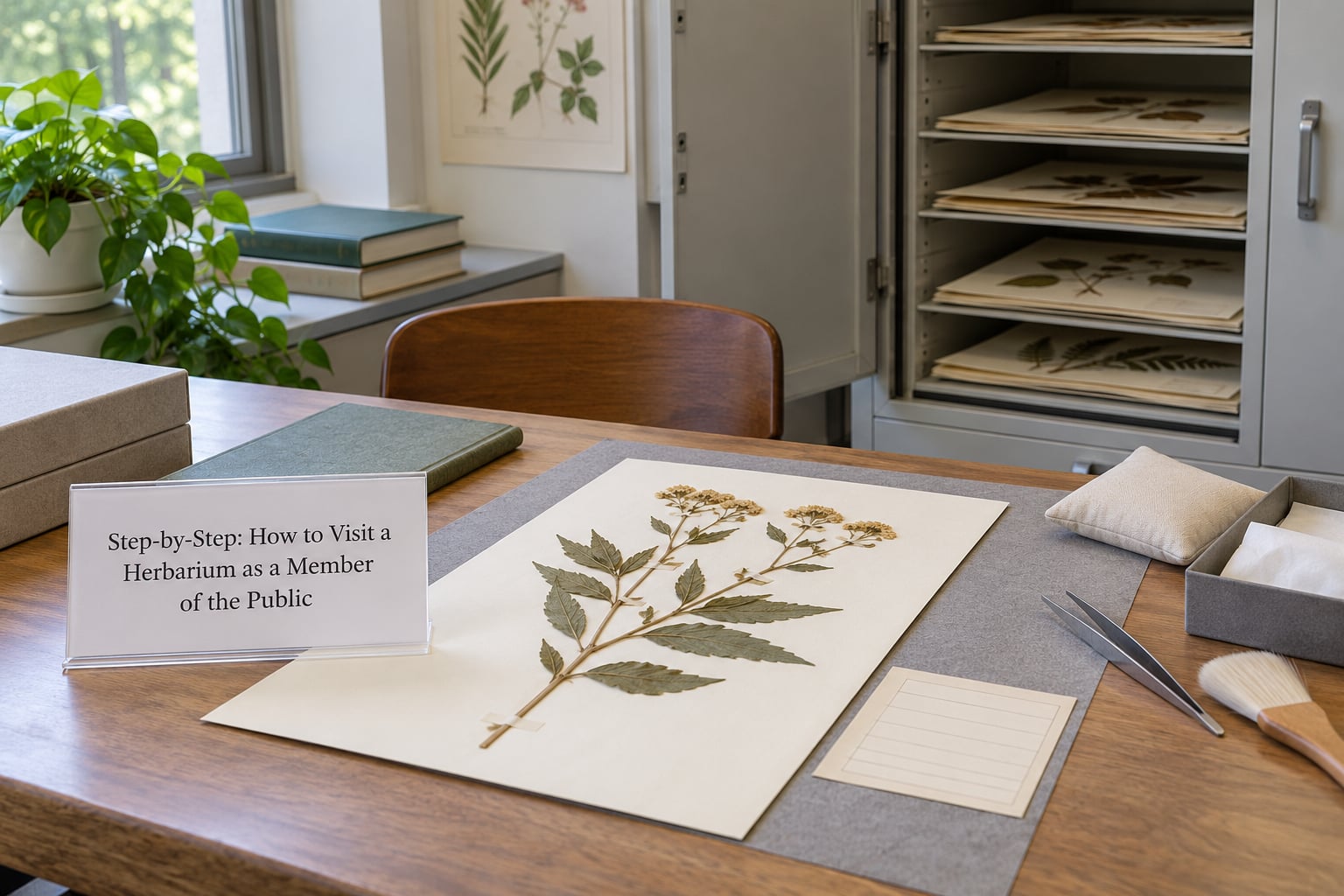
Wait to be handed a sheet. Keep it flat on the table, never on your lap. Do not fold, bend, roll or lift a sheet by one corner, and never lay it face-down; plant material is brittle and mounted to the sheet with tape or glue that fails under twisting. Type specimens stay inside their covers entirely, because they are the permanent reference for a plant’s name.
Use pencils. Keep food and drink out of the room. Put everything back exactly as you found it, in the same folder order, before you leave the table. If staff ask you to stop touching a sheet, stop immediately and ask what they would prefer.
6. Record specimen details accurately
Copy details as you read them rather than from memory afterwards. A workable note template:
- Herbarium name and Index Herbariorum code
- Accession or barcode number, and shelf location
- Scientific name as printed, including the author citation
- Determination label details, if later identifications were added
- Collection locality, with coordinates where recorded
- Collection date, collector’s name and collector number
- Habitat notes
- Reported traditional uses, attributed to the person who reported them
- Whether the sheet is a duplicate, a type, or a voucher
Transcribe rather than paraphrase. Spelling and abbreviations on old labels carry meaning.
7. Ask useful questions and close the visit responsibly
Staff are the fastest route to information here. Ask whether an identification is tentative or confirmed, whether a sheet is a duplicate you can consult at another institution, whether the taxon has been revised since the specimen was collected, and how to cite the collection in a paper or a report.
Ask about vouchers if you are documenting plant use yourself: a herbarium will often tell you what it takes to deposit a properly prepared specimen. Then return your folders, check that you have your notes and your plant material, and thank the institution. Staff answer a lot of public enquiries, and a short, specific thank-you is noticed.
Common Mistakes
Assuming you can walk in. Research collections are usually appointment-only, and arriving unannounced is the single most common reason a visit falls through. Fix: email first, every time, even if the website looks casual.
Looking for a public display and calling it a herbarium. A glass-case display is an introduction, not the archive. Fix: ask specifically to see the study collection and what it holds for your region.
Touching, lifting or rearranging sheets. One folded sheet can be ruined permanently. Fix: keep everything flat on the table and let staff hand sheets to you.
Collecting a plant without checking the rules. Protected, rare or whole plants may not be taken, and importing plant material across borders is restricted. Fix: photograph the plant in place with a scale, note the location and date, and check your local collecting rules.
Treating traditional-use notes as medical proof. A herbarium record documents that a use was reported. It says nothing about whether the use is effective or safe. Fix: describe the record accurately and take any health question to a doctor or pharmacist.
Photographing without permission. Research sheets may include unpublished data, georeferenced localities of rare plants, or material under loan agreement. Fix: ask each time, and follow whatever the staff member says about flash, tripods and publishing.
Giving up before checking online. Many queries can be answered from digitised collections without travelling at all. Fix: search the institution’s own database, then the global portals, before booking travel.
Frequently Asked Questions
Can anyone visit a herbarium?
Yes, in most cases. University and national herbaria routinely host members of the public for scheduled tours and supervised visits, and many run hands-on workshops where you press your own specimen. The research collection itself normally requires an appointment, and you may be asked to sign in, show photo ID and wear a visitor badge. Access is usually free, though some institutions run ticketed tours or workshops. Students and researchers often have longer unsupervised working hours than the general public.
Do I need an appointment to visit a herbarium as a member of the public?
Almost always, yes. Contact the collections manager or curator by email or phone, describe what you want to examine, and agree a date. A few botanic gardens keep staffed public hours with walk-in access to a display area, but the sheet collections behind those doors are working research facilities and are rarely open without notice. Allow a couple of weeks for a reply, and mention any accessibility needs, group size or photography plans in your first message.
Can I take photographs of plant specimens?
Sometimes, with permission. Rules vary widely: some reading rooms allow personal photographs without flash, others require a staff member to make the images, and a few prohibit photography entirely because sheets include sensitive locality data or are on loan. Ask before you raise your camera, and follow the answer exactly. Never assume a specimen visible in an open drawer is cleared for publication. If you need images for a project, staff can often point you to the digitised version online instead.
Why can I not touch or remove plants from a herbarium specimen?
Each mounted sheet is a single, unrepeatable object, pressed over months and glued to archival paper. Bending, folding or lifting it breaks stems, loosens the mounting and destroys the record it holds. Type specimens are worse still: they are the permanent reference that fixes a plant’s scientific name, so they stay inside their covers and are handled only by staff. Working with sheets at a table, under supervision, keeps a collection usable for centuries instead of decades.
What information should I record when researching an African medicinal plant?
Copy the herbarium name and code, the accession number and shelf location, the scientific name with its author citation, the collection locality and date, the collector’s name and number, and the habitat. Add any determination labels showing later identifications, and note whether the sheet is a duplicate, a type or a voucher. Record traditional uses exactly as reported, naming who reported them and the part of the plant and preparation used. Do not convert a reported use into a health claim in your notes.
Can traditional-use information from a herbarium be used as medical advice?
No. A herbarium records what people reported doing with a plant, which is valuable historical and cultural evidence, but it is not a safety or efficacy assessment. Species can be misidentified, plant chemistry varies, and interactions with medicines are possible. Use herbarium information to understand traditional practice and to identify plants accurately; take any question about treating a health problem, or about using a plant alongside medication, to a doctor or a pharmacist who can advise on your situation.
Conclusion
Start with the first action, not the whole plan: identify the herbarium you want, read its visitor information, and email the collections manager before you travel. That single message settles access, timing, photography and what they can pull for you. Everything after that, the handling rules and the note template, is straightforward.