To grow hibiscus for tea you need Hibiscus sabdariffa, the roselle plant, also sold as red zinger, sorrel or Florida cranberry. You do not eat the flower petal. You eat the fleshy cranberry-red cup called the calyx that swells up underneath each bloom after the flower falls, and that cup only forms on the true tea species, never on the ornamental hibiscus sold at garden centres.
Roselle is a heat-loving mallow-family plant that behaves like an annual in most of the US and a perennial in USDA zones 10 and 11. From seed you are looking at roughly four to six months before the first calyxes are worth picking, so it is worth checking your frost dates before you sow. Total effort is modest: warm soil, full sun, water once a week, very little feeding.
Below is the whole process, from choosing the plant to steeping the finished tea, plus the mistakes that cost beginners an entire season.
Table of Contents
- 1What You Need
- 2Step-by-Step
- 3How to Choose the Right Hibiscus Plant
- 4How to Prepare the Growing Site
- 5How to Plant Hibiscus for Tea
- 6How to Water and Feed the Plant
- 7How to Prune and Support Hibiscus
- 8How to Harvest Hibiscus Flowers
- 9How to Dry and Store the Flowers
- 10Common Mistakes
- 11Common Mistakes and How to Fix Them
- 12What Part of the Plant Do You Actually Use for Tea?
- 13How to Brew It Once You Have Dried Calyxes
- 14Is Hibiscus Tea Safe to Drink Every Day?
- 15Frequently Asked Questions
- 16What part of the hibiscus do you use for tea?
- 17How long does it take for roselle to grow and produce calyxes?
- 18Will roselle come back every year?
- 19When should I harvest roselle calyxes?
- 20Can I dry roselle calyxes without a dehydrator?
- 21Why is my roselle making leaves but no flowers?
- 22Conclusion
What You Need
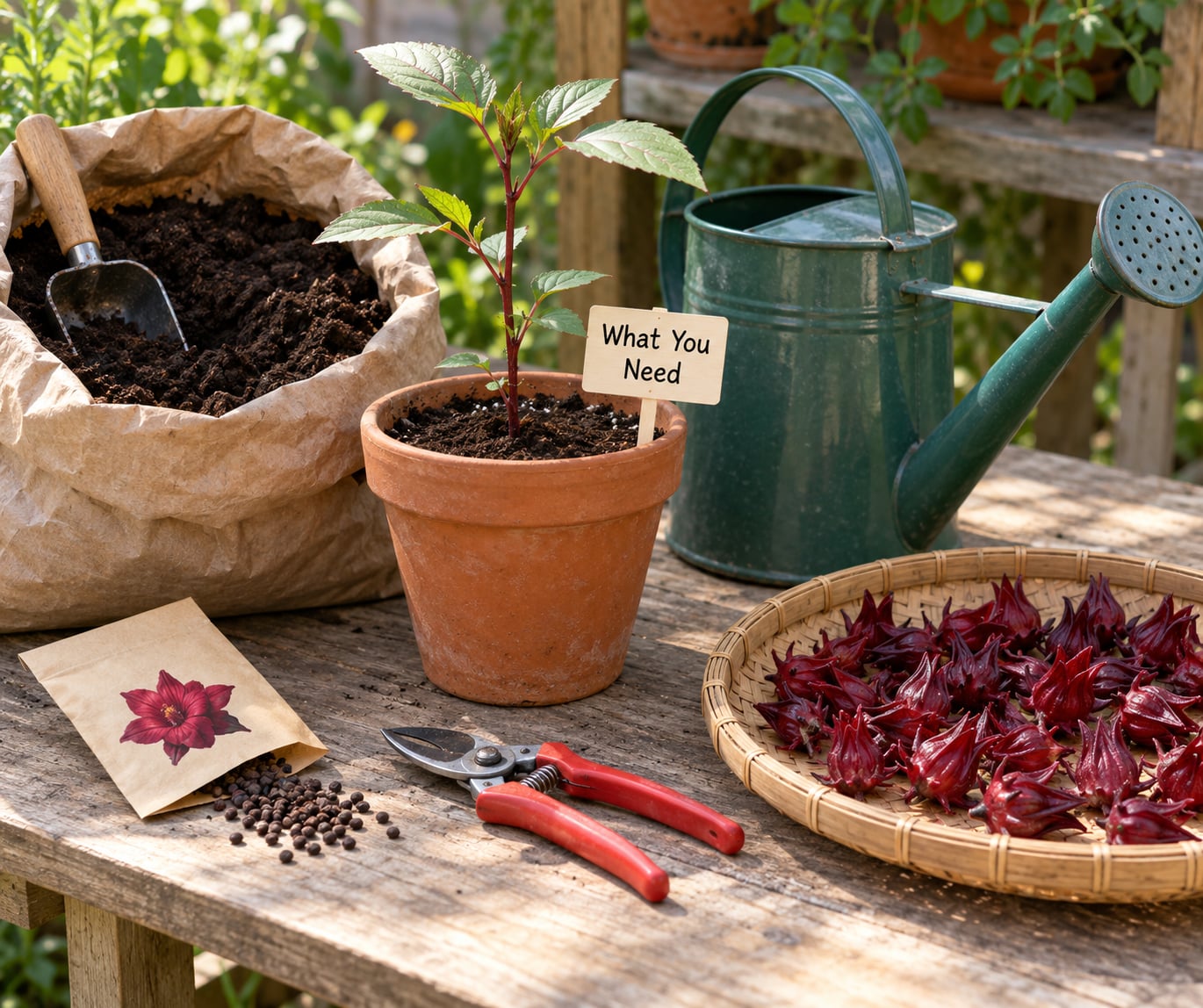
The single decision that matters most is the plant itself. Everything else on this list is replaceable; a garden centre hibiscus labelled only as tropical hibiscus will never give you a cup of tea.
- The plant. Seeds sold specifically as Hibiscus sabdariffa, or a young plant from a nursery that puts the botanical name on the label. Check the label before you buy.
- Soil. Fertile, well-draining loam with compost worked through it. Roselle sulks in heavy clay and in soggy ground more than in dry ground.
- A home. A garden bed, or a container of at least 16 inches (5 gallons) if you are short on space. It grows happily in a pot but gets root-bound and stops flowering if you leave it there for years.
- Water. A can or hose that reaches the root zone rather than just wetting the surface.
- A light hand with fertilizer. A bag of compost or a dilute organic liquid feed. This is the item most beginners over-buy and over-use, and over-feeding is the single biggest reason a healthy roselle never flowers.
- Pruning shears and a stake. Clean snips for harvest, plus something to prop a tall, top-heavy plant before it snaps in wind.
- A drying setup. A dehydrator, a mesh drying screen, or a warm dry windowsill with good airflow and a way to keep dust off.
Step-by-Step
How to Choose the Right Hibiscus Plant
Roselle is sometimes labelled simply “hibiscus” in a garden centre, and that is how plenty of people end up with a decorative shrub. The botanical name is the only reliable check. Look for Hibiscus sabdariffa on the seed packet or the plant tag, and if the label just says Hibiscus rosa-sinensis or “tropical hibiscus,” put it back.
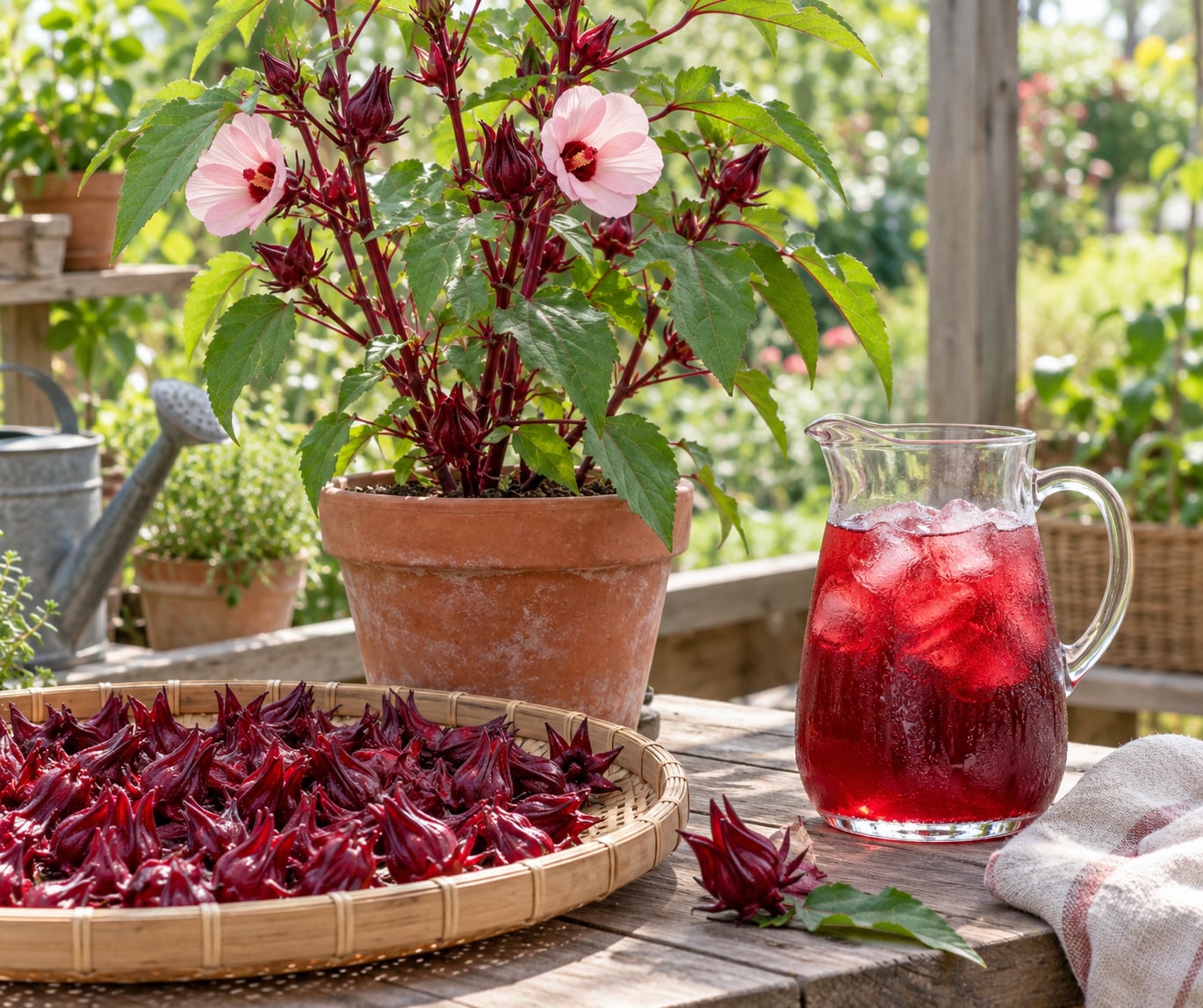
True roselle has pale pink to white flowers about 3 inches across with a deep red centre, stems that turn dark red as they mature, and lobed leaves. It is a close relative of okra and garden sorrel. An unidentified cutting from a neighbour is not worth the risk, since ornamental hibiscus species are not the tea plant and the flower of an unknown species should not go in a cup.
How to Prepare the Growing Site
Give roselle the sunniest, warmest, best-drained spot you have. Aim for six to eight hours of direct light a day, and shelter it from strong afternoon wind, which snaps the tall stems in a summer storm. It grows in most soils if you fix the two extremes: heavy clay that holds water, and sandy soil that dries out by noon.
Work a couple of inches of compost into the top of the bed before planting and aim for a pH between 6.0 and 7.0. For containers, use a pot of at least 16 inches across with drainage holes in the bottom, filled with a potting mix amended with compost. Roselle is not a fussy plant but it is a hungry one, and a container that is too small is the most common reason a potted roselle stays small all summer.
How to Plant Hibiscus for Tea
Most gardeners sow roselle indoors six to eight weeks before their last frost date, then move it outside once the soil is above 50°F and the frost risk has passed. Warm soil gets the seedlings moving faster than outdoor sowing ever will, which matters when you are counting four to six months to harvest.
Sow the seeds about half an inch deep in small pots of damp seed mix, keep them at 75 to 80°F until they germinate, and give them a light on once they are up. Seedlings should show true leaves within a week or two. A first-time grower in zone 7 or warmer can skip all of that and direct sow where the plant will stay, which also avoids the shock of transplanting a plant that resents being moved.
When you transplant, space plants 18 to 24 inches apart so air moves between them, and bury them at the same depth they grew in the pot. Water them in deeply, then mulch with two inches of straw or shredded leaves to hold moisture away from the stem. Keep them sheltered for about a week while the roots take hold.
How to Water and Feed the Plant
Roselle prefers a deep drink once a week over a little water every day. Push your finger two inches into the soil; if it still feels damp, wait. Water the soil at the base rather than the leaves, because repeated wetting from above flushes nutrients downward and leaves the plant looking pale, which growers regularly mistake for a fertilizer problem.
Feeding is where beginners go wrong. Rich soil and heavy nitrogen delay or entirely prevent flowering, and a grower on a popular gardening forum put it plainly: roselle will hold off flowering in nitrogen-rich soil, so fertilise lightly and infrequently. A light compost top-dress at the start of the season and an occasional dilute organic liquid feed is plenty. Stop feeding once buds appear.
How to Prune and Support Hibiscus
Pinch the main stem back at about 10 inches tall. That single pinch makes the plant branch, and each branch carries more flower buds, which means more calyxes from the same plant. Later, cut out any yellowing or damaged growth and take a few stems right back in mid-season to keep the shape compact and productive.
Height depends entirely on where you grow it. Expect something in the two to three foot range in cool summers and a shoulder-high plant in a long hot season, occasionally taller. Give it a stake or a short piece of chicken wire early, before the weight of the branches tips it over in a squall.
How to Harvest Hibiscus Flowers
You harvest the calyx, not the petal. As a short-day plant, roselle only starts flowering once nights run longer than roughly twelve hours of darkness, so in most climates the first calyxes appear in late summer and early autumn, not in July.
- Wait for the flower to open, fade and drop on its own. The calyx is the small red cup that remains, still attached to the stem.
- Check it ten to twenty days later. The cup should be plump, glossy and deep cranberry red, and the pale seed capsule inside still tender enough to crush with a thumbnail.
- Cut or snap the whole calyx off with a short length of stem, taking a little pedicel with it.
- Split the cup open with a knife or scissors and pop out the seed pod. Set the pods aside on a paper towel if you want to save seed for next year.
- Collect the emptied cups, spreading them in a single layer so air can move through them.
Pick every few days while the plant is producing, because roselle sets new flowers across weeks rather than all at once. You can gather about three or four flushes from a healthy plant in a good season. Leave the plant to finish if you want seed; stop picking heavily once the capsules start to turn brown and woody, because at that stage the calyx turns fibrous and the flavour flattens.
How to Dry and Store the Flowers
Drying is where most people lose a good harvest, because wet calyxes packed on a plate turn mouldy in a day or two. Give them airflow and dry them the same day you pick them.
| Method | How to do it | Time | Result |
|---|---|---|---|
| Air-dry | Single layer on a mesh screen in a warm dry room, turned daily, loosely covered with fine mesh | 3 to 7 days | Best colour and flavour, needs patience |
| Dehydrator | 95 to 115°F, calyxes not touching, rotate trays | 6 to 10 hours | Fastest and most consistent |
| Oven | Lowest setting, door cracked, checked every hour | 2 to 4 hours | Works, but scorch risk is real |
How do you know they are done? A dried calyx snaps cleanly rather than bending, looks dark brick-red rather than bright wet red, and crumbles when you crush it between your fingers. If it feels leathery or springs slightly, give it more time.
Store the finished calyxes in an airtight jar, a zip bag with the air squeezed out, or a tin, kept in a dark cupboard away from heat and light. Colour and tartness fade with both. A Facebook grower posted a first-round harvest where 1.75 kg of fresh calyxes, sundried, gave 200 g of dried, so plan on roughly nine parts fresh to one part dry, and about one tablespoon of dried material per cup of water.
Common Mistakes
The failures below come up again and again: buying an ornamental hibiscus, over-feeding with nitrogen, watering too much, picking before the calyx is ready, and drying damp material. Each one has a straightforward fix, and they are all set out in the next section.
Common Mistakes and How to Fix Them
| What you see | Likely cause | What to do |
|---|---|---|
| Plenty of leaves, no flowers | Too much nitrogen, or less than six hours of sun | Stop feeding, top-dress with compost only, and move or reflect more light if you can |
| Leaves yellowing | Watering from above, or waterlogging in a pot | Water at the base, check the holes are open, let the top inch dry between drinks |
| Flowers open but no red cup after them | Cool summer, or a plant that is not yet mature enough | Be patient, it usually sets once nights lengthen; keep feeding light |
| Calyxes stay small and pale | Shade, crowding, or a plant hit by drought | Give full sun, feed lightly, water deeply once a week |
| Seed pods will not set | Insects scarce or flowers unpollinated, common in containers and cool weather | Hand pollinate with a small brush mid-morning, moving pollen between the dark stigmas |
| Curl on new leaves, sticky residue | Aphids or whiteflies | Wash off with a firm jet of water, or treat with insecticidal soap |
| Dried calyxes mould in storage | Harvested damp, or packed while warm | Dry longer, cool completely before sealing, and store in smaller batches |
| Stage | Zones 7 and 8 | Zones 9 to 11 |
|---|---|---|
| Sow indoors | 6 to 8 weeks before last frost | January to March |
| Transplant out | After last frost, soil above 50°F | March to April |
| Pinch at 10 inches | Early summer | Within a month of planting |
| First flowers | August to September | June to July |
| Main calyx harvest | September to first frost | July to October |
| Save seed | Before first frost kills the plant | Late autumn |
What Part of the Plant Do You Actually Use for Tea?
The fleshy red calyx. It is the cup-shaped cluster of sepals left behind after each flower fades, and it is the only part you brew. Split the cup, remove the pale seed capsule inside, and dry the rest. The petals are edible too in the sense that they are not toxic, but they are not what gives roselle its colour and its cranberry-like tartness. The dark red pigment comes from the calyx tissue itself.
For a side-by-side check of the two plants, here is how the tea species differs from the ornamental one.
| Feature | Roselle (Hibiscus sabdariffa) | Ornamental hibiscus |
|---|---|---|
| Botanical name on label | Hibiscus sabdariffa | Hibiscus rosa-sinensis or hybrid |
| Flowers | Pale pink to white, about 3 inches, dark red centre | Large, often red, yellow or multicoloured |
| Stems | Deep red as they mature | Usually green |
| Red cup after flowering | Yes, this is the harvest | No |
| Teas well | Yes | No |
How to Brew It Once You Have Dried Calyxes
A cup is one tablespoon of dried calyx in about 12 ounces of just-boiled water. Steep five to ten minutes and strain. Longer gives a sharper, more astringent cup, which is how most West African bissap is served, usually with sugar, while Caribbean agua de Jamaica is commonly steeped longer and chilled over ice.
| Method | Amount per 12 oz | Steep time | Note |
|---|---|---|---|
| Hot, dried calyx | 1 tablespoon | 5 to 10 minutes | The everyday method |
| Hot, fresh calyx | 4 to 5 whole cups | 5 minutes | Sweeter and less deep in colour |
| Cold brew | 2 tablespoons in a jar | 6 to 8 hours, refrigerated | Smoothest, lowest astringency |
| Concentrate | 1 cup of strong brew | Simmer to half | Sips over ice for a week, refrigerated |
Roselle is a documented part of household food and drink across West Africa and the Caribbean, where the dried calyx goes into sweet cold drinks and infusions under names such as bissap, zobo and agua de Jamaica. If you want the traditional version, sweet the hot infusion and let it cool, rather than brewing it black and unsweetened.
Is Hibiscus Tea Safe to Drink Every Day?
This is general information, not medical advice. Roselle calyx is a food ingredient in much of the world, but people drink it in very large amounts, and regular strong daily use is a different question from an occasional glass.
Two of the most searched questions on this topic are worth answering directly. People report feeling lightheaded, dizzy or unsteady after drinking hibiscus tea, and the most commonly cited reason in mainstream health guidance is its effect on blood pressure, which can drop noticeably. Check with a doctor or pharmacist before drinking it daily if you take blood pressure medication, have low blood pressure, are pregnant or breastfeeding, have a liver condition or a history of liver problems, or are taking anything that affects clotting. A mild tea a few times a week is a different proposition from a strong glass every morning.
Frequently Asked Questions
What part of the hibiscus do you use for tea?
You use the fleshy red calyx, the cup-shaped structure that stays attached to the stem after the flower fades. It is not the petal. Split each calyx, pop out the pale seed capsule inside, then dry the emptied cup. That red tissue is what gives roselle its colour and its tart, cranberry-like flavour.
How long does it take for roselle to grow and produce calyxes?
Plan on four to six months from sowing to your first usable calyxes. Seedlings started indoors six to eight weeks before your last frost get a head start, then flowering waits for nights longer than about twelve hours of darkness, which usually lands in late summer or early autumn in most climates.
Will roselle come back every year?
In USDA zones 10 and 11 roselle is a perennial and returns from the same roots. Everywhere colder it behaves as an annual, dying back after frost and needing to be replanted. Save seed from your dried capsules and you will skip the sowing step next season and get plants that suit your own site.
When should I harvest roselle calyxes?
Wait until the flower has opened, faded and dropped on its own, then check the red cup ten to twenty days later. It is ready when it is plump and deep cranberry red and the seed capsule inside is still tender enough to crush. If the capsule has turned brown and woody, the calyx has gone fibrous and the flavour has faded.
Can I dry roselle calyxes without a dehydrator?
Yes, and it usually gives a better result than a dehydrator. Spread the calyxes in a single layer on a mesh screen in a warm, dry, well-ventilated room, cover loosely against dust and turn them daily for three to seven days. They are finished when they snap cleanly and crumble rather than bend.
Why is my roselle making leaves but no flowers?
The usual cause is too much nitrogen, which pushes leafy growth at the expense of flowers, or too little sun, since roselle wants six to eight hours of direct light. Stop feeding entirely, top-dress with compost rather than fertilizer, and move the plant or add reflected light. In a short cool summer, simply wait for longer nights.
Conclusion
Start by getting the plant right. Buy seed or a plant labelled Hibiscus sabdariffa, and if the label says only “hibiscus,” ask before you pay. Give it the sunniest, best-drained spot you have, with compost in the soil and no fertilizer beyond that once you spot buds.
Water deeply about once a week rather than little and often, pinch it at ten inches for extra branches, and wait for the nights to lengthen. When the petals drop and the red cup behind them plumps up and turns cranberry red, cut it, split it, remove the seed pod and dry the rest the same day in a single layer with air moving through it.
That is the whole craft: right plant, full sun, drainage, restraint with feeding, and a harvest picked at the right moment. Everything else is detail.