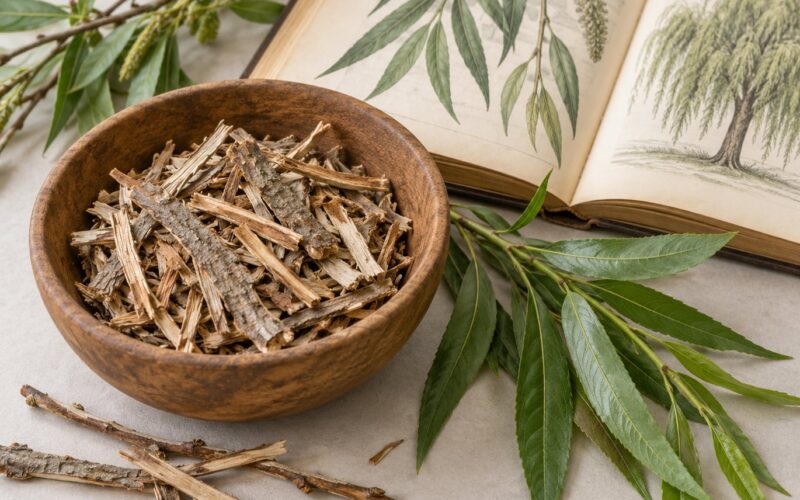
Bioprospecting is the systematic search of nature for genetic material and biological compounds that could become medicines, farm inputs, cosmetics or industrial products. It matters because many useful substances come from plants, fungi, bacteria and marine organisms rather than from a laboratory shelf. The practice is controversial because much of the material and knowledge behind those discoveries was taken without consent, credit or payment to the people and countries it came from.
That tension sits under every bioprospecting project. This guide walks through what the practice involves, how a wild sample turns into a product, and the arguments that have made it one of the most fought-over corners of science policy.
Table of Contents
- 1What Is Bioprospecting?
- 2What sources get searched?
- 3How Does the Bioprospecting Process Work?
- 4Why Is Bioprospecting Important?
- 5Why Is Bioprospecting Controversial?
- 6Six reasons bioprospecting is controversial
- 7The cases that made the argument concrete
- 8The African and Indigenous perspective
- 9The new frontier: data
- 10Traditional Knowledge and Bioprospecting
- 11How Can Bioprospecting Be Made More Fair?
- 12What benefit sharing looks like in practice
- 13What the Nagoya Protocol does not cover
- 14Bioprospecting vs. Drug Discovery
- 15Frequently Asked Questions
- 16What is bioprospecting in simple terms?
- 17What is bioprospecting and biopiracy?
- 18What are the ethical concerns of biopiracy?
- 19Can you give me some examples of bioprospecting?
- 20What is the purpose of the Nagoya Protocol on Access and Benefit-sharing?
- 21Is bioprospecting illegal?
- 22Conclusion: Start with Respect Before Discovery
What Is Bioprospecting?
Bioprospecting is the search for useful biological materials. A team collects plant material, soil, marine organisms or microbial cultures, screens them for biological activity, and works out which compound or gene is responsible. The aim is something practical: a drug lead, an enzyme for industry, a natural colorant, a biopesticide.
It is not the same as a biodiversity survey, which counts and identifies species to map where they live. It is also not drug discovery, which takes a specific lead through chemistry, safety testing and clinical trials. Bioprospecting is the broad, open-ended search at the start of that chain.
What sources get searched?
- Plants. Sweet wormwood (Artemisia annua) gave us artemisinin, plant-derived quinine from the Cinchona bark produced malaria medicines, and Hoodia gordonii was collected in the Kalahari for an appetite-related compound.
- Microbes. Soil samples from a New Jersey backyard yielded Streptomyces griseus, the source of streptomycin, and most antibiotics in clinical use came from soil actinomycetes.
- Marine and polar organisms. Sponges, corals and cold-water microbes produce unusual molecules that rarely occur on land.
- Traditional knowledge. Long before any assay existed, communities knew which plants treated fevers, wounds or infections. Those records narrow the search enormously.
One classic example is metformin. The compound descends from goat’s rue (Galega officinalis), a plant used in European folk medicine, and metformin became one of the world’s most prescribed diabetes drugs. That is bioprospecting, with no consent process attached.
How Does the Bioprospecting Process Work?
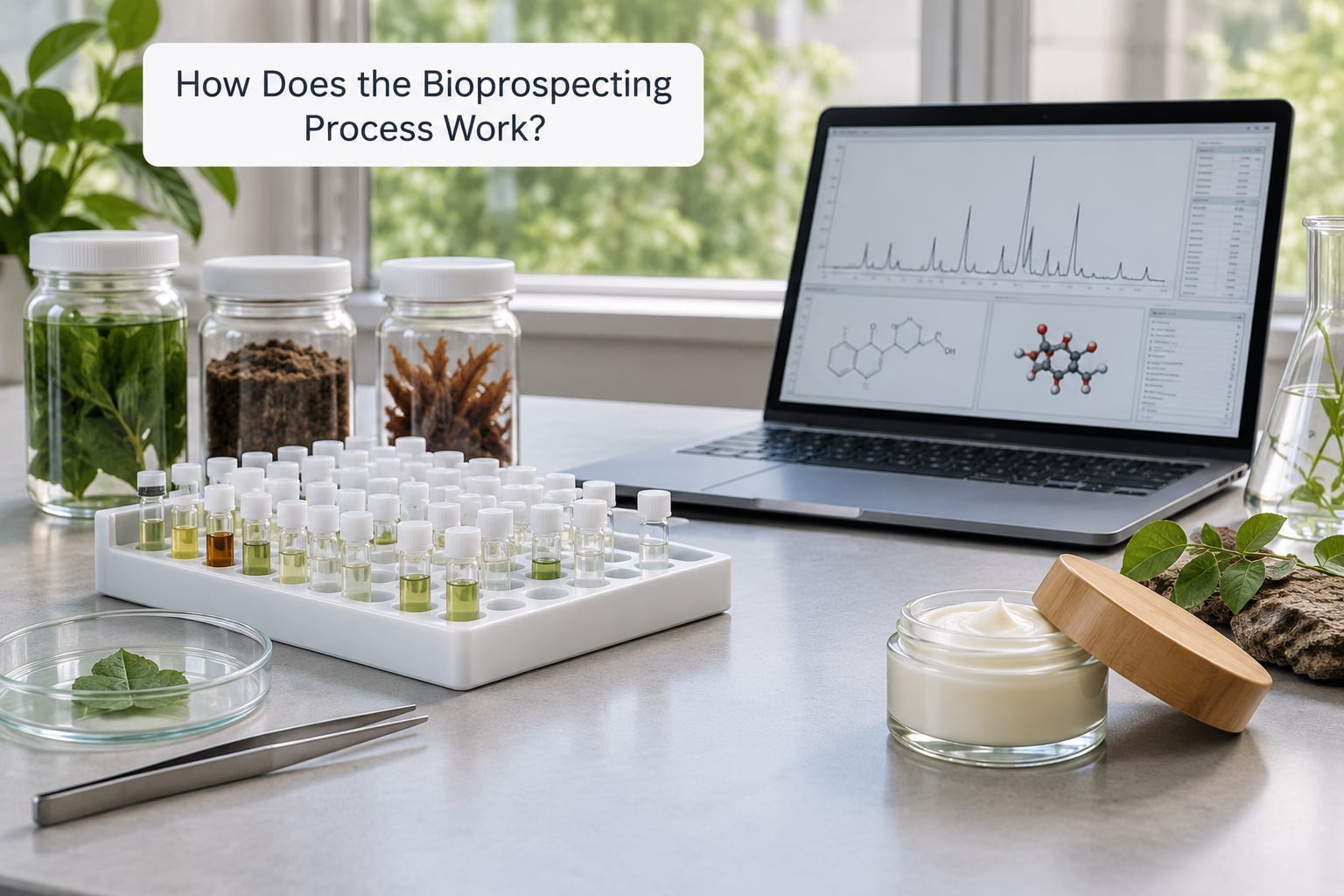
The route from a wild plant to a commercial product runs through several stages, and each one can fail. Most samples never get past the third step.
- Collecting material. Researchers gather plant, microbial or marine samples in the field, often under a permit. Some collections happen in communities’ own forests and fields.
- Documenting the sample. Each collection gets a voucher specimen deposited in a recognised herbarium, so the species can be identified again years later.
- Extracting and screening. Extracts are tested against targets such as bacteria, tumour cell lines or enzymes. Thousands of samples are tested to find a handful of hits.
- Isolating the compound. Chemists separate the mixture and work out which molecule drives the activity. Repeated testing has to rule out interference from other compounds.
- Checking novelty. A database and literature search asks whether the molecule is already known. This is called dereplication, and skipping it wastes years of work.
- Testing safety and efficacy. Toxicology, formulation and clinical work follow. A screen hit is not a treatment.
- Developing and sharing. If a product results, the terms agreed at the point of access decide who receives royalties, funding or training.
Note where consent fits in that list. Legally, it belongs at step one, before anything is collected.
Why Is Bioprospecting Important?
Nature is a chemical library that no chemist has finished reading. Natural products tend to be structurally more varied than laboratory-made molecules, which matters in areas where synthetic design has plateaued. Many current drugs, from cancer agents to antibiotics, began with a soil sample or a plant.
The applications run wider than medicine. Farmers use biopesticides derived from plants; food makers pay for natural colors and flavors; cosmetics use plant extracts; industries use enzymes for everything from laundry to biofuels. Microbial surveys also surface basic science, since extremophiles living in hot springs or deep water reveal how life functions at extremes.
Ethnobotanical screening adds a shortcut. Knowledge of which plant is used for which ailment means a researcher tests 20 informed candidates instead of 2000 random ones. That is a real efficiency gain, and it is the reason ethnobotanists argue for the practice rather than against it.
The caution matters too: discovery is not a product. For every artemisinin there are thousands of hits that fail on toxicity, solubility, dosing or cost.
Why Is Bioprospecting Controversial?
The disagreement is not about whether collecting and studying organisms is useful. It is about who decided, who was asked, and who ended up with the value.
Six reasons bioprospecting is controversial
- No meaningful consent. Material was collected decades ago, by researchers, from land governed by communities that had no say and no mechanism to refuse.
- Traditional knowledge treated as a free input. A healer explains which plant treats a symptom, and that information feeds a patent and a product without credit.
- Unequal bargaining power. A corporation negotiating with a village has lawyers, labs and a deadline on its side. Communities often have limited legal capacity and one season’s income at stake.
- Patents that look like ownership of life. Patent law rewards an isolated, purified or modified molecule. A community’s stewardship of the whole plant may count for nothing in that test.
- Overharvesting. Popular species can be stripped from the wild, damaging the ecology and the incomes of the people who depend on it.
- An extractive pattern. Critics describe a repeating structure: raw material leaves one place, value returns elsewhere, and little stays behind.
The cases that made the argument concrete
| Case | Year | Who involved | Outcome |
|---|---|---|---|
| Rosy periwinkle (Catharanthus roseus) alkaloids | 1950s-1960s | Jamaican and US researchers, Eli Lilly | Anti-cancer vinblastine and vincristine approved; no benefit-sharing with the source country |
| Neem seed biopesticide patent | 1990s | Indian farmers’ groups against a European patent holder | Patent challenged as prior art and overturned; India cited its centuries of documented neem use |
| Turmeric wound-healing patent | 1995 | US patent office versus India’s Council of Scientific and Industrial Research | Patent revoked in 1997 after Indian prior art was presented |
| Hoodia gordonii and the San | 2003 | San communities of the Kalahari and a weight-loss product developer | First widely reported San-Hoodia Benefit-Sharing Agreement; royalties reported at roughly 6-8%, later renegotiated downward |
| Enola bean | 2001 | US Department of Agriculture against Mexican farmers | USDA patent for the yellow bean was contested on origin grounds and later withdrawn |
| Maya ICBG project | 1997-2001 | US research consortium and Maya communities in Guatemala | Compounds turned out to be already known; widely cited as a case of badly spent money and consultation |
| Basmati rice (RiceTec) | 2011 | Indian government against a US corporation | Patent review board cancelled the main claims in 2014 |
The African and Indigenous perspective
Much of the debate makes sense from a place the reader rarely hears from. Communities whose forests host the collection see a trained group arrive, take samples, and leave with specimens that later appear in patents filed elsewhere. The plant returns to their land; the product does not.
For herbal practitioners and ethnobotanists, the line between legitimate bioprospecting and appropriation often comes down to credit and timing. Was anyone asked before the sample was taken? Did the community decide what happened to its own knowledge? Credit is not decoration here, it is the signal that tells a community it was treated as a partner.
The new frontier: data
Sequencing a sample produces a digital record, and that record can be studied from anywhere without ever moving material again. Governments have argued that a sequence file should count as a genetic resource subject to the same access rules as a physical sample. Treatment of so-called digital sequence information remains contested at CBD meetings, and dedicated funding mechanisms have only begun to be set up.
Traditional Knowledge and Bioprospecting
Traditional knowledge is knowledge held by a community about plants, animals, healing practices and the local environment, usually recorded orally for generations. In bioprospecting it functions as a search strategy: it tells researchers which organism is likely to contain something worth isolating.
That contribution is rarely on the label. The patent names the purified molecule, and the person who recognised the plant in a market a century earlier appears nowhere. This is where a second gap opens, because the legal frameworks that govern access to material were not designed to govern access to information.
India’s Traditional Knowledge Digital Library is the clearest response. It publishes existing documented uses of medicinal plants as searchable material that patent offices can consult, giving examiners prior art to reject claims that simply repackage traditional practice. Some Western universities have published similar defensive material. The approach works best as one step, since a patent can be granted, challenged and overturned years later.
How Can Bioprospecting Be Made More Fair?
The legal framework has moved considerably since the 1990s, when access to genetic resources was treated as a free transaction.
The Convention on Biological Diversity, agreed in 1992 and in force from 29 December 1993, sets out three objectives: conserving biological diversity, using its components sustainably, and sharing benefits arising from genetic resources equitably. That third objective is the hinge on which the whole controversy turns.
The Nagoya Protocol, adopted in 2010 and in force since 12 October 2014, added the operational machinery. Under it, anyone who wants to access genetic resources or associated traditional knowledge needs prior informed consent, then a set of mutually agreed terms recorded in writing.
- Prior informed consent. The people who hold rights to the resource are told, in their own language, what the material will be used for, and they can say no. Consent from one individual is not consent from a community.
- Mutually agreed terms. Both sides sign a written agreement covering research, development and use. Companies must be honest about intended use, and check in again if that use changes.
- The ABS Clearing-House. Run under the CBD, this is where signatory countries publish their rules and checkpoints, so a researcher in one country can see what authorisation is required in another.
- Certificates of compliance. Internationally recognised certificates let authorities track whether a party actually obtained permission, which makes enforcement possible instead of theoretical.
What benefit sharing looks like in practice
Monetary benefits include upfront payments, annual fees, milestone payments when a compound reaches a defined stage, and royalties on sales. Non-monetary benefits include training, equipment, research funding, conservation support and paid positions. The San-Hoodia agreement became a reference point because it combined a share of revenue with community funding, though the early percentage was small by any measure and later renegotiated.
What the Nagoya Protocol does not cover
The gap between the law and the practice is wider than it looks. Human genetic resources are handled under separate rules agreed at later CBD meetings. Areas beyond national jurisdiction, including the high seas, have no country with the authority to grant consent in the first place. Material obtained before the convention and the protocol took effect often falls outside the regime, depending on national law.
Codes of conduct from professional bodies such as CETAF, GGBN and IPEN add practical detail, but none of this removes the hardest question, which is what happens when a community that is not organised as a legal counterparty is asked to negotiate with an organisation that is.
Bioprospecting vs. Drug Discovery
The two are often confused, and the confusion inflates both the promise and the panic.
Bioprospecting is the search itself: collecting, documenting and screening material to find something with activity. Drug discovery starts later, at the point where a candidate has to be purified, tested in cells and animals, formulated, and put through human trials. One wide funnel with a high failure rate; one narrow, expensive pipeline with its own failure rate.
Most of what bioprospecting screens never becomes a drug, and plenty of drug candidates are found in other ways, including screening large synthetic libraries and designing molecules from structure. The traditional plant route also carries manufacturing problems. Many organisms grow slowly, produce low yields, or need a complex molecule that is hard to make at scale. That is why some of the most interesting leads have never reached a patient.
Understanding the difference keeps both claims honest: bioprospecting is a real source of medical leads, and a single plant screened is not a medicine in waiting.
Frequently Asked Questions
What is bioprospecting in simple terms?
Bioprospecting is the systematic search of plants, fungi, bacteria, marine and polar organisms for genetic material or compounds that could become useful products. Researchers collect samples, screen them for biological activity, isolate whatever is responsible and test it. The work may end there, or it may lead to a drug, biopesticide, cosmetic ingredient or industrial enzyme.
What is bioprospecting and biopiracy?
Bioprospecting is the search for useful biological material. Biopiracy is that same search carried out without permission, credit or benefit for the country and community providing the material or the knowledge. The word was popularised by Pat Mooney in the 1990s to describe cases where commercial gain came from resources obtained without proper consent. The difference is consent, credit and shared benefit, not the science itself.
What are the ethical concerns of biopiracy?
The main concerns are that material was taken without meaningful consent, that traditional knowledge was used without credit or payment, that communities faced weak bargaining power in negotiations, and that patents can appear to grant ownership over living things. Critics also point to overharvesting of valued species and to a pattern where raw material leaves one country and value returns to another. These are the arguments that produced the Nagoya Protocol.
Can you give me some examples of bioprospecting?
Artemisinin came from sweet wormwood and became the basis of artemisinin-based malaria treatment. Streptomycin came from the soil bacterium Streptomyces griseus. Vinblastine and vincristine came from the rosy periwinkle, Catharanthus roseus, and are used in cancer care. Metformin descends from goat’s rue, Galega officinalis. Quinine comes from Cinchona bark. Hoodia gordonii was collected in the Kalahari for a compound studied in appetite research.
What is the purpose of the Nagoya Protocol on Access and Benefit-sharing?
The Nagoya Protocol sets a legal framework for accessing genetic resources and associated traditional knowledge. It requires prior informed consent and a written set of mutually agreed terms before access happens. It obliges parties to share benefits fairly, whether money, technology or training. Adopted in 2010, it has been in force since 12 October 2014, with rules registered in the ABS Clearing-House.
Is bioprospecting illegal?
No. Bioprospecting itself is lawful in most jurisdictions, including the United States, and drives research into medicines, agriculture and industry. What changed is the conditions attached to it: where the CBD and its protocols apply, collecting material or using associated traditional knowledge needs prior informed consent and a benefit-sharing agreement. Practically, an institution can still fund the science, but skipping the paperwork now carries compliance and reputational risk.
Conclusion: Start with Respect Before Discovery
Bioprospecting is neither a scandal nor a clean activity. It produces real medical and scientific value, and it has also been done in ways that treated communities as scenery. Both halves are true, and the interesting work is in between.
When you read about a bioprospecting project, four questions tell you most of what you need to know. Who agreed to the collection, and did that agreement come before the samples left? Who receives benefit, and in what form? How is the community’s own knowledge protected and credited? Is the resource being collected sustainably, or is it being stripped from the wild? A project with clear answers to those four is doing the work properly. A project that avoids them is telling you something.