Roughly a quarter of modern medicines trace their origins to plants or other natural products, and many of the best-known drugs in use today started as a bark, a root or a leaf in someone else’s hands. The plants that led to modern medicines are not folklore dressed up as chemistry. They are the documented source of aspirin, morphine, quinine, digoxin, artemisinin and a long list of cancer drugs that were isolated, purified and standardised in laboratories.
What follows separates the four different ways a plant connects to a modern drug, walks through nine landmark cases with dates and compounds, and gives African examples the treatment most plant lists skip. It also explains why the plant being natural tells you nothing about whether a preparation is safe.
Table of Contents
- 1Plants That Led to Modern Medicines at a Glance
- 2How Plants That Led to Modern Medicines Became Medicines
- 3How plants that led to modern medicines are evaluated today
- 4The Landmark Plant Discoveries Behind Modern Medicines
- 5Willow and aspirin: a semi-synthetic drug, not a bark
- 6Opium poppy and the first pure analgesic
- 7Cinchona bark and quinine
- 8Foxglove and digoxin
- 9Sweet wormwood and artemisinin
- 10Calabar bean, yew, periwinkle and autumn crocus
- 11Coca, turmeric and the plant that is not a plant
- 12African Contributions to the History of Plant-Based Medicine
- 13Documented evidence versus disputed origin stories
- 14What Counts When a Plant Inspired a Modern Medicine?
- 15Why These Stories Still Matter for Drug Discovery
- 16Safety: Why a Historic Plant Use Is Not Medical Advice
- 17Frequently Asked Questions
- 18Which plants led directly to modern medicines?
- 19What is the most famous plant that led to a modern medicine?
- 20Did African traditional medicine contribute to modern drugs?
- 21Does traditional use prove that a medicinal plant is safe?
- 22Are medicines made from plants better than synthetic medicines?
- 23Conclusion
Plants That Led to Modern Medicines at a Glance
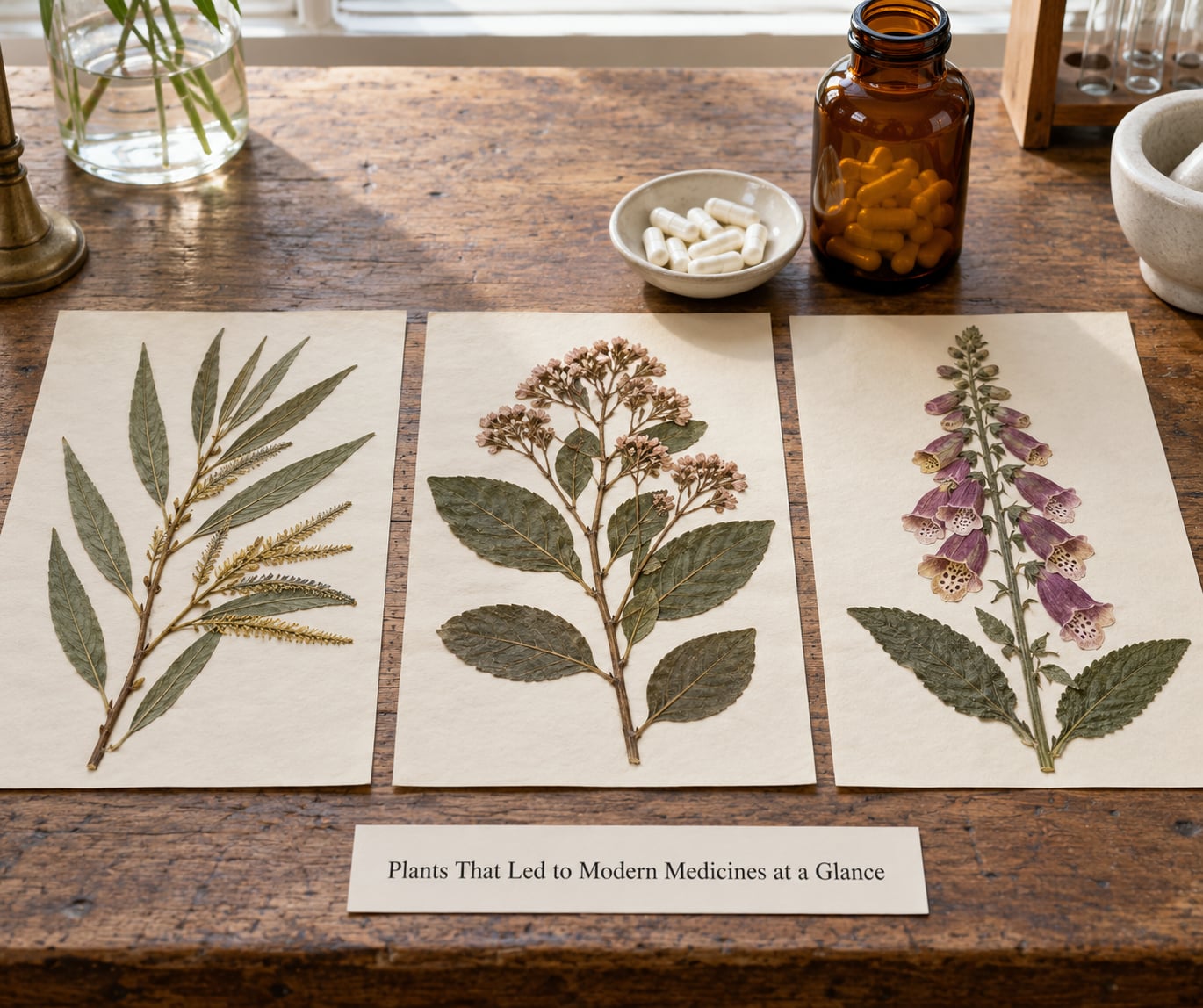
The table below lists fifteen plants and plant products that genuinely shaped modern pharmacology. Influence takes four forms here: a healer observed a use and scientists followed it, an active compound was isolated and kept, researchers reshaped a natural chemical into a drug, or the plant still supplies the starting material or comparison standard.
| Plant or product | Botanical name | Historical source | Modern medical connection | Role today | Safety context |
|---|---|---|---|---|---|
| White willow bark | Salix alba | Greek, Roman and Indigenous North American use for pain and fever | Salicin was isolated and converted to salicylic acid, then acetylated to give aspirin | Reference point for how a plant remedy becomes a semi-synthetic drug | Bark and aspirin are not interchangeable; gut irritation and bleeding risk differ |
| Opium poppy | Papaver somniferum | Ancient use across Eurasia for pain, sleep and cough | Isolation of morphine, codeine and thebaine in the early nineteenth century | Source of the first pure analgesic and of opiate medicines | Dependence, overdose and respiratory depression are the core risks |
| Cinchona bark | Cinchona species | Andean practice for fever, spread through European colonial trade | Quinine isolated from bark, standardised for malaria treatment | Still used, and the reason synthetic antimalarials were developed | Quinine can cause cinchonism, low blood sugar and cardiac effects at high doses |
| Foxglove | Digitalis purpurea and D. lanata | Welsh and English country use for dropsy, documented in folk medicine for centuries | Cardiac glycosides digitoxin, digoxin and digitoxin isolated and dosed precisely | Standard treatment for heart failure and rate control | Narrow therapeutic window; toxicity can be life-threatening |
| Sweet wormwood | Artemisia annua | Chinese records from the fourth century, and African use of African wormwood | Artemisinin isolated by Tu Youyou’s team in the early 1970s; Nobel Prize 2015 | Core of artemisinin-based combination therapy for malaria | Resistance has emerged in South-East Asia; dosing quality matters |
| Calabar bean | Physostigma venenosum | Efik and Igbo traditional use in West Africa, used as an ordeal poison | Physostigmine isolated in 1864, now used to reverse certain anticholinergic effects | Narrow clinical niche as an antidote | Highly toxic; the raw bean has killed people |
| Pacific yew | Taxus brevifolia | Northwest Coast Indigenous use, then almost no pharmaceutical interest | Paclitaxel isolated in the late 1960s; semi-synthesis from a precursor made supply viable | Chemotherapy for breast, ovarian and lung cancers | Neuropathy, low blood counts and taxane hypersensitivity |
| Rosy periwinkle | Catharanthus roseus | Malagasy and Indian folk use for diabetes and skin conditions | Vinblastine and vincristine isolated, turning childhood leukaemia and Hodgkin lymphoma treatable | Oncology protocols worldwide | Bone marrow suppression and neuropathy; dosing is narrow |
| Autumn crocus | Colchicum autumnale | Autumnal meadow saffron used historically for joint swelling and gout in Europe | Colchicine isolated and standardised for gout and inflammatory conditions | Long-standing gout medicine | Poisonous in the wrong dose; severe gastrointestinal and cardiac toxicity |
| Coca leaf | Erythroxylum coca and E. gracum | Indigenous Andean and Amazonian use as a stimulant | Cocaine isolated, plus a long-running pharmaceutical search for safer local anaesthetics | Clinical use is narrow; addiction history dominates public discussion | High dependence and cardiovascular risk |
| Turmeric | Curcuma longa | Ayurveda, Siddha and South Asian food and medicine practice | Curcumin isolated and studied; it informed research into anti-inflammatory agents rather than becoming a mainstream drug | Promising research lead, not an established medicine | Absorption is poor; can interfere with blood-thinning medicines |
| Snake root | Rauwolfia serpentina | Indian and African use for restlessness, insomnia and high blood pressure | Reserpine isolated in the 1950s and used worldwide for hypertension | Reference case for a plant-to-drug line and a lesson in side-effect limits | Drowsiness, depression and a narrow safety margin |
| Aloe | Aloe vera and other Aloe species | Documented African, Arabian and Indian use for skin, burns and constipation | Anthraquinone compounds standardised as laxatives; latex preparations regulated separately | Common in topical preparations worldwide | Laxative anthraquinones can cause dependence and bowel problems |
| Kanna | Sceletium tortuosum | San and Khoikhoi use in the Kalahari for thirst, hunger and altered states | Alkaloid mesembrine studied and standardised in commercial extracts; trials for anxiety and depression | Case study in the debate over benefit sharing for indigenous knowledge | Reports of nausea, dry mouth and interactions with psychiatric medicines |
| Hoodia | Hoodia gordonii | San hunters historically used it to suppress hunger on long treks | An appetite-suppressant compound was patented in the 1990s, then withdrawn from the market | Best-known biopiracy dispute, and a reminder that a patent is not a treatment | Historic use does not make a commercial appetite suppressant safe or effective |
How Plants That Led to Modern Medicines Became Medicines
The pathway from healer to pharmacy has a recognisable shape, and it has six main steps. Almost every plant that led to a modern medicine travelled some version of the same route.
- Observation and record. Someone noticed that a preparation did something. Traditional healers, apothecaries and midwives had been making these observations for a very long time, usually without writing anything down.
- Authentication. A botanist or pharmacist identifies the actual species. This step catches a surprising number of errors, because common names travel between unrelated plants.
- Extraction. The plant material is prepared in repeatable ways: decoction, tincture, maceration, or extraction into organic solvents.
- Bioassay. The extract is tested on cells, enzymes or animals to find out whether the observed effect is real and how strong it is.
- Isolation and modification. Chemists separate the mixture until one compound carries the activity, then sometimes reshape the molecule to improve potency, stability or safety.
- Standardisation and trials. The compound is purified to a fixed specification and tested in humans through staged clinical trials before approval.
How plants that led to modern medicines are evaluated today
Modern evaluation adds three things that traditional use could not supply. Analytical chemistry confirms the compound’s structure and its purity, which is what makes a fixed dose possible. Controlled trials show whether the effect is real by comparison with a placebo or standard treatment. And pharmacovigilance keeps watching after approval for harms that only show up in millions of patients.
That last point matters more than people expect. Rosy periwinkle became a chemotherapy drug because laboratory work showed activity, not because folk use for diabetes implied anything about cancer. Reading tradition as a hypothesis is sensible. Reading it as proof is not.
The Landmark Plant Discoveries Behind Modern Medicines
Willow and aspirin: a semi-synthetic drug, not a bark
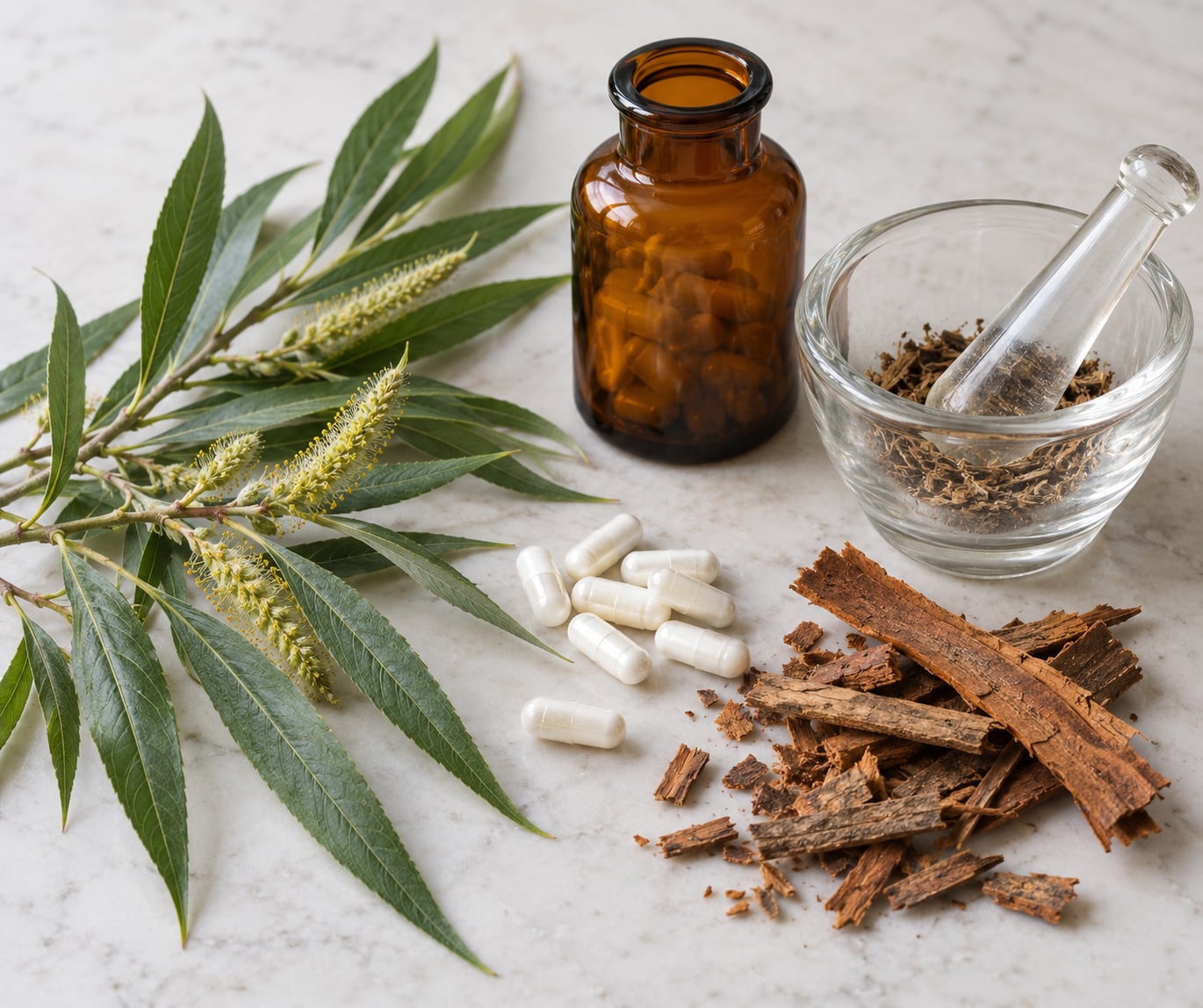
Willow bark for pain and fever is one of the oldest documented remedies in European and North American practice. In the nineteenth century chemists isolated salicin from the bark, converted it to salicylic acid, and later made aspirin by adding an acetyl group. Aspirin is therefore semi-synthetic: the plant supplied the starting skeleton, not the final molecule.
The distinction is not pedantry. Willow bark is a variable mixture of salicins, tannins and resins, so no two doses are alike, and the whole bark is far harsher on the stomach than a measured tablet. The forum favourite objection, that willow bark does not contain aspirin, is correct and worth stating plainly.
Opium poppy and the first pure analgesic
Around 1804, German chemist Friedrich Sertürner isolated morphine from opium and named it after Morpheus. It was the first drug purified to a single active compound, and it changed what surgery and childbirth looked like. Codeine and thebaine came from the same plant, and thebaine still feeds semi-synthetic families of medicines.
Cinchona bark and quinine
Andean peoples used cinchona bark for fevers, and European powers moved large quantities of it through colonial trade routes. Quinine was isolated in the nineteenth century and became the first reliable treatment for malaria, buying colonial armies time while also cementing extractive control over one tree.
Foxglove and digoxin
Country doctors in Wales and England used foxglove leaves for dropsy, a swelling condition now understood as heart failure. Cardiac glycosides were isolated from Digitalis purpurea and, later, D. lanata, which yields compounds better suited to precise dosing. The therapeutic window is narrow, which is exactly why the standardised tablet replaced the poultice.
Sweet wormwood and artemisinin
Chinese texts record qinghao for intermittent fevers from the fourth century. In the late 1960s and early 1970s a Chinese research team screened thousands of traditional remedies and settled on Artemisia annua, isolating artemisinin in 1972. Tu Youyou shared the Nobel Prize in Physiology or Medicine in 2015. Later work found that derivatives of the plant, combined with other antimalarials, shortened treatment and cut transmission.
Artemisia annua also grew in Africa long before it reached Chinese pharmacies, where local names such as sickle-leaf refer to its shape. African growers now cultivate it for artemisinin extraction.
Calabar bean, yew, periwinkle and autumn crocus
Physostigma venenosum, used as an ordeal poison by communities in present-day Nigeria, gave chemists physostigmine, an antidote now rarely used but still taught. Pacific yew bark was toxic to gather and yielded too little paclitaxel to treat patients; isolating a simpler precursor and semi-synthesising from it is what made the drug usable.
Rosy periwinkle is the clearest example of a folk plant becoming an oncology standard. Vinblastine and vincristine, isolated from Catharanthus roseus in the 1950s and 1960s, changed the outlook for children with leukaemia. Autumn crocus supplied colchicine, isolated in the nineteenth century and now a standard gout medicine.
Coca, turmeric and the plant that is not a plant
Cocaine from Erythroxylum coca isolated a local anaesthetic that also helped researchers understand how nerve signals are blocked, even as the drug’s social history caused lasting harm. Turmeric’s curcumin has driven decades of research without becoming a mainstream drug, largely because it is poorly absorbed; it stays an example of a promising lead rather than a finished medicine.
Two routine corrections belong here. Penicillin comes from the mould Penicillium chrysogenum, not a plant. Hirudin, an anticoagulant, is taken from leech salivary glands. Neither is a plant, and both appear on plant lists anyway.
African Contributions to the History of Plant-Based Medicine
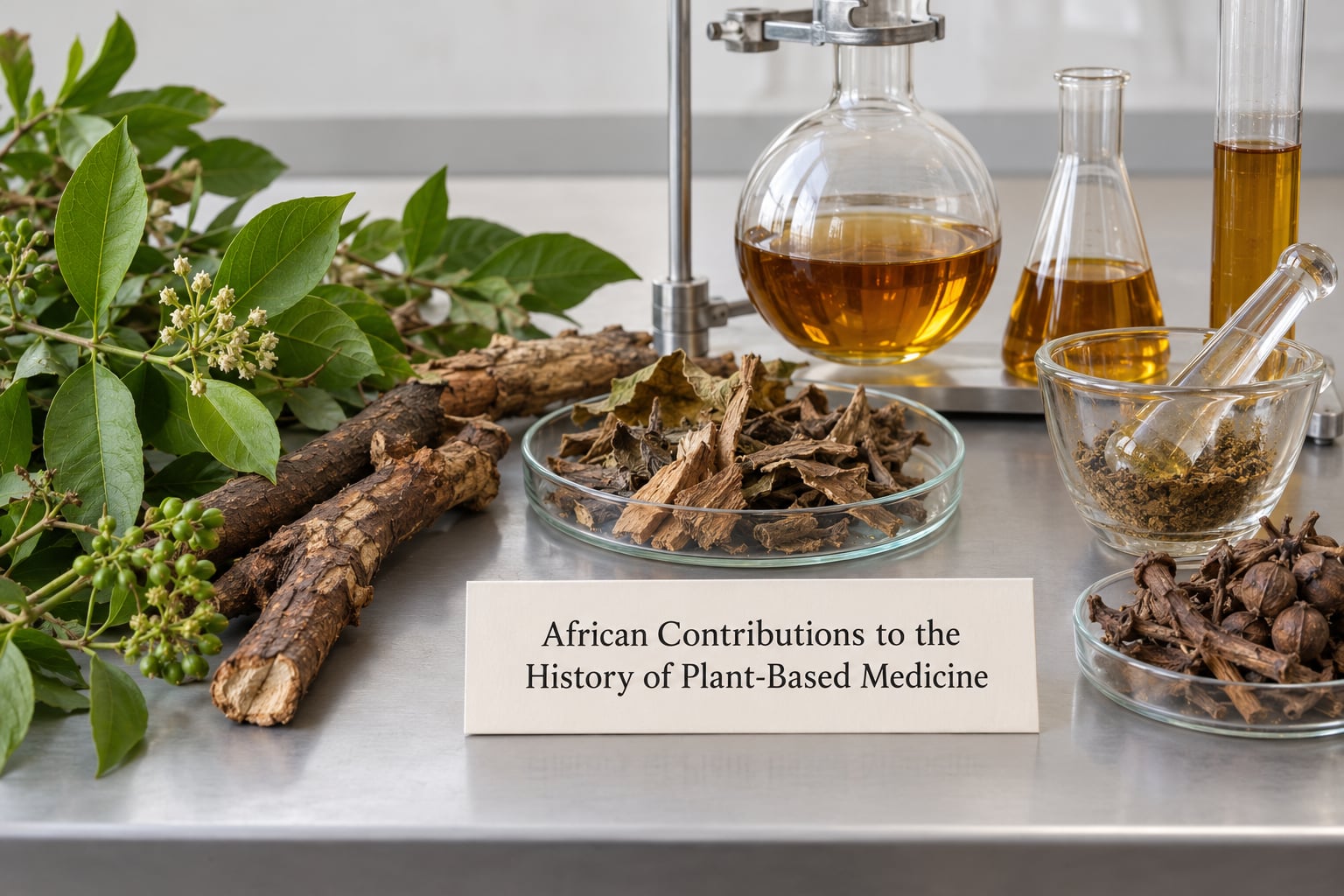
African plants appear in most drug-origin lists as an afterthought, which badly misrepresents the record. Documented cases include Artemisia annua for fever, Physostigma venenosum for physostigmine, Rauwolfia serpentina for reserpine, and Sceletium tortuosum for its alkaloids. Aloe species used across the continent became standardised laxatives. These are starting points, not a complete inventory.
Oral knowledge is the harder part to document and the more important part to credit. A hunter who knew which root relieved thirst, or a healer who could tell a medicine plant from a look-alike, held information that only got written down when outsiders recorded it, and the recording usually left out the knowledge holder.
Documented evidence versus disputed origin stories
Three categories are worth separating. Well documented means the traditional use, the compound and the modern medicine are all traceable in the scientific literature. Contested credit means the plant and compound are real but the story about who found them, and who benefits, is still argued over, as with Hoodia gordonii and the San. Needing further work covers practices carried widely in oral tradition that have not been documented to scholarly standards, and should not be presented as either proven or worthless.
Modern laboratories and clinical trials did the analytical work in every one of these cases. African plant knowledge supplied the observations those laboratories chose to test, and treating the two as rivals rather than partners misreads the history.
What Counts When a Plant Inspired a Modern Medicine?
There are four relationships, and mixing them up is the most common error in popular plant lists.
- Observation. Traditional use pointed scientists at the plant. The plant gave the hypothesis, not the drug. Periwinkle is the textbook case.
- Isolation. A compound was separated and kept in the medicine as it was found. Quinine and colchicine fit here.
- Modification. Chemists altered a natural chemical to improve it. Aspirin, semi-synthetic paclitaxel and etoposide derived from podophyllotoxin all sit here.
- Source or comparator. The plant still supplies starting material, or supplies the reference compound that a synthetic drug is measured against.
Those words are not interchangeable. A plant that inspired research has not become a medicine. A drug semi-synthesised from a plant precursor was not found in the forest. And a plant can be documented as a traditional medicine while having contributed nothing to any drug on the market.
Why These Stories Still Matter for Drug Discovery
Plants remain valuable to drug discovery because their chemistry is structurally different from the libraries most screens rely on. That variety gives researchers hypotheses for targets conventional screening tends to miss, and rough estimates put plant species screened in the tens of thousands.
Long-used remedies also tell you which plants survive in a place, which suggests something about local chemistry, though it says nothing about dosage or efficacy. Traditional use is best treated as a prioritisation tool: it ranks which plants deserve the expensive tests.
Three practical limits follow. Antibiotic resistance and a thinning pipeline make new leads valuable, but a lead is cheap and a drug is not, so most candidates fail. Extraction can only be as sustainable as the species allows, and overharvesting has damaged wild populations. And intellectual property raises real questions: the Nagoya Protocol on access and benefit-sharing now governs the use of traditional knowledge in research, which is why agreements with knowledge holders matter as much as patents.
Safety: Why a Historic Plant Use Is Not Medical Advice
Traditional use tells you a plant was used. It does not tell you that any preparation you can buy is the right amount, free of contamination, or appropriate for you.
Concentration and preparation change effects substantially. A bark decoction, a tincture and an isolated tablet can contain very different amounts of an active compound, sometimes with other compounds present that the purified drug does not have at all. That is the same reason a plant can yield a useful medicine and still be dangerous in the garden.
General risks worth naming, without any dosing guidance, include toxicity, as with foxglove, autumn crocus and calabar bean; dependence, as with poppy-derived opiates; drug interactions, including herbs that affect blood clotting or blood sugar; and contamination or adulteration, where products may carry heavy metals or undisclosed pharmaceuticals. So-called natural does not mean safe, and the history on this page is a history of scientific achievement, not a recommendation for anyone.
For anything you are considering taking, talk to a doctor or pharmacist first. Suspected poisoning or severe symptoms need urgent medical care, not a web search.
Frequently Asked Questions
Which plants led directly to modern medicines?
Willow, via salicin, led to aspirin. The opium poppy gave morphine and codeine. Cinchona bark gave quinine, foxglove gave digoxin, and sweet wormwood gave artemisinin. Pacific yew, rosy periwinkle and autumn crocus supplied cancer and anti-inflammatory medicines. In each case a compound was isolated and standardised rather than the whole plant being used as-is.
What is the most famous plant that led to a modern medicine?
Willow, almost certainly. Its bark was used for pain and fever for centuries before salicin was isolated in the nineteenth century and turned into salicylic acid and then aspirin. The famous part is also the most misunderstood: aspirin is a semi-synthetic chemical made in a factory, not a substance you get by chewing bark.
Did African traditional medicine contribute to modern drugs?
Yes. Artemisia annua grew across Africa for fever long before it entered Chinese pharmacies. Physostigma venenosum gave physostigmine, Rauwolfia serpentina gave reserpine for hypertension, and Sceletium tortuosum has been studied for anxiety and depression. Aloe species became standardised laxatives. These examples are documented, though they are not a complete inventory of African plant knowledge.
Does traditional use prove that a medicinal plant is safe?
No. Long use shows a practice survived, not that it is safe for you. Dose varies wildly between preparations, and a plant can be toxic in the wrong amount, habit-forming, or interact with prescription medicines. Products may also be contaminated with heavy metals or undeclared drugs. Talk to a doctor or pharmacist before using any herbal preparation.
Are medicines made from plants better than synthetic medicines?
Neither is better in general. Plant-derived medicines can be highly effective, but so can synthetic ones. The difference researchers care about is the starting point: plants offer chemical variety that helps generate new drug leads, while synthesis gives precise dosing and consistent supply. Neither origin guarantees safety, and only controlled trials and regulation establish whether a medicine works.
Conclusion
Respect and evidence do not have to compete. Traditional knowledge is a serious source of hypotheses, and the plants that led to modern medicines are proof of what careful testing turns them into. Start by learning the documented history of one plant, follow its chemistry through to the drug, and check current safety guidance before drawing conclusions about any remedy. That is a better use of an old remedy than a guess.