Aspirin came from willow bark because the bark contains salicin, a bitter glycoside that chemists isolated and then rebuilt as a pure, stable drug. Salicin was turned into salicylic acid in the 1830s, then into acetylsalicylic acid by Bayer chemists in 1897, and Aspirin was registered and sold from 1899.
That is the short version. The longer story runs from bark decoctions used across several continents, through an English clergyman’s experiment in 1763, into a laboratory process that made one of the most widely used medicines in the world. It also explains why a plant remedy and a pharmacy tablet are not interchangeable, which is the question most readers are really asking when they search how aspirin came from willow bark.
Below I have kept the documented record separate from the parts that got retold and polished along the way. That distinction matters, because the willow-to-aspirin story is one of the most repeated and least carefully sourced stories in popular medicine.
Table of Contents
- 1How Did Aspirin Come from Willow Bark?
- 2What Is Willow Bark’s Connection to Aspirin?
- 3From Bark Remedies to Isolated Salicin: How Aspirin Came from Willow Bark
- 4Who Transformed Willow’s Idea into Aspirin?
- 5How Is Aspirin Made from the Chemistry of Willow?
- 6What Changed When Aspirin Became a Modern Medicine?
- 7Is Willow Bark as Effective or Safe as Aspirin?
- 8Why Does the Willow-to-Aspirin Story Still Matter?
- 9Frequently Asked Questions
- 10Is aspirin still made from willow bark?
- 11Is willow bark safer than aspirin?
- 12Can you be allergic to willow bark?
- 13Which herb works like aspirin?
- 14What is the most natural aspirin?
- 15What is the origin and history of salicylic acid?
- 16Conclusion: What to Remember About Aspirin’s Willow Roots
How Did Aspirin Come from Willow Bark?
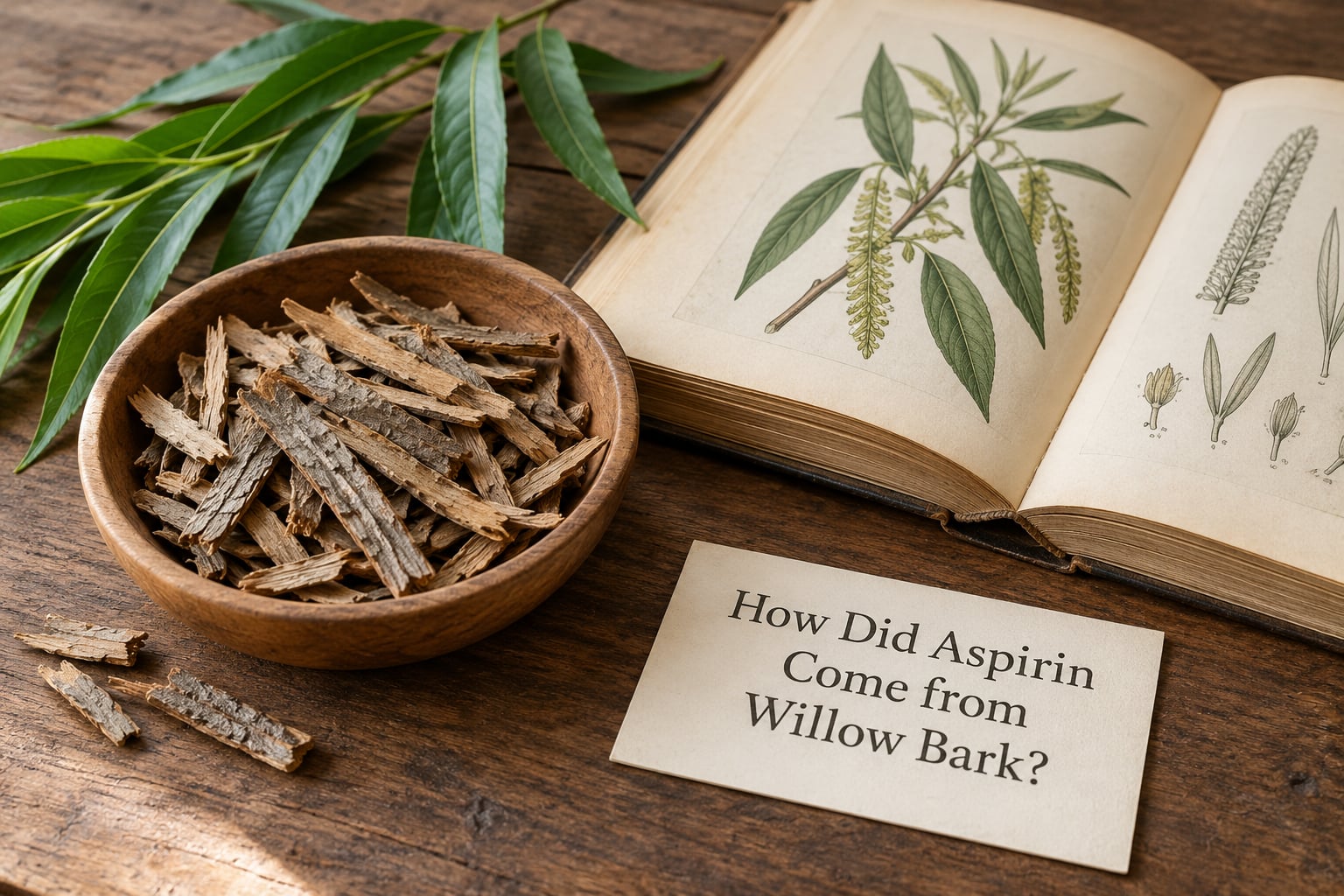
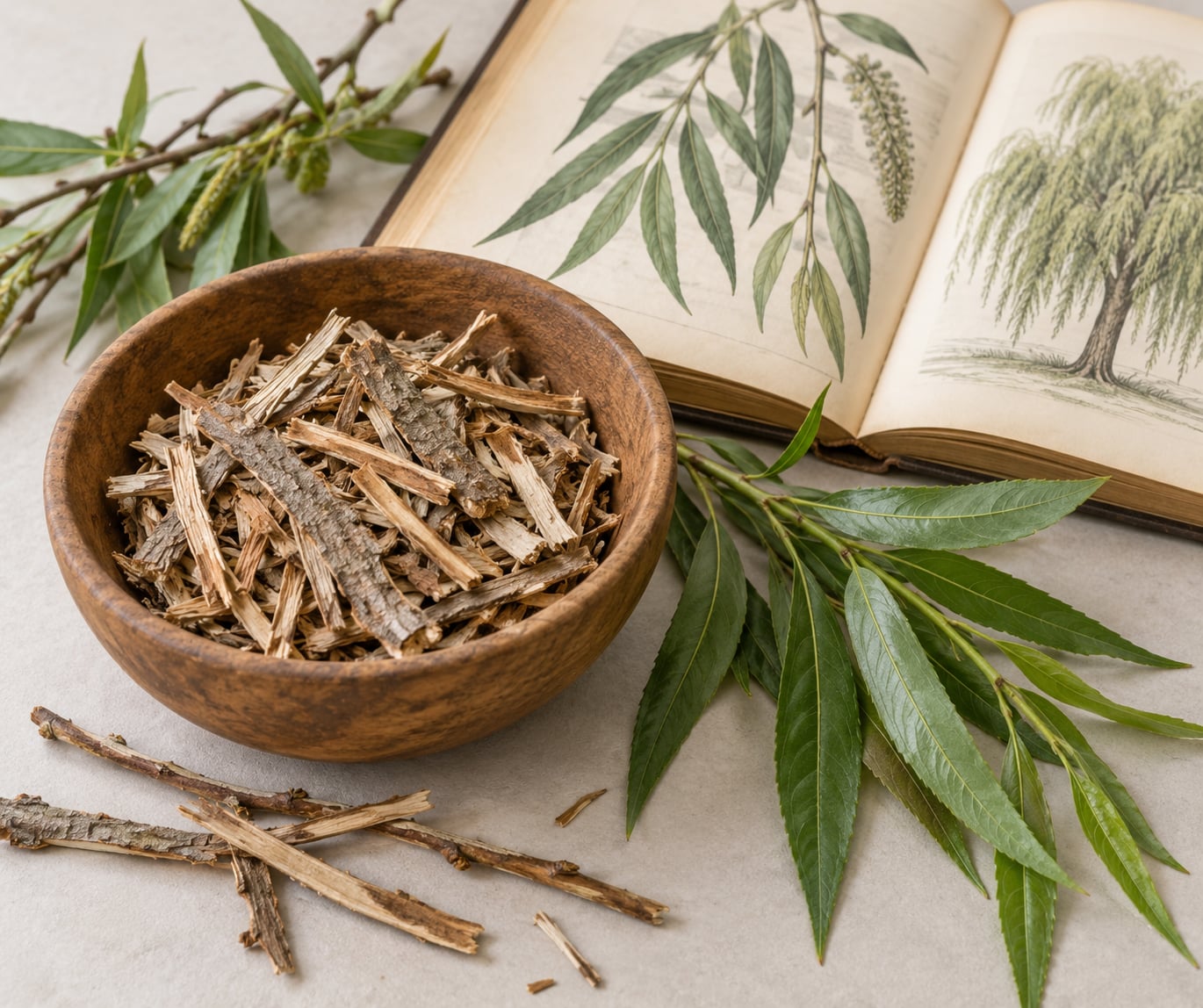
Willow bark carries a natural compound called salicin, mainly in the inner bark just beneath the outer layer. In the body, enzymes split salicin into salicylic acid, a compound that reduces fever, eases pain and calms inflammation. Aspirin is not that compound harvested from a tree; it is a synthetic relative of it, built to a fixed chemical specification.
So the honest answer has two halves. Aspirin’s chemistry grew out of willow bark, and researchers have documented that path carefully from the 1760s onward. Willow bark itself is a crude plant material with a wide range of active substances and a potency that swings from batch to batch, and it is not a regulated medicine.
What Is Willow Bark’s Connection to Aspirin?
The connection is chemical, not cosmetic. Salicin is a glycoside, meaning a small molecule attached to a sugar group, and it sits alongside tannins, flavonoids and other plant compounds in the inner bark of Salix species, including Salix alba, the white willow.
That mixture is the problem. Bark contains salicin at levels that vary widely between species, between individual trees, and between seasons, and it contains compounds that have their own effects on the stomach and kidneys. Aspirin has none of that variety. Every tablet contains the same measured amount of acetylsalicylic acid, which is why a doctor can reason about a dose and a patient cannot reason about a cup of bark tea the same way.
From Bark Remedies to Isolated Salicin: How Aspirin Came from Willow Bark
People used willow bark long before anyone could name what was inside it. Egyptian medical papyri, Greek and Roman writers including Pliny the Elder and Pedanius Dioscorides, Chinese materia medica, and the oral traditions of Indigenous North American and Southern and West African communities all record willow for pain, fever, rheumatic complaints and childbirth pain. These are documented knowledge systems in their own right, not footnotes leading to a German laboratory.
The familiar claim that Hippocrates prescribed willow bark tea for pain does not hold up. The Greek corpus contains no such instruction, and the willow passage that does survive in the Hippocratic tradition describes burning willow leaves to fumigate the uterus after a miscarriage. Willow appears there as a fumigant, not a pain remedy.
The origin point historians trust more is later and stranger. In 1763 an English clergyman, Reverend Edward Stone, read in an old medical text that willow bark had been used for fever. He tested powdered bark on ague, the historical term for malarial fevers, and reported his results to the Royal Society, dosing it the way other bark medicines of the day were dosed.
Between the 1820s and the late 1820s, Italian and French chemists worked the material apart. Bartolomeo Rigatelli and Francesco Fontana obtained bitter extracts, and Henri Leroux isolated and named salicin in 1829. That single step changed the field, because a named compound can be measured, compared and improved in a way that a basket of bark never can.
Who Transformed Willow’s Idea into Aspirin?
The credit belongs to a chain of people rather than one inventor. Raffaele Piria opened up salicylic acid’s chemistry in 1838, and Hermann Kolbe’s 1859 reaction with carbon dioxide made it cheap to manufacture on an industrial scale. Friedrich von Heyden set up a factory for it, and Thomas MacLagan and Franz Stricker in 1876 and Germain Sée in 1877 pushed it into clinical use for rheumatism.
Salicylic acid then produced the problem Bayer set out to solve. It worked, but it burned the stomach. In 1897, Felix Hoffmann, working at the Bayer laboratory in Germany with chemist Arthur Eichengrün, added an acetyl group to salicylic acid and got a compound that was purer, more stable and noticeably gentler on the gut. The compound was acetylsalicylic acid.
The credit argument has run for over a century, and it is worth stating plainly. Eichengrün, a Jewish chemist whose contribution was systematically minimized after the Nazi period, and Heinrich Dreser, who ran the pharmacology and clinical testing, both played real parts alongside Hoffmann. The 1899 registration of the Aspirin trade mark is the date most people remember, and it is a marketing date, not the day of the chemistry.
How Is Aspirin Made from the Chemistry of Willow?
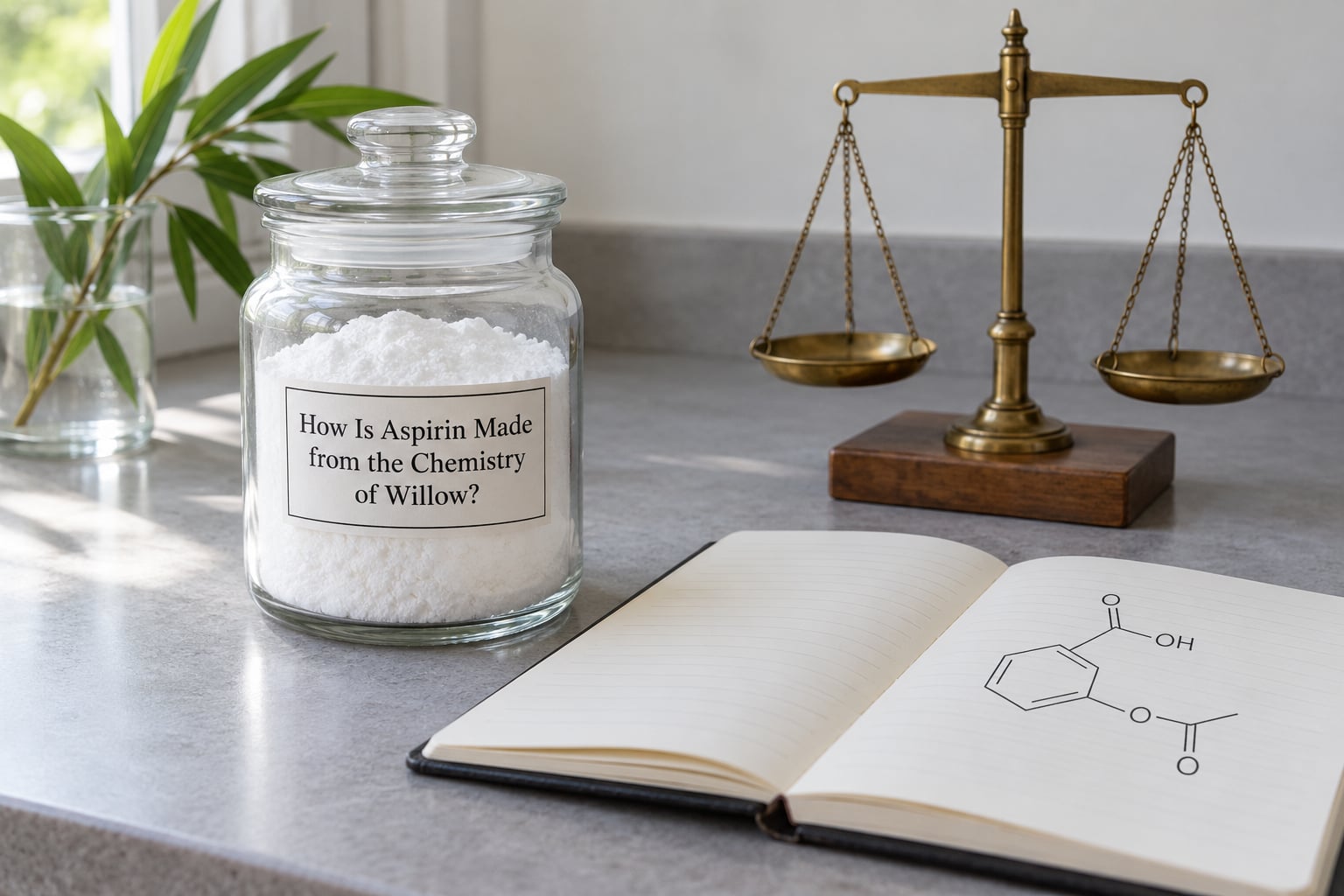
Here is the process without the jargon. Willow bark contains salicin. Enzymes in your gut, and acids in the lab, break salicin down and strip away its sugar group, leaving salicylic acid. Adding an acetyl group to that molecule produces acetylsalicylic acid, which is aspirin.
Each step is a decision about what to add and what to remove. Adding the acetyl group made the drug more stable and less irritating to the stomach lining. Purifying the finished compound, recrystallizing it and testing it in controlled trials removed everything that made bark unpredictable.
That last point answers a question people ask constantly. Aspirin is not powdered willow bark with the twigs shaken out. It is a defined chemical entity, made in a factory, at a dose per tablet that a regulator has approved. The willow plant tells chemists where to start looking. Chemistry and pharmaceutical testing are what turn that hint into a medicine.
What Changed When Aspirin Became a Modern Medicine?
Standardization changed everything. A fixed dose, a stable shelf life, tablet forms in repeatable strengths and regulated manufacturing meant a person could take the same amount today and in ten years, and a clinician could compare one brand with another.
Regulation came next. Medicines had to demonstrate quality, a defined strength and evidence of safety before reaching the public, which is a bar that no bark preparation has ever cleared for a therapeutic claim.
The understanding of how aspirin works came much later. In 1971 John Vane showed that it inhibits the cyclooxygenase enzymes, COX-1 and COX-2, which reduces the prostaglandins that signal pain, fever and inflammation and that help blood clot. That work helped define the whole class of NSAIDs, and Vane shared the 1982 Nobel Prize in Physiology or Medicine for it.
| Feature | Willow bark | Salicin | Salicylic acid | Aspirin |
|---|---|---|---|---|
| Source | Inner bark of Salix species | Isolated from bark | Made from salicin | Synthetic, Bayer process |
| What it actually is | Mixture of many compounds | A single natural glycoside | A single purified chemical | Acetylsalicylic acid, a single defined chemical |
| Dose consistency | Varies widely by species, tree and season | Fixed once isolated | Fixed by weight | Fixed per tablet |
| Stomach effects | Can irritate, tannins also irritate | Can irritate | Notably irritating to the gut | Lower irritation, still a known risk |
| Blood thinning | Present to an unpredictable degree | Present to a variable degree | Present | Documented and dosed for this effect |
| Regulatory status | Not a medicine | Not sold as a painkiller | Historical chemical | Approved medicine |
Is Willow Bark as Effective or Safe as Aspirin?
Short answer: no, and anyone considering willow bark for a health problem should speak with a doctor or pharmacist first. The comparison below is general information, not advice for your situation.
Potency is the first problem. Measured salicin content in willow materials has been reported across a range of roughly 0.04% to 12%, which means two preparations can differ by orders of magnitude. Standardized extracts exist, but anything sold as bark, bark powder or a homemade decoction carries no reliable dose.
Then there are the risks that get left out of herbal circles. Salicylates can cause stomach ulcers and gastrointestinal bleeding, and they interfere with blood clotting, which matters enormously if you already take warfarin, aspirin, clopidogrel or any other anticoagulant or antiplatelet drug. They can trigger reactions in people with salicylate or aspirin allergy, affect kidney function at higher doses, and cause ringing in the ears.
Children and teenagers are a specific concern. Salicylates are linked to Reye’s syndrome, a rare but serious condition, and this is one of the warnings most often missing from willow bark content online. Pregnancy is another point to raise with a clinician rather than self-manage.
If you take willow bark and also take aspirin, you are doubling up on the same drug family without a clear dose. Forum discussions about willow bark often describe genuine but mild relief, comparable to a weak ibuprofen effect, and also nausea after large amounts of tea. Those experiences are consistent with a real but weak and unpredictable salicylate load.
Why Does the Willow-to-Aspirin Story Still Matter?
Because it shows what careful research does with an observation. Somebody watched a traditional preparation, tested it, isolated what was working, measured it, improved it and then submitted it to trials that could prove harm as well as benefit. Every step after the first is what separates a lead from a treatment.
It also shows the value of keeping traditional knowledge intact while it is still living. Ethnobotanical fieldwork, including work with Southern and West African healers and plant specialists, documents uses long before a laboratory has looked at the species. Those records point researchers toward plants worth studying. They do not substitute for testing, and treating a documented practice as a shortcut to a Western product does a disservice to the knowledge itself.
Two cautions belong here. The willow story has been repeated so often that myths have hardened into facts, including claims Hippocrates never made. And natural does not mean gentle: willow bark carries the same salicylate chemistry that makes aspirin effective and the same chemistry that makes it risky.
Frequently Asked Questions
Is aspirin still made from willow bark?
No. Modern aspirin is manufactured entirely by chemical synthesis, mostly from phenol and carbon dioxide using a process refined over more than a century. Willow bark supplied the original idea and the first isolated compound, salicin, but no willow is involved in producing a tablet today.
Is willow bark safer than aspirin?
Not reliably. Willow bark contains the same salicylate chemistry, plus tannins and other compounds, and its strength varies widely between batches. Aspirin’s known risks include stomach bleeding and blood-thinning effects, and willow carries those same risks at an unpredictable dose. A doctor or pharmacist can advise you.
Can you be allergic to willow bark?
Yes. Because salicin is converted to salicylic acid in the body, people who react to aspirin or other salicylates can react to willow bark too. Reactions range from hives and swelling to wheezing and, rarely, severe reactions. Anyone with a known salicylate allergy should avoid it and discuss alternatives with a clinician.
Which herb works like aspirin?
Meadowsweet (Spiraea ulmaria), white poplar and birch all contain salicylate-related compounds and were used traditionally for pain and fever. Meadowsweet is even the plant behind the name aspirin. None of them is a safe stand-in for the drug, since potency is unpredictable and the same bleeding and allergy risks apply.
What is the most natural aspirin?
There is no such product, and the phrase itself is misleading. Aspirin is a synthetic chemical with a fixed dose per tablet. Willow bark, poplar bark or meadowsweet are plant materials whose salicylate content cannot be measured reliably at home. If you want the drug, take the drug; if you want the plant, treat it as a separate and riskier decision.
What is the origin and history of salicylic acid?
Salicylic acid comes from salicin, a glycoside isolated from willow bark and named in 1829. Raffaele Piria opened up its chemistry in 1838, and Hermann Kolbe’s 1859 reaction made it affordable to manufacture. Used widely from the 1870s, it irritated the stomach badly, which led Bayer chemists to add an acetyl group in 1897.
Conclusion: What to Remember About Aspirin’s Willow Roots
Aspirin’s story begins with centuries of recorded willow use and then moves through isolation, chemistry and testing to reach a purified, standardized medicine. The plant pointed the way. Chemistry, manufacturing and regulation are what made it a drug.
If you are considering willow bark, poplar or meadowsweet for any health concern, talk to a doctor or pharmacist first, especially if you take blood thinners, have a stomach history, are pregnant, or are treating a child. That conversation takes minutes and settles most of the questions this article raises.