To put it plainly: how soil microbes affect plant compounds is a question with a real answer, though not a simple one. Microbes release nutrients from organic matter, signal through the root surface, trigger defence chemistry, and break compounds down before harvest. The same microbe can raise one compound and lower another in the same plant.
If you grow medicinal or ethnobotanical plants, or you study plant chemistry, this is the machinery behind two observations that often seem contradictory: two harvests of the same species from nearby fields can differ sharply in chemical profile, and a plant grown on healthy living soil is not automatically the strongest medicine.
Table of Contents
- 1What Are Plant Compounds, and Why Do They Vary?
- 2How Soil Microbes Affect Plant Compounds
- 3What Mechanisms Link Microbial Activity to Plant Chemistry?
- 4How do beneficial microbes change root growth and nutrient uptake?
- 5How do harmful microbes trigger defense compounds?
- 6Can soil microbes activate or transform plant compounds?
- 7Which Soil Conditions Produce the Largest Effects?
- 8What Happens to Alkaloids, Terpenes, and Phenolics?
- 9Why Do Research Studies Sometimes Show Opposite Results?
- 10How Can Researchers Test the Relationship?
- 11What Does This Mean for Traditional and Medicinal Plants?
- 12Frequently Asked Questions
- 13Do soil microbes always increase medicinal plant compounds?
- 14Are higher levels of a plant compound always better for health?
- 15Does mycorrhizal fungi always increase plant alkaloid levels?
- 16Can compost or organic fertilizer replace a detailed soil-microbe study?
- 17What microbes are found in soil?
- 18Does potting soil have microbes?
- 19Conclusion
What Are Plant Compounds, and Why Do They Vary?
Plant compounds fall into two broad groups. Primary metabolites handle growth and housekeeping: sugars, amino acids, fatty acids, nucleotides. Secondary metabolites are the compounds with no obvious growth function — they defend, attract, signal, colour and deter, and they include alkaloids, terpenoids, phenolic compounds and flavonoids.
Concentrations of those secondary compounds are never fixed. Genetics sets the ceiling, but tissue type, plant age, season, water, temperature, light, harvest time and soil conditions all shift what ends up in the tissue. A plant under mild stress often diverts carbon into defensive phenolics; the same plant well watered and thriving may put that carbon into growth instead.
This variability is why two samples of a species collected on different days, or from different soils, can look like different chemotypes to an analyst. Before blaming soil microbes, you have to rule out ordinary agronomic variation.
How Soil Microbes Affect Plant Compounds
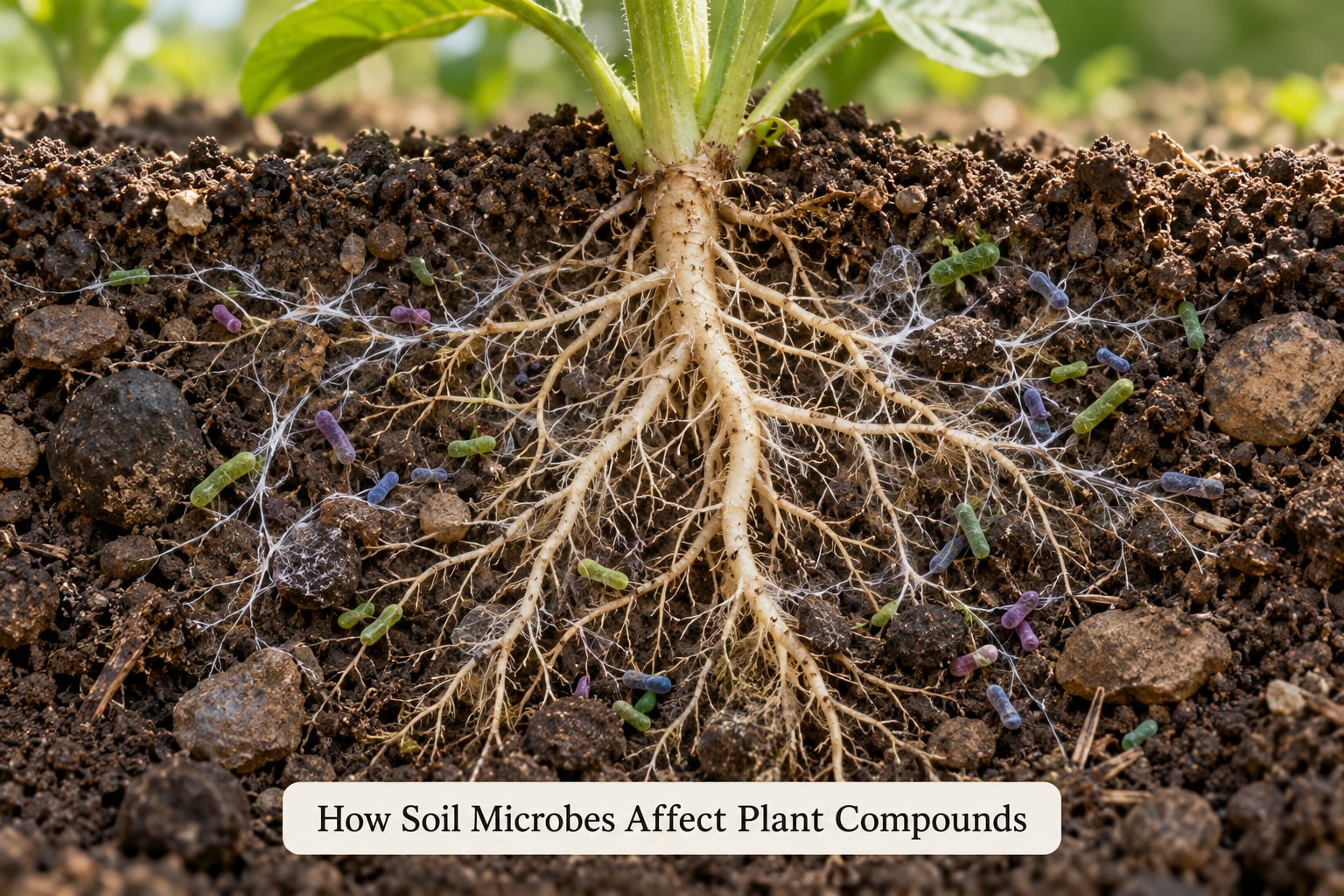
Soil microbes affect plant compounds through five routes, and they act at two different locations. Route one is inside the plant: microbes change nutrient supply, alter root architecture, mimic or shift hormones, and activate or suppress defence signalling, so the plant synthesises different amounts of its own chemistry. Route two is outside the plant, in the root zone and soil: microbes enzymatically transform compounds that have already been exuded, shed in litter, or left in residue.
The distinction matters more than most writing on the topic admits. If a microbial treatment changes what is inside the leaf, that is a change in plant production. If it changes what is extractable from roots and soil, that is a change in what microbes did to the compound after the plant made it.
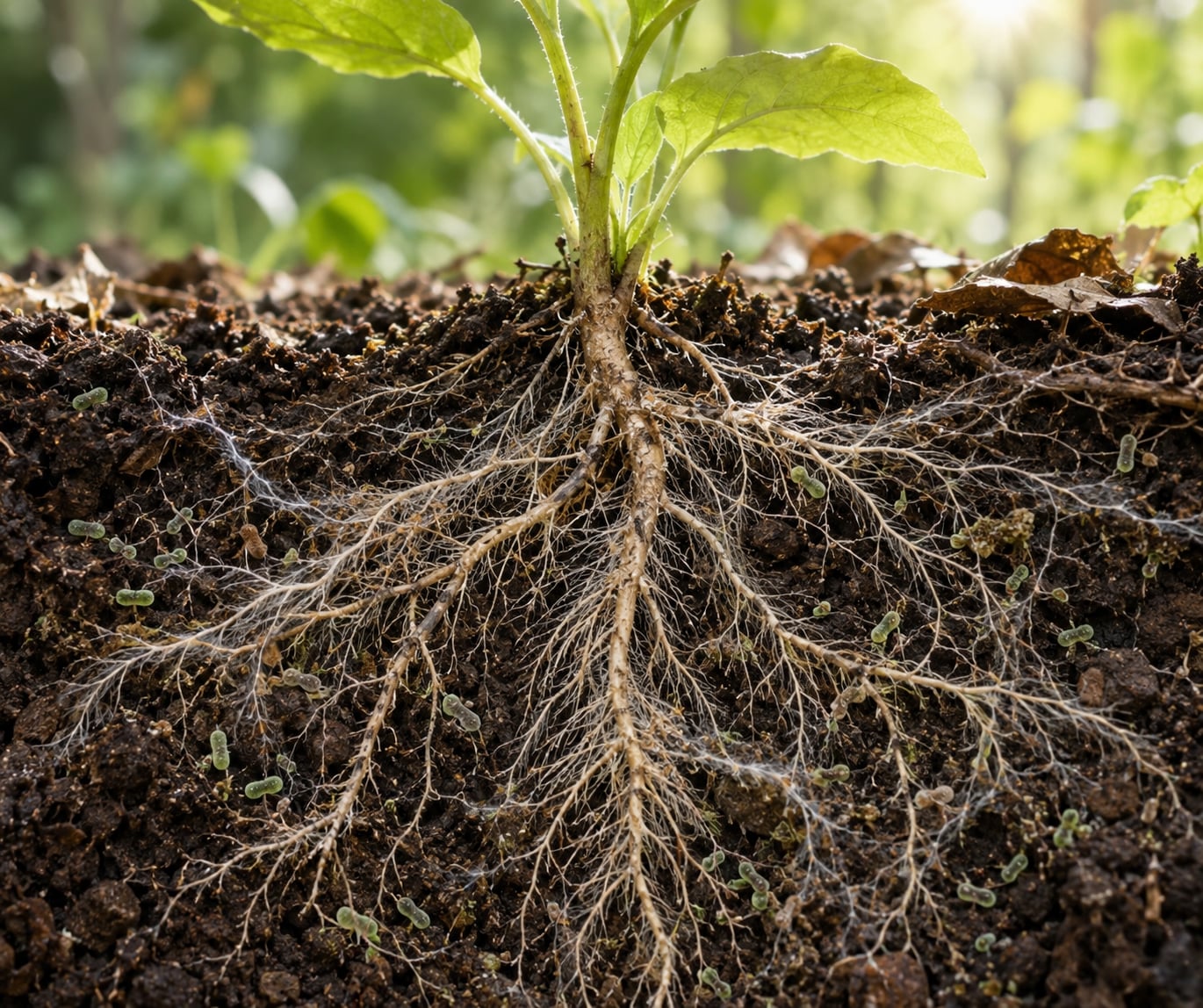
In practice the routes overlap constantly. Root exudates — the sugars, organic acids, amino acids and phenolics a root releases — are simultaneously plant products, microbial food and chemical signals. Microbes metabolise a share of that exudate, and the carbon that is neither respired nor mineralised can be recycled back to the plant as nutrients. The rhizosphere is where both things happen at once.
What Mechanisms Link Microbial Activity to Plant Chemistry?
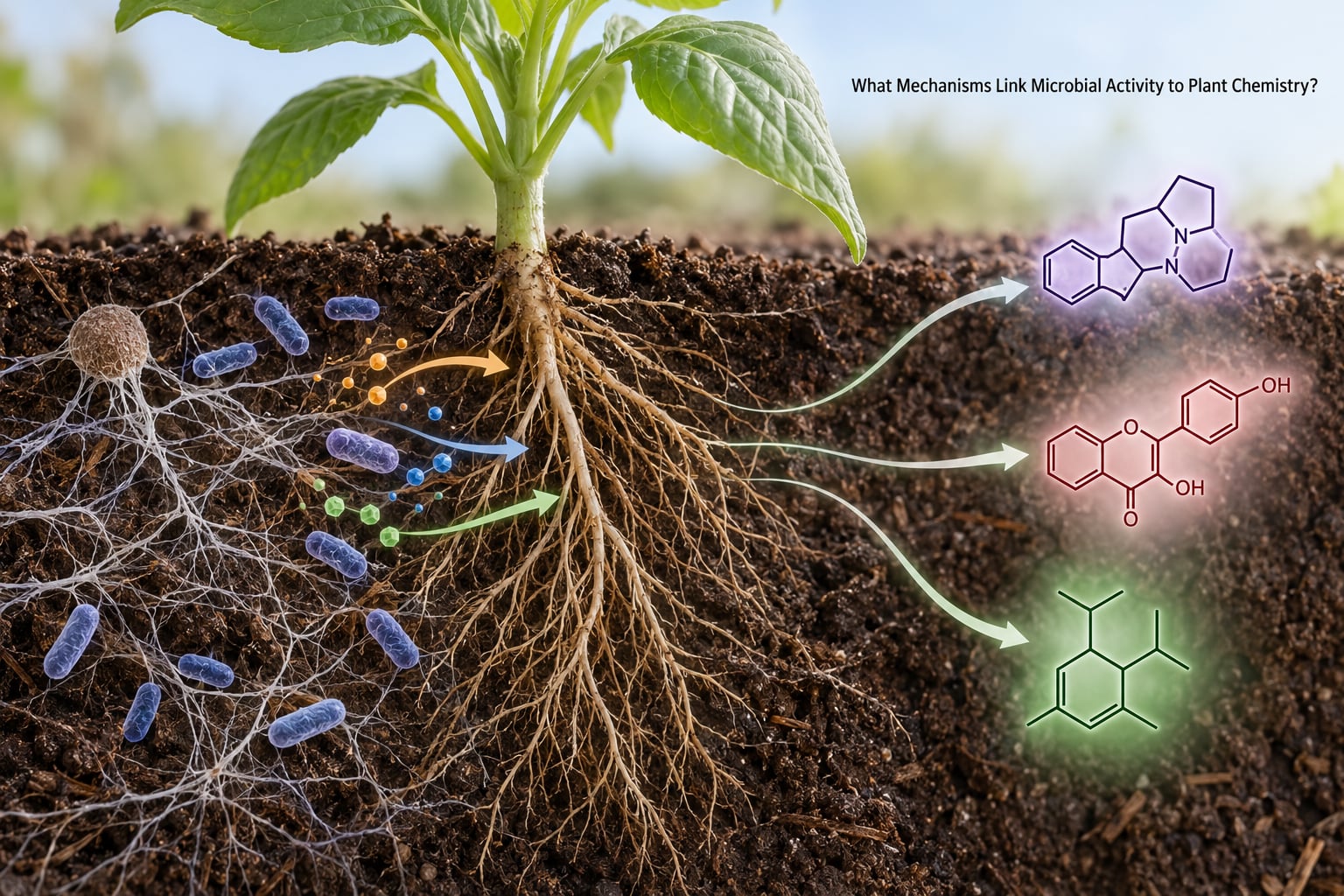
Researchers usually group the mechanisms like this, and they report different kinds of evidence for each.
| Mechanism | Expected effect on plant compounds | Evidence researchers typically use |
|---|---|---|
| Nutrient mobilisation (mineralisation, solubilisation, fixation) | Changes growth rate and therefore the carbon available for secondary metabolism; nutrient limitation often raises defensive phenolics | Nutrient and metabolite measurements in inoculated versus uninoculated plants under controlled supply |
| Root architecture and symbiotic exchange | More or less root surface, altering local stress and carbon partitioning | Root imaging, colonisation measurements, isotopic tracing of exchanged nutrients and carbon |
| Hormone mimicry and signalling | Shift between growth-promoting and stress programmes, with knock-on effects on terpenes and phenolics | Reporter-gene assays, hormone quantification, mutant plant lines |
| Pathogen and herbivore recognition | Rapid induction of jasmonate- and salicylate-linked defences such as phenolics, terpenes and glucosinolates | Inoculated plants, defence-gene expression, metabolite profiling over time |
| Direct transformation in soil and roots | Partial degradation or conversion before harvest, changing extractable amounts without changing plant biosynthesis | Sterile versus inoculated soil, radiolabelled compounds, metabolite disappearance curves |
How do beneficial microbes change root growth and nutrient uptake?
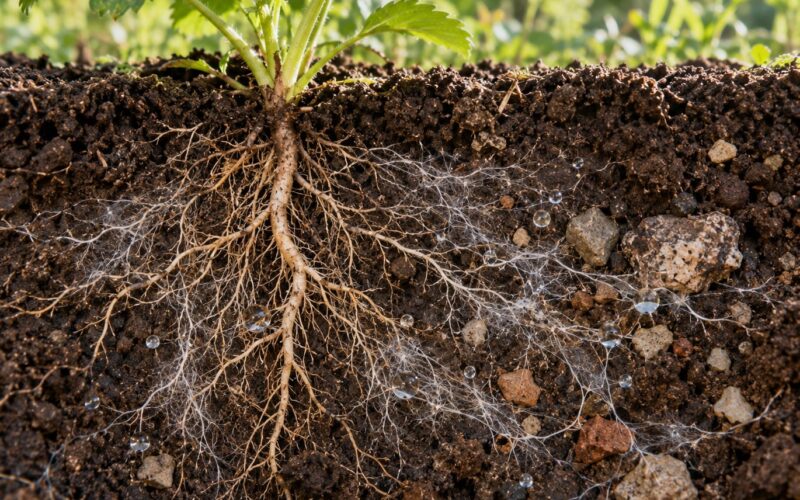
Mycorrhizal fungi extend the root’s effective reach by trading mineral nutrients, mainly phosphorus and some nitrogen, for plant carbon. Root architecture changes too: inoculations often produce more fine lateral root tips and different root density, which changes how much surface is available to exude and absorb.
The compound consequence is indirect and not always upward. A better-fed plant may build more defensive chemistry as a normal part of development, or may grow faster and dilute whatever it does produce. Reviews of mycorrhizal work in medicinal and aromatic crops routinely report higher concentrations of selected phenolics and terpenes in some trials and no change in others. That variation is the finding, not a flaw in it.
Nitrogen-fixing associations and phosphate-solubilising bacteria work on the same principle from different directions: more available nutrient changes what the plant can afford to spend on chemistry. Rhizobia on legumes, for instance, change root nitrogen supply substantially, and legumes themselves are major producers of isoflavonoids.
How do harmful microbes trigger defense compounds?
Pathogens, root injury and some root-feeding organisms activate the same signalling cascades that mechanical damage does. Jasmonate, salicylate and ethylene signalling rise, and the plant builds defensive chemistry: phenolic acids and tannins to bind proteins in the pathogen cell wall, glucosinolates and their breakdown products in Brassicas, terpenes as volatiles and direct toxins, and antimicrobial compounds such as phytoalexins.
So a real pathogen can push a plant toward higher concentrations of some protective compounds. It can also drain the plant’s carbon and nitrogen badly enough that production falls. Both outcomes appear in the literature, and the difference usually tracks with how severe the infection became.
Can soil microbes activate or transform plant compounds?
Sometimes, and the distinction is worth keeping sharp. Some microbial metabolites act as elicitors that switch on a plant biosynthetic pathway — a common example is the way some non-pathogenic bacteria trigger accumulation of antimicrobial compounds in the plant. That is induction of synthesis inside living tissue.
Other cases are transformation without the plant ever changing its production. Soil enzymes, including those from bacteria and fungi, hydrolyse phenolic acids, break down glucosinolates that have reached the soil in residue, and oxidise or reduce terpene and alkaloid skeletons. Where that happens, an analysis of soil or root may show less compound than a plant produced, and a foliar analysis of the same plant may show no change at all.
Researchers separate the two with a simple logic: analyse the same tissue in sterilised soil and in inoculated soil, and sometimes add a labelled version of the compound to see how fast it disappears. When the labelled compound vanishes but plant-synthesised amounts do not change, the loss is microbial rather than plant-side.
Which Soil Conditions Produce the Largest Effects?
Soil context decides the direction and size of every microbial effect, which is why results from one site rarely transfer cleanly to another.
Texture sets how much carbon is held near roots. Sandy soils hold little organic matter, so microbial communities live lean and effects compound with any addition of residue. Clay soils buffer pH and moisture, keeping communities more stable but often slower to respond.
pH is close to a switch. Each functional group of microbes tolerates its own range, and a shift of a unit or two can restructure the community faster than any inoculant applied on top of it. Moisture and aeration interact: waterlogged soil suppresses the aerobic organisms that drive mineralisation, and a dry soil can shut down root exudation and slow the whole exchange.
Organic matter supplies the substrate microbes live on, so adding residue changes both nutrients and community composition at once. That double effect is why compost trials are so hard to interpret: you cannot separate the nutrient contribution from the microbial one without controls.
Nutrient balance, salinity, temperature and contamination all push in the same direction of amplifying context. Salinity selects for organisms that produce osmo-protective compounds and shifts plants toward osmotic adjustment chemistry. Repeated fungicide or fumigant use removes or suppresses the organisms that mediate many of the effects researchers are trying to measure.
Finally, diversity. A community with many functional types buffers the system: if one member drops out, others do the same job. A community dominated by a few specialists responds hard in both directions. Where the effect you care about is a single compound, this resilience matters as much as any single strain.
What Happens to Alkaloids, Terpenes, and Phenolics?
Compound classes respond differently, and the direction is variable rather than universal. This table summarises the usual pattern from the literature, not a guarantee.
| Compound class | Typical microbial effect reported | Caveat |
|---|---|---|
| Alkaloids | Often altered under nutrient limitation, drought and mycorrhizal colonisation; direction varies by species and alkaloid | Nitrogen supply alone can shift alkaloid concentration, with no microbial change required |
| Terpenes and essential-oil components | Some volatile terpenes fall when herbivory or infection induces jasmonate signalling; others rise under specific bacterial elicitation | Volatiles are lost quickly after harvest, so handling can erase or mimic a soil effect |
| Phenolics and flavonoids | Most consistently documented as increasing under stress, pathogen pressure and mycorrhizal association | Often measured relative to dry mass; dilution by fast growth can hide an absolute increase |
| Glucosinolates | Influenced by microbial communities in Brassicas; field work suggests a modest but real contribution | Sulfur nutrition and tissue age rival soil biology as explanations |
| Antimicrobial phytoalexins and coumarins | Induced in plant tissue by specific non-pathogenic bacteria and fungi | Often transient, peaking days after elicitation and fading before harvest |
Read that “varying by species” column seriously. A result reported for one species tells you very little about a different genus, and the concentration of a given alkaloid may respond while the total pool does not.
Why Do Research Studies Sometimes Show Opposite Results?
When two trials of the same idea disagree, the disagreement is usually in the design rather than in the biology.
Species and cultivar differ in how they defend themselves at all, so a finding on one cultivar of one species is not a general law. The microbial strain matters: within one species, different strains colonise roots differently and produce different elicitors. Then there is survival. An inoculated organism that fails to establish produces a null result that gets published as evidence of no effect.
Soil history sets the background the treatment lands on. Two sites differ in organic matter, previous cropping, pesticide history and irrigation before any inoculation happens. Sampling stage is equally decisive: exudate chemistry and secondary metabolite levels shift with plant development, and a treatment sampled at flowering cannot be compared with one sampled at senescence.
Tissue choice changes results too. Roots, leaves and seeds hold different compounds, and a treatment effect in roots may not appear in the leaf a herbal product is made from. Extraction method is the quietest source of disagreement: different solvents and durations pull different fractions out of the same tissue.
Then there is measurement scale. Relative profiles and absolute concentrations answer different questions, and a treatment can raise three compounds while the total pool shrinks because growth outpaced it. Field versus controlled conditions change the stress context, and stress is half the mechanism. Confound any of these and the same honest experiment reports opposite results.
How Can Researchers Test the Relationship?
A workflow that survives scrutiny has a fixed order.
- Characterise the soil first. Measure pH, texture, organic matter, moisture, and the nutrient status of the elements you suspect matter. This sets the interpretation frame.
- Identify what is already there. Amplicon sequencing of rhizosphere samples, or a targeted assay for specific groups, tells you the baseline community and its diversity.
- Keep untreated controls. Sterile soil plus a microbial treatment versus sterile soil alone separates microbial effects from nutrient effects added along with the inoculum.
- Define the treatment precisely. Record strain identity, carrier, application rate, and whether the material is compost, a pure inoculum, or a microbial metabolite.
- Track colonisation and plant stress. Confirm the organism established before you attribute any chemical change to it, and log water, temperature and any stress events through the cycle.
- Sample at comparable stages. Same tissue, same plant part, same time of day and same days after treatment. This is where most of the noise enters.
- Quantify with validated methods. Chromatography or mass spectrometry with authentic standards, reporting absolute concentrations with dry-mass normalisation, not just relative peaks.
- Report variability honestly. Replication, effect size and confidence intervals carry more information than a single average.
If the interest is specifically in compounds disappearing from roots or residue, add a step: spike labelled standards into the soil and measure their decline. That single test separates microbial transformation from plant production.
What Does This Mean for Traditional and Medicinal Plants?
For anyone harvesting ethnobotanical plants, the practical implication is about reproducibility. Many traditional preparations are defined by a marker compound, and if that compound varies with soil, season and tissue age, then two harvests judged by the same marker may deliver different material. Documenting the growing site, the plant part, the harvest stage and the analytical method is what makes a result comparable to the next one.
It is worth stating plainly what does not follow. A higher concentration of a particular compound does not automatically mean a safer, stronger or more effective preparation. Some plant compounds become less well tolerated at higher exposure, and benefit often depends on combinations and ratios rather than single molecules. The relationship between a measured compound and a preparation’s traditional use is a question for the appropriate research, not an assumption to build on.
Anyone reading chemistry results to make decisions about their own health should talk to a qualified clinician or pharmacist, particularly if they take medication or have a health condition. This article is general background on soil biology and plant chemistry, not advice on treating or preventing any condition.
Growers who want to work with this rather than against it have a simpler path than the research literature suggests. Keep the growing surface covered, return organic residues, minimise unnecessary fumigation, and let the community assemble around whatever the site already supports. Live soil practitioners on gardening forums have long argued that diversity beats any single product, and the experimental record broadly agrees with them.
Frequently Asked Questions
Do soil microbes always increase medicinal plant compounds?
No. Microbes can increase, decrease, or barely change particular metabolites. The outcome depends on the plant species, the microbe involved, soil nutrients, moisture, stress level, plant growth stage, and which compound is measured. A microbe that raises phenolics in one trial has lowered total terpenes in another under the same treatment.
Are higher levels of a plant compound always better for health?
No. A higher concentration does not automatically mean greater benefit or safety. Some plant compounds are less well tolerated at higher exposure levels, and beneficial effects may depend on combinations of several compounds in a particular ratio rather than on one molecule. Analytical concentration is one variable among many, not a verdict on a preparation’s usefulness.
Does mycorrhizal fungi always increase plant alkaloid levels?
No. Mycorrhizal colonisation may improve water and nutrient uptake, change growth rate, or activate stress pathways, and each outcome depends on soil and species. Reviews of mycorrhizal work in medicinal crops report higher concentrations of selected phenolics and terpenes in some trials and no change in others. Treat any single claim of a consistent increase as context-dependent.
Can compost or organic fertilizer replace a detailed soil-microbe study?
Not reliably. Compost changes nutrients, pH, organic matter, and microbial communities simultaneously, so the effects cannot be separated. Sterile soil with a defined inoculum is needed to attribute a chemical change to microbes specifically. Amendments are excellent field practice and poor experimental controls, and treating them as interchangeable with a microbial treatment muddies the finding.
What microbes are found in soil?
Soil contains bacteria, fungi, actinomycetes, protozoa, and plant-parasitic nematodes. Bacteria handle most mineralisation and much nitrogen transformation; fungi move carbon and phosphorus through hyphal networks and decompose residue; actinomycetes break down tougher organic matter. Protozoa graze on bacteria and release nutrients in the process. Species composition varies sharply with pH, moisture, texture, and cropping history.
Does potting soil have microbes?
It does, though far fewer and less diverse than field soil. Most commercial potting mixes are largely sterile because they are steam-treated, which removes organisms along with weed seed and pathogens. Unsterilised garden compost or leaf mould added to the mix reintroduces a community, along with its nitrogen and possible pathogens. Expect a small, fragile population that establishes slowly and responds to added organic matter.
Conclusion
Soil microbes change plant chemistry in two separate places: inside the plant, where they shift nutrients, hormones and defence signalling so the plant builds different chemistry; and outside it, where enzymes break compounds down in roots, residue and soil before anyone harvests them.
Start there rather than with an assumption. Look at the specific plant species and cultivar, the soil’s pH, moisture and organic matter, which functional groups of microbes are actually present, which tissue gets analysed and when, and which single compound the question is about. Those five things will explain more variation than any general rule about healthy soil producing a stronger medicine, because that rule is not something the evidence supports.