Terroir and herbal potency explained in one line: terroir is the bundle of growing conditions around a plant, and it can shift the plant’s chemistry, but place of origin alone never tells you how strong a remedy is. The short version is that growing site matters, measurement decides.
Most people meet the word terroir through wine, where it has a clear cultural meaning. Move it to a bag of dried root and the vocabulary gets slippery fast, because herbal potency is a chemical question rather than a romantic one. This guide separates what researchers can document from the marketing that has grown around it, and it does so without pretending a hillside in any particular country produces a better medicine.
One note before we start: this is general information about plant chemistry and quality assessment. It is not medical advice, and no section here should be used to work out a dose or to treat a condition. Talk to a doctor or a pharmacist about anything that touches your own treatment.
Table of Contents
- 1What Is Terroir in Herbal Medicine?
- 2Terroir and Herbal Potency Explained: What Researchers Examine
- 3How Could Soil and Climate Affect an Herb?
- 4Terroir factor to measured chemical effect
- 5Does Harvest Timing Change Herbal Potency?
- 6Does Processing Change the Strength of a Herbal Remedy?
- 7How Do Scientists Measure Herbal Potency?
- 8Does Traditional Origin Add Evidence of Potency?
- 9Terroir, Provenance, and Product Quality: What to Look For
- 10What Can Go Wrong With Potency Claims?
- 11Frequently Asked Questions
- 12Does an herb grown in a particular soil always have stronger medicinal effects?
- 13Is wild-harvested herbal medicine more potent than cultivated material?
- 14Does a higher percentage on a supplement label mean the herb is more effective?
- 15Can drying and storage change the medicinal compounds in a herb?
- 16How can I tell whether two products contain the same medicinal plant?
- 17Should I use a herbal remedy if I am pregnant, taking medication or managing a health condition?
- 18What to Consider First
What Is Terroir in Herbal Medicine?
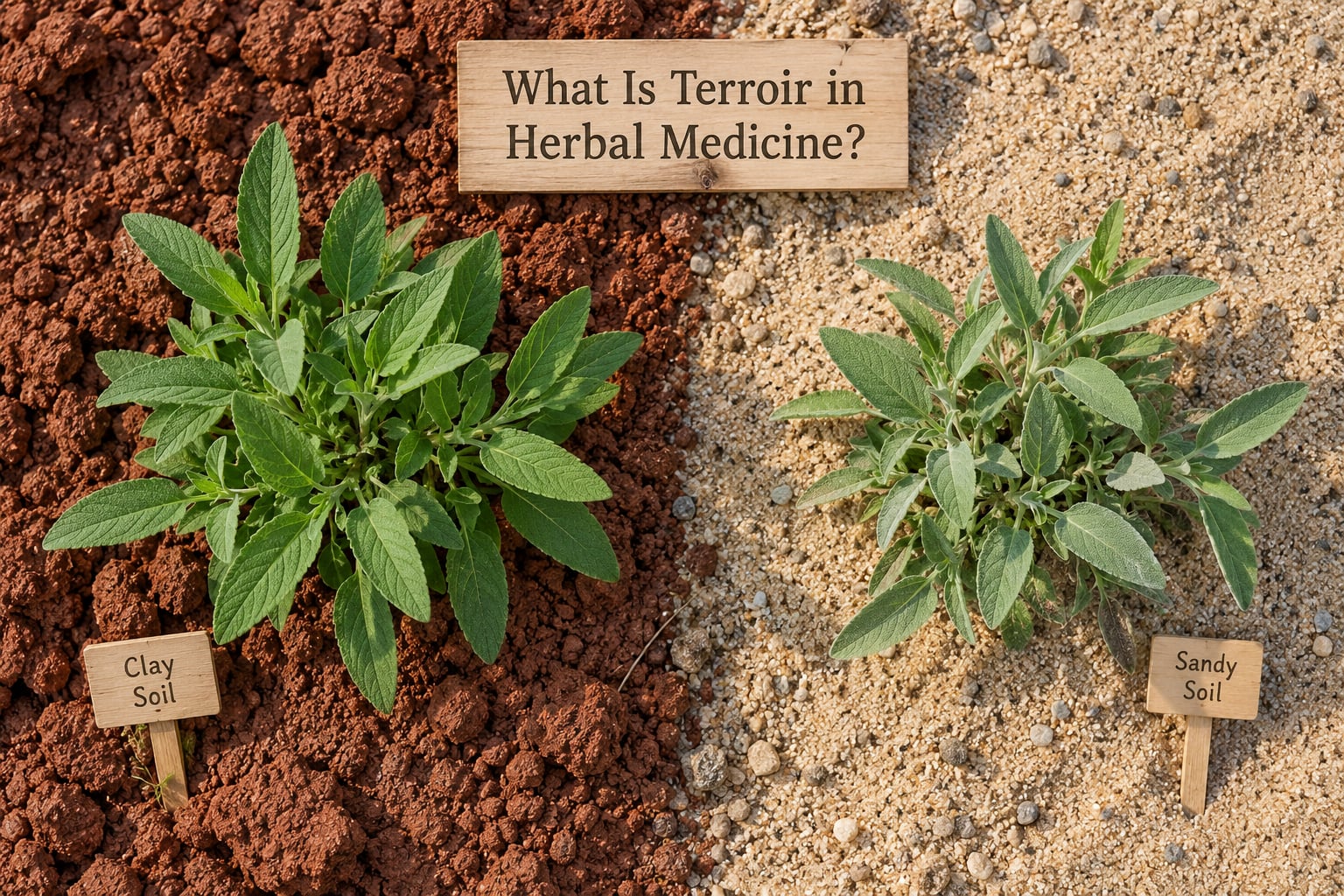
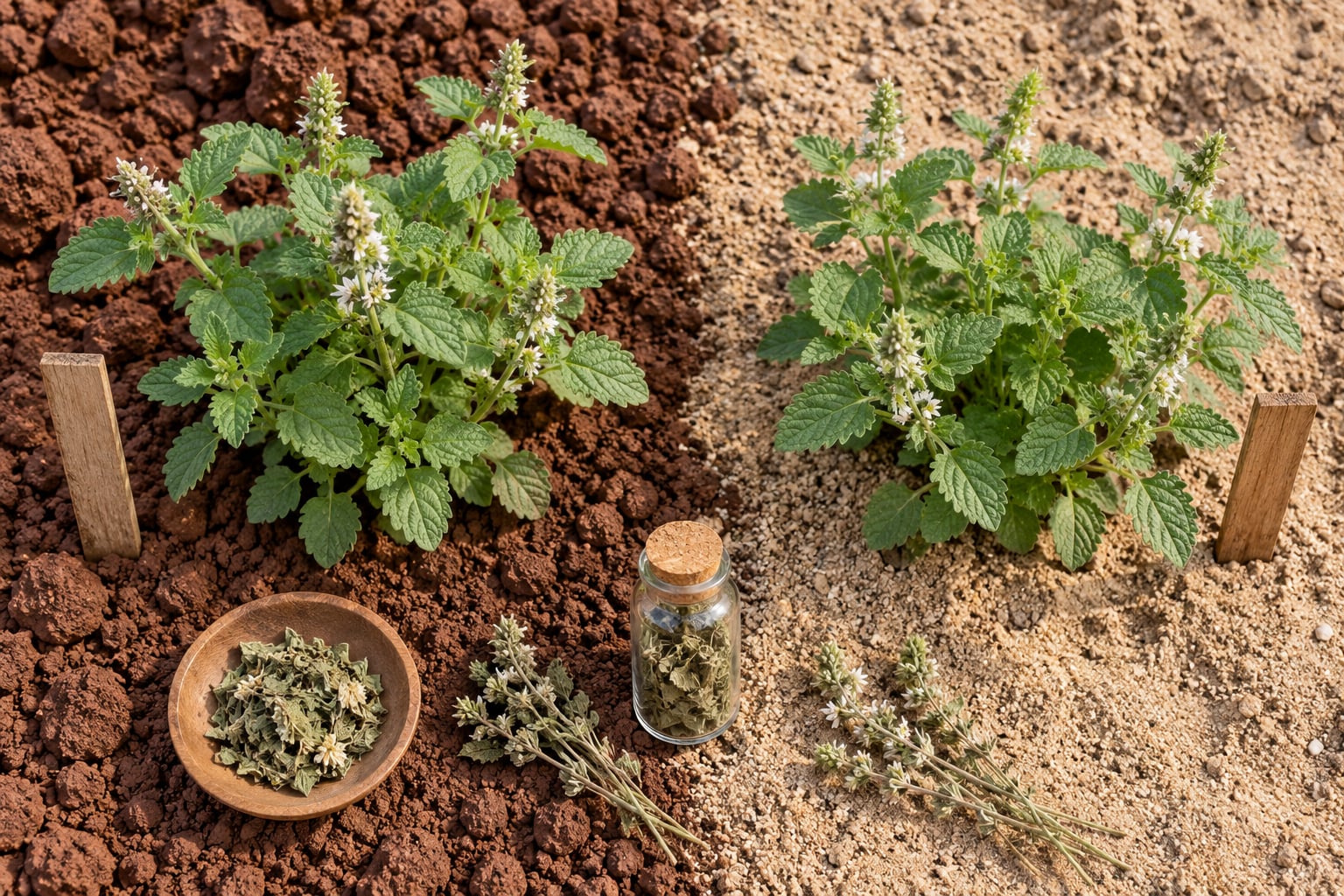
Terroir is the combination of environmental and human conditions in which a crop grows: climate, soil and underlying geology, water, altitude and slope, the surrounding plant and microbial life, and the farming or gathering practices used on that particular site. In wine it stands for a sense of place. In herbs it describes the same set of inputs, except the output is a chemical profile rather than a flavour.
The term carries an older history too. Chinese materia medica used didao, roughly the origin of the genuine material, to grade medicinal substances by where they came from, and paired it with paozhi, the processing that follows harvest. That pairing is useful, because it separates the growing site from what happens to the plant afterwards.
Five things make up terroir in practice:
- Climate — temperature range, rainfall timing, humidity, frost risk and length of growing season.
- Soil and geology — texture, pH, organic matter, mineral content and what the bedrock underneath contributes.
- Water — rainfall, groundwater, irrigation and how drainage shapes root depth.
- Topography — elevation, slope, aspect and the microclimates created by all three.
- Practice — cultivar or chemotype selected, spacing, pruning, harvest method, and whether the material is wild-collected or cultivated.
What terroir is not is a quality certificate. It describes conditions, and conditions are only an influence. A hillside can produce an under-performing batch, and a plain field can produce an excellent one.
Terroir and Herbal Potency Explained: What Researchers Examine
Terroir and herbal potency are related, but not interchangeable. Researchers need chemical testing, controlled side-by-side comparison of the same species, and properly recorded growing conditions before claiming that one origin produced a stronger herb. Without those, origin is a story rather than a finding.
That distinction matters more for herbs than it does for wine. A wine is judged by taste, which humans can do without instruments. Herbal material is judged by what is in it, and what is in it has to be measured in a laboratory. Two sacks labelled with the same species and the same mountain village can differ substantially in the compounds a chromatograph detects.
So the honest framing is this. Terroir is a real set of variables that genuinely affect plant chemistry. Its ability to predict potency for a specific batch is weak until somebody runs the analysis.
How Could Soil and Climate Affect an Herb?
Yes, growing conditions change what a plant puts into its leaves, bark, roots and flowers, though not always in the direction people expect. The mechanism is stress signalling. A plant that is comfortable puts most of its energy into growth. A plant under heat, cold, drought, high light or nutrient imbalance diverts resources into secondary metabolites, the compounds that defend it: essential oils, phenolic acids, flavonoids, tannins, terpenes and alkaloids.
So a drier year does not automatically produce a stronger herb. Under moderate stress, defensive chemistry often rises. Under severe stress, the plant may shed leaves, slow growth and end the season with less total biomass, so the crop yields less material and less of everything else with it. The curve is not a straight line in either direction.
Terroir factor to measured chemical effect
| Terroir factor | Change often observed in the plant | How it gets checked |
|---|---|---|
| Temperature and heat sum | Volatile oil composition shifts, with different terpene ratios | Gas chromatography of the essential oil |
| Drought or reduced irrigation | Higher concentrations of phenolics and tannins in leaf material | Total phenolics assay, antioxidant capacity testing |
| High light intensity | More flavonoid and phenolic accumulation in leaves | Spectrophotometric phenolic and flavonoid assays |
| Soil pH and mineral status | Altered alkaloid and mineral uptake patterns | Soil test paired with plant mineral analysis |
| Elevation and slope aspect | Changes in growth rate and in the timing of flowering | Site records tracked against harvest dates |
| Biotic pressure from pests | Defensive resin and tannin response in the affected tissue | Compound profile of damaged versus undamaged plants |
Temperature is the factor herbal growers watch most closely, because the chemistry of a plant’s volatile oil is sensitive to the temperatures it grew through. Soil pH matters just as much, because it controls which minerals are available. The same plant in the same district on soil with a different pH will take up a different mineral balance, and the presence of heavy metals in the wrong soil is a genuine quality and safety problem rather than a bonus.
Altitude gets discussed constantly, and the honest position is that plants do respond to it. Growth slows, the season gets shorter, and plants often invest more in protective compounds. What is not established is a simple rule that a herb from a higher elevation is automatically more potent. Trials in the medicinal plant literature, including work on how growing conditions and phenological stage shift polyphenol and terpene content, show real effects that vary by species and site rather than a single upward line.
Does Harvest Timing Change Herbal Potency?
Harvest timing can change the composition of a plant, and it is one of the least glamorous variables in the whole chain. Different tissues peak at different moments. Roots and bark are commonly collected when the plant is dormant or in its flowering phase, leaves and aerial parts are often taken around or just before flowering, and flowers have their own narrow window. Harvesting the wrong tissue at the wrong time gives you a different chemical profile from the same plant on the same farm.
Weather and time of day add smaller effects. Material cut wet dries more slowly and can pick up mould and microbial growth. Material left in a hot truck loses volatile constituents. Some traditions specify dawn or dusk harvests, and while the measurable difference is often modest, keeping to a harvest window does give a supplier a repeatable process, which has value in its own right.
What is not supported is the idea that every herb has one universally correct moment picked by the moon, the hour, or an elder’s intuition, with no reference to species or tissue. Traditional harvest calendars are repositories of long observation, and they encode real information about phenology and local climate. They are not a substitute for knowing which species you have and which part of it you are using.
Does Processing Change the Strength of a Herbal Remedy?
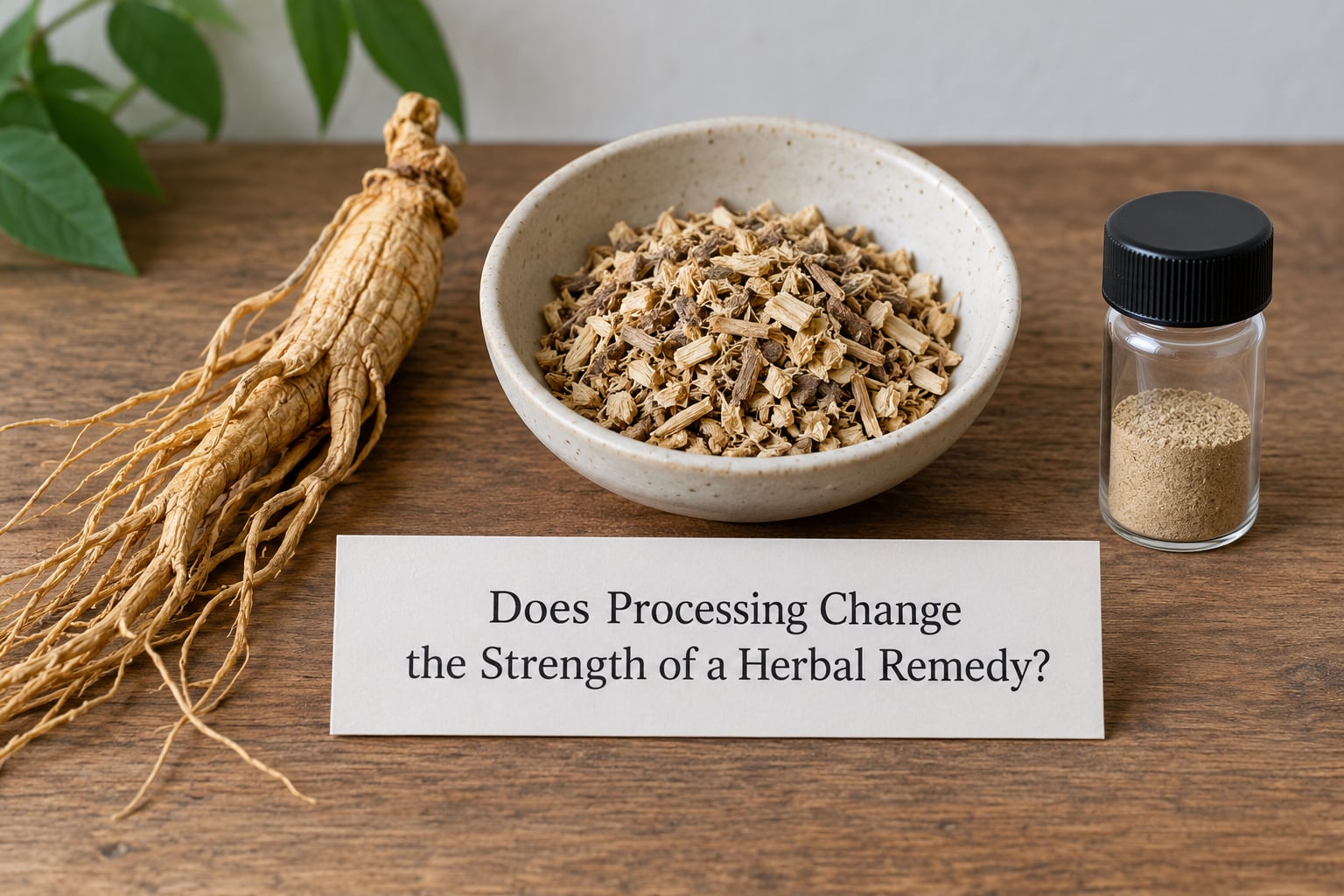
Yes. Everything that happens between the field and the finished preparation can change what you end up with, and it can change the same material in two directions. Drying is the biggest variable. Too fast and heat-damaged leaves lose volatile oil. Too slow and mould sets in. Direct sun drying degrades chlorophyll and some phenolics, while shade drying preserves more but takes longer and costs more.
Storage matters as much as harvesting. Heat, humidity, light and oxygen all drive degradation, and essential oils fade in a warm cupboard within months. Moisture content is tracked in the trade for exactly this reason, since a dried herb that feels leathery rather than brittle is already heading the wrong way.
Particle size changes extraction yield rather than the plant itself. A coarsely milled leaf gives up its compounds more quickly in hot water than a whole one, which is why a decoction tastes more bitter and more astringent than an infusion of the same material. Extracts concentrate further, and a liquid extract made from a 1:1 ratio is a different product from a dried one, not a stronger version of the same thing.
None of this is a dosing instruction. How strongly a given preparation acts on a person depends on the chemistry, the amount taken, and the person, and that is a question for a qualified practitioner or clinician rather than a magazine article.
How Do Scientists Measure Herbal Potency?
Measurement is the part that separates a laboratory from a brochure. There are several tools, and each answers a different question.
- Identity testing confirms the material is the species it claims to be, often by microscopy, macroscopic comparison against a herbarium reference, or DNA-based methods.
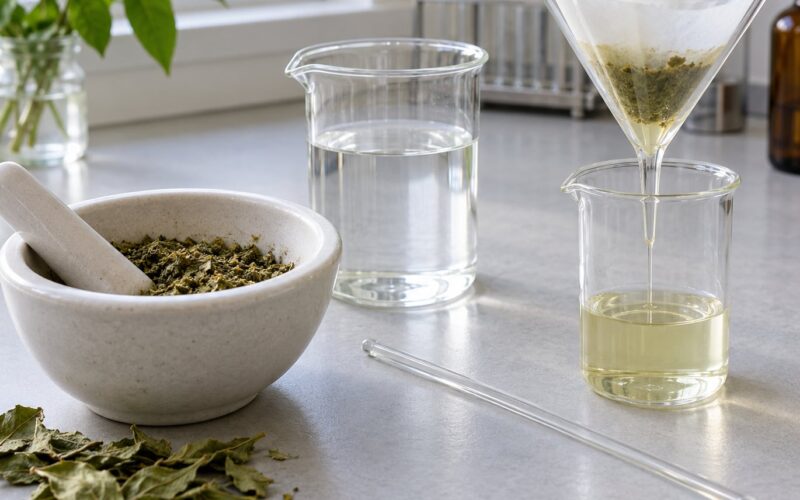
- Chromatographic fingerprinting separates the constituents and produces a profile. High-performance liquid chromatography for non-volatile compounds, gas chromatography for volatile oils.
- Marker compound assay quantifies one or a few named constituents against a stated threshold, for example a minimum percentage of a particular compound in the extract.
- Extract ratio tells you the concentration step, so a 1:5 water extract and a 1:1 ethanol extract are not interchangeable.
- Moisture, ash and microbial testing catch degradation, contamination and adulteration, including heavy metals, pesticide residues and microbial limits.
The limitation is worth stating plainly. A marker compound is a stand-in. One prominent constituent rarely accounts for the full medicinal effect of a plant, and a high reading of that constituent says nothing about the rest of the profile. Two extracts with identical marker levels can behave differently, because the compounds that were not measured are the ones doing part of the work.
Quality standards for herbal materials, drawn up by bodies such as the European Pharmacopoeia, the United States Pharmacopeia and the WHO, exist to fix these variables. They specify identity, purity, assay limits and contamination thresholds so that a plant name means the same material twice.
Does Traditional Origin Add Evidence of Potency?
Traditional origin is real evidence about something specific: which plants a community found useful, and how they prepared them. Ethnobotanical records, harvest calendars and long-standing preparation methods are valuable sources, and much of what the pharmaceutical industry still uses began as observation made over generations.
What traditional origin does not do is measure potency. A preparation trusted for a century may be a weak material, and a well-prepared batch from a new site may be strong. What traditional knowledge does supply is context a chemical assay cannot: which part of the plant mattered, when it was collected, and what a practitioner considered a sign that the material was not right.
It also cannot check safety. Some plants with long traditional use have documented limits, and a long history is not a toxicity study. Treat traditional knowledge as a strong lead worth verifying, not a verdict.
Terroir, Provenance, and Product Quality: What to Look For
Provenance is the documentation trail that turns a terroir story into something you can check. When you are reading a label, a supplier page or a research paper, these are the items that actually tell you something:
- Botanical identity, with the Latin binomial and the plant part used. Common names collide between unrelated species.
- Geographic origin stated at a level that means something, such as a region and harvest year rather than a country on its own.
- Wild-collected or cultivated, and if wild-collected, whether collection is documented as sustainable, since over-harvesting removes the resource.
- Harvest or production date, because dried material has a shelf life and old stock reads as mysterious strength rather than as an expired harvest.
- Batch testing with a certificate of analysis that names the compounds measured, the results, and the laboratory.
- Extraction method and ratio, plus whether the label describes the extract or the whole plant material.
- Storage conditions, and how the material was shipped, since degradation happens in the container as much as in the field.
- Supplier traceability, meaning you can follow the material back to the collection site or farm.
A vague origin claim is a warning sign rather than a guarantee. Phrases like sourced from the wild highlands, or collected by traditional healers, describe a relationship rather than a specification. The moment you ask what species, what part, what harvest date and what test, an honest supplier has answers.
One useful habit: put the label and the certificate side by side and check that the species on both match, and that the stated marker content sits inside the range the certificate reports. A label claiming a much higher percentage than the certificate shows is a simple, decisive catch.
What Can Go Wrong With Potency Claims?
Marketing language travels faster than evidence, and potency claims are a favourite place for it. The recurring problems look like this.
| Common claim | What the evidence supports |
|---|---|
| A specific mountain makes every herb stronger | Site affects chemistry, but direction and size vary by species; no general rule holds |
| Wild-harvested is always more potent than cultivated | Wild material varies more; cultivated batches are usually more consistent |
| A higher percentage on the label means better effect | A percentage is only meaningful against a named marker, a named part and a named extract ratio |
| More bitter means more medicinal | Bitterness is a sensory property, not a potency measurement |
| Older or denser material must be stronger | Very dense dried material often indicates poor drying, moisture or mould risk |
Substitution sits behind most of this. A buyer wanting one species can receive a cheaper lookalike, and unless identity testing was done, nobody downstream knows. Contamination is the other serious one, covering agricultural residues, adulterants, microbial growth and heavy metals where soils are rich in them.
There is also a habit worth pushing back on, which is treating a high laboratory reading as automatically safer. A concentrated extract is not a more effective medicine, and a high reading of one compound can come with a total profile that is not the one traditional users encountered. More measured is not the same as better.
Frequently Asked Questions
Does an herb grown in a particular soil always have stronger medicinal effects?
No. Soil pH, drainage and mineral content do change what a plant takes up and how it grows, and those changes can shift compound levels. But the direction and size of that shift differ by species, and a poor site can produce weak material. Whether a batch is potent is settled by testing the batch, not by reading its origin on a label.
Is wild-harvested herbal medicine more potent than cultivated material?
Not as a general rule. Wild-harvested plants often have more variation between batches because the site varies, while cultivated material is usually more consistent from harvest to harvest. Neither label predicts potency. What matters is correct species identification, the right plant part, a sensible harvest and analytical testing of the finished material for identity, active constituents and contaminants.
Does a higher percentage on a supplement label mean the herb is more effective?
Only if the percentage is tied to something you can verify. A number is meaningful only when the label names the marker compound, the plant part, the extract ratio and the daily amount, and when a certificate of analysis shows the same figure for that batch. A high reading of one compound rarely represents the full activity of the plant, and more is not automatically better or safer.
Can drying and storage change the medicinal compounds in a herb?
They can, and they are a common reason a good harvest becomes a weak product. Heat, sun, oxygen and humidity break down volatile oils and phenolics, while slow drying in damp conditions encourages mould. Moisture content is tracked for this reason. Storage in a warm, humid cupboard keeps degrading, so a material with no production date or storage information is a question rather than a reassurance.
How can I tell whether two products contain the same medicinal plant?
Compare the Latin botanical name, the plant part and the preparation type first, because common names are shared by unrelated species. Then look for a certificate of analysis covering identity testing, ideally microscopy or DNA-based. A product that gives only a marketing name and no analytical document has not shown you what is inside it, however confident the description sounds.
Should I use a herbal remedy if I am pregnant, taking medication or managing a health condition?
Speak to a doctor or pharmacist before you start, and tell them about every supplement and herbal product you already use. Interactions are well documented for several common herbs, and pregnancy, breastfeeding, liver conditions and medication use all change the risk picture. Symptoms such as swelling, breathing difficulty or a rapid or irregular heartbeat need urgent medical care, not a herbal trial.
What to Consider First
Start with identity, not with origin. Know the Latin species name and which part of the plant you are dealing with, because that decision affects everything after it.
Next, ask what evidence exists about the actual product rather than the hillside it came from. A certificate of analysis for the batch, or a published composition study, tells you more than any origin story. And before you take anything for a health condition or alongside a prescribed medicine, put the bottle in front of a doctor or pharmacist and say what is in it.
Terroir is a useful lens. It is just not a substitute for analysis.