Amaranth greens are the edible leaves and young stems of Amaranthus species, a leafy vegetable grown across Africa, Asia and the Americas. They cook in minutes, taste earthy and mild when young, and are among the most nutrient-dense greens per calorie. They are also a different food entirely from amaranth grain, which confuses a lot of nutrition lookups.
Updated for October 2026. This guide covers amaranth greens nutrition and cooking end to end: what the plant is, what a serving actually contains, how to clean it without losing the leaves to mush, six cooking methods with real times, four recipes, and the honest caveats.
Table of Contents
- 1What Are Amaranth Greens?
- 2Amaranth Greens Nutrition at a Glance
- 3What Do Amaranth Greens Taste Like?
- 4How to Prepare and Clean Amaranth Greens
- 5How to Cook Amaranth Greens
- 6Sauté
- 7Blanch, then dry-cook
- 8Boil
- 9Steam
- 10Stir-fry
- 11Cook into dals, curries and stews
- 12Simple Amaranth Greens Recipes
- 13Garlic sauteed amaranth greens
- 14Amaranth greens with tomato and onion
- 15Lentil and amaranth soup
- 16Fresh chopped amaranth salad
- 17Can You Eat Amaranth Grain and Greens Together?
- 18Are Amaranth Greens Safe to Eat?
- 19Frequently Asked Questions
- 20Can amaranth greens be eaten raw?
- 21Is amaranth safe to eat daily?
- 22Is amaranth high in oxalates?
- 23Do I need to soak or blanch amaranth before cooking?
- 24Which is healthier, amaranth leaves or spinach?
- 25How long do you cook amaranth greens?
- 26Conclusion
What Are Amaranth Greens?
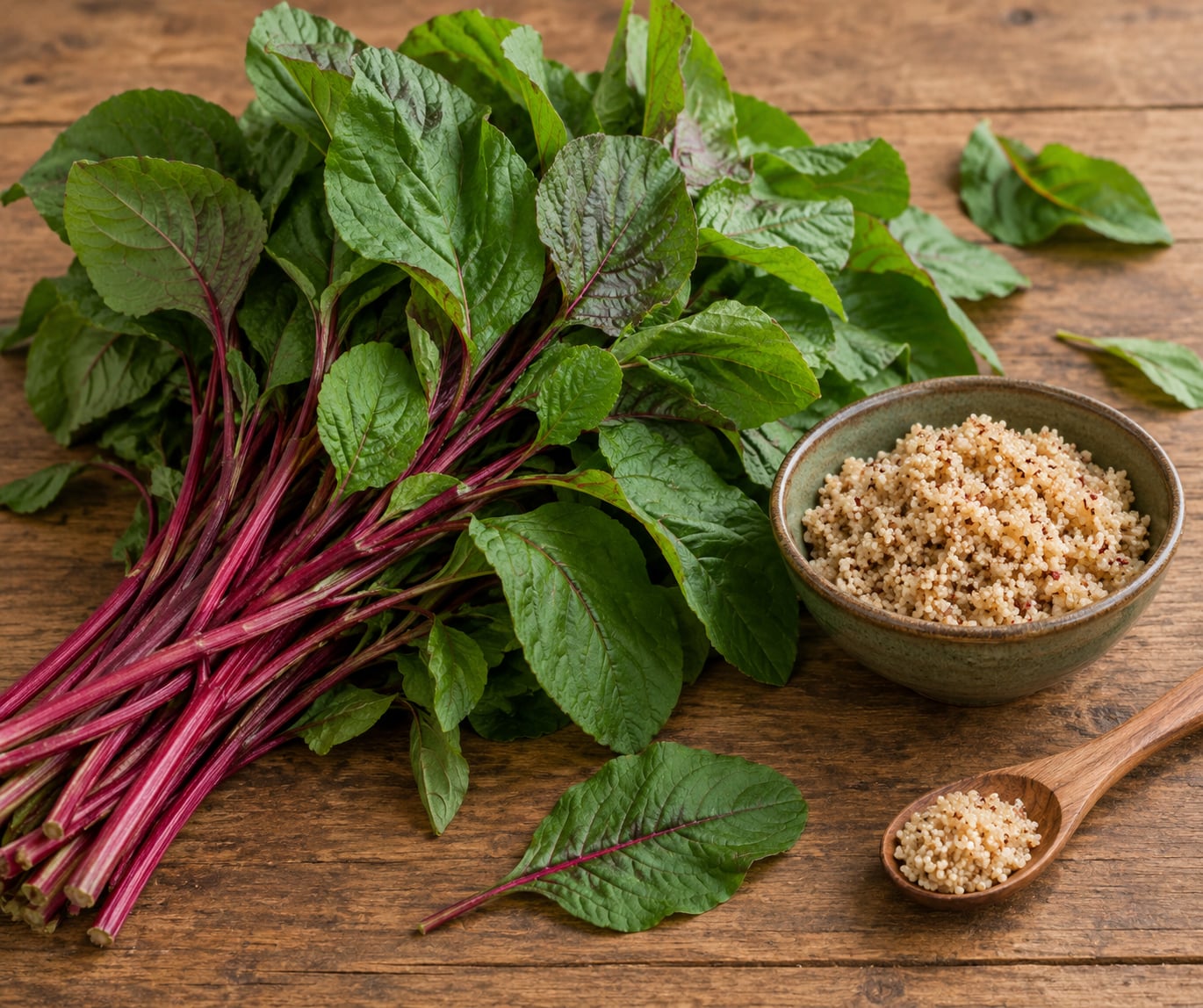
Amaranth is a large genus of broadleaf plants in the amaranth family, and dozens of species grow as food crops, garden greens or stubborn weeds. The leaves people eat come mainly from Amaranthus tricolor, Amaranthus viridis and Amaranthus dubius, with the reddish-leaved forms often grown as ornamentals ending up on the plate too.
You eat the tender leaves and the thin top of the stalk. Stems get fibrous fast, so anything thicker than a pencil gets trimmed. Young leaves barely need cooking; older leaves want a full sauté or a simmer.
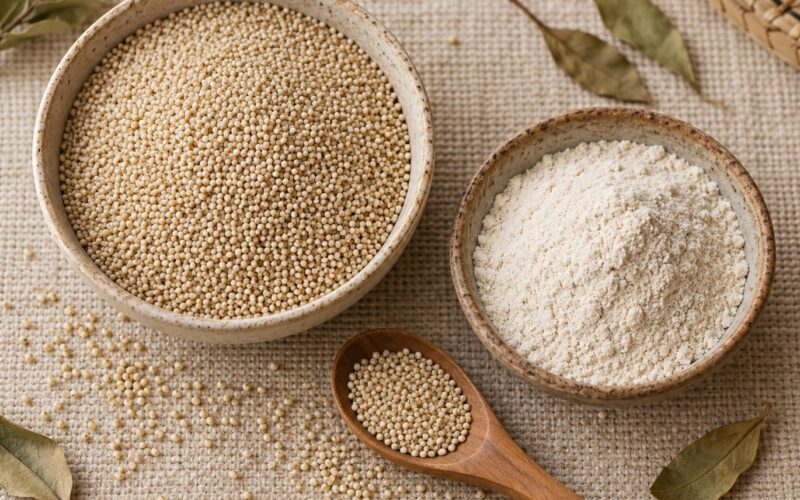
The grain confusion is worth settling early, because the two parts of the same plant behave nothing alike in the kitchen. Amaranth grain is a staple in Mesoamerica and parts of Africa and India, where small seeds are popped or boiled into porridge and ground into flour. The leaves are a vegetable. Nobody boils grain and calls it greens.
| Part of the plant | Eaten as | Flavour | Main nutritional character |
|---|---|---|---|
| Leaves and tender stems | Leafy green: salad, sauté, curry, soup | Earthy, mildly peppery, faintly nutty | Very high vitamin K and vitamin C, folate, calcium, manganese; moderate protein; high oxalate |
| Seeds (amaranth grain) | Whole grain or flour | Slightly nutty, mildly sweet, popcorn-like when dry-toasted | Starchy carbohydrate, complete plant protein around 13 to 14 g per 100 g, gluten-free |
Amaranth Greens Nutrition at a Glance
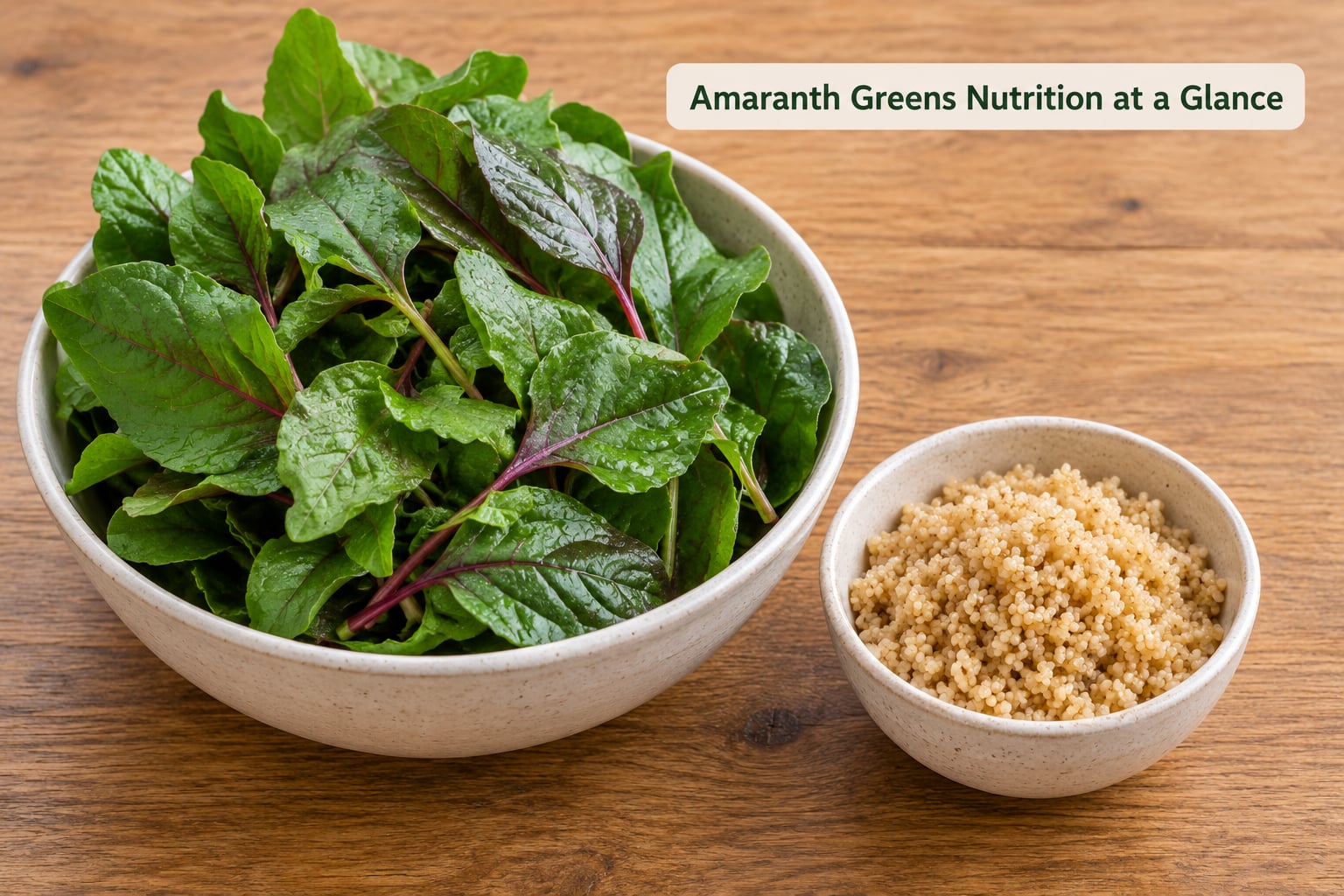
Figures below follow USDA composition data for amaranth leaves, raw, per 100 g, with percent daily values against a 2,000-calorie reference diet. Values shift with species, leaf age and growing conditions, so treat them as a well-sourced guide rather than a lab report.
| Nutrient | Per 100 g raw | %DV |
|---|---|---|
| Vitamin K | 1140 mcg | 1425% |
| Vitamin C | 43.3 mg | 72% |
| Vitamin A | 2917 IU | 58% |
| Folate | 81 mcg | 20% |
| Calcium | 215 mg | 22% |
| Iron | 2.3 mg | 13% |
| Potassium | 611 mg | 13% |
| Manganese | 0.9 mg | 40% |
| Calories | about 23 kcal | low |
That vitamin K figure is the headline and the caveat in one line. It matters for blood clotting and bone protein, and it is high enough that anyone on warfarin should ask their prescriber before making amaranth a daily vegetable.
Raw and cooked numbers look contradictory across nutrition sites because they are measured on different bases. Raw greens weigh 23 kcal per 100 g. A cooked cup weighs roughly 132 g and lands near 28 kcal. Cooking removes water, so per 100 g of the cooked, drained leaves the protein roughly doubles to about 2.1 g, with 4.1 g carbohydrate and 0.18 g fat. Same vegetable, three different measurement bases, no contradiction.
One more practical note on portions: a heaped raw bunch loses more than three quarters of its volume in the pan. About 100 g of raw leaves yields a small side dish for one or two people. Cook for two and reach for roughly 200 g raw.
What Do Amaranth Greens Taste Like?
Young amaranth leaves are mild, earthy and a little grassy, with a peppery finish that some people read as a spinach edge. There is no strong family resemblance to the grain, which surprises people who have only met amaranth as a seed.
Maturity changes the taste more than the variety does. Small, tender leaves eaten raw are soft and barely bitter. Full-sized leaves develop astringency, and a longer cook softens it rather than hiding it.
Bitterness is mostly a function of oxalate and overcooking, not of bad produce. If the greens turn harsh, the most likely causes are old leaves, a crowded pan, or cooking them in a dry pan until they scorched. Cooking them in a little liquid and keeping the heat moving fixes most of it.
Texture is the bigger deal for many cooks. Wet leaves steam themselves into mush before the pan gets hot. Get them dry first, keep the pan hot, and use more oil than feels necessary.
How to Prepare and Clean Amaranth Greens
Preparation takes about ten minutes and determines whether the greens taste good or turn to sludge. Work through it in this order.
- Pick tender leaves. Choose bright, unwilted leaves without yellow edges. Big old leaves cook fine but need the stems trimmed.
- Trim the stalks. Slide your fingers down each stem and bend it until it snaps, then strip the leaf off. Discard stalks thicker than a pencil. Thick stalks are fibrous and will not soften in a short sauté.
- Separate the leaves from other greens when washing. Amaranth grows close to the ground and collects soil, insects and grit faster than most cultivated greens.
- Wash in three changes of cold water. Fill a large bowl, submerge the leaves, lift them out while the grit settles at the bottom, and discard that water. Repeat. Do not soak for long periods, since waterlogged leaves cook unevenly.
- Dry thoroughly. Spin in a salad spinner or pat between two cloths until the leaves are completely dry. This step decides whether you get a sauté or a stew.
- Store loosely and cold. Wrap unwashed, dry leaves in a clean towel or a paper bag inside the fridge, not a sealed plastic bag. They keep three to four days that way and about ten days once blanched and frozen.
Wash just before cooking unless you have dry leaves stored. Greens that have sat in water overnight never crisp up properly in a hot pan.
How to Cook Amaranth Greens
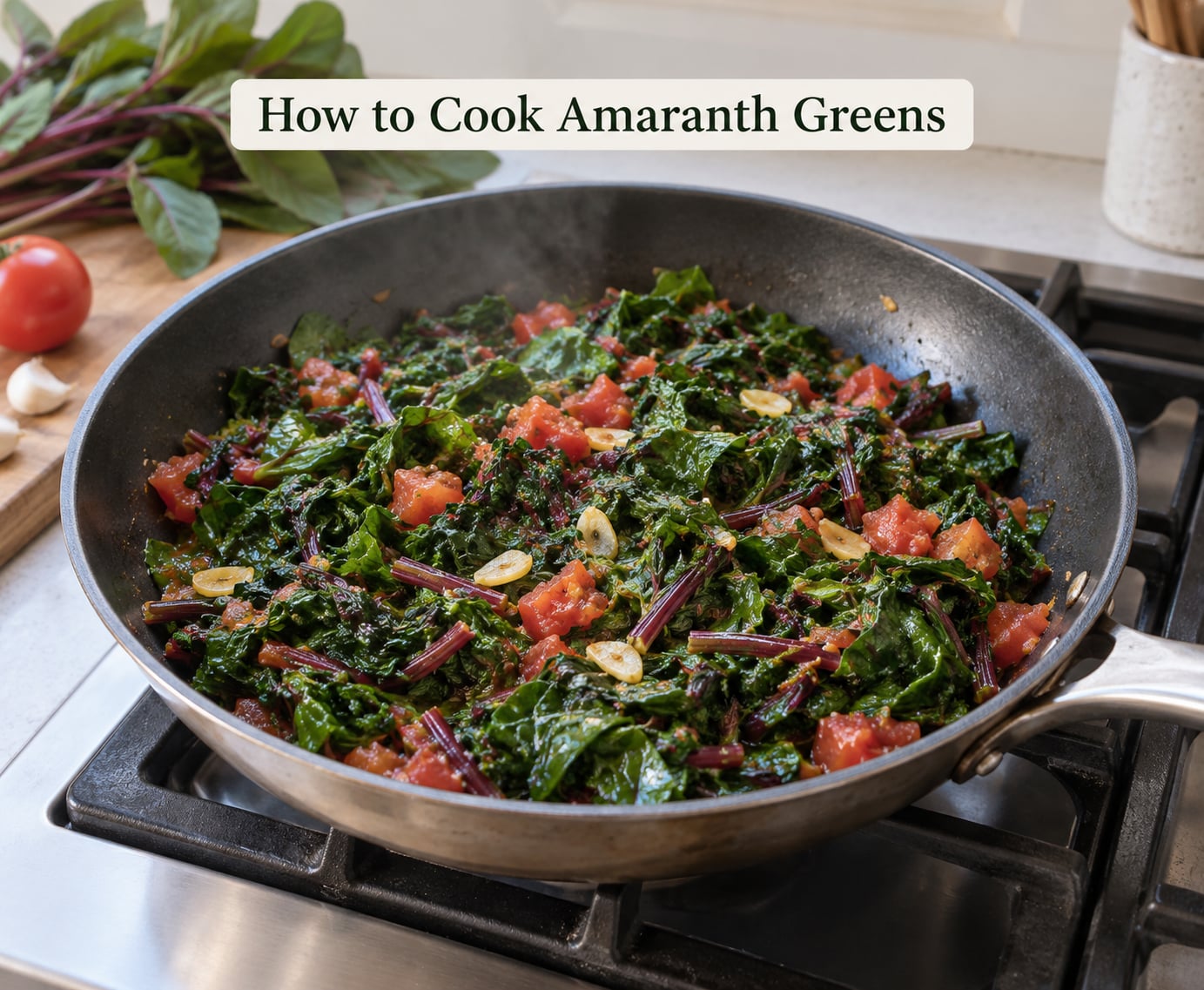
Six methods cover nearly everything, and the biggest single improvement to your results is seasoning after the leaves have wilted. Salt and acid added to a crowded pan before the greens collapse scorch on the bottom instead of seasoning.
Sauté
The everyday method. Heat a wide pan until a drop of oil shimmers, add a tablespoon or two of oil, then the dry greens. Stir for the first minute as they collapse, then leave them for 2 to 3 minutes. Add garlic, sliced chili or mustard seeds in the last 30 seconds, and salt once the volume has dropped by half. Total time, 5 to 8 minutes.
Blanch, then dry-cook
Drop the greens into heavily salted boiling water for 30 to 60 seconds, lift out, shock in iced water and squeeze dry. This is the move for anyone eating a large quantity regularly, because a meaningful share of oxalate leaches into the water you throw away. Sauté as normal afterwards for 3 to 4 minutes.
Boil
Simmer rather than boil, in just enough salted water to cover, for 3 to 5 minutes until the stems bend. Drain well and dress with oil, chili and lemon. Boiled greens are milder and softer than sauteed ones, and the discarded liquid takes minerals and oxalate with it.
Steam
Leaves over a high simmer in a lined steamer cook in 4 to 6 minutes, staying greener and tasting less cooked than boiled. Check at four minutes. Dress straight after with oil and lemon, since steamed greens arrive dry.
Stir-fry
Cut leaves into rough pieces, heat the wok until it smokes, add oil, then the greens in one layer. Toss for 30 seconds, add sliced garlic, ginger and chili, toss another 30 seconds, and finish with a splash of water or sauce to deglaze. Fast, and the greens keep a slight bite. Southeast Asian versions typically season with ginger, garlic and fish sauce or soy.
Cook into dals, curries and stews
Whole or chopped leaves go in during the last 5 to 10 minutes of a lentil dish, or the last 15 minutes of a stew. This is the most forgiving method, since the liquid keeps the greens from scorching and the long cook removes almost all bitterness. Community recipes pair amaranth constantly with rajma and pappu-style dals, and the pairing is not decorative: the legume protein completes what the grain alone does not.
If a dish tastes bitter, the cook time is almost certainly too long or the batch too crowded. Fix the heat, not the leaves.
Simple Amaranth Greens Recipes
Garlic sauteed amaranth greens
Trim 300 g of greens, wash in three changes of water and dry completely. Heat 2 tablespoons of oil in a wide pan over medium-high heat, add the greens and stir for 1 minute. Add 3 crushed garlic cloves and 1 sliced green chili, cook 2 to 3 minutes more, then season with salt and a squeeze of lemon. Ready in about 10 minutes.
Amaranth greens with tomato and onion
Slice 1 onion and soften it in 2 tablespoons of oil for 5 minutes. Add 2 chopped tomatoes and cook until they collapse into a sauce, about 5 minutes. Stir in 400 g of washed, dried chopped greens and a pinch of turmeric, and cook 5 minutes until everything comes together. Finish with salt. A small pinch of sugar is common in South Indian versions and rounds the tomato out.
Lentil and amaranth soup
Simmer 150 g of red lentils in 600 ml water with a sliced tomato and a spoonful of oil for 20 minutes, stirring until the lentils break down. Add 250 g of chopped amaranth leaves and cook 7 minutes more. Season with salt, black pepper and a spoon of ghee or oil. Optional: finish with a tempering of cumin seeds and dried chili in hot oil.
Fresh chopped amaranth salad
Use only the youngest, smallest leaves for this. Chop 150 g finely and toss with 1 tablespoon of lemon juice, 1 teaspoon of olive oil, a pinch of salt and a few grams of grated coconut or chopped peanuts. Serve immediately as a side. Older leaves do not work well raw; their astringency shows in a cold salad.
Regionally, the same vegetable goes by many names. It is thotakura in Andhra kitchens, lal shak when the leaves are red and cooked with turmeric in Bengal and the Northeast, vlita in Maharashtra, and chira in parts of Nepal and East Africa. Coastal Andhra versions pair it with dry prawns, where the prawns reach 145°F internally before the greens go in for the final few minutes.
Can You Eat Amaranth Grain and Greens Together?
Yes, and it is a very good pairing. The grain contributes starch and around 13 g of protein per 100 g cooked; the leaves bring vitamin K, vitamin C, folate, calcium and fibre. Together in one bowl you get a complete plant meal with a much wider nutrient spread than either part alone.
The two need different handling. Grain simmers in liquid for 20 to 25 minutes at roughly two parts water to one part grain. Greens take 5 to 8 minutes. Cook the grain first, then fold the greens through in the final minutes, or wilt the greens separately and spoon them over.
The texture contrast is the point: fluffy little grain pearls against soft, silky leaves. Texture-wise they do not blend into mush together, which is exactly why the combination works.
Are Amaranth Greens Safe to Eat?
For most people, yes, in normal portions. Like spinach, beet leaves and rhubarb, amaranth carries high oxalate, and that is the one factor worth taking seriously rather than waving through.
Oxalate. Oxalic acid binds calcium and iron in the gut, reducing how much of both you absorb. Boiling or blanching amaranth in water and discarding the liquid removes a portion of it, which is why the blanch-then-sauté method above is a better habit than a dry sauté if you eat these greens often.
Nitrates. Amaranth greens also accumulate nitrates. Nutrition research treats high oxalate and high nitrate together as the practical ceiling on daily quantity, which is why moderate portions rather than large daily servings get the better recommendation.
Who should eat less. People with a history of calcium-oxalate kidney stones, gout, kidney disease, rheumatoid arthritis or calcium-oxalate problems generally get advised to limit high-oxalate greens. Anyone taking warfarin should discuss consistent high vitamin K intake with a prescriber before making amaranth a habit.
Gas and digestion. Some people report bloating and flatulence after eating amaranth, more often as a raw-heavy diet or in larger servings, and more often in people unused to high-fibre greens. Cooking reduces the effect.
Allergy. Rare individual reactions occur, as with any plant food. Stop eating it and speak to a doctor if you develop hives, swelling or breathing difficulty.
This is general information, not medical advice. For kidney stones, gout, anticoagulant use or any other specific condition, ask your doctor or a registered dietitian how much fits your situation.
Frequently Asked Questions
Can amaranth greens be eaten raw?
Yes, if you use the youngest, most tender leaves. Small leaves chopped into a salad with lemon and oil are entirely workable, and they are mild rather than bitter. Older, full-sized leaves should be cooked: raw they taste astringent and gritty because of their oxalate and fibre content. Wash them in three changes of cold water and dry them well, since damp leaves dilute any dressing.
Is amaranth safe to eat daily?
For most healthy adults, eating amaranth greens daily in moderate portions is fine. The real limits are oxalate and nitrate content, which is why large daily servings are not advised. If you have calcium-oxalate kidney stones, gout, kidney disease, rheumatoid arthritis, or take warfarin, talk to your doctor or a registered dietitian about how much is right for you before making it a habit.
Is amaranth high in oxalates?
Yes. Amaranth greens sit in the high-oxalate group alongside spinach, beet greens, chard and rhubarb, and that is the main nutritional limitation people run into. It matters most for anyone prone to calcium-oxalate kidney stones. Boiling or blanching the leaves and discarding the cooking water removes a useful share of it, so blanching first is a practical habit for frequent eaters.
Do I need to soak or blanch amaranth before cooking?
Not for texture or safety reasons. A short soak is not needed, since amaranth lacks the bitter compounds quinoa carries in its outer layer. Blanch for 30 to 60 seconds only if you want to lower oxalate, and only if you cook the greens in water rather than sautéing them dry. Dry-sautéed greens retain more of their oxalates.
Which is healthier, amaranth leaves or spinach?
It depends on the goal. Amaranth is higher in vitamin C, vitamin A and manganese, and has a mild flavour that suits curries and dals. Spinach carries more iron per 100 g raw, roughly 2.7 mg against amaranth’s 2.3 mg, and both are high-oxalate leaves with high vitamin K. Either is a strong choice; the better one is the vegetable you will actually cook regularly.
How long do you cook amaranth greens?
A dry sauté takes 5 to 8 minutes, steaming takes 4 to 6, and boiling takes 3 to 5. Stirred into a dal or curry, they need only the final 5 to 10 minutes. They are done when the stems bend easily and the volume has dropped by about three quarters. Cooking much past that point is where bitterness and mushy texture come from.
Conclusion
Amaranth greens are a fast, gluten-free, nutrient-dense vegetable that most cooks either remember from childhood and never buy, or try once and write off. The gap is usually technique, not taste.
Start here: buy a bunch with small tender leaves, wash it in three changes of cold water, dry it properly, and sauté it in hot oil with garlic and chili for five to eight minutes, seasoning once the leaves have wilted. Add it to a dal or curry twice a week, blanch it first if you eat a lot of high-oxalate greens, and keep a bowl of the cooked leaves in the fridge for a fast side dish through the week.