The short answer: use about 2 tablespoons of dried hibiscus calyces for every litre of water at 95 to 100 °C (203 to 212 °F), steep 5 to 10 minutes, strain, then sweeten to taste. That is the whole method. Almost every disappointing cup of hibiscus comes from one of two things going wrong: too much plant for the water, or heat and time pushed past the point where the drink tastes clean.
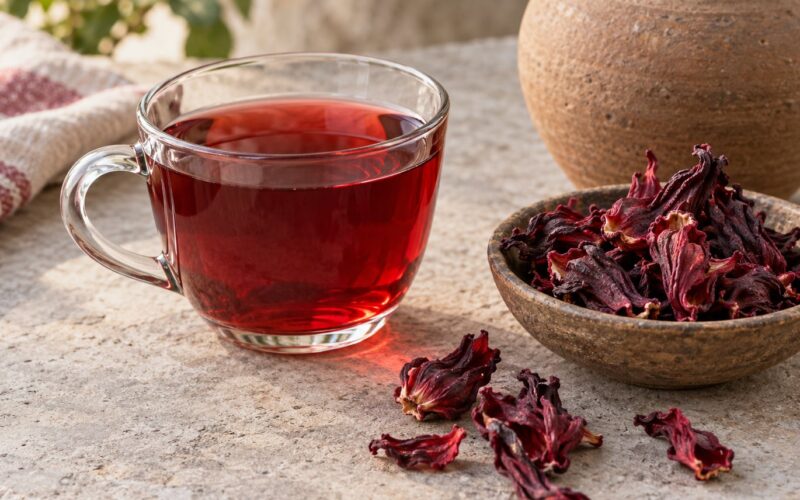
Hibiscus is Hibiscus sabdariffa, the roselle plant. The deep red thing you brew is the calyx, the fleshy cup that sits under the flower, and it is packed with anthocyanins and tannins. Those tannins are why a good cup is tart and slightly drying, and why a badly brewed one is genuinely unpleasant. The plant is naturally caffeine-free, vegan and gluten-free, which is why so many people reach for it as an evening drink instead of coffee or black tea.
It takes under fifteen minutes start to finish, and the only real skill involved is restraint. Read the mistakes section before your first cup; it saves a lot of guessing. Updated for 2026.
Table of Contents
- 1What You Need
- 2How to Brew Hibiscus Tea Properly
- 3Step 1: Pick the right part of the plant
- 4Step 2: Heat the water to 95 to 100 °C (203 to 212 °F)
- 5Step 3: Measure 2 tablespoons per litre
- 6Step 4: Steep 5 to 10 minutes and watch the colour
- 7Step 5: Taste before you sweeten
- 8Steep time and strength: what each window gives you
- 9Cold brew hibiscus tea, the overnight way
- 10Making a hibiscus concentrate for iced tea
- 11Flavour add-ins that actually work with the tartness
- 12How the same drink is prepared across West Africa, Sudan and Mexico
- 13Common Mistakes
- 14How to brew hibiscus tea properly comes down to two variables
- 15Too much plant for too little water
- 16Leaving it on the boil
- 17Steeping far past the window
- 18Judging a normal astringent cup as a failed batch
- 19Confusing fine sediment with a straining fault
- 20Using the wrong part of the plant
- 21A last note on daily drinking and safety
- 22Frequently Asked Questions
- 23How long should I steep hibiscus tea?
- 24Should I boil hibiscus flowers or use hot water?
- 25What part of the hibiscus plant is used for tea?
- 26How can I make hibiscus tea taste less bitter?
- 27How should dried hibiscus be stored?
- 28When should I ask a healthcare professional about hibiscus?
- 29Conclusion
What You Need
The list is short, and most people already own every item. Quantities below are ordinary kitchen amounts for one litre, not doses from any kind of treatment.
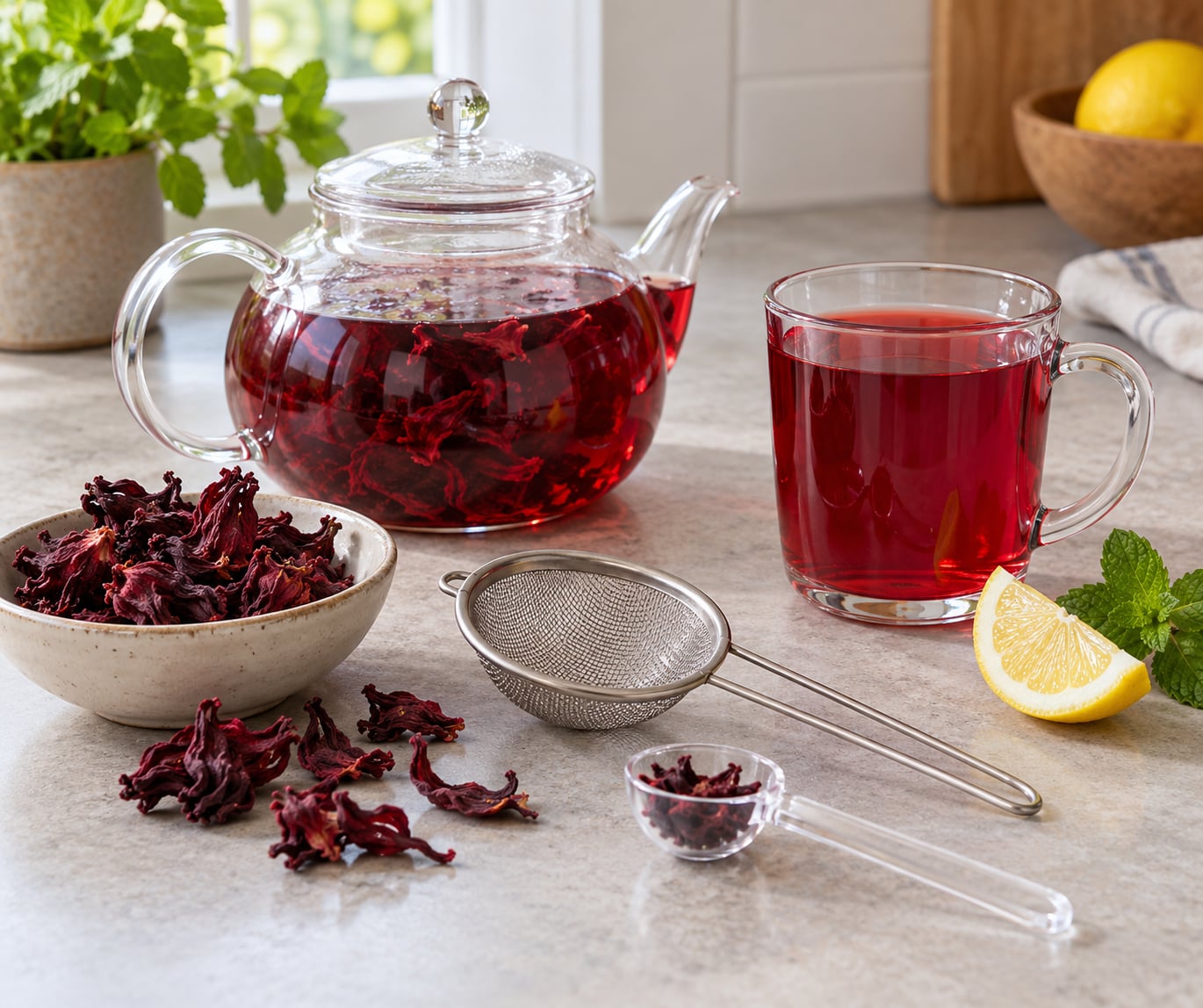
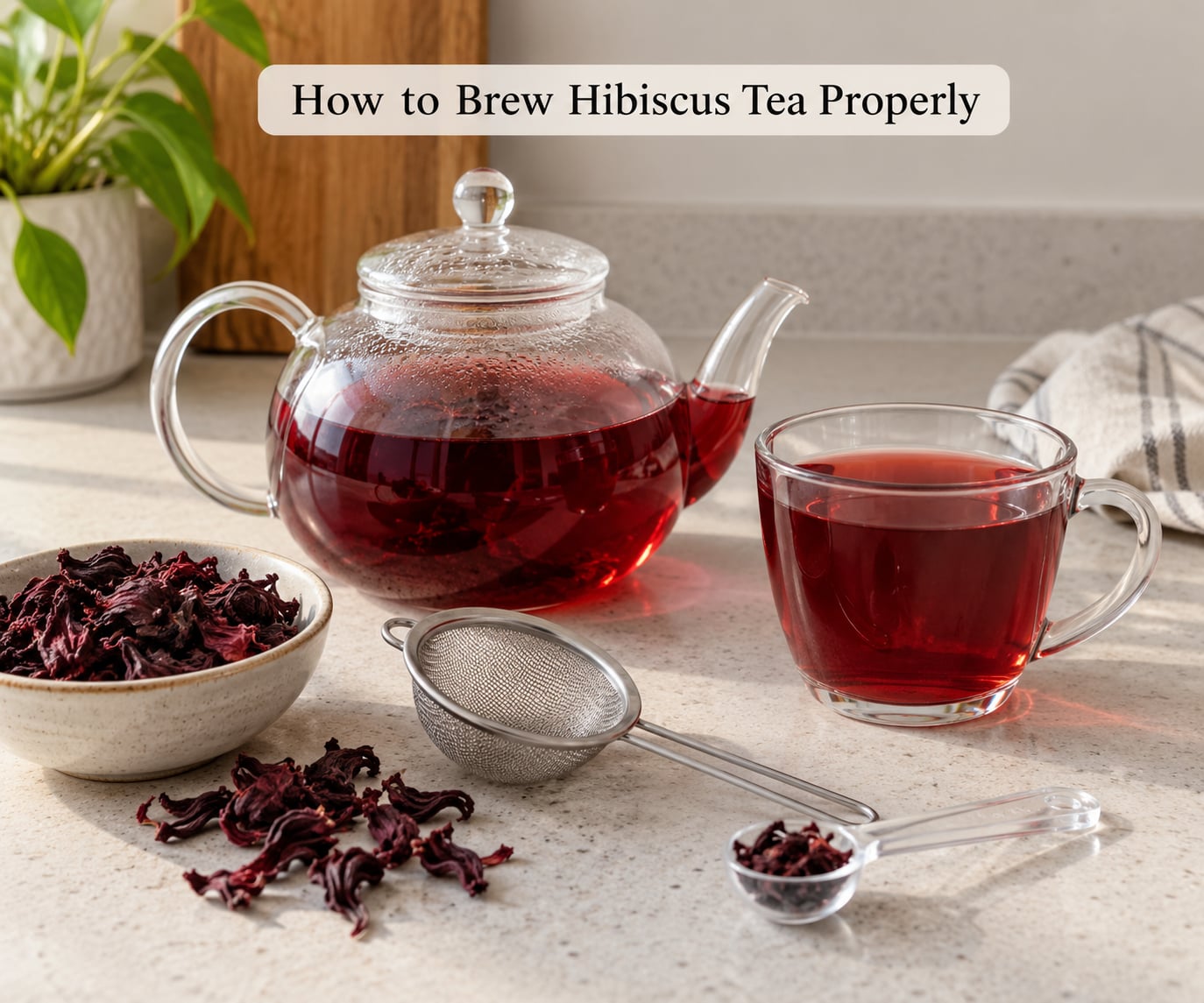
- Dried hibiscus calyces, roughly 2 tablespoons (about 8 to 10 g) per litre. Whole dried flowers work too, and you use a little less since they include petals.
- Fresh water, 1 litre. Filtered or spring water tastes cleaner than heavily chlorinated tap water.
- A kettle or small saucepan with a lid, so you can pour the water off the plant without losing the liquor.
- A fine mesh strainer or an infuser basket. Coarse sieves let grit through, and you will notice it in the last sip.
- A mug or glass, plus a spoon.
Then the optional group: a lemon or lime wedge, a few slices of fresh ginger, a cinnamon stick, a few cloves, star anise, lemongrass, mint, or a spoon of honey or agave. These are for balance, not for hiding a bad brew, so add them after you have tasted the plain version.
How to Brew Hibiscus Tea Properly
Step 1: Pick the right part of the plant
Buy calyces, not decorative petals. The calyx is the fleshy red cup, and it holds most of the colour and acidity. Petals are milder and a little hay-flavoured, and whole flowers sit somewhere between the two. Teabags are usually fine, just less generous: one bag for roughly 250 ml, so a bag in a litre gives you a weak cup unless you steep it longer.
Step 2: Heat the water to 95 to 100 °C (203 to 212 °F)
Hibiscus wants hot water, unlike green tea. Its flavour compounds sit behind cell walls that a gentle 80 °C pour barely touches, so a genuine rolling boil is fine and gives a fuller, deeper brew. Boil the water first, then pour it over the calyces. You are not simmering the plant itself, which is the difference that matters for bitterness.
Step 3: Measure 2 tablespoons per litre
Put the dried calyces in your pot, teapot or jar first, then pour the hot water over them. Pouring water onto the plant rather than the other way round helps the colour come out evenly, and it keeps any dust on the bottom of the packet out of the cup. Use roughly 8 to 10 g per litre as your starting point, then adjust to your own taste from there.
Step 4: Steep 5 to 10 minutes and watch the colour
Cover and leave it alone. The colour is your timer: the liquor moves from pale pink through deep ruby, and when the colour stops deepening you are close. Aroma matters too, since a well-brewed cup smells tart and berry-like rather than cooked. Once the colour plateaus, strain through a fine mesh strainer and press the spent calyces lightly to get the last of the liquor out.
Step 5: Taste before you sweeten
Drink it plain first. The drink should be tart, a little astringent, and clean, with no harsh edge. If it is sharp enough to pucker, add sugar or honey a spoonful at a time, stirring and tasting each time. A squeeze of lemon sharpens it, while a small splash of orange or apple juice rounds the tartness without more sugar.
Steep time and strength: what each window gives you
Time changes strength far more than most recipes admit. Use this as your guide.
| What you want | Dried calyces per litre | Water | Steep time |
|---|---|---|---|
| Light, easy drinking | 8 g (about 1.5 tbsp) | 95 °C / 203 °F | 5 minutes |
| Medium, everyday cup | 10 g (about 2 tbsp) | 98 °C / 208 °F | 7 to 8 minutes |
| Strong, traditional style | 15 g (about 3 tbsp) | 100 °C / 212 °F | 10 minutes |
| Concentrate for iced tea | 25 g (about 5 tbsp) | 100 °C / 212 °F | 15 minutes, then dilute 1:1 |
Cold brew hibiscus tea, the overnight way
Cold brewing takes the heat out of the equation, which most people find makes a sweeter, less astringent drink:
- Measure. 10 g of dried calyces (about 2 tablespoons) per litre of cold filtered water, into a lidded jar.
- Wait. Refrigerate 6 to 12 hours. A workday is the usual window; overnight is easier to remember.
- Strain and serve. Strain out the calyces, sweeten if you want, and serve over ice. A second steep in the same water, 3 to 4 hours, gives a lighter second round.
Homebrewers and fermentation hobbyists use the same cold method at a heavier dose, around 2 tablespoons per 1.5 litres, then add sugar and go on to a second fermentation. The same liquor is also a good base for spritzes and mocktails once you have the strength right.
Making a hibiscus concentrate for iced tea
A concentrate solves weak iced tea, since dilution with ice water is usually the culprit:
- Brew strong. Use 25 g of calyces per litre of boiling water.
- Steep 15 minutes. Longer is fine here, since you are about to cut the strength back.
- Strain hot. Work quickly so the plant does not keep extracting in the cooling liquor.
- Dilute 1:1 with cold water or ice for drinking, or mix 1 part concentrate with 4 parts sparkling water and a squeeze of lime.
You can also turn the concentrate into a simple syrup for soda-style drinks: combine equal volumes of concentrate and sugar, warm gently until dissolved, and refrigerate. Expect a shelf life of about two weeks in a closed bottle.
Flavour add-ins that actually work with the tartness
Ginger slices warmed in the pot give warmth and cut the sourness. Cinnamon, cloves and star anise turn the drink into something closer to a spiced tea, best with the strong setting above. Lemongrass adds a citrus note without more sugar. Fresh mint, added in the last two minutes, is the classic summer pairing. Citrus peels or a splash of pineapple juice work if the tartness is the problem rather than the brew.
How the same drink is prepared across West Africa, Sudan and Mexico
The method is old and shared. Sudanese karkadé, West African bissap and Mexican Agua de Jamaica are all infusions of the same calyces, usually prepared more strongly than a home cup and heavily sweetened, then served cold. Mexican stalls typically boil the calyces briefly in a conche, a straining pot, before sweetening, which fits the finding above: a short boil extracts colour fast, and the strain happens quickly. Knowing where the drink comes from explains why recipes differ so much in strength; they were built for a different serving style, not for a single mug.
Common Mistakes
How to brew hibiscus tea properly comes down to two variables
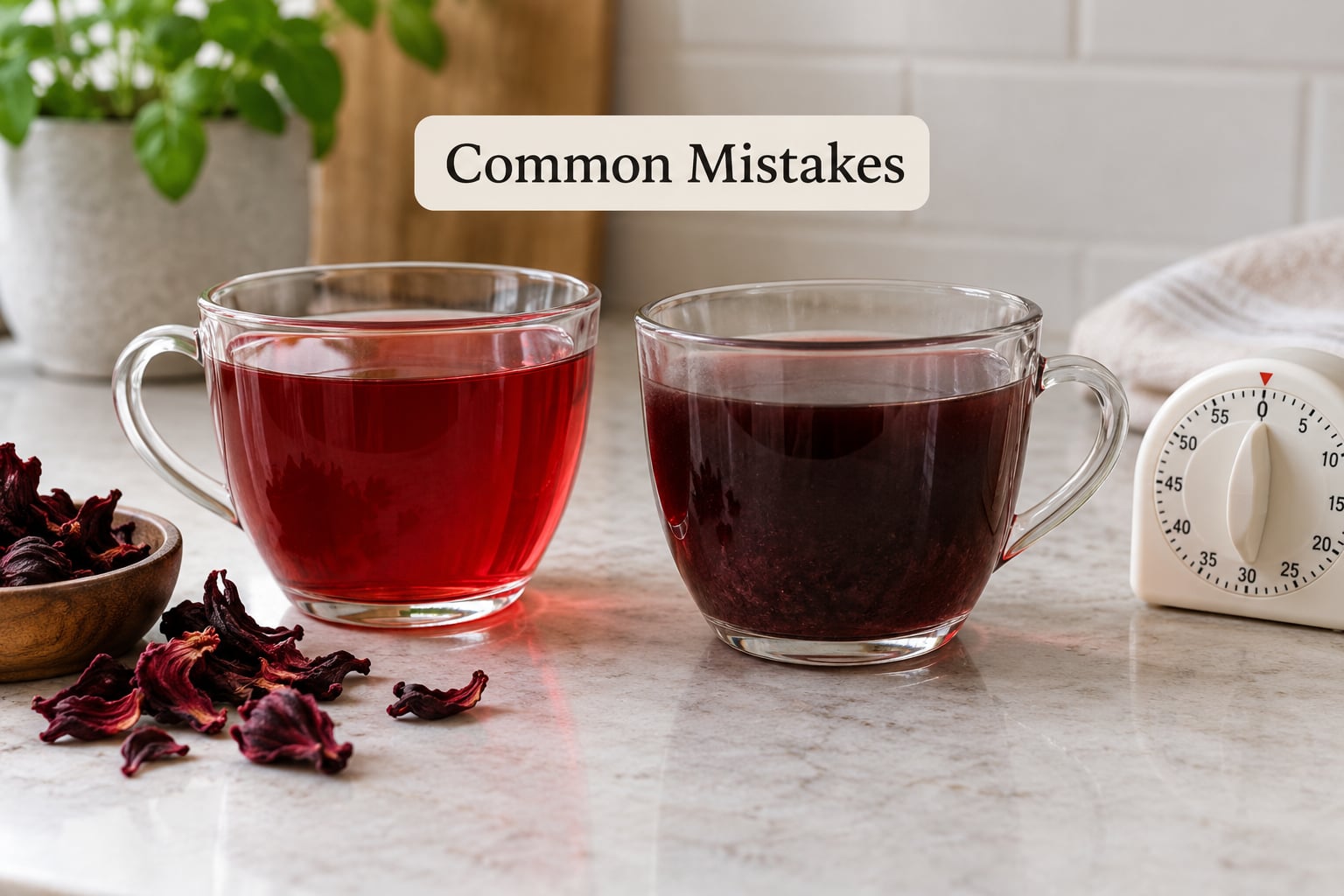
Dose and heat-plus-time. Nearly every problem below traces back to one of them being pushed too far, so fix those two and the cup almost always improves.
Too much plant for too little water
What went wrong: Doubling the calyces does not double the flavour, it doubles the tannins. The cup goes from tart to aggressively astringent and no amount of sugar fixes it properly.
Fix: Drop back to 2 tablespoons per litre and steep for the shorter end of the window. Strengthen a weak tea by brewing a second batch, not by piling more plant into the same pot.
Leaving it on the boil
What went wrong: Simmering the calyces directly for 10 to 15 minutes cooks the tannins out of the plant aggressively and gives a flat, cooked, muddy cup. This is the most common version of the question about whether you can boil hibiscus, and the honest answer is that you can boil the water, but you should not simmer the plant.
Fix: Boil the water in a separate kettle, pour it over the calyces, cover, and leave it to sit. If you have a hit-and-miss memory of boiled hibiscus tasting harsh, that is why.
Steeping far past the window
What went wrong: Leaving the pot sit for 20 minutes or more because you got distracted. Colour deepens but the clean tartness does not; you get a bitter, drying cup.
Fix: Set a timer. If the plant has already over-extracted, straining will not help, so pour the liquor off the calyces at the ten minute mark next time.
Judging a normal astringent cup as a failed batch
What went wrong: Expecting a neutral drink. Astringency is the plant speaking, not a fault. The same calyx always tastes somewhat drying.
Fix: Shorten the steep by two minutes, or add a little more water. Add-ins like ginger and citrus also help more than sugar does.
Confusing fine sediment with a straining fault
What went wrong: A cup with a small amount of dark powder or a slightly cloudy layer at the bottom, which people often assume means the tea has spoiled or the strainer failed.
Fix: Let the strained tea sit for an hour. Fine calyx particles settle as a harmless sediment, and brewing sites with very hard water can produce a slightly gelatinous look for the same reason. Chill the tea, and the appearance usually clears.
Using the wrong part of the plant
What went wrong: A bag labelled decorative petals, or large pieces of the woody stem mixed in. The result is pale and watery rather than tart and ruby.
Fix: Buy calyces, pick out any stem pieces, and use slightly more if the colour comes up weak.
A last note on daily drinking and safety
Hibiscus is a food drink for most people, and many drink it every day, but it is not a neutral one. Since it can affect blood pressure and blood sugar, check with a doctor or pharmacist before drinking it regularly if you take medication for either, and ask before using it during pregnancy or while breastfeeding. Stop and seek advice if you feel unwell after a cup. Nothing here is medical advice, and personal guidance belongs with a qualified professional.
Frequently Asked Questions
How long should I steep hibiscus tea?
Steep 5 to 10 minutes in water at 95 to 100 °C (203 to 212 °F). Five minutes gives a light, gently tart cup; ten minutes gives a strong, traditional one. Longer than that extracts extra tannins and the drink turns harsh. You can also cold steep the same amount in the refrigerator for 6 to 12 hours for a sweeter result.
Should I boil hibiscus flowers or use hot water?
Boil the water, then pour it over the calyces. Do not simmer the plant itself, because cooking the calyces for 10 to 15 minutes flattens the aroma and pulls out a bitter, muddy note. Short boils are traditional in Mexican Agua de Jamaica, but those are quick and the liquor is strained straight afterwards, not left cooking.
What part of the hibiscus plant is used for tea?
The calyx, the fleshy red cup beneath the flower, is the part that is traded and brewed. It carries most of the colour, acidity and tannin. Petals are milder and a little hay-like, and whole flowers sit in between. A tea bag is usually fine but small, so use two bags in place of 2 tablespoons of loose calyces for a litre.
How can I make hibiscus tea taste less bitter?
Shorten the steep by a couple of minutes and add a little more water, since bitterness mostly comes from over-extraction. Ginger, lemongrass, a cinnamon stick, mint or a squeeze of citrus all balance the tartness well. Sweeten a spoonful at a time and taste between each one, and remember that a dry, puckering edge is part of the calyx rather than a mistake.
How should dried hibiscus be stored?
Keep the dried calyces airtight, in the dark, somewhere cool and dry, and use them within a year for the best flavour. Avoid a damp pantry or a fridge, which encourages mould. Brewed tea keeps about three days refrigerated in a closed bottle; a little sediment is normal and harmless, and the flavour softens after the first day.
When should I ask a healthcare professional about hibiscus?
Ask a doctor or pharmacist before drinking it regularly if you take blood pressure or blood sugar medication, and before using it in pregnancy, while breastfeeding, or for a child. Seek advice if you feel dizzy, faint, nauseated or otherwise unwell after a cup, and if you have a scheduled procedure. Tea is a food, but it is not a treatment plan.
Conclusion
Start with clean dried calyces, roughly 2 tablespoons per litre, water boiled and poured over the plant rather than simmered with it, and a steep of 5 to 10 minutes. Strain it, taste it plain, and only then decide whether it needs sweetness or something sharper alongside it.
Once that cup is right, the two variables worth keeping are the dose and the steep. Cold brewing for 6 to 12 hours or a 15 minute concentrate both give you more control than adjusting anything else, and either one makes a good iced drink. If you take any regular medication or have a health question beyond the kitchen, that is worth a conversation with a doctor or pharmacist rather than with a brewing guide.