Solvent extraction is a way of moving desired compounds out of a mixture and into a chosen liquid. With plant material, the dried root, bark or leaf sits in a solvent until the soluble compounds dissolve into it; the solid is then filtered away and the liquid is concentrated. That is the whole idea behind solvent extraction explained for beginners, and everything else in this guide is detail hanging off it.
Table of Contents
- 1Solvent Extraction Explained for Beginners
- 2How the Solvent Extraction Process Works
- 3The Main Parts of a Solvent Extraction
- 4Which Solvents Are Commonly Used?
- 5What Is the Difference Between Extraction and Maceration?
- 6How Do You Choose a Method for Plant Material?
- 7What Safety Rules Should Beginners Follow?
- 8What Can Go Wrong During a Beginner Extraction?
- 9How Do You Know Whether an Extraction Worked?
- 10Frequently Asked Questions
- 11What is the safest solvent for extracting compounds from plants?
- 12Can solvent extraction be done at home with edible plants?
- 13How long should plant material soak in a solvent?
- 14Does a darker extract mean more beneficial compounds were recovered?
- 15What is the difference between ethanol and methanol extraction?
- 16When should a beginner work with a laboratory professional?
- 17Conclusion
Solvent Extraction Explained for Beginners
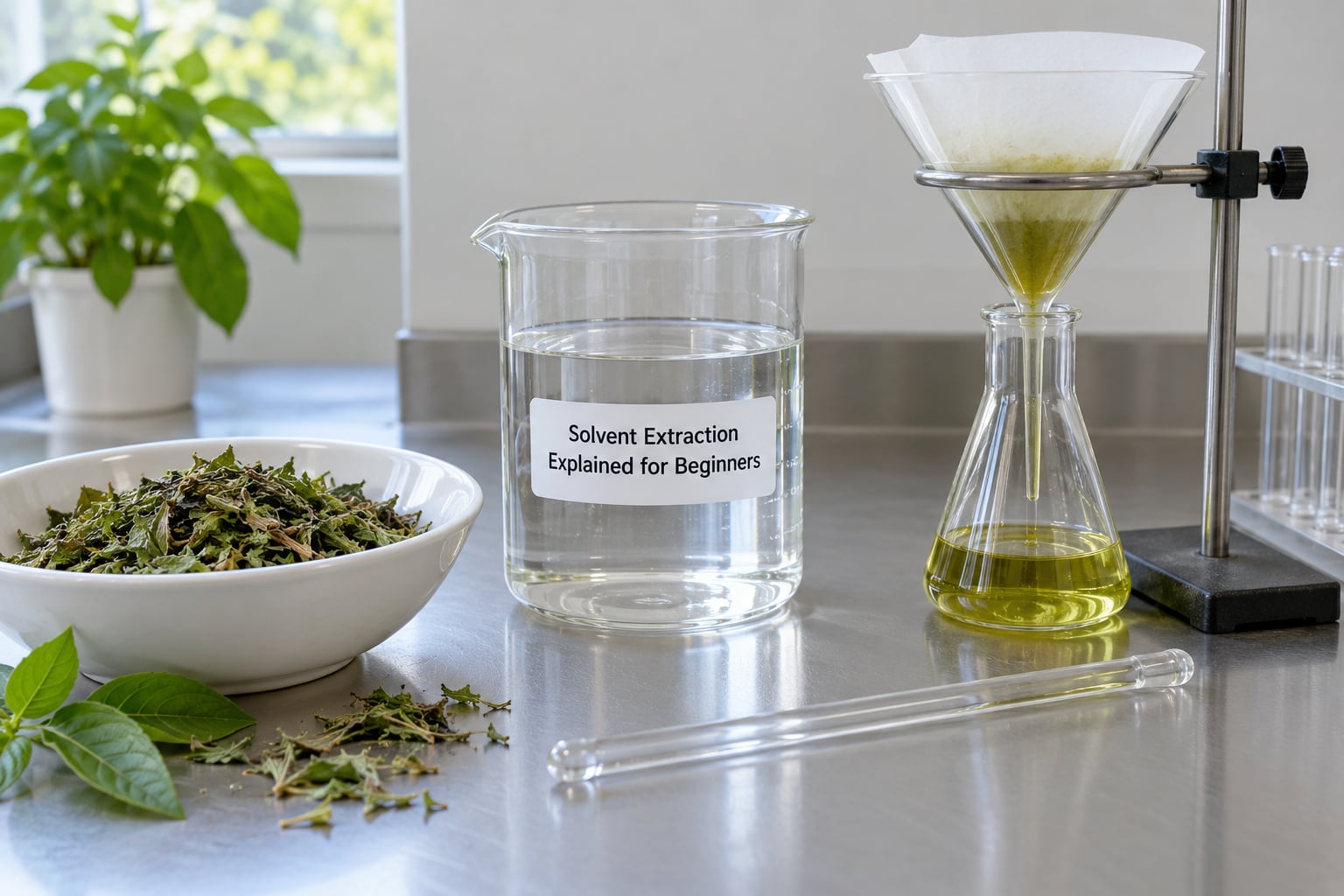
Solvent extraction is a separation technique based on one simple preference: every compound dissolves best in some liquids and hardly at all in others. By bringing a solid material into contact with a selected liquid, the compounds that fit that liquid travel into it, while the rest stay behind.
For plant research, that preference is the whole tool. Ethnobotanical studies often need to know which compounds a traditional preparation actually contains, how much of a marker compound a sample holds, or which of several plants is the richest source of a particular class of chemicals. Extraction pulls those compounds out of the plant matrix so they can be weighed, identified and compared.
One boundary matters before anything else. Extracting a chemical compound is not the same activity as preparing a remedy or a product to be taken by mouth. Laboratory solvents such as methanol, acetone and hexane are chosen because they dissolve things efficiently, not because they are safe to ingest. A vial of extract made in a laboratory is a chemical sample, not a medicine, and no step in the process turns it into one.
Traditional preparations described in ethnobotanical literature are a different case again. Water decoctions, plain infusions, and infusions prepared with wine or beer involve no added laboratory solvent at all. Studying how those preparations work is one thing; reproducing them with a methanol extract is another, and the results are not interchangeable.
How the Solvent Extraction Process Works
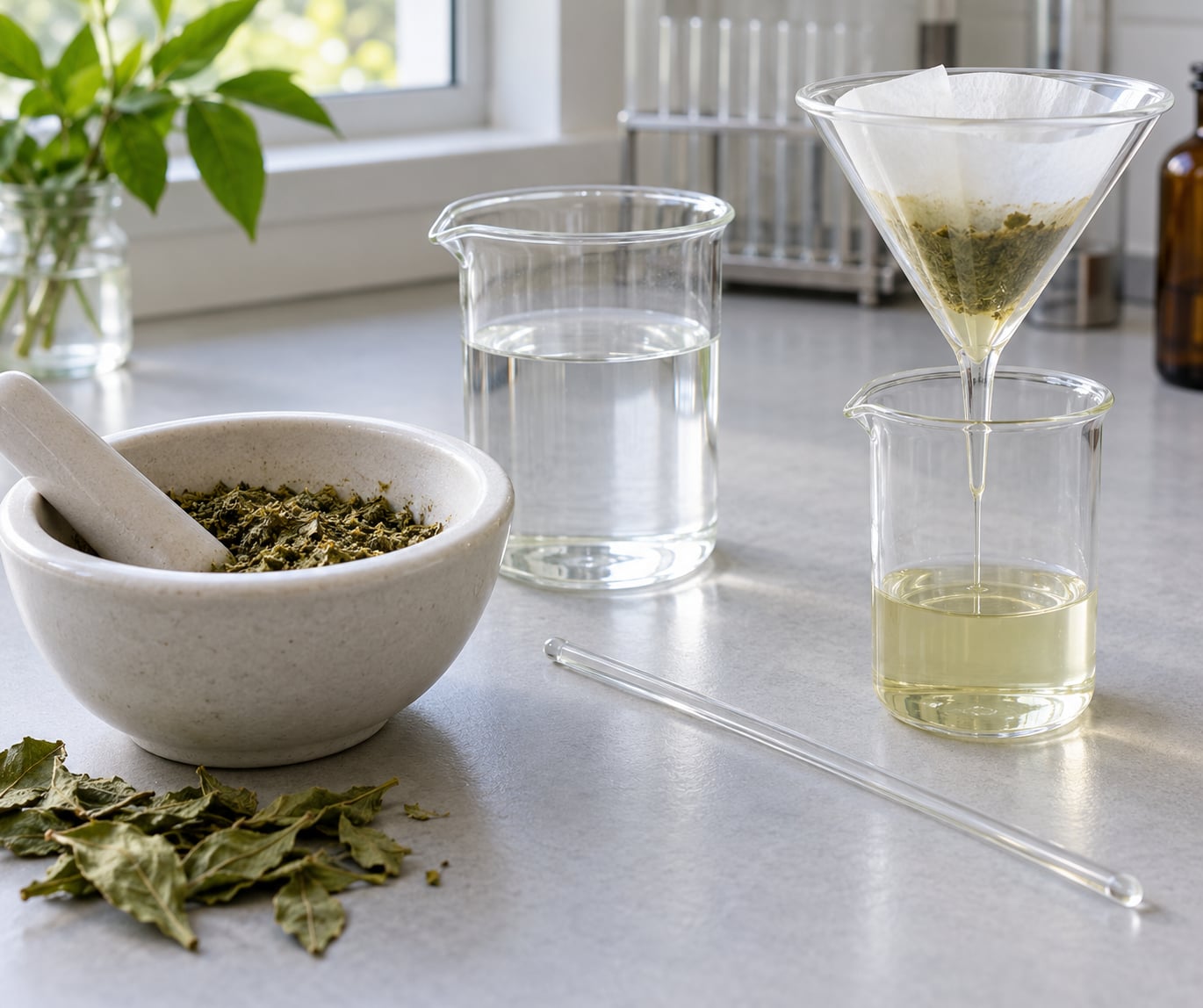
The sequence is short and the same in almost every setting, whether the material is a soil sample, a metal ore or a dried root. Using a dried leaf material as the running example:
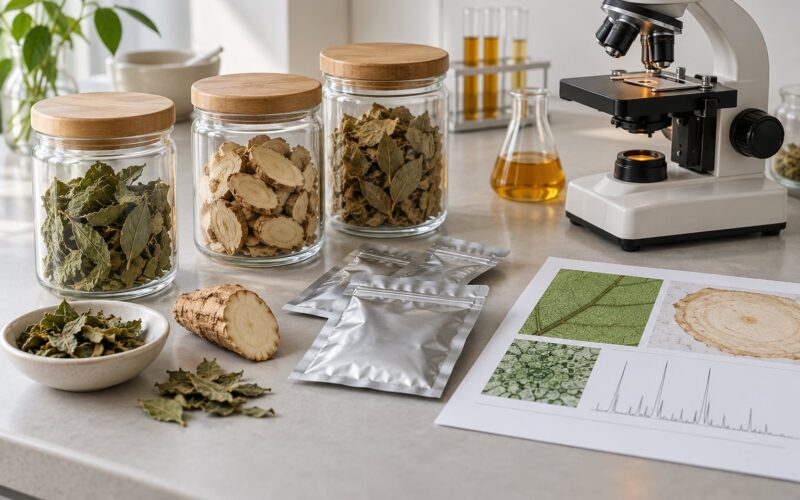
- Select and prepare the material. The plant part is identified, dried, and ground so particles are roughly uniform. Smaller particles expose more surface, so compounds reach the solvent faster, while very fine powders turn into an unusable sludge during filtration.
- Add the solvent. A measured volume is poured over the material at a set ratio, commonly expressed as millilitres of solvent per gram of dried material.
- Bring the two into contact. The mixture is stirred, shaken or simply left to stand. Temperature and time control how far the transfer gets before it stalls at equilibrium.
- Filter. The solid marc is separated from the liquid, usually through filter paper or a coarse strainer, and the spent material is pressed and discarded.
- Concentrate. The solvent is removed, often under reduced pressure, leaving a thicker extract behind.
- Recover the solvent. Where the setup allows, the evaporated solvent is condensed and collected for reuse, which matters for cost and for disposal load.
The two operations that change results most are contact time and surface area. Leave a mixture too short and much of the target stays locked in the plant tissue; grind too finely and you gain speed at the cost of a filtration problem later.
The Main Parts of a Solvent Extraction
Five components do the work, and beginners who can name them can usually diagnose a problem faster.
- The plant material sets what is available to extract. Its part, dryness, age and particle size all affect yield.
- The solvent (also called the extractant or menstruum) decides which compounds move. Polarity is the deciding property.
- The extraction vessel holds the mixture and controls mixing. A stoppered vessel that seals properly matters more than its size.
- The filtration step separates the liquid from the marc. Poor filtration here silently wrecks everything downstream.
- The final extract is the concentrated liquid or residue. Its composition is what the analytical work then measures.
In solvent extraction explained for beginners terms, none of these five is optional. A good solvent with bad filtration still gives you a cloudy, contaminated result.
Which Solvents Are Commonly Used?
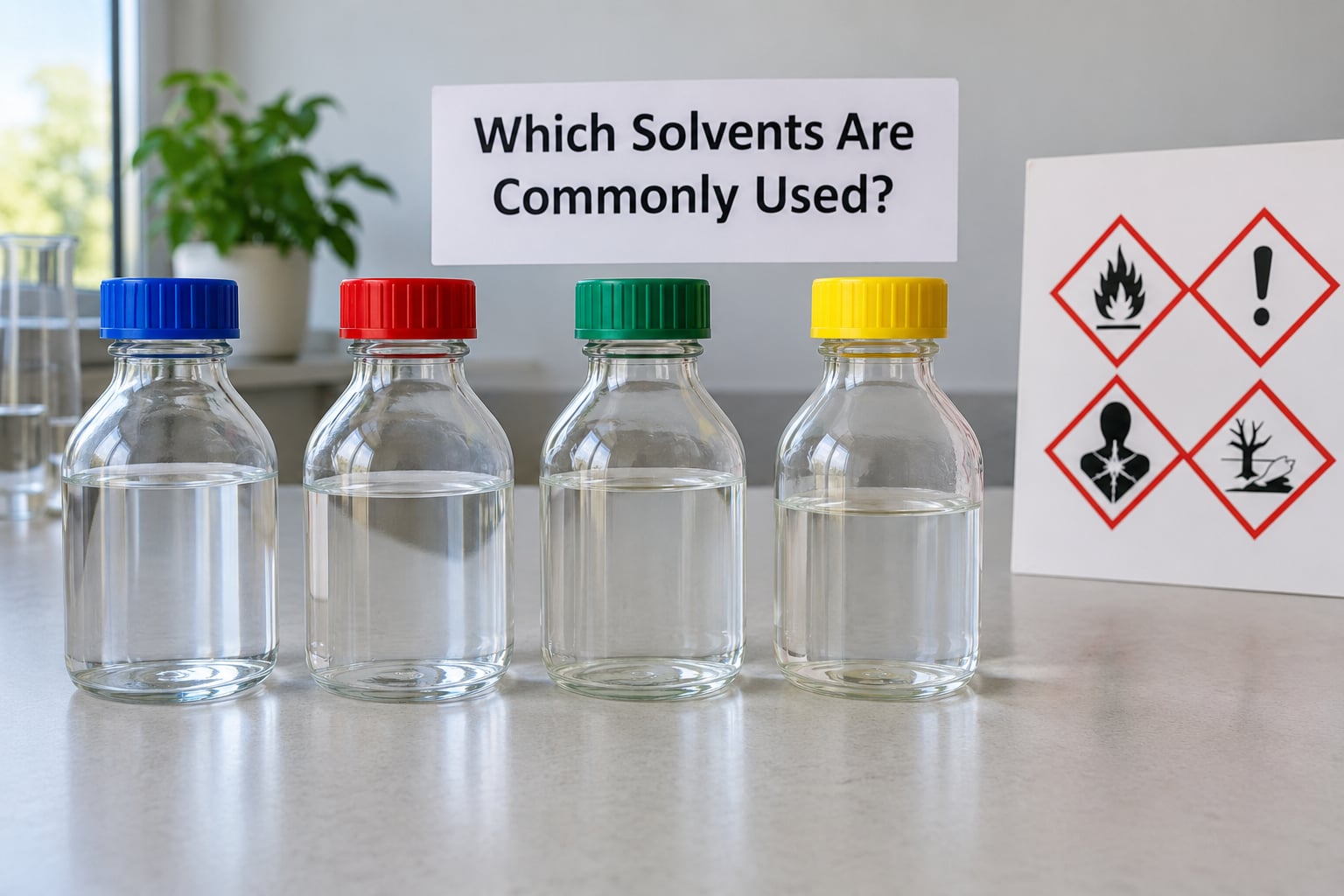
Solvents are usually grouped into four polarity bands, and the band you pick decides which compounds you get. Polar solvents take up sugars, polysaccharides, minerals and phenolic acids; mid-polar solvents reach flavonoids and many alkaloids; less polar solvents reach lipophilic compounds; non-polar solvents take oils, waxes and resins.
| Solvent | Polarity | Typical research use | Evaporation behaviour | Main hazard |
|---|---|---|---|---|
| Water | High | Sugars, polysaccharides, tannins, minerals | Slow, high boiling | Low chemical hazard, microbial spoilage risk |
| Ethanol (aqueous, 40-95%) | Adjustable | Broad recovery: polyphenols, flavonoids, tannins, some alkaloids | Moderate, 78°C boiling point | Highly flammable above about 40% strength |
| Methanol | Mid to high | Reference extraction for analytical work | Faster than ethanol, evaporates cleanly | Toxic by ingestion and inhalation, flammable |
| Acetone | Mid | Chlorophyll, lipids, pigment and residue work | Fast, 56°C boiling point | Very flammable, irritant |
| Hexane or petroleum ether | Low | Non-polar lipids, oils, chlorophyll removal | Very fast, low boiling point | Neurotoxic, volatile, severe fire risk |
| Supercritical carbon dioxide | Tunable | Solvent-free lipid and volatile recovery | Leaves no residue | Requires high-pressure equipment |
Aqueous ethanol is the workhorse of plant work because the water to ethanol ratio is a dial rather than a single setting. Higher water content pulls more of the polar and water-soluble material; higher ethanol content reaches further into the less polar compounds while pulling less of the bulky polysaccharides.
The rule that follows from the table is simple: solvent choice follows the target compounds, not the other way around. Research-grade solvents must never be assumed suitable for ingestion, and a solvent sold for industrial cleaning is not interchangeable with a food-grade product even when both are labelled ethanol.
What Is the Difference Between Extraction and Maceration?
Extraction is the transfer itself: soluble compounds leaving a matrix and entering a liquid. Maceration is one way to make that transfer happen, by soaking the material in solvent with no heat and no pressure involved. People often use the words as if they were the same thing, which makes choosing a method harder than it needs to be.
| Method | Typical time | Equipment | Best for |
|---|---|---|---|
| Maceration | Days to weeks | A jar and a strainer | Small batches, gentle compounds |
| Percolation | Hours | Column or percolator | Faster recovery of the same compounds |
| Ultrasound-assisted | Minutes to an hour | Ultrasonic bath | Rapid small-scale extraction |
| Soxhlet | Hours | Reflux apparatus | Laboratory throughput on non-thermolabile material |
| Supercritical CO2 | Hours | High-pressure rig | Residue-free lipid and volatile recovery |
Advanced methods buy speed, and they also buy risk. The pattern is the same one that trips up beginners every time: Soxhlet is respected for throughput and widely considered the wrong tool outside a ventilated laboratory, ultrasonic baths are the common upgrade that turns a two-week soak into an afternoon, and supercritical CO2 is treated as industrial-only equipment.
How Do You Choose a Method for Plant Material?
Beginners usually start by picking equipment and end up choosing the wrong compound. Work through these six factors in order instead.
- Target compounds. Name them before anything else. Polarity decides the solvent, and the solvent decides the method.
- Plant structure. Dense bark and seed behave differently from leaf. A waxy outer surface slows wetting, and getting through it usually takes a less polar solvent.
- Solvent compatibility. A compound that survives in ethanol may break down in hot acetone. Heatlabile material rules out reflux methods.
- Scale. Analytical sample preparation needs milligrams and precision. Preparative work needs volume, throughput and solvent recovery.
- Equipment available. A jar, a filter and accurate scales already cover a surprising range. Ultrasonic and pressure equipment are the usual upgrades.
- Purpose. Analytical work is judged on recovery and reproducibility. Preparative work is judged on yield, purity and safety of the final material.
If you can answer only one question, ask what you intend to do with the extract next. A sample going into an analytical instrument and a batch going into further processing rarely need the same method.
What Safety Rules Should Beginners Follow?
Safety comes before technique here, because most beginner injuries come from a solvent meeting a flame or a poorly ventilated space.
- Work ventilated. Fume cupboards for laboratory solvents; open windows and a cross-breeze at the very least for anything volatile. Never work with the door closed and inhale over the vessel.
- No open flame, no hot plate near flammables. Ethanol vapour above about 40% strength ignites from a distance. Spark-producing equipment is out too.
- Use compatible containers. Solvent-resistant glass for volatile work, with lids that seal. Check compatibility before anything touches a container.
- Wear eye protection and appropriate gloves. Nitrile gloves suit many tasks; check the glove supplier’s chart for your specific solvent rather than guessing.
- Store as you would expect to be treated. Solvents in labelled, closed, ventilated cabinets, away from heat, oxidisers and food.
- Dispose of waste solvent properly. Pouring it down a sink pollutes ground and surface water and is usually unlawful. Collect it for hazardous waste.
- Write it down. Record the plant identity with its Latin binomial, the plant part, harvest date, solvent and percentage, ratio, duration, temperature and filter type. Undocumented batches cannot be repeated.
- Keep laboratory materials and consumable materials apart. Only materials approved for food, medicine or personal contact belong in anything a person will ingest or apply to skin.
One more rule covers most of the rest: if you cannot name the safety data sheet for a solvent before you open the bottle, you are not ready to open it.
What Can Go Wrong During a Beginner Extraction?
Almost every failed beginner extraction is one of seven predictable mistakes.
| What you see | What caused it | What to change |
|---|---|---|
| Pale, watery result | Solvent polarity does not match the target compounds | Move one step along the polarity scale, or run a sequential extraction with two solvents |
| Cloudy, milky liquid | Emulsion: fine droplets not settling | Let it stand longer, warm it very slightly, or pass it through a fine filter before concentrating |
| Slow, thin extraction | Material too coarse, or barely mixed | Grind more evenly and stir or shake at intervals |
| Sluggish filtration | Very fine powder and cellulose-rich material | Coarsen the grind slightly, use a filter aid, or press before pouring |
| Bitter, burnt smell | Excessive heating drove off volatiles and degraded what remained | Concentrate under reduced pressure at a low temperature instead |
| Low final mass | Transfer losses at the filter, plus solvent residue mistaken for product | Re-extract the marc, weigh the empty vessel first, and dry to constant mass before weighing |
| Results that vary batch to batch | Uncontrolled particle size, ratio, time or temperature | Fix and record all four; treat undocumented variation as the main cause of irreproducible work |
The error that sits underneath all seven is interpretive rather than technical: reading a yield number as a quality number. A high mass of extract can mean efficient recovery of chlorophyll and sugars rather than the compound you actually wanted.
How Do You Know Whether an Extraction Worked?
Colour and residue are clues, not confirmation. A dark, thick extract may be full of pigments, tannins and degraded material; a pale liquid may hold the target compound neatly. Dense colour is evidence of something dissolving, not evidence of the right thing dissolving.
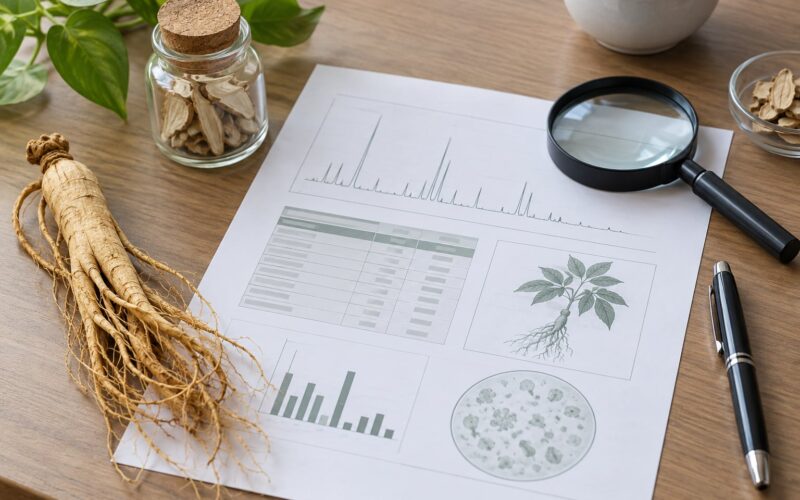
Researchers confirm results with measurement rather than appearance. High-performance liquid chromatography and gas chromatography separate the mixture and quantify each compound against a standard. Thin-layer chromatography gives a quick preliminary check of which fractions came out. Mass spectrometry identifies what a peak actually is, and a marker compound measured against a reference standard is how a batch gets described as standardized rather than merely concentrated.
Reproducibility matters as much as the first result. The same material, solvent ratio, particle size, time and temperature should give the same profile on a second run. Where it does not, the variable to hunt is nearly always one of those five.
Frequently Asked Questions
What is the safest solvent for extracting compounds from plants?
There is no universally safest solvent, because safety depends on the compound and on how you work. Water carries the lowest chemical hazard but spoils quickly and reaches only polar compounds. Aqueous ethanol sits in the middle: it handles a broad range of plant compounds and is far less toxic than methanol, acetone or hexane, though it becomes flammable above roughly 40% strength. Treat every laboratory solvent as a chemical, not as an ingredient.
Can solvent extraction be done at home with edible plants?
Water-based preparations and maceration in a food-grade spirit are the two home approaches people actually use, and both carry limits. Do not use methanol, acetone, hexane or any industrial solvent at home, and do not use laboratory glassware for anything meant to be consumed. Anything prepared at home is not standardized, so its compound content is unknown and it should not replace advice from a clinician or pharmacist.
How long should plant material soak in a solvent?
There is no fixed time, because the useful window depends on particle size, temperature, ratio and compound class together. Maceration runs from days to several weeks, percolation finishes in hours, and ultrasonic-assisted work takes minutes to an hour. Warmth and agitation speed the transfer. Track it rather than guessing: run a small test batch and check whether later sampling pulls anything more before you commit to a long soak.
Does a darker extract mean more beneficial compounds were recovered?
No. Colour usually reflects pigments, tannins and oxidized material rather than the compounds you were targeting. Dark extracts can also be diluted or degraded samples. The only reliable answer comes from measuring a marker compound with a chromatographic method against a reference standard. Judge the extract by measured content and by whether the method was reproducible, never by how dark it looks.
What is the difference between ethanol and methanol extraction?
Methanol dissolves a wider range of plant compounds, evaporates more readily, and leaves a cleaner residue, which makes it the default choice for analytical reference work. Ethanol is far less toxic, is available in food-grade forms, and its strength can be adjusted by dilution, which lets you dial how polar the extraction is. Methanol is acutely toxic by ingestion and inhalation and should stay inside a ventilated laboratory.
When should a beginner work with a laboratory professional?
Work alongside a laboratory professional whenever you plan to use methanol, acetone, hexane or any flammable solvent, whenever you will heat a solvent, and whenever the result will be used for anything involving health, dosing or product quality. A fume cupboard, correct waste routes and safe storage are professional infrastructure, not optional extras. Talking to a chemist or a qualified herbal clinician before starting costs nothing and prevents most beginner accidents.
Conclusion
Solvent extraction comes down to a preference: compounds move into the liquid that suits them best, and everything else stays behind. Start by naming the compounds you are after, choose the solvent polarity and method that fit them, and record every variable so a second run can match the first.
Before you handle anything hazardous, talk to a qualified laboratory professional about ventilation, containers, storage and waste. And if the goal touches health or dosing, take that conversation to a doctor, pharmacist or clinical herbalist rather than to a solvent.