Most people searching how to sweeten bitter herbal teas reach for the sugar first and end up with a cup that tastes sweet and still tastes bitter. The faster fix is usually the brew itself: shorten the steep, drop the water a little, or add more leaf per cup so the cup tastes fuller instead of harsher. When the bitterness is the herb itself, add a small amount of a single sweetener and stop there.
That last part is the one people skip. Sweetening is a series of small adjustments, not a cure, and the honest truth is that some bitter herbs taste bad no matter what you put in them. Our site covers traditional African and ethnobotanical preparations, where bitter tonics were drunk for their bitterness, so we will say plainly which herbs reward sweetening and which do not.
Every method below takes under a minute once the tea is brewed. Nothing here is medical advice, and if a tea is being used as a remedy rather than a beverage, check with your doctor or pharmacist first.
Last reviewed for October 2026.
Table of Contents
- 1What You Need
- 2How to Sweeten Bitter Herbal Teas Step by Step
- 3Step 1: Sweeten Bitter Herbal Teas with Honey
- 4Step 2: Soften Bitterness with Sugar or Syrup
- 5Step 3: Add Fruit for Natural Sweetness
- 6Step 4: Blend in Honey-Free Fruit or Spice Notes
- 7Step 5: Round the Flavor with Milk or a Milk Alternative
- 8Common Mistakes
- 9Frequently Asked Questions
- 10What is the easiest way to reduce bitterness in an herbal tea?
- 11Should I use honey, sugar, or fruit to sweeten an herbal infusion?
- 12Can I add milk or a milk alternative to a medicinal herbal tea?
- 13How can I make a bitter tea taste less harsh without hiding its flavor?
- 14Is it safe to mix sweeteners or mixers with unfamiliar herbs?
- 15When should I stop drinking a tea and contact a healthcare professional?
What You Need
The full list is short, and you need almost none of it. The only real ingredient is the sweetener or mixer that suits how you eat, and everything else just makes the process easier.
- A cup that holds heat. Ceramic or glass, ideally a mug rather than a small cup. Bitter compounds concentrate as a cup cools, so more liquid in the cup means less intensity per sip.
- A teaspoon and a small bowl or whisk. Syrups and honey need mixing, not just pouring, or they settle at the bottom.
- A kettle, ideally with a temperature setting. If yours has no dial, the twenty percent trick works: mix roughly one part cool water with four parts boiling water before pouring.
- A timer. Most over-steeping happens because nobody set one. Phone alarms are fine.
- Citrus. A lemon or orange for juice and peel. Citrus is the cheapest flavor enhancer in this whole guide.
- Fresh fruit. Apple, pear, ripe banana, or a medjool date. Pears and dates do more for a bitter cup than most people expect.
- Honey, sugar, or a syrup. Pick one. Raw honey, granulated sugar, a light simple syrup, maple syrup, agave nectar, or stevia leaf extract will each do a different job, which is covered below.
- Milk or a milk alternative. Whole milk, unsweetened soy, oat, or any other beverage you drink regularly. Dairy is optional and matters mainly for texture.
- A pitcher and ice if you plan to cold brew, which is the cleanest way to sidestep bitterness entirely.
- Spices. Cinnamon bark, fresh ginger, mint, and cardamom pods are worth keeping on hand for bitter cups.
One caveat before you start. Licorice root is the sweet herb most tea drinkers reach for, and it deserves a separate conversation. It contains glycyrrhizin, which is fine in small culinary amounts but is not a casual daily drink for everyone, particularly people managing blood pressure or pregnancy. If that describes you, use one of the other methods here and ask a clinician about licorice first.
How to Sweeten Bitter Herbal Teas Step by Step
Before any sweetener goes in, work down this short ladder. It fixes most bitter cups outright, and whatever bitterness remains is much easier to round out.
- Cut the steep time. Long steeping is the most common cause of harsh cups. Follow the package direction and set a timer for the shorter end of the range.
- Lower the water temperature. For delicate leaves, around 80C. Roots, bark, and seed generally want closer to a boil, so shorten time rather than pouring cooler water on them.
- Raise the leaf-to-water ratio. More leaf in the same water means a stronger, fuller cup that tastes less thin and bitter at once. This is the fix regular tea drinkers recommend most often.
- Cold brew it. Put the herb in cold water in the fridge for six to eight hours. No heat means very little bitterness, and the result is good over ice.
Now the methods. The rule that keeps you out of trouble: change one thing at a time, add in small increments, and taste between each. Half a teaspoon first, wait thirty seconds, then decide.
Step 1: Sweeten Bitter Herbal Teas with Honey
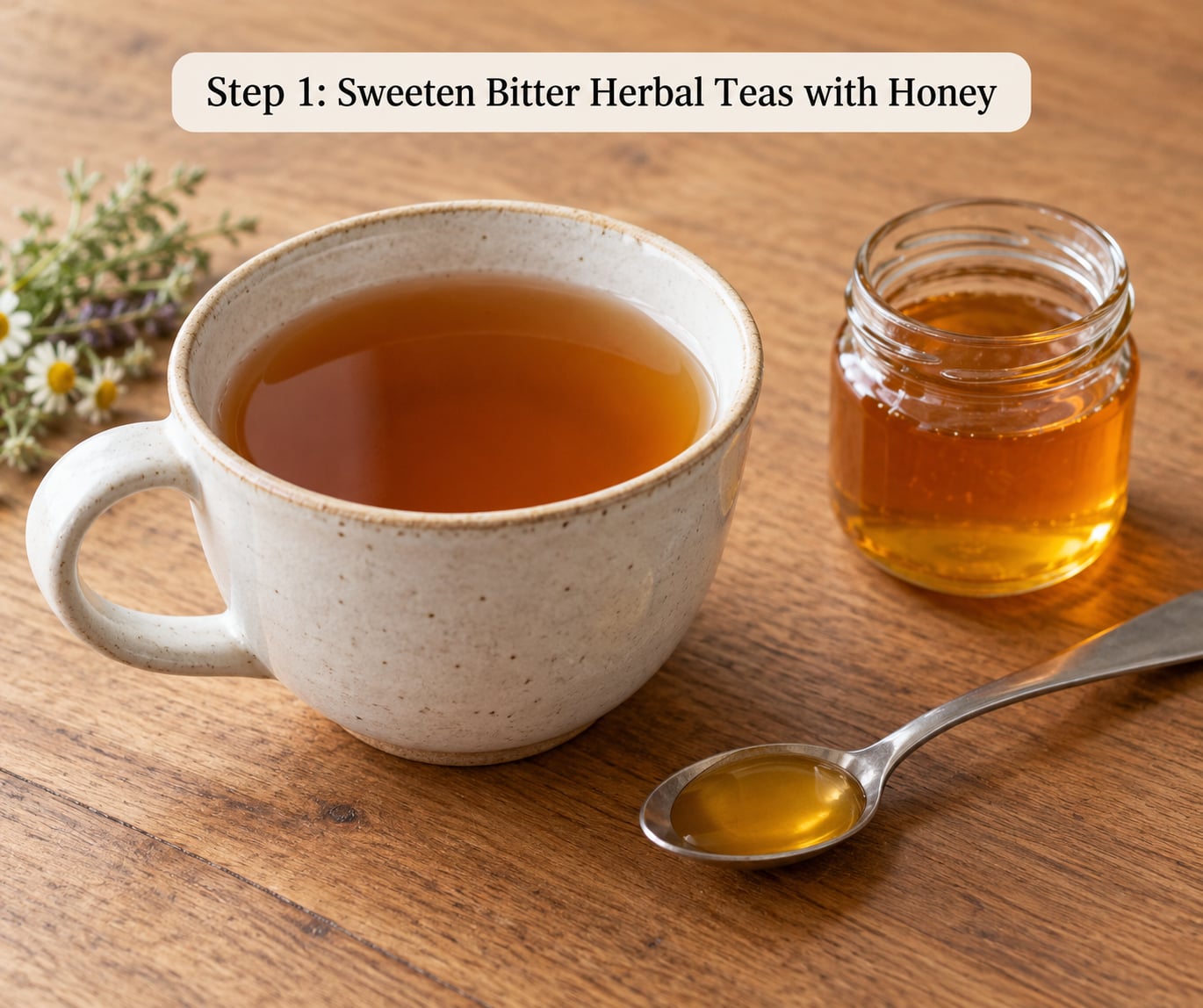
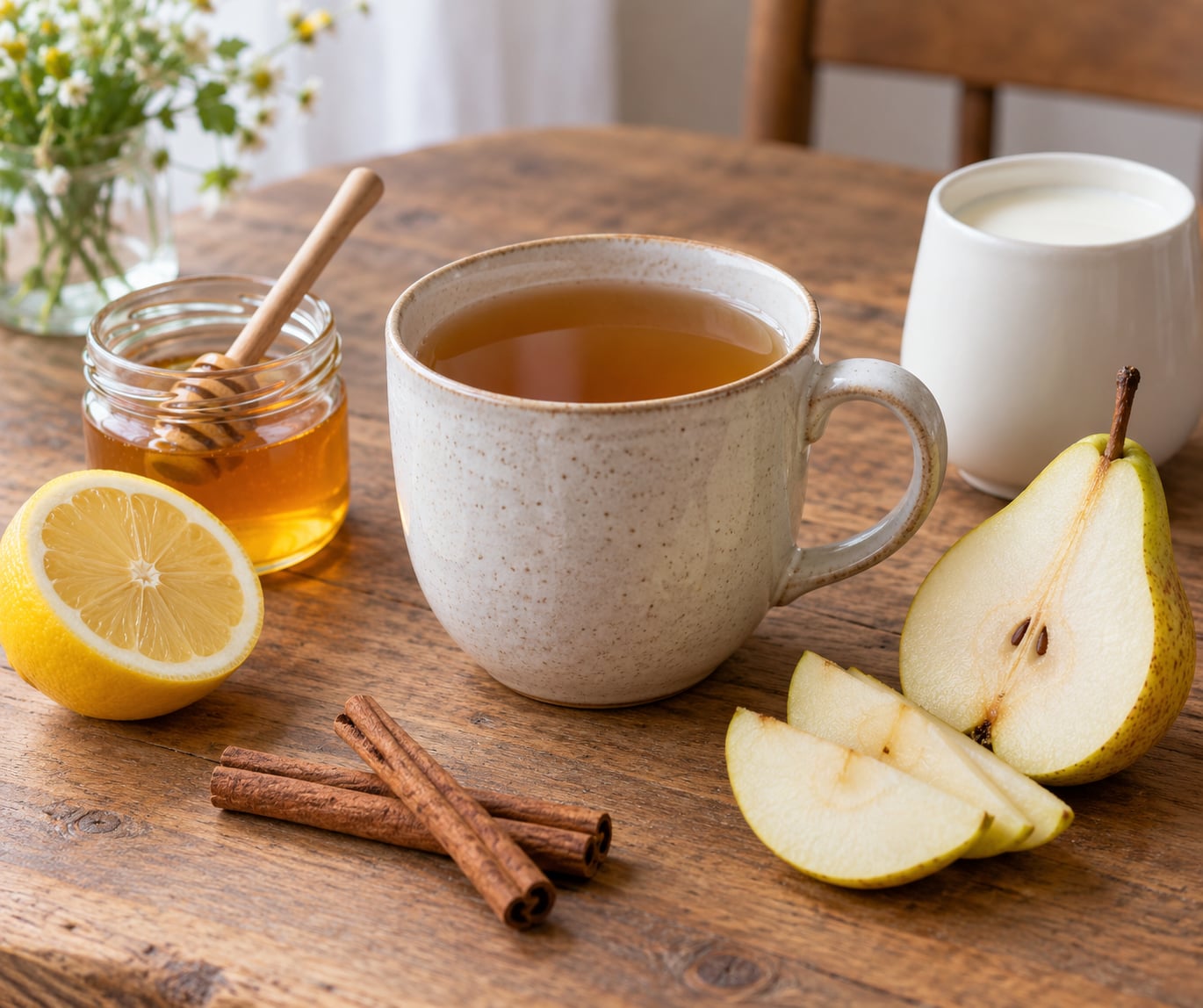
Honey is the default for a reason. It dissolves into a warm infusion, carries an aroma that reads as herbal rather than sugary, and a small amount softens bitterness without flattening the cup the way plain sugar does.
Add it to cooled tea, not to the pot. Hot water scaldes off the floral notes and you lose the thing that makes honey worth using. Let the brew sit until it is warm rather than steaming, around 60 to 70C, then stir the honey in. It will go in cleanly.
Start with half a teaspoon per cup and taste. A level teaspoon is plenty for a strongly bitter tonic such as dandelion root or a cinchona-style bark blend, and going past two teaspoons starts to taste like honey tea rather than herbal tea.
Two cautions. Never give honey to a child under twelve months, because it can carry spores associated with infant botulism. And if you are using the tea as a remedy rather than as a drink, check with your clinician before adding honey regularly, since it changes the taste so much that many people end up drinking a much larger volume than they intended.
Step 2: Soften Bitterness with Sugar or Syrup
Sugar works, and it is honest about being blunt. Granulated sugar does not bring flavor, so a heavy hand with it flattens the infusion and leaves a thin sweetness behind the bitterness. Syrups are gentler because the sugar arrives already dissolved and spread through the liquid.
For a simple syrup, put equal parts sugar and water in a small pan, warm it until the sugar disappears, and cool it. Keep it in the fridge and use a teaspoon per cup. This is the best option if you want a consistent result across several cups, because syrup disperses evenly where granulated sugar can sit at the bottom.
A mild flavored syrup such as maple or agave is the middle ground. Both dissolve into room-temperature tea without effort, and both bring a faint note that reads as warm rather than sugary. Agave is sweeter than sugar by weight, so use less than the recipe amount and dilute the whole cup with a little hot water if the flavor starts to pull ahead of the herb.
If you are managing blood sugar, this is the method to scale down rather than scale up. Reduce the sweetener to a quarter teaspoon, and fix the remaining bitterness with fruit, citrus, or milk instead, which add volume and aroma without adding sugar.
Step 3: Add Fruit for Natural Sweetness
Fruit sweetens without adding a sweetener label, and more importantly it adds aroma, which is what keeps a bitter cup from tasting flat. Citrus juice is the fastest version: a teaspoon of lemon juice in a warm bitter infusion reads as brightness rather than sourness, because the bitterness already supplies the counterweight.
Zest is even better than juice. A strip of lemon peel dropped into the pot while the root or bark steeps gives an infusion that tastes composed instead of corrected, and it is a standard move in bitter tonic blends where citrus and bitter roots have been paired for centuries.
For body rather than brightness, use apple or pear. Slice thin, add to the pot during the last few minutes of steeping, and remove before serving. Both carry a clean sweetness that sits under bitterness instead of fighting it. A ripe banana mashed into warm tea does something similar and adds body, though it is best for people who already like banana flavors.
The failure mode here is going too far with citrus. If your cup tastes sharp and sour rather than sweet and rounded, you have tipped past the balance. Add a little more hot water and try again rather than reaching for more juice.
Step 4: Blend in Honey-Free Fruit or Spice Notes
If you avoid honey or want something other than sugar, fruit concentrates and spice notes do the work. A medjool date soaked in hot water and pressed into the cup behaves like a light, natural syrup with a caramel edge that suits root and bark infusions well. Two small pieces is a normal starting amount for a single cup.
Maple-flavored syrup works as a honey substitute for people who cannot use animal products. Add a small amount to warm tea and stir properly, since it is thicker than agave and will otherwise sit on the surface until the cup cools.
A few drops of vanilla extract, added off the heat, rounds bitterness with aroma alone. Cinnamon bark, a slice of fresh ginger, a few mint leaves, or a crushed cardamom pod steeped alongside the herb all push in the same direction, and none of them sweeten much on their own. Together they make a bitter cup read as spiced and warm rather than medicinal.
Keep the additions small, and check what is already in the blend before you add more. Licorice root in particular is sweet enough on its own that adding honey or syrup to the same cup is usually too much. Anyone using these additions alongside a remedy, or anyone with allergies, diabetes, or a medication list to consider, should run the combination past a pharmacist first.
Step 5: Round the Flavor with Milk or a Milk Alternative
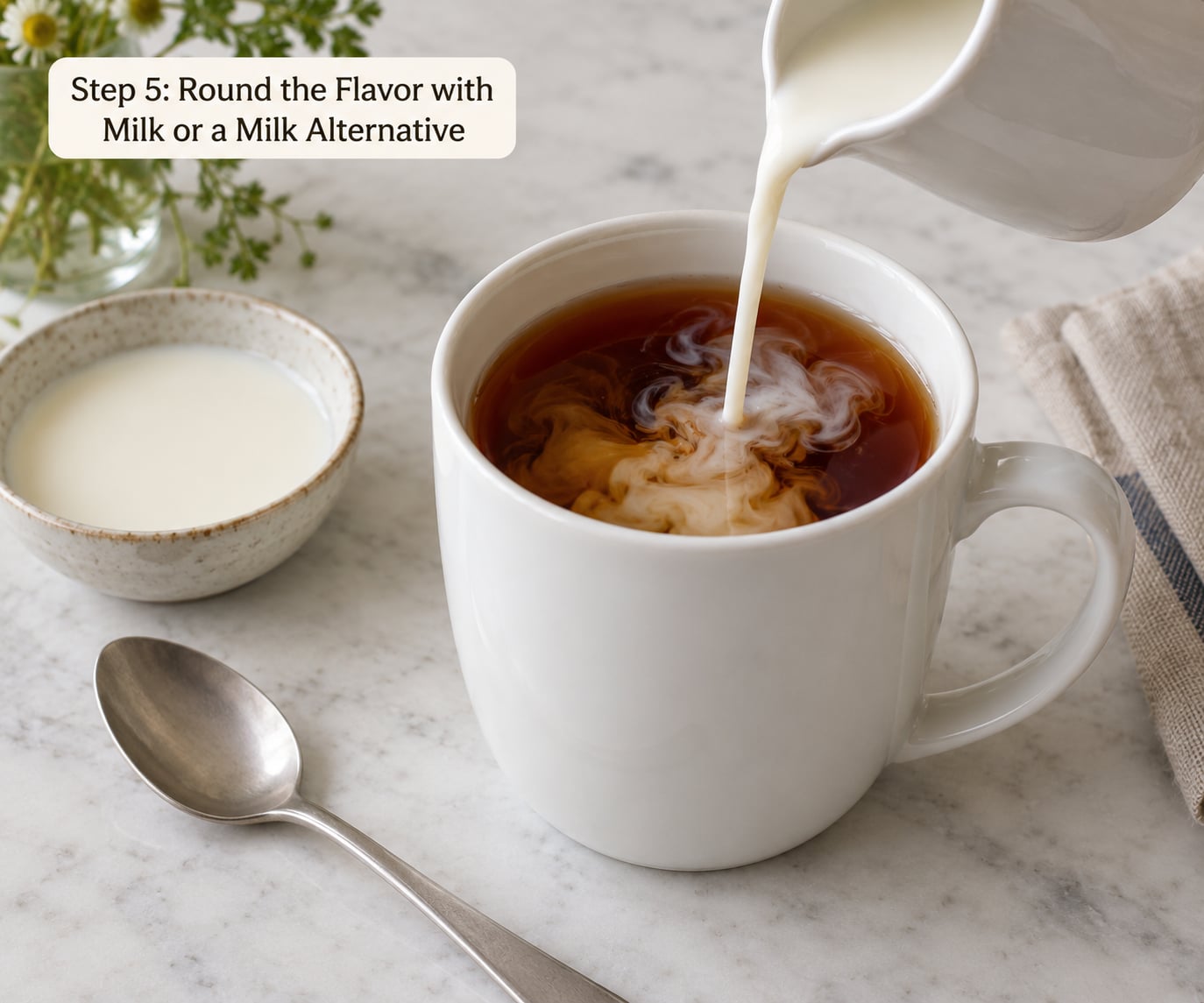
Milk works on bitterness differently from everything else here. Sugar shifts the taste balance, but fat and protein physically soften the sensation, which is why milk tea has survived centuries of drinkers who refuse sugar.
Add it to warm tea, not boiling, and start small. A tablespoon or two of whole milk is enough to take the harsh edge off a bitter tonic. Pouring in a full splash is how people accidentally turn a strong root infusion into something that tastes like a beverage from a cafe, and the herb disappears entirely.
Unsweetened soy, oat, and other plant beverages work the same way, with one difference worth knowing. Many contain added sweeteners already, so check the label, because an unsweetened version balances a bitter cup while a vanilla one can make it cloyingly sweet before you have added anything yourself.
Two things to keep in mind. Milk changes how a tea feels as well as how it tastes, so people taking a specific herb as a remedy sometimes prefer to keep the cup clear and take any sweetener separately. And if dairy, soy, or another ingredient causes you problems, skip this method entirely rather than pushing through it. The other four methods do the same job without the allergy question.
Common Mistakes
Sweetening the whole cup in one go. The instinct is to add a full teaspoon, and then another, until the bitterness goes quiet. What you get is a sweet cup with bitterness still sitting underneath it. Fix: half a teaspoon, thirty seconds of tasting, then decide.
Adding honey or syrup to tea that is too hot. Very hot liquid flattens the aromatics you paid for, and the sweetener reads as cloying because there is nothing else to carry it. Fix: let the brew reach warm, around 60 to 70C, and stir properly.
Assuming every bitter herb is safe to drink daily. This is the mistake that actually matters. A bitter herb in a wellness blend may still be a medicine with a real dose ceiling, and sweetening a cup changes how much someone drinks over a day. Fix: research the specific plant, and talk to a doctor or pharmacist before making it a habit.
Reaching for a substitute that fights the herb. Blackstrap molasses, for example, will take over any cup it enters and leave a mineral heaviness behind. Strong flavored syrups do the same thing to delicate infusions. Fix: use the mildest sweetener that does the job, and match intensity to intensity.
Ignoring allergies and interactions. Honey is off the table for infants under twelve months, dairy and soy cause trouble for many adults, and licorice root interacts with blood pressure medication and is not recommended during pregnancy. Fix: read labels, and ask a pharmacist when you are taking anything daily.
Tossing out the cup that still tastes bitter after three changes. Some preparations are simply not for you. Chamomile and rooibos are the low-bitterness herbs most people tolerate, and switching herbs is a legitimate answer rather than a failure of technique.
One more habit worth keeping: taste the tea plain before you add anything, every time. Once you know what the herb actually tastes like, you are choosing a sweetener on purpose rather than reaching for a habit, and you can tell the difference between a bitter herb and a badly brewed one.
Frequently Asked Questions
What is the easiest way to reduce bitterness in an herbal tea?
Shorten the steep time before you add anything. Most bitter cups come from over-extraction, and taking a couple of minutes off, or using more leaf per cup of water, makes a bigger difference than any sweetener. For delicate leaves use water around 80C instead of a full boil. Cold brewing in the fridge for six to eight hours removes most bitterness with no added ingredients at all.
Should I use honey, sugar, or fruit to sweeten an herbal infusion?
Honey suits most cups because it dissolves cleanly and carries an aroma that feels herbal. Sugar is blunter and flattens flavor when overused, so a light syrup is gentler. Fruit, especially citrus juice or peel, and date or pear pieces add sweetness plus aroma, which is useful if you want to avoid sugar. Pick one approach per cup rather than combining them.
Can I add milk or a milk alternative to a medicinal herbal tea?
It is generally fine unless the person taking it has been told otherwise or has a dairy or soy allergy. Milk softens the sensation of bitterness through fat and protein rather than sweetness, so a tablespoon or two is enough. Check plant beverages for added sugar, since many are already sweetened. If the tea is being used as a remedy, keep the cup clear and sweeten separately so the taste is not driving your volume.
How can I make a bitter tea taste less harsh without hiding its flavor?
Work on the brew first, then add the smallest useful amount of one sweetener. A half teaspoon of honey in warm tea rounds off the harshness while leaving the herb readable. Citrus peel or a slice of apple added during steeping shifts the aroma rather than masking taste. Milk is another option, since it changes mouthfeel without adding sweetness at all.
Is it safe to mix sweeteners or mixers with unfamiliar herbs?
The mixing is rarely the risk. Unfamiliar herbs are, because many bitter plants used in traditional remedies also carry real dose limits and can interact with medication. No honey for children under twelve months. Licorice root contains glycyrrhizin and needs medical advice if you manage blood pressure or are pregnant. Anyone on daily medication should ask a pharmacist before regular use.
When should I stop drinking a tea and contact a healthcare professional?
Stop and seek advice if you notice palpitations, dizziness, swelling, nausea, or any new skin or breathing reaction after a cup. Seek prompt care for signs of a serious allergic reaction such as swelling of the face, lips, or tongue, or difficulty breathing. Also stop and ask if a tea you drink daily begins interacting with your medication or affects blood pressure, heart rhythm, or blood sugar.
Start with the brew. Take two minutes off the steep, add a little more leaf to the same cup, and taste it plain. If it still needs help, stir half a teaspoon of honey into warm tea, taste again, and stop there. If a herb tastes bad no matter what you do, that is the herb, not you, and switching to a gentler blend is the correct answer.