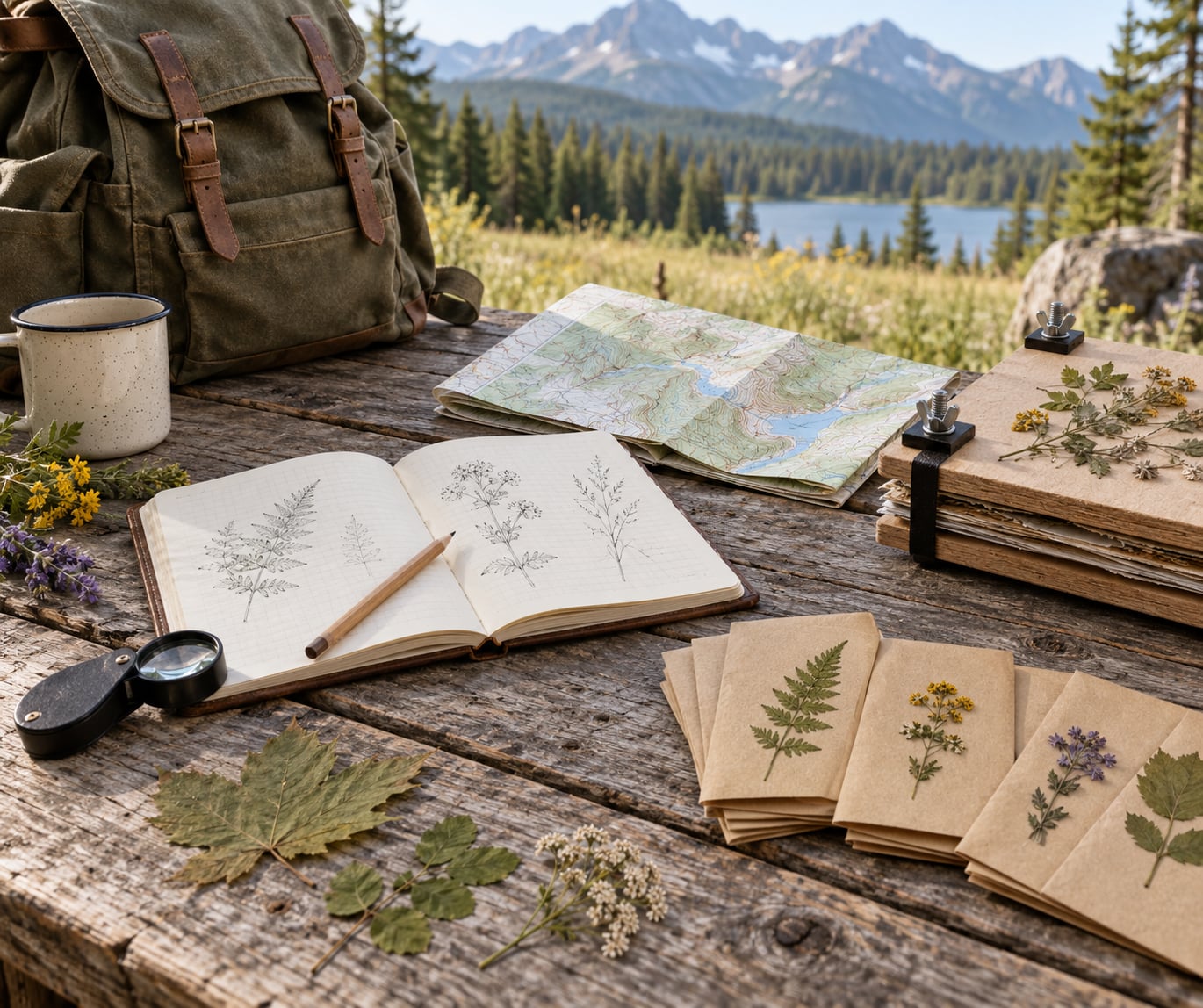
Getting field research experience in botany comes down to one thing: a small, documented question worked out in a real habitat with someone who can vouch for what you did. Most students assume they need a degree, a lab and a grant first. In practice the entry route is usually a volunteer season, a supervised student project or a seasonal technician post, and each of those produces a record you can put in front of the next supervisor. Here is how to get field research experience in botany, step by step, including the routes that work without a current university enrolment.
The whole process takes anywhere from one weekend of self-directed survey work to a full field season. Difficulty depends less on your training than on how tightly you define the question.
Table of Contents
- 1What You Need
- 2Step-by-Step: How to Get Field Research Experience in Botany
- 3Start with a focused botanical question
- 4Build foundational botanical and field skills
- 5Find a supervisor, mentor, or research group
- 6Apply for structured fieldwork opportunities
- 7Plan a safe and ethical field project
- 8Record evidence of your experience
- 9Common Mistakes
- 10How to evaluate a placement before you accept it
- 11Turning field experience into a CV line
- 12Frequently Asked Questions
- 13Can I get field research experience in botany without a university degree?
- 14How do I find affordable or short-term field opportunities?
- 15Can a student volunteer on ethnobotanical research?
- 16How do I identify plants in the field without a laboratory?
- 17How should I document field experience for graduate applications?
- 18Is it better to start with a paid internship or a volunteer project?
- 19Conclusion
What You Need
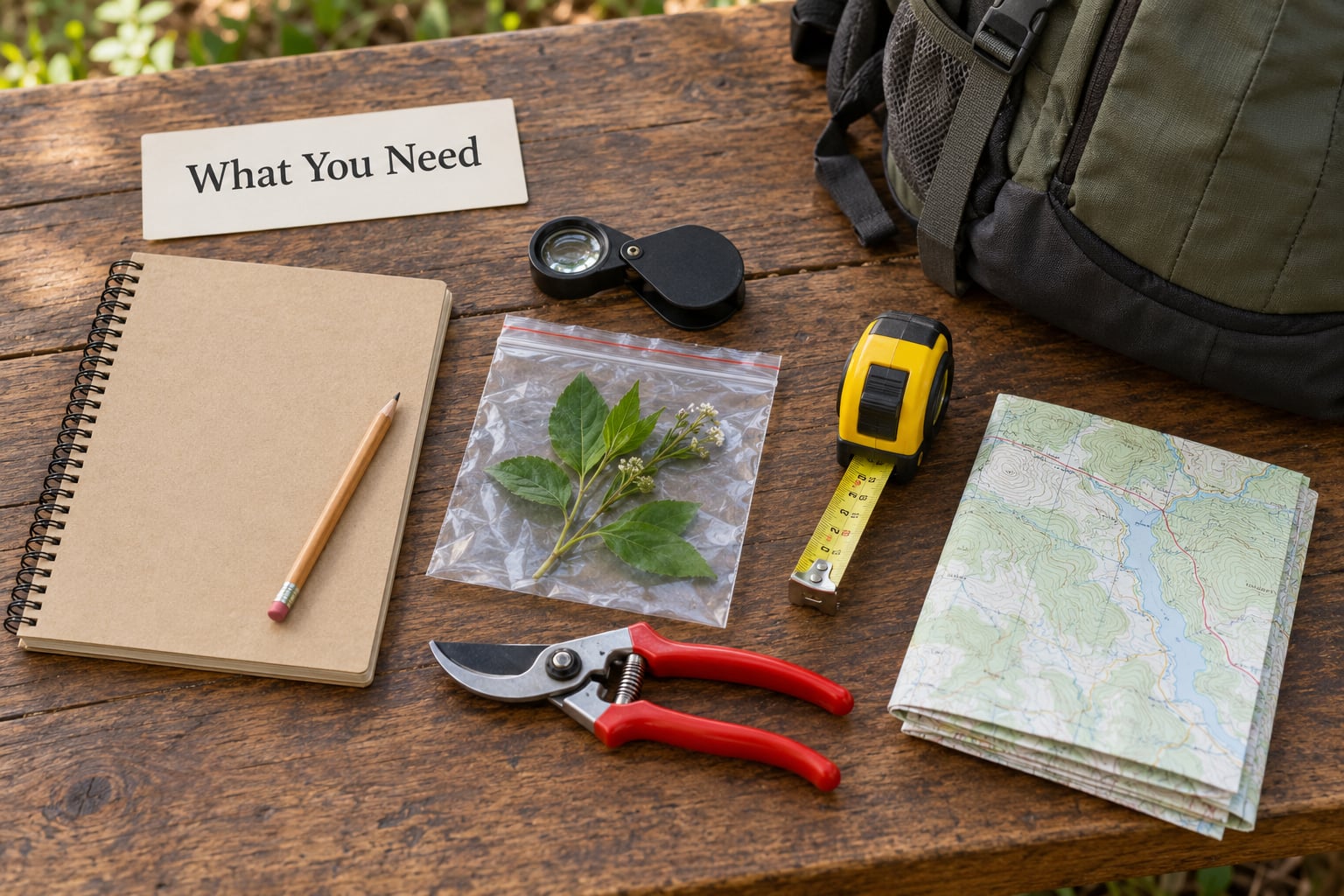
Field research experience in botany is any documented, hands-on work where plants are studied in their natural or cultivated habitat: identifying and collecting specimens, recording vegetation plots, mapping sites with GPS, or running community and ethnobotanical interviews. What makes it count is supervision or verification by a botanist, herbarium, university or conservation organisation.
Before you need any of that, four things have to be in order.
A workable question. Something like “which species flower along this riverbank in the first six weeks of the wet season” is answerable in three weeks with a notebook. “The medicinal plants of the region” is not. Narrow questions produce data; broad ones produce trips.
Basic botanical footing. You do not need to be a taxonomist, but you should be able to use a regional flora or field key and recognise the plant families common in your area. Most botanical placement schemes screen for exactly this, which is why identification skill is the usual entry gate.
Paperwork and permission. Depending on the site, collecting anything may need a research permit, landowner consent, institutional approval or an ethics clearance for any human-participant work. Ask before you go, not after.
Field skills and kit. A waterproof notebook, a hand lens, a 30-metre tape or a measuring tape, a GPS-enabled phone, gloves, a water bottle, sun protection and a basic first-aid kit cover most student projects. A plant press and labelled envelopes matter if you intend to deposit specimens.
Health and safety cover. Some programmes and host institutions require proof of vaccination, tetanus cover, first-aid training or travel insurance before you join a remote team. Carry a charged phone and a written emergency contact list that someone at home holds.
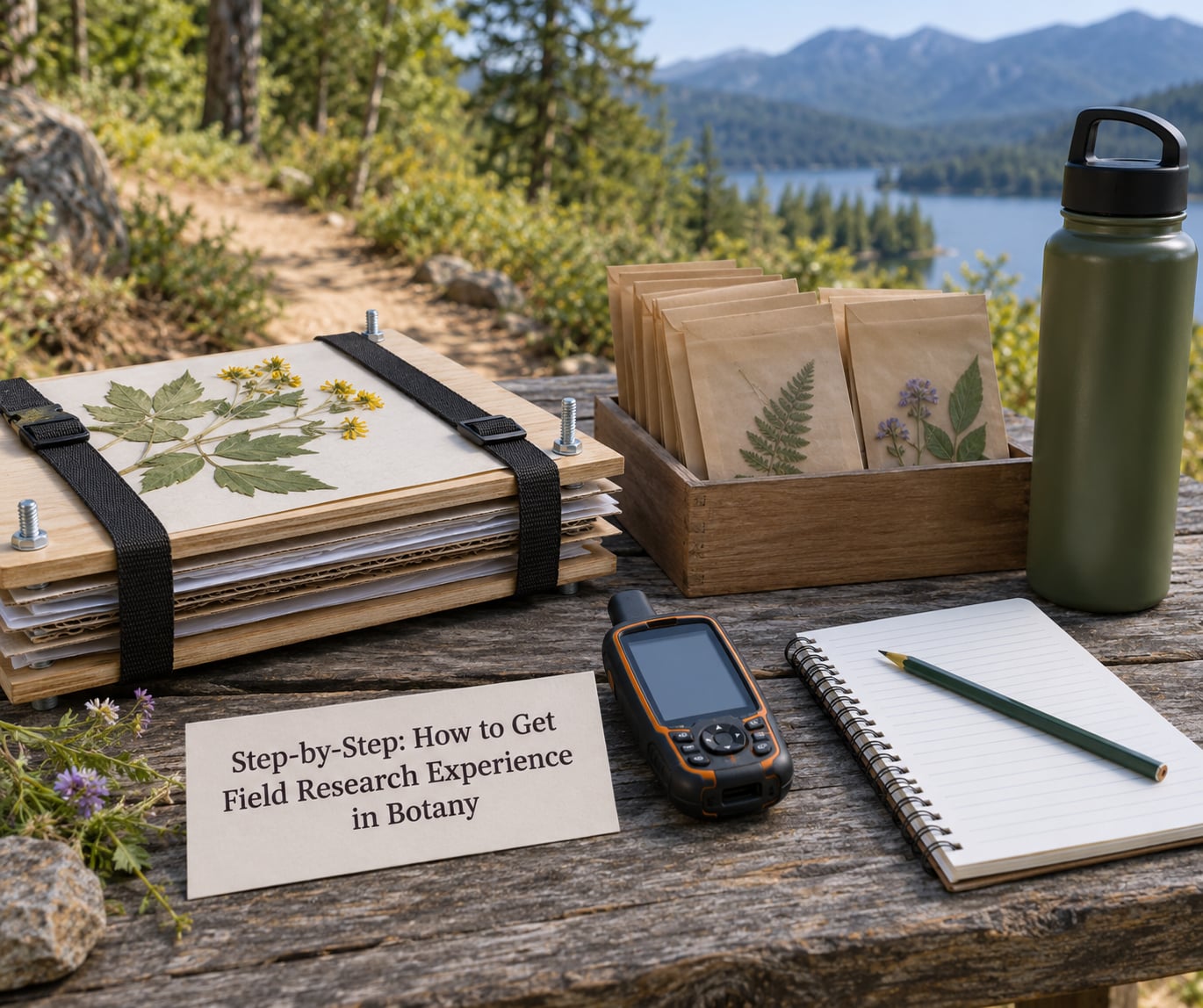
Step-by-Step: How to Get Field Research Experience in Botany
Start with a focused botanical question
Write the question down in one sentence and check it against four constraints: the season you have, the site you can reach, the equipment you can borrow and the people who are allowed to talk to you. If any constraint fails, the question is too big.
Test it with a simple pilot. One visit to the site, twenty minutes of walking, a rough count of what you can identify. That pilot usually kills a bad question before you spend a weekend on it.
Student example: one undergraduate narrowed “medicinal plants near my village” to “which four species are harvested most often within a one-kilometre radius of the trading centre, and in which month”, then surveyed for three weeks with a local guide and a community leader’s verbal agreement. Small, finished, documented.
Build foundational botanical and field skills
Learn identification from the local flora first, then from a regional field key, and practise both outdoors where the plant grows. Campus herbaria, local flora walks and botanical society outings give you practice at low cost, and a herbarium technician will teach you mounting and label conventions faster than any online tutorial.
Alongside identification, learn the methods that field projects actually use: quadrats for abundance, transects for habitat change, vegetation plot description, GPS and GIS data capture, morphological measurement, and disciplined note-taking. Basic statistics and a spreadsheet matter too, because raw field data is worthless without clean, structured records.
Two habits separate people who survive a first season. They record observations immediately rather than at the end of the day, and they mark unknown plants rather than guessing. Both habits prevent the two classic data losses.
Find a supervisor, mentor, or research group
Contacting a professor directly is the highest-return first step people in online botany communities mention repeatedly, and it works for a reason. A short, specific message from someone who has already visited a site beats a generic application to a hundred listings.
Approach university faculty, botanical gardens, museum and herbarium staff, conservation organisations, national botanical surveys and research laboratories. In a strong inquiry email you give four things: who you are in one line, the specific site and species you are interested in, the question you would like to work on, and what you can already offer or learn.
Ask for a small, specific contribution. “I can run a fixed vegetation plot every fortnight for twelve weeks and write up the data” is far easier to accept than “I would like field experience”.
Apply for structured fieldwork opportunities
The main routes differ in who they suit, how long they run and whether they pay. Undergraduates usually start with university field courses or supervised research projects. Research Experiences for Undergraduates programmes fund a summer placement with housing and a stipend in many cases. Botanical garden and herbarium internships cover horticulture, collections and outreach, with research content varying widely.
Field stations, nature reserves and long-term ecological plots hire seasonal field technicians, and conservation NGOs hire short-term survey crews for vegetation, restoration and plant monitoring. Society of Ethnobotany members and similar networks run tropical botany technician internships that ask for existing identification skills. For people with no affiliation at all, citizen science platforms and volunteer survey groups remain the realistic first step.
Before applying, check who supervises you, what training happens in the first week, what you will have produced by the end, and whether costs, accommodation and any stipend are stated plainly. Many programme pages go stale, so confirm the current cycle with the host rather than trusting an archived announcement.
Plan a safe and ethical field project
Ethnobotanical fieldwork carries obligations that ecological fieldwork does not. If you are interviewing people about plants, traditional healing or household use, you need informed consent that is genuinely voluntary, questions asked in the local language by someone the participant trusts, anonymised records, and a clear plan for who keeps the data and who may use it. Documentation vouchers — preserved specimens that back each recorded use — should be lodged in a recognised herbarium so the knowledge is traceable and the community is credited.
Benefit-sharing is the part most self-directed projects skip. Decide in advance what the community receives: a copy of the results in local language, herbarium material returned, training for local youth, or a share of any resulting publication. Agree it before the interviews, not afterwards.
On the practical side, work out permits, site access, transport, check-in arrangements with someone staying behind, weather risk, and a plan for what happens if a participant withdraws their agreement mid-project. Remote fieldwork also needs a radio or satellite communicator where phones do not reach.
Record evidence of your experience
A season you cannot evidence is a season you cannot use. Keep a dated field notebook with the site, date, weather, observers and method for every visit, alongside your data sheets or recordings.
Deposition creates permanent proof. Photograph each specimen in the field, press it properly, label it with collector, number, date and locality, and get it accessioned into a herbarium; a determination voucher is the herbarium’s final identification and the name your methods section will use.
At the end, write a short report: aims, methods, data, findings, limitations, next steps. Ask your supervisor for a signed completion statement naming your responsibilities and hours. That document, plus your notebook and any accession numbers, is what turns a trip into a CV line and a reference.
Common Mistakes
Choosing the destination first. Falling in love with a site and inventing a project to justify it produces weak data. Fix: define the question before the site.
Collecting without permission. Botanical collecting is regulated in many countries, and protected-area rules are strict. Fix: apply for the permit and landowner consent weeks ahead.
Relying on photographs alone. A photo records a moment, not a diagnostic character. Fix: use a hand lens and a key in the field, and confirm identifications against a herbarium determination.
Treating community knowledge as a list of uses. A list strips the practice of its context and can embarrass or harm people. Fix: record who said what, in which language, and under what conditions.
Skipping safety preparation. Heat, remote terrain, biting insects and mobile signal gaps cause more aborted projects than funding does. Fix: written risk assessment, check-ins and insurance.
Leaving without documenting outcomes. No report, no voucher numbers, no confirmation letter. Fix: agree deliverables with your supervisor in week one and treat them as deadlines.
How to evaluate a placement before you accept it
Ask directly what the work involves day to day. Plenty of posts advertised as research internships are mostly garden maintenance or public outreach, and telling them apart before you accept is the difference between a season that builds your record and one that does not.
Unpaid work is not automatically a red flag and not automatically fine. Short volunteer stints attached to real training are common and legitimate. Long placements that produce no training, no supervision and no output are exploitation, and a real research project has no reason to ask for months of unpaid labour without acknowledging the arrangement in writing. Ask what supervision exists, what training you receive, who pays your costs, and whether anything is covered in writing. Be clear in writing about hours, so you are not performing 60 hours a week in an unpaid post.
Turning field experience into a CV line
Replace vague descriptions with method, scale and output. “Assisted with fieldwork” tells a hiring committee nothing. “Ran eleven fixed vegetation plots across four habitats over twelve weeks; recorded 96 species, entered GPS data in QGIS, and produced a herbarium deposit of 40 accessioned vouchers” tells them you can do the job.
Name the method, the scale, the tools and the artefact you left behind. If your work was published or presented, say so with the full citation. Keep the contact of your supervisor available, because most entry-level field roles are filled by reference rather than by CV alone.
Frequently Asked Questions
Can I get field research experience in botany without a university degree?
Yes. Plenty of first seasons are done through volunteer survey groups, botanical garden membership work, citizen science platforms such as iNaturalist and GBIF, and community-led plant documentation projects. What these routes lack in funding they make up in accessibility. You will not get a formal placement without enrolment, but you can produce dated records, counts and photographs, and most mentors care far more about demonstrated care with plants than about credentials.
How do I find affordable or short-term field opportunities?
Look for weekend and fortnight placements first: university field courses, reserve volunteer days, herbaria seeking collection volunteers, and NGO surveys that run for a few weeks rather than a season. Many programmes fund travel, housing or a stipend, especially research placements for undergraduates and structured internships. Ask the host what costs they cover before you commit, and factor permits, gear and travel insurance into any budget you build yourself.
Can a student volunteer on ethnobotanical research?
Sometimes, but only as the host institution allows. Ethnobotanical projects involve human participants, so they need ethics approval, informed consent, anonymised records and an agreed benefit-sharing plan. Volunteers are usually welcome for plant identification, transcription, translation and herbarium work, while interviews are handled by trained researchers. Ask the project lead what you may do without being named as a researcher, and never record an interview on your own initiative.
How do I identify plants in the field without a laboratory?
Use a regional flora or field key rather than an app alone, and confirm with a hand lens the characters the key depends on: leaf arrangement, venation, stipules, flower structure, fruit and bark. Note the habitat, location and date, and photograph the whole plant plus diagnostic close-ups. Mark anything uncertain as uncertain. Depositing a specimen lets a herbarium botanist make a determination, which is the standard way field identifications get verified.
How should I document field experience for graduate applications?
Keep three things: a dated field notebook with site, method, weather and observers; digital records or sheets with GPS coordinates; and a short report of aims, methods and findings. Ask your supervisor for a signed statement naming your responsibilities and hours, and record any herbarium accession numbers. Grant and admissions panels want evidence of method and reliability, and these three items provide it in a form they can check.
Is it better to start with a paid internship or a volunteer project?
Start with whatever you can be consistent about, because completed seasons beat prestigious starts. A supervised volunteer project is realistic for someone with no affiliation and gives you real methods experience plus a reference. A paid role adds money and heavier responsibility, and is usually easier to get once you have one season behind you. If you are choosing between unpaid and paid, check the supervision, training and written terms before you accept.
Conclusion
Write your question in one sentence, list the five local people or programmes most likely to help, and contact one of them this week with something specific to offer. A twelve-week vegetation plot or a three-week community plant survey, documented properly, is a stronger foundation than any certificate. It gives you a reference, a record and a mentor, and those three things are what open the next placement.