If you take a blood thinner, the phrase herbs that may interfere with blood thinners covers two very different problems: plants that make bleeding worse, and plants that quietly weaken the medicine so clots become more likely. Ginkgo, garlic, ginger, dong quai, ginseng and devil’s claw all show up on interaction checklists, and most of them can sit in a kitchen cupboard or a bottle from a market stall without any warning on the package. This guide walks through twelve of them, what the evidence actually shows, and the questions to ask a doctor or pharmacist before you add one to your day.
One warning before the list. Almost all of the published interaction evidence is case reports and small case series, not randomized trials. That means a herb can look either harmless or alarming depending on which two patients happened to be written up, and the honest answer for most entries below is that the risk is plausible rather than proven. Your prescriber, not a website, decides what you take alongside a prescription that can cause internal bleeding.
Table of Contents
- 1Herbs That May Interfere With Blood Thinners at a Glance
- 21. Ginger: A Possible Additive Bleeding Effect
- 32. Garlic: Concentrated Extracts May Increase Bleeding
- 43. Ginkgo: A Blood-Platelet and Clotting Concern
- 54. Turmeric: Supplement Strength Matters
- 65. Feverfew May Add to Bleeding Effects
- 76. Dong quai May Affect Clotting
- 87. Devil’s Claw May Reduce Drug Effectiveness
- 98. Asian Ginseng May Alter Drug Processing
- 109. Cranberry May Increase Anticoagulant Activity
- 1110. Parsley and High-Dose Herb Products May Affect Bleeding
- 1211. Green Tea Extract May Add to Bleeding Risk
- 1312. Licorice May Affect Blood Thinners Indirectly
- 14What Should You Do Before Taking an Herb With a Blood Thinner?
- 15Questions to ask about herbs that may interfere with blood thinners
- 16Can You Safely Use Herbs in Food While Taking a Blood Thinner?
- 17Frequently Asked Questions
- 18What supplements cannot be taken with blood thinners?
- 19Can herbal supplements interact with warfarin?
- 20Can I take magnesium or vitamin B12 while on blood thinners?
- 21Can peppermint tea or herbal tea interact with warfarin?
- 22What are the main food interactions with warfarin?
- 23How long should I stop herbs before surgery or dental work?
- 24Conclusion
Herbs That May Interfere With Blood Thinners at a Glance
Two things drive most of these interactions. An herb can add to the drug’s effect, which pushes bleeding risk up, or it can speed up the liver enzymes that clear the drug, which pushes clotting risk up. The table below sorts the twelve herbs by direction of risk, because that is the question that actually matters when you are standing in a pharmacy.
| Herb | Botanical name | Main concern with blood thinners | Evidence strength | Safest next step |
|---|---|---|---|---|
| Ginger | Zingiber officinale | Additive bleeding effect, mainly in concentrated supplements | Moderate, based on case reports and lab work | Tell your prescriber about any capsule or extract; culinary amounts are a separate question |
| Garlic | Allium sativum | Platelet inhibition, bleeding risk with high-dose extracts | Moderate | Keep cooked garlic in food; ask about supplements and aged garlic extract |
| Ginkgo | Ginkgo biloba | Platelet function and clotting interference | Moderate but inconsistent study quality | Do not start without explicit approval; stop well before surgery |
| Turmeric | Curcuma longa | Platelet effects from concentrated curcumin, higher with piperine | Moderate | Food amounts rarely need review; check enhanced-absorption capsules |
| Feverfew | Tanacetum parthenium | Reduced platelet aggregation, additive bleeding | Limited | Show the product label to your pharmacist before buying |
| Dong quai | Angelica sinensis | Possible clotting effects and drug metabolism changes | Limited | Treat as a prescription-level product needing clinician approval |
| Devil’s claw | Harpagophytum procumbens | May alter drug metabolism and reduce effectiveness | Limited to moderate | Ask a pharmacist before long-term or high-dose use |
| Asian and American ginseng | Panax ginseng, Panax quinquefolius | Enzyme induction can lower the medicine’s effect and INR | Moderate for American ginseng | Name the exact species on the label; avoid abrupt start or stop |
| Cranberry | Vaccinium macrocarpon | Possible increase in anticoagulant effect, including a reported INR above 50 | Moderate, case-report based | Mention regular juice or concentrate use to your prescriber |
| Parsley and parsley seed | Petroselinum crispum | Bleeding concern at large or concentrated doses | Limited | Normal garnish is not the issue; concentrated oil and seed products are |
| Green tea extract | Camellia sinensis | Reduced clotting at concentrated extract doses | Moderate | Drinking tea and taking green tea extract capsules are two different things |
| Licorice | Glycyrrhiza glabra | Blood pressure and potassium changes that complicate therapy | Moderate for the physiological effect | Check sweets, teas and licorice root separately with a clinician |
1. Ginger: A Possible Additive Bleeding Effect
Ginger (Zingiber officinale) is the one herb on this list most people already eat without worry. A teaspoon of grated ginger in tea is not the same exposure as a standardized extract capsule, and the interaction concern sits almost entirely with concentrated products.
The proposed mechanism is additive rather than dramatic: ginger may mildly hinder platelet aggregation, so stacking it on warfarin, apixaban, rivaroxaban or aspirin could add to bruising and bleeding. A 2020 systematic review of warfarin and food, herbal or dietary supplement interactions grouped ginger among the products associated with raised INR, bleeding, or both.
What to do: keep using ginger in cooking and tea as you always have, but mention any capsule, extract, or ginger chew before starting it. If you already take one, that is a good question for your next INR check rather than a reason to panic.
2. Garlic: Concentrated Extracts May Increase Bleeding
Garlic (Allium sativum) carries a reputation for thinning blood that outruns the evidence. The signal concentrates in supplements: high-dose garlic powder, enteric-coated garlic, and aged garlic extract all deliver amounts of allicin-type compounds no plate of food comes close to.
Most interaction references treat garlic as a moderate-risk bleeding contributor when taken in capsule form alongside an anticoagulant. The honest complication is dose. A person who cooks with garlic daily and a person taking a 1,000 mg supplement are not the same patient, and the interaction tables rarely separate them cleanly.
What to do: leave the garlic in the kitchen where it belongs, and bring the bottle of any supplement or aged garlic extract to a pharmacist before you buy it. Garlic also appears in many blends marketed for blood pressure and cholesterol, which is where it often sneaks into a regimen unnoticed.
3. Ginkgo: A Blood-Platelet and Clotting Concern
Ginkgo (Ginkgo biloba) is one of the most studied herbs on this list and one of the least conclusively harmful. The concern is platelet function: ginkgolide B and other constituents may interfere with platelet activating factor, which is one of the signals blood cells use to clump.
A 2020 systematic review placed ginkgo among the products with the strongest interaction signals, but a fair number of the underlying trials are small, dated, or funded in ways that would make a pharmacist wince. That combination means we can say the risk is real enough to take seriously and not proven enough to state as fact.
What to do: do not begin ginkgo for memory or circulation while on a blood thinner without explicit approval. If you already take it, tell your prescriber and raise it at your next appointment, especially before any dental or surgical procedure.
4. Turmeric: Supplement Strength Matters
Turmeric (Curcuma longa) is a kitchen staple that has become a supplement industry, and that shift matters for blood thinner users. The active compound, curcumin, is poorly absorbed on its own, so manufacturers often pair it with piperine from black pepper to increase uptake.
Piperine also affects how the liver processes several medicines, and higher circulating curcumin has been linked to changes in platelet function. This is why a pinch of turmeric in an egg curry and a bioavailable turmeric capsule belong in different categories of conversation with your doctor.
What to do: food use rarely needs review. Any capsule, gummy, or enhanced-absorption formula deserves a look from a pharmacist first, especially if you also take aspirin or a second blood thinner.
5. Feverfew May Add to Bleeding Effects
Feverfew (Tanacetum parthenium) has a long history in traditional Western herbalism, mainly for headache and fever, and a reputation earned partly from an ingredient called parthenolide that appears to reduce platelet aggregation.
The evidence base here is thin. Interaction references cite feverfew as a theoretical bleeding contributor rather than a documented one, largely because few people on anticoagulants take it regularly enough to generate case reports. The same herb also turns up in migraine blends and combination products, so the dose you get may be higher than any single-herb capsule suggests.
What to do: treat the label as the unit of risk, not the plant name. If you are considering a feverfew product for headaches, ask about alternatives that do not interact, and raise it with your prescriber before the first purchase.
6. Dong quai May Affect Clotting
Dong quai (Angelica sinensis), known as dang gui in Chinese herbal practice, is one of the most-used roots in traditional Chinese medicine and one of the more frequently flagged herbs alongside anticoagulants. Coumarin-like compounds in the root are the usual explanation given.
The practical problem is that dong quai arrives inside multi-herb formulas, often under translated names on a label. That makes it hard for a patient, and sometimes for a pharmacist working from a photograph of a box, to work out exactly what is being taken and at what dose. Interaction data are largely theoretical, but the theoretical risk is real enough that this one deserves individual advice.
What to do: bring the actual packaging, with the ingredients list, to a clinician. Anyone using anticoagulants who wants to continue traditional formulas deserves a conversation, not a blanket dismissal of the whole practice.
7. Devil’s Claw May Reduce Drug Effectiveness
Devil’s claw (Harpagophytum procumbens) is widely used for joint pain, and it is the clearest example in this group of the other direction of risk. Some compounds appear to influence liver enzyme activity and drug metabolism, which can mean less anticoagulant reaching your bloodstream, not more.
That direction is harder to notice. Too much anticoagulant announces itself with bruises and nosebleeds. Too little can quietly leave you under-protected while you feel completely normal, which is the part patients rarely consider.
What to do: check with a pharmacist before starting devil’s claw, and never add or stop it in the same week as a dose change without telling your prescriber. Apixaban and rivaroxaban are metabolised through similar enzyme systems, so this advice applies beyond warfarin.
8. Asian Ginseng May Alter Drug Processing
Ginseng products vary more than most readers expect. Asian ginseng (Panax ginseng), American ginseng (Panax quinquefolius), and Korean ginseng are related but not interchangeable, and preparations differ in extraction method and concentration.
American ginseng has been associated with induction of CYP2C9, the enzyme that helps clear warfarin, which points toward reduced anticoagulant effect and a falling INR. Teaching material from the University of Washington PharmD programme notes this induction for American ginseng, with the suggestion that Korean ginseng may behave differently. Ginseng is also a common ingredient in energy and immune blends, so again the label is where the real dose lives.
What to do: name the species, not just the word ginseng, when you discuss it with your clinician. If you already take a ginseng product, report it and ask whether your monitoring interval should be shortened for a while.
9. Cranberry May Increase Anticoagulant Activity
Cranberry (Vaccinium macrocarpon) is the entry most likely to surprise readers, because it arrives as a drink rather than a capsule. Cranberry juice has been associated with increased anticoagulant effect, and a 2020 systematic review describes a case report of an INR above 50 in a patient taking warfarin alongside cranberry products.
That figure is an outlier rather than a typical outcome, and single case reports do not establish a predictable dose threshold. What the case does show is that a daily habit can move the needle in a direction that matters, especially when concentrated extracts, powders, and juice are stacked on top of each other.
What to do: do not stop your prescribed medicine to make room for cranberry juice. Tell your prescriber how much you drink, ask whether an extra INR check makes sense while you are on the juice, and keep it steady week to week rather than bingeing.
10. Parsley and High-Dose Herb Products May Affect Bleeding
Ordinary parsley on a plate is not a blood thinner interaction. Concentrated parsley, parsley seed, parsley seed oil, and combination herbal products are a different category, and they sit on interaction lists because concentrated exposure has been associated with bleeding concerns.
This entry matters mostly because of how these products are sold. Parsley seed extract and parsley oil appear in products marketed for water retention, digestion, and circulation, often with no mention of anticoagulants on the front of the bottle.
What to do: check the preparation type on any label before you buy, not after. If a product uses the word extract, oil, or concentrate, show it to your pharmacist. Cooking with fresh or dried parsley in normal amounts is not the concern anyone is describing.
11. Green Tea Extract May Add to Bleeding Risk
Drinking green tea is not the same as taking green tea extract, and the difference is large enough that the two get separated in most interaction references. A cup or two of brewed tea delivers a modest amount of caffeine and polyphenols with very little absorption of the compounds people worry about.
Green tea extract concentrates those polyphenols and has been associated with reduced clotting in laboratory and clinical studies, which is why it appears in lists of products that may increase bleeding. It also shows up in weight-management and antioxidant blends, often combined with other herbs already on this list.
What to do: if you drink several cups of brewed tea a day, tell your prescriber, because consistency is the useful detail rather than the cup count alone. Capsules and extracts are where the conversation gets serious.
12. Licorice May Affect Blood Thinners Indirectly
Licorice (Glycyrrhiza glabra) works differently from the others here. Its well-documented effect is on blood pressure, potassium, and fluid retention through glycyrrhizin, not directly on platelet function. Those changes matter anyway, because blood pressure swings complicate anticoagulant therapy and add to bleeding risk.
Content varies enormously across products. A black jelly bean, a herbal tea blend, a bag of licorice root, and a concentrated extract can contain wildly different amounts of the active compound, which is why people who would never describe themselves as licorice users still end up with an incidental daily dose.
What to do: read ingredient lists, including candy, tea, and cough preparations, and mention regular use to your clinician. If you have high blood pressure alongside a blood thinner, licorice deserves a closer conversation rather than a shrug.
What Should You Do Before Taking an Herb With a Blood Thinner?
The safest answer is that no herb, tea, tincture, or supplement gets added while you are on a prescription anticoagulant without a clinician’s sign-off. If you want a process rather than a rule, here is the one I would follow.
- Write down the exact medicine and dose. Include the generic name, the strength, and how often you take it, plus anything over the counter such as aspirin, ibuprofen, or naproxen.
- Bring the actual product, not the plant name. A bottle, a photograph of the label, or the supplier’s listing with the botanical name and extract strength. Herbal product names vary too much for a memory-based guess.
- Say what you plan to use it for. Pain, sleep, digestion, joint stiffness, immunity. The reason often has a safer answer your clinician can suggest.
- Ask what monitoring would look like. For warfarin that usually means an INR check. For apixaban or rivaroxaban there is no routine INR equivalent, so the discussion leans on the drug’s own interaction guidance.
- Get the answer in writing where you can. A note in your medication file prevents the same conversation at every appointment.
Questions to ask about herbs that may interfere with blood thinners
Asking in this form gets better answers than a single yes or no: Does this specific product interact with my specific medicine? Is the concern bleeding or reduced effectiveness? How soon after starting or stopping would a problem show up? Do I need an extra blood test? And is there a different approach for my symptom that avoids the interaction entirely?
If your prescriber has never heard of the herb, that is not a dismissal. Bring the botanical name and the manufacturer information, and consider asking whether a pharmacist at your dispensing outlet can review the ingredient list with you. Supplements are not required to prove safety or efficacy before sale, which means the burden of checking sits with you and your care team.
Can You Safely Use Herbs in Food While Taking a Blood Thinner?
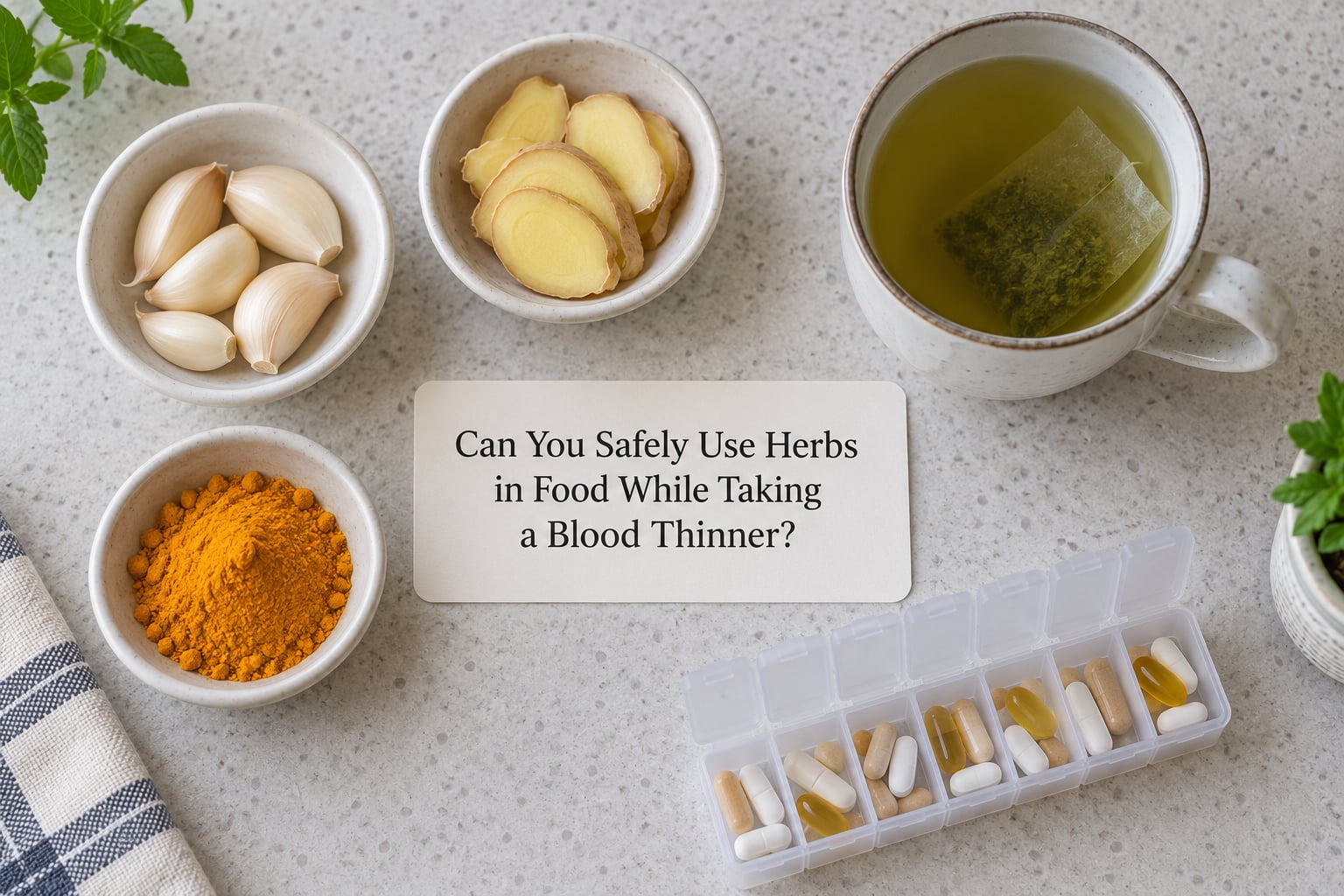
Usually, yes, and this is where a lot of unnecessary worry comes from. Garlic, ginger, turmeric, parsley, and green tea appear on interaction lists as concentrated extracts, powders, and oils. Using them as ingredients in ordinary meals exposes you to far smaller and less predictable amounts, and most clinical guidance treats culinary use as a different question from supplement use.
Two caveats keep that from being a blanket clearance. Vitamin K from leafy greens works directly against warfarin, so keep your intake steady rather than cutting it out or doubling it. And a concentrated preparation, blend, or herbal tea can deliver a supplement-level dose even when it tastes like a drink.
Apixaban, rivaroxaban, dabigatran, and edoxaban do not depend on vitamin K the way warfarin does, but they still carry bleeding risk, and food-drug guidance for them is less developed. When a question is genuinely individual, such as pregnancy, upcoming surgery, kidney function, or a history of bleeding, a pharmacist answering it in five minutes beats a general article in five hours.
Frequently Asked Questions
What supplements cannot be taken with blood thinners?
Ginkgo, garlic, ginger, turmeric, feverfew, dong quai, devil’s claw, ginseng, cranberry, green tea extract, and licorice are the ones most often flagged. The concern runs in two directions: some add to bleeding, others speed up the breakdown of the drug and leave you under-protected. Concentrated extracts carry more risk than culinary amounts. Bring the actual bottle to your pharmacist, and never stop or start one without asking.
Can herbal supplements interact with warfarin?
Yes, in both directions. Some supplements add to warfarin’s anticoagulant effect and raise bleeding risk; others speed up the liver enzymes that clear warfarin, which lowers your INR and raises clot risk. Warfarin has a narrow therapeutic range, so even modest shifts matter. The evidence base is mostly case reports, which means predictions are imperfect. Tell your prescriber about every supplement, tea blend, and traditional preparation you use.
Can I take magnesium or vitamin B12 while on blood thinners?
These two are usually not the problem. Neither magnesium nor vitamin B12 has the same interaction profile as ginkgo or garlic, and vitamin B12 is often prescribed for people on long-term warfarin. That said, any supplement changes what you take, and minerals can affect absorption of certain medicines. Keep your list current, and check any specific product with your pharmacist before starting it.
Can peppermint tea or herbal tea interact with warfarin?
A cup of peppermint tea is not the same as a concentrated herbal preparation, and ordinary brewed teas are generally not a problem. Blended herbal teas, tinctures, and multi-herb products are different because the dose per serving is far higher and less predictable. Patients on warfarin ask about tea more than any other everyday habit. Keep your intake consistent and mention your daily drinks at your next appointment.
What are the main food interactions with warfarin?
Vitamin K from leafy greens such as spinach and kale is the best-known one, because it works directly against warfarin. Consistency matters more than avoidance. Alcohol, grapefruit, and cranberry or pomegranate juice are also cited, with case reports of markedly raised INR values. Large amounts of vitamin E and multivitamins may add to bleeding. Talk to a dietitian or your prescriber about your usual diet rather than cutting out whole food groups.
How long should I stop herbs before surgery or dental work?
Most surgical teams ask you to stop herbal supplements around one to two weeks beforehand, and some require longer for specific products such as ginkgo. Tell the surgical team about every supplement, tea blend, and traditional preparation you use, including how long you have taken them and at what dose. Do not stop your prescribed blood thinner unless the surgical team instructs you to, because clotting during interruption carries its own risk.
Conclusion
The first step is the simplest one: do not start, stop, or combine any herb, tea blend, tincture, or supplement with a prescribed blood thinner without checking with a doctor or pharmacist, and take the exact product with you rather than describing it from memory. Bleeding that runs long, blood in urine, black tarry stools, or bruising with no clear cause need prompt medical attention, and if you are already bleeding heavily, treat it as an emergency.
Traditional herbal practice and modern anticoagulant therapy do not have to be enemies. They just need the same respect for labels, doses, and honest uncertainty that any other combination of medicines demands.