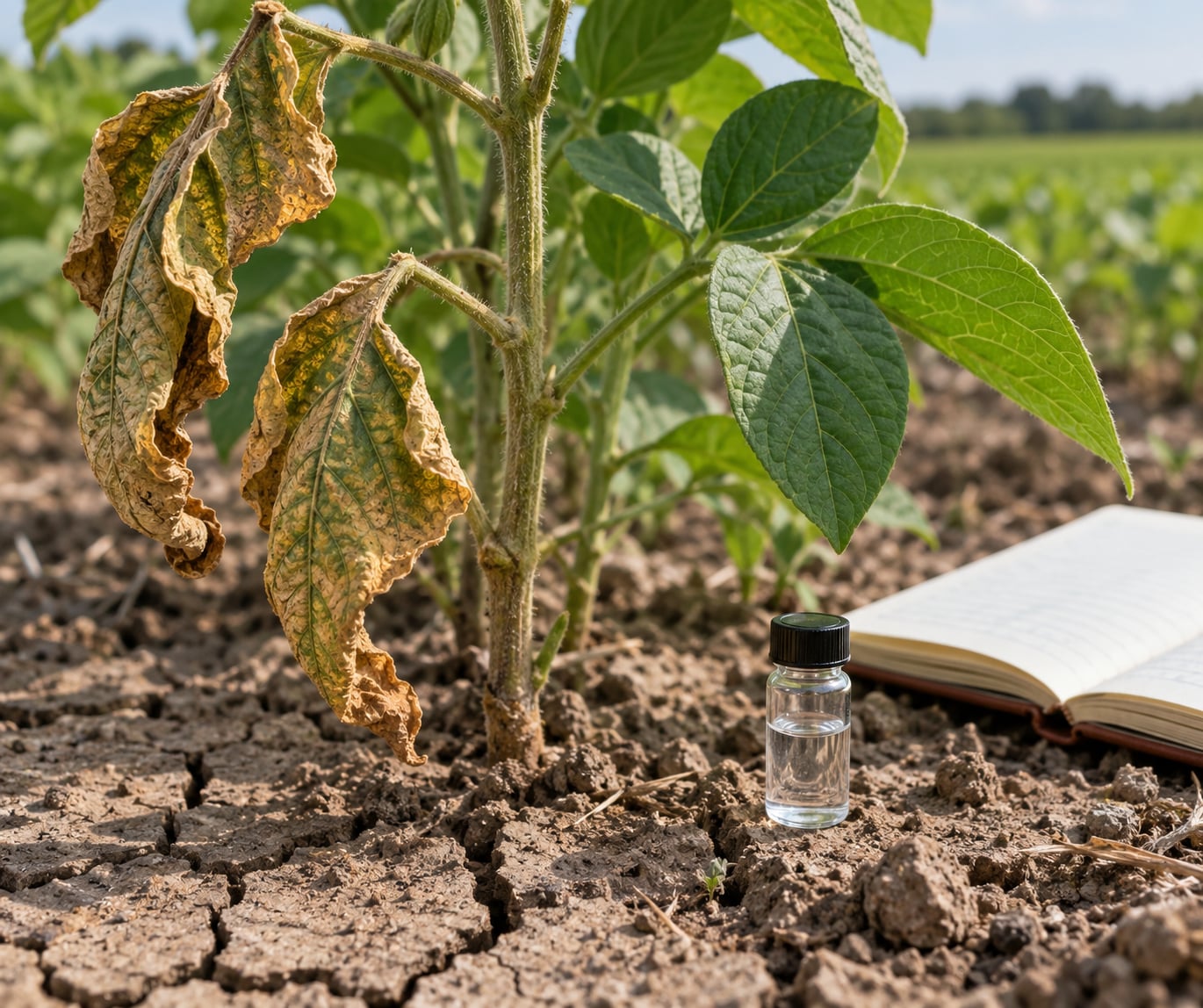
When soil dries out below what roots can pull from it, a plant’s water balance breaks first. It releases the signalling hormone abscisic acid, closes the pores in its leaves, and builds up dissolved compounds such as proline, soluble sugars and glycinebetaine to hold onto water. Photosynthesis slows, growth stalls, and reactive oxygen species start to accumulate until the antioxidant system steps in. This is drought and plant chemistry explained in one paragraph: a switch from growth mode to survival mode, driven entirely by molecules.
The interesting part for anyone who studies medicinal plants is what happens next. Alongside the survival chemistry, drought pushes plants to remake their secondary metabolites, the phenolics, flavonoids, tannins and alkaloids that people harvest. Those compounds can go up or down, and the direction depends on species, tissue, intensity and duration. That single fact explains why a dried year and a wet year can produce two different herbal preparations from the same hillside.
The rest of this guide walks the cascade in order, from the first drop of missing water to the chemical aftermath, then looks at how researchers measure it and what it means for wild-harvested plants in African ethnobotanical settings.
Table of Contents
- 1What Happens to Plant Chemistry During Drought?
- 2Drought and plant chemistry changes begin with water balance
- 3How Does Drought Affect Plant Growth and Water Use?
- 4Stomata close, and carbon intake falls with them
- 5Roots and shoots rebalance
- 6Growth arrest in four steps
- 7Which Plant Compounds Change During Drought?
- 8Primary metabolites and compatible solutes
- 9Pigments
- 10Phenolics, flavonoids and tannins
- 11Alkaloids
- 12Structural chemistry
- 13How Do Plants Use Chemistry to Respond to Dry Conditions?
- 14Osmotic adjustment
- 15Antioxidant defence
- 16Membrane and cell wall protection
- 17Signalling and gene regulation
- 18Redistribution of carbon and nitrogen
- 19What Is the Difference Between Short-Term and Long-Term Drought Stress?
- 20Mild and short stress
- 21Moderate stress over days
- 22Severe and prolonged drought
- 23How Can Scientists Measure Changes in Drought and Plant Chemistry?
- 24Establishing and verifying the stress
- 25Chemical assays
- 26How Might Drought Affect African Medicinal Plants and Their Compounds?
- 27What Factors Can Change the Result Besides Drought?
- 28Frequently Asked Questions
- 29What happens to plants in a drought?
- 30What hormone helps plants respond to drought?
- 31How does drought affect plant growth?
- 32What are the effects of drought stress on plant chemistry?
- 33Is proline accumulation protection or damage?
- 34Does drought change the chemistry of medicinal plants?
- 35Conclusion: Start With Water, Then Follow the Chemistry
What Happens to Plant Chemistry During Drought?
Drought has two definitions, and they are not the same thing. Climatically, a drought is a long spell of missing rainfall over a region. Biologically, it is any moment when soil water drops below what roots can extract, which can happen in a single hot week.
The plant-level version is what chemistry responds to. That condition is called a water deficit, and it is measured as water potential, the physical pull of water in a system. Soil water, root cells, leaf cells and the air outside the leaf each hold a different water potential, and water always moves from the less negative value to the more negative one. When dry soil becomes more negative than the root, the gradient that pulls water up the xylem reverses, and the plant starts losing water faster than it replaces it.
Drought and plant chemistry changes begin with water balance
Once that gradient flips, three chemical systems react within minutes to hours. Water status itself shifts, because ions, sugars and amino acids redistribute across membranes and cell walls. Hormone levels change, led by a fast rise in abscisic acid. And the balance between carbon fixation and carbon consumption tips, because the plant can no longer close its stomata and keep photosynthesising at full speed at the same time.
Over days, the primary metabolites change too. Free amino acids, especially proline, build up. Sugars shift between sucrose, glucose and fructose pools. Organic acids move to hold pH steady as carbon is rerouted away from growth. Every one of these changes is measurable, which is why drought response can be studied chemically rather than guessed at from leaf colour.
The practical summary: drought and plant chemistry changes are a hierarchy, not a single event. Water balance moves first, hormones signal second, and the compound chemistry follows the signal.
How Does Drought Affect Plant Growth and Water Use?
Growth stops because expanding cells are expensive, and a water-stressed plant can no longer afford that cost. It also cannot afford to lose water through open pores. Those two facts explain nearly every visible and measurable effect of drought.
Stomata close, and carbon intake falls with them
Stomata are the adjustable pores on the leaf surface, controlled by two guard cells. Open, they let carbon dioxide in and water vapour out. Closed, they save water and starve photosynthesis of its raw material. This is the central trade-off of drought and plant chemistry: every litre conserved costs a little carbon gain.
The exchange rate matters, and water-use efficiency is the number that captures it, carbon gained per unit of water lost. Some species close stomata early and hard, some late and shallowly, and that difference is a large part of what drought tolerance means.
Roots and shoots rebalance
Under moderate water deficit, plants commonly shift growth toward roots, which improves access to deeper soil water. Severe and prolonged stress reverses this, because the plant can no longer build new root tissue either. Leaves shed, roots die back, and the plant enters a survival posture where existing tissues are maintained and nothing new is made.
Growth arrest in four steps
- Carbon gain falls. Closed stomata limit carbon dioxide, so photosynthetic rate drops within minutes of closure.
- Cell expansion slows first. Leaves stay smaller and thinner because expansion needs turgor pressure that drought removes.
- Meristem activity slows. Shoot and root tips stop dividing, so branching and root length increase stop.
- Reproduction is cut or brought forward. Under terminal drought, many species flower early on whatever reserves remain, or abort flowers entirely.
Nutrient uptake suffers at the same time, because ions move with water. Nitrogen, phosphorus and potassium uptake all fall as the soil dries, and drought-stressed plants often shift toward a higher nitrogen-to-phosphorus ratio, a stoichiometric fingerprint researchers use as an early warning of water stress.
Which Plant Compounds Change During Drought?
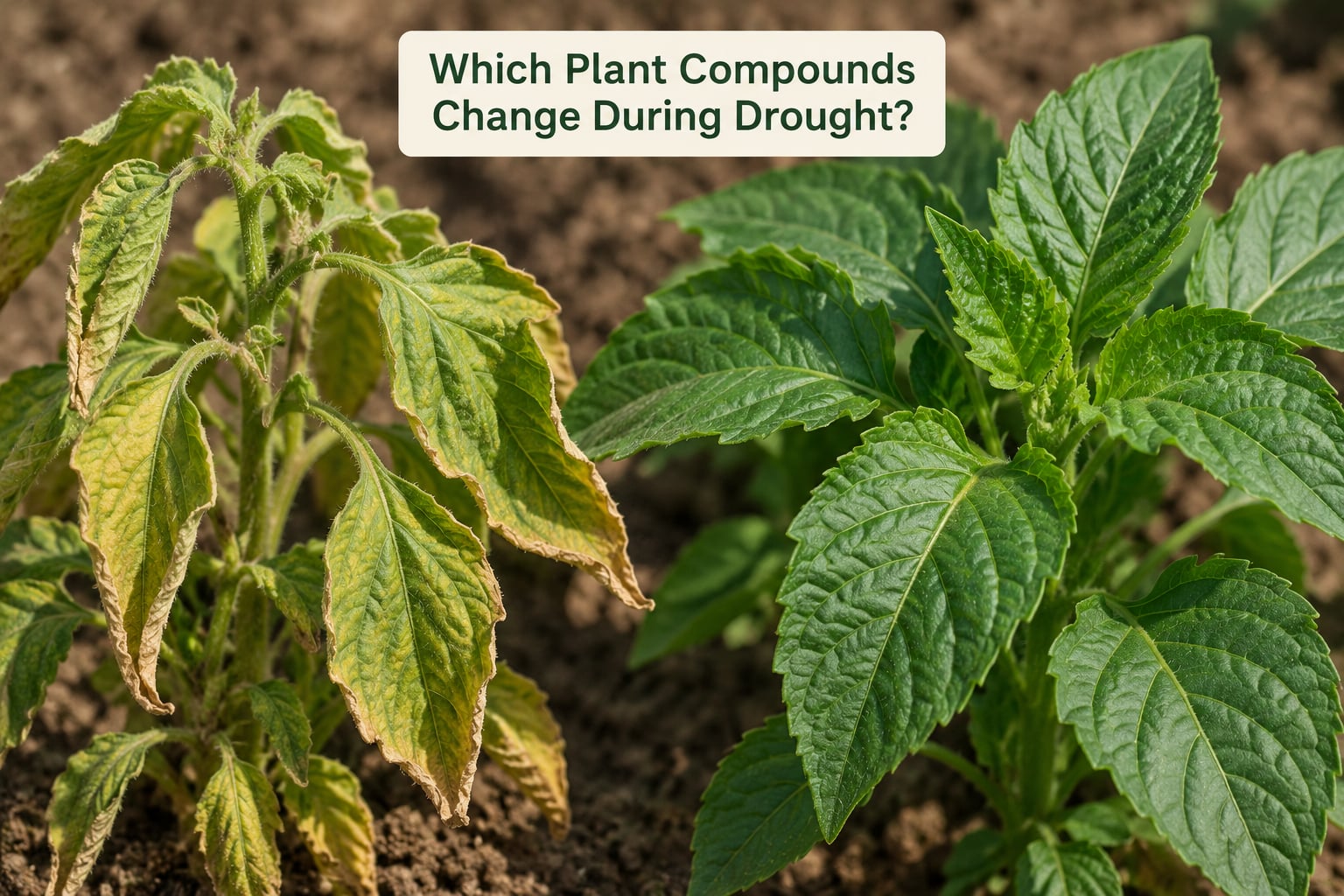
The compound groups below all respond to drought, and most respond in a predictable direction. The reliable caveat is that direction depends on species, drought intensity, duration and which plant part you analyse.
Primary metabolites and compatible solutes
Proline is the clearest case. Under drought, the enzyme P5CS drives its synthesis while ProDH, which breaks it down, is held back, so proline accumulates sharply. It acts as an osmoprotectant, a molecule that does not interfere with metabolism and helps keep cell water in. It also stabilises proteins and membranes, which is why it carries a second job as a protectant.
Soluble sugars, especially sucrose and raffinose-family oligosaccharides, accumulate for the same reason. Glycinebetaine does it too, though many plant families cannot make it at all, which is part of why some species tolerate salinity and drought better than others.
Pigments
Chlorophyll usually falls, because a plant under water stress dismantles light-harvesting machinery it cannot afford to run. Anthocyanins, the red and purple pigments, often rise in stressed foliage as part of the antioxidant screen. That colour shift is one reason drought-stressed leaves look dull purple rather than simply yellow.
Phenolics, flavonoids and tannins
Phenolic compounds, which include flavonoids and tannins, are the most studied group and the most contradictory. Many studies report increases under moderate drought, especially in leaves, because these compounds intercept reactive oxygen species and screen UV radiation. Others report decreases, particularly under severe or prolonged stress, when the plant is short of carbon and nitrogen and cannot keep synthesising them.
The reconciliation is straightforward. Moderate, short stress tends to raise phenolics, severe or long stress tends to lower them, and roots and leaves often move in opposite directions.
Alkaloids
Alkaloids show the same pattern in most surveys: nitrogen-containing alkaloids accumulate under moderate drought, and the plant invests in them because they need nitrogen and carbon for defence. Extreme stress reverses this, because the whole nitrogen pool shrinks.
Terpenes and essential oils complicate the picture further. In some aromatic plants mild water stress concentrates oils by reducing water content per leaf, while heavier stress reduces total oil yield.
Structural chemistry
Lignin, the polymer that stiffens xylem cell walls, changes in composition rather than simply in amount. Work reported in recent years describes a chemical switch in which one monomer, an alcohol, becomes an aldehyde, changing how lignin cross-links and how strongly a xylem vessel resists collapse under the negative pressure of transpiration. Plants with more of the aldehyde form hold hydraulic function better through dry spells, and some of them recover faster after rewatering.
| Compound group | Role in the plant | Direction of change under moderate drought |
|---|---|---|
| Abscisic acid (ABA) | Drought signal, stomatal closure, dormancy | Rises sharply |
| Proline | Osmotic adjustment, protein and membrane protection | Rises sharply |
| Soluble sugars | Osmotic adjustment and carbon reserve | Rises |
| Glycinebetaine | Osmoprotection in species that synthesise it | Rises where present |
| Chlorophyll | Light capture for photosynthesis | Falls |
| Anthocyanins | Antioxidant and photoprotection | Often rises |
| Phenolics and flavonoids | Antioxidant and UV screening | Often rises, falls when stress is severe |
| Tannins | Broad chemical defence | Varies by tissue and severity |
| Alkaloids | Nitrogen-based defence | Rises moderately, falls when severe |
| Antioxidant enzymes | Clear reactive oxygen species | Rise, more in tolerant genotypes |
| Malondialdehyde (MDA) | Marker of membrane lipid damage | Rises when defences are overwhelmed |
| Lignin monomers | Xylem wall strength against collapse | Composition shifts toward aldehyde form |
The table is a starting map, not a rulebook. Any single row can flip in a given species, and that is precisely why claims about drought effects on plant chemistry need the variables attached.
How Do Plants Use Chemistry to Respond to Dry Conditions?
Each part of the response has a job. Reading them together makes the logic much easier to hold on to.
Osmotic adjustment
Cells keep water in by making their own sap more concentrated with solutes, which lowers the cell’s water potential so water stays inside even when the soil is drier. Accumulating proline, glycinebetaine and sugar does this without disturbing normal reactions. A plant that can adjust osmotically can keep growing tissue alive at leaf water potentials where a plant that cannot simply stops.
Antioxidant defence
Reactive oxygen species are chemically reactive oxygen molecules produced unavoidably wherever the plant is doing photosynthesis or respiration. When electron transport slows under drought, the chain leaks, and superoxide and hydrogen peroxide build up. Left alone, they attack lipids, proteins and DNA, and the resulting damage is measurable as malondialdehyde, a breakdown product of membrane lipids.
The counter-system is enzymatic and chemical. Superoxide dismutase converts superoxide to hydrogen peroxide, catalase and ascorbate peroxidase then clear the peroxide, and small molecules such as glutathione, ascorbic acid and tocopherols mop up what is left. Species and genotypes differ mainly in how large and fast this system is.
Membrane and cell wall protection
Membrane lipids change their fatty acid composition under drought so membranes stay fluid and intact as temperatures swing. On the structural side, lignin chemistry adjusts the mechanical strength of xylem walls, which determines whether a conducting vessel stays open or implodes when transpiration pulls hard on it.
Signalling and gene regulation
ABA binds to receptors in the PYR1/RCAR family, which releases transcription factors of the ABF/AREB type. Those switch on drought-responsive genes: transcription factors themselves, transporters, dehydrins,LEA proteins, and the enzymes of proline and glycinebetaine synthesis. Prolonged exposure can add epigenetic marks, which is one proposed basis for the priming or stress memory effect discussed later.
Redistribution of carbon and nitrogen
Carbon leaves the growth pathway and moves into defence chemistry, soluble reserves and, in some species, the cell wall. Nitrogen follows similar logic, moving into amino acids and alkaloids. This is why drought-stressed plants often taste more bitter or astringent: the allocation to phenolics and tannins has gone up relative to carbohydrate.
What Is the Difference Between Short-Term and Long-Term Drought Stress?
Short stress and long stress are handled by different chemistry, and confusing the two explains a lot of contradictory published findings.
Mild and short stress
Signal-driven, reversible, and dominated by water conservation. ABA rises, stomata close, compatible solutes accumulate, photosynthesis dips and growth slows. Proline and antioxidant enzyme activity both increase, and when water returns, the plant resumes normal growth within days with little lasting trace.
Moderate stress over days
Structural and defensive chemistry starts to matter. Osmotic adjustment is well established, phenolics and flavonoids in leaves tend to rise, lignin composition shifts, and root-to-shoot allocation changes. Photosynthesis recovers fully after rewatering in many species, though not always in all of them.
Severe and prolonged drought
Defences are eventually overrun. Antioxidant capacity plateaus while reactive oxygen species keep climbing, malondialdehyde rises as membranes lose integrity, and photosynthesis does not recover even with water. Growth stops permanently, tissues senesce early, and the plant sheds leaves it cannot afford to replace.
Two downstream patterns mark the severe stage. Carbon and nitrogen reserves fall, so many secondary metabolites decline rather than accumulate. And recovery becomes partial: a plant that survived severe drought can show altered growth and altered chemistry for weeks or months afterwards, an effect researchers call a legacy or memory effect.
How Can Scientists Measure Changes in Drought and Plant Chemistry?
Measurement decides which of the conflicting claims above survives. Most studies combine a controlled water treatment with a set of complementary assays, because no single number captures drought response.
Establishing and verifying the stress
Soil water content and predawn and midday leaf water potential set the treatment. Gas exchange measurements give stomatal conductance and photosynthetic rate, which confirms that the chemistry being measured is happening under real water stress rather than a label applied to a sample.
Chemical assays
- Proline and soluble sugars by colorimetric assays or HPLC, the standard first pass for osmotic adjustment.
- Antioxidant enzymes, superoxide dismutase, catalase and ascorbate peroxidase, measured as activity per gram of protein.
- Lipid peroxidation through malondialdehyde, usually read as thiobarbituric acid reactive substances.
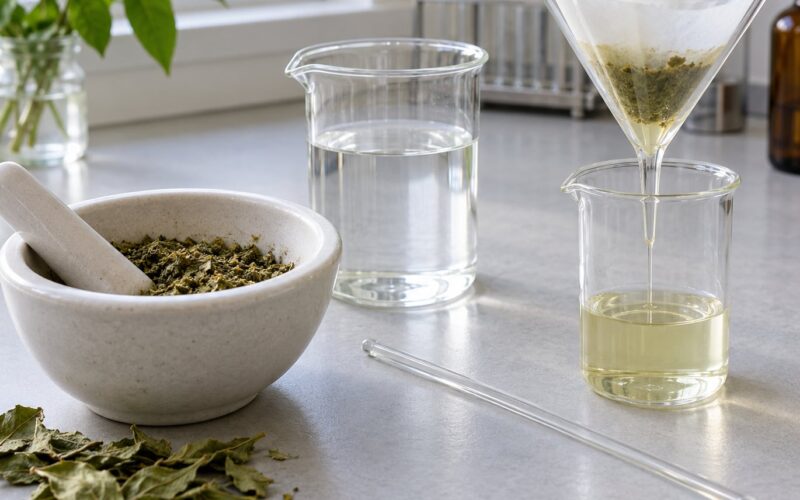
- Phenolics, flavonoids, tannins and alkaloids by colorimetric assays or chromatographic profiling.
- Metabolomics, gas chromatography or liquid chromatography with mass spectrometry, which measures hundreds of metabolites at once and is how researchers catch shifts nobody thought to test for.
- Elemental composition by X-ray or digestion-based assays, used to track the nitrogen-to-phosphorus shift as a water-stress signal.
- Transcript levels by qRT-PCR, which confirms which drought-responsive genes are actually on.
The pattern to notice: every measurement needs a water potential reading taken alongside it. Without one, a chemical difference between two samples could just as easily reflect soil type, plant age or time of day.
How Might Drought Affect African Medicinal Plants and Their Compounds?
For wild-harvested medicinal plants, drought chemistry is not an abstract problem. It affects concentration, harvest timing and standardisation of anything prepared from those species, and those effects vary widely by region and season.
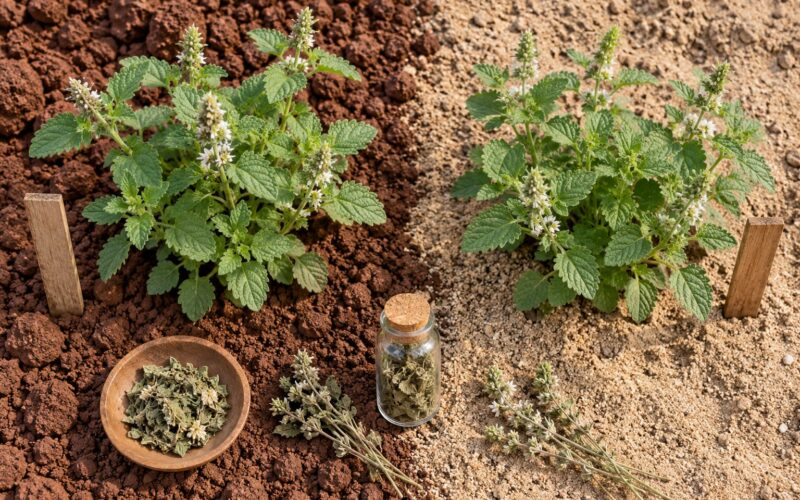
Geographic and seasonal variation is the first problem. The same species collected in two districts, or the same district in a dry year and a wet year, can differ substantially in the concentration of the compounds a preparation depends on. A concentration measured at one site in one season does not describe populations elsewhere, which means a single published figure should never be treated as a specification.
Harvest timing follows directly from the chemistry. A plant under moderate stress often holds higher phenolic and flavonoid concentrations, so an informal rule of thumb in many harvest traditions, waiting until the plant looks stressed before picking the leaves, has a chemical rationale behind it. That rule fails under severe drought, where those compounds fall, and it fails again if the harvester cannot tell moderate from severe. Colour and leaf texture offer clues: dulling, early senescence and leaf rolling signal a stage where protective chemistry may already be declining.
Authenticity and substitution compound the problem. When a preferred species becomes scarce in a dry year, markets fill with look-alike species or with material that has been stored, and dried material loses the volatile fraction and degrades over storage. Both change the chemistry without changing the name on the label.
This article is informational. It does not support any claim that a drought-year plant is safer or more potent, and no compound concentration from a research study can be transferred to a preparation in a household. Questions about remedies, dosing and safety belong with a qualified pharmacist or clinician, and anyone using medicinal plants alongside prescribed medicine should ask them about interactions.
What Factors Can Change the Result Besides Drought?
Any chemical shift in a plant has several possible causes, and drought is rarely the only one in play. Soil texture, pH and organic matter set nutrient availability. Temperature and light change photosynthesis rate and phenol synthesis. Plant age, genotype and developmental stage change every measurement. Pests and pathogens trigger their own defence chemistry, which often overlaps with the drought response.
Altitude and latitude shift photoperiod and temperature, and thus chemistry, independently of rainfall. Herbivory changes leaf chemistry strongly in some species. Harvest handling matters: drying temperature, drying speed and duration. Storage matters just as much, because phenolics and volatile terpenes degrade over time and stored material can look identical to fresh material.
Season and time of day matter too, since diurnal shifts in starch, sucrose and alkaloid concentration are normal in an unstressed plant. Any claim that drought changed a compound’s concentration is only credible when those variables were controlled, which is exactly the control most often missing from the studies that disagree with each other.
Frequently Asked Questions
What happens to plants in a drought?
When soil water drops below what roots can extract, a plant’s water potential becomes more negative and photosynthesis slows. It releases abscisic acid, which closes the tiny pores in its leaves called stomata so it loses less water through transpiration. It also accumulates dissolved compounds such as proline and soluble sugars to hold water, raises antioxidant enzyme activity to control reactive oxygen species, and slows or stops growth while redirecting resources to survival.
What hormone helps plants respond to drought?
Abscisic acid, usually shortened to ABA, is the master drought hormone. Roots sensing dry soil release it, and it travels up to the leaves where it binds to receptor proteins in the PYR1/RCAR family. That binding triggers stomatal closure to cut water loss and switches on the genes that build protective solutes and slow growth. ABA also induces seed dormancy, which is why it was first studied in relation to seed ripening.
How does drought affect plant growth?
Drought cuts growth through four linked effects. Closed stomata limit carbon dioxide, so photosynthetic rate falls within minutes. Cell expansion slows because expansion needs turgor pressure that drought removes, so leaves stay smaller. Meristems stop dividing, ending shoot and root extension. Finally, reproduction is cut short or brought forward, and under terminal drought the plant flowers early on remaining reserves or aborts flowers entirely.
What are the effects of drought stress on plant chemistry?
The chemical effects fall into three groups. Physical and hormonal: water potential becomes more negative, abscisic acid rises sharply, stomata close. Osmotic and protective: proline, soluble sugars and glycinebetaine accumulate, pigment levels shift, and antioxidant enzymes increase while malondialdehyde marks membrane damage. Structural and defensive: lignin monomer composition changes in xylem walls, and phenolics, flavonoids, tannins and alkaloids shift in direction depending on how severe the stress is.
Is proline accumulation protection or damage?
At normal levels, proline is protection. Under moderate water deficit it accumulates through increased synthesis by the enzyme P5CS and reduced breakdown by ProDH, and it lowers cell water potential, stabilises proteins and membranes, and scavenges reactive oxygen species. It becomes a warning sign only when levels keep climbing during severe or prolonged stress, where it usually accompanies falling photosynthesis and rising malondialdehyde, indicating that defences are being overwhelmed.
Does drought change the chemistry of medicinal plants?
Yes, and the direction is not fixed. Under moderate drought, phenolics, flavonoids, tannins and many alkaloids often increase in leaves, while chlorophyll falls and anthocyanins may rise. Under severe or prolonged drought, the opposite tends to happen because the plant loses the carbon and nitrogen it needs to keep making them. Roots and leaves can move in opposite directions, so a concentration from one site or season cannot be generalised to other populations or other years.
Conclusion: Start With Water, Then Follow the Chemistry
If you take one idea away from this guide, take the order. Water balance moves first, abscisic acid carries the signal, stomata and osmotic adjustment act on it, reactive oxygen species follow, antioxidants respond, and secondary metabolites shift last and least predictably.
For a student, that cascade is the map to memorise. For a farmer or gardener, the early-movement signals are the ones worth watching, because stomatal closure, leaf rolling and slowing growth precede visible damage by days. For anyone working with wild-harvested medicinal plants in 2026, the practical rule is to treat every concentration figure as specific to a place, a season and a severity of stress, and to have any preparation question answered by a pharmacist or clinician rather than by a research paper.