Teff is the tiny seed of Eragrostis tef, an ancient gluten-free grain eaten across Ethiopia and Eritrea for thousands of years, and it is one of the most mineral-dense everyday grains you can cook. Teff nutrition and how to cook it comes down to two numbers: start with about 3 cups of water for every 1 cup of teff, and give it 20 minutes on the stove. That ratio is the whole game.
Cooked that way, a cup holds roughly 6 g of protein, 4 g of fibre and about 125 mg of calcium, with an earthy, slightly molasses flavour that works sweet or savoury. Most people get teff wrong in one of two ways: they drown it, or they walk away from the pan too late and scrape burnt grains off the bottom.
Everything below covers the nutrition numbers per 100 g, what to buy, three reliable cooking methods with exact ratios, and the handful of mistakes that turn a good grain into porridge or paste. Figures are per 100 g of raw dry whole grain teff unless stated otherwise, drawn from USDA FoodData Central figures.
Table of Contents
- 1Teff Nutrition Facts Per 100 g of Whole Grain
- 2What You Need
- 3Step-by-Step: How to Cook Teff
- 4How to cook teff on the stovetop
- 5How to cook teff in an instant pot
- 6How to make teff porridge
- 7How to use teff in flatbreads and cakes
- 8Common Mistakes and How to Fix Them
- 9Too little water
- 10Too much water
- 11Cooking at too high a heat
- 12Skipping the resting time
- 13Confusing teff with similar grains
- 14Storing cooked teff badly
- 15Buying the wrong form
- 16Frequently Asked Questions
- 17Is teff healthy?
- 18How long does it take to cook teff?
- 19Do I need to rinse teff before cooking?
- 20Can teff be cooked in an instant pot?
- 21Is teff gluten-free?
- 22How should cooked teff be stored?
Teff Nutrition Facts Per 100 g of Whole Grain
Teff’s nutritional reputation rests on minerals more than on macronutrients. It is a carbohydrate grain first, but the density of iron, calcium, magnesium and manganese per calorie is unusually high, and it carries more protein and fibre than the average wheat or rice serving.
| Nutrient | Amount per 100 g | Percent daily value |
|---|---|---|
| Calories | 343 kcal | 17% of 2,000 kcal |
| Protein | 13.6 g | 27% |
| Total fat | 2.4 g | 3% |
| Saturated fat | 0.3 g | 2% |
| Carbohydrate | 62.0 g | 23% |
| Fibre | 7.2 g | 26% |
| Sugars | 0.7 g | less than 1% |
| Calcium | 180 mg | 14% |
| Iron | 4.7 mg | 26% |
| Magnesium | 183 mg | 44% |
| Manganese | 3.1 mg | 136% |
| Phosphorus | 429 mg | 34% |
| Potassium | 407 mg | 9% |
| Zinc | 3.4 mg | 31% |
| Copper | 0.25 mg | 28% |
| Thiamin (B1) | 0.29 mg | 24% |
| Riboflavin (B2) | 0.11 mg | 28% |
| Niacin (B3) | 3.3 mg | 21% |
| Vitamin B6 | 0.20 mg | 12% |
| Folate | 54 mcg | 14% |
| Selenium | 0.9 mcg | 2% |
Two figures stand out. Manganese runs past the daily value on its own, and half a cup of dry teff covers a meaningful share of your iron and magnesium needs in a small volume, which matters for people who eat little meat.
Teff is also notable for what it does not contain. It is naturally free of gluten, dairy and egg, and dry teff carries essentially no vitamin C. Claims that teff is a “vitamin C powerhouse” describe the fermented products made from it, such as injera, where bacterial fermentation raises the level.
Not all teff behaves the same. Brown and red teff retain the germ and bran, so they run higher in fibre and micronutrients. White teff is milled lighter, tastes milder and cooks softer, at the cost of some fibre and minerals. Teff flour made from whole grain sits between the two: same minerals as the grain, finer texture, faster cooking.
What You Need
Teff is a low-equipment ingredient, and almost any method that works for rice will work for teff with a shorter cook time.
- Teff grain for porridge and boiled grain. A 1 kg bag lasts several months and freezes well.
- A saucepan with a tight-fitting lid. The lid matters more than any other tool, because the final steam rest is what separates fluffy teff from gummy teff.
- A whisk or wooden spoon. Teff’s starch releases quickly once it boils, and a whisk is the fastest way to break up clumps in the first minute.
- Water, stock or milk. Water gives the cleanest grain flavour; stock or fortified soy milk shifts it savoury or creamy.
- Optional additions: salt, oil, butter or ghee, vegetables, spices such as berbere, and toppings like nuts, seeds and fruit.
- Teff flour if you plan to cook injera, pancakes or bake. Keep it sealed, because ground flour goes rancid faster than whole grain.
Rinsing is not a required step, and rinsing can actually strip the light coating that gives teff its nutty aroma. Most recipes call for using it straight from the bag and letting the grain do its own work during the simmer.
If you buy whole grain and want flour, a home blender works. Mill in short pulses, not continuously, so the heat from the blades does not cook the starch. Sifted flour is fine enough for pancakes, but keep some grain texture if you are making injera or a rustic loaf.
Step-by-Step: How to Cook Teff
Here is the ratio cheat sheet I keep coming back to. One cup of whole grain teff is roughly 140 g, and one cup of water is 240 ml, so you can scale the cup ratio or work by weight.
| What you want | Water | Result |
|---|---|---|
| Fluffy grain, rice-style | 3 cups (710 ml) | Soft, spoonable, slightly creamy |
| Pilaf or grain bowl | 2.5 cups (590 ml) | Separate grains, holds shape |
| Savoury side or salad base | 2 cups (470 ml) | Firm, slightly chewy |
| Tabbouleh-style salad | 1.5 cups (355 ml) | Tender but still grainy |
| Porridge | 3 to 4 cups | Loose, spoonable |
| Thick breakfast porridge | 2 cups | Spoon-sticks-standing consistency |
How to cook teff on the stovetop
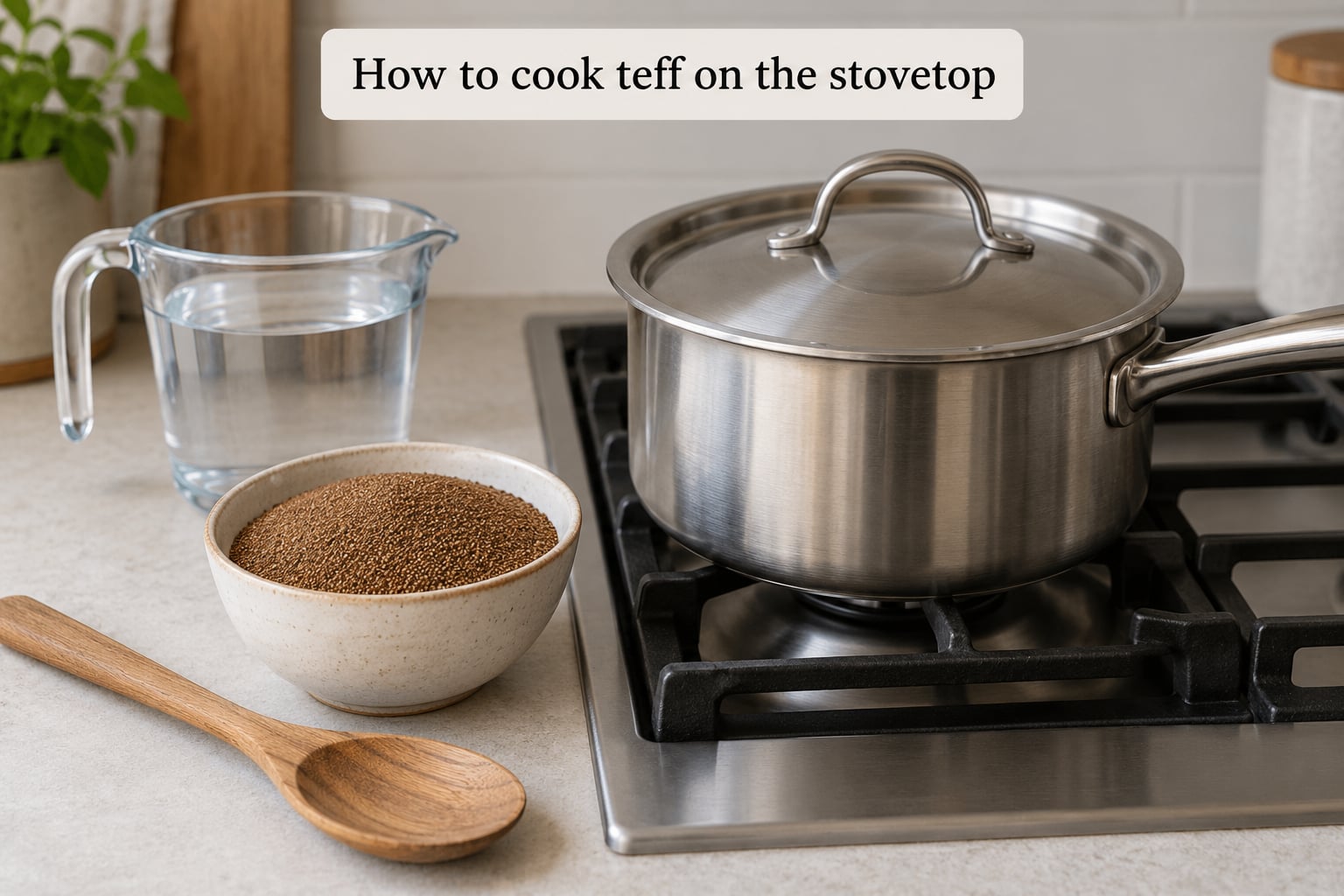
Toasting first is the step most recipes skip, and it is the cheapest flavour upgrade available. Heat a dry saucepan over medium heat, add the teff and stir for 1 to 2 minutes until it smells nutty, then tip it into a bowl so you do not scorch the toasted grains in the pot.
Return the pot to the heat, add a teaspoon of oil or butter, pour in the hot water, add the teff and a pinch of salt, and stir immediately to separate the grains. Bring to a boil, then drop the heat to the lowest setting your stove allows.
Cover and cook for 15 to 20 minutes, stirring every few minutes once the mixture thickens. The grains are done when they are tender and slightly sticky, the liquid is gone, and a spoon leaves a clean line across the surface that closes slowly.
Turn off the heat, cover again and let the pot sit for 5 to 10 minutes. That steam rest finishes the cooking and dries the surface. Fluff with a fork rather than a spoon, so the grains separate instead of smearing together.
How to cook teff in an instant pot
Pressure cooking suits teff well because it shortens a grain that otherwise burns easily, and it uses less liquid than the stovetop method. Add 1 cup teff and 2 cups water to the pot, giving the water another minute or two of preheating after the oil and teff go in.
Seal the lid and set the valve to sealed. Cook at high pressure for 6 minutes, then let the pressure come down naturally for about 10 minutes. Opening the valve before it falls can push foamy starch through the vent, so give it the full natural release.
If your teff is older, has been sitting in a warm pantry for a year, or came straight from a bulk bin, it drinks more. Use 2.5 cups of water and add 1 to 2 minutes of pressure time. Ground teff cooks in less time than whole grain, so check it at 4 minutes rather than the full 6.
How to make teff porridge
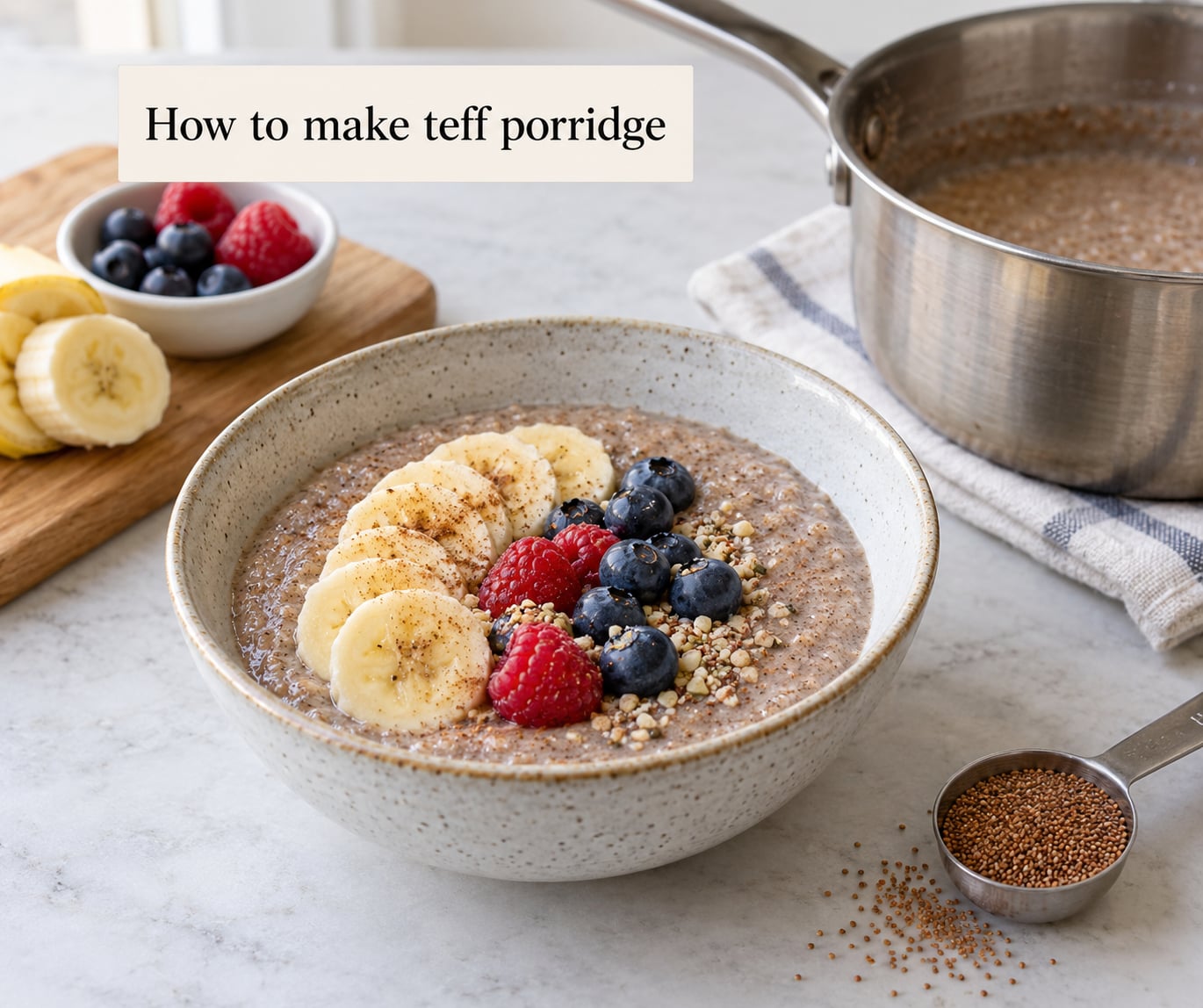
Porridge is the easiest place to start and the easiest place to overcook, because the ratio does more work than the heat. For a breakfast-loose porridge, use 1 cup teff to 3.5 to 4 cups liquid and stir often enough that the base never catches.
Bring the liquid and a pinch of salt to a boil first, then add the teff and whisk hard. Lower the heat and cook for 15 to 20 minutes, stirring regularly, until it reaches the looseness you want. Add milk or fortified soy milk for the last five minutes if you are making it creamy, then stir in any splashes of hot liquid at the table to loosen it back to eating consistency.
Whole grain teff will always have a slight grit compared with oatmeal, because the grain is not rolled or flaked. Some cooks solve this by soaking 1 cup of teff in 3 cups water for 20 minutes or overnight before cooking, which softens the texture noticeably.
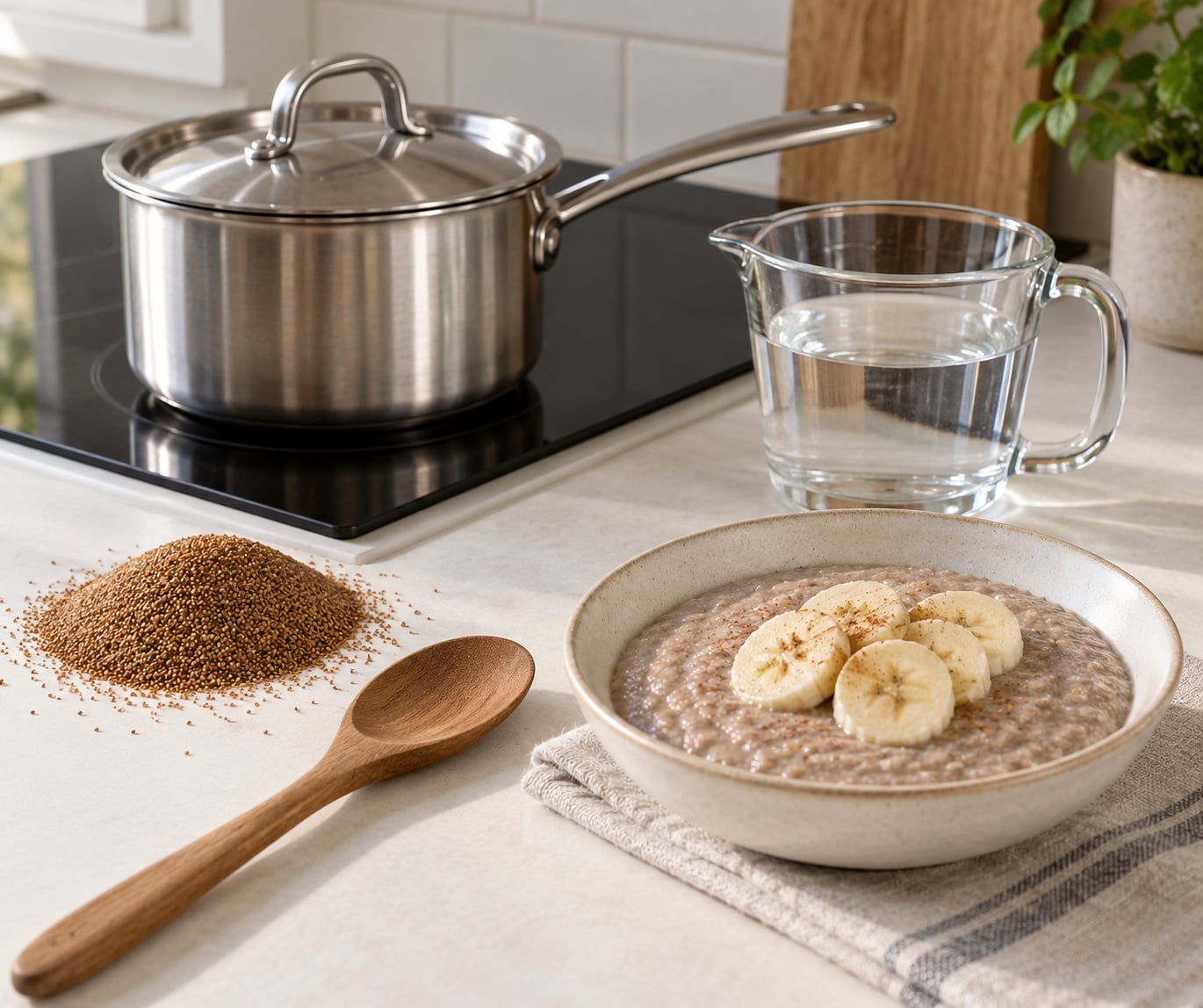
Serve with banana, berries, cinnamon and a spoonful of ground flax, or go savoury with tomato, onion, berbere and olive oil. Store any cooked teff in a covered container in the fridge within two hours and eat it within four days, or freeze it flat in a sealed bag for up to three months.
How to use teff in flatbreads and cakes
Teff is the flour behind injera, the fermented flatbread of the Horn of Africa, and the fermentation is the part people find intimidating. Injera dough ferments over two to three days with a starter called ersho, a culture of wild yeasts and bacteria maintained from batch to batch, which gives the bread its sour, slightly tangy flavour and its soft, chewy texture.
If you do not want to commit to a three-day starter, whole grain teff pancakes are the same idea in one evening. Mix 1 cup teff flour with 1 cup water and a pinch of salt, rest the batter for 20 minutes, then fry thin rounds in a lightly oiled pan. The 50/50 rule applies to baking too: half teff flour, half a lighter flour like rice flour or buckwheat keeps the crumb tender, while a 100% teff loaf will be dense and crumbly.
Use teff flour to thicken soups and stews as a straight swap for cornmeal or rice flour, and blend it into a coffee or spice mix for an earthy note. Because it is already gluten-free, it gives gluten-free bakers a nutty depth that plain rice flour cannot, at the cost of some structure that a blended flour supplies.
Common Mistakes and How to Fix Them
Too little water
The grains stay hard in the middle and catch on the base of the pan. The fix is simple: go up a half cup of water per cup of teff and stir more frequently through the last five minutes.
Too much water
You end up with a loose, starchy porridge rather than grain. Spoon it back out and let it simmer uncovered for two to three minutes, or spread it on a tray and finish it in a hot oven.
Cooking at too high a heat
Boiling hard after the liquid returns boils starch onto the bottom of the pot. Keep the simmer just below a bubble, and use the wooden spoon to scrape the base as you go.
Skipping the resting time
Fluffing straight off the heat gives you a gummy, clumped pile. The covered five to ten minute rest after the heat is off is not optional; it finishes the cooking and sets the texture.
Confusing teff with similar grains
Teff is not quinoa, millet or amaranth, and it cooks differently from all three. Millet and quinoa are noticeably larger and take their water differently, while amaranth is a leaf and stem rather than a seed. Check the label says Eragrostis tef if you are buying online from an unfamiliar seller.
Storing cooked teff badly
Cooked teff goes off quickly at room temperature because it is a moist, starchy food. Cool it fast, refrigerate in a shallow airtight container, use it within four days, and do not reheat more than once.
Buying the wrong form
Whole grain teff takes about 20 minutes to cook and gives you grain texture. Teff flour cooks in a few minutes, thickens liquids, and is what injera and baking need. Reaching for the wrong one is the most common reason a recipe fails, and the packaging often looks similar from a distance.
One honest caveat. Teff is nutrient-dense but not a miracle food. Its fibre and phytic acid can bother people with sensitive guts, the grain is high in phytic acid before soaking or sprouting, and a cup of cooked teff still counts as a carbohydrate. Anyone with coeliac disease, a diagnosed condition, or a strict elimination diet should check with a doctor or registered dietitian before changing how they eat.
Frequently Asked Questions
Is teff healthy?
Teff is a nutrient-dense whole grain and fits comfortably into a healthy diet. Per 100 g of dry grain it provides about 13.6 g protein, 7.2 g fibre, 4.7 mg iron and 180 mg calcium, and it is naturally gluten free. It is also high in resistant starch and carries phytic acid, so soaking or sprouting can improve mineral absorption. Treat it as one good whole grain among many rather than a superfood that replaces everything else.
How long does it take to cook teff?
Whole grain teff takes about 15 to 20 minutes on the stovetop after the liquid comes to a boil, plus a 5 to 10 minute covered rest off the heat. An instant pot cooks it in roughly 6 minutes at high pressure with a natural release. Teff flour needs far less: a few minutes of simmering for a thickener, or about 2 minutes per side in a pan for pancakes.
Do I need to rinse teff before cooking?
No. Rinsing is not a required step and most recipes skip it. Teff has no surface starch like quinoa or rice, so there is nothing to wash away, and rinsing can strip the light coating that contributes its nutty aroma. If you want a softer texture, soaking 1 cup of teff in 3 cups of water for 20 minutes or overnight works better than rinsing.
Can teff be cooked in an instant pot?
Yes, and it suits teff particularly well because the shorter cook time removes the risk of burning. Use 1 cup teff with 2 cups water, bring the water to a boil, then cook at high pressure for 6 minutes and let the pressure release naturally for about 10 minutes. Older or denser grain may need 2.5 cups of water and 1 to 2 extra minutes.
Is teff gluten-free?
Teff is naturally gluten free, which is why it is widely used in gluten-free cooking. That natural status applies to the grain itself, not to every product sold with a teff label. Shared mills, oats and cross-contact during milling and packaging can introduce gluten, so people with coeliac disease should look for certified gluten-free products and check with their dietitian.
How should cooked teff be stored?
Let cooked teff cool quickly, then refrigerate it in a shallow airtight container and eat it within four days. You can freeze it flat in a sealed bag for up to three months and reheat from frozen with a splash of water. Dry whole grain teff keeps about a year in an airtight container in a cool, dark cupboard, while ground teff flour keeps roughly three to six months because the oils oxidise faster.
Start with a small batch this week: one cup of teff, three cups of water, a pinch of salt, and 20 minutes on the stovetop followed by a covered rest. If you have been searching teff nutrition and how to cook it, that one method answers most of the question. Once the ratio feels automatic, keep a bag of the grain in the cupboard and rotate it with your other whole grains through porridge, pilaf, pancakes and injera, where teff’s iron, calcium, fibre and gluten-free character make it a genuinely useful staple rather than a novelty.