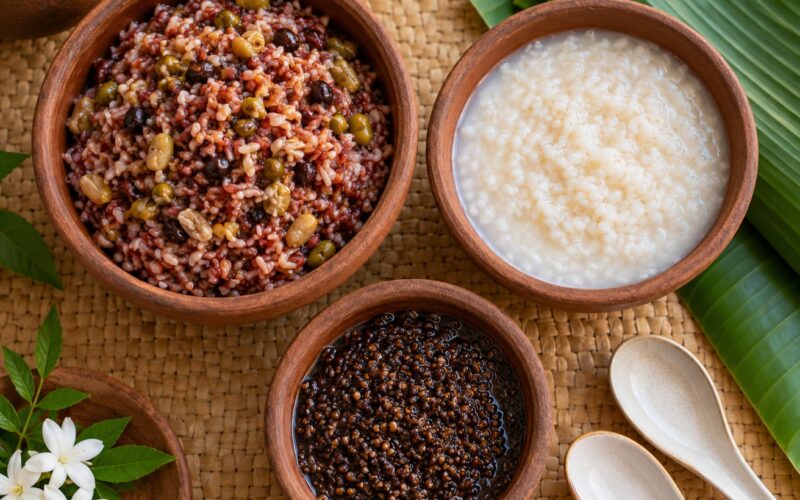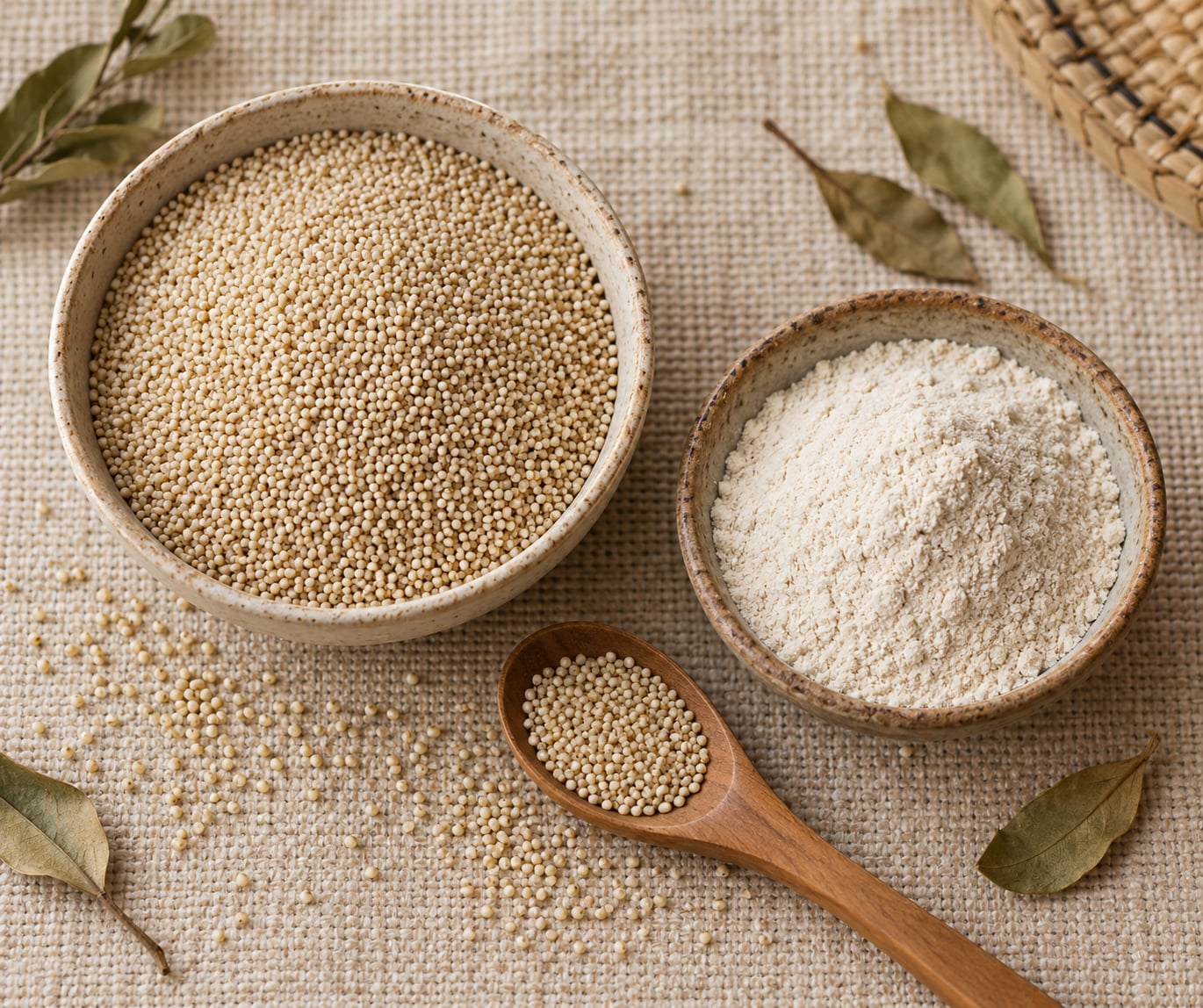
Fonio is a tiny grain from West Africa, grown mainly in the Sahel and known scientifically as Digitaria exilis, with a second species, Digitaria iburua, often mixed in. It is naturally gluten-free, cooks in minutes, and tastes mild and nutty, somewhere between couscous and semolina rather than like quinoa.
Fonio grain explained for beginners usually comes down to three things: what it is, what it does to your body, and how to cook it without turning it to paste. That is what this guide covers, with the nutrition numbers you will see published and the places where the marketing runs ahead of the evidence.
The honest reason fonio is worth a beginner’s attention is practical rather than trendy. It grows fast in poor soil and low rainfall, it survives where rice struggles, and it cooks faster than most whole grains. Everything else is detail, and the detail is where the interesting parts sit.
Table of Contents
- 1What Is Fonio Grain?
- 2What Does Fonio Taste Like?
- 3Fonio Grain Explained for Beginners: Nutrition and Benefits
- 4What is in 100 g of dry fonio?
- 5What is established and what is oversold
- 6Is Fonio Gluten-Free?
- 7Where Does Fonio Come From?
- 8How to Cook Fonio Grain
- 9Step 1: Rinse the grain
- 10Step 2: Cook pre-cooked fonio with the absorbing method
- 11Step 3: Cook raw fonio from scratch
- 12Step 4: Make a beginner porridge
- 13Why your fonio turned mushy
- 14What Can You Make With Fonio?
- 15How to Buy, Store, and Use Fonio Safely
- 16Fonio and Other Whole Grains: What to Know
- 17Frequently Asked Questions
- 18Is fonio a grain or a seed?
- 19How long does it take to cook fonio grain?
- 20Can fonio replace rice or other grains?
- 21Is fonio healthier than rice?
- 22What is the best way to cook fonio for beginners?
- 23How should fonio be stored?
- 24Bottom Line
What Is Fonio Grain?
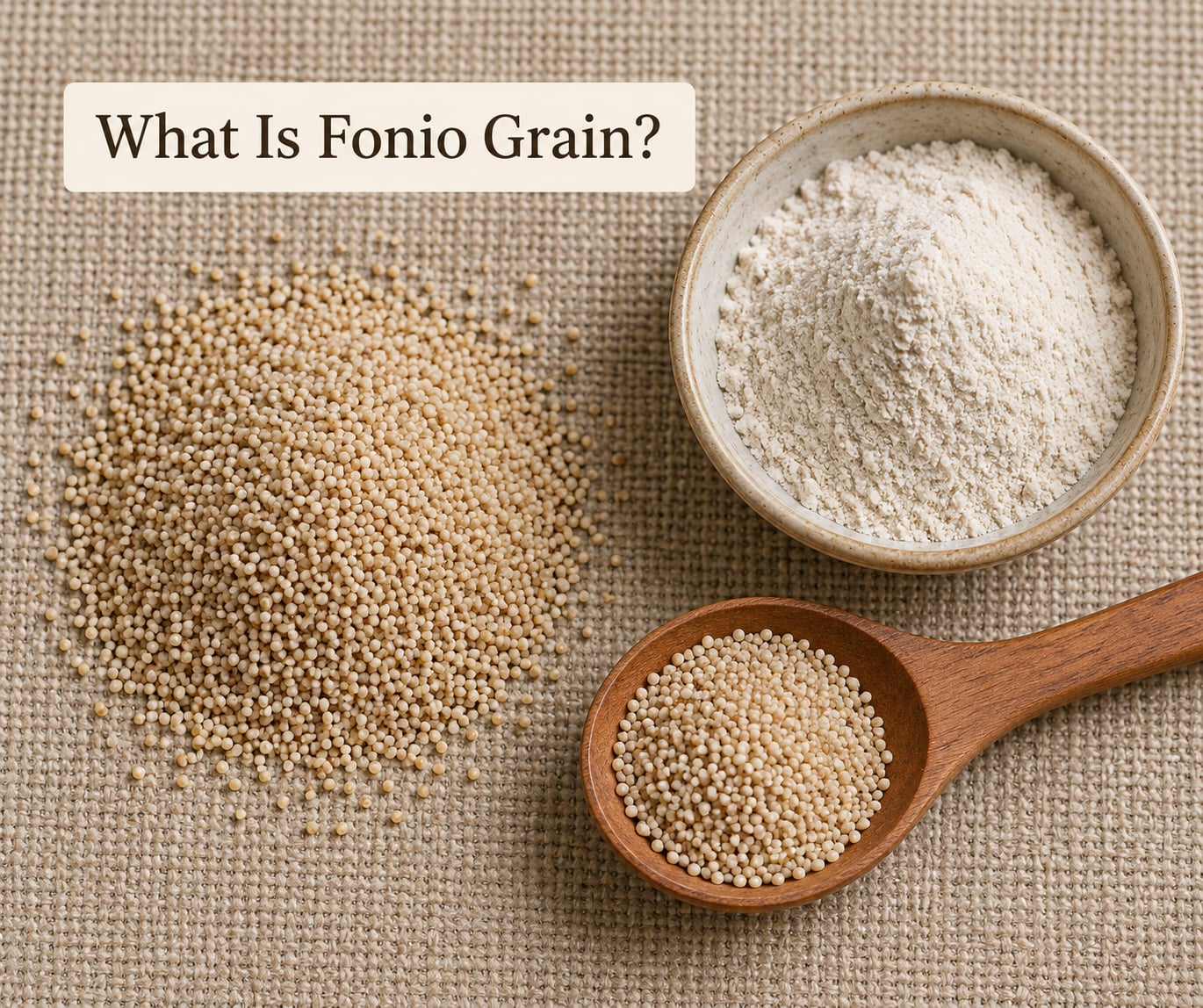
Fonio belongs to the grass family, Poaceae, and the species name you will see most often in research is Digitaria exilis. It is related to millet, though it is a distinct crop. Each grain is smaller than a pinhead, which is why it cooks so fast and why it is usually sold either whole or milled into flour.
The grain you buy comes in three forms, and they are not interchangeable.
- Whole fonio grain: the raw, unhulled grain, dusty and slightly gritty until rinsed. This is the form that expands into fluffy couscous-style grains.
- Pre-cooked fonio: grain that has been steamed, dried and parboiled. It swells in hot water and needs no long simmer. This is the easiest starting point.
- Fonio flour: milled whole grain, used for bread, pancakes, fritters, porridge and as a thickener in sauces.
Across West Africa the same grain goes by many names: findi in Wolof, foni in Bambara, and acha in Hausa. So if a reader asks which grain is acha, the answer is fonio.
In the European Union, fonio is regulated as a novel food under Regulation 2018/2016, which means products must carry a clear label stating the species and the fact that it contains hulled fonio grains. Labels matter here, and I will come back to them.
What Does Fonio Taste Like?
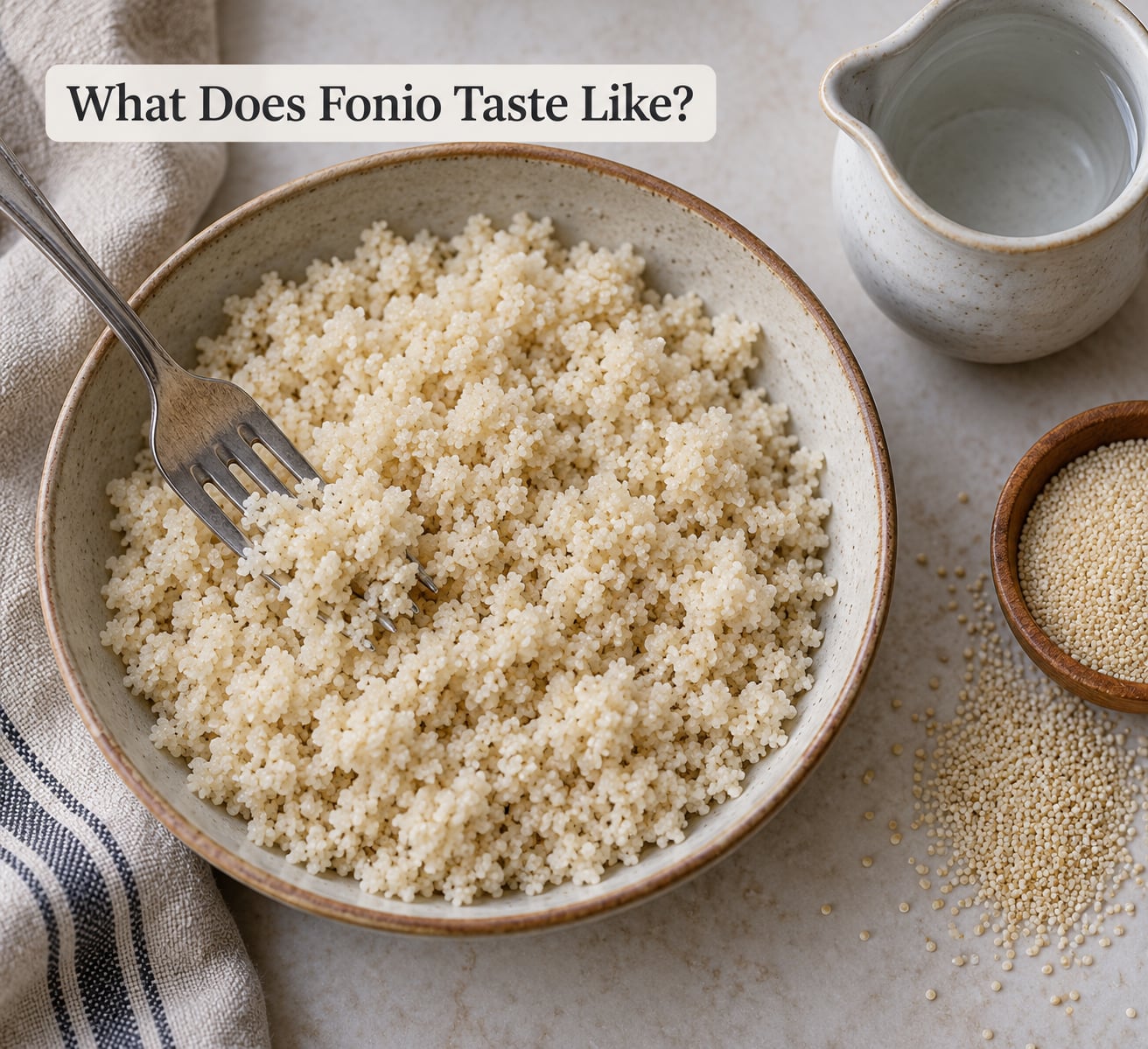
Cooked fonio tastes mild and softly nutty, with a faint cereal sweetness underneath and no strong flavor of its own. The texture is the bigger surprise: light, fluffy and a little springy, similar to couscous or a very fine semolina, and quite unlike quinoa, which keeps a distinct bite and a stronger, more vegetal flavor.
People who cook fonio at home usually describe it as closer to couscous than to quinoa, and that is the comparison I would make when you are choosing a substitute in an existing recipe.
How it tastes changes a lot with the method, though. Toasted dry before liquid goes in, it takes on a nutty depth that suits pilafs and fried cakes. Boiled plainly and served with sauce, it stays plain and takes on the sauce instead. Milled to flour and baked, it reads as a mild, dense, slightly earthy crumb, closer to a buckwheat or teff loaf than to wheat bread.
Because the flavor is quiet, fonio works well as a carrier for strong seasoning. Peanut sauce, tomato and onion, okra, ginger, smoked fish, coconut milk: any of these will sit on top of the grain rather than fight it.
Fonio Grain Explained for Beginners: Nutrition and Benefits
Published analyses of fonio vary a wide amount, mainly because different samples are hulled to different degrees and measured by different laboratories. Scientific reviews tend to report ranges rather than one number, and those ranges are more honest than any single figure you will find on a packaging label.
What is in 100 g of dry fonio?
| Nutrient | Reported per 100 g of dry grain | Notes |
|---|---|---|
| Energy | Low-to-mid 300s kcal | Clusters tightly across sources |
| Protein | 5.1 g to 11 g | Huge spread; hulling method drives it |
| Fibre | 0.4 g to 11.3 g | One of the widest ranges in cereal research |
| Carbohydrate | Majority of the weight | Mostly starch |
| Fat | Low, under 5 g | Very low fat grains |
| Minerals of note | Iron, magnesium, zinc, calcium, phosphorus | Values vary with soil and processing |
What is reasonably well established is that fonio contributes iron, magnesium and phosphorus in useful amounts, and that its protein contains the sulphur-containing amino acids methionine and cysteine that are scarce in many plant grains. What is less settled is how much of that translates into a real health outcome for an individual eating it as part of a varied diet.
What is established and what is oversold
Worth taking seriously: fonio is gluten-free by nature, high in fibre relative to refined grains, quick to cook, and mineral-dense for its size. Those are properties of the grain itself, and they are not marketing.
Worth being careful about: the claims that fonio “cures” or “reverses” diabetes, or that its low glycaemic response makes it a miracle food for blood sugar. What the research usually shows is that whole-grain fonio produces a lower post-meal glucose response than refined starches, which is a normal and unremarkable property of any intact whole grain with fibre and resistant starch intact.
If you manage diabetes or blood sugar concerns, that is a conversation for your doctor or a registered dietitian, not for a food blog. Fonio can sit on your plate. It should not replace medical advice.
Is Fonio Gluten-Free?
Yes. Fonio is naturally gluten-free, which is one of the few unambiguous facts about the grain. It is not wheat, rye or barley, and it contains no gluten-forming proteins from the species those cereals belong to.
That is not the whole answer for anyone with celiac disease. The real risks are cross-contamination during milling and packaging, and blends. A product milled on shared equipment alongside wheat can pick up gluten even though the grain itself is clean.
- Look for a dedicated gluten-free label or certification on the package, not just the absence of wheat in the ingredient list.
- Read the full ingredient list. Some blends add wheat flour, malt, or barley malt for texture or binding.
- If you are highly sensitive or newly diagnosed, ask the manufacturer directly about their milling and packaging lines.
One practical note for baking: gluten is what gives wheat its structure, so gluten-free loaves need binders. Tahini, ground flaxseed, chia seeds, psyllium and cornflour are the usual helpers. A straight swap of wheat flour for fonio flour in a bread recipe will produce a dense brick that crumbles.
Where Does Fonio Come From?
Fonio is one of the oldest cultivated cereals in Africa, domesticated in the western Sahel, in the belt of land running from Senegal and Mali into Niger and Nigeria. It remains an everyday staple across that region, where it is eaten as a porridge, a pilaf-like side dish, and a base for thick stews.
Its resilience is the practical reason it has survived so long. Fonio matures in a very short window, tolerates soils that other cereals reject, and can produce a harvest when rainfall is too low for rice or maize. Historically it was the grain of last resort during lean seasons, and also the grain of celebration when harvests came in well.
That dual role continues. In Mali, fonio appears in djouka, a steamed cake often wrapped in banana leaves, and in porridges served with peanut sauce. Around Senegal and the Gambia it appears as findi, commonly eaten with vegetables and oil. Sharing a large dish of fonio at a naming ceremony, a wedding or a harvest festival still carries a sense of abundance, and guests are served generously as a sign of how plentiful the family is.
Outside West Africa, fonio was largely a curiosity until fairly recently. It reached European shoppers as an exotic grain, and the search interest around it now has as much to do with climate-conscious eating as with health.
How to Cook Fonio Grain
Two methods cover almost everything. The absorbing method, used for pre-cooked fonio, takes about five minutes. The simmering method, used for raw grain, takes twenty to thirty. Cook the grain in water or stock with a tight lid and a pinch of salt, and it will not need much else.
Step 1: Rinse the grain
Rinse fonio in a fine sieve or a bowl under cold running water for about a minute, swishing it with your fingers, until the water runs mostly clear. This washes off surface starch and husks, and it is the single step that keeps fonio from turning into glue.
Most fonio cooking videos begin with this step, and it is the one beginners most often skip. If your fonio goes mushy, this is the first thing to fix.
Step 2: Cook pre-cooked fonio with the absorbing method
- Measure one part fonio to one and a half parts water, or stock if you want seasoning in the grain itself.
- Bring the liquid to a boil, season it with salt, then stir in the rinsed grain.
- Cover tightly, turn the heat off, and leave it alone for five minutes.
- Fluff with a fork, let it stand two more minutes, and taste for salt.
The result is light and separate, the way couscous should be. Lift the lid early and you will find a wet, sticky layer instead.
Step 3: Cook raw fonio from scratch
- Rinse the raw grain well, then soak it in water for twenty minutes if you have time. Soaking shortens the cook.
- Drain and transfer to a pot with fresh salted water, roughly three parts water to one part grain.
- Bring to a boil, then lower the heat and simmer for fifteen to twenty minutes, stirring occasionally.
- Stop while a little bite remains. Fonio keeps cooking from residual heat, so pull it off early.
For a steamed, fluffier result the traditional method is more work: parboil the grain, drain, steam it over boiling water, then repeat the parboil and steam passes before drying and tossing. That process is why pre-cooked fonio exists and why most beginners should start there.
Step 4: Make a beginner porridge
For a simple breakfast, use one part grain to four parts water or milk. Simmer for fifteen minutes, stir in honey, dates, cinnamon or peanut butter, and let it stand covered for five minutes before serving. Fonio porridge thickens noticeably as it cools, so loosen it with a splash of hot liquid before serving.
Why your fonio turned mushy
- You skipped or rushed the rinse, leaving starch on the surface.
- You used too much liquid, or lifted the lid during the absorbing method.
- You left pre-cooked fonio standing after the heat went off, or you reheated it dry.
- You cooked it far past the point where the grains still separated.
What Can You Make With Fonio?
Once you can cook the grain itself, everything else is substitution. Here are the uses that pay off fastest.
- Breakfast porridge: the simplest entry point, sweetened with fruit and spices or thickened with coconut milk.
- Couscous-style side with peanut sauce: cook the grain, then fold through cooked vegetables and a peanut or tomato sauce. This is the everyday West African serving.
- Steamed balls and cakes: a thick fonio paste steamed in a mold and cut into pieces, or formed into patties and fried, the way Malian djouka is made.
- Pancakes and fritters: a thin batter of fonio flour and water, fried until crisp. Fonio flour also works as a coating for fried foods.
- Bread and baked goods: with a binder such as tahini, psyllium or ground flaxseed, and roughly a third of the flour weight replaced by a starch like cornflour for a lighter crumb.
- Thickened soups and sauces: fonio flour stirred into broth thickens it without the raw flour taste that plain wheat flour leaves, provided you simmer it for a few minutes after adding.
- Dumplings and gnocchi: boiled fonio drained well, mixed with potato and egg, shaped and boiled or baked.
None of these require technique beyond what you already have. Fonio is a forgiving grain because there is no gluten structure to ruin and the grains cook in minutes.
How to Buy, Store, and Use Fonio Safely
The packaging confusion is the biggest barrier for beginners, so start with the form you want to eat.
| Form | Best for | Time to prepare |
|---|---|---|
| Whole raw grain | Learning from scratch, pilafs, porridge, pilaf-style sides | Rinse, soak, simmer 15-20 min |
| Pre-cooked grain | Weeknight sides, quick couscous-style dishes | About 5 min, off the heat |
| Fonio flour | Bread, pancakes, fritters, baking, thickening sauces | A few minutes per recipe |
Pre-cooked fonio is the sensible first buy for most people. It costs about the same as the raw grain and removes the longest, most error-prone step from the process.
On labels, check three things. The species should be named as Digitaria exilis or Digitaria iburua, which tells you what you are actually buying. The ingredient list should be short, ideally just the grain. And for gluten-free use, look for a certification mark rather than relying on the ingredient list alone.
Fonio rarely appears in mainstream supermarket aisles, so expect to look in West African and Caribbean shops, in health food stores, or from importers who sell to African grocery buyers. Buy small the first time. Fonio is not a neutral flavor, and a large bag is not a learning aid.
For storage, keep the grain in an airtight container in a cool, dry cupboard away from direct sunlight. Because it is a dry whole grain with low moisture, it keeps well for many months, but a smaller quantity in a sealed container is a more honest way to buy it than one large bag left open on a shelf.
Cooked fonio stores separately from dry. Cool it uncovered for a short time, then refrigerate in a sealed container and use within three to four days. For longer keeping, spread it on a tray, freeze flat, then move the frozen grains into a bag so they stay loose. Reheat with a sprinkle of water in a covered pan or microwave, and fluff with a fork rather than stirring hard, since it sets as it cools.
Cooked grain is a perishable food. Cool it promptly, refrigerate within two hours, and reheat until steaming hot throughout.
Fonio and Other Whole Grains: What to Know
Fonio is not a universal upgrade on every other grain. It is smaller and faster than most, less flavorful than some, and pricier per serving than quinoa or couscous, which is a fair reason for a beginner to try millet first if they only want one new grain in the pantry.
| Grain | Texture when cooked | Gluten | Cook time | Best use |
|---|---|---|---|---|
| Fonio | Light, fluffy, couscous-like | Naturally gluten-free | 5 min pre-cooked, 15-20 min raw | Fast sides, porridge, baking |
| Quinoa | Fluffy with a distinct bite | Naturally gluten-free | 12-15 min | Salads, bowls, meal prep |
| Millet | Soft, slightly sticky when cooked in excess water | Naturally gluten-free | 20-25 min | Pilafs, porridge, flatbreads |
| Sorghum | Firm, chewy, mild | Naturally gluten-free | 40-60 min | Stews, popped snacks |
| Brown rice | Firm, nutty | Not gluten-free | 25-40 min | Everyday side dishes |
Substituting fonio for quinoa in a recipe works one to one by volume in pilafs and sides. In salads it will not, because quinoa keeps its bite and fonio does not. Fonio is also the wrong swap for brown rice in a dish that relies on rice starch to thicken, such as risotto or congee.
On the question of which gluten-free grain is the healthiest, the useful answer is that no single grain wins for everyone. What matters more is whether you eat a whole grain regularly, how it fits your meals, and whether your diet covers fibre, protein and micronutrients across the week. Fonio fits comfortably into that pattern for anyone who enjoys it.
Frequently Asked Questions
Is fonio a grain or a seed?
Fonio is a grain, specifically a cereal in the grass family. The plant Digitaria exilis produces tiny seeds that are harvested, hulled and eaten as a grain, much as wheat seeds are used for wheat. You may see it called a seed in older botanical writing, but in the kitchen it behaves exactly like a grain: it is cooked in water, eaten as a porridge or side dish, and milled into flour for baking.
How long does it take to cook fonio grain?
Pre-cooked fonio takes about five minutes on the stove using the absorbing method: boil the water, add the grain, cover, turn off the heat and leave it. Raw whole fonio takes fifteen to twenty minutes of gentle simmering after a rinse and an optional soak. Fonio also cooks well in a rice cooker on a normal setting, and it keeps cooking from residual heat, so pull it off the heat a minute early.
Can fonio replace rice or other grains?
For pilafs, couscous-style sides and grain bowls, yes: fonio swaps one to one by volume for quinoa, millet or couscous. For rice it depends on the dish. Fonio will not give you a sticky congee or a thickened risotto, because it contains no gluten and very little starch. If a recipe relies on rice starch to bind or thicken, keep the rice or add a separate thickener such as fonio flour or cornflour.
Is fonio healthier than rice?
Compared with white rice, whole fonio generally offers more fibre, more minerals and more of the protein fraction, and it is not a refined grain. That makes it a reasonable swap on nutritional grounds. Against brown rice the difference is narrower, and against quinoa neither grain is clearly better. Your overall eating pattern matters more than any single swap, and a dietitian can advise on your own situation.
What is the best way to cook fonio for beginners?
Start with pre-cooked fonio and the absorbing method, because it is nearly impossible to ruin. Rinse the grain under cold water until the water runs mostly clear, then use one part grain to one and a half parts salted water. Bring to a boil, cover tightly, turn off the heat, wait five minutes, and fluff with a fork. Raw grain takes longer and rewards a rinse just as much.
How should fonio be stored?
Keep dry whole grain or flour in an airtight container in a cool, dry cupboard away from sunlight, and buy smaller quantities so it stays fresh. Refrigerate cooked fonio in a sealed container and use it within three to four days. For longer storage, freeze it flat on a tray first, then transfer the grains to a bag so they do not clump, and reheat with a splash of water.
Bottom Line
Buy a small bag of pre-cooked fonio, rinse it properly, cook it one to one and a half with salted water off the heat, and eat it with something strong like peanut sauce or vegetables. That is the whole beginner’s method, and it takes five minutes.
Everything beyond that, the nutrition ranges, the gluten-free label, the cultural role across the Sahel, is context for a grain that has fed people in hard conditions for thousands of years and is finally finding its way into more kitchens.