Bambara groundnut nutrition explained in one line: Vigna subterranea is a drought-tolerant West African legume whose dry seeds carry roughly 18 to 25 percent protein, 55 to 70 percent carbohydrate, 5 to 6.5 percent fat and 5 to 12 percent fibre, plus iron, potassium and a full set of essential amino acids.
It is called a nut, but it is botanically a bean. That single fact explains most of the confusion around this food, because people expect nutty oils and a hard shell, and get a firm, starchy, floury legume instead. The numbers below come from published composition tables rather than from supplement marketing, and they are updated for 2026 readers who want to know what is really in the bowl.
Table of Contents
- 1What Is Bambara Groundnut?
- 2Bambara Groundnut Nutrition Explained at a Glance
- 3What Nutrients Does Bambara Groundnut Contain?
- 4Protein, and why its quality matters
- 5Carbohydrate, starch and sugars
- 6Fat, and which fatty acids dominate
- 7Resistant starch and fibre
- 8Which Vitamins and Minerals Are Important?
- 9How Does Cooking Change Its Nutrition?
- 10Soaking
- 11Boiling
- 12Roasting and dry heat
- 13Sprouting and fermenting
- 14Dehulling and milling
- 15Is Bambara Groundnut Good for Weight Management?
- 16How Do You Prepare and Eat Bambara Groundnut Safely?
- 17Sorting and soaking
- 18Boiling
- 19Roasting
- 20Making okpa
- 21Storing and reheating
- 22Are There Risks, Allergies, or Foods to Avoid Combining It With?
- 23It is a legume, so peanut cross-contact matters
- 24Undercooked pulses
- 25Bitter seeds
- 26Conditions worth a doctor’s opinion first
- 27Food combination myths
- 28Frequently Asked Questions
- 29How much protein is in Bambara groundnut?
- 30Is Bambara groundnut healthier than peanuts?
- 31Can Bambara groundnut help with weight loss?
- 32Should Bambara groundnut be soaked before cooking?
- 33Is Bambara groundnut safe for people with peanut allergies?
- 34How many calories are in a serving of Bambara groundnut?
- 35Conclusion: Start with a Sensible Portion
What Is Bambara Groundnut?
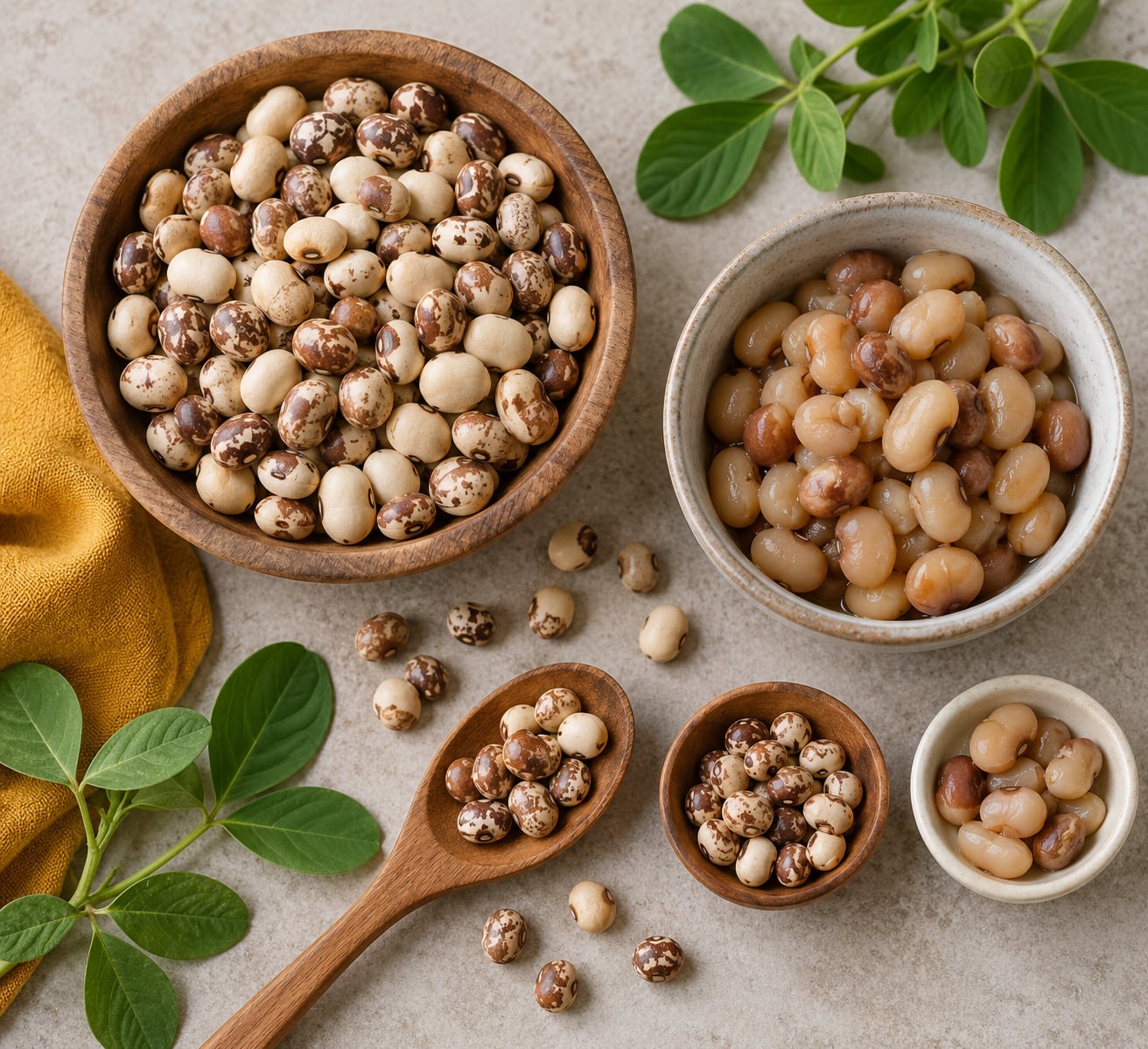
Bambara groundnut, older name Voandzeia subterranea, is a nitrogen-fixing legume cultivated across West and Southern Africa. It grows close to the ground, sets pods underground, and produces small hard round seeds with a tough coat, usually cream, red or mottled brown.
The names in circulation are numerous: bambara nut, earth pea, Congo goober, hog-peanut, njuguma bean, and okpa in parts of Igboland, where the bean is also the name of a steamed pudding made from it. Nigeria, Cameroon, Ghana, Zambia, Zimbabwe and Botswana all grow it as a staple rather than a novelty.
Compared with peanut, it behaves differently on the plate. Peanut is an oily legume around half fat by weight, while cooked bambara groundnut is mostly starchy and soft, closer in mouthfeel to a firm cowpea or a very dense lentil. Raw seeds that have not been soaked can be genuinely hard enough to dent a pot, which is the reason some people assume the crop is not worth the trouble.
Bambara Groundnut Nutrition Explained at a Glance
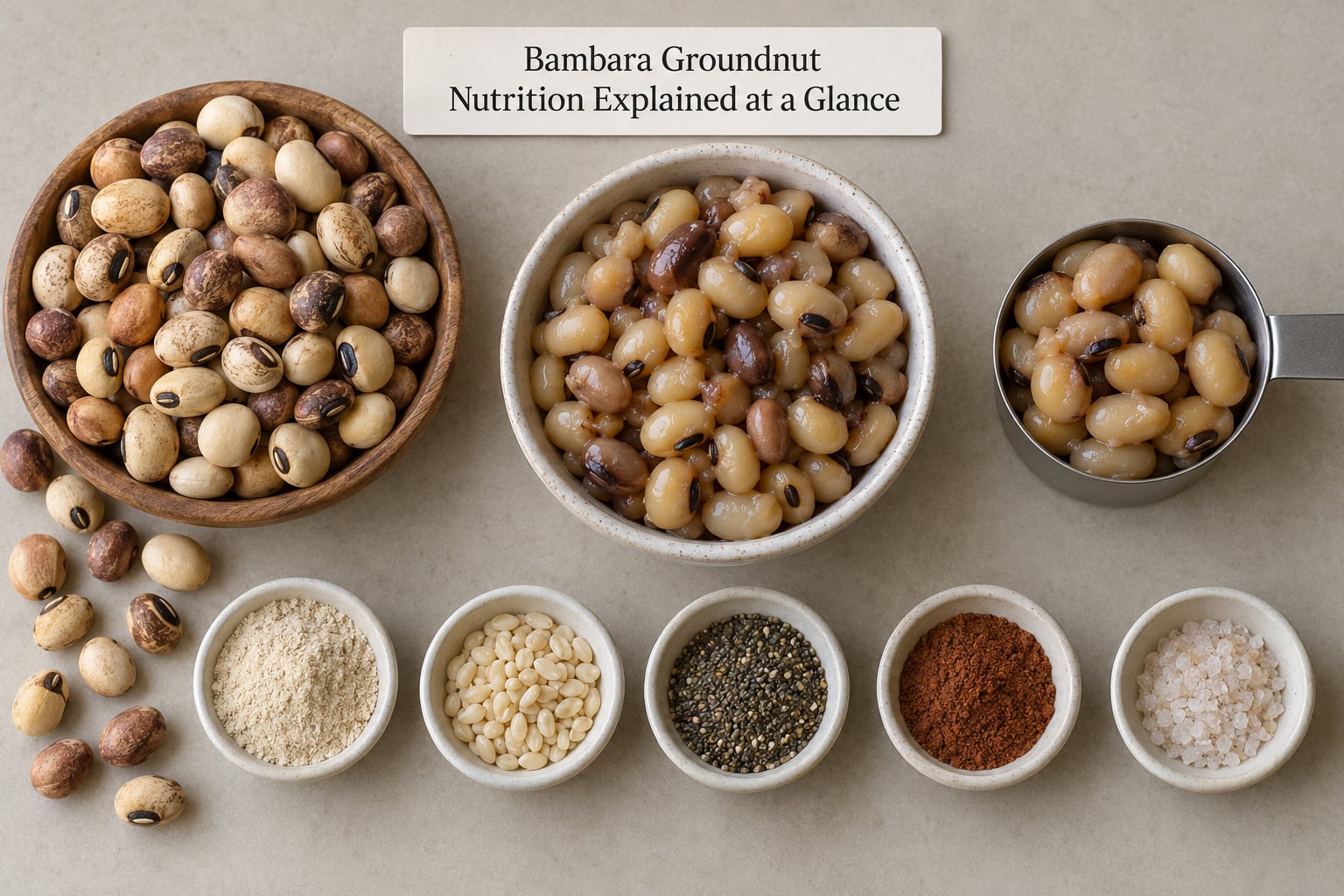
The table below is the clearest answer to the question. All figures are per 100 grams and come from dry weight unless stated otherwise. Cooked values are deliberately not listed, because water absorbed during boiling changes the weight of a portion so much that any published cooked figure becomes meaningless once you compare a drained bean with a drained chickpea.
| Nutrient (per 100 g) | Whole dry seed | Dehulled seed | Bambara groundnut flour |
|---|---|---|---|
| Energy | Starchy legume energy density | Lower, seed coat removed | 368.47 kcal |
| Protein | 18-25% of dry weight | Concentrated as coat is removed | 22.11 g |
| Carbohydrate | 55-70% | High, mostly starch | 56.01 g |
| Fat | 5-6.5% | Similar proportion | 5.79 g |
| Dietary fibre | 10.8% of dry matter | 5.2% of dry matter | 1.95 g |
| Iron | Present, soil dependent | Present | 5.51 mg |
| Zinc | Present, soil dependent | Present | 12.82 mg |
| Potassium, calcium, phosphorus, magnesium | Reported across composition tables | Reported | Reported |
Two numbers in there deserve a second look. Flour carries more protein than whole dry seed because milling discards the coat, and fibre drops sharply for the same reason, from 10.8 percent of dry matter to 5.2 percent. If fibre is what you are after, eat the whole bean rather than the flour.
Published values also vary widely because this is not one cultivar. A South African study of 70 landraces found an average crude protein of 19.20 percent, with the highest at 36.87 percent. If a paper quotes a single figure, check which landrace and which season it measured.
What Nutrients Does Bambara Groundnut Contain?
Protein, and why its quality matters
Bambara groundnut protein is often described as complete, and the evidence supports that description better than for most plant proteins. A published review comparing protein scores puts bambara groundnut flour at 80 percent, ahead of soya bean at 74 percent and cowpea at 64 percent, and the landrace study recorded all essential amino acids as present.
Legumes in general are short of the sulphur amino acids methionine and cysteine, while cereals are short of lysine. Bambara groundnut sits unusually well on both fronts, which is why it pairs so naturally with a maize or rice meal. Eating it with a grain rather than on its own is closer to how it is traditionally eaten, and closer to how the amino acids complement each other.
Carbohydrate, starch and sugars
Most of the carbohydrate is starch, and a good share of that starch resists digestion unless it is cooked soft and chewed finely, which is a detail that matters more for satiety than most people expect. Small amounts of sucrose, glucose and myo-inositol are present too, with sucrose making up about 91 percent of total sugars in one landrace survey.
Fat, and which fatty acids dominate
The fat content is low, roughly 5 to 6.5 percent of dry weight, and it is mostly unsaturated. One analysis put linoleic acid at about 41 percent and oleic acid at about 21 percent of the fatty acids. In other words, this is not an oilseed meal and it does not belong next to peanut or sunflower oil in calorie terms.
Resistant starch and fibre
Beans of this type cool slowly and keep some of their starch intact, which adds to the fullness you get from a bowl of them. Dry-heated and boiled forms differ, and processed versions such as flour and drinkable mixes usually carry much less of this effect.
Which Vitamins and Minerals Are Important?
Mineral content is the strongest part of the profile. Composition tables report iron, zinc, calcium, phosphorus, magnesium, potassium and sodium, with potassium and calcium singled out as notable in food composition references for this seed. The flour figures above, 5.51 mg iron and 12.82 mg zinc per 100 g, sit in the same range as other dried legumes.
Vitamins are the weaker part, and it is worth being honest about that. Vitamin data for this crop is thin in the published literature, with most general food composition pages leaving the vitamin column empty or unverified. What is consistently reported is that the seed supplies several B vitamins, including thiamine, riboflavin, niacin and folate, at levels comparable to other legumes.
Two caveats apply to every mineral figure here. Soil and rainfall where the seed grew change the numbers more than variety does in some cases, and processing removes minerals when the seed coat and cooking water are discarded. Boiling and throwing the water away also leaches potassium and some B vitamins into it.
Nothing in the composition table is a treatment or a guarantee. If you have anaemia, kidney disease or any condition involving mineral intake, a doctor or registered dietitian should decide what a bean can and cannot do for you.
How Does Cooking Change Its Nutrition?
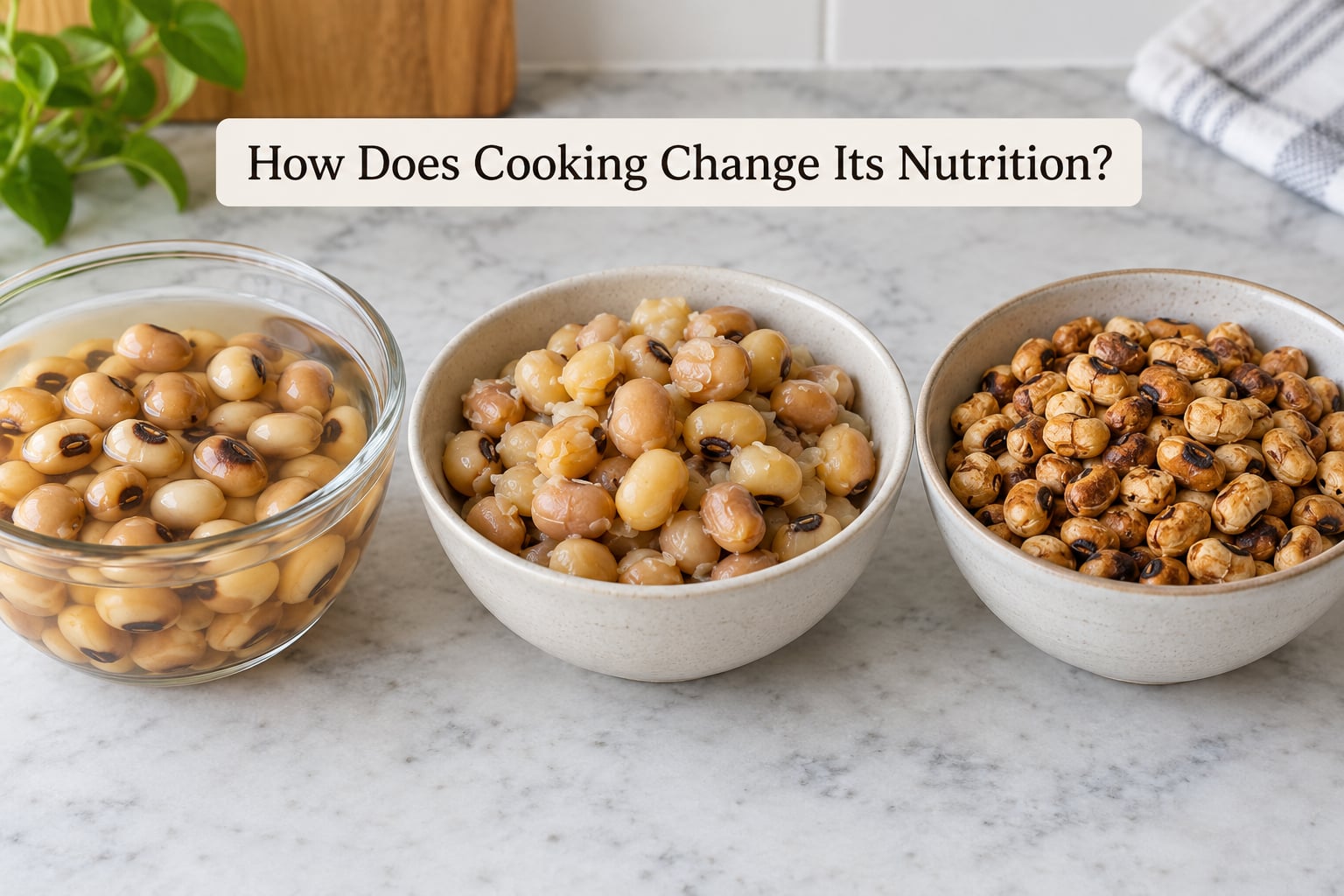
Cooking does not destroy this food, but it moves the numbers in specific directions. Knowing which way is useful before you decide whether a label matters to you.
Soaking
Soaking in cool water for several hours before cooking softens the hard coat and begins reducing phytate, the compound that binds iron and zinc. Soaking in warm water works faster. The minerals are not destroyed, but whatever leaches into the soak water is discarded when you pour it off.
Boiling
Boiling gelatinises starch and reduces trypsin inhibitor activity, which is why the crop is never eaten dry. It also increases the weight of a portion dramatically through water uptake, so a cooked bean has far fewer calories per 100 g than a dry one. Serve it with the cooking liquid in soups and stews if you want to keep what leached out.
Roasting and dry heat
Dry roasting concentrates water loss and can reduce available lysine at high temperatures, which is a protein-quality cost. It also develops flavour and, in some landraces, intensifies bitterness from condensed tannins. Roasted seeds are best kept away from a very hot oven or open flame.
Sprouting and fermenting
Sprouting and fermentation both lower phytate and tannin levels noticeably and can improve digestibility. These are slower routes, used traditionally more in household and village processing than in commercial milling.
Dehulling and milling
Removing the coat and milling into flour raises protein concentration and cuts fibre, as the table shows. Flour is the form most people outside West Africa actually encounter, in okpa, porridges and doughs, so it is worth knowing that it is a concentrated, lower-fibre version of the whole seed.
Is Bambara Groundnut Good for Weight Management?
It is a reasonable food for a person aiming to eat more whole plant protein and less refined carbohydrate, and I would not describe it as a weight-loss food. Protein and fibre both contribute to fullness, and the low fat content means a bowl of beans adds bulk without adding a large fat load.
The part people get wrong is portion arithmetic. Calories per 100 g change dramatically between dry, soaked, boiled and drained forms, because boiling adds water that counts toward the weight on the scale but not toward energy. A 100 g portion of dry seed eaten after cooking is a very different amount of food from 100 g of cooked beans straight from the pot.
A sensible starting point is a heaped half-cup of cooked beans weighed after draining, served with vegetables and a starch or grain, rather than a cup of beans on its own. People using it for weight or glucose management should track the cooked form, not the dry form, and talk to their clinician before making it a staple.
How Do You Prepare and Eat Bambara Groundnut Safely?
Bambara groundnut is eaten as a boiled bean, a roasted nut, a flour, or a steamed pudding. The safety rules are the same ones that apply to any dried pulse.
Sorting and soaking
Pick out stones and damaged or shrivelled seeds, then soak the rest in several times its volume of water for 6 to 12 hours. Longer soaking in cool water is the practical answer to the hardness problem that keeps people off this crop.
Boiling
Drain, cover with fresh water, and simmer gently until tender, usually 45 to 90 minutes depending on size and how long it soaked. The seeds must be completely cooked; dried pulses eaten underdone can cause real digestive upset.
Roasting
Soaked or dried seeds roast at moderate heat until they smell nutty and crack between the teeth. Watch them, because they move quickly at the end.
Making okpa
Soak and boil the seeds well, then pound or blend them with water into a smooth slurry. Season with palm oil, salt, pepper and other spices, wrap the paste securely in leaves or foil, and steam until firm. Okpa is normally eaten with pap, oats or custard, which is a useful reminder that it is a starch with protein, not a protein dish on its own.
Storing and reheating
Keep dry seed in a sealed container somewhere cool, dark and dry, and use it within a reasonable period because the oil fraction goes rancid. Refrigerate cooked beans and reheat thoroughly until steaming throughout, rather than leaving cooked food at room temperature. Discard cooked batches that have been sitting out for hours.
Are There Risks, Allergies, or Foods to Avoid Combining It With?
It is a legume, so peanut cross-contact matters
This is the most important caution on the page. Bambara groundnut is in the bean family, not the tree-nut family, and it can cross-react in people with peanut or other legume allergies. People with a diagnosed allergy to peanuts, chickpeas or peas should speak to an allergist before trying it, and should avoid products processed on shared equipment.
Undercooked pulses
Never eat the raw seeds. Trypsin inhibitors and other antinutritional factors in the raw seed are why soaking and full cooking are not optional. Even then, some people experience gas and bloating, since a pulse-heavy meal introduces fermentable carbohydrate that the gut has to adapt to.
Bitter seeds
Red, brown and black-seeded landraces carry higher tannin levels and taste noticeably bitter. Cream-coloured seeds are the mild choice, and soaking plus thorough cooking softens the bitterness further.
Conditions worth a doctor’s opinion first
People with kidney disease, gout, or an active ulcer should ask a clinician before making any legume a regular part of the diet, because potassium, phosphorus, purines and fibre load all need to be considered individually. Same for anyone managing diabetes or on a restricted diet.
Food combination myths
There is no good evidence that pairing bambara groundnut with a particular food produces a dangerous reaction, and there is no need to keep it away from fruit, milk or vegetables. It is a legume eaten with grains, vegetables and spices across West Africa without any special rule. The real cautions are cooking it thoroughly and respecting a genuine allergy.
Frequently Asked Questions
How much protein is in Bambara groundnut?
Raw dry seed is typically 18 to 25 percent protein by weight, and a 100 g serving gives roughly 18 to 25 g. A survey of 70 South African landraces averaged 19.20 percent crude protein, though the top variety reached 36.87 percent. Milling into flour raises protein concentration slightly because the seed coat is removed, giving about 22 g per 100 g of flour.
Is Bambara groundnut healthier than peanuts?
Neither is healthier in the abstract; they do different jobs in a diet. Peanut is roughly half fat by weight with about 25 g of protein per 100 g, while Bambara groundnut carries 18 to 25 g of protein with only 5 to 6.5 g of fat, plus far more fibre and starch. Choose the bean for fibre and slow starch, the nut for dense fat and portable protein.
Can Bambara groundnut help with weight loss?
It can support a weight-conscious diet, but it is not a weight-loss food. Protein and fibre contribute to fullness, and the low fat content means bowls of cooked beans add bulk without a large fat load. Watch the preparation basis, though: a 100 g portion of dry seed becomes far more food once boiled. Portion control and total daily energy decide outcomes, not one food.
Should Bambara groundnut be soaked before cooking?
Soaking is worth the extra step, even though it is not the only safe route. Six to twelve hours in cool water softens the very hard seed coat and begins reducing phytate, which binds iron and zinc. It also shortens cooking time considerably. If you skip soaking, extend simmering time, and always cook the seeds completely until they are soft enough to crush.
Is Bambara groundnut safe for people with peanut allergies?
Treat it as a risk and get advice from an allergist. Bambara groundnut is a legume, not a tree nut, so it is not automatically safe for someone with a peanut allergy, and cross-reaction among legumes is documented. This matters even more for people who have had a severe reaction before. Products made on shared equipment carry the same concern.
How many calories are in a serving of Bambara groundnut?
Bambara groundnut flour is about 368 kcal per 100 g. For the whole dry seed, values vary with landrace, generally landing in the mid to upper 300s per 100 g. Cooked and drained beans sit far lower per 100 g because boiling adds water, so a weighed portion of the cooked bean is the only reliable way to count the calories in a meal.
Conclusion: Start with a Sensible Portion
The honest summary is that Bambara groundnut is a protein-rich, low-fat legume with a strong essential amino acid profile, useful fibre and starch, and solid iron, zinc, potassium and calcium figures, wrapped in a package that grows on poor soil with little water. The vitamin data is thinner than the marketing suggests, and antinutrients are real but manageable with ordinary soaking and cooking.
One place to start this week: cook a small batch, weigh half a cup of the drained beans, and serve them with vegetables and your usual staple. Adjust the portion around any medical guidance you have been given, and if you have a legume allergy, talk to an allergist before the first spoonful rather than after.