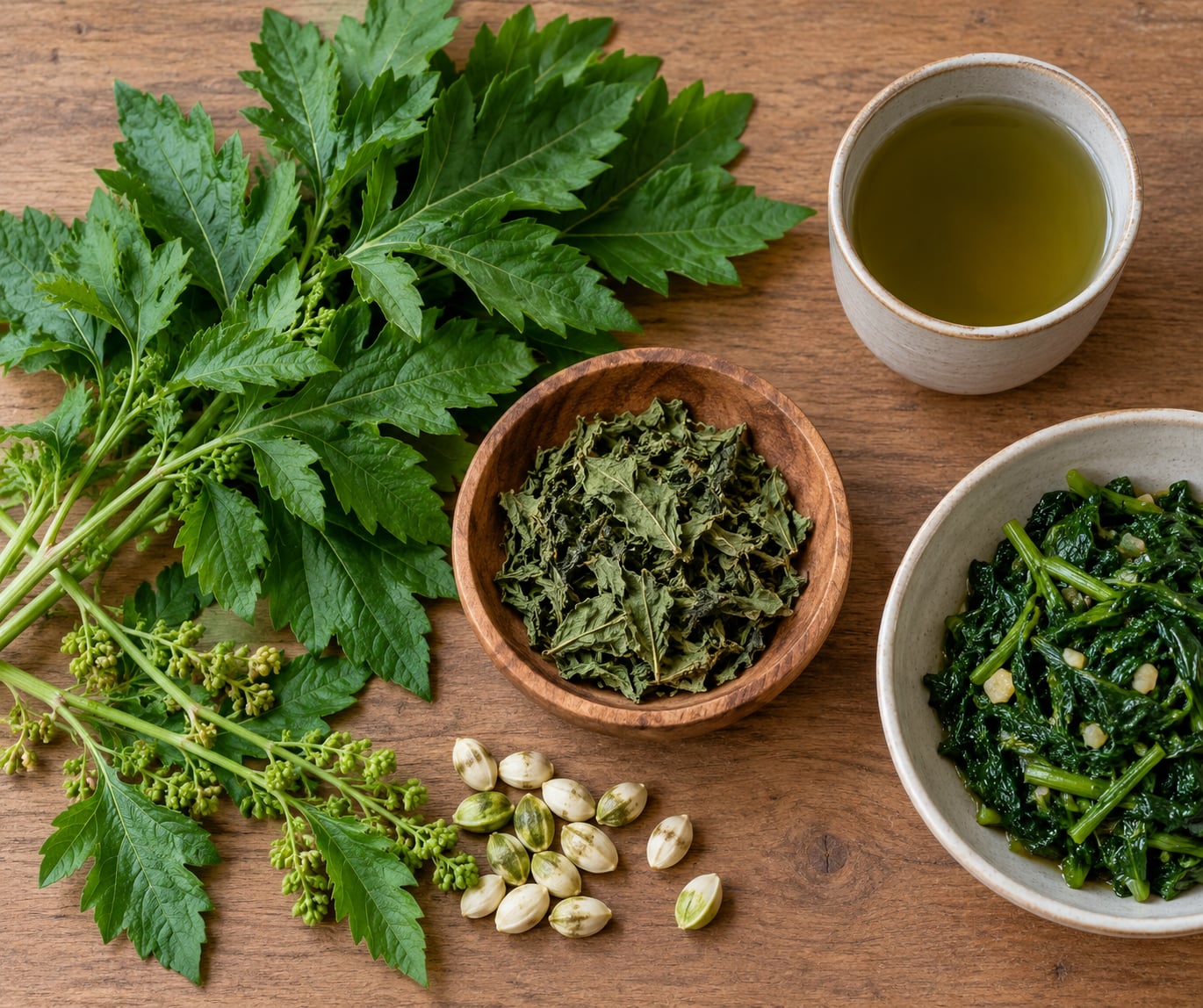
The short answer to why bitter plants were valued in traditional diets is simple: they pushed back on a plate built from starch, fat and sweetness. A bitter leaf, root or peel was sharp enough to wake up a digestion that had gone quiet, and it cut through heavy food. Across African, Asian, European and Middle Eastern foodways, that sharpness was treated as a signal of usefulness, not as a flaw to be bred out.
The idea sounds odd on a supermarket run, where bitterness is treated as something a food company should remove. It is also why people raised on bitter soups and greens often describe them as refreshing rather than unpleasant. This guide covers what bitter plants are chemically, how they balanced a plate, what each tradition did with them, what modern research actually supports, and where caution matters.
Table of Contents
- 1What made bitter plants useful in traditional diets?
- 2How did bitterness balance everyday meals?
- 3What cultural and practical reasons supported their value?
- 4What possible health associations have been discussed?
- 5Why Bitter Plants Were Valued in Traditional Diets
- 6Why bitter plants were valued in traditional diets, reason by reason
- 7How are bitter plants prepared and used safely today?
- 8Frequently Asked Questions
- 9Were bitter plants eaten because they were highly nutritious?
- 10What foods are traditionally considered bitter in African diets?
- 11Does eating bitter plants improve digestion?
- 12How were bitter plants used in traditional cooking?
- 13Are all bitter-tasting plants safe to eat?
- 14Can bitter plants replace medical treatment?
- 15Conclusion
What made bitter plants useful in traditional diets?
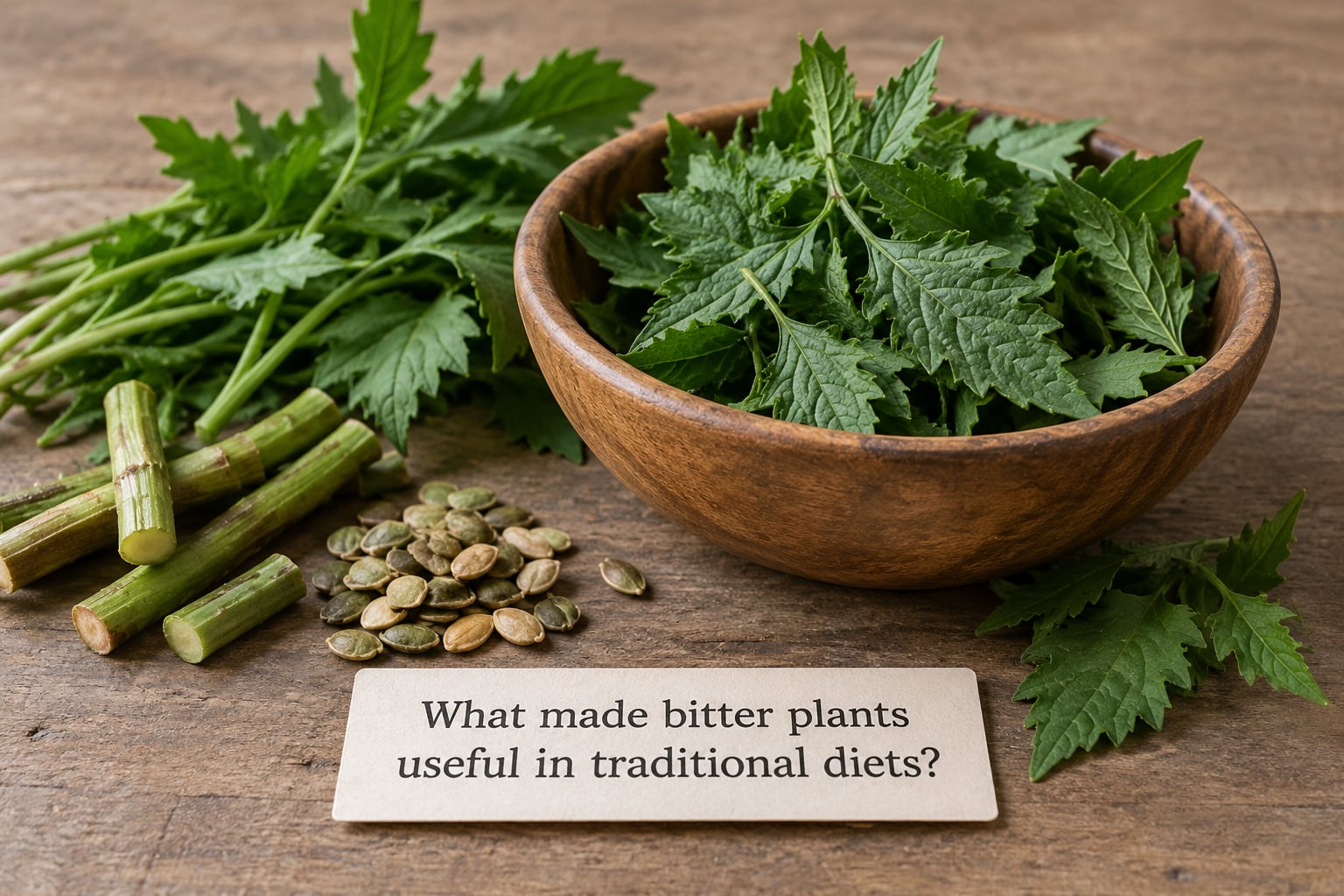
Bitter plants are edible plants whose flavour comes from defensive chemistry rather than from sugar. Leaves, roots, bark, seeds and fruit peels all produce bitter compounds, and they do it because bitterness works as a chemical shield against insects, grazing animals and pathogens.
Those compounds fall into a handful of recognisable families: alkaloids, saponins, tannins, glucosinolates and sesquiterpene lactones. Chicory (Cichorium intybus) and dandelion (Taraxacum officinale) carry lactones and sesquiterpene compounds; horseradish (Armoracia rusticana) and brassica greens deliver glucosinolates and their pungent isothiocyanates; bitter melon (Momordica charantia) and bitter leaf (Vernonia amygdalina) contain cucurbitacins and sesquiterpene lactones.
Traditional cooks did not know the compound names. What they knew was the behaviour of the plant and the effect on the person eating it, which is why bitter ingredients were used in small, repeated amounts alongside staples rather than as the bulk of a meal. A spoonful of bitter leaf in a pot of maize meal or a strip of citrus peel in a pot of tea is dilution by design.
How did bitterness balance everyday meals?
Bitterness is the only one of the five basic tastes that cuts against richness instead of adding to it. Sweet, salty and savoury amplify what is already on the plate; sour refreshes; bitter interrupts. That makes it the natural counterweight to a meal built on starch and oil.
Consider what it does at the table. In a maize, rice or yam meal that is bland on its own, a bitter green or herb adds the note that stops the plate tasting flat. In a fatty broth or a palm-nut sauce, bitterness cuts through the richness and leaves the eater wanting another mouthful, which matters in households where meals are repeated daily. Alongside sweet fruit or a starchy pudding, it keeps the palate from saturating.
The bitter foods that did this work fall into recognisable groups. Leafy greens and vegetables include bitter leaf, kale, collards, mustard greens, chicory, endive, radicchio, dandelion greens and artichoke. Roots and rhizomes include horseradish and gentian root. Fruits and peels include bitter melon, grapefruit peel, orange peel and the unripe karela used in South Asian cooking. Herbs and spices include wormwood, gentian, hops, hawthorn and the bitter edge of ginger and turmeric. Drinks carry bitterness too, through tea, coffee and dark chocolate.
That breadth matters. Traditional diets valued bitterness as a dietary category with several members rotating through the year, not as a single herb with a single reputation.
What cultural and practical reasons supported their value?
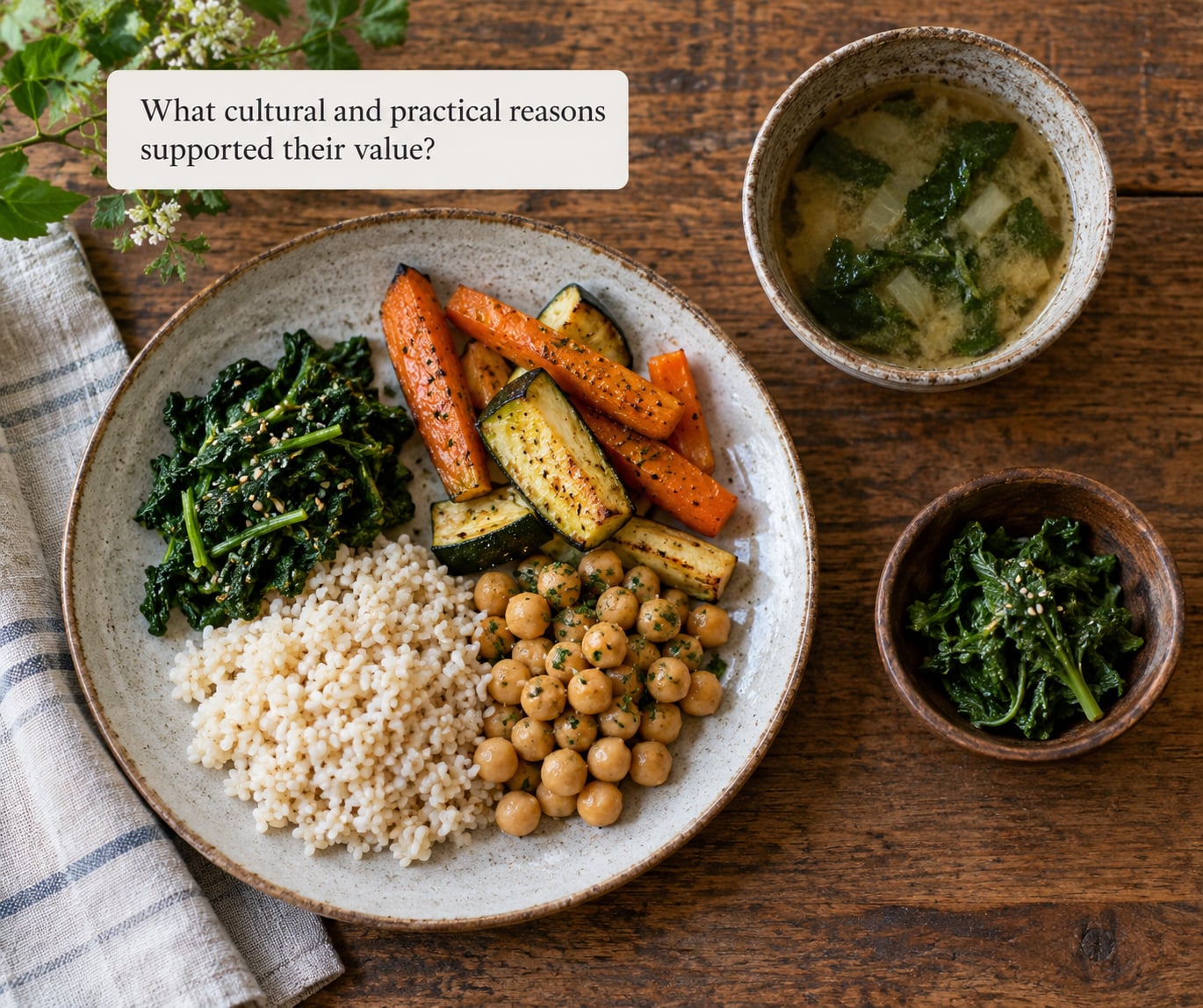
Availability did much of the work. Bitter greens grew fast, tolerated poor soil, and survived the dry or cold stretches when staple crops did not, so they were dependable food in seasons of scarcity. Leaves could be picked repeatedly from the same plant over weeks, which made a small plot of bitter vegetables a reliable kitchen resource.
Seasonal knowledge came with it. Cooks knew which plants were edible at which stage of the year, which meant a bitter ingredient could be used at its safest and most tender rather than collected indiscriminately. In many communities, gathering and preparing these plants was taught across generations, alongside which plants to leave alone.
Preparation traditions made bitterness workable. Blanching, fermenting, drying, pounding with the staple grain, or long simmering all reduce harshness and change the flavour. Bitter leaf is eaten as a vegetable, folded into soups, and used as a household remedy at the same time, because in these traditions food and medicine were never separate categories. That is a cultural fact worth holding onto before treating any of it as pharmacology.
Household economies pushed in the same direction. A bitter herb added character to a pot without requiring more fuel, more land or more money, and distinctive regional flavours built identity around local plants that no outside trade could reproduce. Where that pride exists today, it shows up plainly in community food groups, where people describe the disappearance of bitter greens from the modern plate as a genuine regression from what they grew up eating.
What possible health associations have been discussed?
Traditional systems and modern researchers are talking about related things but not the same thing, and keeping them apart is the most useful thing this article can do. Traditional accounts describe a person and their balance; laboratory accounts describe compounds and receptors. Neither is automatically the other.
Physiologically, bitterness is well characterised. Bitter compounds bind to TAS2R-family receptors, not only in the mouth but also in the stomach and gut, and that signalling is associated with gastrin release, gastric acid and bile secretion, and digestive enzyme output. The vagus nerve carries some of that gut-to-brain signalling, and there is ongoing research into how bitter-taste receptor activity interacts with appetite and satiety hormones such as GLP-1.
Traditions got there by observation rather than mechanism. Traditional Chinese Medicine classifies the bitter taste as entering the Heart and Lung and clearing heat. Ayurveda treats bitter taste as cooling and detoxifying. European monastic medicine kept stomach bitters for slow digestion, and that lineage fed into the nineteenth-century patent bitters trade, including Angostura-style aromatic bitters.
Strength of belief and strength of evidence are separate things, and the honest position is this: much of the health literature on bitter foods in humans is small, observational and short-term. Where a claim appears below, the verdict column reflects the quality of the human evidence, not the strength of the traditional claim.
| Common claim | Traditional basis | What human studies show | Honest verdict |
|---|---|---|---|
| Bitters prime digestion before a meal | Used in Europe, China and Ayurveda as a pre-meal digestive | Receptor signalling and gastrin release are established; meal-to-meal digestive outcomes are mostly small studies | Mechanism plausible, clinical effect modest |
| Bitter foods reduce appetite and cravings | Used to sharpen hunger before a main meal | Observational links with meal size and satiety; small trials of bitter exposure | Interesting, not established |
| Bitter greens feed the gut microbiome | Long-standing practice of eating bitter leaves as a daily vegetable | In-vitro and animal work on polyphenols as prebiotics outpaces human data | Mostly laboratory evidence |
| Bitter leaf helps blood sugar | Long household use of bitter leaf as a folk remedy | Animal and in-vitro studies, some small human trials; not an established treatment | Not a substitute for care |
| Bitterness marks a potent medicine | Traditional pharmacopoeias rate stronger bitterness as stronger medicine | No clinical support for judging potency by bitterness alone | A tradition, not a dosing rule |
Why Bitter Plants Were Valued in Traditional Diets
Why bitter plants were valued in traditional diets, reason by reason
Pulled together, the reasons behind why bitter plants were valued in traditional diets come down to five things: a digestive effect, a flavour function, a marker of potency, a survival resource, and a cultural habit that survived long after the original need passed.
| Reason | What it did in practice | What holds up today |
|---|---|---|
| Digestive priming | A bitter ingredient taken before or at the start of a meal, as a vegetable, tea or tincture | Strong on receptor biology, weaker on clinical outcomes |
| Flavour balance | Counterweight to starch, oil and sweetness in the daily plate | Holds up completely; this is a matter of taste, not of medicine |
| Mark of potency | Stronger bitterness read as a stronger remedy in traditional pharmacopoeias | A cultural convention only |
| Practical access | Crops that grew in poor soil and short seasons, harvested repeatedly | Still the most underrated reason of the five |
| Cultural continuity | Recipes, remedies and preferences passed down across generations | Alive today, and strongest where the food is still cooked from scratch |
Bitterness also varies from person to person, which explains why one household’s beloved dish is another’s punishment food. Genetic variation in bitter taste receptors, including the well-studied TAS2R38 receptor, changes how intensely a person perceives bitterness, and sensitivity tends to shift with age, which is one reason older members of many traditions grew to prefer bitter greens that children refused. The same food, a different nervous system.
Exposure also changes perception. People who work with bitters report that repeated exposure over roughly one to two weeks rebuilds tolerance, after which bitter greens start reading as interesting or sharp rather than unpleasant. That is palate conditioning, and it explains how a bitter taste became normal in one foodway and disappeared in another.
How are bitter plants prepared and used safely today?
The first rule is identification. Eat a bitter plant only when you know exactly what it is and where it came from, and never harvest from roadside verges, industrial ground or treated land. Unidentified wild plants cause more poisonings than unfamiliar grocery vegetables do, and bitterness alone is not a safety test, since harmless dandelion and genuinely dangerous plants can both taste bitter.
The second rule is preparation. Blanching, boiling, fermenting, drying and long simmering all soften bitterness, and pairing with fat, salt, sweetness or acidity balances it. Start with a small amount and build up, which matches the traditional pattern of diluted use rather than concentrated dosing.
The third rule is knowing when to stop. Concentrated preparations such as tinctures and extracts are not the same thing as a vegetable, and traditional practice rarely involved concentrated doses. Anyone with gallstones or a bile duct obstruction should avoid concentrated bitters, since they stimulate bile release. Bitter preparations can aggravate reflux and peptic ulcer symptoms in some people, and they are not a good fit during pregnancy without medical advice. Bitter melon and bitter leaf can also interact with diabetes medication and with thyroid medication, so a pharmacist should check any concentrated product you intend to take regularly.
None of this makes traditional bitter food dangerous. It makes it food with a normal dose-response relationship, and the way to stay on the right side of that relationship is small amounts, reliable identification, and a conversation with a doctor, pharmacist or registered dietitian if you take regular medication, are pregnant, or have a digestive or gallbladder condition.
Frequently Asked Questions
Were bitter plants eaten because they were highly nutritious?
Not mainly. Bitter leaves and roots were eaten for flavour, digestive effect and because they were available when other crops were not, and bitter taste also discourages many animals from overeating a plant. Nutrient density varied a lot by species and preparation, since boiling and fermenting reduce some vitamins. Where bitter greens were eaten daily alongside a varied diet, they contributed minerals and fibre, but calling them the nutritious part of the meal oversimplifies it.
What foods are traditionally considered bitter in African diets?
Bitter leaf (Vernonia amygdalina), known by names including njangsa and owo, is the most widely named example, eaten as a leaf, in soups and with staples such as maize meal or pounded cassava. Other examples include bitter melon, known as karela, various wild bitter greens gathered seasonally, and citrus peel used in teas and stews. Names, preparations and meanings differ widely by region and by ethnic group, so local knowledge matters more than any general list.
Does eating bitter plants improve digestion?
Bitter compounds bind to TAS2R taste receptors in the mouth, stomach and gut, and that signalling is linked to gastrin release, gastric acid, bile and digestive enzyme output. That physiology is well described. Whether this produces measurable improvements in digestion after a meal is a different question, and human studies are small and often short. Traditional use and receptor biology are real; a proven digestive benefit in people is not yet established.
How were bitter plants used in traditional cooking?
Most often diluted and cooked. Bitter leaves were folded into soups, sauces and stews, or pounded together with staples such as maize, millet or cassava. Roots and peels went into decoctions, teas and broths, and bitter herbs were used in smaller quantities as seasoning. Fermenting, drying, blanching and long simmering all reduce harshness. The consistent pattern is a small amount added to a larger dish rather than concentrated doses taken alone.
Are all bitter-tasting plants safe to eat?
No. Bitterness is a warning signal produced by many harmless plants and by some dangerous ones, so taste tells you nothing reliable about safety. Eat only plants you can identify with confidence and that came from a known source. Avoid wild harvesting from roadsides and treated ground, keep the traditional pattern of small diluted portions, and check with a doctor or pharmacist if you take regular medication, are pregnant, or have gallbladder or ulcer-related conditions.
Can bitter plants replace medical treatment?
No. Bitter foods are foods with a long cultural record, not a therapy. Some plant compounds have been studied in animals or in the laboratory, and a few small human trials exist, but none of that makes a leaf, tincture or tea a substitute for prescribed care. Use them as food within a varied diet, and take any health concern to a doctor, pharmacist or registered dietitian who can look at your own situation.
Conclusion
Bitter plants earned their place in traditional diets for five reasons: they primed digestion, balanced a plate built on starch and fat, signalled medicinal strength, fed people in seasons when little else grew, and became a habit that carried cultural meaning. If you want the fuller answer to why bitter plants were valued in traditional diets, start with the food history, learn the bitter ingredients already familiar in your own foodway, and eat only what you can identify with certainty.