Rinse fresh herbs under cool running water, swish them gently, lift them out instead of pouring the water back over them, and dry them thoroughly before use or storage. That is how to wash fresh herbs properly, and it takes about five to fifteen minutes for a normal kitchen bunch.
The details matter more than most guides admit. Herbs pick up soil, insects and foodborne bacteria during harvest, packing and transport, and most of them end up eaten raw, spooned straight over finished food. Rinse well and you lose the grit. Rush it, soak too long, or store the leaves wet and you get limp herbs, faded aroma and a bag of green slime within days.
Food-safety guidance from the FDA and USDA still points the same direction in 2026: cool running water, no soap, no bleach, no home remedies. Everything below is built around that.
Table of Contents
- 1What You Need
- 2Step-by-Step: How to Wash Fresh Herbs Properly
- 31. Inspect and Prepare the Herbs
- 42. Rinse Under Cool Running Water
- 53. Clean Sturdy Herbs and Stems
- 64. Dry the Herbs Properly
- 75. Store Clean Herbs for Maximum Freshness
- 86. Know When You Should Not Wash Ahead
- 9Common Mistakes
- 10Frequently Asked Questions
- 11Do I need vinegar, lemon juice, or baking soda to wash fresh herbs?
- 12Is it better to wash fresh herbs in cold or warm water?
- 13How long should fresh herbs air-dry after washing?
- 14Does washing fresh herbs remove most of their vitamins?
- 15Should I wash herbs before storing them in the refrigerator?
- 16Can I use dish soap or bleach to clean fresh herbs?
- 17Conclusion
What You Need
You need less gear than most washing guides suggest. Cool running water, a clean basin or colander, clean hands and a clean towel handle the job for both tender leafy herbs and woody ones.
- Cool running water. Hot water softens leaves, knocks down aroma and can wilt basil in seconds.
- A clean basin, bowl or colander. A wide bowl lets you swish and separate leaves; a perforated colander drains faster.
- Clean hands and a clean board. You are the most common source of contamination in the whole process.
- A salad spinner or a clean kitchen towel. Drying is the step people skip, and it is the reason washed herbs spoil early.
- A clean vegetable brush for woody herbs. Rosemary, thyme and sage trap grit in the leaf crevices. Not needed for basil, mint or cilantro.
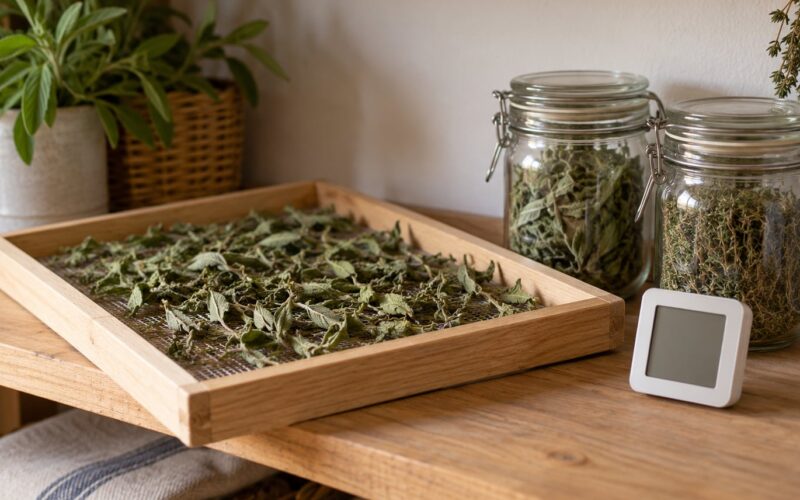
For herbs you plan to dry for tea or for traditional preparations, the same tools work. You just dry harder, all the way to crisp, before storing.
Step-by-Step: How to Wash Fresh Herbs Properly
Allow five to fifteen minutes depending on quantity and herb type. One bunch of cilantro is a three-minute job. A bag of mixed market herbs, or a basket of garden sage, takes longer because the woody stems need more attention.
1. Inspect and Prepare the Herbs
Sort the herbs before water touches them. Once a muddy bunch is submerged, you are rinsing loosened dirt back over the clean leaves. Pull off anything rotten, bruised or yellowed, snap off damaged stem ends, and separate bunches that are packed so tightly the leaves cannot move.
You know the prep worked when the pile sits loosely in your hand and nothing is left hiding underneath. For garden herbs, check the undersides of leaves for insect holes, eggs and droppings before the greens go anywhere near water.
2. Rinse Under Cool Running Water
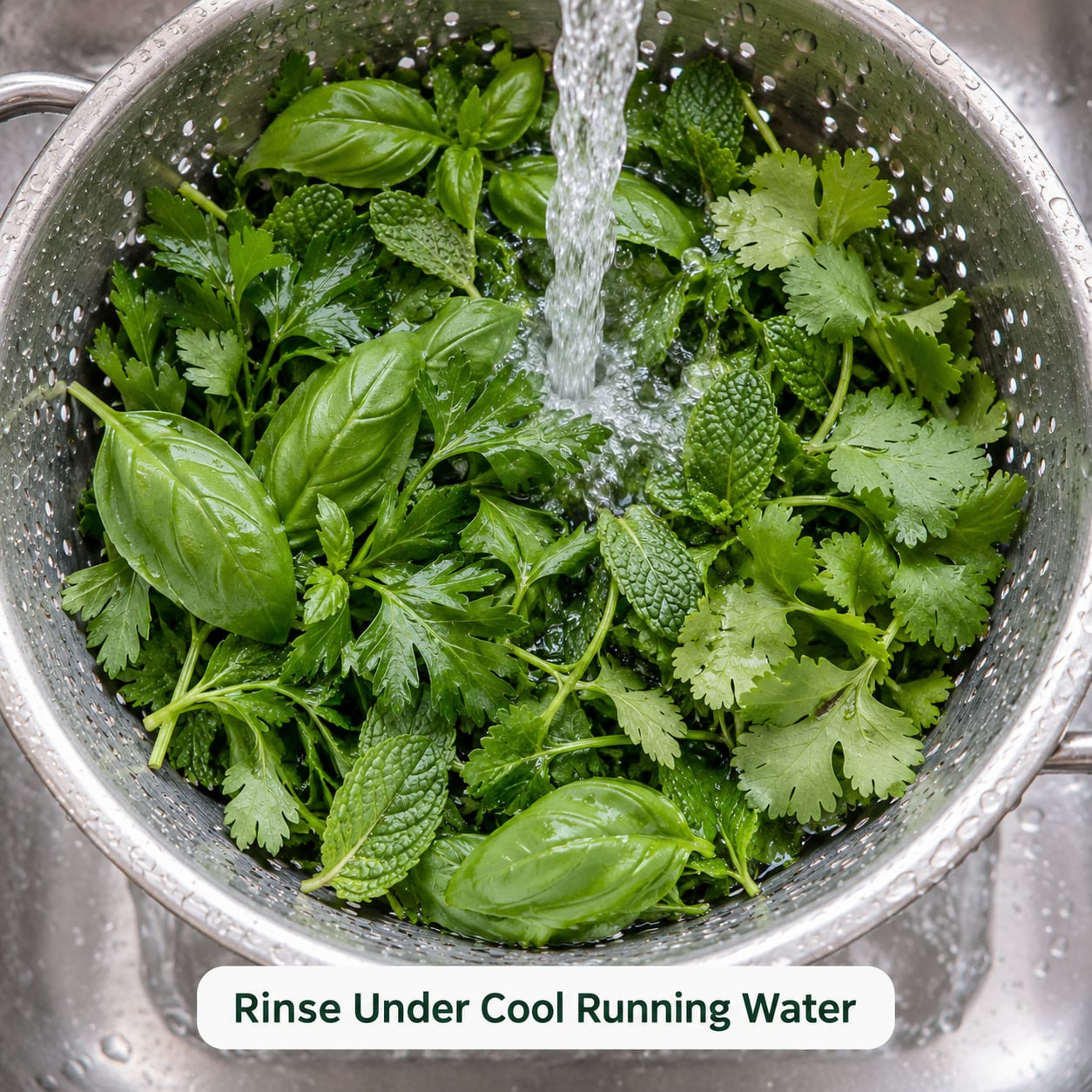
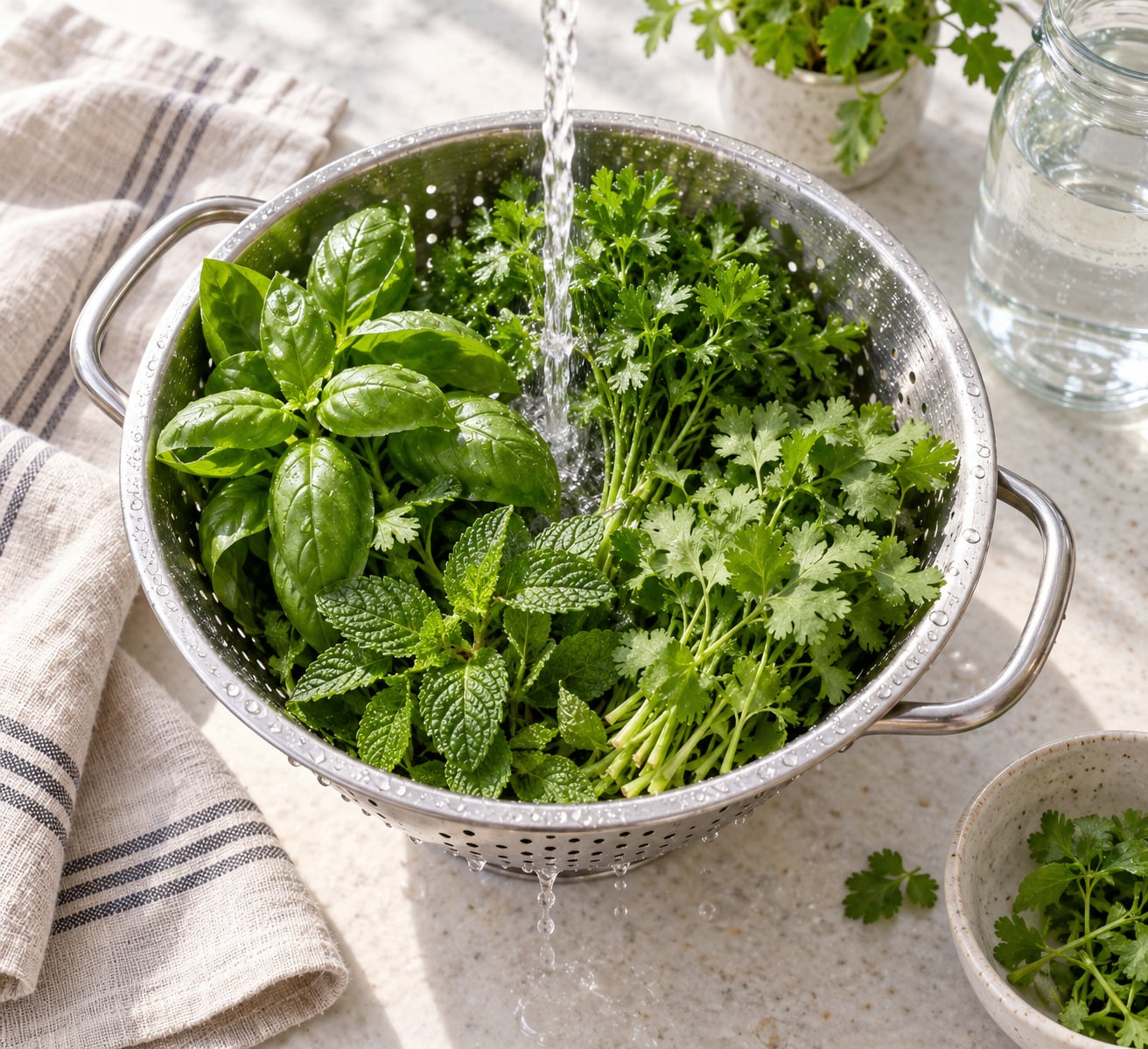
Hold the herbs loosely under the stream and move them with your fingers so water reaches every surface. A gentle swish does the work. You are loosening grit, not scrubbing leaves, so treat the herbs like something that bruises easily.
Skip the soaking, the dish soap, the bleach and the hot water. Leaves sitting in water go limp and shed aroma, soap leaves a residue you would have to rinse off again, and heat wilts tender herbs almost instantly. Visible soil and debris running clear down the drain is the signal that the rinse is finished.
3. Clean Sturdy Herbs and Stems
Rosemary, thyme, sage and oregano need more than a passing rinse. Run each sprig under the stream, rub the stems between your fingers, and turn the branch so water pushes through the needle-like leaves. Where leaves join the stem is where soil lodges, so work that junction specifically.
A clean vegetable brush helps on thick stems such as rosemary. Use it lightly and follow up with your fingers under the water, since a brush loosens grit and the stream carries it away. You are finished when the water leaving the stems runs clear and no dark specks come loose.
4. Dry the Herbs Properly
Wet herbs spoil fast, so drying is not a finishing touch, it is part of the wash. A salad spinner is the fastest route: fill it loosely, spin, check, and repeat until the leaves stop throwing water. For herbs without a spinner, roll the bunch in a clean towel and press, then lay it flat or hang it on a rack.
Delicate leaves are dry when they feel dry to the touch and no longer cling to each other. They should not feel brittle or limp, and you never want to wring them hard in the towel, which tears leaves and crushes the stems.
5. Store Clean Herbs for Maximum Freshness
Tender herbs want water. Trim an inch or two off the stems, stand the bunch in a jar with about an inch of clean water, drape a loose bag over the top, and refrigerate. Change the water every two or three days, and pull any leaf that has gone soft. Basil is the exception: it blackens in a cold fridge, so keep it in water at room temperature and use it quickly.
Hardy herbs want air instead. Dry them thoroughly, strip the leaves, and store them in a jar or a loose bag with a dry paper towel in the fridge. Rosemary, thyme, sage and oregano keep for weeks that way, while a jar of water keeps tender herbs usable for roughly five to seven days at most.
A damp paper towel helps, and damp matters. Wrinkle it, lay it under the herbs and close the bag loosely so air still moves. A soaking wet towel inside a sealed bag creates the warm, wet conditions that turn everything slimy.
6. Know When You Should Not Wash Ahead
Washing too early is the quiet way to shorten the life of a bunch. Any moisture left on the leaves, even in a refrigerator, pushes decay faster. The practical rule is simple: wash tender herbs right before you cook with them, and wash hardy herbs whenever it suits you.
Basil, cilantro, mint and dill fall on the wash-last side. Rosemary, thyme, sage, oregano and parsley tolerate a wash days ahead of time and dry completely without losing anything. If you bought a large bunch for one recipe, the rest can be washed and stored today.
Common Mistakes
- Leaving herbs submerged in a basin. Minutes of soaking waterlog the leaves, fade the aroma and speed up spoilage. Hold them under running water instead.
- Adding dish soap or bleach. Neither belongs on food. Rinse has been the accepted method all along, and bleach leaves a residue you are not meant to eat.
- Using hot water. Warm water is unnecessary and hot water cooks the leaves. Cool or cold is right for every herb.
- Crowding the basin. A packed bowl of herbs never gets water between the leaves. Work in small, loose handfuls instead.
- Scrubbing or wringing. Twisting stems and buffing leaves with a brush tears them. Swish under the stream, then spin or press.
- Sealing damp herbs into a bag. Moisture trapped in a closed bag turns leaves to slime. Dry them first, and loosen the bag.
For crusted dirt that clings to a broad leaf, give that single leaf a quick dip in cool water and hold it under the stream while you work the soil loose with your fingertips, then dry it as usual. And if you are cooking with the herbs within a day, a quick cold rinse is plenty. There is no point running a full drying and storage routine for herbs that get used tonight.
Frequently Asked Questions
Do I need vinegar, lemon juice, or baking soda to wash fresh herbs?
No. Cool running water removes dirt, insects and surface bacteria from fresh herbs, and adding vinegar, lemon juice or baking soda does not make it work better. Acid soaks can soften tender leaves and dull aroma, and a baking soda soak leaves a soapy taste if the proportions are off. Rinse, then dry, then store. The water does the work.
Is it better to wash fresh herbs in cold or warm water?
Cold or cool water is the safe choice for every herb. It keeps leaf cells firm, so basil, cilantro and mint come out of the rinse looking crisp instead of wilted, and it preserves the volatile oils that carry aroma. Warm water is not needed to loosen soil, and hot water will wilt delicate leaves within seconds and can cook herbs you plan to eat raw.
How long should fresh herbs air-dry after washing?
For herbs you will use within a few hours, 20 to 30 minutes on a rack or a clean towel is plenty. For storage in the fridge, dry them fully, which usually takes longer, and test by touching the leaves: they should feel dry and not cling, but still flexible. For drying herbs for tea or storage in a jar, they must go all the way to crisp and brittle, which takes several days of air-drying.
Does washing fresh herbs remove most of their vitamins?
A short cool-water rinse does not meaningfully strip nutrients from fresh herbs. Water-soluble vitamins such as vitamin C do leach slightly during washing, and some loss happens from storage time and wilting after the rinse, not the water itself. The food-safety benefit is far larger than the nutrient cost, so do not skip washing. Keep the rinse brief and dry the herbs well to limit further losses.
Should I wash herbs before storing them in the refrigerator?
It depends on the herb. Woody herbs such as rosemary, thyme, sage and oregano handle being washed and dried ahead of time, since they keep for weeks. Tender herbs like basil, cilantro, mint and dill are better washed right before use, because leftover moisture shortens their life. If you do wash ahead, dry them thoroughly and store them loosely rather than in a sealed wet bag.
Can I use dish soap or bleach to clean fresh herbs?
No, never on edible herbs. Dish soap leaves a residue that is not meant to be eaten and would need heavy rinsing, and bleach is a chemical treatment for surfaces, not food. Rinsing under cool running water is the accepted method. If you use a commercial produce wash, follow its label for dilution and rinsing, and do not improvise your own chemical solutions on herbs you plan to eat or brew.
Conclusion
Start by sorting the bunch: pull off damaged leaves, snap the bad stem ends, and loosen anything packed tight. Then hold the herbs loosely under cool running water and swish until the water runs clear, lift them out rather than pouring the basin over them, and dry thoroughly with a spinner or a clean towel.
That is how to wash fresh herbs properly, and it costs about five to fifteen minutes. Skip the soap, the bleach and the soaking, wash tender herbs close to when you will cook with them, and your herbs will keep their flavor, their leaves and their shelf life.