You cook sorrel leaves by washing and de-stemming them, then wilting them in butter or oil for one to two minutes, exactly as you would spinach. Add chopped sorrel near the end of cooking rather than at the start, so the leaves stay bright green and the lemony tang stays sharp instead of turning drab.
Sorrel (Rumex acetosa) is a hardy perennial green that tastes sharp and lemony because of the oxalic acid in its leaves. Most people meet it in one of two situations: a garden that has gone wild with it, or a farmers market stall that had a bundle that week. It is uncommon in supermarkets, which is why so many home cooks find a recipe online and then cannot find the ingredient.
This guide walks through the whole method: how to choose and wash the leaves, how to cook them four different ways, what to pair them with, and where the oxalate caution genuinely bites. Updated for 2026.
Table of Contents
- 1What You Need
- 2Basic preparation in three steps
- 3What sorrel actually is, and which type you have
- 4Ingredients that balance the acidity
- 5Equipment
- 6Choosing leaves you can trust
- 7Step-by-Step: How to Use Sorrel Leaves in Cooking
- 81. Choose and wash the sorrel leaves
- 92. Chop the leaves and balance the acidity
- 103. Sauté sorrel for a quick side dish
- 114. Add sorrel to soup, stew, or a creamy sauce
- 125. Cook sorrel with eggs or potatoes
- 136. Use young leaves raw in salads and garnishes
- 14Common Mistakes
- 15Frequently Asked Questions
- 16Can sorrel leaves be eaten raw, or should they always be cooked?
- 17How sour is sorrel, and what can I add to make it milder?
- 18How do I cook sorrel without turning it into mush?
- 19What can I use if sorrel is not available?
- 20How long do washed sorrel leaves keep in the refrigerator?
- 21Can cooked sorrel be frozen for later use?
- 22Conclusion
What You Need
Sorrel is a single ingredient used four ways, so the shopping list is short. You need fresh leaves, a fat to cook them in, a knife and a board, and at least one mild, starchy or creamy ingredient to take the edge off the acidity.
Basic preparation in three steps
- Wash and trim. Pull the leaves off the stems, discard any thick or fibrous stalks, and rinse the leaves under cold running water.
- Chop or shred. Slice the leaves into ribbons or a rough chop so they cook evenly and melt into sauces.
- Add near the end. Wilt in hot fat for one to two minutes, or stir into a hot dish in the last few minutes of cooking.
What sorrel actually is, and which type you have
Names vary by region, and the plants behind them are not always the same species. Common sorrel and garden sorrel are closely related and broadly interchangeable in the kitchen. French sorrel is the cultivated variety with the broadest, mildest leaves, the ones most recipes picture. Broadleaf or red-veined sorrel is a different species with a sharper, more peppery edge.
Wood sorrel (Oxalis acetosella) is a completely different plant with three-part heart-shaped leaflets, and foragers eat it straight from the lawn. It is lemony and edible, but it is not a substitute for culinary sorrel, and the identification deserves real care before you pick anything from a lawn.
In the Caribbean, a “sorrel drink” usually means a hibiscus infusion, not Rumex. In South India, sorrel is gongura. In West Africa, sorrel appears in stews alongside other sour greens. When you read a recipe, work out which plant it means first, because the cooking times are not interchangeable.
Ingredients that balance the acidity
Cream, creme fraiche, butter and milk are the classic softeners. Starchy potatoes and cooked rice do the same job with less fat. Egg yolks in a scramble or a frittata mellow the sharpness as well as adding body. Small amounts of sugar or a spoon of honey round it out in gluts, in the style of Caribbean sorrel preparations.
Equipment
A salad spinner or a clean kitchen towel for drying. A wide skillet for wilting, because a crowded pan steams the leaves instead of cooking them. A heavy pot for soups. A blender or mortar if you want pesto or a chilled herb drink.
Choosing leaves you can trust
Pick bright green, unwilted leaves with no yellowing or brown edges. Wilted, slimy or blackened material tastes dull and should be skipped, and a leaf that has lost its sheen has lost its acid too. Sorrel is not a bunchy herb that hides age; freshness shows on the leaf. If you buy it, expect to use it within a day or two, or dry or freeze it the day you get it.
Step-by-Step: How to Use Sorrel Leaves in Cooking
The short answer is that sorrel behaves like spinach with an acid built in. Which method you pick depends on how tender the leaves are, how much time you have, and what you want the finished dish to taste like.
1. Choose and wash the sorrel leaves
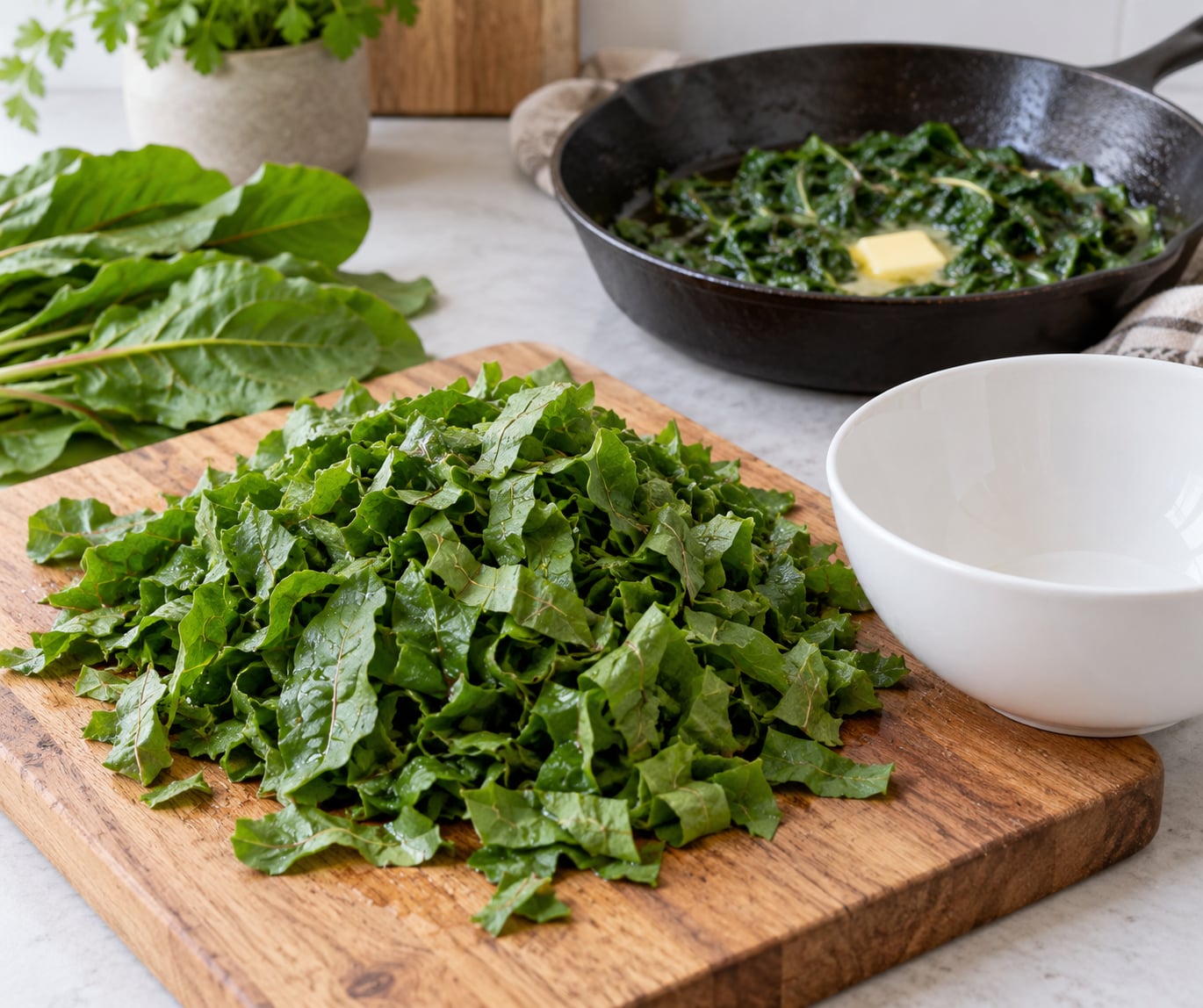
Look for firm, bright leaves and pull them free of the stems. Older sorrel has thicker central ribs that taste grassy and bitter, so strip them the way you would strip the ribs from kale.
Rinse the leaves under cold running water and swish them in a bowl of cold water. If they came from a garden or a farm, do this twice, because grit hides in the leaf folds and lifts out on the second pass. Lift them out rather than pouring off the water, or you pour the grit right back on.
Dry them thoroughly in a salad spinner or between the folds of a clean kitchen towel. Wet leaves need extra pan heat to shed their moisture before they start to cook, and that extra time is what turns a bright green side dish into a dull grey one. Dry leaves hit the pan and wilt almost immediately.
2. Chop the leaves and balance the acidity
Slice the dried leaves into ribbons, sometimes called a chiffonade, or give them a rough chop. Even pieces cook at the same rate, and ribbons fold into cream sauces and eggs far more neatly than whole leaves.
Keep the quantity modest at first. A single handful of chopped sorrel will brighten a pot of soup for four people, and two handfuls will make it taste sour. Taste as you go and stop adding when the dish tastes balanced rather than when the pot turns green.
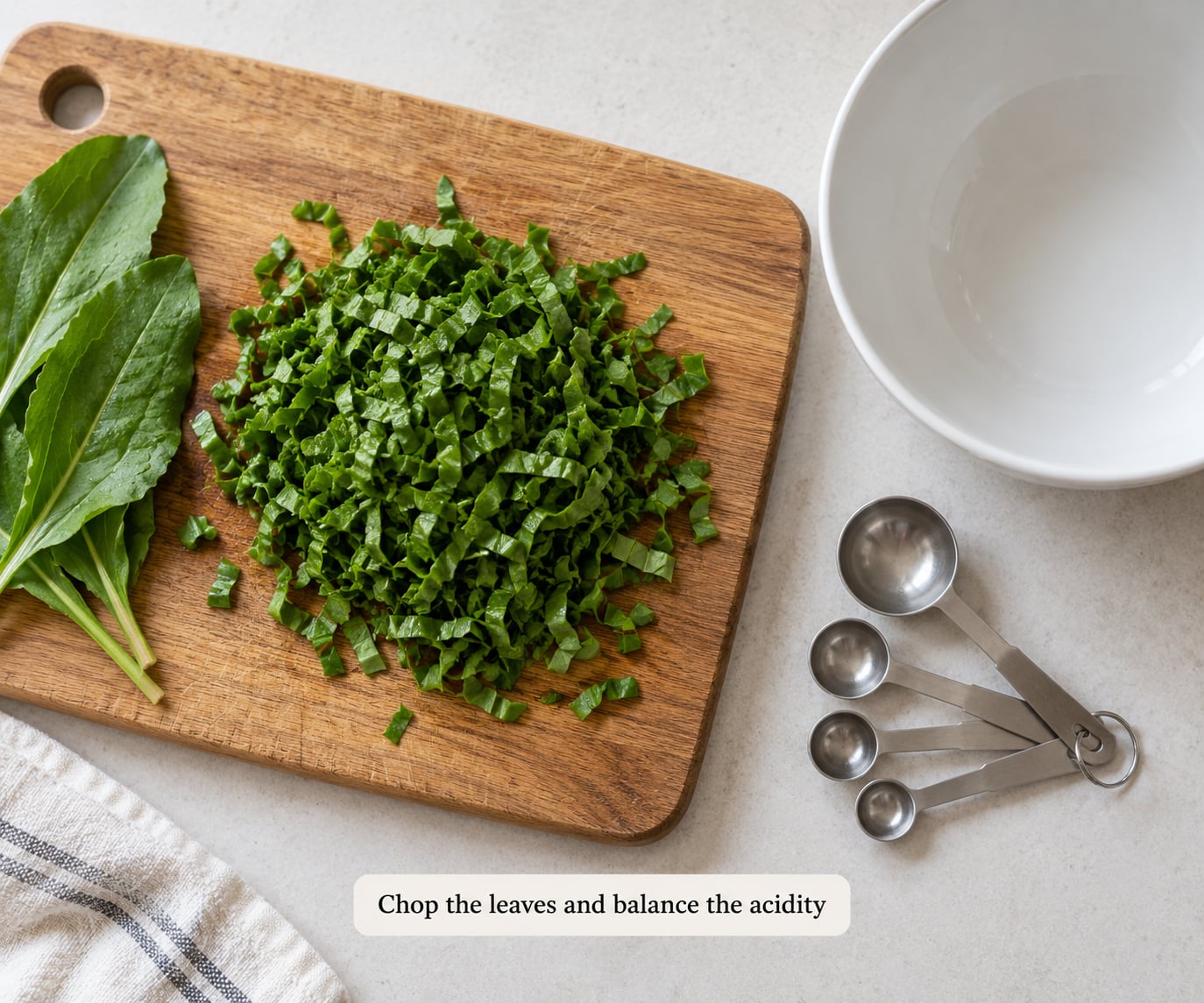
Measure with your hands rather than a scale. A loosely packed handful, roughly 30 to 50 grams of fresh leaves, is the amount that reads as seasoning in a family-sized dish. The same handful works as the main green for two people.
3. Sauté sorrel for a quick side dish
Heat a tablespoon of butter or olive oil in a wide skillet over medium heat. Add sliced garlic if you like, cook it for about 30 seconds until fragrant but not coloured, then add the dried chopped sorrel and a pinch of salt.
Stir and let it wilt for one to two minutes. The leaves will collapse to roughly half their height and go glossy and dark green. That collapse is your cue. When the leaves have lost their volume and look slightly slick, take the pan off the heat.
Serve this straight away as a side for fish, or spoon it over scrambled eggs. It also keeps a few hours in the fridge and makes a decent cold topping for a baked potato.
4. Add sorrel to soup, stew, or a creamy sauce
This is the method that rewards timing. Build your soup or sauce the way you normally would, with onion, garlic, broth, cream or butter, and simmer it through.
Stir in the chopped sorrel in the last two or three minutes of cooking. If it goes in at the beginning and boils for half an hour, the chlorophyll breaks down and the pot turns khaki or grey. The same leaves added late stay green and keep a fresh edge.
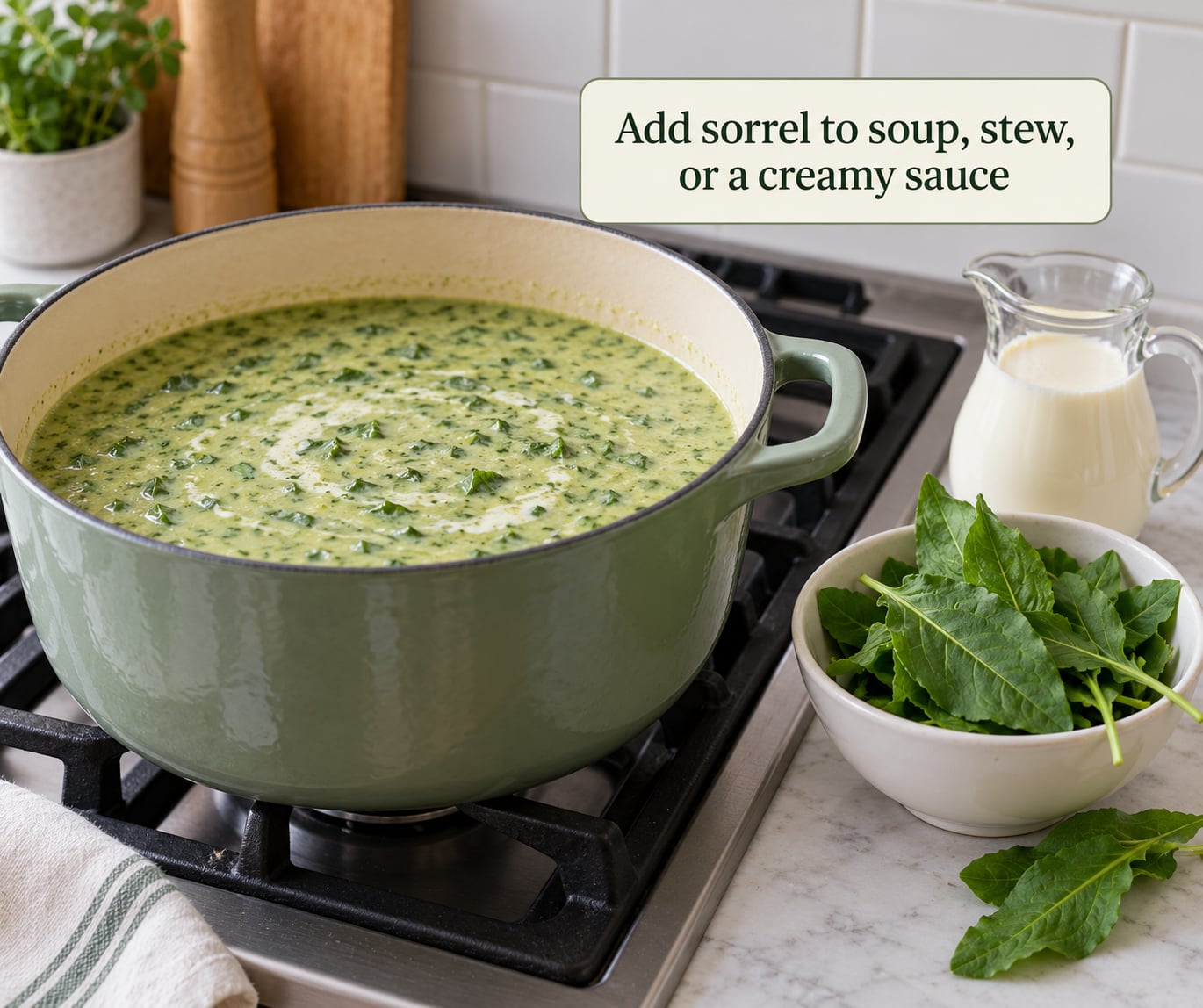
For a cream sauce, warm the cream or creme fraiche off the heat, stir in a handful of chopped leaves, and warm it through without boiling. That keeps the green colour and gives you the classic lemony cream served over salmon, trout, poached chicken or veal.
Soup traditions run on this. Potage Germiny is the French version, built on potato and cream. Polish zupa szczawiowa is sorrel soup finished with a spoonful of sour cream and a hard-boiled egg. Green borscht in Eastern Europe and the Caribbean follows the same logic with beet, and each of them owes its sharpness to the sorrel rather than to vinegar.
For a cold version, blend the raw leaves with cucumber, yoghurt or buttermilk and a little garlic. That gives you a pale green soup for a hot day without cooking the leaves at all.
5. Cook sorrel with eggs or potatoes
Fold chopped sorrel into scrambled eggs at the very end. Pull the eggs from the heat while they still look slightly underdone, stir in the raw chopped leaves, and let the residual heat wilt them for about 30 seconds. The result sets soft and pale green rather than becoming flecked with dark specks.
The same trick works for an omelette or a frittata. For a frittata, wilt the leaves in butter first so the egg cooks evenly, then pour the eggs over the top.
With potatoes, add the sorrel in the last five minutes of boiling, or wilt it in butter in the same pan after the potatoes are cooked. Creamy potato soup with a final handful of sorrel stirred in off the heat is the version most people remember from their first pot of it.
You can tell it has worked when the leaves are soft and dark and the eggs or potatoes are evenly set, with no raw green streaks and no brown specks. If you see flecks, the leaves were added too early.
6. Use young leaves raw in salads and garnishes
Small, tender spring leaves can be eaten raw, and that is where sorrel does its best work as a natural acid. You do not need a dressing. Tear a few leaves over cucumber, tomato, egg or avocado and the salad tastes finished.
Use restraint. Raw sorrel is powerful, and a salad that tastes sharp is nearly always a matter of too many leaves rather than the wrong leaves. A dozen small leaves per plate is plenty.
Common pairings are cucumber, tomato, boiled egg, avocado, radish, mild cheese such as feta or goat cheese, and oily fish. Sorrel also works scattered over avocado toast, folded into a sandwich with soft cheese and ham, or used as a garnish for a bowl of soup just before it goes to the table.
Not every variety is at its best raw. Broadleaf and red-veined sorrel are sharper than French sorrel, so start with half the quantity and taste. Anyone sensitive to oxalate should cook their sorrel rather than eat it raw, and a doctor is the right person to ask if that applies to them.
Common Mistakes
Most disappointing sorrel comes down to timing, quantity and identification. The fixes are simple once you know what went wrong.
Washing too late. If you rinse the leaves after chopping and then cook them wet, they spend their time boiling off water instead of frying, and they grey off. Wash first, dry properly, then chop.
Leaving the stems in. Mature sorrel ribs are fibrous and bitter, especially on older leaves. Strip them before you chop.
Adding too much at once. Sorrel is an acid, not a bulk green. Start with one handful per pot, taste, and add more only if the dish still tastes flat. A grey, sour soup is nearly always the result of doubling the quantity on the second addition.
Ignoring the acidity. Cooking sorrel in a rich dish with nothing to soften it leaves the sharpness unbalanced. Cream, butter, egg, potato, rice or a spoon of honey all do the work. Every traditional sorrel soup pairs the leaves with potato or cream for this reason.
Overcooking it. Long boiling is what turns bright green into drab khaki. Add sorrel at the end, keep the pot off a hard boil after it goes in, and use a pot you did not line with reactive material. Cast iron and unlined aluminium are the traditional choices.
Confusing sorrel with wood sorrel. Wood sorrel (Oxalis acetosella) has three heart-shaped leaflets and grows in lawn and woodland. It is a different plant with a different safety profile. Learn to tell them apart once, and never harvest from a lawn or roadside without being certain of the identification.
Storing it badly. A plastic bag in the fridge turns sorrel to slime within a day or two. Wrap the dry leaves in a paper towel inside a loosely closed container, keep it in the crisper, and use within two to three days. If your garden has produced more than you can eat that week, chop the leaves, blanch them for 30 seconds, cool them in ice water, drain well and freeze them in portions. They lose some brightness but keep well for soups and sauces. Pesto, a blended soup base and a pickle in brine all freeze or keep longer than the raw leaf does.
For meal planning, treat sorrel as a two-ingredient green rather than a week-long vegetable. Buy it, use it in two meals, then move it to a pot, a jar of pesto or the freezer. That is what the gardeners on cooking forums actually do, and it is the reason sorrel recipes tend to be soups rather than roasts.
Frequently Asked Questions
Can sorrel leaves be eaten raw, or should they always be cooked?
Yes, small tender spring leaves can be eaten raw, and that is how most people use sorrel as a natural acid in salads, sandwiches and garnishes. Start with about a dozen small leaves per plate and taste before adding more, because raw sorrel is sharp and larger varieties are sharper still. Cooking suits older leaves, bigger bunches and anyone eating less of it.
How sour is sorrel, and what can I add to make it milder?
Fresh sorrel is genuinely tart, closer to lemon than to spinach, and quantity is what turns pleasant into sour. Cream, creme fraiche, butter, egg yolks, potato or rice all soften it. A small spoon of honey or sugar works in gluts and Caribbean-style preparations. Add leaves in stages and taste after each handful rather than doubling the recipe.
How do I cook sorrel without turning it into mush?
Wilt it fast in a wide pan over medium heat and stop as soon as the leaves collapse and look glossy, usually one to two minutes. Keep a crowded pan in mind: too many leaves steam in their own moisture instead of frying, which is the usual cause of a slimy result. For soups and sauces, stir the leaves in during the last two or three minutes and never boil hard afterwards.
What can I use if sorrel is not available?
Nothing replaces it exactly, because the tartness is the point. A squeeze of lemon or a splash of vinegar added at the end gives acid without the green colour or the slight earthiness. Young spinach or chard give the green but not the tang. If you are after a herb with real lemon flavour, wood sorrel tastes closest, but only eat it if you are certain of your identification.
How long do washed sorrel leaves keep in the refrigerator?
Two to three days if the leaves are completely dry when you store them. Wrap them in a paper towel inside a loosely closed container in the crisper and avoid a sealed plastic bag, which traps moisture and turns the leaves slimy. Discard anything that is limp, discoloured or has turned slimy at the stem end rather than trimming and hoping for the best.
Can cooked sorrel be frozen for later use?
Yes, and it is the easiest answer to a garden glut. Blanch the chopped leaves for 30 seconds, cool them in ice water, drain thoroughly and freeze in meal-sized portions. Cooked sorrel freezes best in soups, sauces and curries, where the colour matters less. It is less suited to freezing for a salad or a sauce you want to serve bright green.
Conclusion
Start by washing a small batch, stripping the stems, drying it properly and chopping it. Wilt a handful in butter for a minute to see how you like the flavour, then decide how much your soup, eggs or salad actually need. Treat it as an acid rather than a bulk vegetable, add it late, and it will taste like sorrel should.