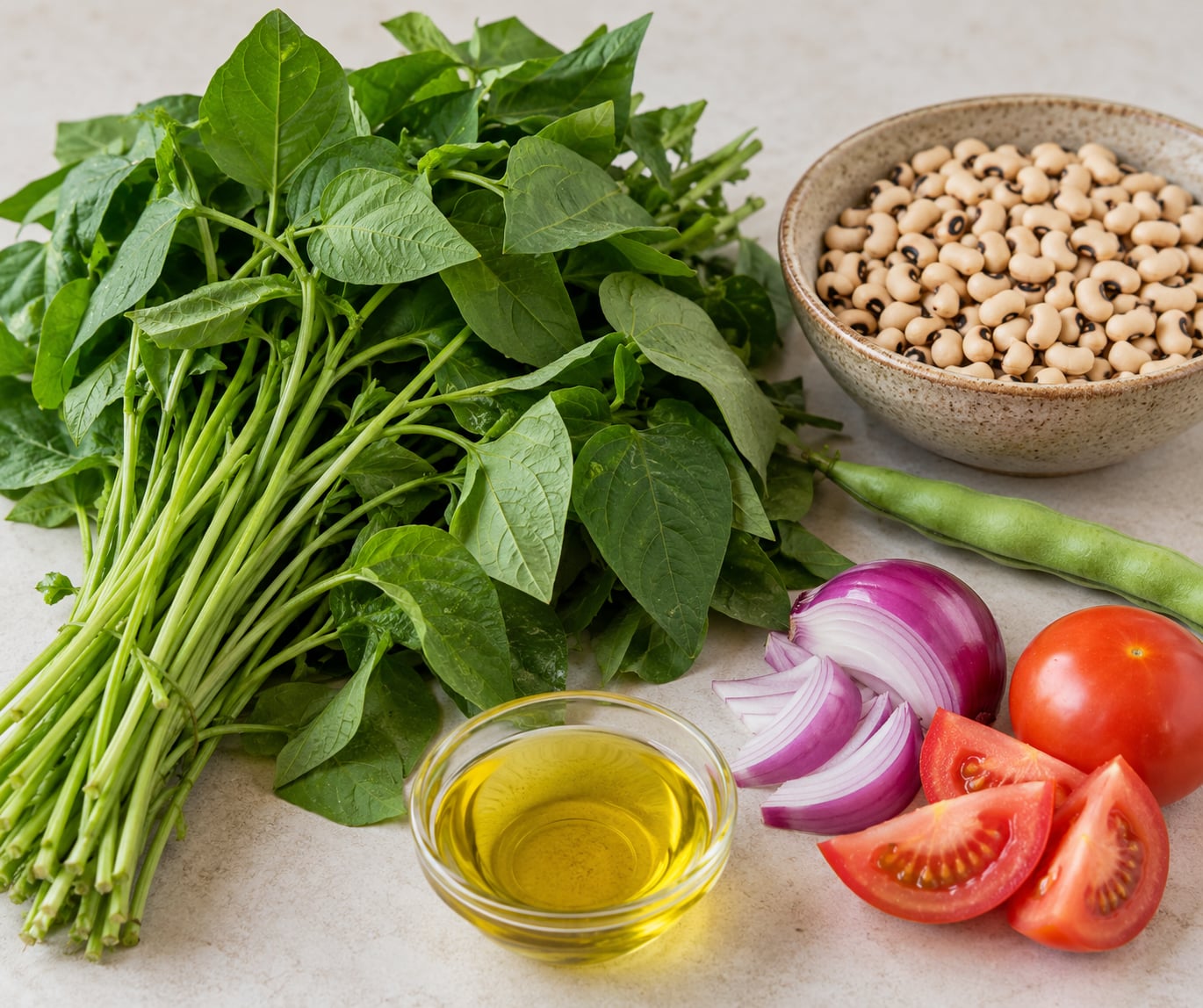
Cowpea leaves as a vegetable simply means cooking the young leaves and tender shoots of the cowpea plant, Vigna unguiculata, the same warm-season legume grown for beans and pods. The leaves are picked while still tender, washed well, and cooked quickly as a green vegetable, usually alongside onion, tomato, oil or coconut milk. They are eaten across much of sub-Saharan Africa under local names such as kunde and moroho, and they supply iron, protein, fibre and vitamin A precursors in a plant most households already grow.
They are also seasonal. In many households the fresh leaf is a short-season green, and the dried or frozen form carries families through the months when the plant is producing pods rather than tender shoots.
This guide covers what the leaves are, how they fit into everyday cooking, how to prepare them safely, and which groups should eat less of them.
Table of Contents
- 1What Are Cowpea Leaves?
- 2How Are Cowpea Leaves Used in African Food Traditions?
- 3What Do Cowpea Leaves Taste Like?
- 4cowpea leaves as a vegetable explained
- 5Are Cowpea Leaves Good for You?
- 6How to Prepare Cowpea Leaves Safely
- 7cowpea leaves as a vegetable explained: common cooking methods
- 8Wilted greens with oil and aromatics
- 9Folded into a vegetable stew
- 10Soup and pottage
- 11Dried leaves, rehydrated
- 12What to Watch For When Foraging or Buying
- 13Frequently Asked Questions
- 14Can you eat the leaves of cowpeas?
- 15Are black-eyed peas and cowpeas the same thing?
- 16What is the English name for cowpeas?
- 17Why do cowpea leaves taste bitter, and how do I fix it?
- 18Are there any side effects from eating cowpea leaves?
- 19Can I eat cowpea leaves every day?
- 20Conclusion
What Are Cowpea Leaves?
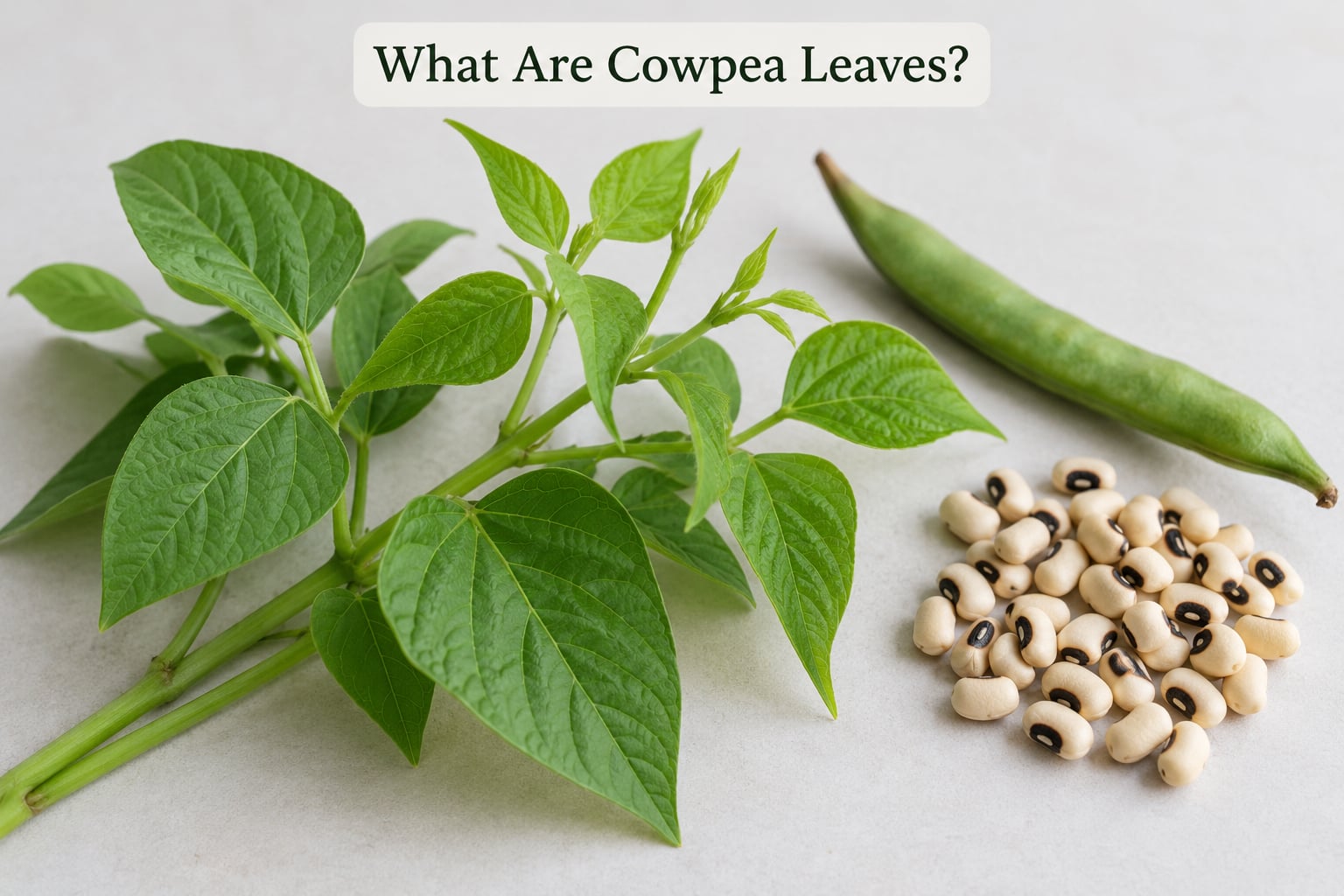
Cowpea leaves are the young leaves and soft growing tips of Vigna unguiculata L. Walp., harvested while still tender and eaten cooked as a leafy vegetable. The plant is a legume in the same family as beans, peas and lucerne, and the exact same vine produces pods and seeds later in the season.
Cowpeas go by a long list of English names depending on the region: cowpea, black-eyed pea, yardlong bean, lubia, kaupi, sala and others. The names describe the same species. The leaves are what people call cowpea greens, and the pods and dried beans are the same plant at a later stage.
| Plant part | What it is | How it is normally eaten |
|---|---|---|
| Young leaves and tender shoots | Picked while soft, before the stems harden | Washed and cooked as a green vegetable, in soups, stews or a leaf sauce with oil and aromatics |
| Pods | The seed capsules, eaten immature while the seeds are still small | Cooked whole as a vegetable, or opened and the immature beans eaten |
| Mature seeds | Dried beans, often black-eyed or brown-speckled | Soaked and boiled as a pulse, ground into flour or meal |
The same leaf material is called kunde in Kenya and parts of East Africa, moroho in some southern African communities, and many other names depending on language and locality. Knowing the local name matters, because searching for the plant in English tends to return academic literature rather than kitchen guidance.
Leaves, pods and seeds are all edible. They are also different vegetables with different nutrition and different cooking times, so it is worth being clear which one you have in front of you before you start.
How Are Cowpea Leaves Used in African Food Traditions?
Cowpea leaves turn up as an everyday green rather than a special dish. Household cooking across many regions treats them the way other leafy vegetables are treated: washed, chopped, and cooked down into a sauce that is served with a starch staple such as maize meal, rice, ugali or fufu.
The common pattern is a short sequence. Oil is heated, onion and sometimes garlic or tomato go in, then the chopped leaves are added with a little water and cooked until they collapse and darken. Salt, pepper and spices go in near the end. In some households coconut milk is added for richness, and in others the leaves go straight into a soup or stew that is simmering alongside meat, fish or beans.
The leaf is also treated as an accompaniment. A bowl of cooked leaves, seasoned simply, sits beside a meal the way a dressed salad or a relish would, and it is used to thicken and flavour soups and stews rather than always being served on its own.
Because the plant grows in a home garden or a small plot, the leaves have a specific social place: they are one of the few greens available without buying anything. A household with cowpea vines in the yard can pick tender shoots for weeks, though the tender growth slows once the plant switches to flowering and pod filling.
Preparation is not identical everywhere, and it should not be described as though one recipe is the standard. Regional names, seasonings and cooking bases differ, and that difference is a good reason to ask someone who cooks the dish rather than guess at it.
What Do Cowpea Leaves Taste Like?
Fresh cowpea leaves have a mild, grassy flavour with a green, bean-like quality underneath it. Young leaves are the mildest. As you move up the vine toward the tougher stems and then to older leaves, the flavour turns stronger and more fibrous.
The taste people complain about most is bitterness. It is real, and it is the reason blanching exists in so many cowpea leaf recipes. Boiling the leaves briefly in salted water and draining them pulls out a good share of the bitterness along with some of the oxalates, and the leaves then cook into a rounder, less sharp sauce.
Fresh, dried and fermented leaves are three different ingredients. Fresh leaves cook in minutes and taste green. Sun-dried leaves concentrate everything: the green fades to a dull brown, the texture softens after soaking, and the bean note comes forward. Fermented or very well-dried leaves are more intense still, and households that eat them are used to that depth.
Soup, pottage and stew bases also change the finish. Oil and aromatics round out bitterness, acid such as tomato or citrus cuts it further, and coconut milk softens it. Long slow simmering in a stew tastes different from a quick wilt in a hot pan, mostly because the leaves have longer to break down.
cowpea leaves as a vegetable explained
The short version, for anyone who landed here searching: cowpea leaves as a vegetable are the tender young leaves of a bean plant, and they are cooked and eaten much like other leafy greens. Pick them young, strip them from the stems, wash them in several changes of clean water, and cook them until tender.
They carry a nutrient profile typical of dark leafy greens, with iron, protein, dietary fibre, carotenoids, folate, and minerals including calcium and magnesium. A Ghanaian agricultural officer has argued that cowpea leaves hold the highest iron content in the leafy vegetable category, disputing the common belief that cocoyam leaves, known in Ghana as kontomire, set the benchmark.
There are compounds worth knowing about. Like most legumes and most leafy greens, the leaves contain oxalic acid, which binds iron and calcium and reduces how much of both the body absorbs, and phytic acid, which does something similar to minerals and to protein. Leaves of the cowpea plant also contain small amounts of cyanogenic glycosides, and they contribute purines.
None of this makes the leaves dangerous in ordinary servings. It does mean that blanching, draining, cooking briefly and eating them alongside a source of vitamin C all improve how much nutrition you actually get out of them.
Cowpea leaves fit into the broad category of African indigenous vegetables, commonly called AIVs: crops that people have selected and maintained locally for food, medicine and seed, and that carry micronutrients many imported vegetables do not. They are part of a larger food system rather than a single unusual ingredient, which is why they are treated as a normal green in the places where they are common.
Are Cowpea Leaves Good for You?
Cowpea leaves are among the nutrient-dense greens available to a household at very little cost. They contribute iron, protein, fibre and carotenoids, and they are valued in food-based approaches to iron deficiency because they combine a mineral source with vitamin C and are eaten alongside other foods that help absorption.
- Iron. Cowpea leaves are valued specifically for iron density, and pairing them with tomato, citrus or another vitamin C source at the same meal improves how much of that iron is taken up.
- Protein. As a legume leaf, the plant carries protein alongside its carbohydrate, which separates it from most other leafy vegetables.
- Vitamin A precursors. Dark green leaves contain carotenoids, which the body converts to vitamin A, and short cooking times preserve more of them than long simmering.
- Calcium and magnesium. Both are present, though the oxalates in the leaves bind a portion of the calcium and cut absorption.
- Dietary fibre. The fibre is useful for gut health and for slowing the absorption of sugars, and it contributes to the feeling of fullness in a meal built around a starch staple.
- Folate and other micronutrients. Leaves supply folate and a range of trace minerals that are easy to miss when the diet is built mainly on staples.
Nutrient content varies with the variety, the leaf age, the soil and how the plant was fed, so figures from one study will not match another exactly. Older leaves are usually higher in fibre and minerals and tougher to eat; younger leaves are more tender and easier to digest.
How much you actually absorb depends on preparation far more than most nutrition writing admits. Oxalic acid and phytic acid reduce mineral absorption, and heat plus draining reduces them. Long cooking at a high temperature destroys more carotenoids than a short gentle one. Vitamin C at the same meal works in your favour.
People eat cowpea leaves as part of a varied diet, not as a treatment. Anyone with a diagnosed iron deficiency, anaemia, kidney disease or a condition affected by purines should talk to their doctor or a registered dietitian before leaning on a single leafy green, and no leaf is a substitute for medical care.
How to Prepare Cowpea Leaves Safely
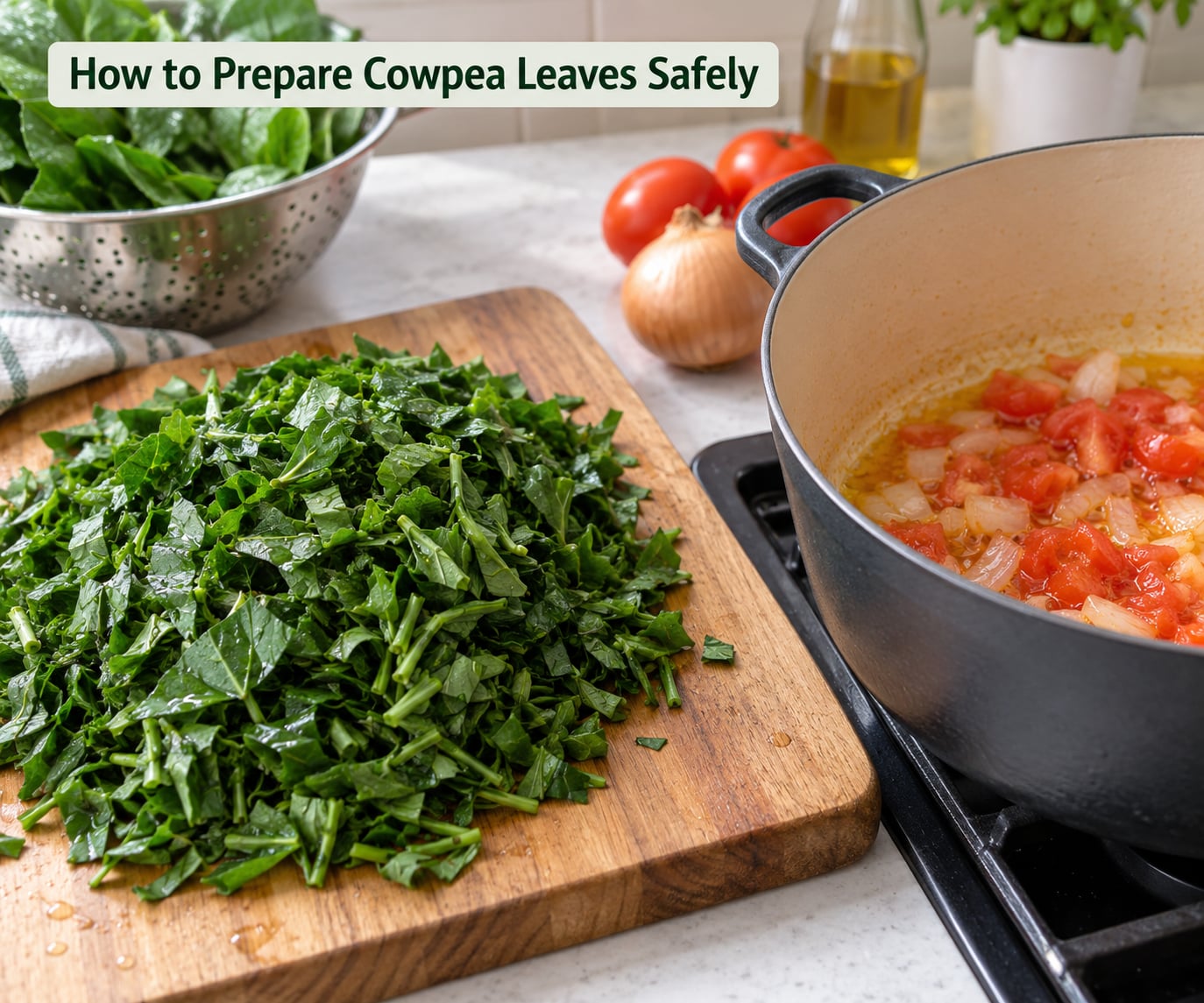
Preparation takes about twenty minutes and the sequence matters more than any equipment. Work with clean water, clean surfaces, and tender leaves, and cook the greens until they are properly soft rather than half raw.
- Choose tender leaves. Pick the young leaves and soft tips. Skip anything woody, yellowing, insect-damaged or wilted.
- Separate leaf from stem. Strip the leaves off the vine, then pull or cut away the thicker stem fibres running through the centre of each leaf. These do not soften with cooking and spoil the texture.
- Look the leaves over. Spread them out and check for insects, eggs, caterpillars and small stones. This is the step most people skip, and it is the one that catches the most.
- Wash in several changes of clean water. Rinse the leaves until the water runs clear, changing it three or four times. Leafy greens trap soil in the folds of the leaf and along the veins, and running water does this better than a quick swish. If you can use running water, use it.
- Blanch if the leaves are bitter. Drop them into boiling salted water for a minute or two, then drain and discard the water. This short step takes out most of the bitterness along with a good share of the oxalates.
- Chop and cook. Chop the leaves, then fry onion in oil, add tomato if you have it, add the leaves with a splash of water, and cook until collapsed and tender. Season near the end.
Use clean water from the start to finish. If your tap water is unsafe, use treated or boiled water for washing the leaves and for the cooking liquid. Keep raw and cooked greens separate, use a clean knife and board, and refrigerate leftover cooked leaves in a covered container and eat them within a couple of days.
If you plan to preserve the leaves rather than eat them the same day, that changes the method. The traditional answer documented in a UKZN farmer magazine interview was to boil the leaves briefly and then dry them in the sun, so the household could eat them through the year.
cowpea leaves as a vegetable explained: common cooking methods
Four methods cover almost everything households do with these leaves.
Wilted greens with oil and aromatics
The quickest route and the one most people use on a weeknight. Heat oil, soften sliced onion and garlic, add tomato or a little chilli, then add the washed chopped leaves with a splash of water. Cover and cook for five or six minutes until the leaves collapse into a glossy sauce. Season with salt and pepper at the end.
Folded into a vegetable stew
Add the leaves to an onion and tomato base with stock or water, a tomato-and-onion mix, or grated coconut, and simmer until the greens soften and thicken the liquid. The leaves cook down considerably, so cook the stew’s other vegetables first and add the leaves toward the end so they do not disappear entirely.
Soup and pottage
Leaves go into soups with meat, fish, okra or beans and are simmered until tender. For a thicker pottage-style soup, add the leaves early enough to break down into the broth, then season heavily. Dried leaves usually go in earlier than fresh ones because they need longer to rehydrate and soften.
Dried leaves, rehydrated
Soak sun-dried leaves in warm water or stock for twenty to thirty minutes, drain off the soaking liquid, which carries a good deal of the bitterness, and cook them as you would fresh leaves. Dried leaves need more cooking time and less added salt. Fermented or heavily dried leaves are stronger in flavour, so start with less and taste as you go.
What to Watch For When Foraging or Buying
Most of the trouble comes from identification and hygiene rather than from the leaves themselves. A few rules cover most of it.
- Do not eat from polluted ground. Avoid roadside plants, plants near drains or septic systems, and any bed that has been treated with pesticide or herbicide not labelled for food crops. Wash in clean water regardless.
- Watch for spray. If the plant was treated recently, do not pick from it. Where spraying is common, buy from a source that can tell you what was applied.
- Do not guess at identification from a photo. If you cannot confirm the plant, leave it. Misidentification is the one error in this article that cannot be undone in the kitchen.
- Buy leaves, not shoots with pesticide baited nearby. Where field insects are controlled, avoid leaves that show insect damage; a damaged leaf is also a leaf that has been sitting exposed.
- Keep leaves cold and dry. Fresh cowpea leaves wilt fast. If you cannot cook them the same day, shade them, keep them cool, and wash only what you need.
- Do not assume bitter means spoiled. Bitterness is normal and comes out with blanching. Slimy, discoloured or off-smelling leaves are a different problem and should be discarded.
If you grow the plant yourself, pick young leaves and tips rather than stripping a vine, and pick in the morning when the leaves are firm. Repeated picking encourages regrowth, but yield varies by variety, and a plant producing heavily for pods will give less leaf. Harvesting the tips too hard on a young plant can set it back for weeks.
Frequently Asked Questions
Can you eat the leaves of cowpeas?
Yes. The young leaves and tender shoots of the cowpea plant are eaten regularly as a cooked leafy vegetable across much of Africa. Pick them while soft, strip the leaves from the stems, wash them in several changes of clean water, blanch briefly if they are bitter, then cook with oil and aromatics until tender. Older, tough leaves are edible but fibrous.
Are black-eyed peas and cowpeas the same thing?
They are the same species, Vigna unguiculata, under different English names. Black-eyed pea usually refers to the dried beige seed with the dark eye, cowpea covers the whole plant, and the leafy vegetable people call cowpea greens or kunde comes from that same vine. Leaves, pods and mature seeds are all edible and cook in very different ways.
What is the English name for cowpeas?
The botanical name is Vigna unguiculata L. Walp. Common English names include cowpea, black-eyed pea, yardlong bean, lubia, kaupi and sala, and different regions favour different ones. Local names for the leaves include kunde in Kenya and other East African countries and moroho in some southern African communities. The names all refer to the same plant.
Why do cowpea leaves taste bitter, and how do I fix it?
Bitterness is natural in cowpea leaves and stronger in older leaves and stems. Boiling them in salted water for one or two minutes and draining the water removes much of it, along with a portion of the oxalates that bind iron. Washing the leaves in several changes of clean water also helps. Cook the blanched leaves briefly rather than simmering them for a long time.
Are there any side effects from eating cowpea leaves?
Ordinary servings are well tolerated by most people. The leaves do contain oxalic acid and phytic acid, which reduce the absorption of iron and calcium, small amounts of cyanogenic glycosides, and purines. People with gout, kidney disease or calcium-oxalate kidney stones are usually advised to limit high-oxalate greens. Anyone on anticoagulants or managing a medical condition should ask a doctor first.
Can I eat cowpea leaves every day?
You can eat them often, and many households do, but portion size and preparation matter more than the frequency. Leaves are high in oxalates, so keep portions moderate, blanch and drain them, cook them briefly, and eat them with a source of vitamin C such as tomato or citrus to improve iron absorption. Varying your greens across the week is a sensible habit.
Conclusion
Start with a reliable plant. Confirm you have cowpea leaves, pick them young, strip the leaf from the stem, check for insects, and wash them in several changes of clean water. Blanch for a minute or two if they are bitter, then cook them quickly with onion, tomato and oil until tender, and serve them with a source of vitamin C at the same meal.
Treating cowpea leaves as a vegetable means one green among many, part of a varied diet rather than a cure for anything. If you have a health condition, are pregnant, or take regular medication, speak to your doctor or a registered dietitian before making them a staple.